


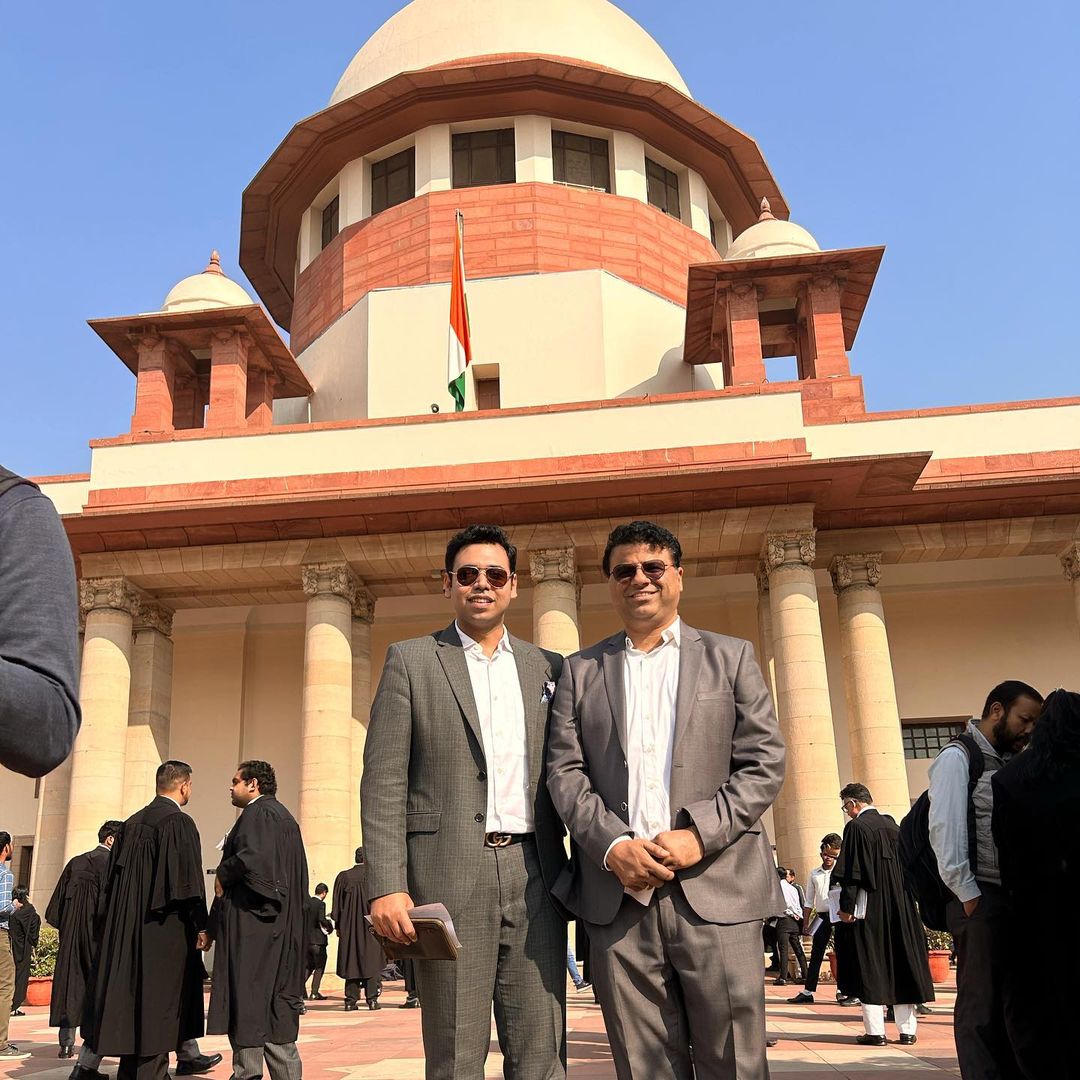
The Supreme Court on Friday sought the government’s response to pleas to recognize same-sex marriage under the Special Marriage Act. The Special Marriage Act of 1954 allows a civil form of marriage for couples that cannot get married under Personal Law.
The notice was issued in response to a PIL filed by a same-sex couple from Hyderabad, Supriyo Chakraborty, and Abhay Dang, who said that the non-recognition of same-sex marriage amounted to discrimination. The Public Interest Litigation was filed under Article 32 of the Constitution of India and posited that the 1954 Act should grant same-sex couples the same protection that inter-caste and inter-faith couples who want to marry are offered.
The petitioners submitted that the right to many a person of one’s choice is a fundamental right guaranteed under the Constitution of India to each person. They also stressed that the court has also explicitly held that members of the LGBTQ+ community have the same human, fundamental, and constitutional rights as other citizens.
A Bench of Chief Justice of India DY Chandrachud and Justice Hima Kohli agreed to hear the matter. A separate petition was filed by another couple, Parth Phiroze Mehrotra and Uday Raj Anand.
The Bench issued separate notices to the Union of India and the Attorney General of India. The case has been listed for hearing after four weeks.
There are presently 9 petitions pending before the Delhi High Court and the Kerala High Court seeking recognition of same-sex marriage under the Special Marriage Act, Foreign Marriage Act, and Hindu Marriage Act. The bench transferred all these pending issues to itself.
The Petition
The petition was drafted by lawyers Arundhati Katju, Priya Puri, and Shristi Borthakur, and will be argued by Neeraj Kishan Kaul and Menaka Guruswamy. The lawyers argued that this petition was a follow-up to the 2018 judgment when Section 377 was read down.
At present, there are about 15 legislations related to gratuity, adoption, surrogacy, and other facets of a person’s life that do not apply to LGBTQ+ citizens. And the first step towards affording these rights begins with legalizing same-sex marriage.
The petition aims to make the 1954 Act a gender-neutral one. “The Act only says marriage should be between ‘two persons. It does not say it is a union of A and B,” Mr. Rohatgi submitted. By denying same-sex couples the same rights, as well as recognition and status that comes from marriage, the Act is ultra vires the Constitution, the petition also said.
It also noted how Supriyo and Abhay were devoid of the opportunity to be recognized as a married couple, even though they had been together for 17 years and are presently raising two children together. The inability to solemnize their marriage has prevented the petitioners from having a legal relationship of parent-child with both of their kids.
The petition argued that the Act, in its present form, should be declared violative of the fundamental rights to a dignified life and equality as “it does not provide for solemnisation of marriage between same-sex couple”.
