


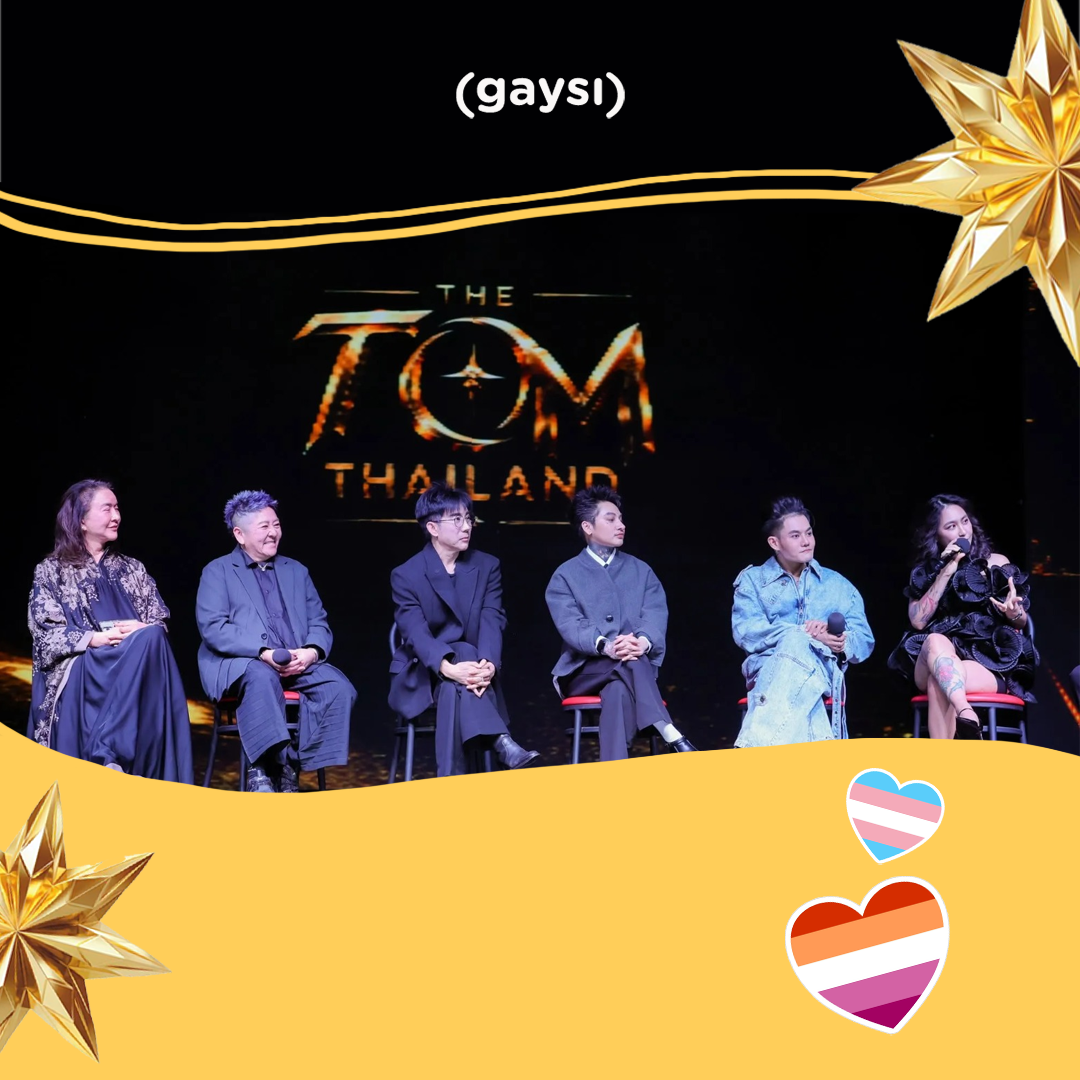
In most pageants, masculinity is either hidden backstage or handed the microphone as authority. The spotlight usually belongs to gowns, crowns and conventional femininity. So when Thailand launched The Tom Thailand 2026, its first pageant dedicated to toms (masculine-presenting Thai lesbians) and trans men, it felt like more than a Pride-month headline. It felt like a rearrangement of who gets to stand under the lights.
To understand why this matters, it helps to understand the word “tom”. In Thailand, “tom” comes from the word “tomboy”, but it is not a simple copy-paste of the Western “butch” label. It belongs to a specifically Thai history of gender and sexuality, often used for masculine-presenting people assigned female at birth who may date feminine women known as “dees”. For some, tomness is in style: short hair, shirts, swaggers, a refusal of compulsory softness. For others, it can sit closer to gender identity, overlapping with transmasculinity without always meaning the same thing.
That is why The Tom Thailand is interesting. It is not just asking who looks handsome enough to win a sash. Organisers have framed the competition around confidence, character, thinking, conduct and lifestyle. In other words, the pageant is trying to move beyond the idea that visibility only means being looked at. It wants toms and trans men to be heard, coached, introduced, styled, interviewed and recognised as people with stories.
Of course, pageants are complicated. They can turn empowerment into polish, identity into branding, and community into competition. A stage can liberate, but it can also decide which bodies and kinds of masculinity become “acceptable”. There is always the danger that marginalised people will be celebrated only when they become neat, charming and marketable.
But that tension does not erase the power of the moment. Masculine queer people are often punished because they interrupt what society expects from bodies read as female. Femme queerness can sometimes be softened into “just girls being close.” Masc queerness is harder for the patriarchy to ignore. It refuses the script of prettiness. It makes families ask why you will not grow your hair out. It makes schools, workplaces and relatives panic over shirts, trousers, voices, girlfriends, pronouns and taking up space.
That is also why a tom pageant feels deliciously paradoxical. Pageants have historically rewarded femininity performed to perfection. The Tom Thailand takes that old format and asks: what if queer masculinity got the crown treatment too? What if a person in a crisp shirt, cropped hair or masc silhouette did not have to be comic relief, threat, phase or family embarrassment? What if they could be aspirational?
The timing matters because Thailand is a major Asian reference point for queer visibility, from BL and GL exports to marriage equality. But visibility is never evenly distributed. Sapphic and transmasculine communities are often present but less centred. A national stage for toms and trans men does not solve that imbalance, but it names it.
For Indian queer audiences, the resonance is immediate. India has a long history of female masculinity, transmasculinity and queer women’s lives, yet mainstream culture rarely knows what to do with them. Masculine women are often mocked or stereotyped, trans men remain largely invisible, and butch lesbians seldom receive nuanced representation. Even when Indian cinema tells sapphic stories, they have often leaned towards tragedy, tokenism or respectability, rather than giving queer masculinity the same richness and visibility it deserves.
That is why The Tom Thailand matters beyond Thailand. Representation is not just about more queer love stories, it is also about making space for queer people whose identities refuse easy labels. Imagine an Indian festival, campaign or web series that celebrated masc lesbians, trans men and gender non-conforming people without reducing them to stereotype.
India does need its own tom pageant or at least a stage bold enough to celebrate queer masculinity with the same glamour, confidence, and applause. One that honours the butch lesbians, trans men and transmasculine people of India who have always carried style, swagger and softness on their own terms. Imagine a platform that celebrates masc queer artists and creators like Mehr, Shruti Chakravarty, Prarthana Prasad, Letitia Mendes and Wanda Amber Hendricks, not as exceptions, but as a larger, louder lineage. Queer masculinity does not need validation to exist. But it does deserve visibility, complexity, celebration and a spotlight of its own.
