


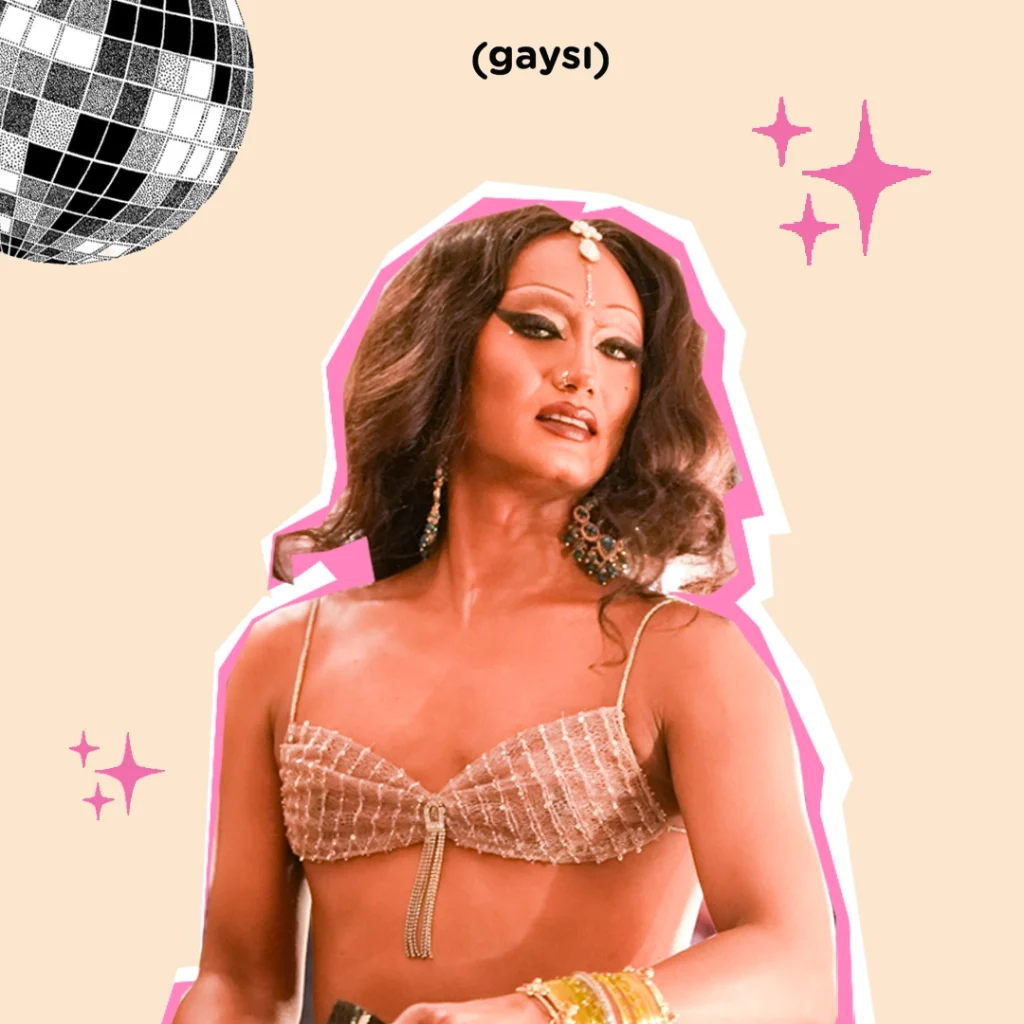
Berlin drag collective Duct Tape turned four on 19 September 2026 and threw a full-on birthday bash at Theater im Delphi. And who was on the bill? Our very own Mumbai girl, The Glorious Luna.
Duct Tape (EMI, Symba and Magda von Pfeffer) has been putting on some of Berlin’s biggest drag shows since 2022, and the anniversary show has become a September tradition at the Delphi. This year’s lineup was properly international: Miss Velvet from Lisbon, Tina Bikki from Brisbane, Berlin’s own Alice Dee, and Luna repping India.
First thing that got Luna? The venue. “The theater was built around 1910, so it has this very art deco style, a beautiful theater that instantly transports you into that era,” she says. “The lighting was amazing.”
And the vibe of the show itself was a whole thing too. “All of the girls are so talented, and it was such a big ensemble, with different artists from different parts of the world,” she recalls. “It was a very multicultural show, and it was a full house.” Miss Velvet sang live, while Luna did two popular Bollywood numbers with two costume changes. Yes, two.
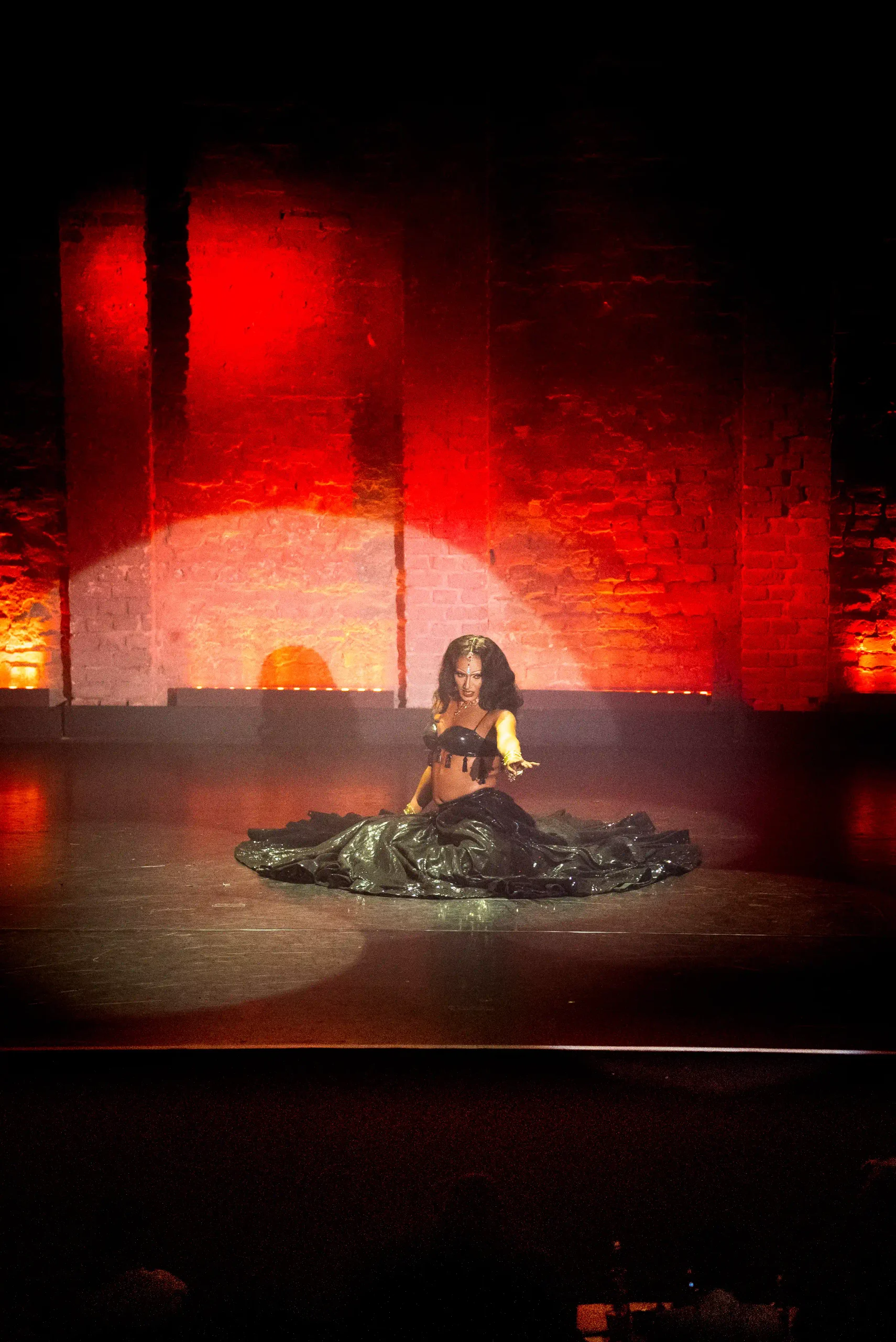
Photograph by: Mathis J Horlacher
“I did my full Bollywood fantasy, which was a dream come true, to be able to represent India and my culture in that way,” Luna says. “It was quite a fulfilling experience. Everybody was so welcoming, and they loved me here in Germany.”
And honestly, that’s why it worked. Luna didn’t tone herself down or squeeze into a Western template. She came with Bollywood, not as a translation but as a presentation in its own right. Drag travels well as storytelling, but it rarely goes both ways. Western drag formats, especially the TV ones, reach Indian audiences easily. An Indian queen bringing her own cultural language to a European theatre stage and getting a full house cheering? That’s rarer.
It’s also not like Luna got here the easy way. She’s talked before about how much work goes into drag in India. In a 2020 interview she described making her own costumes, makeup and hair, and the real struggles, from the cost to finding a safe place to get ready. Off stage, Suruj Rajkhowa is an actor, model and drag artist from Assam. She also founded Queer Carnival, a platform for queer-centric events, and co-created the IT Ball, a ballroom night in Mumbai.
Their work has also taken them beyond stage. Suruj has appeared in fashion campaigns and walked for designers including Manish Malhotra, Gaurav Gupta and Monisha Jaising. They co-founded Current Management, a talent agency created to exclusively represent queer, non-binary and trans talent. Suruj stepped into mainstream cinema as one of the leads in Lala & Poppy, a gender-fluid love story directed by Kaizad Gustad and produced by Bobby Bedi.
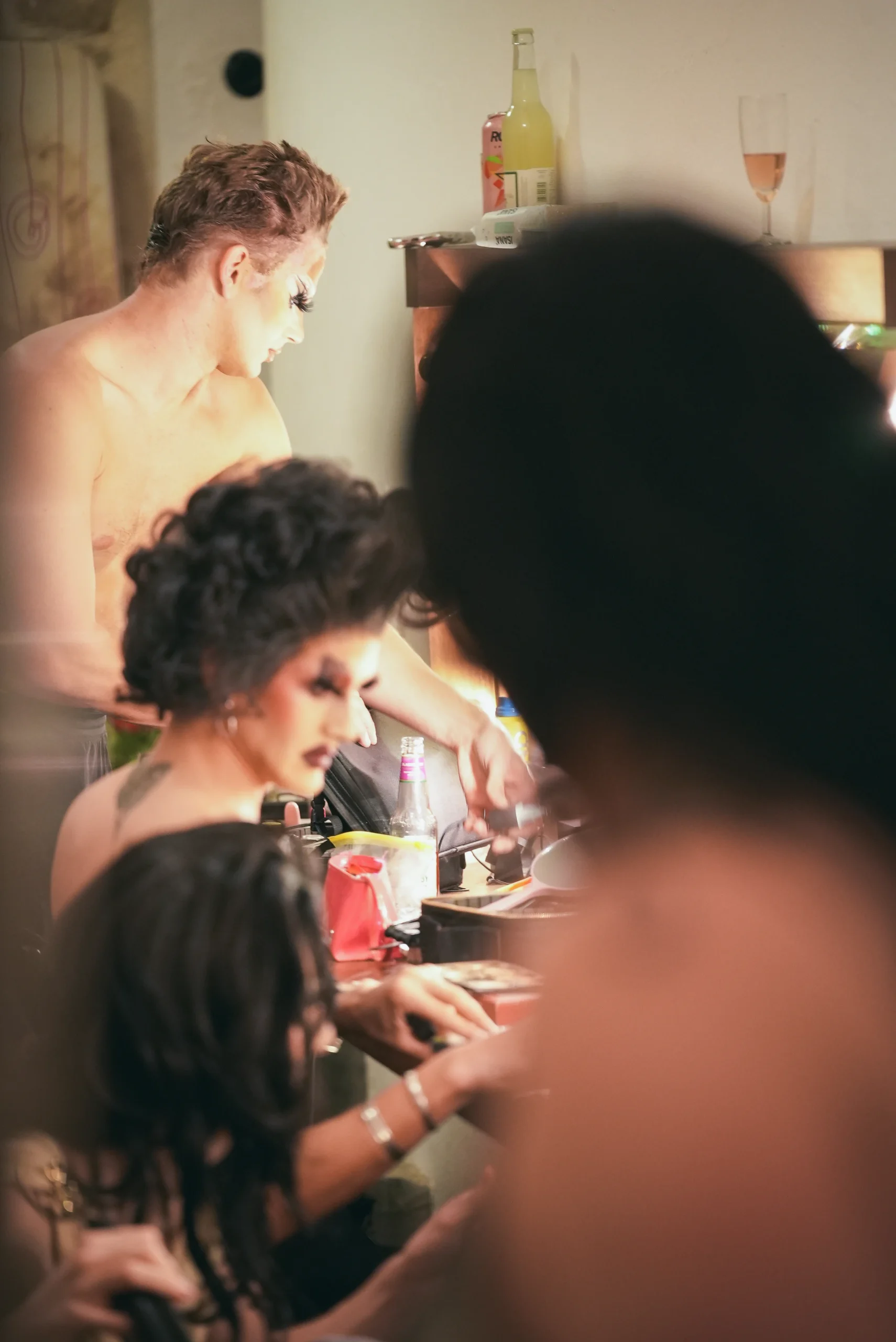
Photograph by: Mathis J Horlacher
It all began back in February of this year when the Goethe-Institut Delhi invited Duct Tape to India, the collective’s first time performing in the country. The occasion was Opn Art House, a two-day festival curated by Gaysi Family at the Goethe-Institut / Max Mueller Bhavan in New Delhi. The 2026 edition was themed “Rewriting Indian Classics” and brought together 50+ artists across an art bazaar, an exhibition and community activities.
It also puts two very different queer worlds in conversation. India decriminalised same-sex relations in 2018, when the Supreme Court read down Section 377, and queer artists have spent years building visibility, community and income where acceptance is still uneven.
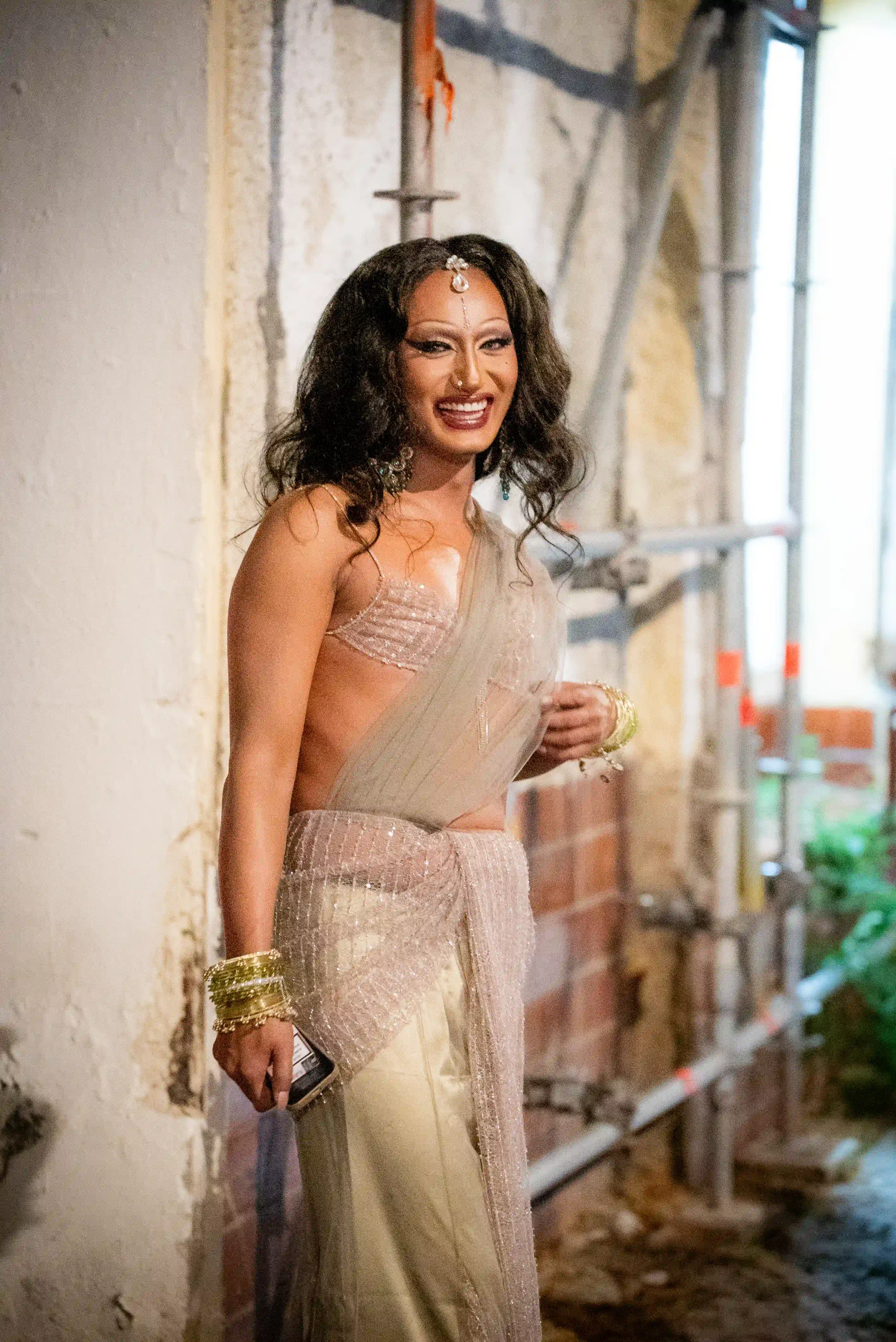
Photograph by: Mathis J Horlacher
Berlin has a long-established queer nightlife and stage culture, which Duct Tape has grown into theatre-scale productions. Putting artists from both scenes on each other’s stages means sharing what each has built: Berlin’s production scale and institutional support on one side, India’s community-led, experimental, often self-funded drag scene on the other.
Duct Tape says its goal is to make drag visible as an art form in its own right, for a wider audience. A trip that starts at a Delhi cultural centre and comes back as a Mumbai artist headlining a Berlin theatre is pretty much that in action.
It’s worth being honest that, for now, the exchange still leans on a Western cultural institution to open the door, and the traffic mostly runs one way. But you have to start somewhere, and this is a good somewhere.
And if this keeps going, it could become a blueprint for how queer artists build a circuit that doesn’t only run through London, New York or LA, but straight between Berlin, Delhi and Mumbai. We’d love to see it.
