


There’s something uniquely terrifying about a man who thinks he is the victim in every room he walks into.
Not the loud, obvious villain, or the cartoonishly evil psychopath. But the guy who insists he’s “just misunderstood”. The guy who swears he loves harder than everyone else. The guy who thinks his suffering makes him entitled to your attention, your body, your time, your emotional labour and eventually, your entire life.
That’s what makes the recent 2026 horror movie Obsession so deeply uncomfortable. On the surface, it looks like another horror story about love gone wrong. But underneath all the supernatural chaos and spiralling violence is something much more familiar: the horror of a man who mistakes obsession for destiny. And honestly? The scariest part is that most of us have met someone like that in our lives already.
The internet loves to joke about “male manipulators”, “sad boys” and men who weaponise therapy language after reading one Instagram infographic. But Obsession taps into something darker beneath that meme culture. Bear doesn’t think he is an obsessive monster. He thinks he’s romantic and devoted. He thinks his years of longing make him deserving of Nikki’s love.
That delusion is exactly what makes the “nice guy” archetype so dangerous in horror. Because, unlike traditional villains, these men don’t see themselves as villains at all. They narrativise their entitlement as vulnerability.
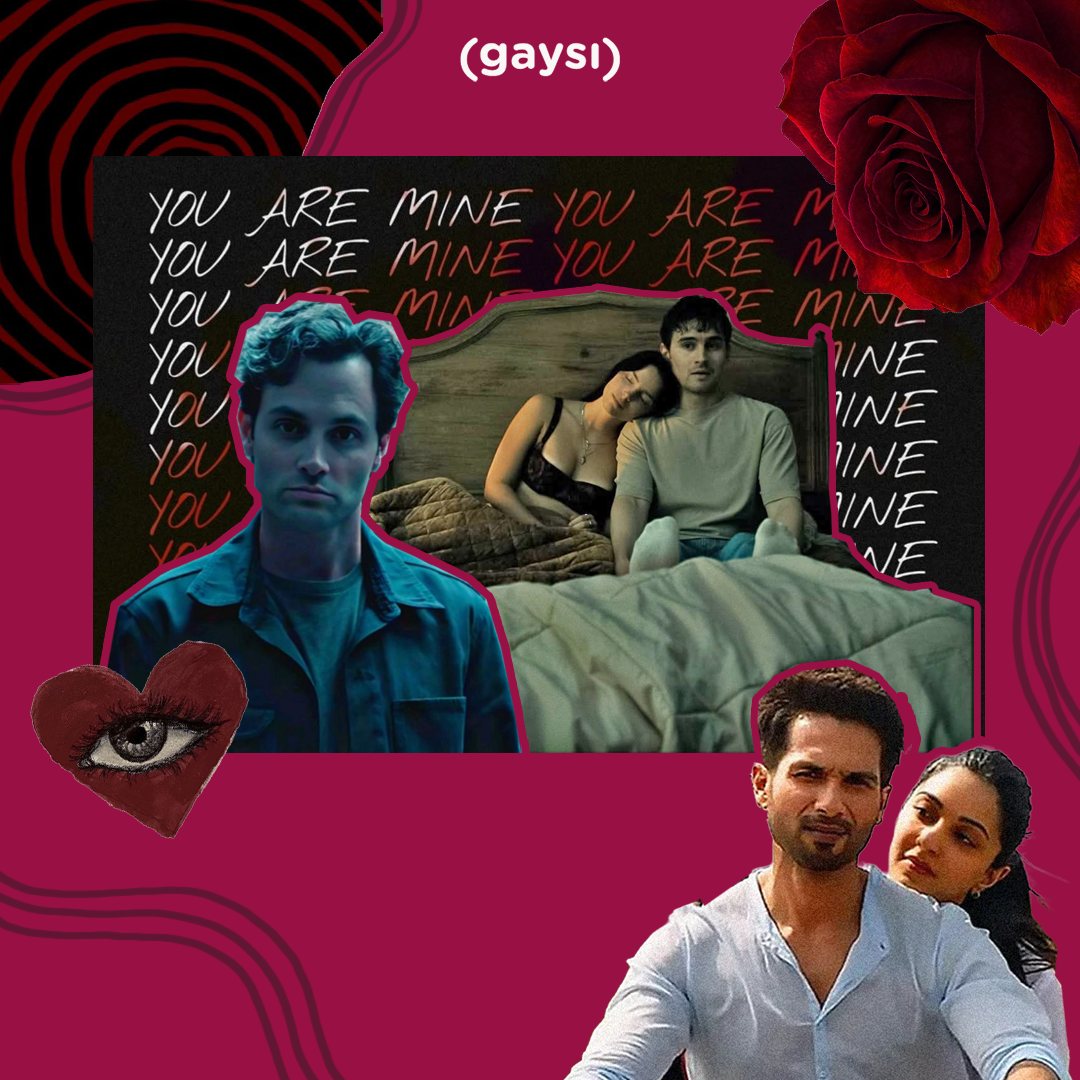
You can see traces of this archetype everywhere in modern thrillers. But honestly, a lot of us first encountered it much earlier through “romantic” films that taught generations of Indian men that persistence, jealousy and surveillance were proof of love. Bollywood has spent decades flirting with this fantasy, from Darr turning a violent stalker into a tragic lover to films like Raanjhanaa and Kabir Singh packaging harassment, possessiveness and emotional volatility as passionate masculinity. Critics and audiences have increasingly pushed back against how these stories normalise the idea that if a man suffers enough for a woman, he is eventually owed her affection.
That same emotional logic exists in characters like Joe Goldberg from You, who was clearly represented as a walking red flag, both by his actor Penn Badgley and the show’s creators. But that framing doesn’t stop Joe from narrating his stalking and violence as poetic love. Or take Josh in Companion, who sees himself as an undeserving, unlucky suitor while trying to turn Iris into his compliant partner. Underneath all the poetic language is the same ugly desire these “nice guy” characters always have: possession. Total emotional control disguised as devotion.
And this dynamic can exist in queer ships too, like with Fernando Vera and Elliot Alderson in Mr. Robot. Vera at first sees himself as some philosophical rogue who can be redeemed by love and has this dangerous spiritual obsession with Shayla before killing her and moving on to Elliot as his new object of desire. Vera’s fascination with Elliot becomes deeply intimate, invasive and emotionally charged, but also disturbing, because he doesn’t just want to defeat Elliot. He wants to consume him mentally and emotionally. He wants to become the person Elliot needs the most.
A lot of queer people recognise this archetype immediately because queer relationships are not magically immune to possessiveness, coercion or emotional entitlement. Sometimes, toxic obsession gets disguised as “protectiveness”, “soulmate behaviour” or “finally being understood”. Sometimes manipulation arrives dressed as emotional vulnerability. And queer audiences especially understand how dangerous it is when someone frames control as proof of love.
That’s why Obsession hits such a big nerve.
What makes Obsession especially tragic is how Nikki still gets reduced to “the crazy, clingy girlfriend” despite being manipulated and gaslit into obsession against her will. It feels painfully familiar. Women in horror are constantly blamed for the emotional damage done to them, while audiences conveniently ignore what pushed them there in the first place. Nikki becomes another example of a woman being punished for a man’s fantasy. Bear wants unconditional devotion, gets it, and then recoils from the horrifying reality of what he created.
The film understands something many thrillers don’t: obsession is not flattering. It’s annihilating.
That’s partly why Obsession feels so relevant to modern dating culture, where surveillance is often disguised as romance. People joke about stalking Spotify activity, decoding Instagram stories or obsessively rereading texts until suddenly it stops being funny. Because obsession always contains entitlement eventually.

Apparently you wrote the movie and every other interpretation is wrong.
This comes across as an extremely vain article.
Learn how to write in a way that expresses opinion when what you’re saying is “YOUR OPINION.”