


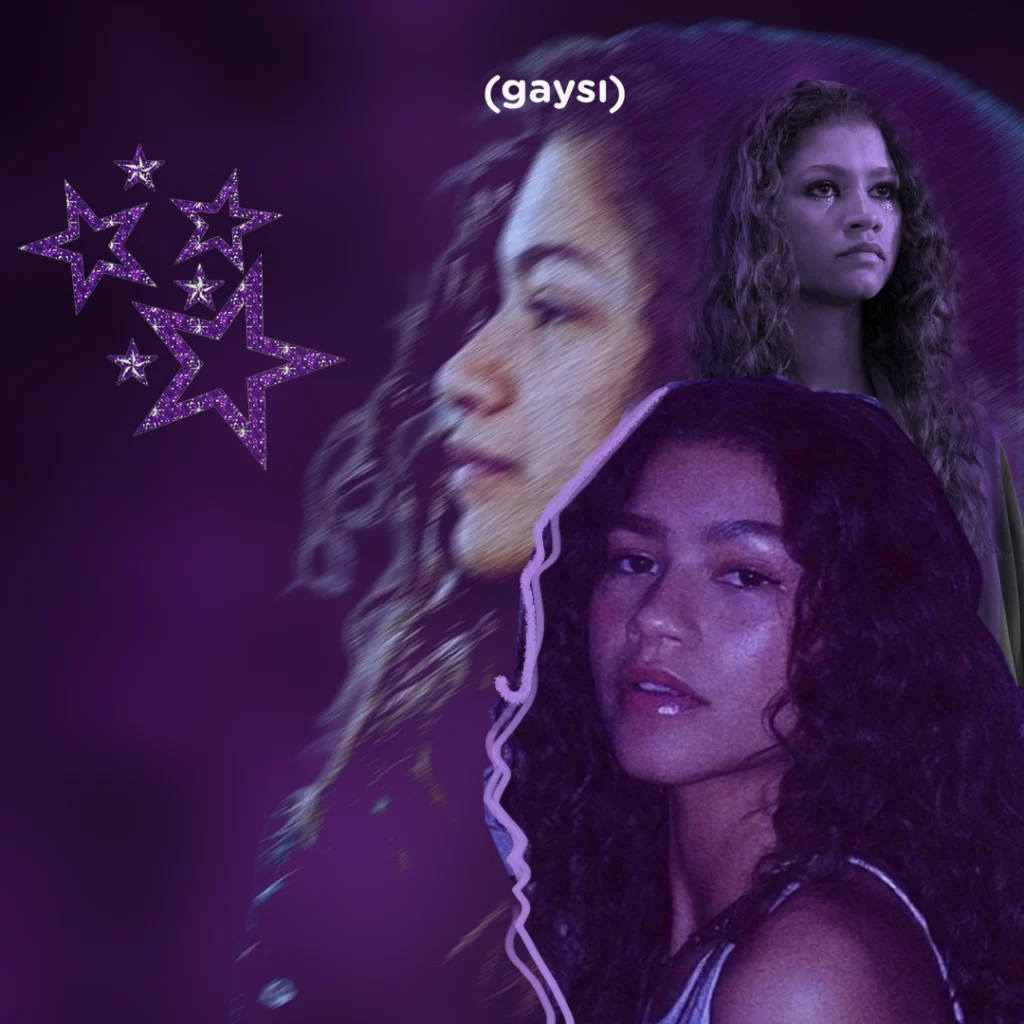
Spoilers for the series finale of Euphoria:
There are some fictional deaths that feel less like plot twists and more like a personal insult.
Rue Bennett dying in the final episode of Euphoria was not exactly shocking. The show had been circling her overdose since the beginning, practically lighting a neon sign above her head that said: this girl is not making it out clean. Rue was always living with one foot in survival and the other in self-destruction. But just because something feels inevitable does not mean it feels fair. And it definitely does not mean it was the only ending she deserved.
For me, Rue was never just “the addict character” (though our femininity differs greatly). She was the girl who made pain funny because sometimes that is the only way you can speak about it without collapsing. She was the girl who could be selfish and loving in the same breath. She was the girl in a purple oversized hoodie, half ghost, half comedian, narrating everyone else’s chaos while barely surviving her own. She was annoying, heartbreaking, manipulative, soft, sharp, needy, cruel, adorable and deeply human.
Basically, Rue was a mess. But she was our mess.
And maybe that’s why her death hurt so badly. Because for those of us who have struggled with mental illness, addiction, disordered eating, binge cycles or any kind of compulsive relationship with the thing that is both comfort and punishment, Rue did not feel like “content”. She felt like recognition.
I have not struggled with Rue’s exact addiction, but I know what it’s like to have your brain become a hostile place to live in. I know what it is like to want comfort so badly that you reach for something even when you know it will hurt you later. For me, that has often come through food, eating addiction, shame, body panic and the exhausting cycle of trying to prove I am “in control” while feeling completely controlled by the thing I am fighting because of my stress, anxiety and depression. So when Rue spiralled, lied, snapped, begged, ran, relapsed and hated herself afterwards, I did not watch her from a safe moral distance. I watched her with the awful intimacy of someone thinking, yeah, I understand that monster a little too well.
That is why turning Rue into another beautiful corpse feels so frustrating. Yes, technically Alamo laced the pills, so this was less a relapse than a setup. But the show still chose to write Rue out through fentanyl on a couch, and that lands the same blow: a queer, mentally ill Black girl killed by the exact substance the audience was trained from episode one to brace for. Her overdose may have made narrative sense, but it also reduces her into the most predictable version of tragedy. Rue did not just die. She became the lesson. The warning label. The grief object. The cautionary tale people can point to and say, “See, this is what happens.”
But Rue Bennett deserved more than being HBO’s glittery anti-drug PSA.
What makes it even more bitter is the timing: Rue dying right before Pride Month. Even if it was not intentional, it lands horribly. Pride is supposed to be about queer survival, joy, mess, chosen family, thirst traps, protest, bad decisions, healing and staying alive out of pure spite. Instead, the show hands us a lesbian protagonist dead on a couch, after spending the season being dragged through humiliation and pain like a designer-clad punching bag.
This is where the “bury your gays” feeling becomes impossible to ignore. Rue’s queerness mattered. Her relationship with Jules mattered, even when it was toxic, confusing, teenage and doomed in the way first queer love often feels doomed because nobody teaches you how to survive desire without making a religion out of it. Rue was not a perfect representation, but that was the point. She did not have to be clean, inspirational, pretty in a correct way or morally digestible. She was a lesbian girl allowed to be ugly in her pain.
But then the show seemed to forget that ugliness is not the same as depth.
By Season 3, Rue often felt less like a character and more like a misery delivery system. Every episode needed her to suffer harder, relapse worse, lose more, crawl further into the dirt. At some point, she stopped feeling like a complicated person and became the universe’s punching bag in a hoodie, proof that the show had mistaken constant suffering for depth.
And honestly? That’s exhausting.
People with mental illnesses are not just our breakdowns. Addicts are not just cravings. Fat people, binge eaters, depressed girls, anxious girls, queer girls with ugly coping mechanisms, we are not content for others to consume and call “raw”. There is humiliation in being treated like your pain only matters when it’s cinematic.
That is the part that hits me. Mental illness is often “too much”. Eating addiction is “too much”. Shame is “too much”. Recovery is not a clean montage. Sometimes it is eating the thing you promised you would not, crying afterwards, pretending you are fine, and trying again the next morning. Sometimes, it is knowing exactly what is wrong and still not knowing how to stop.
Rue understood that, Zendaya understood that and the writing understood it too. Which is why killing her off feels like such a failure of that imagination.
Rue did not need a magical happy ending or a wellness influencer recovery arc. She could’ve relapsed, hurt people, gone back to rehab, had one more awful conversation with Jules, made Gia laugh again, sat with Ali in silence and still chosen, one day at a time, to stay. Because survival is not cheesy. Survival is radical, especially for queer and mentally ill people. Especially for those whose bodies and brains have been treated like a problem to be solved.
Maybe Euphoria wanted to be honest by saying not everyone gets saved. And yes, that is true. But television is still a set of choices. Writers choose who gets punished, gets grace, gets a future, and who becomes trauma content. When queer characters keep dying in the name of realism, we are allowed to ask why realism rarely seems interested in queer people healing.
So yeah, Rue Bennett deserved a future beyond trauma content. Alive, older, still messy, still trying and making it to Pride Month.
