


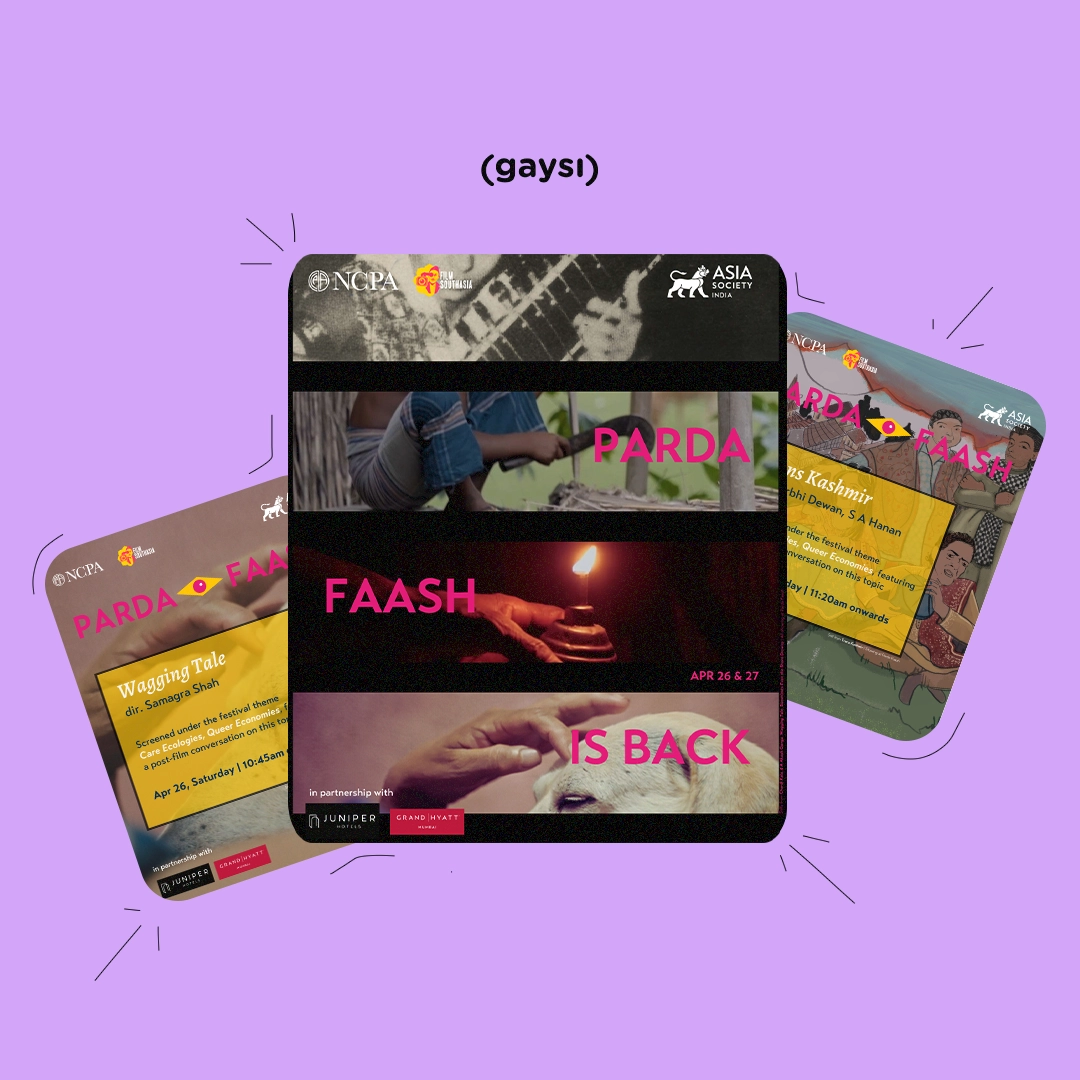
Asia Society India Centre returns this year with the second edition of Parda Faash, a two-day festival of films from and about South Asia. Developed in collaboration with Film Southasia and NCPA, the festival brings together contemporary, non-fiction films from India, Pakistan, Bangladesh, Nepal and Sri Lanka.
Presented over two days (Apr 26-27, 2025) at NCPA’s Little Theatre, the second edition of the festival features nine films, hand-picked from Film Southasia ’24, that collectively offer a nuanced, moving portrait of South Asian identity in the present. The selected works to be showcased at the festival all revolve around a shared theme, The Poetry of Presence.
By giving a spotlight to stories that engage gender, queer ecologies, the precarious conditions of belonging (to land, to landscape, to nation) and the culture of cinema-going itself, The Poetry of Presence considers how everyday people and ordinary creatures cling to this world, resisting erasure and preserving little glimmers of beauty. It reveals the structures of adversity that everyday people face, but rather than giving into despair, it encourages the viewer to recognise and act.
Care Ecologies, Queer Economies
Within this framework, we want to focus on two films that fall under the sub-theme Care Ecologies, Queer Economies and are centred around queerness and community-oriented practices of care and kinship.
The first of the two films is Wagging Tale, which is Nepal-based director Samagra Shah’s debut short documentary film. 23 minutes in length, Wagging Tale chronicles the life of Rupak, a man with HIV who walks the streets of Kathmandu carrying 80 kgs of chicken bones every day to feed the city’s street dogs. The film follows Rupak’s journey, highlighting themes of love, loneliness, and the special connection between him and his four-legged companions in whose eyes he finds a glimpse of what he’s looking for: a family to call his own.
Samagra Shah is a multimedia storyteller who is curious to understand the relationship we share with animals and nature. Wagging Tale received a Special Jury Mention at the Kathmandu International Mountain Film Festival 2024. The film was also a recipient of the Toni Hagen Foundation Documentary Grant 2021.
The second film is Trans Kashmir, directed by Surbhi Dewan and S A Hanan and 61 minutes in length. For generations, the transgender women of Kashmir have worked as matchmakers and performers. But their gender, economic and socio-political realities make them some of the most vulnerable people in the world today. Trans Kashmir offers an intimate look into their unique culture, resilience, and beauty, documenting their growing movement to secure basic human rights.
Surbhi Dewan is an independent writer, director and producer. Her films connect personal portraits to larger socio-political landscapes. She is deeply committed to presenting unique perspectives and humanising ‘the other’ through her films.
Hanan is a television producer, director and an educator. He has produced and directed around 300 hours of television programs that include documentaries, short fiction films, public service announcements, and talk show series for various television channels.
Highlighting Queer Sensibilities
When asked about their intent behind spotlighting and including queer films in the festival, here’s what Inakshi Sobti, CEO at Asia Society India Centre, had to say:
“Parda Faash is about listening for the voices that get drowned out in our lives, and opening up the conversation about how people live in South Asia. Queer films are critical for this exercise. Trans Kashmir and Wagging Tale are both about vulnerable people on the margins of society, but they’re not sermons—they are a chance to discuss, with empathy and curiosity, the vastness of the human experience, the diversity of South Asia, the different ways in which people can be true to their nature in a complex world.
At Asia Society India Centre, we want to bring people into dialogue with each other about issues that matter to our lives in India and the subcontinent; films like these tie together the larger strands of politics, society, identity, history, and culture into one inextricable, questioning knot to ask: how do people live?”
Parda Faash is free and open to the public. To attend the film screenings, please head over to Asia Society India Centre’s website to register. You can also check out their Instagram for more updates.
