


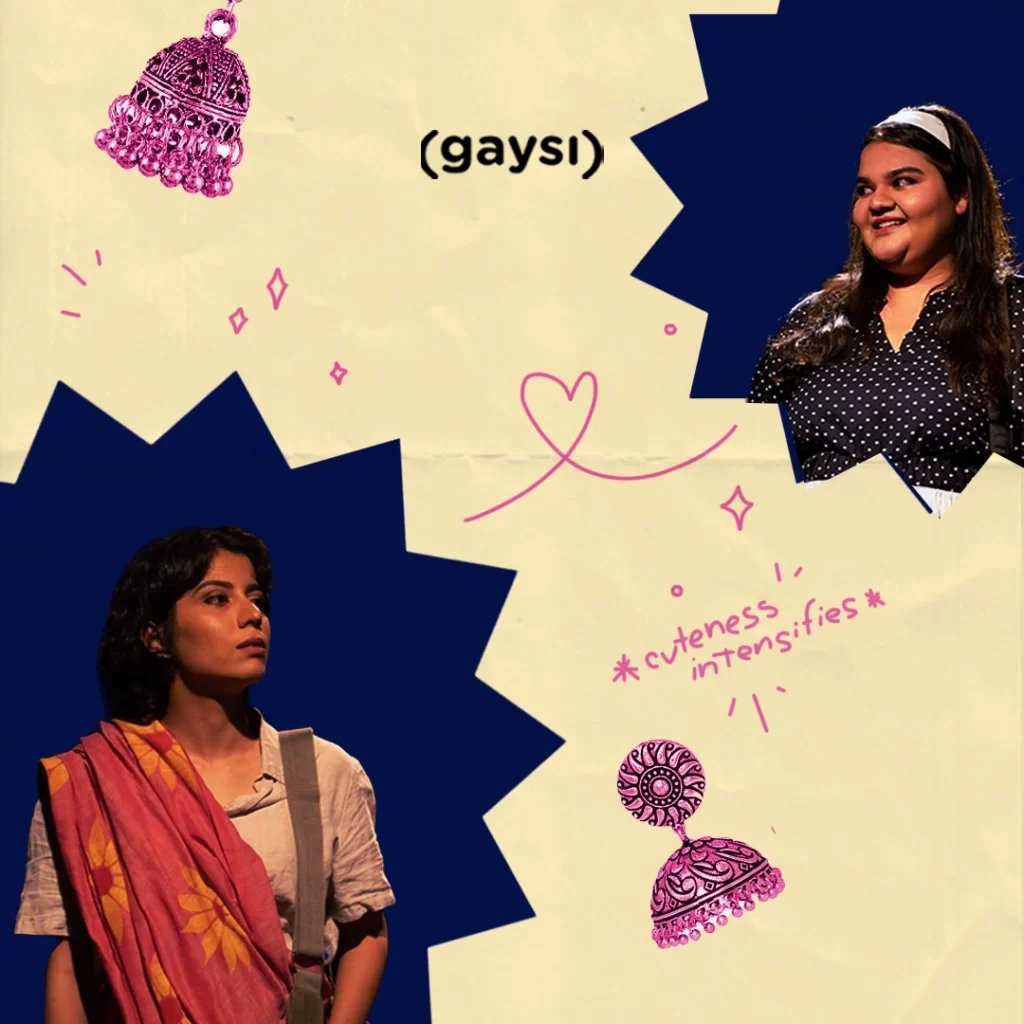
Set in the chaotic 70’s in Mumbai, Jhumkewali follows the sweet sapphic meet cute of Rekha and Bindu, two college girls. The debut play under the theatre group ‘Haus of Bhaus’ caught my eye on social media featuring a simple illustration of a femme and masc women. It debuted at Harkat Studios in Versova, and I knew I had to catch it because the play’s title intrigued me. Scheduled for a late evening Sunday show, the audience gathered and the ambience was ‘cozy and queer’.
Of Jhumkas and Jhalli girls
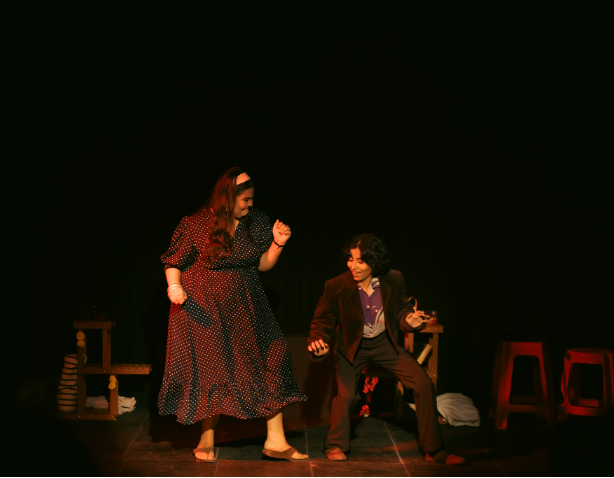
Taking me back to the retro era, we meet Rekha who seems to have lost her jhumki, and if you are a jhumka wear-er, the panic is real, the pair is incomplete, the sense of loss keeps you spiraling for some damn reason! With a boy-ish charm, we crash into Bindu who seems to have her own dual life—one where she wears baggy shirts and another where she has no choice but to wear the crumpled sarees. Bindu finds the missing jhumka and Rekha finds a reason to start the conversation!
Watching the duo on the compact stage fall for each other from sipping chai to wondering the good ‘ol ‘what are we?’ felt so relevant. That against the backdrop of Mumbai locals, college and political unrest felt like we never really left the time still in many ways.
Throughout the play, at the back of my mind, there would be a nagging feeling of what’s the worst thing that could happen next, “should I quickly Google what happened to Mumbai’s lesbians in the 70’s?” such is how our queer minds are shaped, thanks to our history and the mainstream narratives. When I asked this, Nidhi and Ami from Haus of Bhaus, shared
“A lot of queer stories in the mainstream are about the turbulent lives of queer people, especially of those who existed in the past. …The 70’s in India held up a mirror to our present circumstances: economic instability, xenophobia and polarisation, tyrannical authorities. Surrounded as we are by so much pain and violence, it can be hard to imagine that things were ever different––better or worse. Setting a story like ‘Jhumkewali’ in the ‘70s was about re-grounding ourselves in joy; reminding ourselves that queerness isn’t always about turbulence or ‘coming–out’, but about seeing ourselves in each other. That we have queer elders, so many of whom have found love and joy and have survived––if they can, so can we.”
Going off the society’s rails
A canon event in a young woman’s college life is time restrictions. Add this with the concept of queer time, and life feels so unfair– as if the whole world stands against you and your acts of affection. Rekha and Bindu find themselves stuck in this loop of sneaking out, waiting and catching up with each other, all while battling the effects of comphet.
But time seemed to stand still in the ladies coach of the ever running trains of Mumbai. Lo and behold, Bindu and Rekha found their third space, one of the most desi places for queer love to flourish. Trains are also the spaces where class becomes clear and yet blurry at the same time—you are tossed around together and bargain for the same jewelry you spot. The difference is, are you the woman admiring the trinkets or the woman selling them?
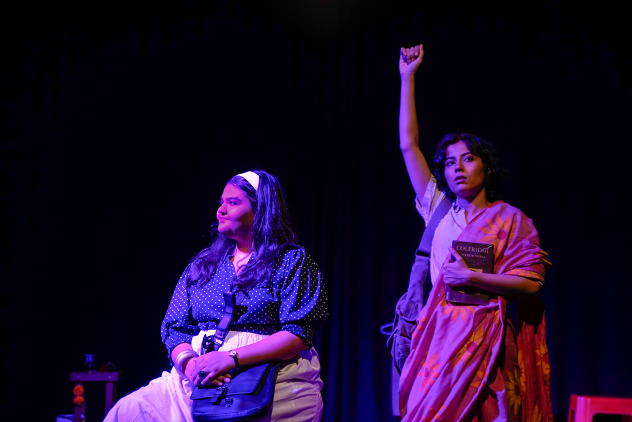
Bindu seeks to impress Rekha despite not being financially secure and sets out to test her entrepreneurial working class spirit in the train. Trains, jhumkas, masc lesbians and their obsession with spoiling their femme princesses got me chuckling and then some.
I had to ask Ami what was the origin story behind bringing lesbians and trains together? They replied,
“The first seed with which the story began was “When do you think they started selling jhumkas on the train for the first time?” Then, “Was there even a ladies’ compartment on the train at the time?
Our conclusion was that the first person to sell jhumkay on the train had to be a woman in love. If you left it up to us, we could argue that everything important ever was invented by a lesbian––what lengths have lesbians not gone to for love? Love to the point of invention and discovery.
When you are dating in Mumbai, especially if you live in a suburb, the local train journey to and from the date is a part of the whole experience. The anticipation and excitement when you are on your way to her in the local train! Checking your hair, re-applying your make-up––all of it within the tender environment of a ladies dabba.”
Love is never just love, and yet it is
From the looks of our laws, Queer love and dating demands one to be political because it is so deeply intertwined with our identities, our families and livelihood. I enjoyed the dynamic between Rekha, who belongs to a stable income family with 3 elder brothers, and Bindu, who was a migrant’s only daughter. Bindu’s initial hesitation and aloofness when she is invited to join marches and unions in contrast with Rekha’s radical approach is something that we still haven’t figured out how to navigate.
Closing thoughts
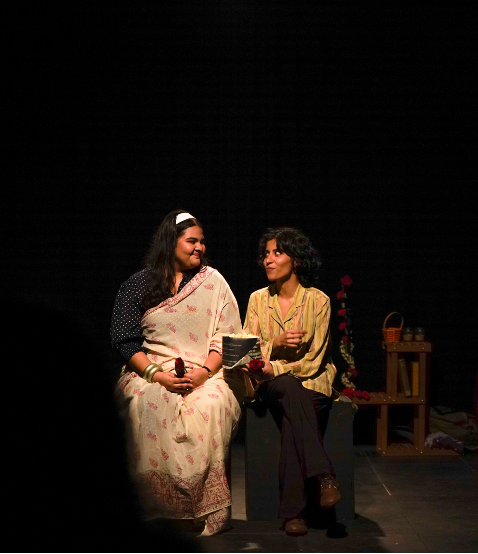
The 45 minute play ends and I’m reminded of how much I have been craving a simple, sweet love story, and it’s sapphic too? I was spoilt for choice! And in the middle of clumsy costume changes, soft pink neon lights falling on the actors and a performance larger than the stage, I felt inspired and envious at the adamant energy of the play and its sheer determination to spotlight queer stories and emerging queer talent. Upon asking about this urgency and enthusiasm, Nidhi answered,
“When you’re an emerging theatre maker, making a debut project can seem incredibly daunting. A lot of the urgency that informed the script was the urgency that we as young, queer artists feel about our own space and voices. As Rekha says: “ab nahi bolenge toh kab?” Our concern was less with perfection, and more with potential.
Our hope for the show was to bring together queer people in public and private spaces to collectively remember and celebrate our elders. Queer people have always been around, and this play is simply about the imagination of a fleeting and fragile past that can evoke hope and resilience for the present and future.”
Busy securing funds and fine tuning as per feedback from their first show, Haus of Bhaus is currently in the process of developing the show into a longer one. Their hope is to collaborate with more queer artists and take the show to different cities and venues over the course of the year! Here’s me hoping you get to catch an hour full of sapphic bickering, very adorable possessive energy, and jhumkis of course!

I witnessed this magic, and applaud the team, the artists playing the characters bring the story to life, being truly realistic. Each and every naunce was well thought out,researched and presented beautifully . The tiny stage seemed like a full screen movie screen. Waiting for more such gems from Haus of Bhaus .