


TW- mentions of abuse, mild spoilers
Monster is a Japanese movie released in 2023. It is directed by Koreeda Hirokazu known for his other masterpieces such as Shoplifters (2019), Nobody Knows (2004) and more. The movie follows two elementary school boys named Mugino Minato and Hoshikawa Yori. The film is quite slow-paced at the beginning as it establishes the situation that the characters are trying to tackle. We are taken through multiple perspectives of the same events and what I liked the most is that the movie doesn’t do any hand-holding as the audience walks through a maze of meanings.
The story is presented in vignettes of non-linear time. It starts with Mugino’s single mother who becomes increasingly concerned about her son’s strange behaviour like impulsively cutting off his hair or turning up at the house with an injured ear and a lost shoe. She finds out that Mugino is being hit by his teacher and she is determined to confront the school and the teacher to get justice for her child. After several visits to the school and insincere apologies from the teacher, we see the perspective of the accused teacher Hori Michitoshi, who himself is a victim of incomplete truths and societal gossip for visiting a local hostess bar. He initially sees Minato as a bully. Finally, we see the situation through the eyes of the two boys themselves. For a minute I thought, “Is there really a monster here in the disguise of Hori sensei? Is the school a secret lab of some sorts?” I was captivated by the idea of the ‘monster’ the movie presents.
The word ‘monster’ can be traced to the Latin monstrum meaning a divine omen (typically inauspicious). Language, more than being a mere communication tool, holds the knowledge of a community. However, the lack of language to describe something does not ensure curiosity and openness to understanding. It somehow automatically turns the unknown into a monster perhaps because that is easier. When you think about it, several local languages across the world do not have colloquial words to express homosexuality. While there are several slang words and phrases, often derogatory, the English word ‘gay’ is adapted as is. When you don’t have any colloquial word to describe being gay, how do you express it?
The film is an excellent example of showing rather than telling. It doesn’t use any words to indicate sexuality or label the children. Instead, we are shown, when Yori and Minato are suddenly too close during a play date and Minato panics and Yori tells him that it’s okay, he feels that way too. Minato runs away, only to come back to Yori later, to accept that he’s not weird, that he has not failed as his dead father’s son. Understanding dawns upon us as we learn that Yori’s father told him that he is sick, and he has a pig’s brain instead of a human brain; when he later claims Yori is “cured” because he likes a girl in his grandmother’s neighbourhood where he must move to and break his friendship with Minato. Sweet Yori however, instantly runs out of his house again to tell Minato that that was a lie. His father then drags him in and Minato is forced to bang on the door while listening to Yori scream in pain.
Jeffery Cohen in his paper Monster Culture (Seven Theses) writes that a monster’s body is a cultural body. He writes, “A construct and a projection, the monster exists only to be read: the monstrum is etymologically “that which reveals”, “that which warns”, a glyph that seeks a hierophant.” Without an audience, the monster doesn’t exist. Without their classmates and their families, Minato and Yori’s hiding spot which is an abandoned train car is the only safe space for their blossoming love. I think the train car may symbolise the children’s desire for mobility away from the shadows of the adults as they pretend to be the loco pilots.
Yori’s question, “who is the monster?” rang in the back of my mind as the movie progressed. It is quite common for mainstream media to depict queerness in a monstrous light but the shifting perspectives do not center the monster in one person. Is it Yori’s alcoholic, abusive, and homophobic father? Is it the societal ideology that perpetuates this prejudice? Is it truly the sweet child Yori? Or his school peers who don’t understand why but know they must bully him? Or the teachers who are no better, because they are people after all and it is better to ignore these things anyway?
It is not possible to hold one person responsible because we are ultimately a part of the bigger societal mechanism of control. However, there are chances given to become better. When Hori realises that Yori and Minato are in love because of a secret code in Yori’s homework, he rushes to Minato’s house to comfort him in the middle of a storm. Hori sensei, who is the talk of the town because it is shameful as a teacher to visit a hostess bar to abate his loneliness. We also catch a glimpse of the headmistress who perhaps appears more as a robot than a human, wrapped in her own grief over the death of her grandchild. Blamed to be the killer of her grandchild, we see she can connect with Minato and share his burden of grief in a way that no one else could. This is when I realised, that perhaps only monsters can understand other monsters, however different their branding may be.
The movie questions the very foundation of the monstrous; if it can be determined in a child who is often considered the pinnacle of innocence, then what saving grace is left for us adults? The movie confronts us to look into the monsters we hold within ourselves and believe in. What monsters are we afraid to let go of and why? If love is unconditional towards a child for only as long as they fit into the strict box of “normal”, does this love then not become a monster? Cohen writes, “These monsters ask us how we perceive the world, and how we have misrepresented what we have attempted to place. They ask us to reevaluate our cultural assumptions about race, gender, sexuality, our perception of difference, our tolerance towards its expression. They ask us why we have created them.”
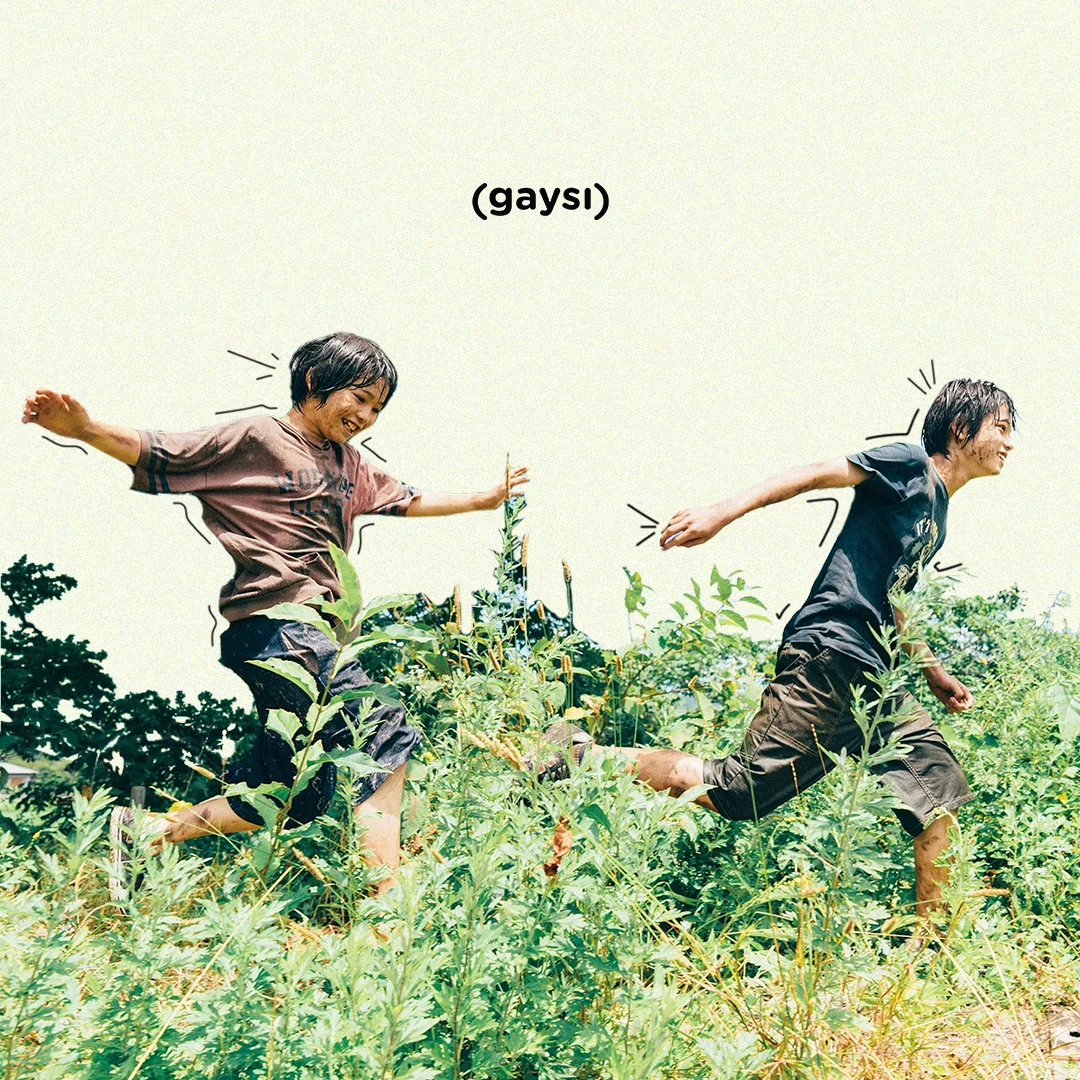
We are condemned to enter the world as blank slates to be filled with ‘knowledge’ and learn the ways of society. Our human existence is often more of a palimpsest where we write, erase, and rewrite all that we learn and unlearn. Children, it seems, are better at understanding this than adults. At the end of the movie, Minato and Yori are running in a field after the storm with the wind in their hair and laughter on their lips. Yori asks if they are reborn and Minato says they are not. They are satisfied with themselves just as they are, soaking in the new sunlight and revelling in their sweet love.
