


Spoiler alert: This article discusses the plotlines of both seasons of Severance!
Like many people who spend a lot of time online, I couldn’t avoid the tweets and online discussions about Severance. And while I’m not the biggest consumer of TV or streaming series, I found Severance intriguing enough to pick it up (no, it wasn’t FOMO, I’m just a curious person, I swear!). I want to talk about an interesting phenomenon I noticed, which is the lack of compliance with heteronormativity among the employees on the “severed” floor.
First of all, if you’ve stumbled onto this article without watching the show, you may be wondering: what is Severance even about? Who are these employees and why are they getting “severered”? Let me give you a quick rundown.
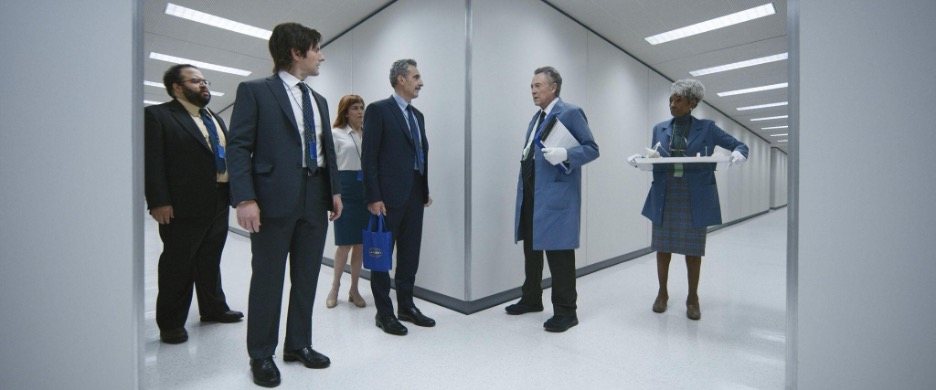
Severance follows the lives of employees of the fictional biotech company Lumon Industries, who decide to undergo “severance”—a medical procedure that splits one’s consciousness into two distinct beings. This involves someone at Lumon drilling a hole into one’s skull and placing a chip in their brain, which ensures the person retains no memories of the outside world while at work, and has no recollection of their job once they leave.
All severed employees work on the “severed floor” of Lumon. Their work personalities are referred to as “innies”, while their real life selves in the outside world are called “outies” (it’s okay, you can laugh). After the severance procedure (which is basically just brain surgery), “innies” wake up for the first time on the severed floor, and are asked questions to make sure they retain no knowledge of the outside world.
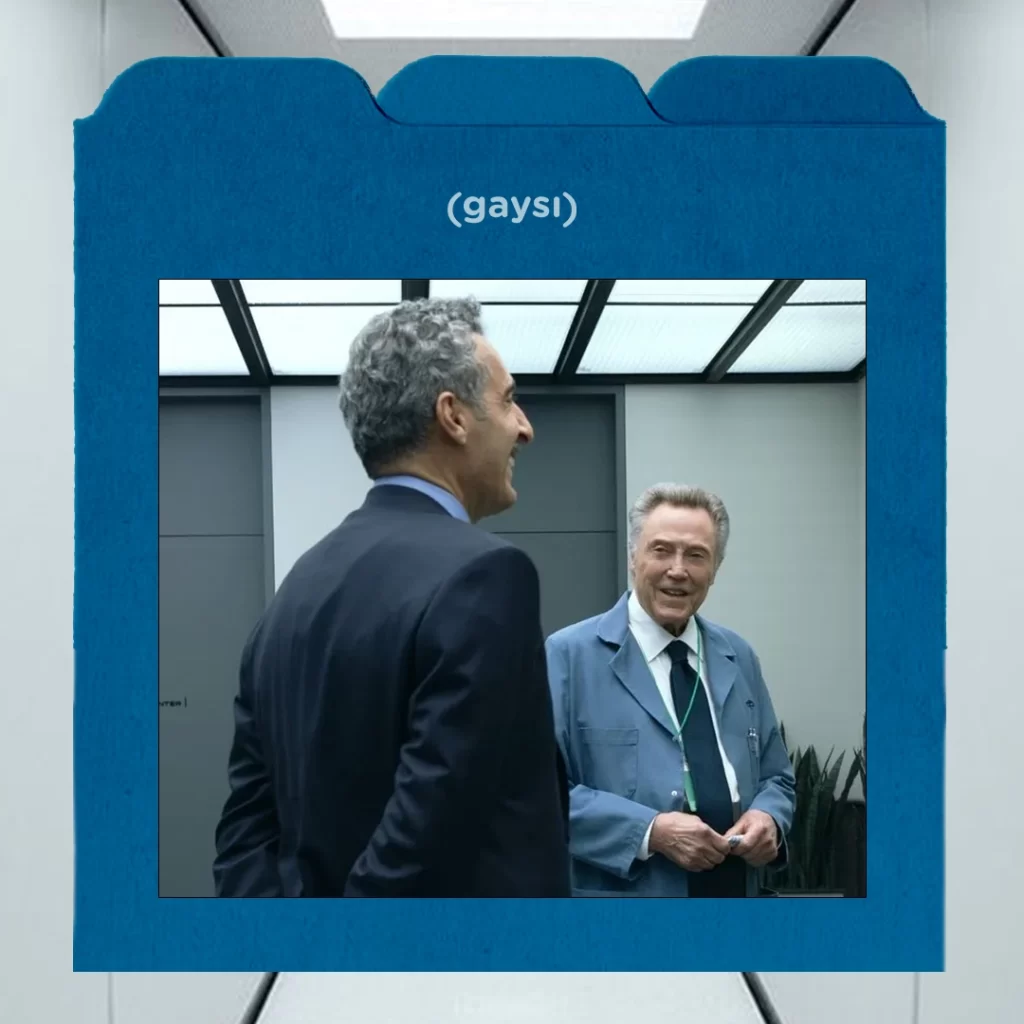
The story primarily focuses on the protagonist Mark Scout (Adam Scott), manager of the Macrodata Refinement (MDR) department, who underwent the severance procedure to cope with the grief of losing his wife, Gemma (Dichen Lachman). However, I’m here to talk about two side characters: Irving B. (John Turturro), another employee from the MDR department, and Burt G. (Christopher Walken), head of the Optics & Design (O&D) department. (Also, both the audience as well as the severed employees themselves are given almost no information about what any of these departments actually do, especially the MDR employees; all they’re told is that the work they do is “mysterious and important”).
Burving: Love At First Infodump
Within the first few episodes of Season 1, we see Irving B. and Burt G. develop feelings for each other. They first meet when Irving is admiring a painting on the severed floor—Burt sees this and lets him know that as head of O&D, it’s his department placing the paintings everywhere. They continue to encounter each other in the hallways of the severed floor, and quickly fall for each other as they bond over their shared love for art.
While there are plenty of American shows that don’t shy away from depicting queerness, it was interesting to see how every character working in their respective departments just accepts it like any other relationship. In real life, the actual queerness of such relationships is something rarely ever left unemphasized—whether in a favourable way or an uncomfortable way—even in the most progressive of spaces. That only ever happens if every single person around you has embraced their own queerness, and that definitely wasn’t the case in the Severance universe.
So, what does any of this have to do with heteronormativity? Well, it’s a result of the severance procedure. Let me explain.
A Severely Interesting Phenomenon
You see, the “innes” in Severance exist in a vacuum of sorts. While they may know some basic facts about being a human being, and maybe the name of an American state or two, that’s about it. Once any character is severed from their regular life, their innie is like a newborn adult, which is the best way I can describe it.
What this means is that innies retain basic knowledge about the world, such as how to walk, talk, and understand simple concepts. They also possess basic skills, like hygiene and communication, but that’s about it. Since their entire identity is tied to their work at Lumon, they’re completely unaware about anything outside the office. They don’t even remember their real names when they wake up for the first time on the severed floor.
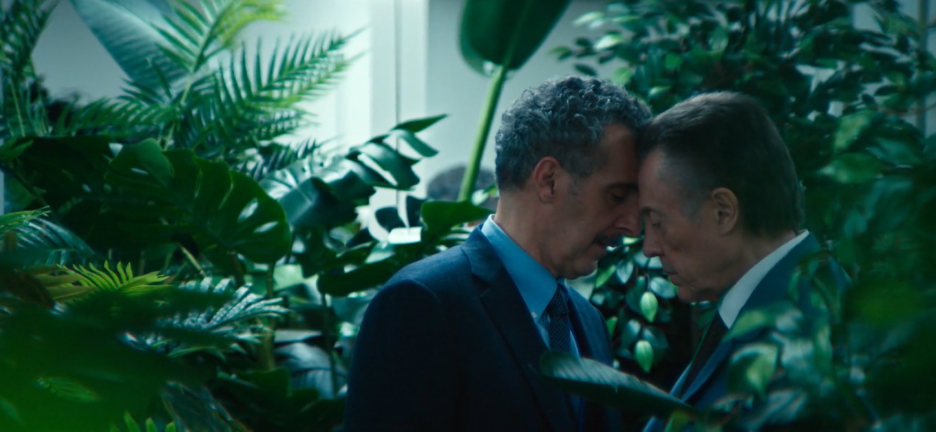
What this ALSO means is that queer characters stay queer; queer outies are also queer innies. In the real world, Burt Goodman—the “outie”—has a husband, and on the severed floor, his innie, Burt G., has strong feelings for Irving B.
Severing The Pain Away
So, why does this matter to me? Well, the very concept of severing yourself from the trials and tribulations of real life, and compartmentalising yourself into any number of innies who can do whatever their singular outie finds undesirable, is just an exaggeration of what we deal with in real life. In Season 2, we find out that Gemma, Mark’s wife, is not only alive but is also being held captive on the mysterious “testing floor” of Lumon, where they have created several different innies of Gemma. This gives us a fair glance at how Lumon is perfecting the severance procedure to eventually market it to the masses as a clean way of dealing with unfavourable and mentally taxing life events.
And one could make the argument that commentary on homophobia does exist within Lumon in subtle ways. For example, their fellow employees may be indifferent to their queerness, but Lumon as an organisation goes to the extent of retiring Burt G. after his relationship with Irving becomes public knowledge. But that’s the management of the company, not the severed employees, and this distinction is important to consider when you think about the difference in socialization between severed innies and anyone else in the Severance universe.
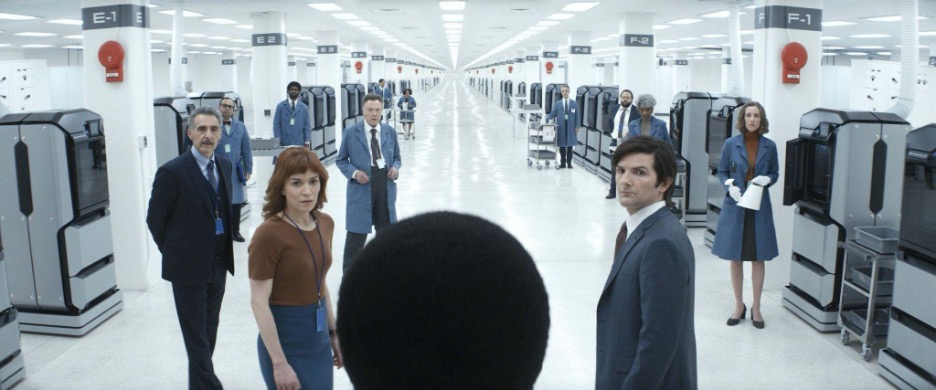
In short, the innies aren’t taught to be homophobic; they lack the socialization that makes people in the outside world discriminatory. When Dylan (Zach Cherry) from MDR disapproves of Irving going to visit Burt in his department, it’s not a homophobic reaction by any means; he’s just worried about what could happen to Irving because of the rumours of a past violent war between both the departments.
Irving is the only character whose backstory is yet to be fully explained. We only get a few clues about his outie’s past—besides the fact that Irving was collecting information about Lumon employees and investigating the company, all we know is that his father was in the US Navy, and that Irving himself has served in some branch of the US military. Fans have used this information to theorize that Irving’s outie may have experienced homophobia and sexual repression during his younger years. Another nod to this theory comes in season 2, when outie Irving tells outie Burt that he’s never been loved before. Nevertheless, with a third season in the works, it will be interesting to see how Irving is brought back as a character, and whether his queerness will be explored in a new light. We’re severely missing him. (sorry.)
