


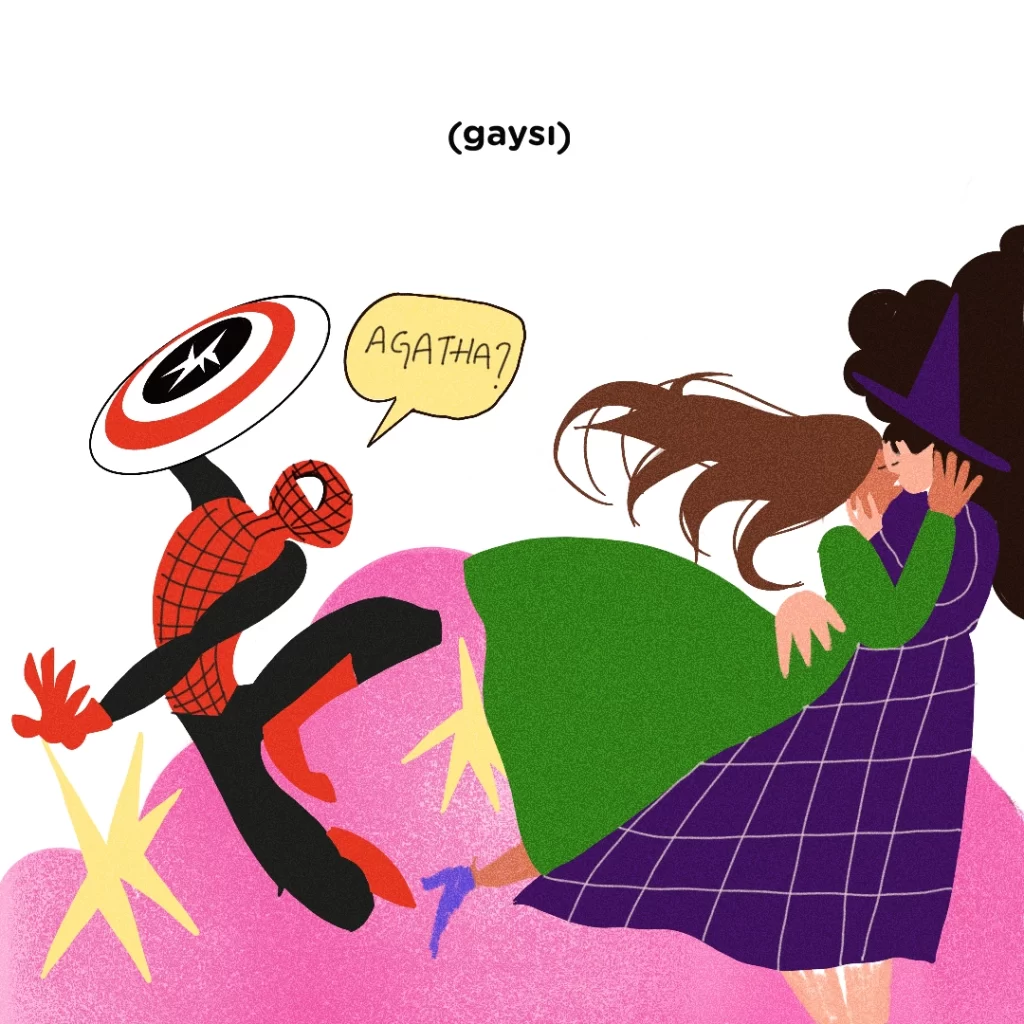
In 2024, Marvel Studios released Agatha All Along, an American miniseries that is part of the Marvel Cinematic Universe (MCU). The eponymous protagonist is a lesbian witch and the series also features the first MCU lesbian kiss. There is also a gay Wiccan who proudly displays the slogan ‘Trans Lives Matter’ in his bedroom.
It is heartening to see prominent and positive representations of LGBTQ+ characters by a big studio like Marvel. This is both a reflection of the wider acceptance of alternate gender and sexual identities and could also lead to greater inclusivity in the socio-political space.
In Agatha All Along, being a lesbian witch connotes freedom, power and self-assertion. However, historically, people with alternate sexualities have often been conflated with monstrous and supernatural figures and have been consequently persecuted. This conflation stems from the fear that witches, vampires, gay and trans people have inspired since they all defy mainstream norms, moral codes and religious beliefs.
For instance, from the 15th to the 18th century, Europe witnessed witch hunts that targeted women who lived together. These women were accused of forming ‘covens’ where they were accused of practising witchcraft. Men were accused of sodomy (same sex sexual acts) which was considered unnatural and part of devil worship since Christianity explicitly forbade it.
The punishment meted out for witchcraft, having same-sex relations and effeminacy (which was seen as perverse) was the same, death by burning. This was in accordance with Emperor Charles V’s 1532 penal code that described “sexual acts contrary to nature” and witchcraft as punishable by being burnt at the stake.
So, for example, in 1618 Bruges, Magdaleene and Mayken were accused and tried for homosexuality and witchcraft. Homosexuality was considered a sin and exorcisms were carried out to try and rid people of the demonic possession that had supposedly made them homosexual.
Mary Shelley’s Frankenstein (1818), a foundational Gothic horror novel, presents a monster who is an unnatural creation—not a “real” man. Gender theorist Judith Butler notes that the monster exists in a “liminal zone of gender.” His rejection by society for being “unnatural” echoes trans and transgender experiences, particularly the struggle for recognition, identity, and acceptance.
The relationship between LGBTQ+ fiction and monstrosity can be traced in similar Gothic novels that became popular in the late 18th and the 19th century. Some Gothic authors were in the closet, gay but afraid to express their true selves publicly as homosexuality was criminalized at the time. So, in their writing, the anxiety over their own supposedly sinful and secret desires was coded and transferred onto the monsters they wrote about. For example, Bram Stoker, the author of the 1897 Gothic horror novel Dracula, was a closeted homosexual, and the novel contains some gay subtext.
Bram Stoker began writing Dracula as Oscar Wilde was imprisoned for homosexuality—an event that likely influenced Stoker’s conflicted expression of same-sex desire. Stoker’s internalized fear, shaped by Church and State condemnation, surfaces in Dracula’s homoerotic undertones, masked by the vampire’s monstrosity. Jonathan Harker feels “a wicked, burning desire” as male vampires approach, and Dracula declares regarding Harker, “This man belongs to me!” For it is part of the queer lore of the male vampire that he penetrates both men and women to drink their vital fluids and is also the one to receive the fluids, subverting conventional gender roles.
The lesbian vampire trope gained popularity in the late 19th and early 20th centuries but, like Dracula and Frankenstein’s monster, was villainized. Their sexuality, same-sex desire, and supernatural power challenged the gender norms expected of “good” women. The trope began with Sheridan Le Fanu’s 1872 novella Carmilla, where a female vampire’s desire for the narrator is clear: “It was like the ardour of a lover… hateful and yet overpowering.” Same-sex desire was portrayed as corrupting, with vampirism used to mask queer expression in Gothic fiction.
Carmilla saw a resurgence in cult popularity in the second half of the 20th century when many movies were made based on the trope of the lesbian vampire like Dracula’s Daughter (1936), Blood and Rose (1960), The Blood-Spattered Bride (1972) and Vampyros Lesbos (1971). However, even in these movies, the lesbian vampire was depicted as someone monstrous and immoral, preying upon innocent conventional young women.
It is only towards the very end of the 20th century, as LGBTQ+ people gain greater acceptance in mainstream society because of political and social movements, that the media starts depicting positive LGBTQ+ characters, including those that were supernaturally empowered by their monstrosity. The homoerotic overtones in Anne Rice’s The Vampire Chronicles suggests a fetishisation of vampires and an admiration of their ability to live outside social norms while freely exploring their sexuality.
In the 2001 film Jesus Christ Vampire Hunter,Jesus fights vampires to protect lesbians, a politically correct take on Carmilla wherein lesbianism is no longer equated with monstrosity.
Similarly, witches were historically burnt at the stake for their dark magic and sexual freedom that challenged heteronormative mores. They were seen as perverted outsiders, paralleling the perception of gay and trans people. However, in the second half of the 20th century shows like Sabrina the Teenage Witch (1996-2003), Buffy the Vampire Slayer (1997-2003) and Chilling Adventures of Sabrina (2018-2020)had prominent characters who were lesbian witches and were depicted as being powerful and heroic. For example, Willow, a witch and one of the main heroic characters in Buffy the Vampire Slayer came out as queer in the show and had a relationship with Tara, a Wiccan.
Horror as a genre has historically been rooted in monsters considered unnatural and immoral, paralleling society’s perception of alternate sexual and gender identities. This has resulted in the creation of characters caught at the crossroads of monstrosity and queer identity. However, times are changing, and the evolving attitude toward LGBTQ+ individuals is reflected in their increasingly positive portrayals in media and the horror genre—whether as human beings or as “monsters” who are not evil, but simply differently empowered.

History is fair to winners. Repressed aspects of living found their way across our culture to today. May they bloom and bring joy in their wake.
Thank you Neha for writing this article. It made a difference to me.