


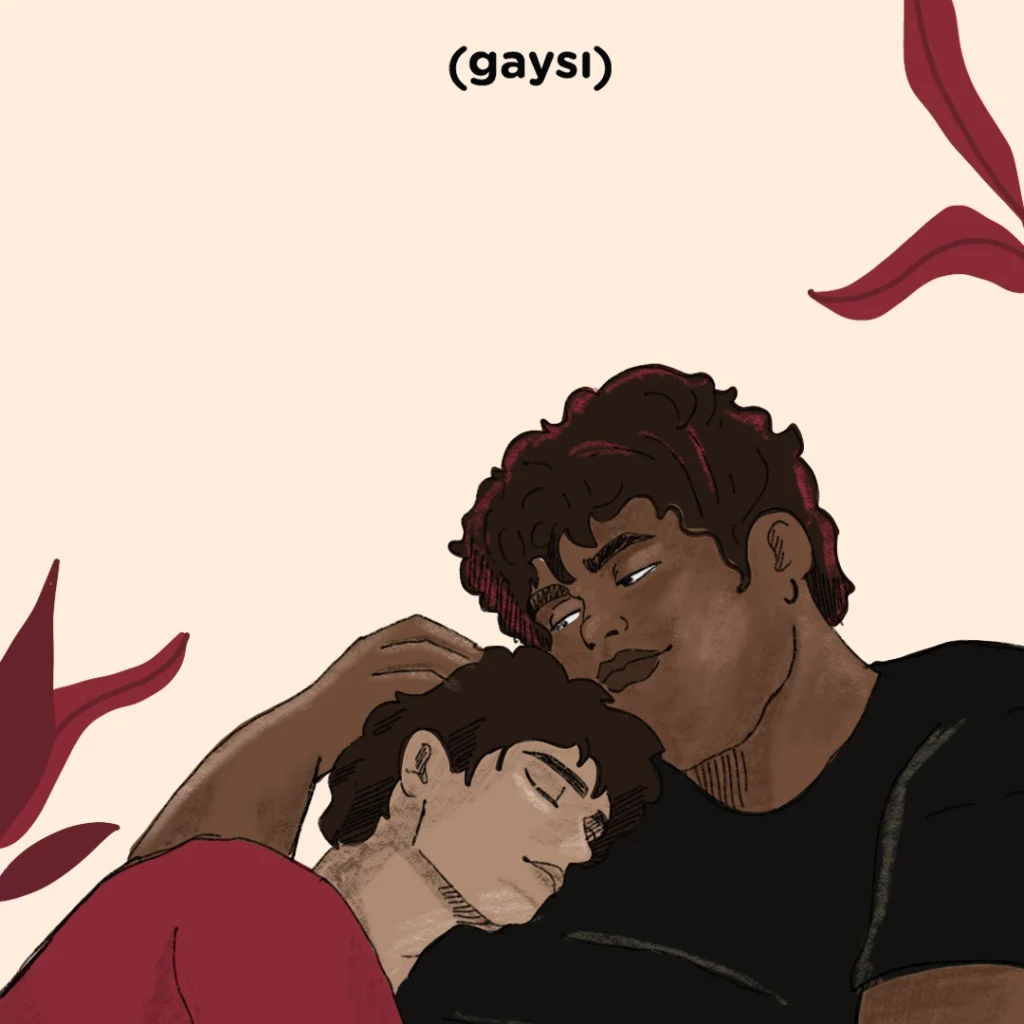
TW/CW: Stalking, abusive relationships, coercive control, obsessive behaviour, psychological abuse, threats, gun violence, blood, and trauma.
This story explores the difference between love and possession, and does not romanticise abuse or violence. (Inspired by Mr. Robot)
At 2:13 am, my phone lit up with a photograph of my boyfriend asleep on our sofa.
Underneath was a message:
I knew him before you did. I’ll know him long after you’re gone.
Arin was beside me, breathing through his first peaceful night in weeks. The photograph had been taken through a gap in the curtains of our Mumbai flat. I checked the balcony door twice, then a third time because fear makes fools of practical people.
“Raza”, Arin said when I showed him.
He didn’t sound surprised. That frightened me more.
I met Arin at a midnight screening of a terrible detective film. He laughed at the wrong scene and spent the walk home explaining why every character deserved a better script. He was a programmer with gentle and watchful eyes and a habit of apologising for things that weren’t his fault.
I was chatty, fond of old action movies, the sort of man who believed most problems could be solved with tea and a convincing bluff. Falling in love hadn’t fixed either of us. It made ordinary life feel possible.
Raza Qureshi had once offered Arin something similar.
He owned clubs, warehouses and enough frightened men to make people call him a businessman instead of a drug kingpin. Arin had dated him for three months. Flowers came first. Then questions about where he had gone, whom he’d spoken to, why he needed friends when Raza could provide everything.
When Arin left, Raza treated the breakup like a theft he intended to avenge.
But Arin wasn’t his first obsession.
Meher, a tattoo artist who once worked at Raza’s club, found us after somebody left a wilted bouquet outside our flat. She’d been his girlfriend before Arin. Raza had tracked her shifts, copied her keys and called the bruises on her wrists a misunderstanding.
She escaped with the photographs of his criminal accounts. Arin later helped her protect the evidence.
“I thought he’d forget me,” she said. “Instead, he found someone he could punish for helping me escape.”
For weeks, we documented unknown numbers, messages, a motorbike outside my workplace, and a voice note calling Arin his destiny. We changed locks, spoke to a lawyer and took Meher’s evidence to investigators.
At the police station, an officer called me Arin’s friend.
“Boyfriend.” I corrected him.
Arin held my hand.
Still, the messages came.
Raza began sending photographs of places we’d visited together, each captioned with the same two words: remember me?
“Maybe if I just talk to him,” Arin suggested.
“No”, I said too quickly.
He flinched. I hated sounding like another man giving him orders.
“Sorry. It’s your decision. But you don’t owe him a conversation.”
Arin studied me. “That’s the difference, isn’t it?”
“Between what?”
“You and him.”
Three nights later, we attended a queer film fundraiser in an old single-screen cinema.
Volunteers watched the doors, and two officers waited nearby; after Meher’s testimony, the police warned us Raza might retaliate. I wanted Arin home. He wanted one evening where the city didn’t belong to his ex.
Halfway through the closing credits, the projector died.
A man stepped into the aisle, applauding.
Raza wore a white shirt and a smile that looked polished to the point of cruelty.
“Arin”, he called, as if they’d arranged dinner. “Come home.”
“This isn’t my home,” Arin answered.
Raza turned towards me.
“You think he is yours now?”
“He isn’t mine. That’s what you don’t understand.”
“I knew him before you. I know what’s inside of him.”
“Then you should know what no sounds like,” said Meher, emerging near the exit.
His smile faltered.
Raza reached for his waistband. I moved toward Arin, but Arin stepped between us, palms raised.
“Everyone, get back,” he said.
The gunshot cracked through the cinema.
Arin folded, one hand flying to his abdomen. For a second, I couldn’t understand the red spreading across his shirt.
Then I was kneeling beside him, pressing my jacket against the wound while somebody called an ambulance.
I’d spent weeks imagining myself saving him. None of those fantasies had prepared me for how small his voice sounded when he said my name.
Meher pulled the fire alarm. Volunteers ushered people out. Raza fled into the side passage, but the officers outside intercepted him.
I heard the handcuffs close.
He kept shouting Arin’s name.
Arin was breathing. I kept holding his hand until the paramedics took over.
At the hospital, the surgeon told us the bullet had missed his spine and that he’d survived surgery.
Recovery would be slow. I sat beneath fluorescent lights with blood on my sleeves, shaking.
When Arin woke, he looked at the dressing across his stomach.
“Please tell me you didn’t do anything stupid.”
“I considered a heroic monologue. Apparently those are medically useless.”
He laughed, then winced.
There would be statements, court hearings and nights when he’d wake convinced somebody was outside. Meher called on the third morning, not to ask about Raza but to ask what Arin needed.
Arin squeezed my fingers.
“Does this mean I belong to you now?” he asked, trying to joke.
“Absolutely not. You leave your socks on my floor by choice.”
He didn’t belong to Raza. He didn’t belong to me. We belonged beside each other, and that was enough.
