


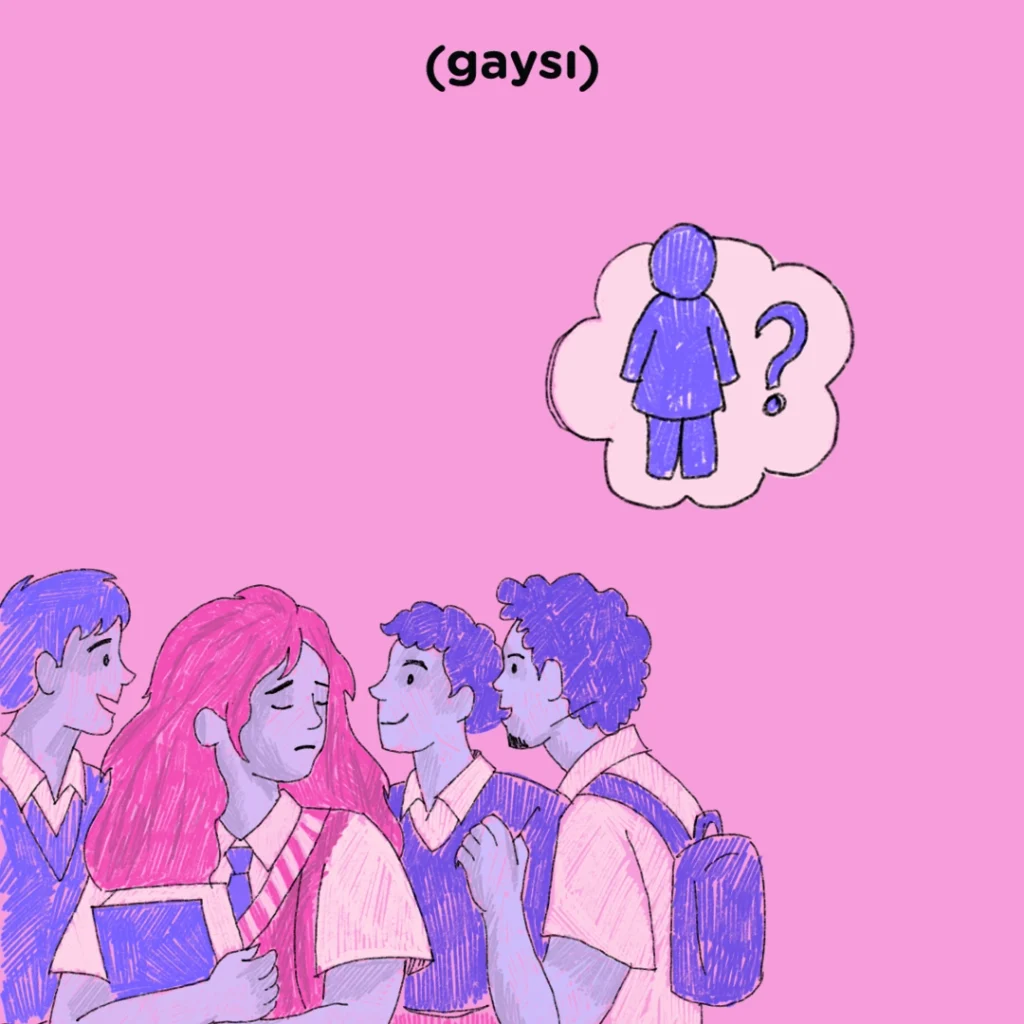
In my late teens, I thought not being sexually attracted to boys made me a good girl. I had grown up in a world where a girl’s respectability was tied, in part, to how little she seemed to want. I did not question my lack of attraction very much then. If anything, I thought it worked in my favour.
In my twenties, I began to wonder whether something else was going on. I could find someone good-looking, enjoy their company, and become fond of them without experiencing sexual attraction. The feelings other people seemed to describe so casually did not come to me in the same way. I wondered whether I was asexual because it was the closest explanation I had.
During my PhD research in queer history, I came across the term demisexuality. It describes a pattern in which sexual attraction develops only after an emotional bond has formed. I began reading about it and recognising parts of my own experience. I am still not entirely certain whether I identify with the label, but it gave me a way to understand something I had struggled to explain. My experience was not simply an absence of attraction. Attraction, when it happened, seemed to depend on a kind of emotional closeness that could not be produced on demand.
I have experienced sexual attraction towards four people in my life. Each time, I had known the person for a considerable period. There had been conversations, familiarity, trust, and an emotional attachment that had developed over time. Only then might sexual attraction emerge. Might is the important word. Knowing someone well does not mean I will want them. Wanting them does not mean they will want me in return, or that we will be able to build a life together. There is no sequence of steps I can follow, no amount of time I can invest that guarantees a particular outcome. I can get to know someone, grow attached to them, and discover that my feelings have changed. What happens next remains beyond my control. For a long time, I thought of this as a question of understanding myself. Eventually, it became a question of the life I wanted to build.
I am in my early thirties. I want to get married and have children. At one point, I imagined having quadruplets: two boys and two girls. Apparently, I had decided that if I was going to have a family, I might as well have an entire classroom at once. The practicalities of raising four children received considerably less attention than the fantasy. Still, I could picture that future. I could imagine the home, the children, and the ordinary business of sharing a life with someone. What I could not picture with the same confidence was how I would meet the person with whom I would build it.
The difficulty is not that I do not want a relationship or that I am incapable of attraction. I know I can experience it. The difficulty is that the time I need to develop feelings cannot be separated from the uncertainty of what those feelings might become. I cannot make myself trust someone faster, manufacture intimacy with a stranger, or persuade myself to desire a person simply because I have reached an age at which I would like certain things to happen.
This uncertainty became more tangible through someone I had known for nearly a decade. For most of those years, we were friends. I had always had a soft corner for him, but over time, my feelings had deepened. We had spoken about our fears, our flaws and the parts of ourselves that are difficult to explain to other people. He understood me well enough to recognise when I was pretending not to care. I have a habit of dismissing things before admitting that I want them, and of becoming defensive when someone sees through me. With him, I did not always have to explain myself.
After nearly ten years of knowing each other, I began to imagine a future with him. This was not a future I had spent a decade waiting for, nor was I trying to turn a friendship into something more simply because I wanted a relationship. My feelings had changed. The familiarity and trust we had built made room for a possibility I had not previously imagined. Eventually, we acknowledged that the attraction was mutual. We also decided not to act on it, for reasons I will not discuss here. They are not mine alone to tell. What stayed with me was the realisation that even when attraction was mutual, and the emotional closeness I needed was already there, a future together was not necessarily possible. Knowing someone for years had allowed my feelings to develop, but it could not resolve the circumstances that stood between us.
The experience made me confront a distinction I had not fully understood before: the conditions that allow me to want someone are not the same as the conditions that make a life together possible. It left me with a different question: what happens when the time I need to develop feelings meets the time I feel I have left to build a family?
I do not want an arranged marriage to become an answer to that question simply because I am frightened. My circumstances, including questions of caste, class, and family, make that route complicated. But even without those complications, I would still want to know the person I was choosing. I would want to feel safe with them, to be understood by them, and to have the possibility of sexual attraction between us. These are not minor details that can be postponed until after a wedding. I cannot assume that attraction will eventually appear simply because a marriage has taken place.
I also do not want to pretend that time is irrelevant. I want to get married. I want children. I want the intimacy of sharing a home with someone who knows me, including the parts of myself I do not readily show. I want the family I have imagined, quadruplets notwithstanding.
This is where my uncertainty becomes difficult to live with. Finding a partner is often described as a process of meeting people, recognising compatibility, and making a choice. For me, there is another question that may take time to answer: will sexual attraction develop at all? I may meet someone kind, compatible, and emotionally available without feeling sexually attracted to them. I may develop feelings for someone only to discover that a shared future is impossible. The longer it takes to discover whether attraction will develop, the longer I must live without knowing whether the relationship I want will be possible.
The word demisexuality has helped me recognise a pattern in my experience. It has not told me how long that pattern will take to unfold, or what it will mean for the choices I make. Understanding myself has given me language for what happens. It has not given me control over when it happens. Sometimes I think about the person I have not met yet. I wonder what he will be like, whether I will recognise what is happening when my feelings begin to change, and how long it will take for me to know that I want him. I wonder whether he will want me in return. I cannot know whether the next person I grow close to will be someone with whom a future is possible.
I am not asking for certainty. No one can know whom they will meet or what a relationship will become. But there is a particular helplessness in knowing that one of the things I want most depends, in part, on a process I cannot control. I can take the time I need and still worry about what that time might cost me.
I want a life with someone. I want to choose them, to desire them, to build a home and raise children together. I want to reach a point at which the future I have imagined is no longer something I have to picture alone. I do not know whether I will get there. Understanding myself better cannot remove that uncertainty, and I do not want to mistake uncertainty for inevitability. The fact that I cannot guarantee the future does not mean I will not have one. But I am in my early thirties, and I am no longer asking only whether I can experience attraction. I know that I can. I am asking whether I will have enough time to find someone I want, who wants me in return, and with whom I can build the life I have imagined.
Will I find you in time?
