


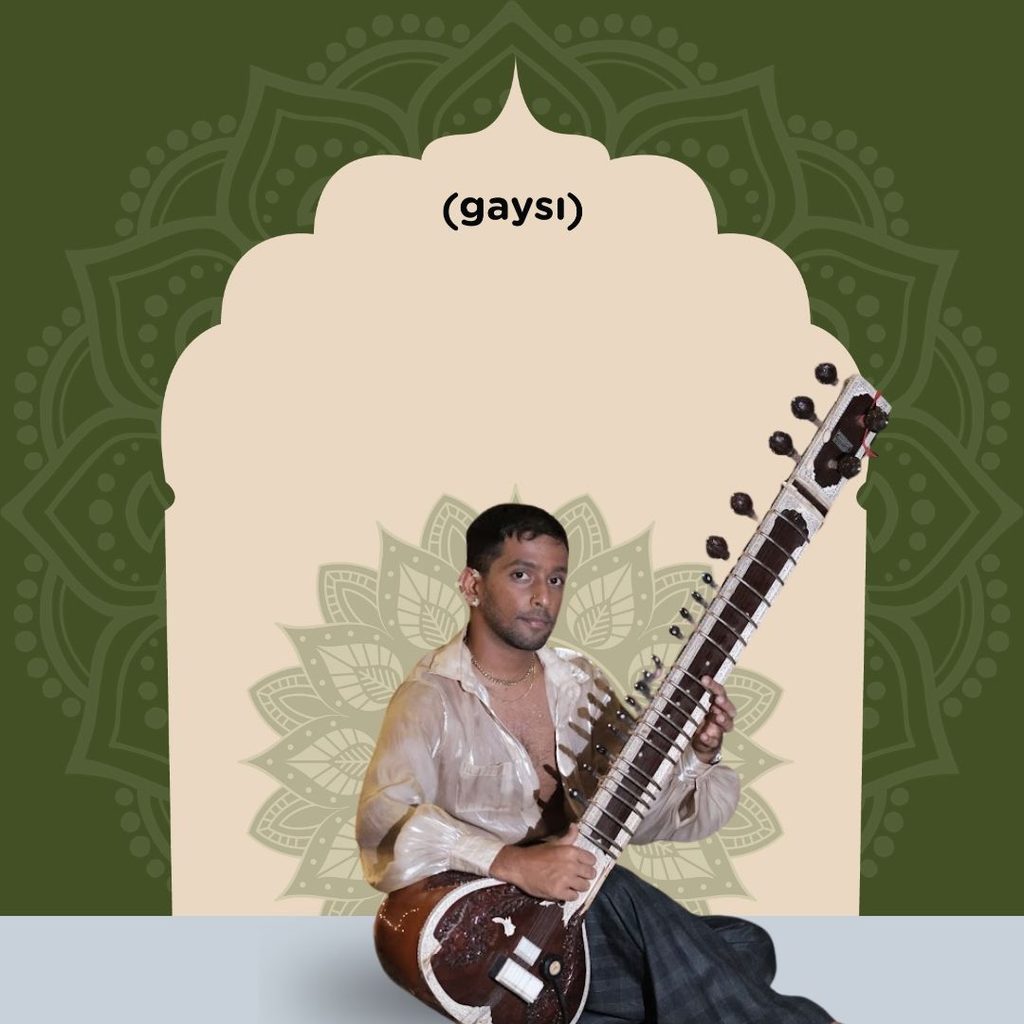
Recovering from a heart attack while pursuing the Mr. Gay India title reshaped Vrujen’s priorities. As he prepares for Mr. Gay World 2026, he speaks about queer identity, creative freedom and his #HeartFirst advocacy platform.
When Vrujen Andhare applied for Mr Gay India in July 2025, he was still recovering from a heart attack. By September 2025, he was competing for the national title without having fully recovered. Now, as he prepares to represent India at Mr. Gay World 2026 in Cebu City in the end of November, the 32-year-old is taking a message beyond pageantry: queer people deserve the freedom to build lives shaped by their own ambitions, relationships and creative pursuits. “Honestly, it feels a little surreal,” Vrujen says. “Winning Mr. Gay India gave me a title, but it also gave me a responsibility. Suddenly, my personal story became something other people could see themselves in.”
His advocacy platform, #HeartFirst, draws on his experience of a life-threatening cardiac event but extends beyond physical health. It connects emotional wellbeing, community care and creative expression, encouraging queer people to pay attention to their needs rather than continually postponing their happiness. “I wasn’t saying yes because I thought I was invincible. I was saying yes because I wanted to give myself the opportunity to find out what was still possible,” he says of entering the national competition while recovering.
A life that refuses to fit into one box
Raised in Nagpur, Vrujen began learning Hindustani classical music at eight. Vocal music and the harmonium eventually led him to the sitar, while poetry, writing and performance provided other ways to explore his creative instincts. He later studied environmental science at the Indian Institute of Science in Bengaluru, bringing together an analytical education and an artistic sensibility.
“I think I’ve always had a slightly restless creative mind. I wanted to understand the world, but I also wanted to express how it made me feel,” he says. Having come out at 19, Vrujen understands identity as something shaped by multiple, sometimes seemingly contradictory, experiences. His professional life spans marketing, content, social media, bartending and event curation. He is also a sitarist, poet and performer, working across Hindustani classical music, electronic influences and spoken word.
In Goa, he is one of the people behind A Rainbow Collective, a queer collective that brings people together through music, drag, art, conversations and community experiences. His drag persona, Sexwax, offers another avenue for exploring the fluidity of identity. “I spent a long time believing that I needed to choose one version of myself to be taken seriously,” he says. “But why should I have to choose between intellect and emotion, masculinity and femininity, tradition and experimentation?”
It is a question he intends to carry to Mr Gay World. Rather than presenting a carefully packaged identity, Vrujen wants to demonstrate that queerness allows room for contradiction, reinvention and complexity. “I’m not going to Mr. Gay World to present a perfectly packaged person. I’m going as someone who is becoming the human they were always meant to be.”
Building community beyond nightlife
Goa has given Vrujen the freedom to develop his artistic practice and build community. Through A Rainbow Collective, he hopes to create spaces where queer people can meet without being expected to perform a particular version of themselves. But he is wary of the assumption that Goa’s reputation for openness translates into universal acceptance. Experiences can differ considerably depending on geography, economic circumstances and whether someone is a local resident or a migrant.“There’s a difference between being welcomed into a destination and feeling that you belong to a community,” he says.
That distinction informs his approach to international representation. Vrujen wants to challenge reductive portrayals of India as either a country with an entirely accepting cultural heritage or one defined solely by discrimination. Both narratives overlook the diversity of queer Indian lives, shaped by caste, class, language, disability, family structures, geography and access to healthcare.
“I want to represent an India where queer people are creating art, building communities, caring for their families, challenging expectations and imagining futures that may look different from the ones prescribed to them,” he says. Vrujen also wants to broaden the understanding of masculinity. A man can embrace traditional Indian textiles, play the sitar, express femininity and perform in drag without any of these identities cancelling out the others.
His ambition is to move the conversation beyond the question of whether queer people are accepted. They should also be able to aspire to intimacy, creativity, professional success and ordinary happiness, without having to justify their place in society through exceptional achievements.
#HeartFirst: health, heart and art
On 10th May 2025, Vrujen experienced a heart attack triggered by a 100% blockage in his ostial left anterior descending (LAD) artery. He required two stents. He is careful not to attribute the event to any single cause, noting that heart disease can have multiple contributing factors and that his experience should not become a simplistic story about lifestyle or blame.
The episode forced him to reconsider his relationship with his body and his ambitions. Recovery did not mean abandoning creativity; it meant recognising that caring for himself was part of sustaining it. “The biggest shift was realising that being alive isn’t the same as living,” he says. “I want to be here for the work I want to do, the people I love, the art I haven’t made and the experiences I haven’t had.”
That perspective underpins #HeartFirst, which Vrujen describes through three interconnected ideas: health, heart and art. It encompasses physical and emotional wellbeing, care for others, and creativity as a means of expression and connection. He also believes wellbeing cannot be treated exclusively as an individual responsibility when people lack access to healthcare, safe environments or supportive communities.
His message extends to substance use and sobriety. Vrujen says he no longer drinks or smokes and believes conversations about addiction within queer communities must be approached with compassion rather than judgement. Support, he argues, should be available before someone reaches a crisis point. “You don’t have to hit rock bottom to deserve support,” he says. “And if you relapse, it doesn’t mean you’re a failure.”
As Vrujen prepares for Mr. Gay World 2026, his priorities extend beyond the title. He wants to question the pressure queer people face to be desirable, successful, politically correct or resilient enough to earn acceptance, often at the expense of their own happiness. For him, a meaningful life includes surfing, playing the sitar, writing poetry, spending time with loved ones and occasionally doing nothing at all. “We deserve to experience life, not just survive it,” he says.
That is the message Vrujen hopes to take to Mr Gay World 2026: that queer Indian lives cannot be reduced to a single narrative, and that representation should make room for people who are complicated, creative, vulnerable and joyful. “I don’t want visibility to be the finish line,” he says. “I want it to be a doorway into actual participation in co-creating spaces.”
