

“You Wanted Chosen Family? Then Choose It Every Day”
A Rainbow Elder’s Call to the Next Generation
I have been part of building queer kinship before it became a hashtag, before it was commodified into Pride merchandise or romanticized in TV dramas. I have sat in living rooms and on protest lines, helping stitch together the fragile threads of safety, love, and belonging for those of us who were cast out of our birth families. I have been called an “adopted grandmother,” a role I didn’t audition for but stepped into with open arms, because I believed still believe in the revolutionary power of chosen family.
But lately, I have found myself asking: what does it mean when chosen family is no longer chosen with care? When younger queers brilliant, brave, beautifully gender-expansive begin to mirror the same neglect, the same silencing, the same disposability we all once fled from?
This is not a general complaint. This is specific. This is personal. This is a letter I wrote to someone I once considered my queer grandson. It is a love letter, yes but one edged with anger, disappointment, and grief. It is also a call to anyone who has ever claimed the language of chosen family: if we don’t show up for each other, especially across generations, then what exactly are we building?
What follows is my attempt to speak, as clearly and honestly as I can, from the place of a rainbow elder non-normative in age, gender, sexuality, and heart asking the next generation not just to build queer constellations, but to sustain them.
To the Gender-Fluid, Gay Man Neglecting His Adopted “Grandmother”:
You don’t get to rewrite the rules of family creating these beautiful, chosen constellations only to abandon your roles when they become inconvenient. You wanted a queer family, one that transcends bloodlines and heteronormative scripts? Then honor that commitment.
This ‘adopted grandmother’ she is not an accessory to your identity. She is not an archival photo for your Instagram. She is a person who, in this radical remake of kinship, took on the role of elder, of wisdom, of care.
And what are you giving her in return? Token attention? A birthday message every other year? A place in your mind only when it’s Pride Month and she happens to fit the aesthetic?
Chosen family is beautiful when it’s about celebration. When it’s about joy, drag, and dance. When Puja runs all the way from Rajasthan to show up for you. But real family whether queer or biological is messy, demanding, and uncomfortable. It asks you to stay even when you’d rather flee.
It’s easy to critique the mainstream for how it discards aging women. But if you cannot hold your rainbow elders with care, you are repeating that same violence. You are not subverting the system—you are becoming it.
You wanted freedom and revolution? That starts with care. Radical care.
Stop chasing applause for how progressive your family structure looks—do the work. Call her. Listen to her. Show up. Otherwise, don’t call her family.
True queerness, true revolution, lies not just in building something new but in sustaining it—with love, with effort, and with the courage to face what chosen family demands. Neglecting your queer elder is not neutral—it is betrayal.
I say this with a heart full of anger and disappointment, and also one that still carries the love of a grandmother for her grandson.
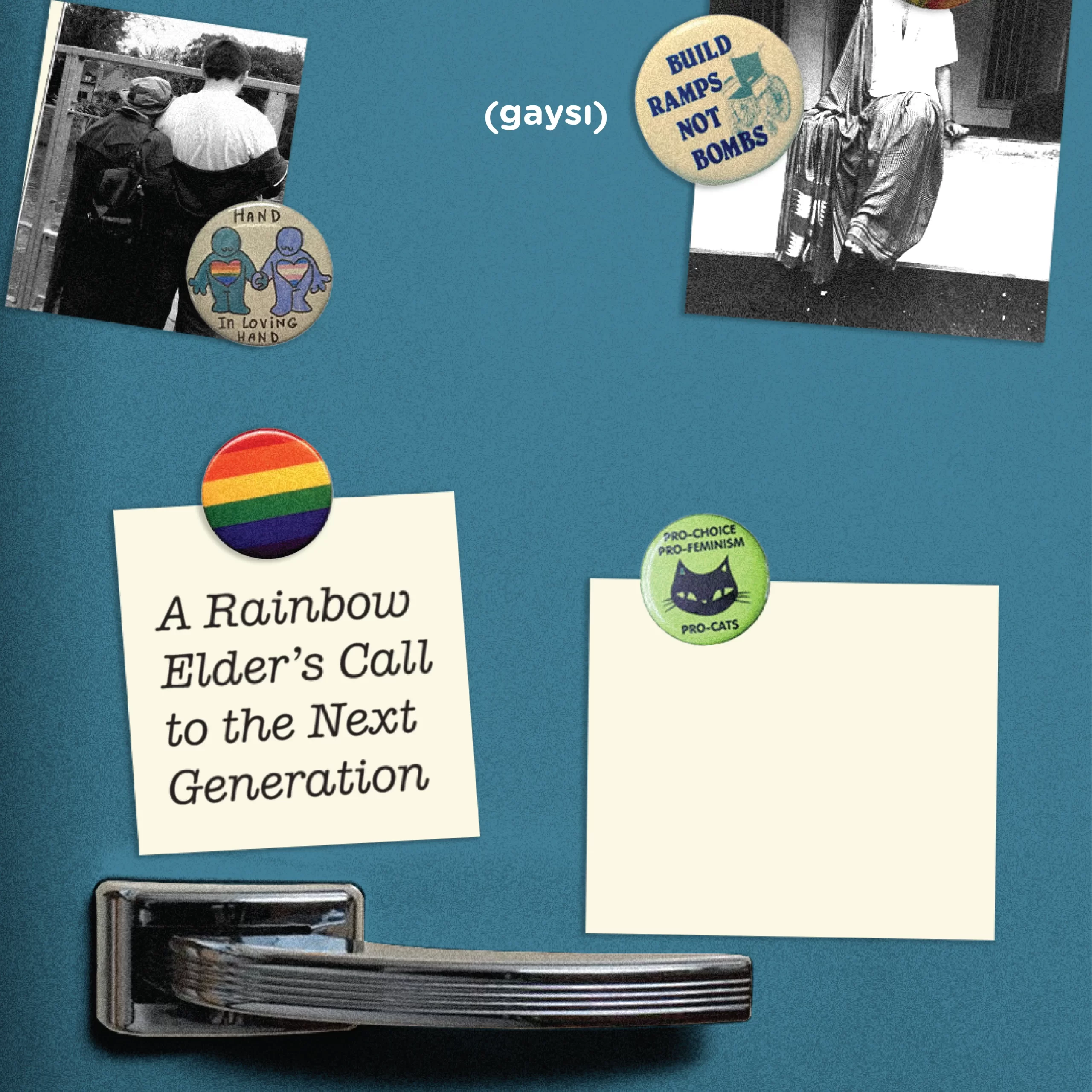
I remember you—draped in a saree at the French Embassy, radiant in your gender fluidity. I keep that photo on my fridge. I remember how proud I felt. I remember your cat, Shereen, and the way you held her—loving, warm, mothering.
Those are the parts of you I cherish. But those parts don’t mean anything unless they translate into sustained, living care.
I am still here. This letter is a door, slightly ajar. My final offering. If you’ve chosen family, then show up for it. Show up when it’s hard. Show up when you’ve messed up. Show up when your elder asks for a moment of presence, a hand, a call.
Because the revolution begins with care.
Because chosen family isn’t just something we create—it’s something we uphold.
