


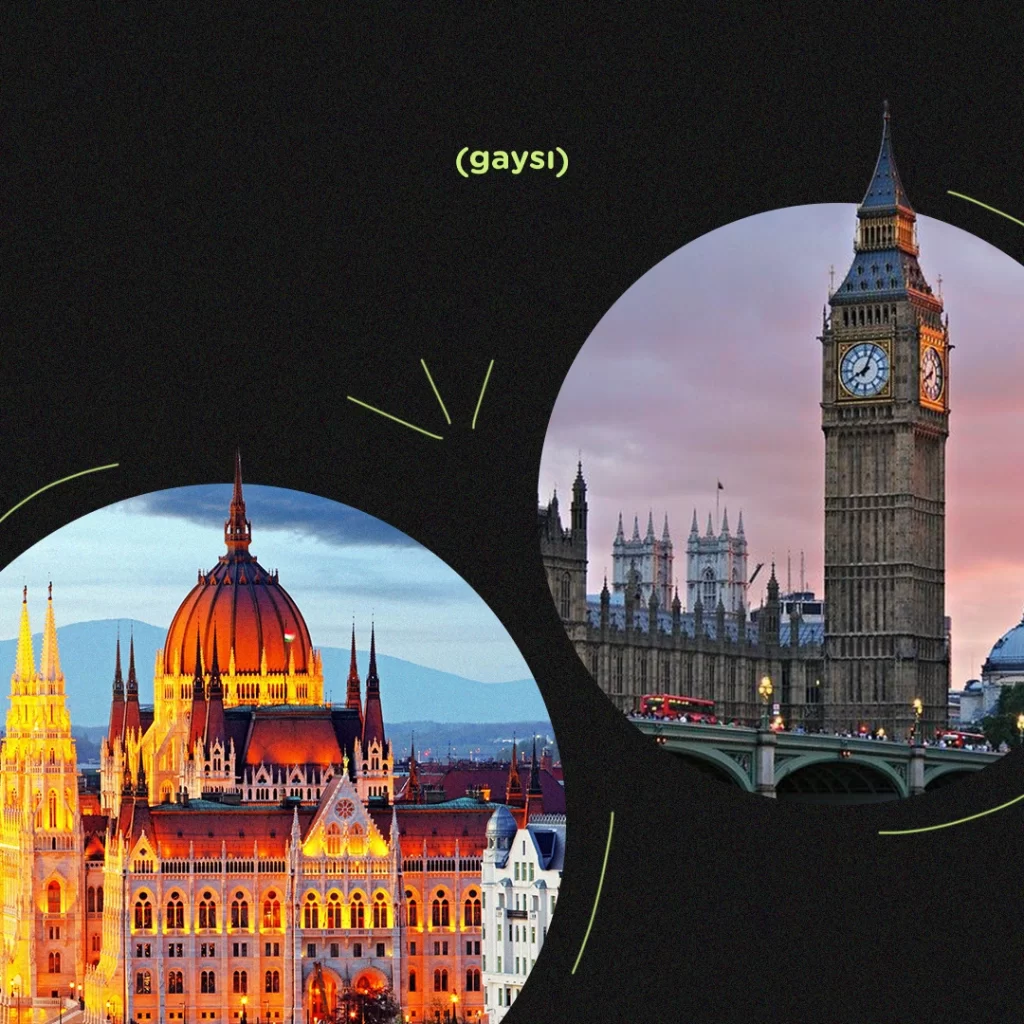
Across the world, governments are introducing laws and amendments that threaten the future of trans rights — all under the guise of “common sense” and “protecting the children.” But what do these shifts mean for queer and trans people in India, where our rights are already on uncertain ground? And how long before such decisions are mirrored by our own government?
United Kingdom: Returning to the Biological Binary
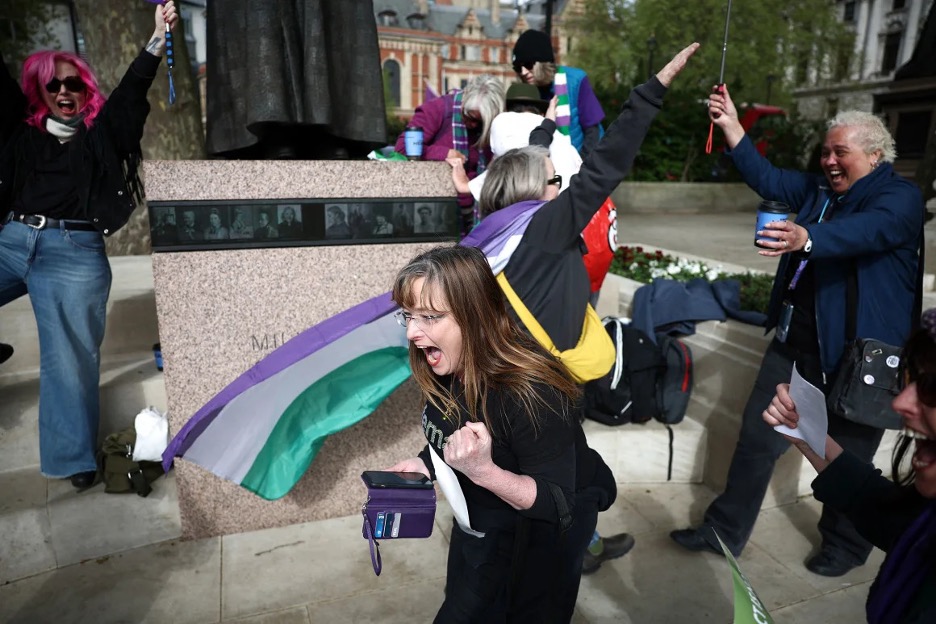
On Wednesday, April 16, 2025, the United Kingdom’s Supreme Court ruled that the legal definition of “woman” excludes trans women under the country’s anti-discrimination law, the Equality Act of 2010.
In a unanimous decision, five judges declared that the terms “woman” and “sex” in the Act refer strictly to “biological woman” and “biological sex,” reinforcing a rigid, cisnormative framework.
The case stems from a dispute triggered in 2018, following the passage of the Gender Representation on Public Boards (Scotland) Act, which aimed to ensure 50% representation of women on public authority boards. Importantly, the law included trans women within this quota.
However, the inclusion was challenged by a group calling itself For Women Scotland, which argued that only individuals assigned female at birth should be counted. The Scottish government defended its position, asserting that trans women with a Gender Recognition Certificate (GRC) are legally recognized as women under the Equality Act and should be protected accordingly.
Following an earlier judicial review, the Scottish government revised its guidance to limit inclusion to only those trans women holding a GRC. But Wednesday’s Supreme Court ruling overrode even this more restrictive interpretation, effectively re-establishing a legal binary that erases the lived realities of trans people.
Although the Court emphasized that trans individuals—with or without a GRC—could still seek protection under the “gender reassignment” clause of the Equality Act, this narrow concession does little to address the broader structural violence being legitimized.
Unsurprisingly, anti-trans feminist groups were quick to celebrate the ruling as a “victory” for so-called “biological women,” echoing a tired and dangerous narrative that pits women’s rights against trans rights, as though the two are mutually exclusive.
This verdict is part of a worrying global trend, where state power and judicial authority are being mobilized to reinforce cis-heteronormativity under the veil of protecting social order. The ruling does not exist in isolation — it sends a ripple effect far beyond the UK’s borders, threatening the fragile ground on which trans rights stand in many other countries, including India.
Hungary: Only Two Genders, No Pride Events
Just a couple of days earlier, on Monday, April 14, 2025, Hungary’s Parliament passed a chilling constitutional amendment that legally recognizes only two binary genders — (cis) male and female — effectively erasing legal recognition for transgender and non-binary people. Under this new law, Hungarian citizens can no longer change their gender markers or legally affirm their identities.
This amendment is more than a bureaucratic shift — it is a violent erasure of existence, denying trans and non-binary people the right to live as themselves within the eyes of the law.
Even more concerning is one of the amendment’s provisions that places the so-called “moral, physical, and intellectual development” of children above most constitutional rights — including the right to peaceful assembly. The only exception? The right to life. In practice, this paves the way for sweeping repression of LGBTQ+ rights under the guise of “protecting children,” a well-worn tactic used globally to justify queerphobia. This codifies the government’s recent ban on public LGBTQ events, which authorizes the use of facial recognition software to identify individuals who attend LGBTQ gatherings held in defiance of the law.
The amendment was proposed by the ruling Fidesz-KDNP coalition and passed easily along party lines, with a final vote of 140–21.
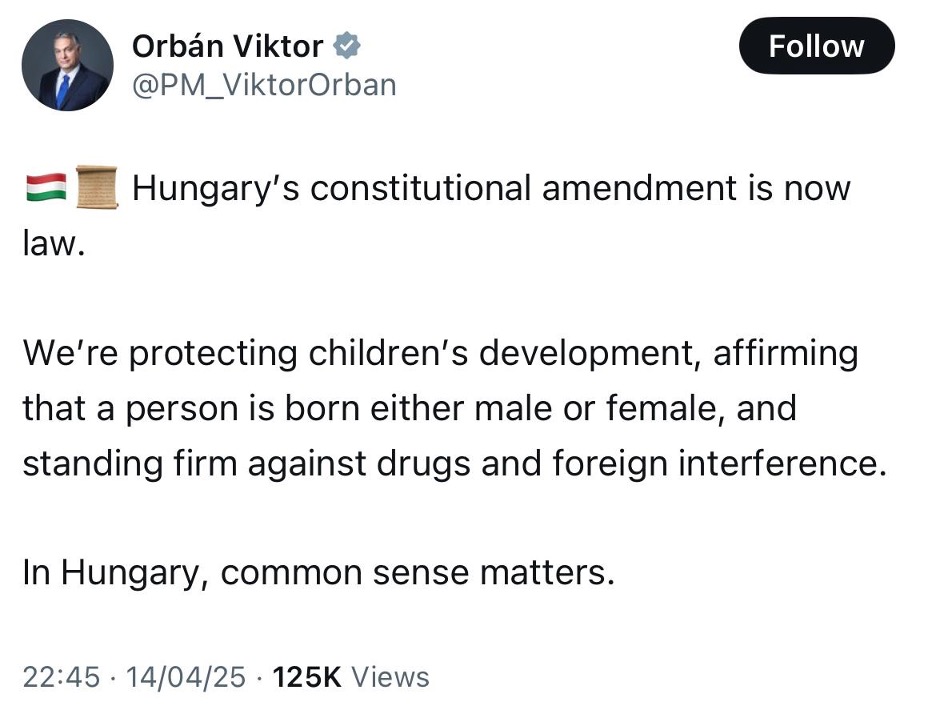
Prime Minister Viktor Orbán defended the amendment in a post on X (formerly Twitter), writing: “We’re protecting children’s development, affirming that a person is born either male or female, and standing firm against drugs and foreign interference. In Hungary, common sense matters.”
The Indian Perspective—Are We Safe From Censorship?
While Indian law does not currently restrict public LGBTQ events or gatherings, these laws and amendments signal a larger global shift toward authoritarianism and moral conservatism—raising concerns that such decisions could influence our own government back at home.
For instance, Hungarian Prime Minister Viktor Orbán and former U.S. President Donald Trump have openly expressed admiration for each other, with many analysts noting that Orbán’s anti-democratic policies have influenced conservative movements in the United States. This cross-pollination of right-wing ideologies should be a warning sign for countries like India.
Just a few weeks ago, organisers of the Pride Parade in Amritsar announced the cancellation of this year’s event following protests by local Sikh organisations. In a public statement, student organisers Ridham Chadha and Ramit Seth said:
“We are a students’ organisation and have been conducting a peaceful celebration/parade in Amritsar since 2019 to connect and uplift the LGBTIA community, mainly focusing on transgender people and their rights… This year, due to opposition, we are informing that Pride Amritsar is cancelling the Pride Parade 2025 scheduled to be held on April 27 at Rose Garden.”
Despite not being officially banned, the pressure from religious groups and lack of state support effectively silenced the event—demonstrating how vulnerable LGBTQ expression in India remains.
Meanwhile, although India legally recognises transgender people as a “third gender,” the framework itself reinforces a binary by placing trans people in a separate category. Current law only allows individuals to be legally recognised as transgender after undergoing sex reassignment surgery—placing unnecessary medical and bureaucratic burdens on gender self-determination.
With limited legal protections for queer and trans Indians, and a ruling government that has embraced religiously conservative values, the question isn’t whether we’re safe—but for how long.
