


In 2013, I incorporated Gaysi Family as a company. No business plan, no investors. Gaysi had existed since 2008 as a blog, and I wanted to take a plunge and see if it could be a sustainable model. It was done out of a whim, one may say, or out of curiosity. I definitely did not go in with the intention, or the conviction, that this would be a success story.
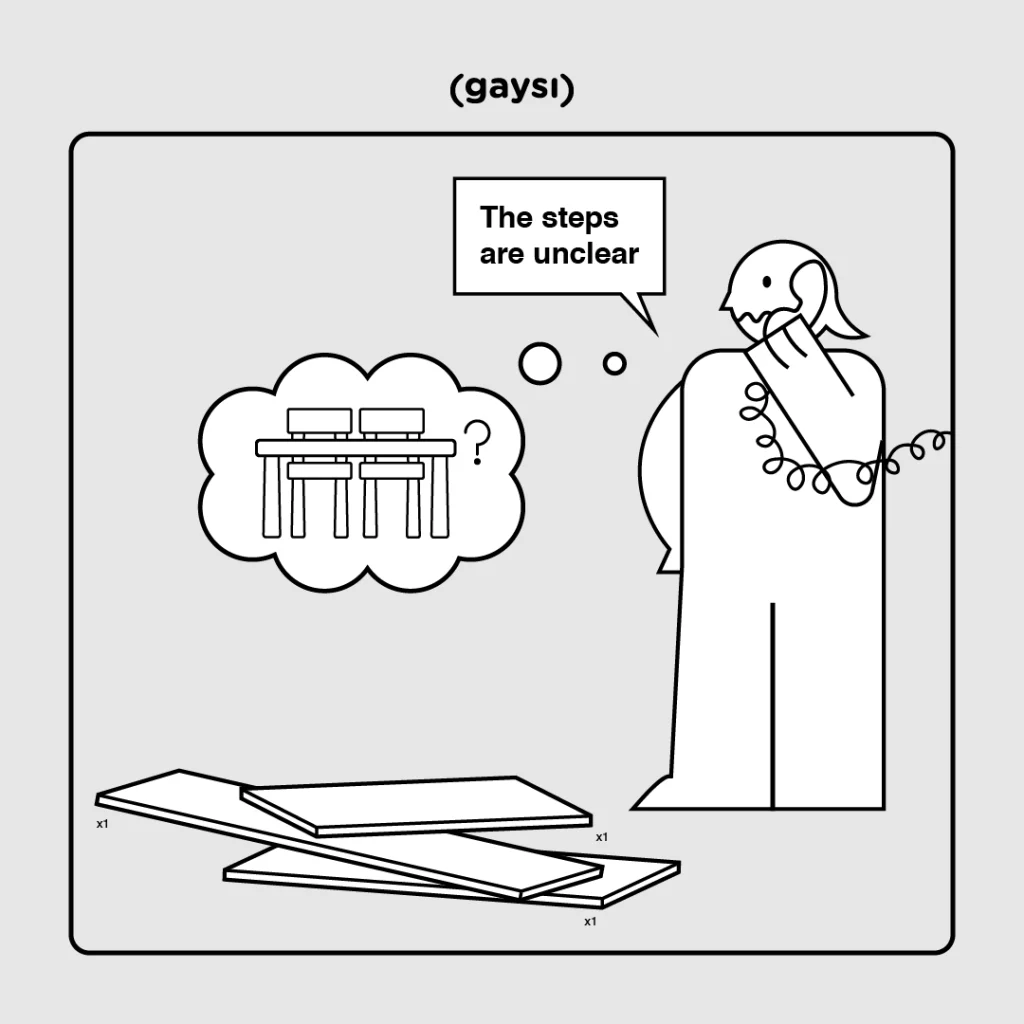
What I remember from that period is the absence. No openly queer women founders I could point to. No senior queer women in corporate life who had come out the other side of identity and ambition with both intact. Not much LinkedIn, no heavy social media. Simply put, no role models or mentors.
I built it anyway.
Some things have changed. This has not.
We moved past Section 377. NALSA happened. Pride marches run in several cities. Queer stories reached Indian mainstream media and OTT platforms. Queer social events started taking up space. Yes, plenty still needs to be done and undone. That’s a conversation for another day.
But when I look at corporate India and the founder ecosystem, at the rooms where budgets are decided and policies are made, I see the same absence I saw in 2013. Women hold roughly 18% of directorships in India’s top 500 listed companies, and 77% of those firms have only one or two women directors. The proportion of out queer women on top of that is effectively invisible in any dataset.
Staying invisible in corporate life is often a rational response to a hostile environment. I have made my own calculations over the years about how much of myself to bring into professional rooms. This is not about pressuring anyone. It is about naming what is happening.
Visibility is not power.
Today, we queer women are somewhat more visible than ever as consumers. Streaming platforms greenlight our stories, as long as they end in a way that does not make the general audience too uncomfortable. We are showing up on the dance floor, on dating apps. Heck, some of us even find lifelong partners.
But is this representation equal to representation in capital? In reality very very few of us are out or present in the rooms where everything is decided: what gets funded, who gets hired, which communities get resources and which are quietly deprioritised. Women-led startups in India receive less than 3% of total venture capital. Fewer than 5% of senior roles in Indian VC firms are held by women. The proportion of that capital moving toward out queer women founders does not yet register as a measurable figure.
Absence reproduces absence.
The absence of queer women from senior corporate and entrepreneurial roles is not just a symptom of exclusion. It is how exclusion reproduces itself. When there is no one to look to, the next generation cannot see what is possible. When there are no queer women with capital and seniority, there is no one to mentor, fund, advocate, or open a door. The pipeline continues to stay thin.
I could not find a mentor back then. This struggle is very real for me even today. I watch extraordinarily determined women choose to stay closeted at work and still face barrier after barrier. So I do not want the next person building something to still be waiting. The barriers are not about individual courage. They are compounded disadvantage, especially for desi queer women and trans women, at every stage of professional life.
I am also fully aware of what it took to get into those rooms in the first place. To be a woman in corporate India is already to have paid a tax no one announced. To be a queer woman is to have paid it twice. To be a queer woman from a further marginalised background or a trans woman is to have paid it again. So when I talk about responsibility, I am not talking about courage you have already spent.
What I do believe is that those of us who made it into any room have a responsibility to hold the door (something Parmesh Shahani said to me over a decade ago). To be accessible. To use whatever credibility, capital, and access we have to make the pipeline marginally less hostile than it was when we came through. Some of us are going to have to break the old pattern of the closet at work. It will not break on its own.
The door is for her.
The door I am trying to hold is for her. The queer woman starting something right now, in 2026, the way I did in 2013. Building out of necessity. Looking around for someone who has been through it and stayed visible. I want her to find me. I want her to find more of us.
The question is not whether queer women can build and lead and hold power. Of course we can. The question is what it will take for that to become visible, powerful, remarkable. To the queer women already in those rooms: I see you. I see what it cost. The moment the odds tilt even slightly in our favor, let them find us. Let them see us. Consistently. Because if we stay quiet in the rooms we fought our way into, she will be writing this same essay in 2039.
P.S. A big shout out to Sonal Giani and Radhika Piramal for the amazing work you continue to do, and to Zoya for always making room for my rants.
