


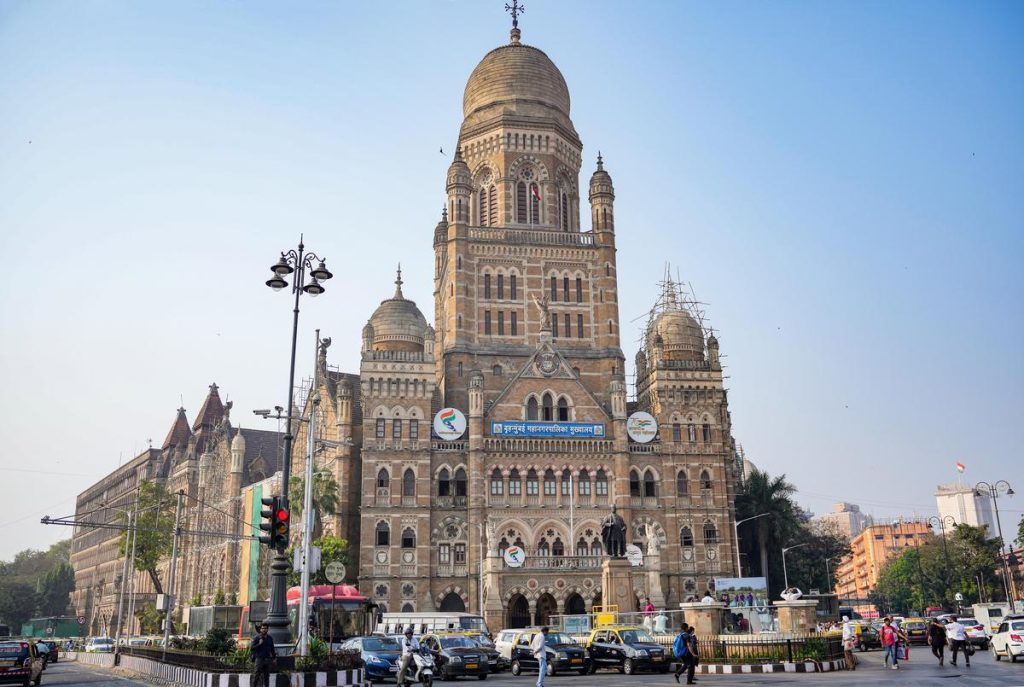
Mumbai goes to the polls in the Brihanmumbai Municipal Corporation election tomorrow, the 15th of January, 2026, after nearly three years of delay. What happens in Mumbai doesn’t stay confined to city limits. As India’s economic, financial, and cultural powerhouse, Mumbai shapes policy, capital flows, cultural narratives, and urban priorities that ripple across the nation, from infrastructure laws to identity politics.
Mumbai as the Engine of India’s Economy and Culture
Mumbai is arguably the financial capital of India, contributing over 6% of the country’s GDP in nominal terms, which is a larger economic footprint than nearly every other city in South Asia. The city also accounts for outsized shares of income and corporate taxes, foreign trade, and financial markets, and hosts the headquarters of India’s biggest banks, stock exchanges, and corporate houses. It is a cultural colossus in equal measure!
The film industry known as ‘Bollywood’ and the broader film/entertainment sector, much of which is headquartered in Mumbai, are central to how India imagines itself to the world and how stories about gender, identity, class, and belonging are circulated. In 2024, India’s screen sector generated over USD 61 billion in economic activity and supported millions of jobs, with Mumbai as its nerve center. But the city’s magnetism cuts both ways.
Mumbai Policy as National Policy
Over a decade ago, when changes to the Coastal Regulation Zone (CRZ) framework began with discourse in Mumbai with the Maharashtra government overturning a 36-year no-reclamation policy, it effectively reshaped India’s coastal development norms. This unlocked vast real-estate and infrastructure possibilities along coastlines nationwide! Such shifts originated in Mumbai’s high-stakes negotiations over reclaimed land and urban expansion, often before many citizens even noticed.
Earlier this week, days before the BMC election, the Supreme Court reiterated that reclaimed land along the Mumbai Coastal Road must remain public and cannot be used for residential or commercial development. While hailed by activists as a protection for public space, it highlights how Mumbai’s land governance debates set precedents for other Indian cities and coasts.
Queer Rights and Urban Governance—An Intersectional Gap
If Mumbai sets the rhythm for national policy, it’s slow pace when it comes to addressing queer, trans, and intersex rights at the municipal level also offers a pulse on national policies on the same. The struggle for queer recognition in India has made important gains, from legal battles over Section 377 to ongoing advocacy for comprehensive civil rights. Yet in local governance spaces like the BMC, where everyday affairs of sanitation, healthcare access, education, and public services are decided, there is little structural space for queer voices, needs, and protections.
Urban queer lives, which are shaped by class, caste, gender identity, migration, and bodily autonomy need addressing of issues like gender-neutral toilets, sensitized civic staff, anti-discrimination protections, and intersectional data collection; these are no longer fringe concerns. They determine whether queer Mumbaikars can access healthcare, thrive in public life, or feel safe on the streets they pay taxes to maintain. That’s why queer votes and those of allies, do matter.
Political Promises: AAP and Beyond
Ahead of these elections, the AAP manifesto for the BMC included commitments to gender-neutral toilets and sensitized staff. These count as concrete steps toward making the city’s services more inclusive, but that’s only a beginning. Policies must go further to include intersex recognition, anti-discrimination safeguards, and horizontal reservation for historically excluded caste-based communities. Municipal governance is where these frameworks begin walking the talk.

More queer representation matters not just symbolically but strategically, because laws and municipal actions shape lived experience. In the last BMC cycle in 2017, a transgender candidate contested from Kurla, breaking barriers but also exposing how political structures rarely nurture ongoing community leadership. This time, we should ask: Why aren’t parties investing more in queer candidates? Why is queer representation still an afterthought in the civic body that governs public health, housing, sanitation, and culture — the things that most directly affect queer lives?
Political Parties and Queer Engagement
There are some hopeful signs:
In 2020, the Nationalist Congress Party (NCP) formed an LGBTQ cell in Maharashtra; a first for any regional party.
In 2024, the Indian National Congress established an LGBTQIA+ vertical within its All India Congress Committee (AIPC).
These moves are important as they signal that political machines are beginning to acknowledge queer constituencies as stakeholders rather than footnotes. But rhetoric without ground-level investment in candidates, capacity building, and campaign support will not translate into power for queer communities. Municipal politics is where accessibility intersects with everyday life—bus routes, community health centers, water access, street safety. Queer Mumbaikars and allies are stakeholders in every one of these.
Queer Votes, Queer Power
This isn’t just about rights in the abstract, but about recognizing the city’s invested role in shaping the cultural, economic, and social fabric of the nation, and ensuring that as Mumbai continues to make policy waves, it does so with justice, inclusion, and accountability at its core.
Queer voters, organizers, and leaders have an urgent stake in tomorrow’s polls. It is a moment to move beyond visibility to representation; beyond rhetoric to infrastructure; and beyond tokenism to tangible participatory power.
Because if Mumbai shapes India, queer Mumbaikars must help shape Mumbai.
