


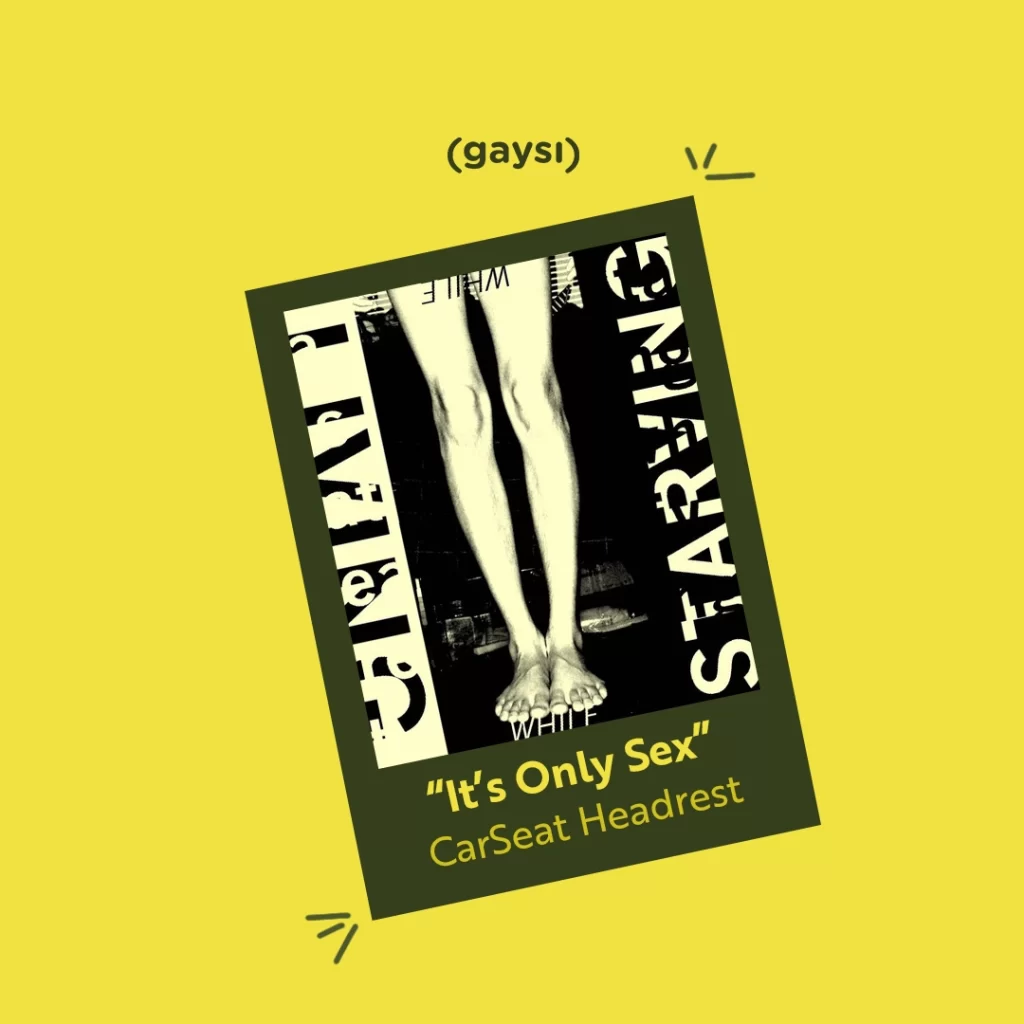
Car Seat Headrest’s song “It’s Only Sex” offers a poignant exploration of asexuality, delving into the emotional and psychological complexities faced by individuals in a society fixated on sexual attraction. The song’s lyrics capture the disconnect between emotional intimacy and physical pleasure, portraying asexuality as a complex interplay of desire and societal expectations. Lines like “My flesh yields no pleasure” reflects the often-overlooked rift between emotional connection and physical experience, while “Baby, my body / Constantly betrays me” illustrates the internal struggle between personal reality and societal norms.
The refrain, “It’s only sex,” underscores the notion of sex being frequently framed as an obligation in relationships, rather than a source of personal fulfilment. By addressing themes of personal autonomy and the tension between societal expectations and individual reality, “It’s Only Sex” contributes meaningfully to the discourse on asexuality. The song challenges conventional narratives about relationships, advocating for greater empathy and understanding of diverse expressions of human sexuality. Through its evocative storytelling, the song emphasizes the value of emotional connection and calls for a broader appreciation of intimacy beyond physical expectations.
“My Flesh Yields No Pleasure”
The lyric, “Just to see you / It’s such a treasure / But when I feel you / My flesh yields no pleasure,” captures a sentiment deeply emblematic of the asexual experience, echoing the silent rift between emotional connection and physical intimacy. In the often overlooked landscape of asexuality, individuals encounter a unique dichotomy—where the heart may burn with affection, yet the body remains unmoved by physical touch alone. These touching lines reveal the complex feelings involved, showing a clear gap between simply admiring something and actually feeling pleasure from it.
Also read: Asex-ception to the Rule: Asexuality and the Search for Belonging in Marriages
The phrase “my flesh yields no pleasure” speaks to the metaphorical “bare performance” that intimacy can become—a symbolic gesture rather than a shared emotional experience. For many asexual individuals, sexual acts may devolve into a performative ritual, stripped of the mutual fulfillment often expected. The metaphor of a flower that blossoms in the mind but wilts in the hand perfectly encapsulates this paradox—where the allure of love and connection is cherished from afar, yet falters when forced into the realm of the physical. For asexual individuals, the act of sex can transform into a performative ritual, devoid of the expected pleasure that others often associate with it. Mentioning “flesh” adds to the confusion and self-doubt, showing the clash between what society expects and what people really feel. This idea questions stereotypes about pleasure, showing that physical closeness is complex and enigmatic for asexual people.
“I Care About Me, and My Sex Deal!”
The song’s lyrical exploration continues with a resounding declaration: “But I don’t care about hundreds of hypothetical people / And their hypothetical sex deals/ I care about me, and my sex deal!/ What about my problems?” From this perspective it can be said that rather than conforming to social norms, one’s experience is of greater value inherently. Asexuality, like a lone tree in a forest of blooming flowers, symbolizes an unwavering assertion of selfhood—a rejection of the societal pressure to conform to predetermined notions of sexual expression. Much like this solitary tree, asexuality defies conventional ideas of growth and expression, offering a reimagination of what it means to thrive.
Also read: As an Asexual Person, Sex is all the More Important to Me
Situated at the intersection of identity and self-discovery within the diverse LGBTQIA+ spectrum, asexuality subverts the assumption that sexuality is a universal cornerstone of human experience. It poses a fundamental question: What does an asexual person express? The paradox is that an asexual person, by definition, goes against typical ideas about sexual behavior. By accepting who they are, they create their own unique story, different from the usual narratives about sexual desire or attraction. In this way, asexuality becomes both a personal and cultural assertion: a quiet but powerful declaration that one’s value and identity are not dependent on sexual experiences or conforming to society’s predetermined roles.
“Baby, My Body Constantly Betrays me”
The verse “Baby, my body / Constantly betrays me / I try to betray it / I only hurt myself / Yeah, yeah” distills the internal dissonance experienced by those navigating asexuality. It is like a tricky dance between the mind and body, where the dancers can’t find their rhythm. This reflects the confusion that asexual people feel as they try to understand their internal reality in a world steeped in sexual norms. It speaks to the alienation and loneliness that they feel as their physicality seems at odds with societal expectations.
Also read: Queer, But Not Enough
Feeling like they are betraying themselves, they try to fit into a story that isn’t theirs, which makes them feel very alone. This inner struggle affects how asexual people see and take part in relationships. The mismatch between their mind and body creates a split that impacts their close relationships and social connections. As they navigate the complex terrain of relationships, this disconnect often evokes a deep sense of isolation, further exacerbated by a society that tends to overlook or misunderstand asexuality. The sentiment of feeling “lesser,” small, and as if falling into an abyss reflects the emotional turmoil experienced by asexual individuals. In a culture that often treats sexual experience as a fundamental aspect of identity, asexual individuals may wrestle with the burden of being seen as an anomaly—misunderstood, dismissed, or rendered invisible in conversations about love, relationships, and fulfillment.
“But Only in the Literal Sense”
The verse “I want to hold you tight / I want to feel your love physically / I want to sleep with you / But only in the literal sense” captures the delicate push and pull of asexual experience—the deep yearning for closeness, complicated by a disconnect from conventional sexual attraction. At the core of this lyrical discourse lies a fundamental human need—the desire for meaningful connections with others. The quest to hold someone tight, to feel a physical manifestation of love, and to share the intimate act of sleeping together, refers to the universal longing for human companionship. However, it also reveals the complexity of navigating physical intimacy as an asexual person, requiring constant negotiation between personal truth and societal expectation.
Also read: Heartstopper S2 (Mostly) Aces It
For asexual individuals, what might seem like a simple desire becomes a nuanced challenge, requiring constant negotiation between personal truth and societal expectation. This paradox—wanting physical closeness while keeping it strictly non-sexual—underscores the ways in which asexuality disrupts mainstream narratives of love and intimacy. It’s a quiet defiance, a reimagining of what connection can look like outside of the frameworks imposed by a sexually normative world. The imagery evokes a sense of fragility, akin to delicate flowers reaching for warmth and affection while carefully avoiding the burn of expectation.
“It’s Only Sex”
The concluding lyrics, “I can’t tell you if I like it, I like it / What happens if I don’t like it? I like it / I can’t tell you if I like it, I like it / What happens if I don’t like it? It’s only- / It’s only sex (it’s only sex),” encapsulate the dilemma faced by individuals navigating the spectrum of asexuality. In a society that values physical intimacy as essential for human connection, asexual individuals struggle to understand their own desires, comfort levels, and identity.
For many asexual people, sex isn’t something they naturally desire or enjoy. Much like turning a key to open a door they never truly wanted to step through, the act becomes mechanical, something done out of expectation rather than genuine desire. This reframing of sex—from an adjective describing passion to a verb denoting obligation—reveals the emotional and psychological burden asexual individuals often carry.
Also read: Self Help is the Best Help: The Autosexual Way
The difference between the mind’s emotional needs and the body’s social expectations creates an internal conflict, similar to a lovely melody played off-key, leading to a strong feeling of loneliness. While some asexual individuals find solace in establishing deep mental connections with their partners, the persistent gap between mental desires and physical obligations heightens the confusion surrounding identity, further intensifying the struggle with authenticity. This conflict increases their sense of being different from society, making them question their desires and their place in the world.
Conclusion
Car Seat Headrest’s “It’s Only Sex” is an important addition to the conversation about asexuality, providing valuable insights into this often misunderstood expression of human sexuality. The song’s powerful lyrics and deep emotions highlight the complicated experiences of asexual individuals, emphasizing the significant gap between societal expectations and their true feelings. It gives voice to an experience that is frequently overlooked—one where emotional intimacy flourishes while physical desire remains elusive, challenging mainstream narratives that equate love with sexual attraction.
Also read: Asexuality in Pop Media: Why Nothing Might Just Mean Everything
By unraveling the internal conflict between physical expectations and emotional truths, “It’s Only Sex” dismantles the notion that intimacy must be synonymous with sexual fulfillment. The refrain, “It’s only sex,” is a powerful meditation on obligation versus autonomy, encapsulating the struggle many asexual individuals face in a world that often fails to validate their experiences. The song highlights the paradox of navigating relationships in a sex-centric culture, where personal comfort and identity often clash with ingrained societal pressures.
In doing so, “It’s Only Sex” fosters empathy and encourages a broader, more inclusive understanding of intimacy. By affirming asexual experiences with striking honesty, the song empowers those who may feel isolated in their identity while challenging listeners to reconsider their assumptions about love, desire, and human connection. The song is a key cultural piece that boosts awareness and acceptance of asexuality, making it valuable for understanding this human experience.
