


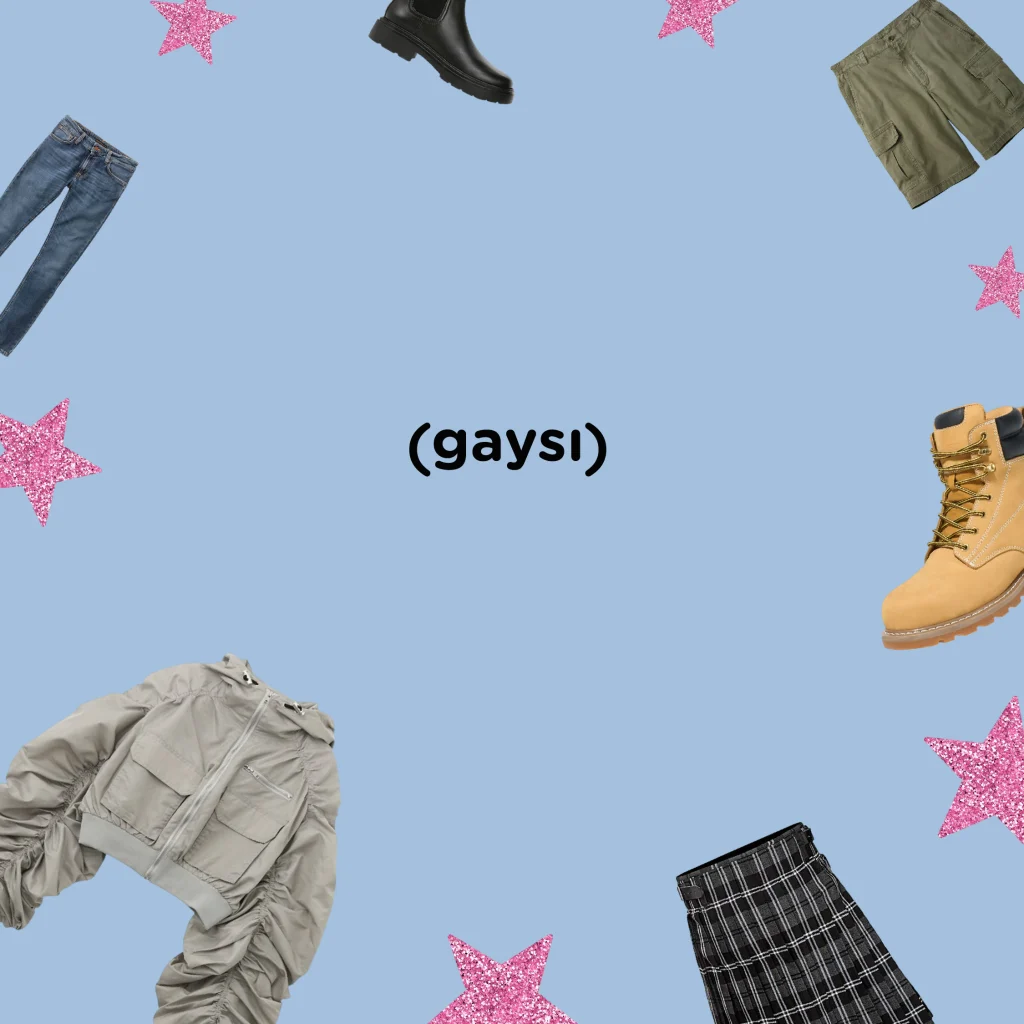
Gay men have always been ahead of the fashion game. Whatever they’re wearing in Brooklyn or Soho today, straight men will be wearing in the suburbs by 2030. This isn’t a stereotype, it’s literally proven history. Trends that first appeared in gay clubs, Tumblr feeds, underground parties, and niche urban circles became mainstream a few years later. If you examine gay male fashion over the past fifteen years, one thing stands out: it moves in pendulum swings.
The 2010s: The Era of the Slim-Fit
The 2010s were the era of the “tailored gay.” If you were a gay man in the 2010s, you owned three staple possessions: a well-tailored blazer, Chelsea boots, and an opinion on raw denim. Fashion was sleek, polished, and carried a kind of groomed masculinity that Queer Eye had quietly evangelised into mainstream consciousness. Skinny jeans, fitted button-downs, leather jackets, and neatly styled hair defined the look. The Indie Sleaze Tumblr aesthetic and the put-together, aspirational image conveyed “I have my life together,” even though they absolutely did not. Gay men were dressing up for visibility and control in a society where appearance often shaped how others perceived them.
The 2020s: Hyper-Masculinity & The Lounge Lizard
By the early 2020s, the pendulum swung sharply in the opposite direction. A sizable portion of gay men’s fashion shifted as gender-fluid styling went mainstream and straight male celebrities started wearing skirts, eyeliner, and nail paint. Suddenly, skinny silhouettes felt restrictive and overly refined.
Many queer men started embracing aesthetics inspired by the Castro Clones of the 1970s post-Stonewall era and rough Americana working-class imagery. Jorts, white tanks, work boots, flannels, oversized workwear, vintage denim, moustaches, mullets, sports jerseys, and tiny gym shorts were the satirical take on “dad” masculinity, defying the very masculinity it evoked.
The later-2020s version added gorpcore, Old Money aesthetics, and a nostalgia for early-2000s brute simplicity: Carhartt, New Balance 990s, and fleece vests. The remix was the hypermasculine pivot, and the mainstream is still catching up.
2030: The Forecast (The Bio-Tech & Neo-Classic Era)
Forecasting queer fashion is forecasting fashion. Gay men in urban centres were wearing gender-nonconforming pieces in 2018–2020 that straight men only adopted by 2024. So where does the pendulum swing by 2030? If the 2010s were sleek and the 2020s were deliberately rough, the 2030s logic points toward something more maximalist and culturally hybrid.
Rather than ultra-tight tailoring, the 2030s could focus on sculptural silhouettes, dramatic proportions, and architectural clothing. Think elegant utility instead of minimalism. Tailoring that incorporates non-Western silhouettes into everyday queer wardrobes: draped jackets, loose wraps, and reconstructed vintage pieces. Technology and sustainability will probably play a significant role too. Smart fabrics drawing on traditions from South Asia and West Africa, modular garments, and climate-adaptive clothing may show up first in queer fashion spaces before crossing over.
Most importantly, the focus on masculinity versus femininity may diminish. The 2030s could emphasise individuality, texture, craftsmanship, and self-expression over proving gender. If the 2020s emphasised ironic masculinity, the 2030s may prioritise aesthetic freedom. The next frontier isn’t about masculinity or femininity at all. It’s about queer men globally dressing from their own cultural ancestries rather than importing Western silhouettes wholesale.
The heteros will figure this out by 2042. As always.
