


(*Note: Contains Some Spoilers Ahead)
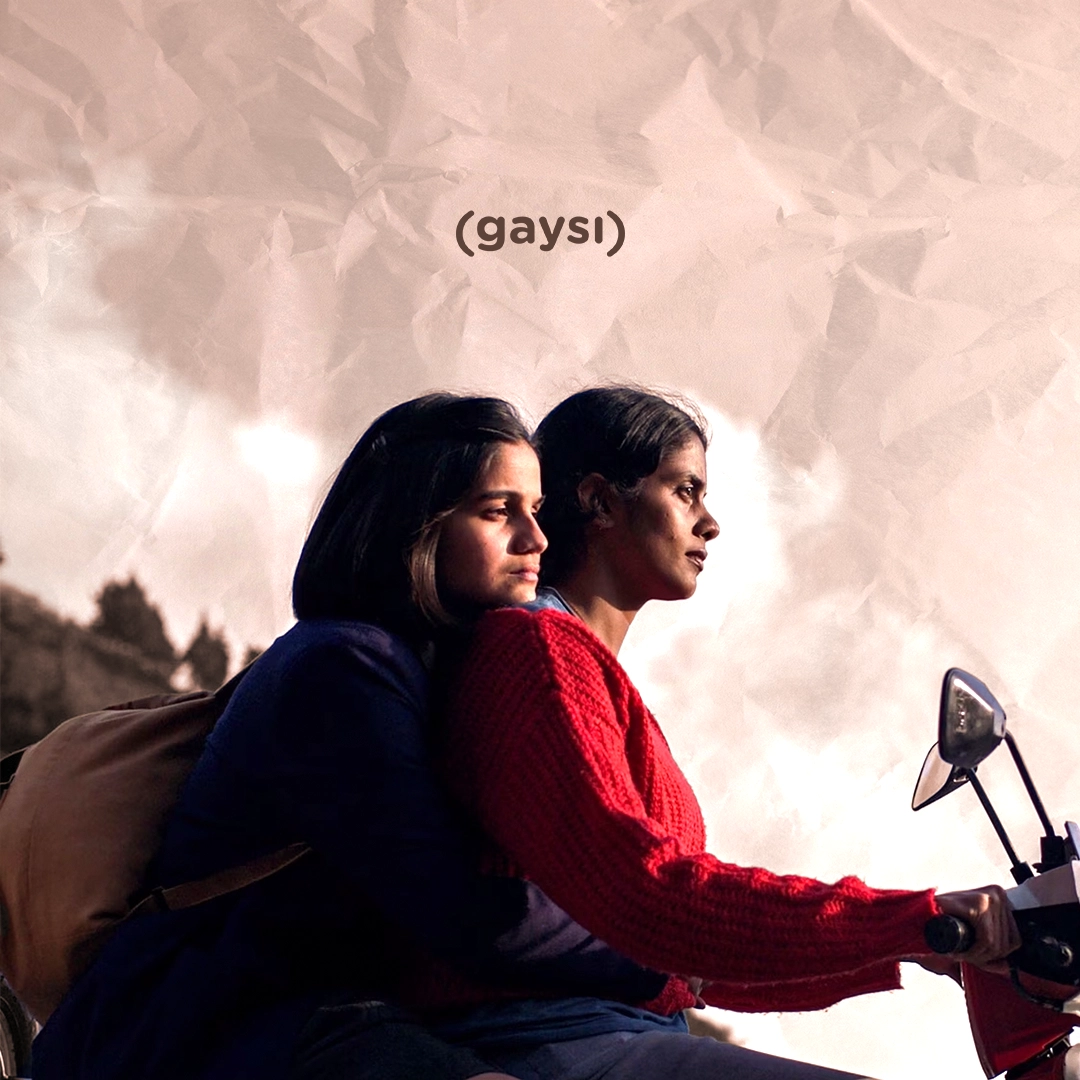
Set in the scenic hills of Dehradun, Girls Will Be Girls promises a nostalgic revisit to the girl I used to be, and in many ways, and continue to be. Puppy love, PDA, parental supervision and navigating perfectionism—it feels like director-writer Shuchi Talati grabbed my hand and forced me to confront my coming-of-age, I’m-too-cool-for-everything, and OG brat summer era.
Also read: Bad Economy, Bad Politics, and Brat Era: An Album Review
Truth be told, I’ve been on the lookout for its Indian release ever since I got to know of the film’s existence. So when MAMI announced its Mumbai screening, I was, and to quote my fav queer actor Ayo Edebiri, “I’m seated. The theater employees are scared and asking me to leave because it’s ‘not December yet’ but I’m simply too seated”.
I for one have always been a sucker for coming-of-age films with girls as the main character. It’s nice to take a break from the massy mainstream Madonna-Whore complex and not have to look for representation that is so obviously meant for a cis-het teenage boy.
The film is very different from Greta Gerwig’s Lady Bird, which is my usual option for when I want to feel sad, real, and okay in being a flawed woman. The thing is, when you’re brown, you can relate to the film only to an extent. In a lot of non-Indian films, you see white girls become rebellious, being all over the place and punk. But with a cultural background such as that of India, the rebel trope takes for a toss. Which is why Girls Will Be Girls works so well. The Indian girls’ version of rebelling is simply getting to live the life of the age that you are.
With legions of families obsessed with their girls growing up into perfect overachievers, as a 2000s girl the plot of this movie hits too close to home even though Shuchi sets the scene in the 90s.
Also read: Your Must-Watch Guide to Queer Season at MAMI
First Things First
Mira (Preeti Panigrahi), our protagonist is a 16-year-old girl studying in a strict boarding school, who is set to give one of the most important examinations of her academic life, i.e. the board exams. Mira is a bright, model student and this is very quickly established as she becomes the school’s first girl prefect. Used as an example to police the girls wearing shorter skirts and to reprimand her own best friend in the assembly line, Mira’s fate is sealed as one who does not make any mistakes.
On the other hand, we see Sri (Kesav Binoy Kiron), a transfer kid from Hong Kong, who is shown to fail in tests with Mira topping them. Sri, although not good at academics, is shown to be sensitive enough to be self-aware of his shortcomings, while approaching things pragmatically. As their romance blossoms, Mira keeps figuring out loopholes to get the best of both worlds: forbidden exploration and the pursuit of social validation.
Mira’s mother, Anila, played by the amazing Kani Kusruti, is on work leave for Mira’s boards allowing the two “buddies” to meet at a safe space i.e. at home! A parenting technique that is unheard of in a brown household, both teens get to explore their desire as Mira navigates her body, boys, and strict benchmarks.
Also read: Love Letters
Two (Boarding) School(s) Of Thoughts
The film also presents two female figures of authority, Miss Bansal (Devika Shahani), Mira’s school’s principal who has learnt to live with the system and her mother, who hasn’t seen any merit in the system and challenges its hypocrisy. It’s fascinating, cringey, and endearing to see Mira keep appeasing to the Principal, like a teacher’s pet. Simultaneously, she judges her mother’s independent, laidback approach.
On a day when all the girls at school are expected to wear sarees, when the other girls are dressing up, Mira’s mother tries to help her drape it. When the safety pin pinches her skin, Mira decides that her Mother has messed up and yells at her in a room full of other students and parents. She takes her Principal’s help instead. The standards for her own mother and a stranger are set differently. It’s humiliating, cruel, naive and very difficult to sit through.
Both these characters are contrasting, sharp and shape up Mira’s dissonant thought process. To join or to beat, that is the question.
Anila is this progressive woman, who is also employed, while prioritizing her daughter in her life. On the other hand, her husband is a workaholic father, with their conversations mostly focused on their daughter’s studies and her image as an ideal child. Anila helplessly tries her best to save her daughter from internalizing this misogynistic ideal, but in vain.
The Boy’s a Liar
In the middle of this, Sri and Mira’s puppy love faces its ups and downs. From trying to make out while studying to getting upset at Sri’s decisions, it’s tough to figure out in whose court the ball could be.
Sri is a mother-loving manipulator (literally). At no point can you guess if he thinks in Mira’s best interest or not. But what about her mother? Throughout the film, Anila tries to fill in for Sri’s “too busy, neglectful” parents and takes care of him. And because we tend to follow Mira’s gaze, at times this ‘care’ feels almost grooming-esque.
Both Mira and Anila don’t really have empathetic men around them. At one instance, Anila’s husband discusses at the dining table about how a young female relative ran away for love and was foolish to do so. It is later revealed that Anila had also done the same for her love for Mira’s father. This reveals the callousness of Anila’s husband and the sacrifices she has made for the sake of their relationship.
The Key To Mothers, Misunderstanding And Misplaced Anger
A particularly memorable scene was watching Mira and her father making fun of Anila and her hobbies, which reminded me of Bonnie Burstow’s quote:
“Often father and daughter look down on mother (woman) together. They exchange meaningful glances when she misses a point. They agree that she is not bright as they are, cannot reason as they do. This collusion does not save the daughter from the mother’s fate.”
As the film progresses Mira realizes this and it finally hits her when she gets chased by a bunch of rowdy male students on teacher’s day. On a day where adults step away from their usual roles and students take on theirs at school, Mira is assigned to act as the principal for the day. The boys’ resentment spills over as they chase her toward the girls’ hostel. The frames get tighter and their mocking gets louder as it becomes evident how the system has never rewarded women regardless of them following, tip-toeing around it, or breaking patriarchy’s rules.
Under Shuchi Talati’s gaze, Anila is an empathetic hero who rescues her daughter in distress while Miss Bansal resorts to blaming the girl before turning toward the boys. As it unfolds, I can’t help but realise how many Miss Bansals I’ve met who build golden children out of some girls only to push the other girl students to fall in line. The loyalty and trust that these educators demand is impossible to deliver. That Mira faces shaming and guilt-tripping from the Principal and not her mother, says a lot about how women are pitted against each other in the system. At what age does it get better for women?
Also read: Flexible Boyhood and ‘Boys Will be Toys’ in Conversation with Humhu
No Break From Being A Girl
I had the opportunity to watch the director’s QnA session after the screening at MAMI. One of the audience members, a writer, told the director: “This movie is too overwhelming, the frames are too tight, the plot is too linear and headed towards one thing; don’t you think it could’ve used a song or funny subplot for a breather?” Shuchi, who wrote the film based on her personal experiences, replied that this is how she envisioned the film saying, “I’m sorry, no break for you, sir!”. “And isn’t that how experiences of girlhood really feel like? Overwhelming, no breather, one after another a jumpscare,” I mentioned animatedly to a fellow cinema girlie who looked equally flabbergasted in front of me!
As the credits rolled, I felt that Mira is not flawed or as someone who has met grave failures, but that she’s simply being a girl her age. In the end, we see Mira and her mother’s role, love and knowledge exchanged.
Earlier this year when I watched Varun Grover’s amazing debut film, ‘All India Rank’, my heart felt incomplete as I wondered if an equivalent would ever get made about girlhood. It filled me with great joy when I got an opportunity to see it in Girls Will be Girls so soon!
Jih-E Peng’s cinematography breathes space and sensitivity into every frame, while Sneha Khanwalkar’s music elevates the nostalgia of the 90’s. I can’t wait for the rest of the Indian audience to catch this film. Till then you’ll find me making fan edits of this film with Mitski’s Class of 2013 playing in the background.
