


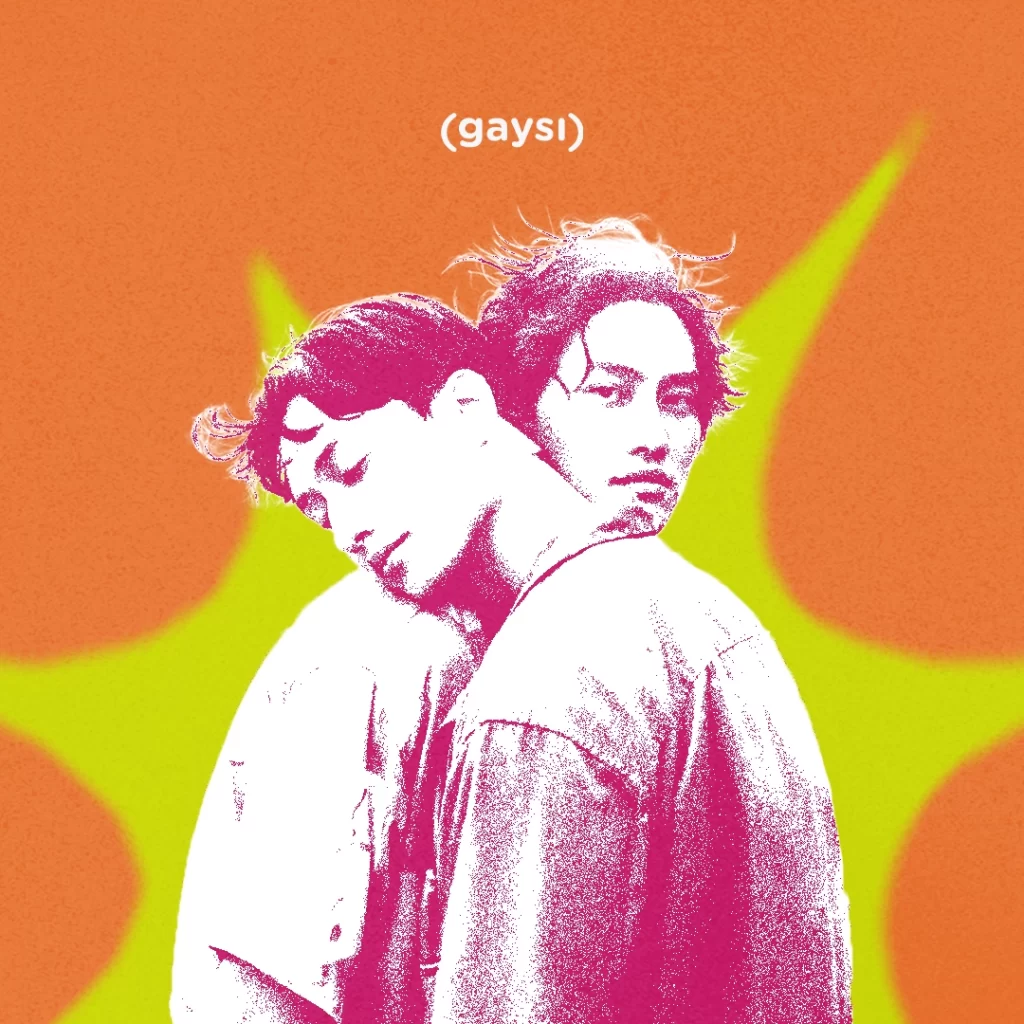
A Balloon’s Landing reignites the collective memory surrounding the Chinese bisexual icon, Leslie Cheung. Whether it can be termed as a “BL” is debatable, but nevertheless, the film borrows heavily from Wong Kar Wai’s Happy Together, re-imagined as fantasy. The introductory scene, speaking of the death of one of the protagonists’ parents—which happened to coincide with the passing of Leslie Cheung—automatically takes viewers on a sojourn to the Asian cityscape that was once adorned by Leslie’s androgyny. Tian Yu, an established writer from Hong Kong, embroiled in a plagiarism accusation, moves to Taipei, contemplating suicide, and encounters A Xiang, a gangster. Their journey towards a romantic realisation traverses the hilly terrains of childhood trauma, suicide, self-doubt, but most importantly, navigating the temporality of a shared social landscape.
The Missing Post Office in Japan receives thousands of letters without a forwarding address. This could’ve been an inspiration for the director who thought it would be creative to relate the timeline of an orphan child with that of a graduating student, using letters and a magical red post-box, with no one to deliver it to, ten years later, in the offing. The memory associated with the “letters” of the past rekindles a relationship in the current year, the one that will prevent the writer’s suicide. We are once again reminded of Leslie’s passing in 2003, the same year, when Jin Run Fa (aka A Xiang), asked his pen-pal, the writer, to “not die” and that he would be waiting for him at the “Bay of Vanishing Whales”. Leslie’s passing remained as a collective memory for Hong Kong, and it was his popularity and critical acclaim that made the event of his passing an entity worthy of being commemorated.
Drawing parallels with the gay cinematic masterpiece, Happy Together, the protagonists’ characters share similarities with each other. The trip to the fictional “Bay of Vanishing Whales” in A Balloon’s Landing bears some semblance to when the protagonist in Happy Together lamented his lonesome visit to the Iguazu Falls, when they were meant to do it together. Both the films make “journey” as the cornerstone of a romantic inception where the road leading to the destination often falters, revealing nuances of the relationships that are meant to last. The director’s insistence on revelling in the picturesque scenery, resurrects the imagery of Buenos Aires that the leading characters, in Happy Together traverse. Leslie’s character in Happy Together (Ho Po-Wing) and A Xiang are juxtaposed with their counterparts Lai Yiu-Fai (played by Tony Leung) and Tian Yu, who are grounded in reality, showing a sombre demeanour, whilst the other pair demonstrate a longing for a spirited and carefree self.
On a superficial level, the film talks about a “probable” love story that does not go beyond short glances, an “accidental kiss”, and wrapping arms around one’s waist, and this ‘apparent’ romance has left viewers expressing their annoyance over the non-deliverance of an overt “boy-love” film. Boy-love dramas have been problematized, and the fetishization that comes along with it would not be a good tribute to Leslie.
With remnants of Hong Kong and Taipei in both, it is obvious that the director hoped to create a parallel world where Leslie is still alive. A Balloon’s Landing conjures a world that is receptive to Leslie’s androgyny, and implores him to “not die”, as is evident from multiple interventions into the writer’s life by his pen-pal, living in the past, and his companion, in the current day. A comedic intervention at best, the writer contemplating suicide upon facing public onslaughts reminds one of the unequivocal hatred Cheung had received due to his display of feminine flamboyance and homosexuality. The writer is being accused of what can be termed as an instance of coincidental plagiarism, for which the hate was undeserved. Cheung didn’t deserve it, either. A Balloon’s Landing recognises a utopian world where mistakes can be reversed, leading to an alteration of one’s life chances. While we won’t have Leslie back, the film presupposes a society that gives “second chances”, a chance to rectify mishaps. Tian Yu’s letter to his pen-pal, in the past, after learning about his death, forces us to rethink how, in reality, we lose focus pandering to our selfish pursuits, often leaving others amidst disarray.
Tian Yu’s return to his “normal” life as a writer, while grappling with a yearning to meet A Xiang (or Jin Run Fa), can be compared to Happy Together’s concluding scene where Fai longs to see Chang (a co-worker he befriended abroad), as he reminisces with a photograph. In the 2024 film, photographs play a compelling role, as they do in reality, by freezing moments to be cherished.
The film ends on a happy note that brings the two together, despite temporal hardships; a trope that was missing in the seminal Wong Kar Wai film, whose claim of being “happy, together” seems to have been forfeited.
