


*Spoilers Ahead
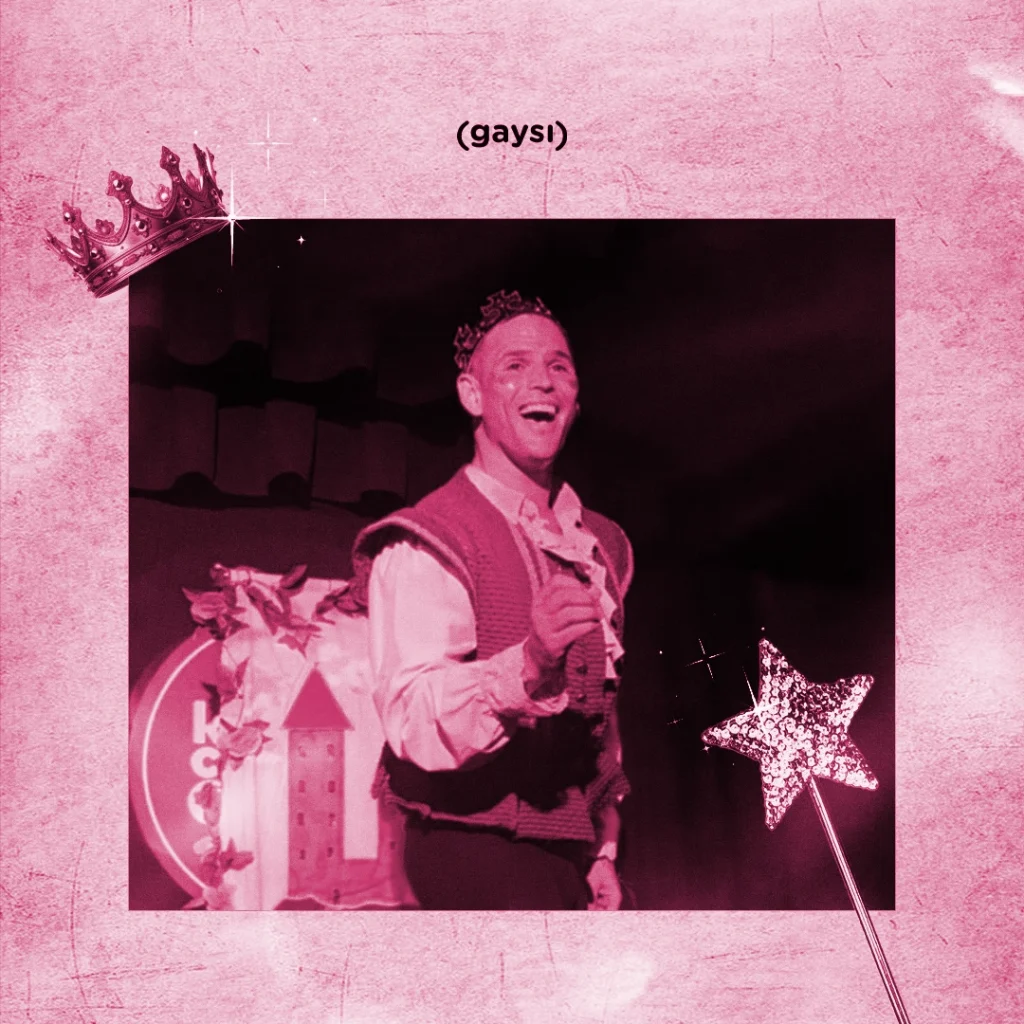
From the familiar swell of Disney tunes to the cheeky, heartwarming farewell that closes the night, Happily Ever Poofter by Rich Watkins is pure joy. His performance sweeps his “citizens” through glittering highs and tender lows, blending camp humour with heartfelt honesty. A big thank you to the Mumbai Fringe Festival for creating a space where queer stories shine.
Fairytales have always tugged at our hearts, whether Disney classics, local tales and legends, Panchatantra fables, or the ones we invent ourselves. Watkins taps into that magic, reworking it with wit and queerness at the centre. Watkins’s on-stage persona, Prince Henry, a starry, wide-eyed, and playful romantic, welcomes us into his castle with playful jabs and confessions, claiming he’s the only openly gay person in the kingdom. He expresses how he is constantly reminded of the biased norm that “happily ever after” always belongs to a prince and a princess, never anybody else. He then starts the show with a reimagined Little Mermaid number, “Part of Your World,” rewritten as a gay anthem for venturing into the real world where queerness thrives. This leap between his fairytale kingdom and the real world nods cleverly to Enchanted. Each musical number, reimagining Disney gems, kept the show dazzling and whimsical, while his political satire gave it bite and brilliance.
As this is a one-man show, the other characters featured in his performance were also played by him. His fairy godfather is one of the memorable characters performed, as well as a few of the seven dwarfs.
Prince Henry recounts his wild nights of fun with the other men of his kingdom. At the same time, Watkins doesn’t shy away from the more serious experiences when one goes too hard with “magical potions” and the importance of PrEP. He balances sparkle with sincerity, proving that fairytales can be both fabulous and grounded in reality. Watkins adds a playful twist with a segment inviting one of his “citizens” on stage. It was a fun and wonderful bit in the show that added creative flair.
In true fashion for a flamboyant gay story, Prince Henry prepares to come out to his father, the king, after a cabaret-style performance, complete with the crack of fierce, queer fan props. Instead of confessing to his father, Henry embarks on another quest: confronting the very author of beloved fairytales. Here, the tone of the story sharpens. The author refuses to rewrite the narrative with queerness at its core. Undeterred, Henry launches into another brilliantly reimagined Disney classic, hoping to sway the author, only to be rejected again. It’s in this moment of refusal that Henry realises he doesn’t need permission to tell his story to his kingdom. By the end, he discovers he is not alone; queerness thrives in his kingdom after all.
