


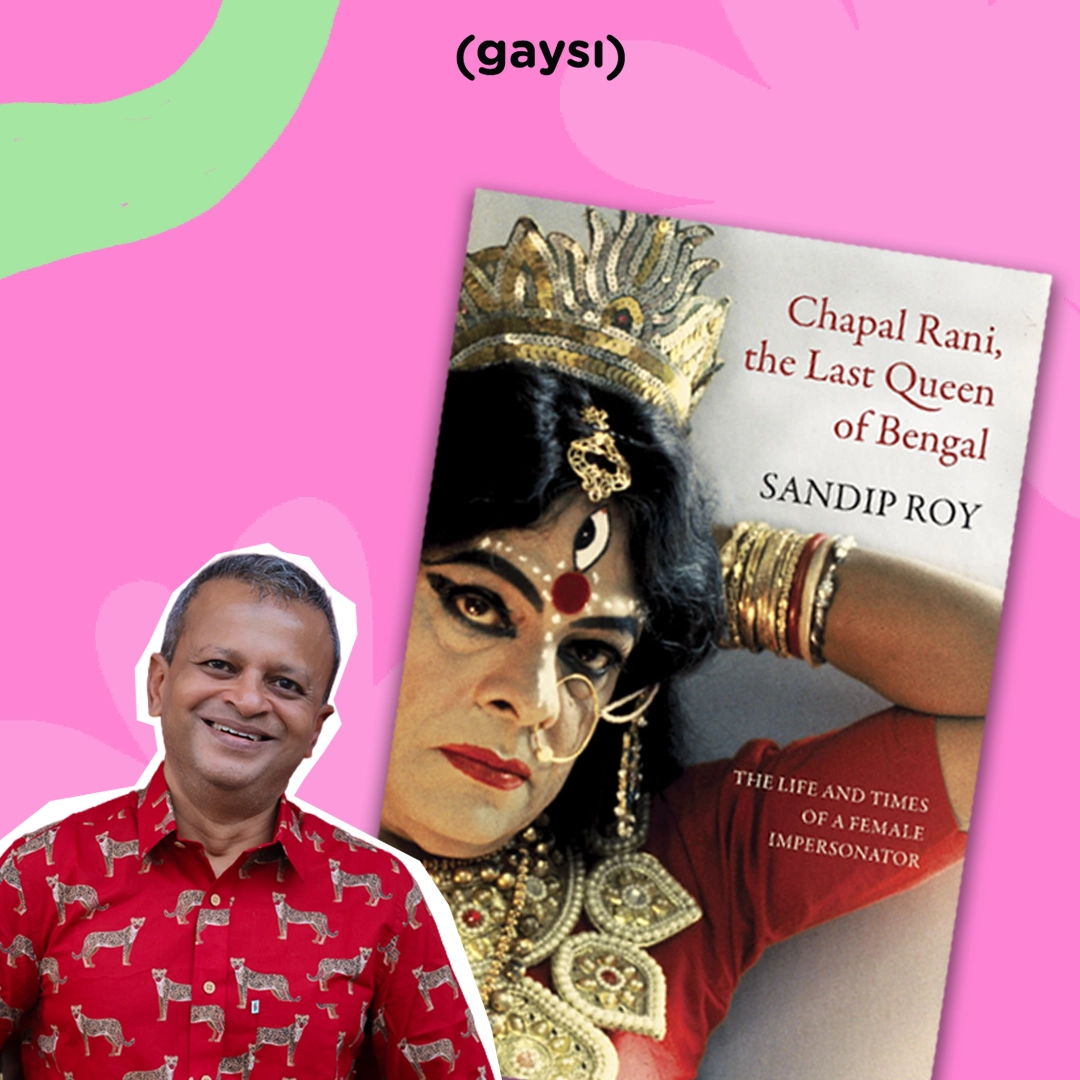
In Chapal Rani: The Last Queen of Bengal, Sandip Roy brings back the dazzling, complicated life of jatra icon Chapal Bhaduri—a performer who blurred the lines between masculinity and femininity long before India developed a lexicon for queer expression.
Queer history is not only made in courtrooms, gay protests or moments of political strife. Sometimes, it lives in forgotten green rooms, in vintage sepia photographs, in fading theatre billboards and in the memories of an audience who witnessed someone extraordinary long before society could grant it a name—and acceptance.
Long before conversations around gender identity entered public consciousness, before terminology such as queer, non-binary or gender-fluid became part of everyday conversations, there were people who unsettled desi society’s neat ideas of what a man or woman should look like.
Some did it by choice. Some did it by necessity. Some did it because the stage gave them liberties that the world outside refused. Chapal Bhaduri belonged to that rare category. For generations of Bengali audiences, he was not merely a man playing a woman. He was the woman they had come to watch. As a celebrated performer of jatra—Bengal’s vibrant travelling folk theatre tradition—Chapal transformed himself into heroines whose emotions, elegance and presence captivated audiences across the state. The title Chapal Rani was not handed to him as a gimmick. It was earned through years of artistic mastery.
In Chapal Rani: The Last Queen of Bengal, Sandip Roy does something far more interesting than simply documenting the life of a legendary performer. He does not attempt to force Chapal into a contemporary framework or make him fit neatly into today’s conversations around identity. Instead, he explores the messy, fascinating reality of a life shaped by performance, desire, ambition, survival and the complicated politics of being seen. And that is precisely what makes the biography so compelling.
Not a Drag Queen. Not a Gay Icon. A Human Being.
The easiest way to tell Chapal Bhaduri’s story would have been to transform him into a queer icon—a heroic figure who existed only to represent India’s burgeoning LGBT movement. Roy refuses the easy route. He deliberately avoids making Chapal Bhaduri sound like a contemporary drag performer or trans figure, because that would risk historical inaccuracy. The queer lens works best when it honours the complexity of his era rather than forcing him into today’s terminology.
What emerges instead is a portrait of an artist who lived in contradictions. Chapal’s femininity was his greatest gift and, at times, his greatest vulnerability. On stage, it brought him fame, admiration and artistic recognition. Outside the theatre, it exposed him to judgement, cruelty and misunderstanding.
The brilliance of Roy’s approach lies in allowing those contradictions to exist. The world of jatra itself is central to understanding Chapal’s journey. At a time when women were often excluded from professional theatre spaces, male actors frequently performed female roles. But Chapal’s artistry went beyond costume and cosmetics. He understood the smallest details—the movement of a hand, the cadence of a voice, the emotional weight behind a glance. He was not merely wearing femininity; he was constructing a complete character. For audiences, the transformation was so convincing that the performer disappeared behind the persona.
Today, many readers may instinctively search for familiar labels. Was he queer? Was he gender non-conforming? Was he a drag performer? These questions are understandable, but Roy reminds us that historical lives do not always fit into modern boxes. Sometimes, ambiguity is not a lack of understanding. Sometimes, it is the most honest way to remember someone.
When Queer Visibility Comes With a Cost
One of the most moving aspects of Chapal Rani is that Roy does not stop at the applause. Queer stories are often told through moments of coming out, rebellion or liberation. Less frequently do we talk about what happens afterwards—the ageing, the loneliness, the fading relevance, the quiet disappearance.
Roy pays attention to that. As popular culture changed and jatra slowly lost its dominance to cinema and television, Chapal’s world began to contract. The stages became fewer. The crowds became smaller. The performer who once commanded attention found himself confronting the vulnerability that comes when an artist is no longer constantly witnessed.
There is a particular ache in reading about queer elders who lived before community networks, legal recognition and digital spaces offered even limited forms of connection. Their survival often depended on personal resilience rather than social acceptance. Chapal’s later years are a reminder that visibility alone is not enough. To be seen is one thing. To be cared for is another.
A Queer Archive Etched in Kohl
Perhaps Roy’s greatest contribution is not only preserving Chapal Bhaduri’s story but asking why so many similar stories have vanished. Queer histories are fragile. Families sometimes erase them. Institutions often overlook them. Archives preserve famous names but forget the ordinary people who challenged social expectations quietly, without ever becoming part of a movement.
Chapal Rani becomes an act of reclamation. He wasn’t a showbiz celebrity standing on a stage demanding recognition. His rebellion was quieter. It existed in the simple act of continuing to perform, continuing to create, continuing to inhabit a self that did not always align with what society expected.
For younger queer readers, there is something profoundly powerful about discovering an ancestor whose life existed before the language many of us use today. Chapal reminds us that queer existence did not begin with Pride marches or hashtags. It existed in theatre halls, backstage corridors, village performances and countless hidden spaces where people found ways to survive.
If there is one small limitation to Roy’s beautifully restrained biography, it is that readers may occasionally wish for more of the theatrical magic—the atmosphere of the jatra stage, the excitement of transformation, the electric relationship between performer and audience.
But perhaps that restraint is deliberate. Roy is not interested in creating nostalgia for a lost spectacle. He is interested in the person who remained after the costume was removed, the make-up was wiped away and the applause disappeared.
Chapal Rani: The Last Queen of Bengal is ultimately not just a story about a man who played women. It is a story about performance as survival, identity as something fluid and human, and the countless ways people create spaces for themselves in worlds that try to limit them. Sandip Roy does more than revive the memory of a forgotten performer. He restores a missing chapter of India’s queer cultural inheritance.
Verdict: A tender, thoughtful and deeply researched portrait of an artist who challenged gender expectations through the transformative power of performance. A vital addition to India’s queer archives and a reminder that our histories have always been far more colourful than the stories we were first told.

I don’t think I’ve read a better review of this seminal book. You’ve captured the essence of the book here. Thank you.