


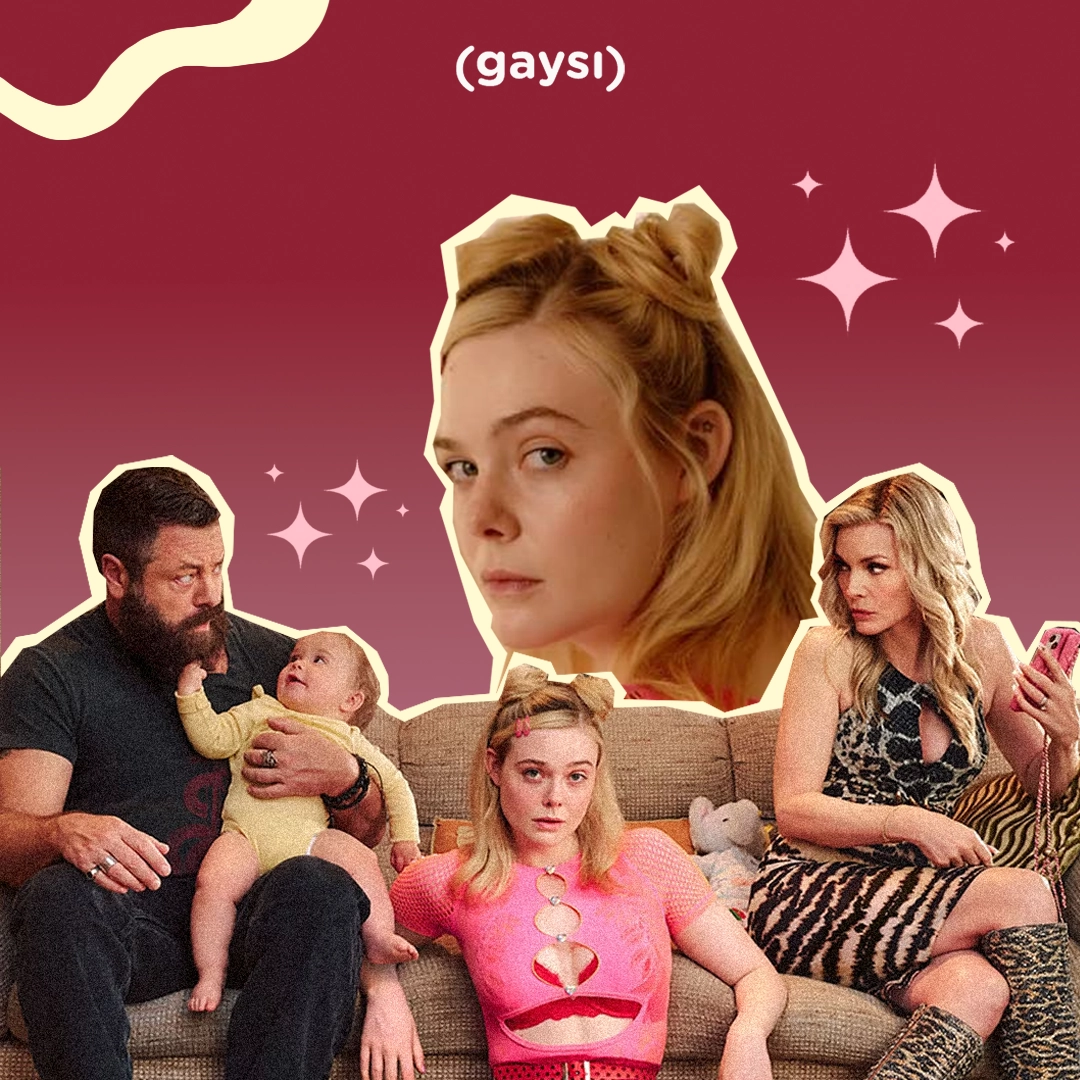
There is something almost too honest about the title Margo’s Got Money Troubles. It does not dress up its heroine’s crisis as ambition, destiny or a glamour reinvention arc. Margo does not simply “choose herself” in the clean, aspirational way that streaming shows often like their messy young women to do. She has a baby, she has unpaid bills, and she has shame circling around her in every direction. And because survival rarely arrives in respectable packaging, she turns to OnlyFans.
That is what makes the Apple TV series feel so refreshing. It refuses to flatten Margo into a victim, a joke or a girlboss fantasy. Instead, it lives in the messy middle, where survival rarely feels empowering and sometimes the only choice left is the one everyone else is ready to judge.
Margo, played by Elle Fanning, becomes a young single mother after a relationship with her English professor leaves her carrying the consequences, while he slips back into respectability. From there, the show becomes less about scandal and more about the logistics: rent, childcare, food and the humiliating maths of being alive. The scene where Margo goes through an unsuccessful job interview (with her son Bodhi by her side) especially captures this because it shows the quiet humiliation of trying to do things the “respectable” way, and still being left with “no real way out”. The point is not that OnlyFans is easy money. The point is that society is often more offended by women monetising their bodies than by the systems that leave them desperate enough to do it.
This is where Margot’s Got Money Troubles feels especially relevant to the Gen Z survival economy, even for viewers who are not young parents. Most Gen Zs may not relate to nappies or custody battles, but many will recognise the feeling that one income is never enough, stability is always one emergency away from collapsing and almost every hobby, skill or part of yourself can become content if you’re desperate enough. Deloitte’s 2026 Gen Z and Millennial Survey found that financial strain is delaying major life decisions for young people worldwide, from further education to starting families. Margo’s circumstances may be extreme, but the financial anxiety behind them feels painfully familiar.Deloitte’s 2026 Gen Z and Millennial Survey found that financial strain is delaying major life decisions for young people worldwide, from marriage to further education and starting families
What the show understands is that “online survival” is still labour. Margo is not just posting and waiting for money to magically appear. She is performing, branding, responding, calculating, managing desire and learning how attention works. Her estranged father Jinx, a former wrestler, becomes an unlikely guide because wrestling and OnlyFans both understand spectacle. You need a persona, timing and you need to know what the audience thinks it wants and what it is actually paying for. This is one of the show’s smartest ideas.
But the show is also flawed. Sometimes, the series is so determined to be charming that it risks sanding down the brutality of poverty. There are moments where the narrative wants us to laugh, and the laughter lands, but beneath it is a darker question: why does a young woman need to become exceptional at self-commodification just to survive?
Still, the show’s humanity matters. It refuses the lazy moral binary around sex work: exploited or empowered, degraded or liberated, foolish or brave. Margo can be funny, irresponsible, resourceful, selfish and loving and scared at the same time. That complexity is where the dignity of the series lives. It does not ask us to approve of every decision she makes. It asks us to look at the world that made those decisions feel possible, necessary or even sensible.
The motherhood angle makes the judgment around her even harsher. A young woman without a child doing OnlyFans is already treated as a cultural panic button. A young mother doing it becomes, in the eyes of the world, a failed woman twice over. Margo’s refusal to disappear into shame is what makes her compelling. She is not the perfect mother, but she is present and she is trying. And sometimes, trying looks like doing the thing everyone will judge you for because your baby still needs to eat.
That tension feels especially important because queer and feminist pop culture has long understood that respectability comes with privilege. The “right” kind of survival is often only available to those with family support, social approval or financial safety nets. Margo’s story reminds us that dignity does not always look respectable. Sometimes it looks like refusing to let other people’s shame decide whether you deserve a future.
Margo’s Got Money Troubles is not a perfect show, and maybe that’s why it works. It is chaotic and surprisingly moving in the way survival is messy. It does not glorify OnlyFans, but it also does not punish Margo for finding a way through. Instead, it asks a more uncomfortable question: when the economy turns everyone into a performer, why are women still judged the most for performing well enough to live?
