


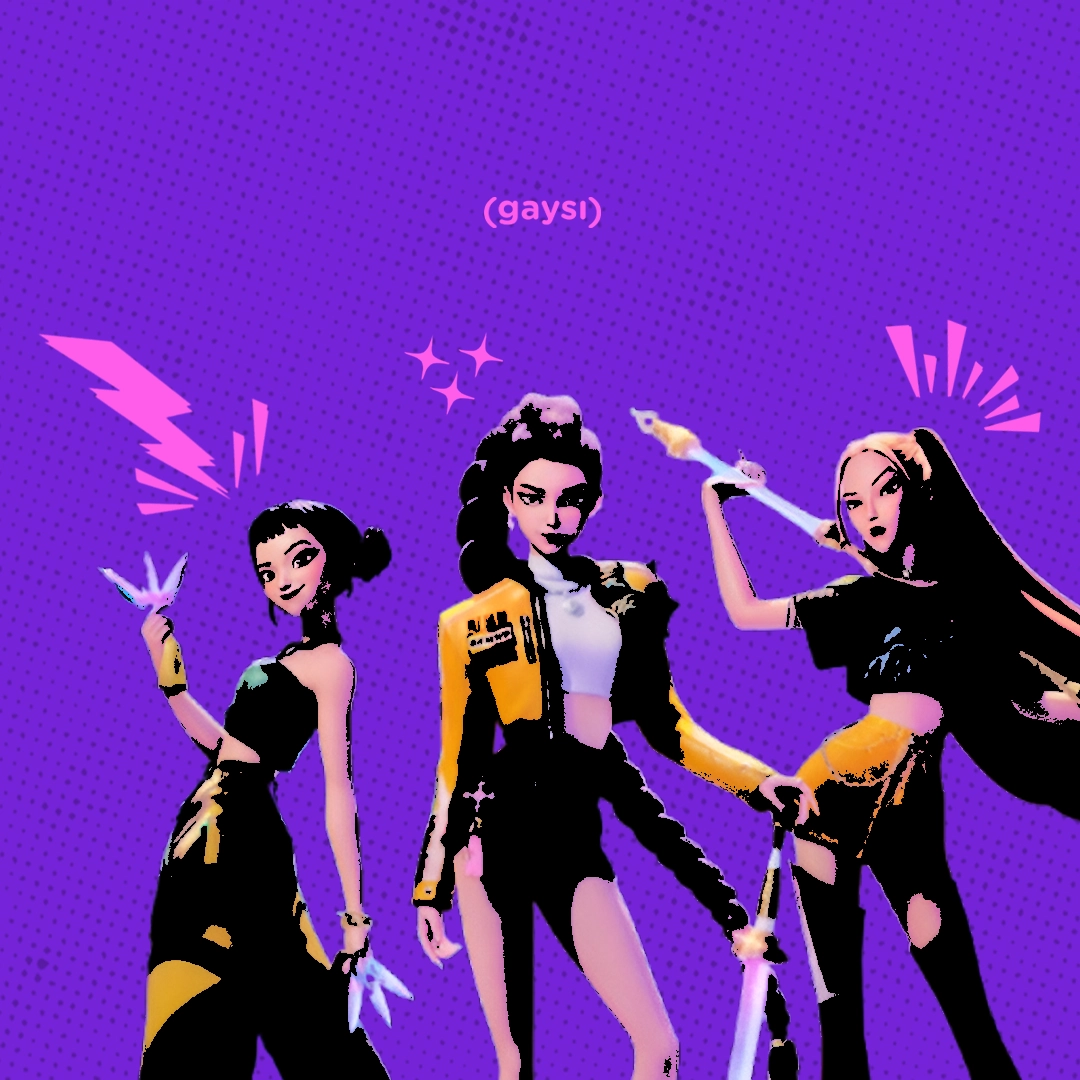
When KPop Demon Hunters arrived on Netflix on 20 June 2025, I expected an affectionate K-pop fantasy. I did not expect to feel personally attacked by an animated idol hiding her supernatural marks beneath her costume. Yet somewhere between “Golden”, Rumi’s collapsing voice and her bandmates refusing to abandon her, the film became more than a streaming hit. For me, it became proof that glitter and emotional devastation belong together.
One year later, its scale is difficult to dismiss. Netflix says the film spent 52 consecutive weeks in its Global Top 10 and became its most-watched title. It also won the Academy Award for Best Animated Feature and Best Original Song for “Golden”. Huntr/x, although fictional, became the first K-pop girl group to top the Billboard Hot 100 (and the first fictional act to do so), while the film crossed 500 million Netflix views. These achievements blurred the boundaries between animation, idol culture and pop history. A fictional group became real enough to chart, perform and gather a fandom of its own.Netflix says the film spent 52 consecutive weeks in its Global Top 10 and became its most-watched titleIt also won the Academy Award for Best Animated Feature and Best Original Song for “Golden”.Huntr/x, although fictional, became the first K-Pop group to top the Billboard Hot 100
The success matters because the film understands K-Pop as more than an aesthetic package. Its songs were created with producers connected to BTS, BLACKPINK, TWICE and THEBLACKLABEL, but the music is never decorative. Every number advances the story. “Golden” begins as the sound of impossible perfection, while “What It Sounds Like” turns performance into confession. The stage is simultaneously a place where the girls rehearse who the world permits them to be. In an era where animated musicals can be reduced to one viral track, KPop Demon Hunters lets its entire emotional arc live through music.
That relationship between performance and identity is especially legible to queer audiences. Rumi is adored as an idol while fearing that the truth of her body will make that love disappear. Her demon marks are not just a direct substitute for queerness, but the language surrounding them is painfully familiar: hide this, control it, fix it, become acceptable before anyone notices it.
Director Maggie Kang has compared Rumi’s story to coming out of the closet. Co-writer Hannah McMechan has also shared that she realised she was bisexual while working on the film. As the screenplay developed, she found herself connecting Rumi’s plea for Celine to love all of her with her own experience of seeking acceptance from religious parents. What began as a fantasy metaphor acquired an unexpectedly autobiographical queer meaning.
This does not mean Rumi must be labelled queer for the metaphor to matter. Queer viewers have always recognised themselves in stories that were not presented as explicit representation. Sometimes we find ourselves in magical girls with double lives. Rumi’s shame grows because it remains hidden. Her healing begins when she stops treating half of herself as the enemy.
The demons may be literal, but the most dangerous voice in the film is the one insisting that isolation is safer than honesty.
Just as important is the girl-group sisterhood surrounding her. K-pop narratives can frame women as competitors, but Huntr/x survives because Mira, Zoey and Rumi are not interchangeable parts of a brand. They are sisters forged through rehearsal and battle.
Rumi is not only afraid of losing her career. She is terrified of losing the people who know her choreography, moods, ambitions and worst habits. Queer chosen family often carries that same hope: that someone will see the mess beneath the performance and stay. Mira and Zoey cannot magically erase Rumi’s shame, but they can refuse to let her fight alone.
The fandom extended that promise beyond the screen. Fans dressed as Huntr/x, attended sing-along screenings and created art, choreography, edits and queer readings. The film respected fandom rather than treating it as a joke, showing fans of different ages and genders instead of reducing K-Pop audiences to screaming teenage girl stereotypes.
For queer people, who have long used pop fandom to experiment with style, desire, community and self-invention, that respect feels significant. Stanning can be a refuge. Singing together in a cinema or recreating a fictional idol’s outfit may appear unserious, but these activities allow people to recognise one another. Fandom turns private identification into collective celebration.
Perhaps this is KPop Demon Hunters’ queer legacy after one year: it made self-acceptance feel neither quiet nor solitary. It imagined healing as loud, collaborative and spectacular. You do not need to defeat shame by becoming less visible. You defeat it by letting your friends fight beside you.
A year later, I return to the film because “What It Sounds Like” still makes me cry. Its greatest fantasy is not that pop stars can kill demons. It is that after the costume tears, the secret is exposed and the perfect performance collapses, you can still be loved, not despite every part of you, but with every part included.
