


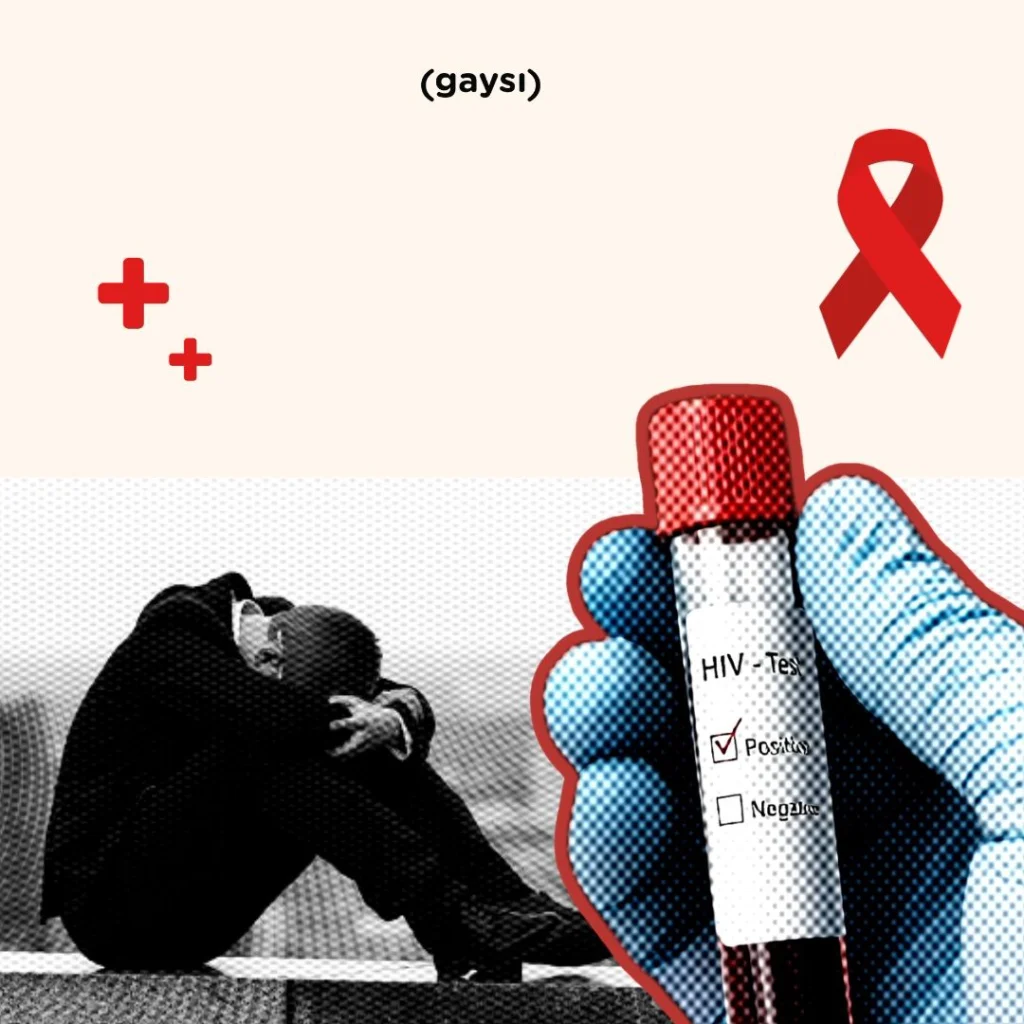
There is a loneliness that isn’t lonely. It’s a screen at 1 a.m., faces at the top of the grid, a message typed and erased three times before it is sent. For many queer men in Bengaluru, this remains the only space where they can voice desire out loud. Not a bar. Not a friend’s living room. Not a family dinner table. A grid.
The HIV data coming out of Karnataka is being read as a story about risk this year. I want to tell it as a story about access, because for queer people, those are not the same thing.
What the numbers say
HIV-positive men who have sex with men (MSM) detected under the state’s targeted intervention programme, run out of Bengaluru, rose from 166 in 2023-24 to 412 in 2025-26, a worrying increase flagged by the Karnataka State AIDS Prevention Society (KSAPS). In a 2024 study of MSM clinic sites across India, HIV incidence was highest in Bengaluru, at 3.5 new infections per 100 person-years.
A figure of more than 66,000 was circulated as the number of people who had tested positive with KSAPS, but that was a misreading: it was the number of people KSAPS had reached through its programmes. The corrected number is still large.
Anonymous app-to-app encounters have been cited as the reason contact tracing keeps failing. That is usually where the story ends: apps, anonymity, a fuzzy gesture at “lifestyle.” I want to go one step further, and ask why the app is the only room.
How hard “easy” intimacy actually is
A lot of people get to experience intimacy gradually. A second glance that lingers a beat too long. A slow build, where you can learn about a person before you ask to meet. A place to be together without being in danger for it. And at some point, even messily, a family that finds out and has to deal with it.
For a queer person, there is hardly any of that scaffolding. There is no public vocabulary for queer flirting, none that exists openly or visibly, so it has to be invented, and that usually means it happens online, and quickly. There is no “ask around about him” to check on a person, only the danger of the meeting itself. There is little time: it costs by the hour, and it costs money in the currency of secrecy. Intimacy gets planned around a parent’s absence rather than around desire, and when the window is small, everything gets compressed into it, including what both people want and whether it is safe. There is rarely a vocabulary to have that conversation at all. For the people I have sat across from in community work, queer sex was never once described as something that simply happens, let alone something you could ask questions about safely.
None of this means queer people don’t find intimacy. They do, constantly and resourcefully. But when all of these conditions are scarce at the same time, intimacy no longer has room to unfold slowly, quietly, with negotiation. It becomes something that has to be seized, fast, silent, without the back-and-forth of safety. This is not a personal defect. It is compression, what happens when a whole category of desire is cut off from any room to exist in.
I think of a young man I sat with, who spent the week before a family wedding deleting every app off his phone, then reinstalled them all the moment he got back, not because they had vanished and returned, but because there was no option between hiding them and not having them at all. He didn’t have a name for what he wanted. He had a download and a delete.
The app isn’t the cause — it’s the workaround
“Dating apps are complicating contact tracing” is a headline that is both true and wrong. The app did not make anonymity a risk factor. The closet did. For queer people in this city, the app is the first infrastructure through which intimacy is possible at all, and it was never built to carry courtship, community scrutiny, sex education, healthcare access, and the distribution of those responsibilities across families, neighbourhoods, schools, and clinics.
The message isn’t “don’t have MSM activity,” it’s “have safe sex,” as the KSAPS project director put it. It’s a sound instinct. But safe sex isn’t only a behaviour you choose; it’s something you either have the conditions for or you don’t. Real, good interventions are happening, testing camps in engineering colleges across the country, anonymous QR-code risk-assessment tools, but those interventions are triage on a system that has never let queer intimacy be ordinary enough to protect.
What “public health concern” should actually mean here
It is tempting to read an alarm from a health department as confirmation of the suspicions already circulating in the culture: that queerness is dangerous, disordered, something to be managed. That reading is upside down. If infections in a city are rising among people who have never been tested, that is not evidence that queer desire is to blame. It is a testament to what happens when we force queer people to build their entire intimate life, courtship and vetting, safety and healthcare, out of a single app, in secret, with no time and no net.
The remedy was never “be more careful.” The solution is to let queer intimacy happen somewhere that isn’t too early, too fast, too visible, or too unsafe to care about, somewhere it is perfectly normal to care about it, as desire already is. The grid at 1 a.m. isn’t the problem. The problem is that we have built a city where it is still the only room in the house, and as long as that’s true, no number of testing camps will offset the price of the closet.
