


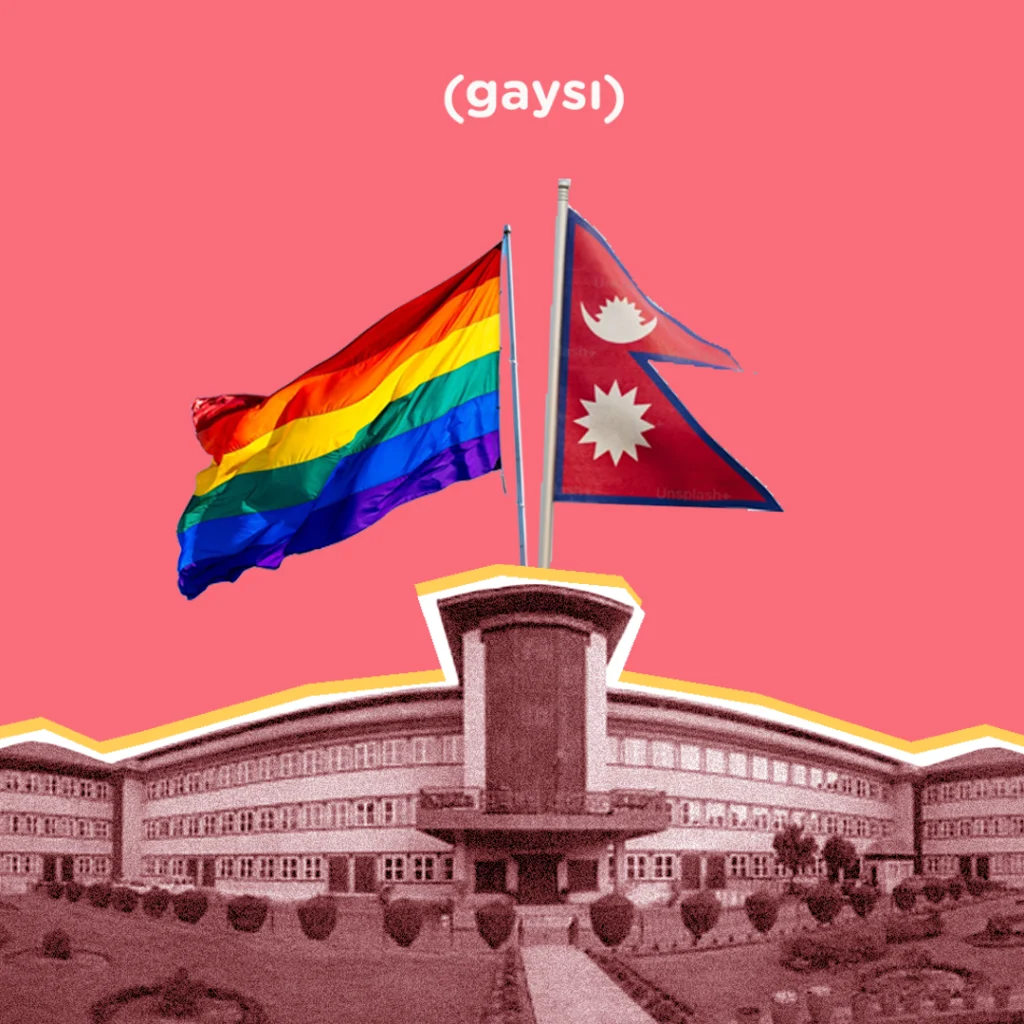
In a landmark victory for LGBTQIA+ rights in South Asia, Nepal’s Supreme Court has officially ruled in favour of marriage equality for gender and sexual minority communities. On June 18, 2026, the court issued a binding directive ordering the government to guarantee equal marriage rights by updating the country’s civil code and removing discriminatory language that excludes queer couples.
The ruling is the result of years of activism. On June 7, 2023, Pinky Gurung, president of Blue Diamond Society, and other LGBTQIA+ activists filed a writ petition against the Government of Nepal seeking equal marriage rights for Nepal’s PoMSOGIESC community, people of marginalised sexual orientations, gender identities and expressions and sex characteristics. A month later, activist Rukshana Kapali joined the case as an interested party on behalf of Queer Youth Group.
The petition had already secured an important interim victory in 2023, when Nepal’s Supreme Court directed the government to begin temporarily registering same-sex and non-heterosexual marriages through local government offices. But temporary recognition was never enough. Without changes to the civil code, queer couples still faced legal uncertainty over their relationships and families.
After the final hearing on May 7, 2026, the Supreme Court reserved its verdict for June 18th. On that date, it ruled in favour of the petitioners, directing the government to guarantee marriage equality through legal reform. The court also dismissed a counter-writ filed by advocate Yuvraj Paudel, who had sought to block equal marriage rights for gender and sexual minority communities.
Blue Diamond Society welcomed the decision as a historic milestone while emphasising that implementation is now the government’s responsibility. Updating laws, changing official procedures and ensuring local authorities recognise queer marriages will determine whether this victory translates into everyday reality.
The judgment is especially significant because it marks the fourth Supreme Court decision in nearly two decades affirming that LGBTQIA+ people are entitled to equal dignity and constitutional protection in Nepal. It also arrives at a symbolic moment, with one of the original petitioners, Bhumika Shrestha, now serving as a Member of Nepal’s House of Representatives.
For many queer people, marriage equality is about far more than weddings. It means being recognised as family, whether that involves hospital visitation, inheritance, property rights, healthcare decisions, or simply having the state acknowledge that your relationship is as valid as anyone else’s.
Nepal’s progress also throws India’s position into sharper focus.
In 2023, India’s Supreme Court declined to legalise same-sex marriage, instead leaving the issue to Parliament. While the court acknowledged the dignity and rights of queer people, it stopped short of recognising their right to marry. For many LGBTQIA+ Indians, it was a heartbreaking reminder that equality remains conditional.
That is why Nepal’s ruling resonates far beyond its borders. It proves that marriage equality is not a distant Western ideal but a conversation being shaped within South Asia itself. Nepal and India share deep cultural and historical ties, yet today they stand in very different places when it comes to recognising queer families.
Nepal’s fight is not over. The government must now implement the court’s directive and ensure equal rights extend beyond marriage certificates to every aspect of family life. But the Supreme Court has made one thing unmistakably clear: queer love deserves the same legal recognition, dignity and protection as any other.
For queer Indians still waiting, that victory is both hopeful and bittersweet.
