


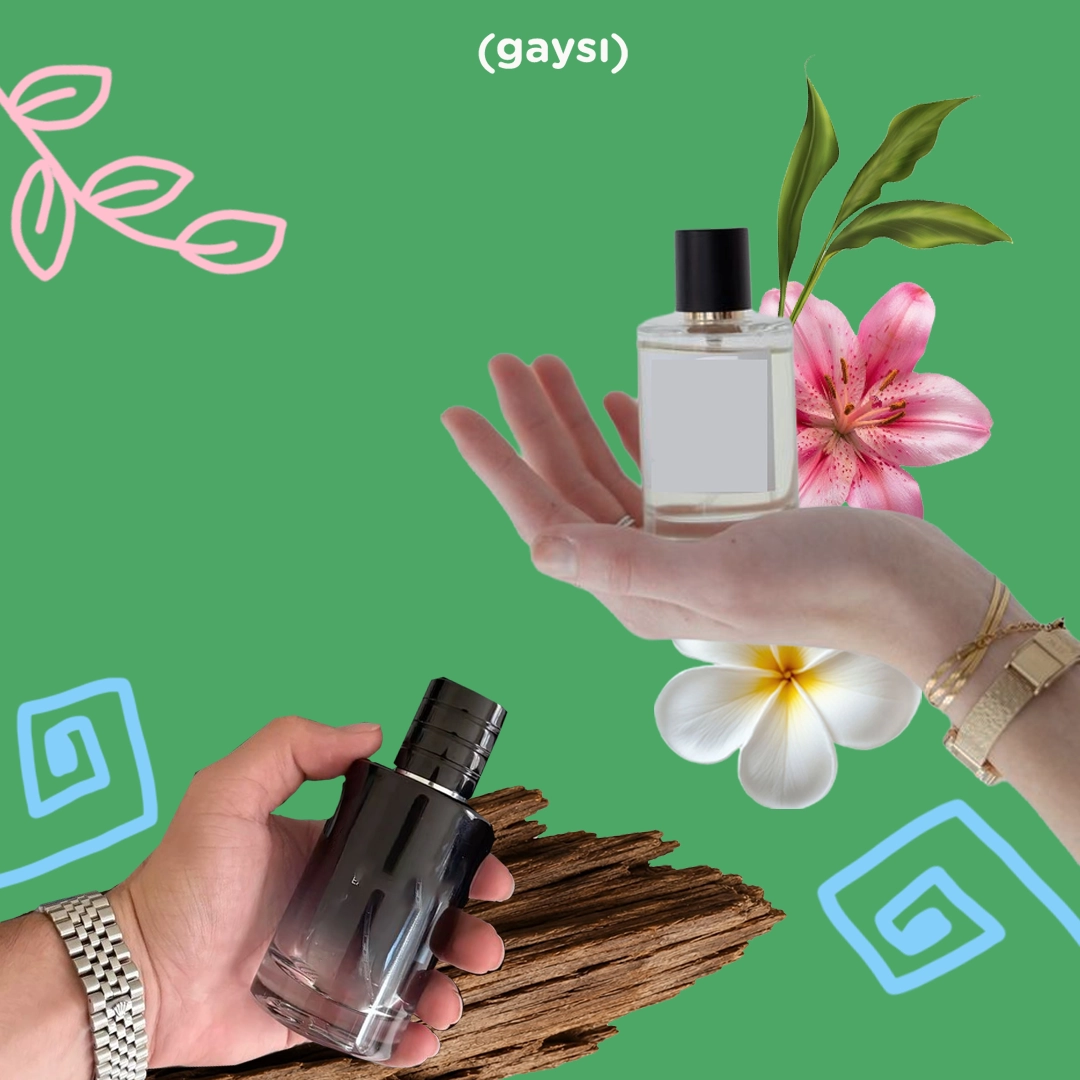
Walk into almost any perfume shop or department store in a mall, and you are immediately asked to participate in a strangely familiar ritual. On one side, there are fragrances “for women”: bottles shaped like delicate ornaments, filled with notes of jasmine. On the other are fragrances “for men”, packaged in navy, promising some combination of leather and musk.
The implication is surprisingly rigid: women apparently smell like a beautiful, delicate rose while men smell like a rigid, manly leather. Somewhere along the way, perfume stopped simply being something we liked smelling and became another way to perform gender correctly.
But there is nothing inherently feminine about jasmine, just as there is nothing biologically masculine about leather. These associations are learned, repeated and most importantly sold to us.
Perfume Does Not Have A Biological Sex
A rose does not know that it’s supposed to be feminine. Neither does sandalwood know that it has supposedly been assigned to men.
And yet, fragrance advertising often treats these categories as though they are natural laws.
Women’s perfumes are frequently described through words like irresistible, while masculine scents are sold using words like dominant.
For example, Yardley’s perfume ads place women in more elegant and glamorous settings that showcase their gracefulness. It is less about what these ingredients actually smell like than the stories brands have attached to them. It is the same cultural shorthand we see everywhere else: pink versus blue.
Perfume simply makes that binary expensive.
How Marketing creates “Feminine” and “Masculine” smells.
Fragrance marketing does not merely sell smell. It sells identities.
A perfume commercial rarely tells you, plainly, “this contains jasmine, amber and cedar”. Instead, it promises that wearing a fragrance will turn you into a seductress or an alpha male.
When I see perfume advertisements, I often notice women are positioned as objects of desire, while men are sold fantasies of power.
This also explains why certain ingredients have become so aggressively gender-coded. White florals are associated with femininity because they fit cultural ideas about women being soft. Meanwhile, smoke easily fits traditional fantasies of masculinity built around ruggedness.
The associations may feel natural now, precisely because marketing has repeated them for so long.
The Rise of Unisex Perfume.
The perfume industry has, of course, begun loosening these rules.
Fragrances are increasingly marketed as unisex, particularly within niche fragrance culture.
On one hand, this feels freeing. It allows fragrance to become playful again: something chosen according to taste rather than gender.
A person might want to smell like jasmine and oud without those combinations making a declaration about their gender.
But even the word “unisex” raises an interesting question: Why did perfume need to be gendered so heavily that smelling however we wanted required its own category?
Queerness makes Perfume much more interesting.
Queer approaches to beauty have always been particularly good at asking: who made this rule, and why should I follow it?
Fragrance can work the same way.
Instead of asking whether a perfume is appropriately masculine or feminine, we can choose scents according to mood or pure sensory pleasure. I might want to smell like jasmine one day and ocean breeze the next.
That does not necessarily mean my gender has changed between Tuesday and Wednesday. Sometimes a perfume wardrobe can contain contradictions because human beings contain contradictions.
For queer people especially, that contradiction can become its own form of expression. Scent can be gender-euphoric without needing to settle neatly into “for him” or “for her”.
Just let people smell good.
Perhaps the strangest thing about gendered perfume is how unnecessary the entire argument becomes once you actually smell something you love.
Nobody encounters a beautiful sandalwood perfume and instinctively receives a scientific message announcing its gender.
We receive associations, memories, fantasies and feelings.
And those things belong to whoever wants them.
Maybe perfume does not need a gender revolution so much as it needs us to stop asking bottles of scented liquid to perform gender in the first place.
Because ultimately, flowers do not belong to women. They are just smells. And smelling good should not require choosing a side.
