


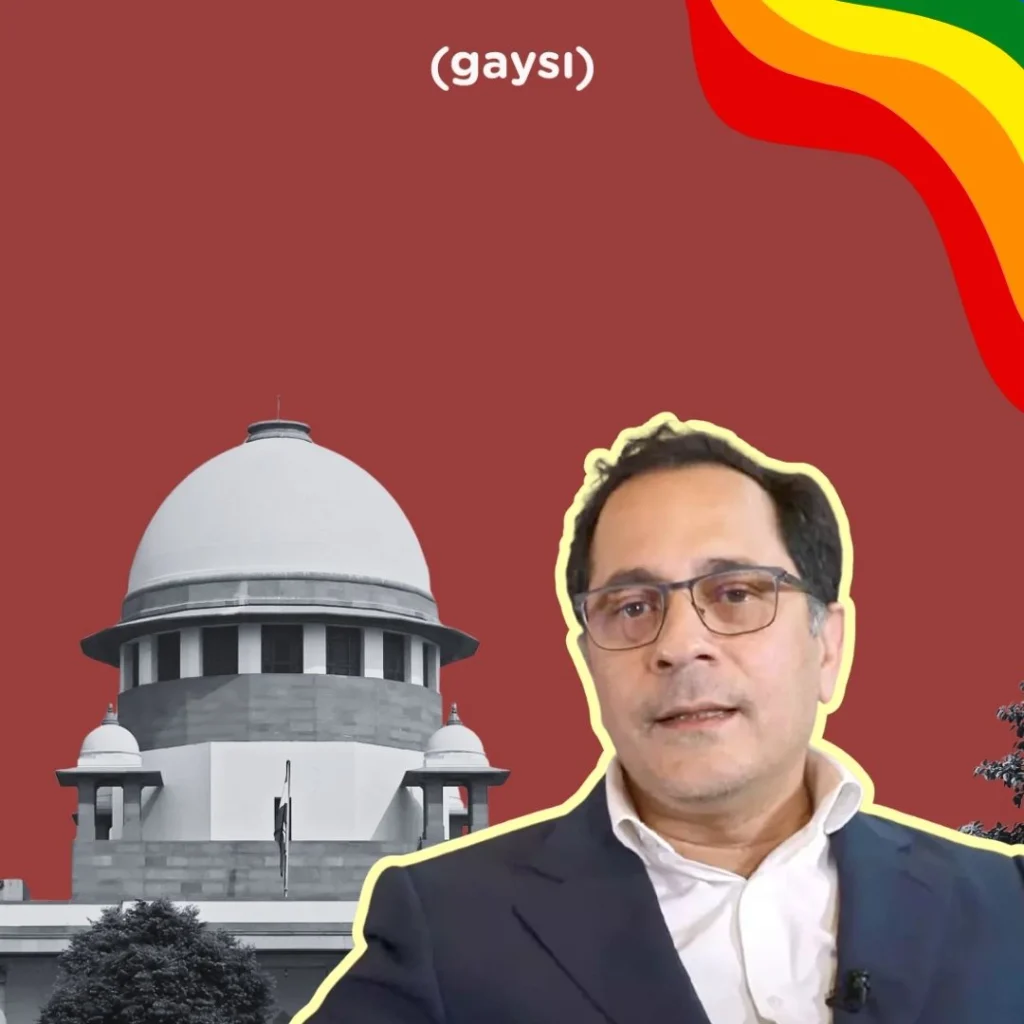
At a panel on judicial transparency this week, Justice Ujjal Bhuyan spoke about the opacity of India’s Collegium system: reasons withheld, criteria left uncodified, the public’s right to know who is elevated. Then he named Saurabh Kirpal. The Supreme Court Collegium’s reasons for recommending him were convincing, Bhuyan said. More than three and a half years after it reiterated that recommendation, no appointment had come.
Kirpal was on the same panel. He argued that appointments should rest on objective, genuine reasons rather than unexplained or copied language that leaves candidates and the Bar guessing. The discussion was about transparency. It was also about a file that has outlasted governments, Chief Justices and the controversies around it.
As of 4 August 2026, Saurabh Kirpal remains a senior advocate, not a judge of the Delhi High Court.
A recommendation that never became an appointment
The Delhi High Court Collegium unanimously recommended Kirpal on 13 October 2017. The Supreme Court Collegium approved the name on 11 November 2021. The Centre returned it for reconsideration on 25 November 2022. On 18 January 2023 the Supreme Court Collegium reiterated the recommendation.
The Supreme Court first considered the candidature in 2018 and deferred it several times before the 2021 approval. The government did not appoint him; it sent the file back the following year.
Kirpal had been counsel assisting senior advocate Mukul Rohatgi in Navtej Singh Johar (2018), the case that read down Section 377 insofar as it criminalised consensual same-sex conduct between adults. The recommendation was for the Delhi High Court, not the bench that decided Navtej. The appointment would still have placed an openly gay lawyer who had helped argue one of India’s most consequential LGBTQ rights cases inside a constitutional court. If appointed, he would be India’s first openly gay High Court judge.
What the government objected to
The January 2023 Collegium resolution set out the government’s objections with unusual directness. It referred to two R&AW communications (11 April 2019 and 18 March 2021) that raised the Swiss nationality of Kirpal’s partner and the fact that he was in an intimate relationship and open about his sexual orientation. A letter from the Union Law Minister dated 1 April 2021 noted that homosexuality had been decriminalised but same-sex marriage remained unrecognised, and that Kirpal’s “ardent involvement and passionate attachment to the cause of gay-rights” did not rule out the possibility of bias.
The objections were framed as questions of national security and judicial impartiality. Sexuality, relationship and advocacy were all part of the stated reasoning.
The Collegium rejected both lines. On security it found that the R&AW notes reflected no apprehension about the partner’s conduct bearing on national security, and no basis for assuming a Swiss national would be “inimically disposed” towards India. On bias it relied on the constitutional principles that protect LGBTQ citizens: every individual is entitled to dignity and individuality based on sexual orientation. Kirpal’s openness, the Collegium said, went to his credit; rejecting him on that ground would be “manifestly contrary” to those principles. It described him as possessing competence, integrity and intellect, said his appointment would add value and diversity to the Delhi High Court, and noted that any media comments about the delay should not count against him given how long the name had remained pending. It reiterated the recommendation and said it needed to be processed expeditiously.
The force of a reiteration
In an April 2021 order on delays in judicial appointments, the Supreme Court stated that a unanimous Collegium reiteration should lead to appointment within three to four weeks. Kirpal’s case has moved far beyond that window. More than three years after the January 2023 reiteration there has been no appointment and no publicly stated formal rejection. What remains is prolonged administrative non-resolution: occasional judicial criticism, no single decision to confront, a candidate left in professional life while the appointment stays permanently provisional.
Kirpal continues to practise as a senior advocate. In August 2026 he was speaking publicly about transparency in judicial appointments and the publication of inquiry reports concerning judges. The contradiction is hard to miss: a participant in a conversation about why institutions should explain their decisions remains the subject of one of the system’s least explained files.
Why the case matters beyond one person
India has never had an openly LGBTQ High Court judge. Appointment would place an out queer person on a bench that decides questions of family, inheritance, discrimination and constitutional rights, including those of other queer litigants. Judicial diversity is not only representation for its own sake. Who sits on the bench shapes which realities a court can grasp without having them explained from scratch, and shapes public confidence that the judiciary reflects the society it rules on. A Collegium that affirmed Kirpal’s competence, integrity and intellect, and rejected sexuality as a disqualification, has already made that argument in writing.
The delay carries a second, harder-to-measure cost. Kirpal is a senior advocate with decades of practice, a public profile and institutional standing; he can afford, in every sense, to wait. Earlier-career openly queer lawyers watching a Collegium-backed, publicly vindicated candidate remain unappointed for years without explanation have less reason to believe that openness about their identity will not cost them a seat. When a file of this profile stays unresolved, the next generation of queer advocates is left to calculate whether visibility is still a professional risk the system is willing to extract.
Beyond one file
Kirpal’s stalled elevation is not proof of a single coordinated policy on queer rights. It now sits inside a wider moment in which constitutional protections are contested through procedure, interpretation and administrative design.
In 2026 the Supreme Court heard arguments in a nine-judge Sabarimala reference on the scope of “constitutional morality”, the same doctrine that underpinned Navtej. Separate reporting indicated the Union government had asked the Court to revisit that reasoning, arguing that Navtej and Joseph Shine both relied on too subjective a use of the doctrine. This is not a reversal of Navtej, but it is a live challenge to the constitutional idea that helped make it possible.
The same year brought a concrete change to India’s transgender-rights framework. The Transgender Persons (Protection of Rights) Amendment Bill was introduced in the Lok Sabha on 13 March 2026, passed by both Houses by 25 March, received presidential assent on 30 March and came into force on 25 May. The amendment narrowed the statutory definition of “transgender person,” removed the express provision recognising a right to self-perceived gender identity, and introduced medical-authority involvement in obtaining an identity certificate. The law is under constitutional challenge; at a May hearing the Supreme Court issued notice, declined interim relief and placed the matter before a three-judge bench.
These developments are not interchangeable. One is an executive delay inside the appointments process. Another is legislation. A third is a question of judicial doctrine. Their connection is not a single legal mechanism. It is the way rights can be narrowed without an openly announced reversal: a name left unappointed, a doctrine recast as subjective, a statutory definition rewritten. The result is not always dramatic repudiation. Sometimes it is simply a change in who is allowed to enter the room.
The wait without a verdict
The 2023 Collegium resolution was unusually clear about Kirpal’s qualifications and about the constitutional weakness of the objections against him. It did not settle the appointment. It created a public record of institutional disagreement. The Collegium said sexual orientation could not be used against him. The government did not announce a formal rejection. The appointment did not happen.
More than three years later Justice Bhuyan could still describe the Collegium’s reasons as convincing while asking why nothing had followed. Kirpal continues to appear before courts and to speak about the institutions he may once have joined. He has not become a judge. His stalled candidature has become a case study in what happens when constitutional approval meets administrative silence.
The question is no longer only whether Saurabh Kirpal will be appointed. It is what a judicial system says about itself when it can explain why a person deserves the bench, reiterate that conclusion, prescribe a timetable for action, and still leave the appointment unresolved nearly nine years after the process began.
