


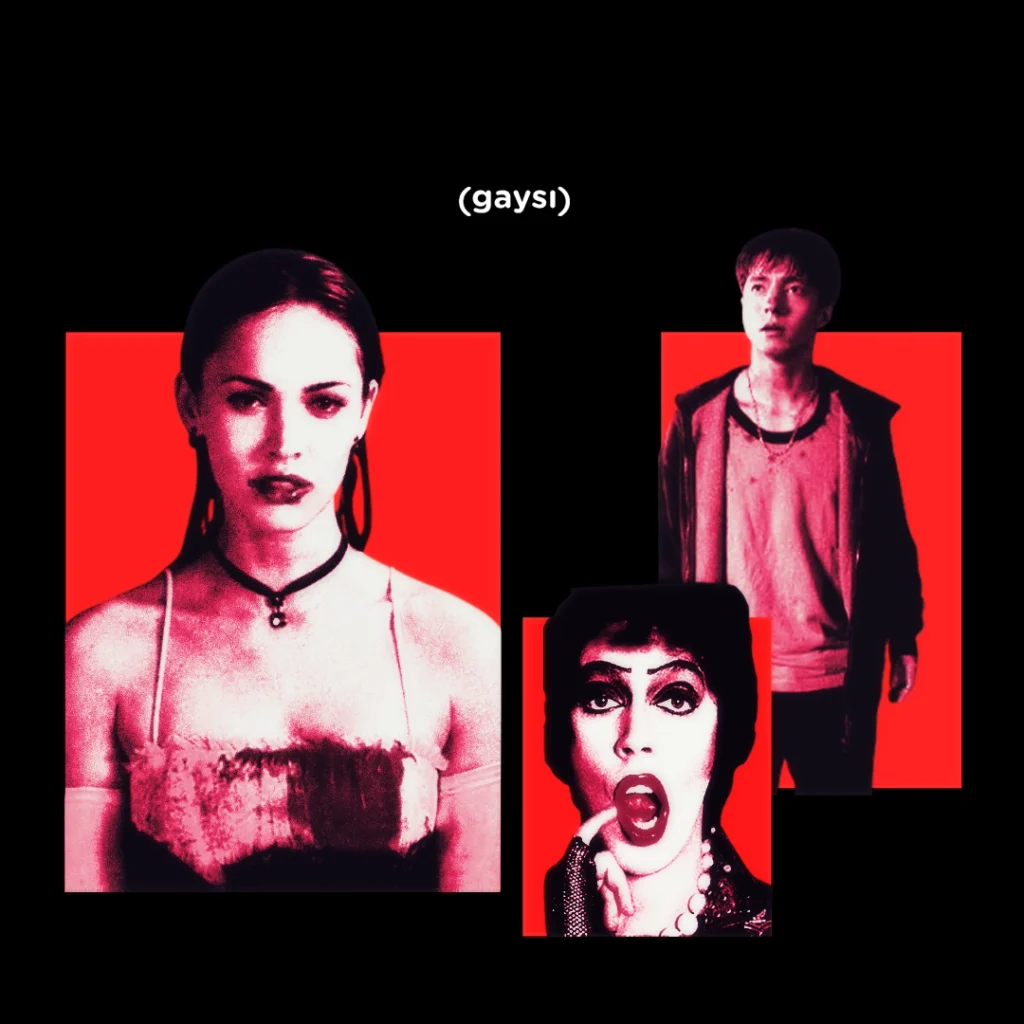
There is a reason so many queer people end up becoming horror fans. Maybe it’s because horror has always understood what it feels like to be watched, to be feared, to be told there is something wrong with you, long before mainstream cinema gave queer people a happy ending.
As a horror fan, I’ve always been drawn to films where desire becomes dangerous, bodies transform into something unfamiliar, and outsiders refuse to fit neatly into the world around them. Looking back, it’s almost funny how many of those films were queer, whether they admitted it or not.
Queer horror didn’t suddenly appear in the 2020s. It had been lurking in the dark corners for decades.
Take The Hunger (1983). On paper, it’s a stylish vampire film starring Catherine Deneuve, David Bowie and Susan Sarandon. In reality, it’s one of the most influential queer horror films ever made. The film wrapped lesbian desire, immortality and loneliness in silk sheers, nightclub lighting and blood-red lipstick. It was sexy, tragic and impossible to forget.
Then came films like Mulholland Drive (2001), which isn’t horror in the traditional sense but absolutely understands nightmare logic. Its fractured identities, dreamlike lesbian romance and sense of lurking dread make it feel like a ghost story about desire itself. The romance between Betty and Rita remains one of the most haunting queer relationships in cinema.
By the early 2000s, queer horror was becoming less coded and more confrontational.
Few films capture that better than Lucky McKee’s May (2002). The cult classic follows a lonely young woman desperate for connection. It’s awkward, uncomfortable, darkly funny and devastating. Long before “female rage” became an internet buzzword, May was already showing what happens when isolation mutates into obsession. Many queer viewers recognise themselves in her longing, even when her choices become monstrous.
Then came the film that launched a thousand Tumblr gifs and queer awakenings: Jennifer’s Body (2009).
What was originally marketed as a straight teenage boy fantasy has since been reclaimed as one of the defining queer horror films of the 21st century. The relationship between Jennifer and Needy is too emotionally charged, too possessive and too intimate to fit inside the box of “just friends”. Years later, critics and audiences began recognising the film as a story about female desire, messy attraction and the terrifying intensity of adolescent relationships.
And then something interesting happened. Queer horror stopped hiding. Modern filmmakers no longer needed monsters as metaphors. Queer characters could simply exist at the centre of the story.
The Netflix trilogy Fear Street gave us queer teenage protagonists whose sexuality wasn’t treated as a tragic twist or cautionary tale. Instead, they got to be heroes, survivors and lovers. The trilogy felt like a milestone because it combined everything horror fans love, slashers, curses and blood-soaked set pieces, with a queer romance at its heart.
Meanwhile, filmmakers were pushing horror into even stranger territory.
Few recent films embody queer horror’s evolution better than Titane (2021). Trying to explain Titane to someone who hasn’t seen it is almost impossible. There are cars, there is body horror, there is gender transformation, there is unexpected tenderness. Beneath all its chaos lies a deeply moving story about identity and becoming something entirely new. It’s a film that feels less interested in labels than in the fluidity of being human.
Similarly, Swallowed (2022) uses body horror and crime-thriller elements to explore friendship, desire and queer vulnerability. The horror emerges not from queerness itself but from the world surrounding queer people. That’s a significant shift. Modern queer horror increasingly rejects the old tradition of making queer identity the source of fear. Instead, it asks what happens when queer people navigate systems that already see them as outsiders.
That outsider perspective may be why queer audiences continue gravitating towards horror.
Horror understands transformation. It understands bodies that don’t behave the way society expects. It understands longing, secrecy, shame and reinvention. Whether it’s a werewolf shedding skin, a vampire discovering forbidden desire or a final girl refusing the role assigned to her, horror has always spoken the language of becoming.
Perhaps that’s why queer horror feels so alive right now. The genre has evolved from coded glances and subtext into something louder, stranger and more confident. Queer creators are no longer sneaking themselves into the margins of horror cinema. They’re building entire worlds.
And 2026 looks set to continue that momentum.
Two of the year’s most talked-about titles are Leviticus and Teenage Sex and Death at Camp Miasma. Both have already made waves on the festival circuit, Leviticus premiering at Sundance and Camp Miasma taking the Queer Palm at Cannes, and both continue horror’s recent obsession with queer desire, transgression and outsider communities. If the past few years have shown us anything, it’s that some of the most exciting horror stories are being told by filmmakers willing to embrace queerness not as a metaphor, but as a lens through which to view fear itself.
For decades, queer audiences found themselves in the monster. Now, increasingly, we’re finding ourselves in the hero too. And honestly? The monsters are still pretty hot.
