


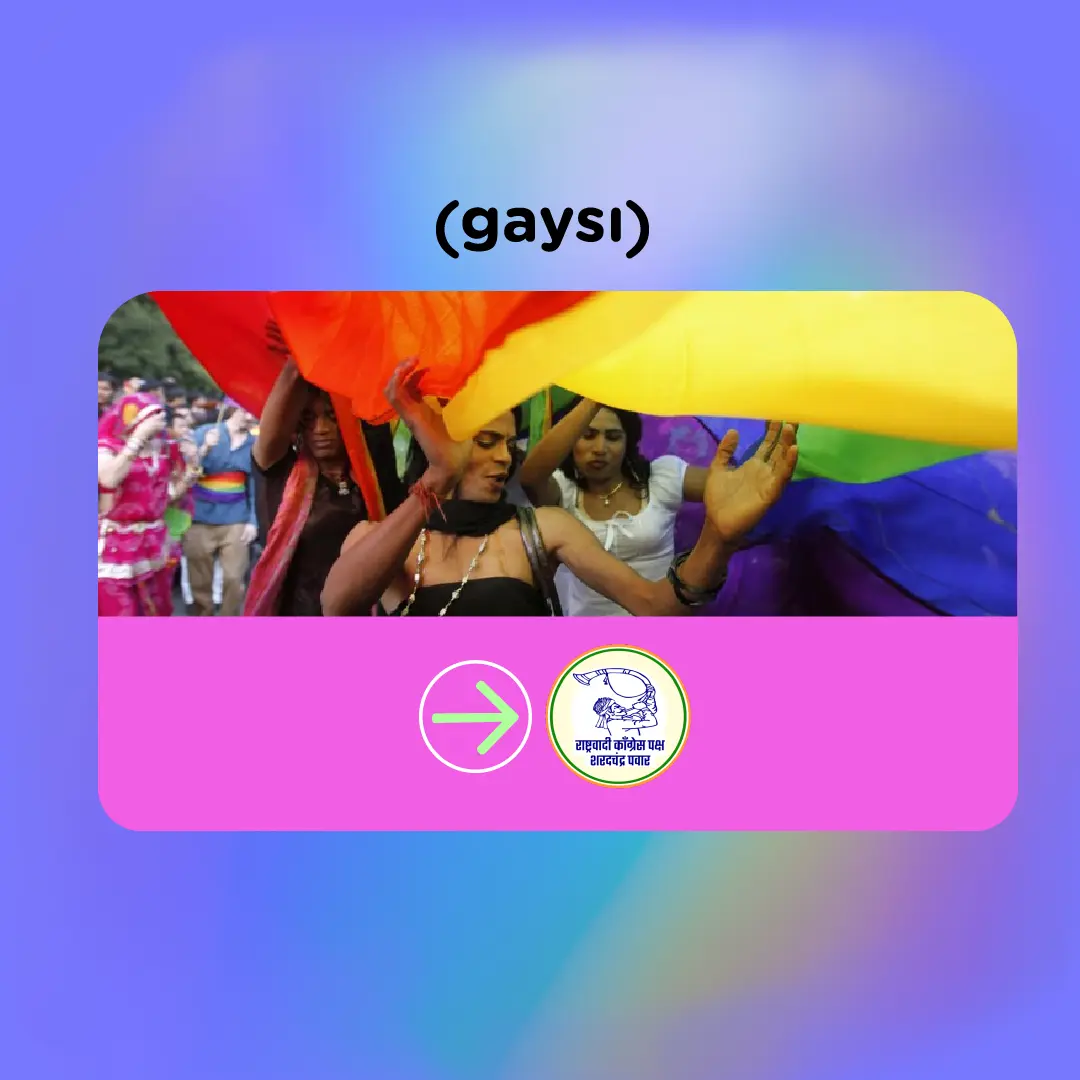
The Nationalist Congress Party (Sharadchandra Pawar), which was founded by its President, Sharad Pawar, and symbolized by a man blowing the tura trumpet, has listed down their plans for the LGBTQIA+ community in their election manifesto.
This party is not to be confused with the Nationalist Congress Party (clock symbol) that broke off under the leadership of Ajit Pawar in 2023 and has aligned itself with the NDA Alliance, which consists of members like BJP and Shiv Sena. On the other hand, the Nationalist Congress Party (Sharadchandra Pawar) has aligned with former political rivals, Shiv Sena (UBT) and the Indian National Congress.
What is this state party bringing to the table?
The list addresses the following:
Healthcare, Marriage and Adoption Rights
Sensitivity training for teachers to foster safe spaces in educational institutes
Inclusive, gender-affirming care, mental health support, and HIV/AIDS prevention and treatment
Police training to effectively tackle anti-LGBTQ hate crimes, and creating laws against targeted hate crimes.
Setting up youth centers, counseling and support groups to tackle community-specific challenges and community well-being
Policies to eliminate workspace discrimination based on sexual orientation and/or gender identity
Public sensitization to remove stereotypes, eliminate stigma and cultivate acceptance for LGBTQIA+ community.
Minimum of 5% budgetary allocation for Disability Inclusion, with plan to release budget statement addressing women and children distinctly. However, disabled LGBTQIA+ folx were not mentioned separately.
Here are some things that remain unaddressed:
Horizontal Reservation that takes into consideration the intersection of caste-oppression with queer identities
Safety in civic spaces and access to public transportation
Ease of access to self-determination in public documentation
Comprehensive gender and sexuality education in schools
Funding for housing accessible to trans folx and those facing violence in the home environment; initiatives like Garima Greh have been long-ignored despite failing infrastructure and reduced access to funding
How Does This Impact The Community At Large?
Clearly mapping out the party’s intent to protect a vulnerable community is defining. But given our history with promises made by parties before the election, will this eventually end up on the back burner? How will we hold them accountable? Will the party cadres engage more people from the community or will we be relegated to public consultations and discussions only? Intersectionality of identities has once again not been considered despite protests by various marginalized groups among queer folx making their needs known.
Reading NCP’s election manifesto does make it seem like they have taken time to define the work they intend to begin doing. Prioritizing vulnerable groups by announcing welfare programs for people like farmers and caste-oppressed people, and workplace reservation for women sounds great on paper. However, the proof of the pudding is in eating it.
Could this shape the future of the country at large?
The election manifestos of 2024, have shown varied interests in plans for vulnerable groups with rising expectations for action and protection. We are yet to see how these plans would unfold in real time and how they would look like in action. However, it is worth noting that the incumbent party’s manifesto itself does little to address the pressing needs of the larger LGBTQIA+ community in India.
One can’t help but hope that this would set the precedent future election and political discourse. However, what truly cements the template will only be decided by the actions that elected leaders take in terms of legislation, resource allocation, and implementation. And that responsibility of action depends on our votes.
