


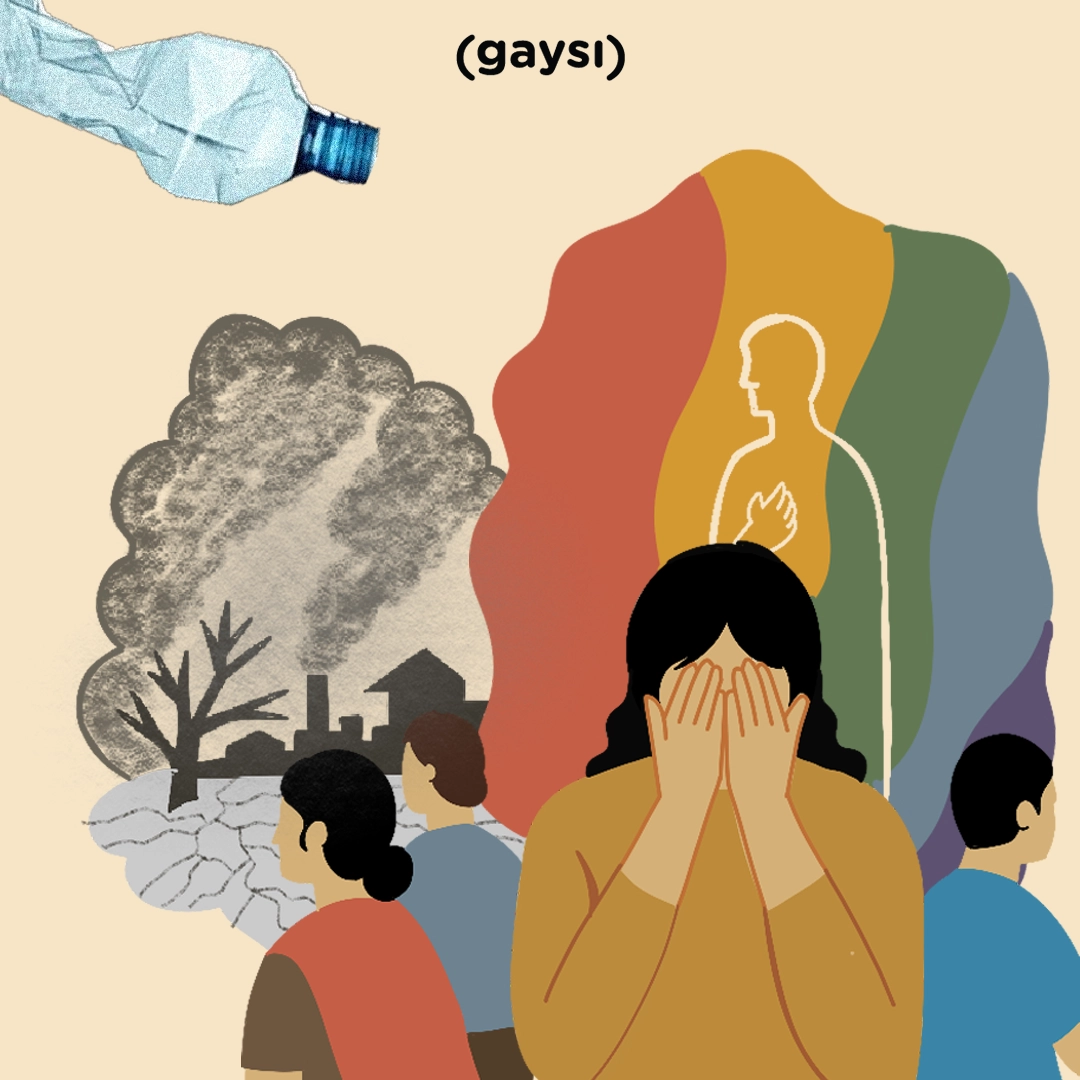
The idea of what makes a life well lived among the Indian middle class is as unoriginal as it is prevalent. To follow the prophecy, you must play along by following the arbitrary rules already in place. For that, you will need to get a prestigious job (ideally abroad) or join the family business, marry well (someone of a similar social and economic standing but also someone from an upper caste), have children (at least one boy), take care of your elders (including your in-laws if you are a woman) and keep faithfully playing your part to uphold age-old rituals and traditions to preserve your culture until you die. This template is passed down through families, wrapped in love – an emblem of filial piety and Indian excellence.
Such an existence requires rigorous compliance; to manufacture the right outcome, you must fold your hands, bow your head, and follow the path carved for you, as many before you have; a path of least resistance. More importantly, it asks you to abstain from questioning or entertaining any philosophies that may disrupt the modus operandi of multiplying dutiful kinfolk. As for the people who refuse to bow down to this preordained destiny, they will find themselves in an uphill battle with those around them — questioned, shamed, and shunned.
Within such a life, your queer identity is coerced into being hidden, tucked away with a lifetime of possessions in the infamous family loft; an accessory not meant to see the light of day. In time, any semblance of this queerness is forced to become a much smaller, unobstructive part of the big theatre of life where it can dissolve into the ordinary business of living.
Much like a queer person’s identity, the climate crisis is given a similar lukewarm reception in this country – disregarded and laughed off in the public sphere so our society can focus on bigger and better things. Preferably, business affairs that focus on extracting value and driving a profit – all to line the pockets of the planet’s wealthiest at the expense of everything that may stand in the way.
For a nation that takes delight in forwarding messages about breaking new world records, it should come as no surprise that India manages to dominate most countries by being among the top ten nations most affected by climate change.
In the past few decades, our country has been ravaged slowly and steadily by natural disasters – from floods, heatwaves and storms to droughts – which has resulted in everything from death, displacement, food insecurity, water crises to destruction of people’s health and livelihoods. The pace is only picking up. These extreme conditions are not anomalies. They can be directly linked to human endeavours (agriculture, manufacturing, transport, food production, etc.) over the past two centuries – which necessitated the burning of fossil fuels (coal, oil and gas) that release greenhouse gases (primarily carbon dioxide), ultimately getting trapped in the Earth’s atmosphere, leading temperatures across the globe to rise. Now, the chickens have come home to roost, which takes us to where we are today – a world plagued by unprecedented calamities.
Yet, man’s ongoing assault on the ecosystem persists. While fantastical projects approved by the Indian government keep getting more ambitious, they continue to further the exploitation of not just our environment but also its very people. From eroding coastal zones and deforestation to encroaching on tribal lands and doubling down on investments in fossil fuels – all in the name of progress. The country’s back is against the wall – more and more people continue to suffer, as others watch their devastation unfold on their algorithms. The public is offered an unhealthy dose of scepticism, nonchalance, and underreported data. Meanwhile, profits and net worths seem to be compounding, their speed matched only by the worsening of the climate catastrophe.
We stand at a critical crossroads in human history.
If you and I continue to turn a blind eye, we will watch the world around us burn. It demands our attention and collective action. If we continue to stay on course and refuse to accept the direness of the situation, we will, in no time, exceed the 1.5°C threshold – the internationally agreed limit on global warming beyond which the risk of irreversible climate breakdown rises sharply, triggering multiple tipping points. Unlike the movies, there won’t be a singular day to mark on your calendar when humanity ceases to exist. Instead, it will be a gruelling and cumbersome ordeal, where we will witness humanity being desecrated as the planet engulfs us.
Whether it is a queer person’s identity or the climate emergency, they’re both met with apathy in our country. Their plight remains inadequately addressed. This shared indifference to their realities is shaped by the same system and sustained by the same willingness to trade the feeling of unease for the comfort of pretence – a fleeting sense of relief that is not just temporary but also fictitious, one that will gnaw at you and everything around you in a matter of time.
