


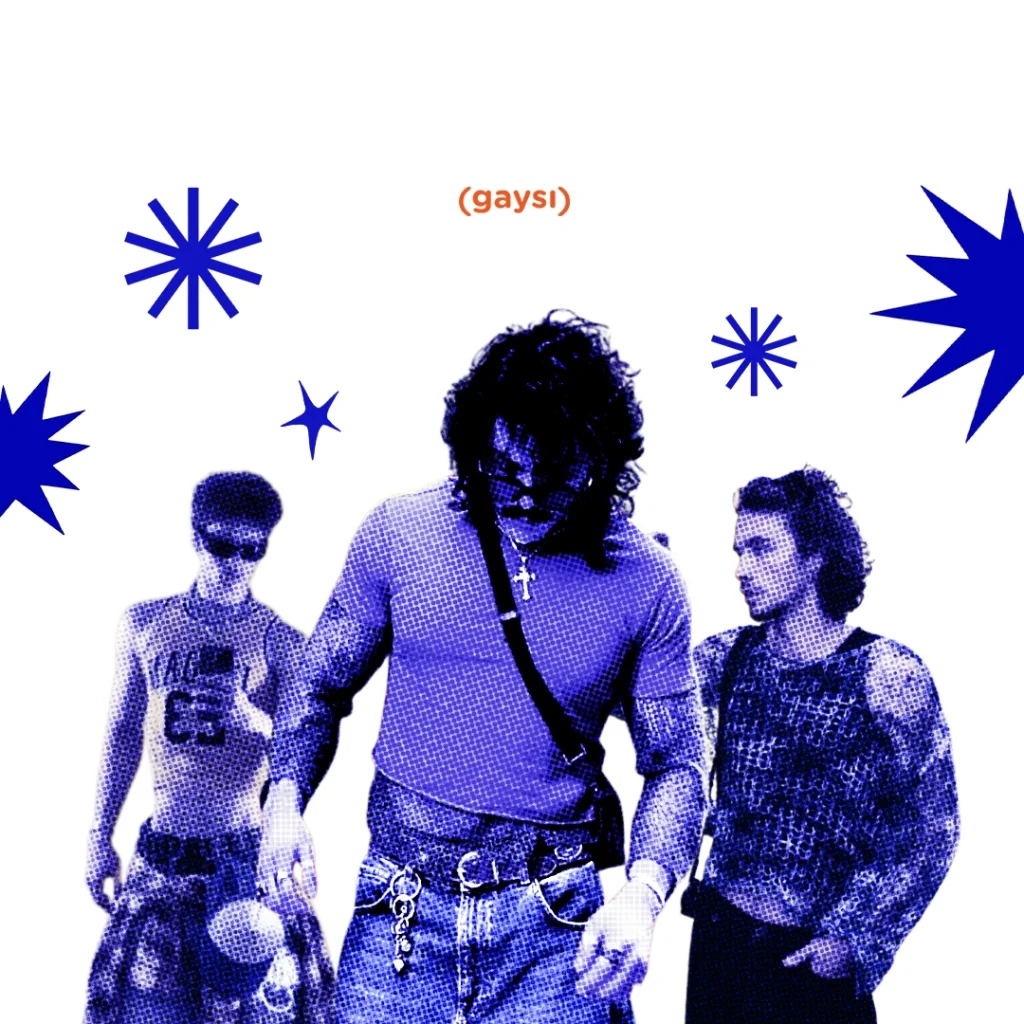
Remember when serving cunt meant looking like you hadn’t slept in three days? Every millennial that came of age between 2007 and 2013 has a photo that lives rent free in their mind. Think smudged kohl, chain-smoking outside a basement club in a ripped American Apparel deep-V, vintage distressed Levi’s denims, too tight, hanging on for dear life. It was a middle finger to the idea that queers owed anyone polish or propriety. The freedom to be sloppy. Finding beauty in excess, imperfection, and the delicious possibility of letting go just a little. That was peak Indie Sleaze. And it is dead. Looking back at those mood boards through a contemporary fashion lens is a trip.
Launch Grindr, Hinge, or attend any LGBTQ+ mixer, and the transition of the visual language has undergone a shift so total it demands its own taxonomy. The new algorithm transformed the cultural landscape into an era of relentless hyper-optimisation. Everyone got really interested in wellness. The silhouettes are cleaner. The wardrobes are quieter. The skin is clearer. But the body speaks louder than ever. Let’s go into the absolute dominion of Gym Gay Minimalism. This is the era of compression tees clinging to meticulously engineered torsos, of neutral-toned athleisure supplanting vintage curation, of fitted grey crewnecks that yell I track my macros, and the body as an infrastructural project that has reached nirvana through progressive overload. Basically, Lululemon is now where Rick Owens used to live. The chaotic grunge revival was a successful digital fad for a moment, but in the fractured, hyper-anxious 2020s, doing ‘messy’ just wasn’t sexy anymore.
Post-pandemic, when the world felt so out of control, the gym became the one thing you could actually control. Now it’s not about what clothes are on the body; it’s about ‘the body’ being the garment. If your profile picture is your introduction and your currency, then your body is your profile picture. The six-pack replaces the designer bag. Biceps communicate status. Discipline as aspiration. Branding becomes self-improvement. It’s a shift in how queer identity plays out. The irony, of course, is that the two aesthetics are responding to the same thing. Belongingness. Indie Sleaze sought it through rebellion. Gym Gay Minimalism seeks it through optimisation.
This shift is logical when you look at the way contemporary queer spaces consume luxury and create digital identity. One asked us to look like we’d just left the party. The other asks us to look like we’ve just left Pilates. They both voice the aspirations of their age. The death of the sleaze era is an expression of our collective desire for control. When the designer labels have been done to death, building your lats and maintaining the pump is the best flex you can have. You own the only asset you have and you control its design! The question was never which era dressed better, it’s a question to ourselves: in trying to look so perfectly put-together, what was the piece of our radical queer messiness that we left in the locker room?
