



Domestic spaces are often divided up between the custodians of the house, usually your parents or grandparents. Depending on the environment you were raised in, it is likely that different spaces in the home can invoke different emotions in you. This experience can be rooted in how you see/have witnessed your parents cultivating and interacting with these spaces, even if it were along the lines of gendered roles.
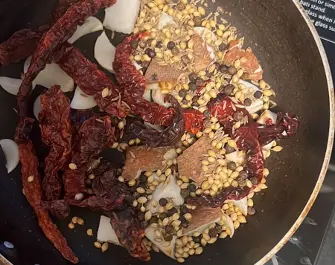
The kitchen has been one such gendered space in many homes. While it might not be true for everyone, patriarchy demarcates the kitchen as a predominantly “feminine” space. Gendered spaces at home often become an enabler of the hetero-norm that goes on to further reproduce gender roles.
The problem with enforcing gender roles, especially on skills like cooking and navigating domestic work in the kitchen, is that we take away the opportunity from people to grow and develop interests in holistic ways. For example, if a person is raised as a boy and conditioned to express their masculinity (often assigned male at birth – AMAB) shows interest in cooking, it is often discouraged or they’re held back from taking active interest in these activities. But for a person who is raised a girl and conditioned to be feminine (often assigned female at birth – AFAB) being forced into learning cooking for the sake of their potential husband, it takes away their autonomy and excitement of trying something new for their own selves.
Speaking to young queer folx raised as girls, especially some who grew up in environments that encourage experimentation in the kitchen and promote cooking as a skill that would enable them to conduct their lives with a sense of agency, one speculated about the possibilities of fully degendering kitchen spaces.
MAKING SPACE:
For Subeksha (she/her) who grew up in Darjeeling, cooking was always a space that was dominated by her parents, making her see it as a parental space where adults would take charge and would only let her help with peeling rather than actual cooking. Even then, she had no particular interest in learning how to cook as she had other hobbies and academic interests to explore.
As for Jay (she/they), they did not like cooking for the simple reason that their kitchen was a small space and could not hold more than 2 people at a time. However, she enjoyed helping their grandmother cook in her spacious kitchen.
Sasha (name changed) (she/her) talked about how the kitchen space was more of an activity area for her. Even in a physically smaller house in Mumbai, she would be seated and playing with her own kitchen set next to her mom, who would spare some atta flour to make her kitchen set seem more legitimate.
ARE YOU A SURVIVOR CHEF OR EXPERIMENTING CHEF?
As many do in a rite of passage to adulthood, Subeksha moved out for college and was surrounded by roommates who eased her into cooking. She initially helped them by chopping, peeling and handing out things, and eventually learned her way to “survival cooking”. The pandemic was a time when she would spend time in her family kitchen experimenting “like a mad scientist” to recreate foods and satisfy her cravings. Jay, who has a similar philosophy, also learnt how to prepare recipes that they crave just to save money and make it whenever they want it.
Nikita (she/her) spoke to us about how her mom never taught her to cook, mainly since her mother also learnt how to cook after having kids. Also because her mom believes that she can learn it later in life if she needs it or just find a partner who can feed her. Nikita’s mom wanted to make sure that she is always focused on her academics and career rather than the domestic space. However, Nikita says that has always wanted to learn cooking as a basic skill and be able to survive on her own, but one of the obstacles she faces is finding a good teacher. Being neurodivergent, she needs a teacher who can supervise and teach recipes with detailed instructions.
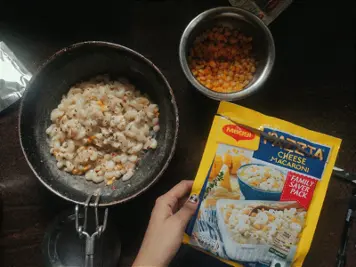
On the other hand, there is Avi (name changed) (she/her), who works 12-16 hours at a cancer research lab in Navi Mumbai, has the option to purchase decent meals from her work cafe. For her, food is still just for survival and cooking is for emergencies, because it’s “too time & energy-consuming”. Avi adds that the only cooking related “lecture” she got from her parents was, “Pati ko rakh side pe, khud ko kya khilayegi?” (translates to: leave cooking for your husband aside, what will you feed yourself?).
FOOD FOR ME & YOU
Jo (they/him) shared how their PCOD (Poly-Cystic Ovarian Disorder) motivated him to learn cooking beyond just as a mere means for survival, and as a way to deal with cravings in a healthier way. They say that, going from living in a chawl and then with a joint family, one does not need to enter the kitchen much, as someone is always who can cook for you. But as an adult, making homely versions of their favorite foods not only helped them begin to enjoy cooking but also enabled them to start taking better care of their health.
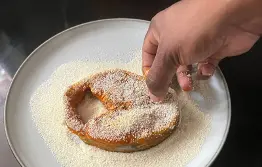
Sasha, talked about the ups and downs she experiences with respect to her body image and weight, and how it led to her starting a diet last year. But after getting tired of just eating bad food, she decided to work on cooking and eating what she likes, and fill in the nutritional gaps with newer recipes. But what mainly sparked her interest in the kitchen was coffee and her journey with experimenting with different brewing styles. Soon she also learnt to cook middle eastern food via Khayali Pulav’s YouTube videos, and started to have more fun with cooking. Sasha also thinks hosting is a big reason for why she loves cooking now.
A coincidental common thread between all of these strangers who have never interacted with one another, could be that their parents fostered a degendered space around cooking in the kitchen. Either allowing them to pursue it from a young age or allowing them to not take interest in it even as adults. Promoting a degendered environment for food, kitchen and cooking as a skill paves the way for many young adults to explore their lives outside of their gendered expectations.
