


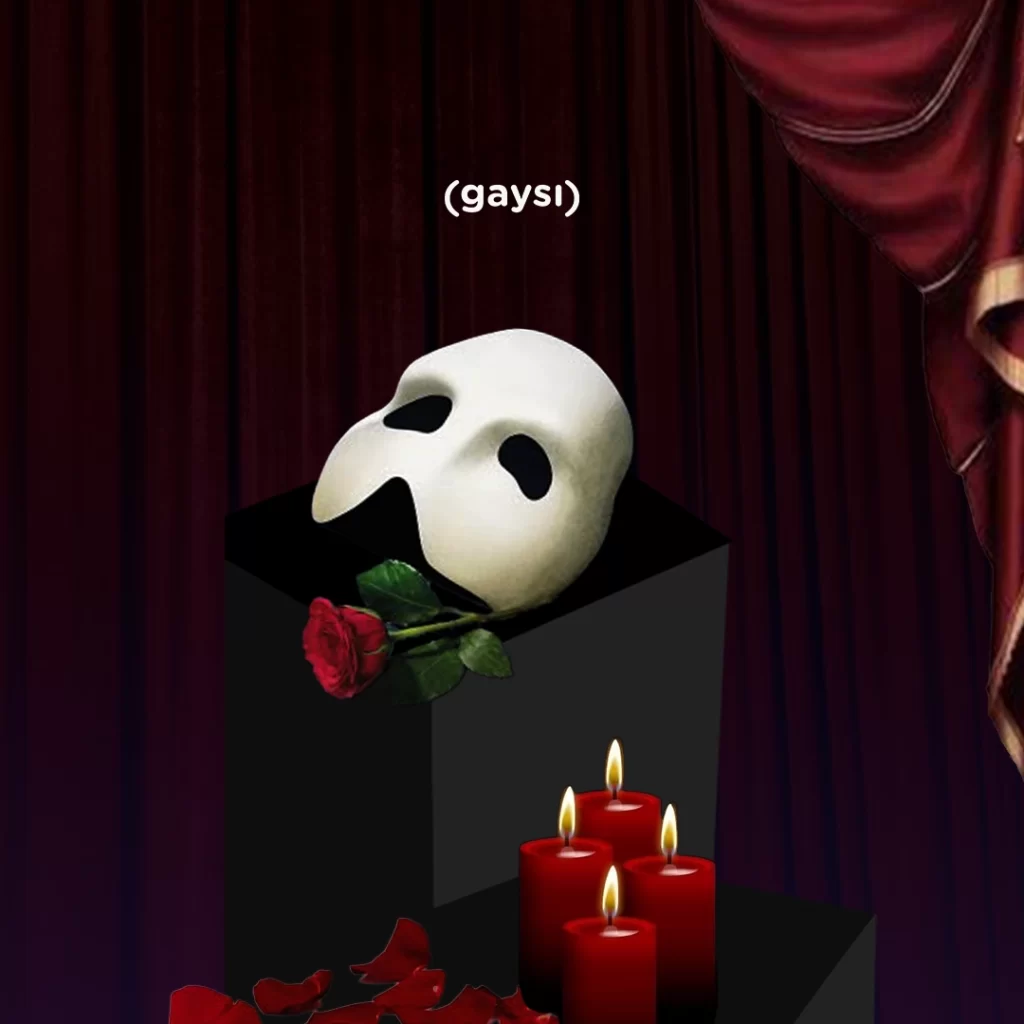
There’s something about The Phantom of the Opera that lingers long after the final note fades. Something more than the music, more than the romance, more than the tragedy. It’s a story that settles into the bones, a whisper of longing, of isolation, of the unbearable ache of being unseen.
Because at its heart, The Phantom of the Opera isn’t just about love. It’s about hiding. It’s about yearning. It’s about wearing a mask—not just to conceal, but to survive.
The Phantom, or Erik, is a man who has been condemned from birth. His face, twisted and scarred, was enough to make the world turn away in disgust, enough to make his own mother recoil. And so, he learns early on what the world does to those it deems unworthy—it casts them aside, locks them away, turns them into ghosts long before they are dead. And when the world refuses to see you, what choice do you have but to disappear?
So he hides beneath the opera house, building his world in the shadows, watching the stage above with both admiration and bitterness. He exists in fragments—half in the light, half in the dark, never fully belonging to either. His mask is more than just a piece of porcelain—it is the barrier between who he is and who the world allows him to be.
And I wonder… how many of us have worn that mask?
How many of us have felt like phantoms in our own worlds? How many have hidden away the most authentic parts of ourselves, afraid that to be seen is to be rejected? That to be known is to be unlovable?
Because the Phantom’s tragedy isn’t just his unrequited love for Christine. It’s his belief that love—true, unfiltered, unconditional love—is something he can never have. That no matter how much he creates, no matter how much beauty he pours into the world, no matter how much he loves, he will never be loved in return.
And isn’t that a feeling so many of us know?
The queer experience has long been one of longing. Of being told, in a thousand different ways, that we do not belong. That our love is unnatural, that our identities are mistakes, that we are too much or not enough. And so, we learn to make ourselves smaller. To hide in the places where we feel safe, even if that safety is just another form of loneliness.
The Phantom’s underground lair is more than a hiding place—it’s a cage. A sanctuary that quickly becomes a prison. It is the suffocating safety of living half a life, of convincing yourself that solitude is better than rejection, that it is easier to be unseen than to be seen and cast aside.
But there is another layer to his story—one that is found in the space between Christine and Raoul.
Raoul is everything Erik is not. He is light, he is safety, he is acceptable. He doesn’t have to fight to be loved—he simply is. The world welcomes him with open arms, while the Phantom is left clawing at the edges, desperate to be included, to be chosen.
And Christine? She is caught in the middle, between the world as it is and the world as it could be. She sees Erik. She sees his pain, his genius, his isolation. But seeing is not the same as choosing. And when the moment comes, she chooses the path of least resistance. The path that is expected of her.
And isn’t that a story we know all too well?
How often have we seen the queer figure painted as the tragic one? The one who is admired but never truly accepted? The one who is fascinating, compelling, other—but never allowed a happy ending?
Because the Phantom is not just a villain, nor is he simply a romantic figure. He is the embodiment of every person who has ever been told they must hide who they are. Every person who has learned that love—real love—is a privilege they may never receive.
And now, as The Phantom of the Opera prepares for its first-ever Indian premiere at NMACC, this conversation feels even more urgent. Because India, with its deep-rooted traditions and evolving narratives of identity, is a stage in itself—a place where the tension between past and future, between visibility and erasure, plays out every day.
Queer Indians, much like the Phantom, have lived in the margins, forced into the shadows by social expectations and rigid norms. But we are no longer content to be ghosts. We are stepping into the light, unmasking ourselves, refusing to be mere spectators in our own stories.
So perhaps, as The Phantom of the Opera graces the Indian stage for the first time, it is not just a performance but a reflection. A moment to ask—who gets to take off their mask? Who gets to be seen, to be loved, to be real?
And what if, for once, the answer was all of us?
Because the Phantom’s tragedy is not that he was unlovable—it is that he believed he was.
But we do not have to share his fate.
We do not have to be ghosts in our own lives. We do not have to settle for being seen only in pieces. We do not have to wait in the darkness, hoping that one day the world will be ready to accept us.
We can write our own endings.
We can take off the mask.
And we can be.
