


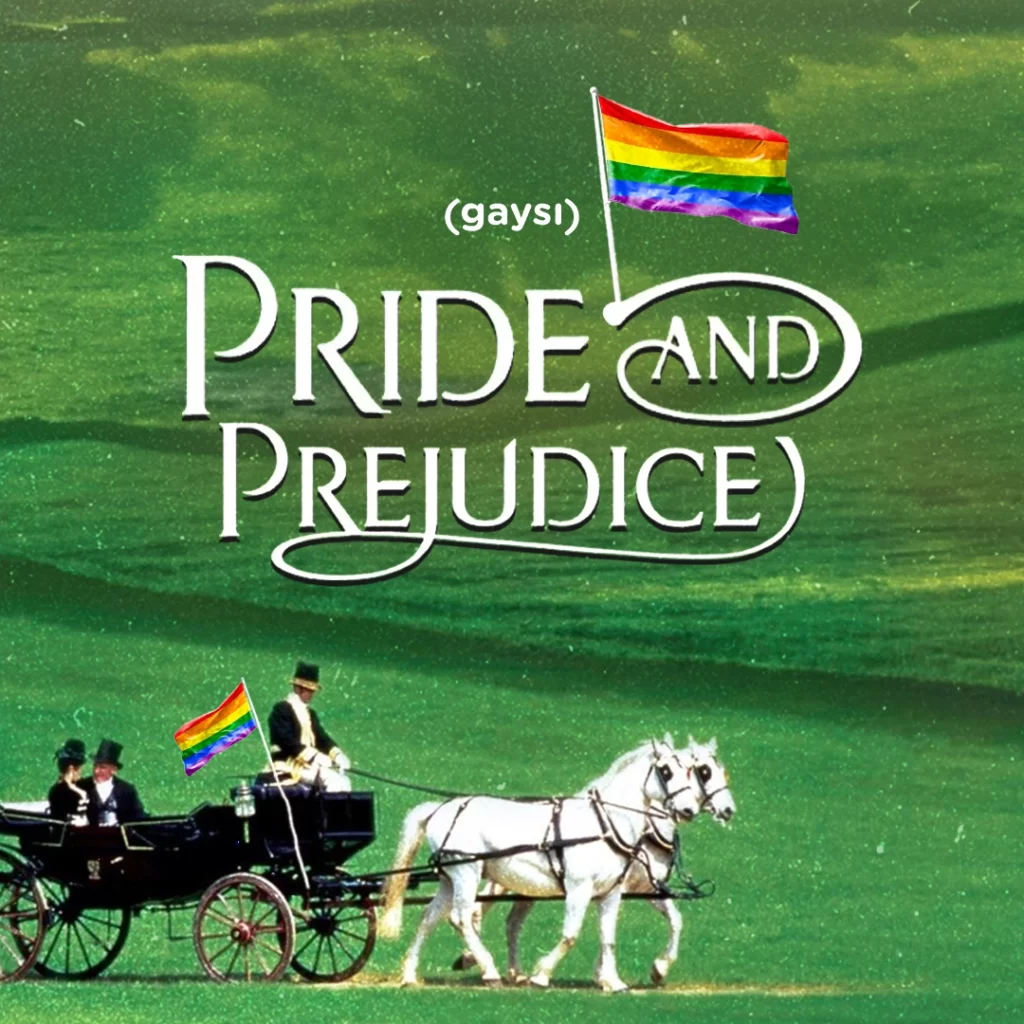
“Why do you need to display your sexuality and parade it on the streets?”
I’ve been out and proud for a long time—long enough that my inner circle has stopped asking awkward questions. Long enough that I no longer hear:
“I know ‘a’ gay, you two should MEET!”
“Are you 100 percent sure? Every girl crushes on girls once in a while.” (Spoiler alert: No, only gay girls do that. So if you, as a girl, periodically crush on other girls… you might want to check in with yourself.)
Long enough for my parents to accept their defeat in the “our daughter vs. marriage” family court case. By Indian cultural standards, my parents have been relatively accepting of my homosexuality. Coming out wasn’t grand or dramatic—and, luckily for me, it wasn’t life-threatening either. It was a relief. The elephant in the room—marriage—was successfully obliterated before I even hit my late 20s. So, I usually felt pretty lucky in this aspect. I mean, what are the odds? (I wanted to insert a relevant statistic here, but jokes on me—there isn’t any comprehensive research on homophobia in India at the blink of a Google search. Shocking!)
So, long story short, I would rate my parents a solid 6/10 on acceptance and support. And, just like my parents accepted their slightly above-average academic child, I too wholeheartedly accepted my slightly above-average supportive parents.
Then, much later, an ‘internet friend’—someone I had known for ten years—came across some Pride photos and posts and asked, in the most genuinely innocent way:
“Why does the LGBTQ+ community feel the need to parade on roads about who they sleep with? We (the cis-hets) don’t do the same.”
You think you know someone, and then boom! They hit you with that. What do you even do? Where do you even begin?
That question cracked open years of neatly repressed emotions. It took me back to conversations with my mother:
“As long as no one knows, you’re safe. Do what you wish to. But why do people dress so bizarrely on the streets, making it obvious that they’re gay? Why invite trouble? It’s not like anyone is going to come check your bedroom. Being discreet is always in your favor.”
At the time, I had brushed it off as a mix of her lack of exposure and her good intentions. She means well, I told myself. At least they accept me for who I am. What more can I ask for? Me? A homosexual daughter at that?
But my friend’s question—coming from someone my own age—made me connect the dots. It finally made sense why my mother’s words, despite her acceptance, always stung. Even the most well-intentioned people may miss the point.
“Why are you parading your bedroom preferences on the streets? Straight people don’t.”
How do you even begin to answer that? I can bore all readers with historic facts but the curious will Google the origin and history of Pride… Allow me, instead, to talk about the very subjective feelings from someone who has been parading their bedroom preferences on the street for quite a while now:
Growing up with zero representation (or worse—seeing yourself only in comedic sidekick roles or as villain-coded characters, if you’ve done your research on media rep).
Feeling like you are broken.
Feeling completely alone in what you know is right.
Knowing your identity is fair game for mockery.
Living with the constant fear of violence. The very realistic possibility of being disowned.
Imagine growing up in an environment where it is perfectly normal for people to laugh at or be disgusted by a core part of who you are. Imagine hiding in plain sight, surrounded by friends, family, neighbors, classmates—people who openly joke about “your kind.”
Where do you find the courage to tell them that you are the joke? That you identify with the joke, more than with your blood and that the “humor” separates you further from your ‘loved ones’? It isolates you and makes you hate yourself and cave into yourself so that no one ever finds out that you are the one all the jokes and violence is being aimed at.
Then, you grow up. Exhausted by loneliness. Desperate to belong.
But how?
You cannot share your truth with your closest people. Safety must come first—before you can even dream of luxuries like belonging, like being your authentic self, like happiness and pride in who you are and who you will be.
So, you search. Quietly. Secretly. And you find it.
You learn that Pride exists. That it doesn’t just exist—it creates visibility. A sea of people like you marching together, unapologetically demanding rights, celebrating how far we’ve come.
Why wouldn’t you want to be a part of that? Why wouldn’t you want to join a group of people who had similar experiences like yours and stand up for your rights together? Isn’t that the very essence of being a social being? And legend has said “Man is a social being”.
Why wouldn’t you want to experience the joy of belonging when you’ve never had it—not even among your loved ones?
Isn’t this question similar for any minority group?
Why did women celebrate their right to vote? Men never made a big deal out of it.
Why do women talk about the gender pay gap? Cis men don’t.
Why do previously colonized countries celebrate Independence Day? Other countries don’t declare a national holiday for their independence.
Some questions, when read three to four times, answer themselves. Maybe the question “ why don’t the cis-hets parade for their human rights of equality and visibility?” Is also one such question.

So true! We need to keep coming out almost all the time! So well put 🥺💕
Thankyou 🫶
❤️
Sorry I didn’t meant to hurt you sweetheart
You are my darling
I love you. We both were growing then and even now- you’re the most supportive mom I could’ve asked for ♥️
The thing is, one thing that I notice is how heteronormative our society is. Everyone just assumes you’re straight unless you come out. Being different from the herd is what makes coming out difficult. Suddenly, you’re not “normal” anymore.
I’ve heard of this before, “Oh you’re queer?, I see, I’m not this stuff, I am normal”
What do they mean that they’re “normal”? You could say, I’m straight, but no, it’s sometimes something like this.
The little things in society is what makes being queer difficult, forget about coming out.
Also, these lines are just hella relatable:
> Why did women celebrate their right to vote? Men never made a big deal out of it.
> Why do women talk about the gender pay gap? Cis men don’t.
> Why do previously colonized countries celebrate Independence Day? Other countries don’t declare a national > holiday for their independence.
> Some questions, when read three to four times, answer themselves. Maybe the question “ why don’t the cis-hets parade for their human rights of equality and visibility?” Is also one such question.
You’re absolutely correct- society makes being queer a very isolating experience.
Thankyou for reading it and sharing your views ♥️