


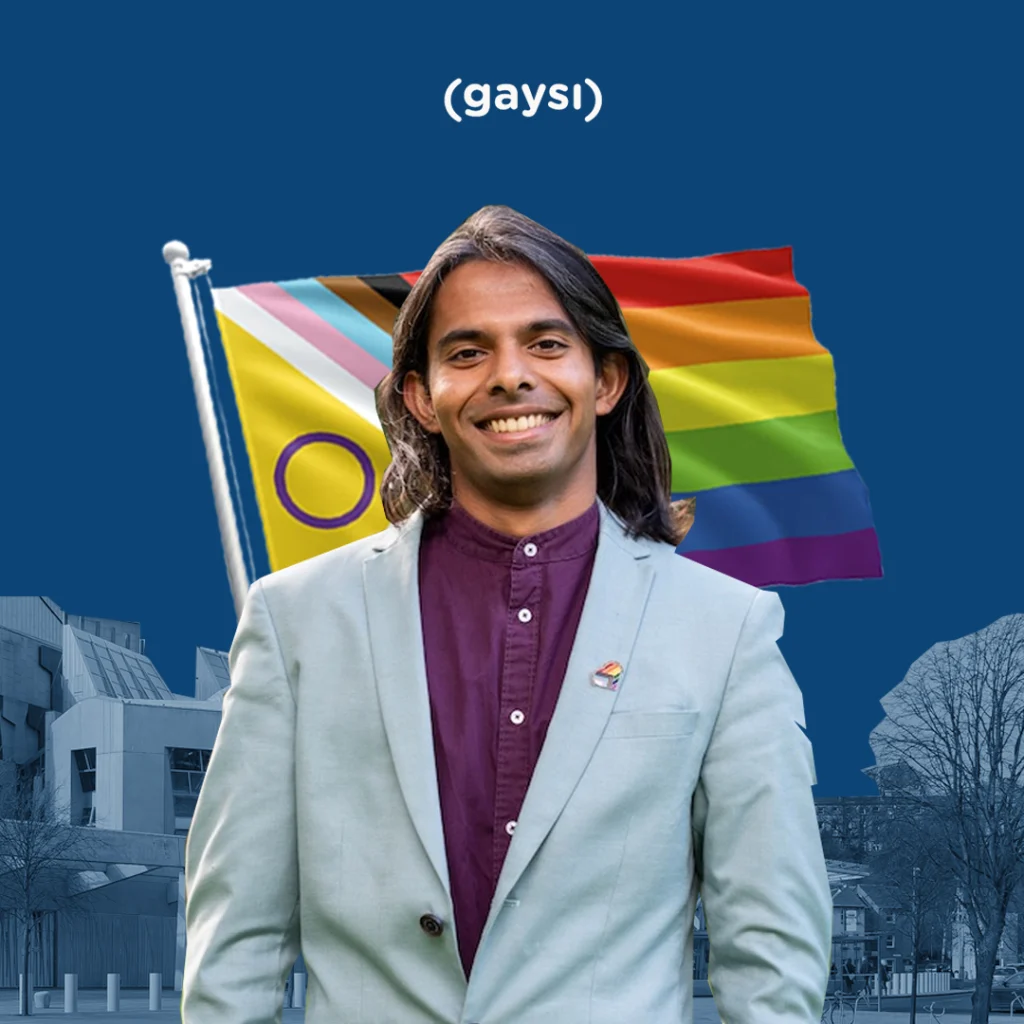
Q Manivannan’s election to the Scottish Parliament feels bigger than just another political headline. A Tamil Nadu-born trans migrant arriving in Scotland on a student visa and ending up in Parliament a couple of years later sounds incredible, especially when they don’t even have permanent residency or British citizenship yet.
Manivannan moved to Scotland in 2021 to study and is now the first openly trans person elected to the Scottish Parliament. For many queer South Asians online, though, the news didn’t just register as another “historic” story to slot into a media narrative. It resonated on a more personal level. Most of the time, trans South Asians are either erased from political conversations altogether or pushed into a stereotyped corner of the story. The visibility of someone who is Tamil, transgender, outspoken, and politically active on an international stage is rare, and powerful.
Standing for the Scottish Greens, Manivannan’s politics cover housing, queer rights, immigration, and welfare. What makes their story land is how seamlessly their lived experience shapes everything they speak about. They’ve been open about racism, transphobia, and the loneliness that often comes with being an immigrant trying to start over somewhere new. That’s honestly why young voters identified with them.
The timing of this win matters, too. Anti-trans sentiment has noticeably risen over the last few years across the UK and globally, both in online discourse and inside the rooms where countries are represented. Winning as an openly trans migrant isn’t just a win for representation. It’s a challenge to the idea that queer and trans people belong on the sidelines of society.
What is also fascinating is how furious some South Asians on the web got in response. A lot of people weren’t even talking about policy at first. They were reacting emotionally to the visibility of it all. There is something incredibly visceral about seeing someone with a culturally recognizable background now occupying spaces we were told to stay out of.
Manivannan’s journey doesn’t immediately fix the realities queer and trans people face, either in India or abroad. What it does show is that identity, lived openly in a public space, can itself become a form of resistance. For many queer South Asians watching it unfold online, that is what made the story feel deeply personal.
