


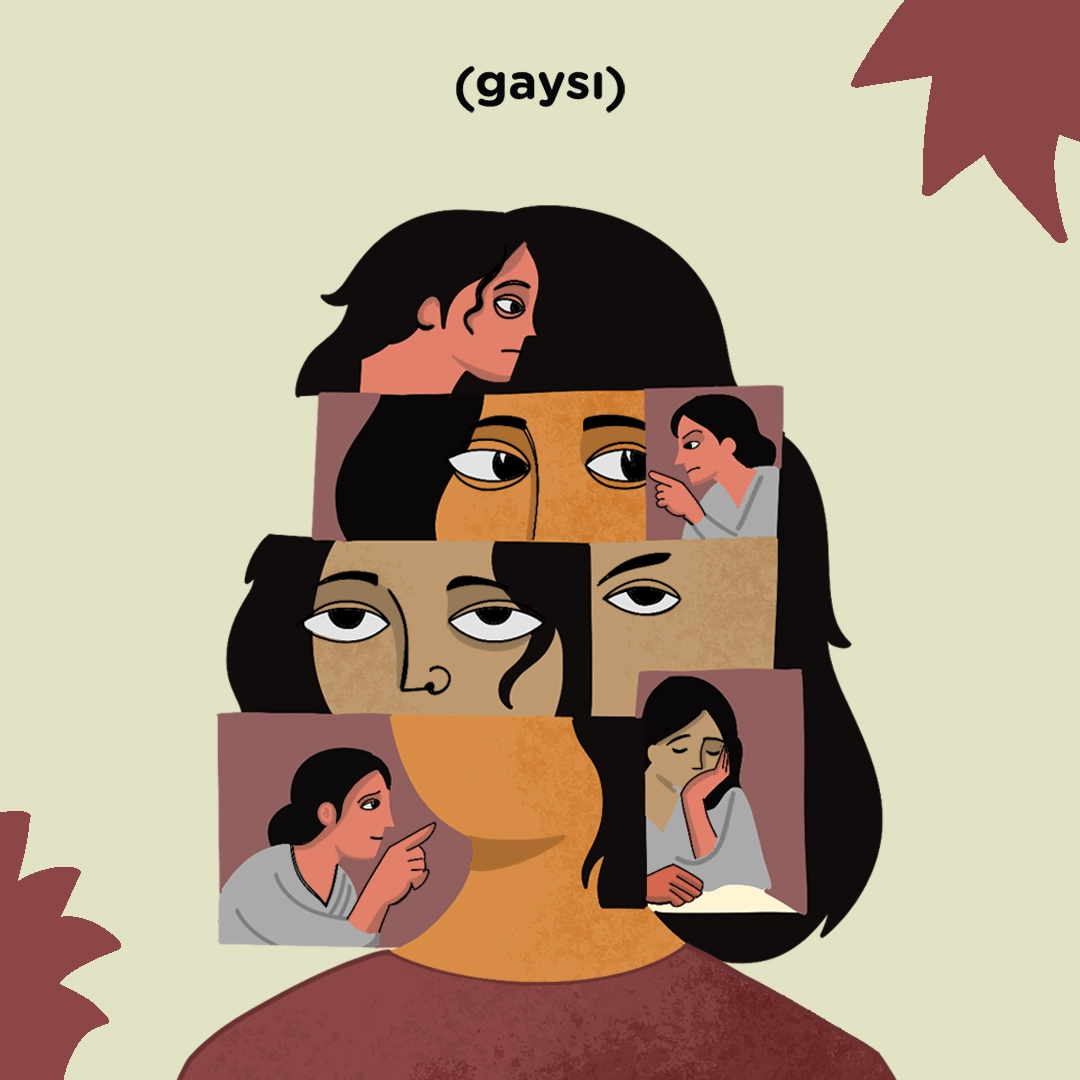
There is a particular kind of silence that settles in a Desi house after your mother has said something cruel and everyone pretends it was normal.
It may not even sound cruel to an outsider. “You’ve gained weight”, “Don’t eat that much”, “Did you look at how their daughter is doing so well?”, “I am only saying this for your own good”. The words arrive disguised as concern, but inside your body, they land like tiny arrows. You learn to scan her face before speaking. You learn that love can come with running commentary on your body, appetite, clothes, tone, future and failures.
This is the stress of being your mother’s daughter. The person you want comfort from is also the person who can make your chest tighten in seconds. The person who knows when you are hungry is also the person who can turn food into shame. The person who raised you is also the person whose moods you learned to survive.
I have always found the phrase “mommy issues” too small for what it tries to hold. It sounds like an internet joke, something used to explain why someone dates badly or cries too easily. But in many Desi homes, mommy issues are also about culture, gender, guilt and control. They are about mothers who were taught to swallow their own anger and then pass it down in smaller, sharper pieces.
The difficult part is that love is often real. She may cook for you, worry about you, remember your medicine, pray for your success. Then in the same breath, she may comment on your stomach, compare you to someone else’s daughter, or remind you of every sacrifice she made so you could exist. The affection and wound come in the same hand.
In Desi families, the mother-daughter relationship is treated as sacred, almost beyond criticism. We are told mothers can never truly mean harm. We are told that they are stressed, tired, conditioned, lonely, and unappreciated. Many mothers have carried impossible burdens: marriage, in-laws, unpaid labour, sexism, body shame, and family honour. But understanding someone’s pain does not make the pain they give you disappear.
Sometimes, I wonder how many daughters are living with a nervous system built around their mother’s reactions. You hear footsteps and immediately check whether you have done something wrong. You avoid eating junk food, or any food, in front of her, because it will come with an opinion. You hide purchases, friendships, desires, career doubts, even joy, because joy can be interrogated, too.
Food becomes one of the biggest battlegrounds. In many homes, food is love, but it is also surveillance. Eat more, you are looking weak. Eat less, you are getting fat. Finish what is on your plate, but do not become greedy. Your body becomes a family project, something everyone feels entitled to manage. If you are “presentable”, she is praised. If you are not, she is questioned. So she questions you first.
Then there is the guilt. “After everything I did for you…” “You will understand when I die.” “No one ever cares about me.” “You only think of yourself.” Suddenly, your boundary becomes cruelty, your exhaustion becomes disrespect, your need for space becomes betrayal. You are no longer just a daughter; you are proof of whether her sacrifices mattered.
The resentment goes both ways, though we rarely admit it. A mother may resent the freedom her daughter has: education, language, refusal, the possibility of leaving. A daughter may resent the way her mother’s fear becomes law, the way love is used to monitor her, the way every argument ends with the daughter apologising just to restore peace.
For queer daughters, unmarried daughters, daughters who do not fit the family script, this becomes even more suffocating. You are not only defending your choices; you are defending your right to have choices at all. You learn which parts of yourself can sit at the dining table and which parts must stay locked inside your phone.
Healing from this doesn’t always look like a cinematic confrontation. Sometimes it looks like naming the pattern privately before you can name it out loud. Sometimes it looks like eating what you want without explaining yourself, closing the door, refusing to discuss your body, leaving the room when guilt becomes a weapon. Accepting that your mother can love you and still hurt you, and accepting that you can love her and still need distance.
I do not want to turn mothers into monsters. Many of them were daughters once, too. Many were controlled, criticised, starved emotionally, married off, silenced and told to call it duty. But daughters should not have to become therapists for the women who raised them. We can have empathy without self-erasure. We can understand the wound without volunteering to be wounded again.
A mother may be your first home. But if that home taught you to live on edge, you are allowed to build another one inside yourself.
