


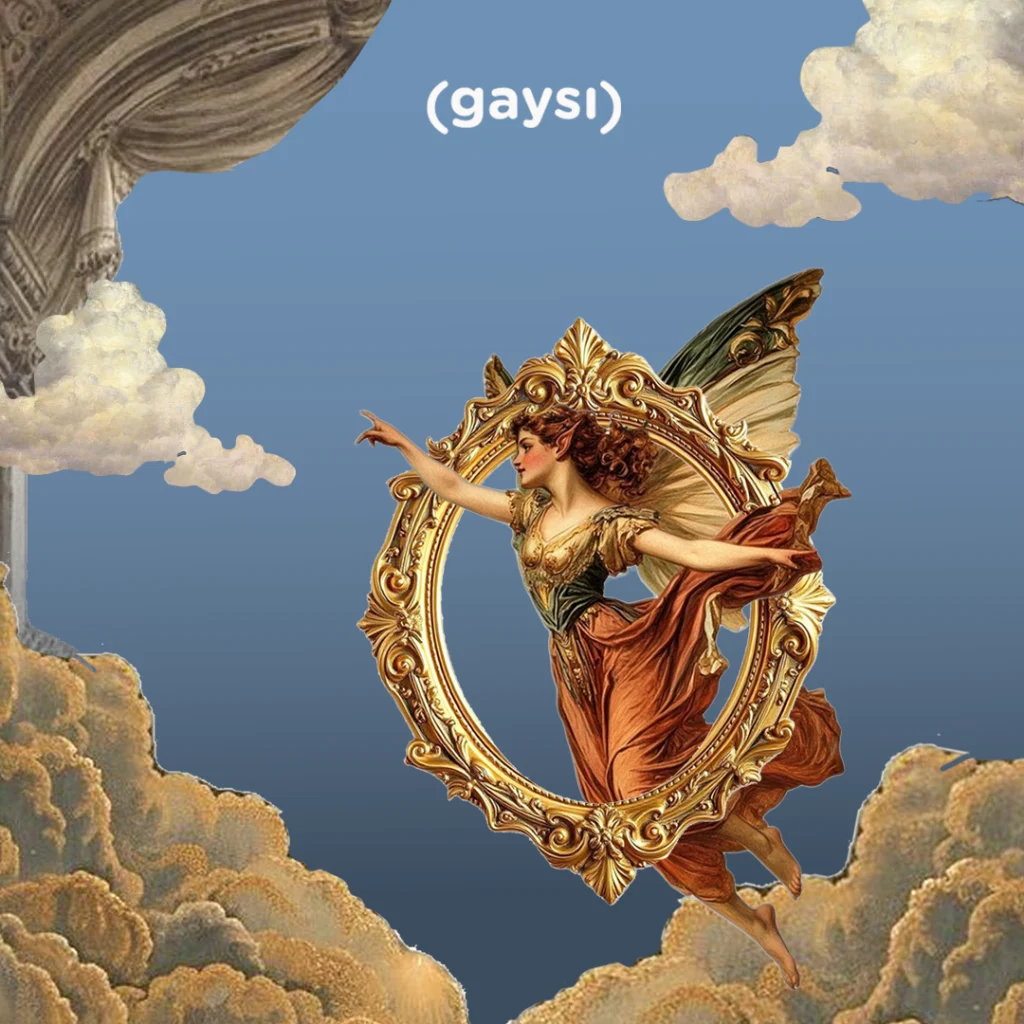
Somewhere between “religious devotion” and “drag brunch with an incense budget”, Baroque art entered Europe like it had just been told the theme was “heaven but make it impossible to ignore”. It arrived with saints fainting under divine light, martyrs bleeding with gorgeous posture, angels hovering like backup dancers, and enough gold to make minimalism file a complaint.
To read Baroque art through a queer camp lens is not to announce that every seventeenth-century painter was secretly waiting for Pride Month. It is to recognise what camp has always loved: exaggeration, theatricality, artifice, emotional surplus, and the refusal to be tasteful in a quiet way. Camp understands that sometimes the only honest way to express feeling is to overdo it. Baroque art understood this centuries earlier and called it devotion.
Where the Renaissance liked balance, Baroque art preferred the emotional power move. What if everyone was crying? What if the muscles were twisting, the clouds opened, and God entered from stage left with the world’s most aggressive spotlight? Born in the heat of Catholic spectacle, Baroque art knew persuasion to be sensory. It wanted viewers to feel faith in the gut before they could politely intellectualise it.
This is where Caravaggio becomes the patron saint of dramatic lighting and bad decisions. His chiaroscuro was not merely light and shadow; it was mood, accusation, seduction, interrogation. In The Calling of Saint Matthew, holiness does not float politely above ordinary life. It barges into a room full of men who look like they were just trying to mind their own business. Divine revelation becomes less “calm spiritual awakening” and more “your situationship just walked into a bar”.
Caravaggio’s saints are not porcelain holy cards. They have dirty feet, tired faces, exposed flesh, and the emotional energy of people who have absolutely been through something. The sacred is dragged into an alley, lit from one side, and made unbearably intimate. A queer camp reading can feel the thrill in that contradiction: the holy and the bodily, shame and spectacle, suffering and beauty, all refusing to stay in their assigned categories.
Then there are the martyrs, Baroque art’s most committed theatre kids. Saint Sebastian, Saint Catherine, Saint Ursula, Saint whoever-is-currently-being-pierced: these figures often appear at the exact moment pain becomes display. Their bodies twist, collapse, glow or open themselves to violence in compositions meant to move the viewer emotionally. To modern eyes trained by melodrama, horror films and pop divas, the effect can feel intensely camp. Nobody simply suffers in Baroque art. They suffer with staging.
Camp is not the opposite of seriousness; its best trick is taking seriousness so far that it becomes dazzling. A martyr’s body is both religious instruction and high drama. It asks for compassion, awe, fear, and desire, sometimes all in the same breath.
And then comes Bernini, a man who looked at a marble and asked, “But can it moan?”. His Ecstasy of Saint Teresa is perhaps the ultimate Baroque camp object: a mystical vision staged like a premium theatre. Teresa reclines in spiritual rapture as an angel prepares to pierce her heart with divine love. Golden rays descend like a celestial lighting rig. The Cornaro family appears in side boxes, observing the scene like wealthy patrons at an opera. Sculpture, architecture, theatre, religion and softcore swoon collapse into one overwhelming experience.
What makes Bernini so excessive is his refusal to let marble behave like a stone. Drapery ripples, bodies melt, clouds become furniture, the spiritual becomes physical and the physical becomes suspiciously glamorous. Here, the boundary between devotion and desire gets so thin it might as well be chiffon. A camp lens does not flatten the religious meaning; it reveals how spectacularly embodied that meaning is. Baroque, spiritually, is a full-body event with lighting cues.
Gold matters here too. Baroque churches and altarpieces often treat ornament not as a decoration but as emotional infrastructure. Gilded rays, swirling columns, cherubs, heavy curtains, carved clouds, polished marble: these are not extras. They are the language. Camp recognises this instantly. It knows that glitter can be armour, and theatricality can reveal truths too tender to say plainly.
Queer audiences have long understood performance as survival, communication, and pleasure. To be camp is often to know that identity itself can be staged, exaggerated and reclaimed from people who call it “too much”. Baroque art, for all its institutional power and religious politics, shares that faith in staging. It turns bodies into arguments. It makes emotion architectural.
Not all Baroque art is camp, but its seriousness has always been inseparable from its excess. That may be why it still feels so alive today. It tells us to cry harder, pose better, add another angel, and never apologise for being too much. Camp doesn’t laugh at Baroque art; it laughs with it.
