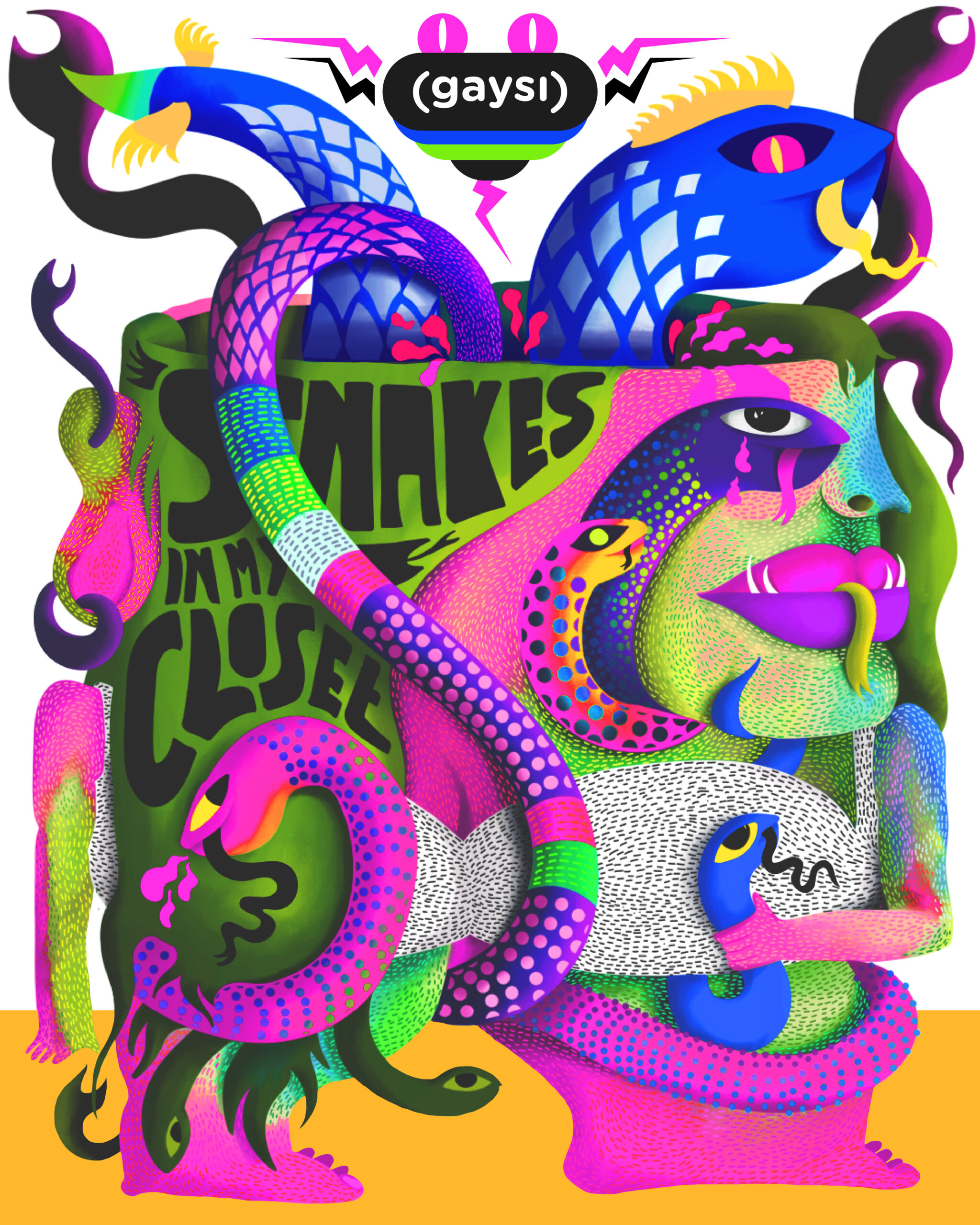
All you need to know about GLAAD’s report on queer representation in video games and 7 LGBTQ+ video games coming out (literally) in 2024 that we think you should watch out for!
When you think of the quintessential gamer, your mind goes to a white boy sitting in the basement of his parents’ house, crouched in front of a screen, away from all of society. That’s just not true anymore. This may have been the key demographic of gamers a few years ago but not today. With the ‘gamer girl’ culture taking over the socials, strides have been made to make the space more inclusive, but is it enough?
Due to its interactive nature and opportunity to build community, gaming, like any other form of media, can be a great escape from reality for its users. Especially for its queer users, it can be a way for those who don’t feel comfortable or safe enough to explore their gender identity or sexuality in the real world, to indulge in the same in the digital world. This makes it an important outlet for self-expression.
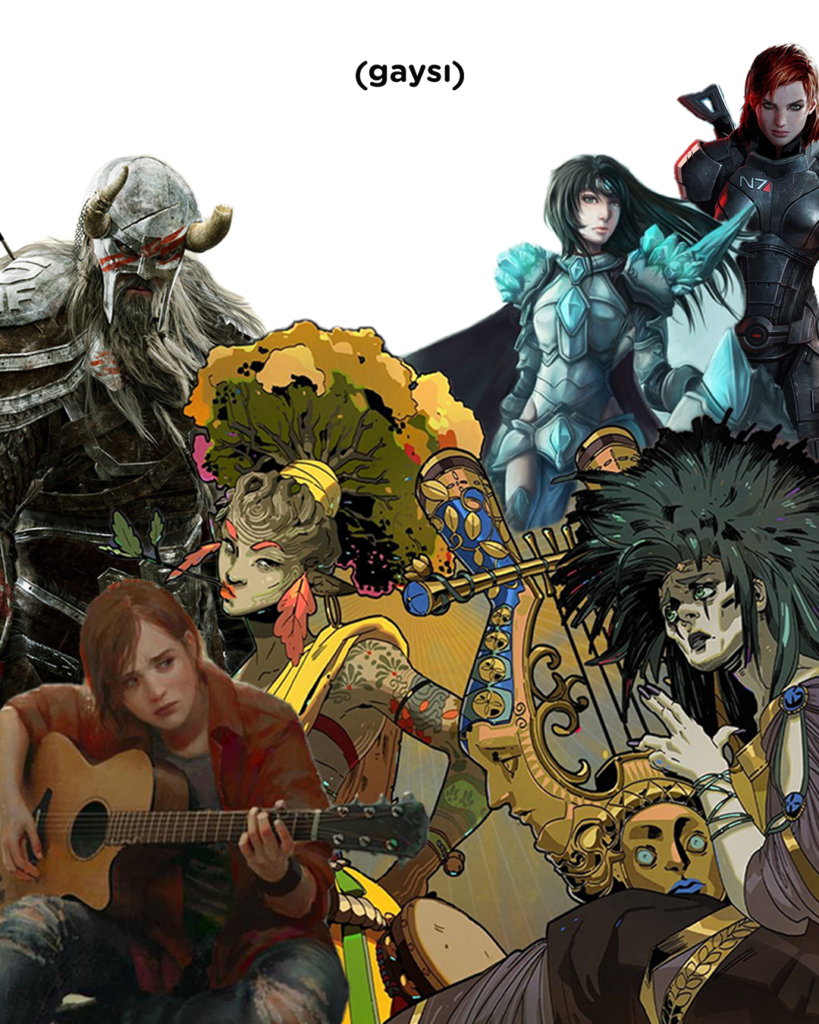
There are a few relatable queer characters in the gaming space, like that of Lev from Last of Us (Part 2) and Ellie from the original game, who rose to prominence after the HBO adaptation of the same starring non-binary star Bella Ramsey and our favorite trans ally, Pedro Pascal. Nonetheless, most video games claim brownie points for representation only by adding optional or secondary characters that are queer.
Don’t get me wrong, having this option is great, allowing players to decide if they want their character to romance queer non-player characters is a way of adding a layer of diversity. These kinds of character customizations are certainly a step in the right direction. But, they have been stand-ins for a more robust and impactful LGBTQ representation in the world of video game for decades!
We need more out-there, in-your-face, queer representation!
Till we don’t have that, let’s celebrate the ones we do have. Here are 7 LGBTQ+ video games coming out (literally) in 2024!
Hades 2
The Hades video game series is a rogue-like dungeon crawler in which you battle to break free from the Underworld (as described in Greek mythology) using dark sorcery to take on the sinister Titan of Time. Probably one of the most anticipated games by queer gamers, the first edition followed Zagreus, the bisexual son of Hades, whose equal parts loveable and frustrating nature helps him hack and slash his way out of the underworld!
In the second edition we follow the star goddess, Melinoë as she takes on her turn to battle the Titan of Time in the Greek Underworld. Even though little is known about this version of the game yet, the original one offered two distinct romance options and more than a handful of LGBTQ+ characters, all inspired by Greek mythology. No doubt this one will do the same!
Release Date – Q2 2024
Dragon’s Dogma
One of the most iconic action role-playing games. This high-fantasy adventure takes players in the role of Arisen, the hero of the story driven by his desire to challenge the dragon, who recruits allies to take on giant monsters. Even though no information is given by Capcom about the changes in prospective character relationships, we do hope that the sequel continues with allowing players to befriend and romance any character they wish just like in the original.
Release Date – 22nd March, 2024
Beloved Rapture
The developers of this OG Nintendo style role-playing game have shared how LGBT themes and friendship are integral to the story of the game!
The game is an indie jRPG that blends modern themes with classic gameplay. It follows Johan, an introverted man from the countryside, as he is forced to abandon his carefree existence when he comes up against a religious faction. He is joined by Aiden, a mysterious son of a shrine caretaker, and Crystal, a noblewoman who has run away from her family.
Release Date – Q1 2024
They Speak from the Abyss
If you’re a fan of classic dungeon crawling-style role-playing games that explore themes of psychological horror while solving puzzles then this is the game for you!
Step into the shoes of Vanessa Rivers, a queer woman who moves to a new city to be closer to her partner, but her fresh start turns into something sinister as she’s thrown into a nightmarish world.
Set in a lush, narrative-driven world of witchy demons, the game lets its players bond with witches and demons and even smooch adorable characters!
Release Date – 2024
Read Only Memories : NEURODIVER
ES88 is an esper tasked with capturing Golden Butterfly, a psychic entity hiding in the memories of others. Set within Read Only Memories’ Neo-San Francisco, colorful, vibrant cyberpunk city, players will get to play as ES88 as they work to uncover the memories stolen by the Golden Butterfly in this psy-fi adventure.
Like the original, this one too is set to feature multiple LGBTQ+ characters that players can take on!
Release Date – 2024
AfterLove EP
This slice-of-life game is a blend of narrative adventure, rhythm game, and dating simulator that allows players to experience urban life in Jakarta, Indonesia through the eyes of the musician Rama, a young-man working through the death of his girlfriend, Cinta.
Through this role-playing game, we explore the decision Rama makes about the path he wishes to take and his relationships!
I know, I know- Valentine’s month is a capitalist nightmare for a lot of people, with heart-shaped things haunting you as you are just trying to go about your life. But I am a cheesy person who loves love and firmly believes that there is nothing wrong with using an occasion to shower a little more of it.
Last year, I broke up with someone who I have been dating since I was a teenager. It was a happy and healthy relationship, which means that we both had space to love ourselves along with loving each other and we cheered for the other’s growth. For example, last year on Valentine’s Day I bought gorgeous white lilies for myself – distinct from our celebration together – because ‘I can buy myself flowers’ should not be a sentiment reserved only for those who are not in a romantic relationship.
Internal love and external love are both important, and neither is a substitute for the other. So taking care of myself will not be a new thing exclusive to this month (though I have been going the extra mile). Instead, maybe, my new thing can be watching movies and shows that make me feel all warm and fuzzy inside. As a self-confessed romantic I must admit that there is a long list of those, but here are some that are my absolute favourites:
The Addams Family: My current dating app profile says something like ‘It’s meant to be if you also want to slow dance your way into old age.’ And this sentiment is a result of watching Morticia and Gomez waltz on screen and feel disappointed when it has been ‘hours’ since they last did it. How is anyone supposed to look at the electric chemistry and passion between the two of them and not want to manifest their dancing ritual? Is it really too much to ask for slow dancing in the kitchen every evening after we tell each other about our day?
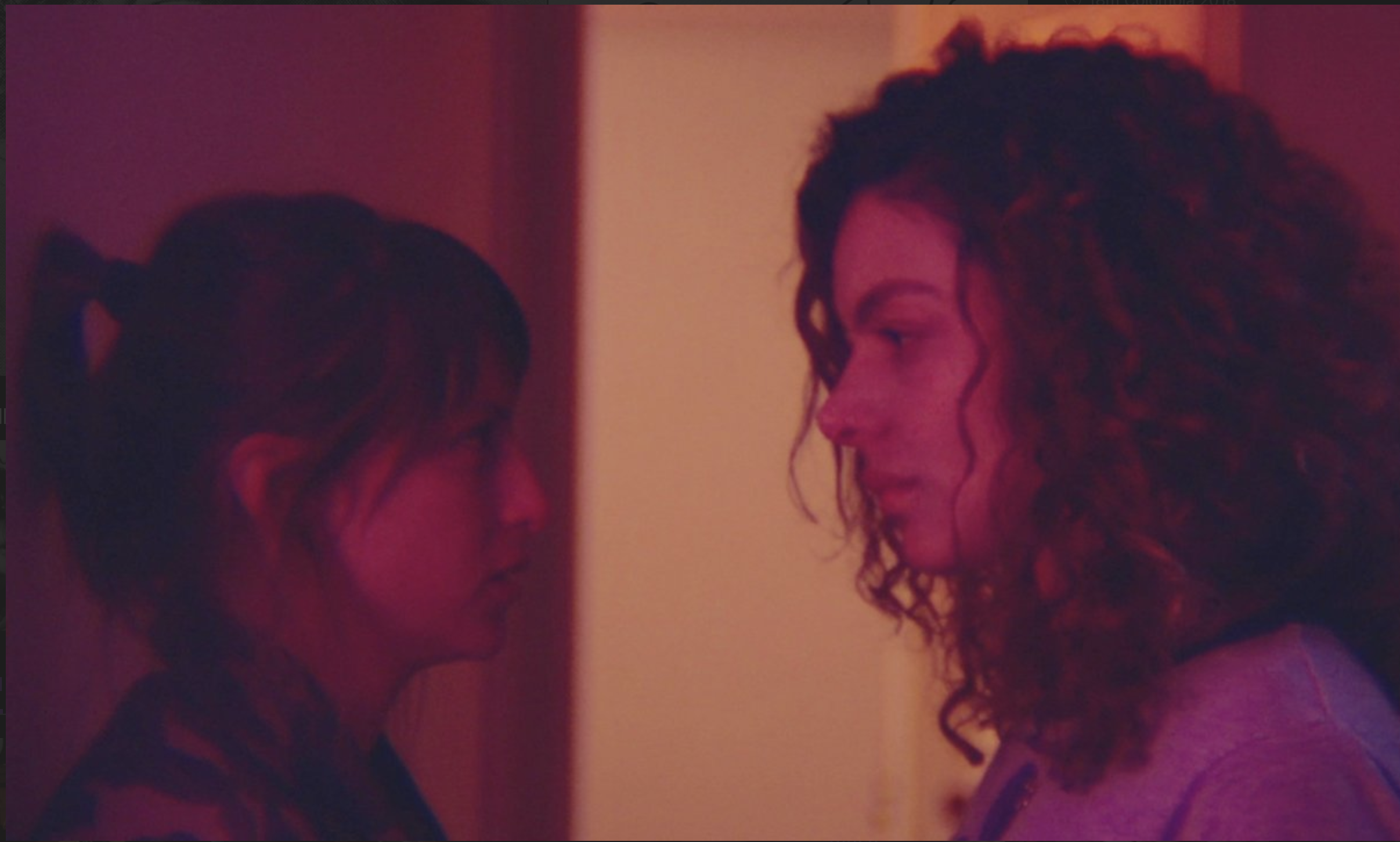
Anne Plus: This feel-good movie revolves around a queer protagonist who is trying to navigate a newly-opened relationship along with an upcoming move. The element of self-discovery is gorgeous and heartwarming without being preachy, and the story gives Anne the space to breathe, explore, and just be. Not to mention that there is a fabulous scene in which Anne and her friends try drag for the first time! The warmth and fuzz in this movie comes from the tonality which does not treat things like make-or-break but like possibilities and opportunities for learning new things about yourself.
What We Do In The Shadows: This show focuses on the trope of ‘found family’, which in my eyes is the ultimate Valentine’s Day theme because there is so much love in those two words. It is specifically about a found queer vampire family that lives together in a creaky house. Everyone sleeps with everyone but there is zero jealousy (perhaps a few centuries of living together does that to you) and they are always off on a (mis)adventure together. The costume design is brilliant, because of course, queer vampires will be the most well-dressed folx on the planet. It is a hilarious show – to the point where I had to pause to laugh even on rewatches.
Portrait of a Lady on Fire: Yes, this one is waaaay more intense than the other movies on this list, but my heart completely melts when I think of “you dreamt of me?” “no, I thought of you.” It is a beautiful interaction with an important reminder of intentionality and purposefulness being important pillars of love. Plus their slow burn romance is swoony in the best way. I also love that some important scenes involve a kitchen, because it is a place of comfort and conversation. Most importantly, it has a lot of eye contact which I am always, always a sucker for.
Schitt’s Creek: I said warm and fuzzy in the introduction so obviously this show is going to be on the list. Whether it is the episode where Patrick sings ‘simply the best’ to David or the one where Alexis learns how to take time for herself and not jump from one relationship to the other, there are so many precious moments on this show that make it what it is. My personal favourite is David and Stevie sitting in the honeymoon suite with face masks on, while telling each other: ‘You are my best friend’, right after running to the bathroom with upset stomachs. If that is not love, I don’t know what is.
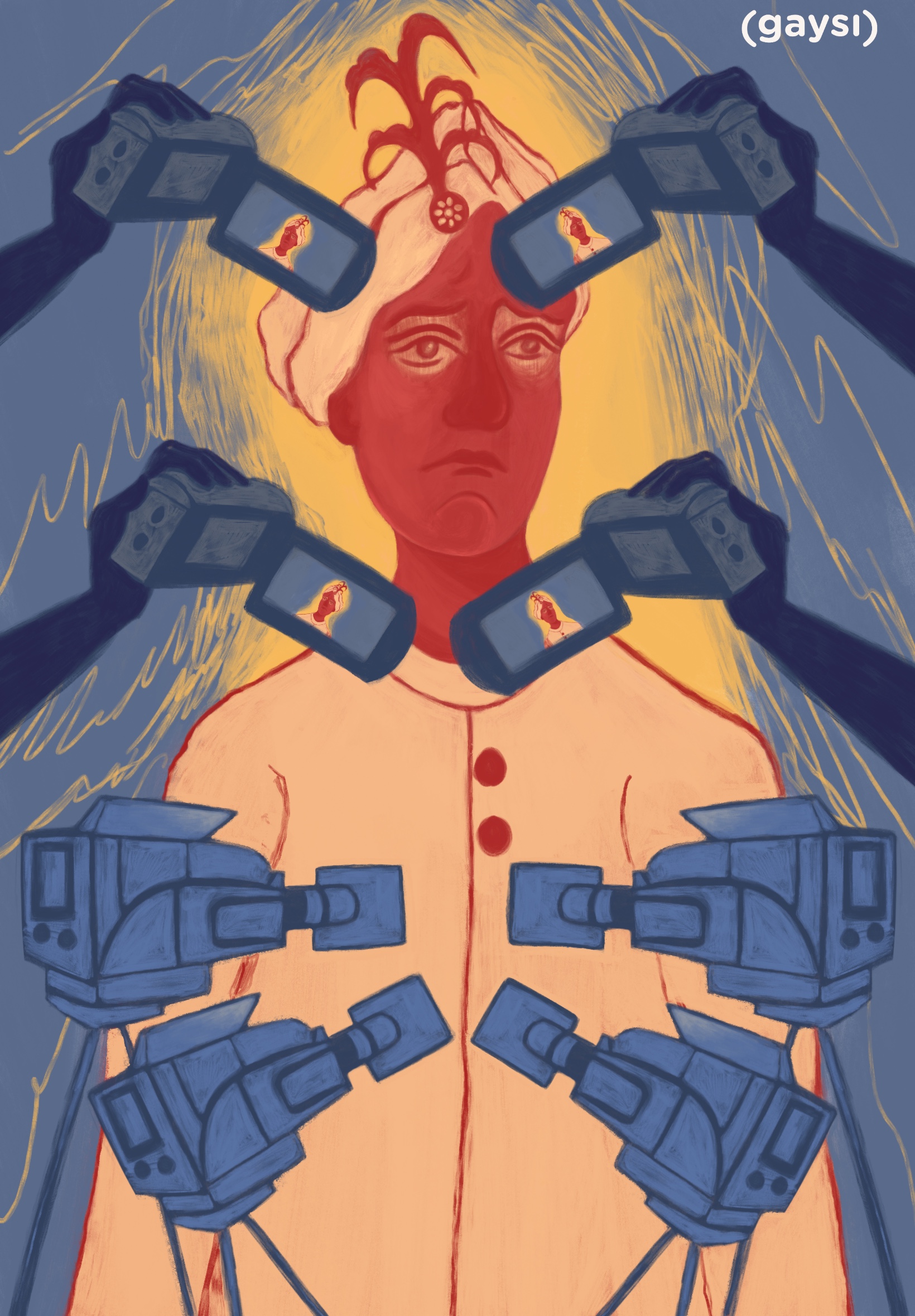
The Sagar Dighi pond in Cooch Behar, West Bengal, is known for being home to a diversity of migratory birds, and is surrounded by government offices and courts. Many young people come there to hang out as it serves as a ‘third place’ – a space besides the home and workplace, which anchors community life. Khaboria24, a local news channel, recently broadcast a short video from the banks of this pond where 2 young women were sitting and recorded kissing from a distant camera. On the channel, as a presenter wrapped up their segment, the video was played on screen to a song that seemed to poke homophobic fun at the young people. After all, queerness is just a mere spectacle for mainstream media.
This breach of the young persons’ privacy can be largely attributed to stringer culture in journalism. Stringers are not unlike your local gossip. They land up in the vicinity of a neighborhood and ask for information about what’s going on. If it is newsworthy, they might pull out their camera or microphone to get a shot or soundbyte of it. They don’t receive salaries or retainers, but often maintain relationships with multiple news organizations that rely on them for B-roll or early information from ground zero before a reporter can get there and do a more thorough investigation and reportage. This means that stringers are often not sensitized about the ethics of journalism (that are already quite sparse and white gaze-y, to begin with). During the COVID lockdowns, many news organizations were telecasting videos sent in by stringers where they can be seen prodding people who had lost children or dear ones due to bureaucratic mis-steps related to imposing the lockdown – such as daily wage labourers resorting to walking long distances to flee cities so as to sustain themselves and find shelter. They were asked pointed questions, even as they were in the throes of grief, like: is your child dead? Is it true that you suddenly lost your livelihood in the city?
It is likely that some stringer going about the town happened to spot these 2 young women kissing on the banks of the pond and zoomed in on them with their camera to get a shot of it before sending it across to the news channel. The editor at the news channel, seeing no fault in outing these 2 young women without consideration for social consequences, seems to have gone ahead and telecast the same. After all, to mainstream media, queerness is merely a spectacle. According to reports, the channel refused to take down the video until the parents of the 2 women apologized and assured that it would never happen again.
Contrast this with the trans-person in Chennai, who works as a software engineer in the Chromepet area. They were dragged and tied to a lamppost, stripped of various articles of their clothing, and beaten as several people looked on. According to the people, they were suspected of being a kidnapper in the neighborhood, but it boils down to transmisia. The police eventually rescued the trans-person from the mob, and videos recorded by onlooker began circulating of the event. News channels and social media accounts broadcast the video as-is, without considering the pain and humiliation of the trans-person who was victimized by the pervasive transphobic gaze in our society.
This is not just breach of individuals’ privacy by the prevalent media culture, but also a case study in how voyeuristic “news” content led by stringer journalism has become in today’s day and age. It is a deep-rooted systemic rot in the gaze taken to report on community life. At a time when queer people report feeling unsafe to be their real selves at home and in workplaces, a ‘third space’ like the banks of the Sagar Dighi pond or even the roads of Chromepet in Chennai is where they feel they could retreat and take a breather – but alas! the Big Brother lurks there too. Media, which is often touted as the fourth pillar of democracy, has been reduced to a bully who is prying on people and threatens to leak their private information, with little regard for their life post the 15 minutes of infamy and humiliation doled out by news platforms.
This is not limited to queer persons, but can also be observed in how women were chased and slut-shamed by popular Tamizh news channels simply because they were at a pub that was open beyond 11:30pm in Chennai on the night of the cricket World Cup final in November 2023. They were described as “half-dressed” and shots of their faces and bodies were repeatedly flashed on the videos accompanying the news reportage.
One truly wonders about the newsroom culture in these media organizations and the editorial gaze taken to news itself.
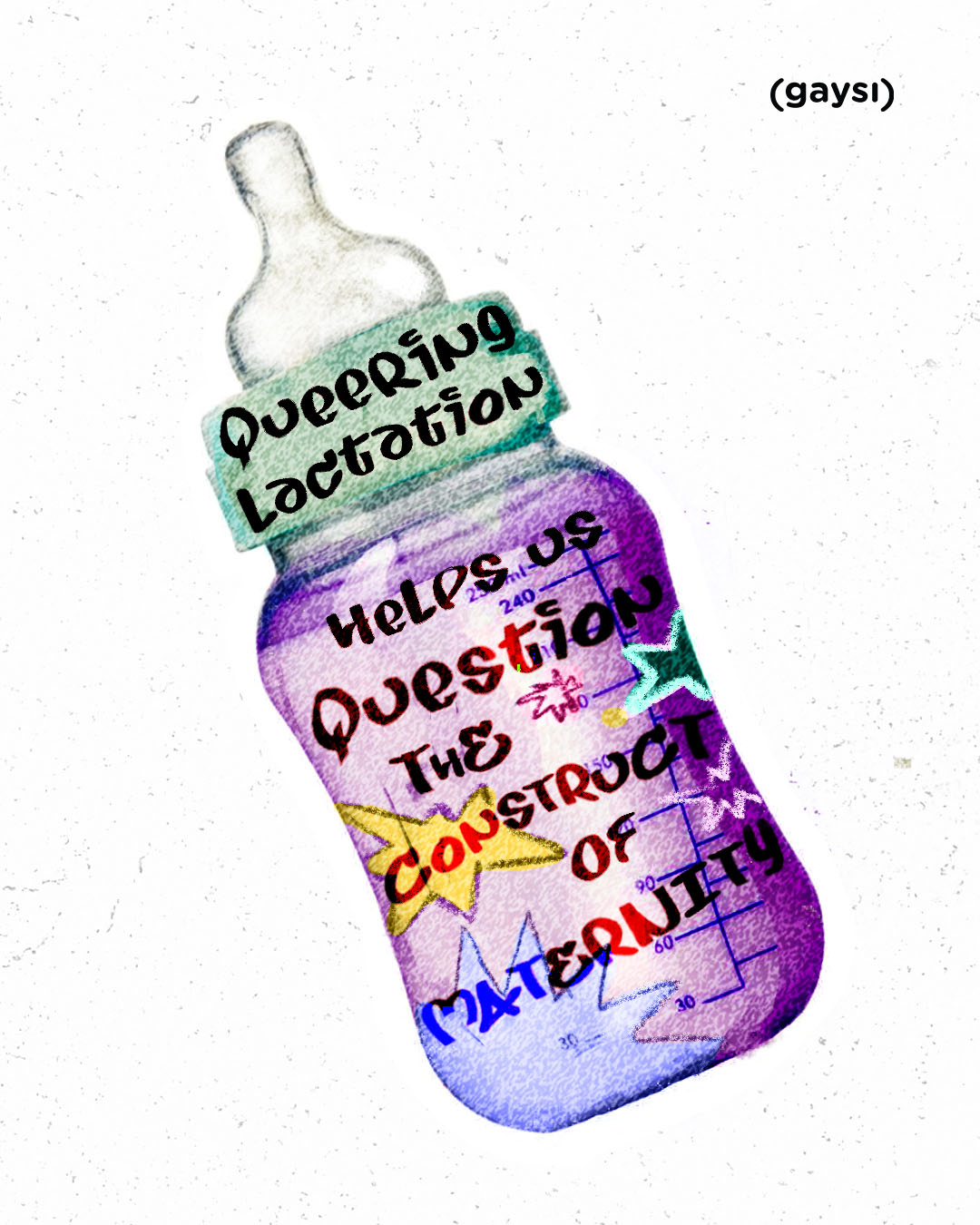
Induced lactation to breastfeed young children has been an important medical breakthrough for parents of all genders. But this is especially queer-affirming, given that it helps adoptive parents as well as transgender parents connect with their children, through this incredibly intimate experience.
Induced lactation has been described as the process of milk production by a mammal without their becoming pregnant. This is often done through using herbs, supplements, medication, hormonal therapy, mechanical stimulation, as well as the infant.
In a world where breastfeeding is considered an important chapter of building intimacy and kinship as a mother, it can be incredibly desirable for certain people as well as dysphoric to others, depending upon their relationship with their gender identity, their body, and maternity.Despite the rigorous process and often an inability to produce adequate milk, most people who induce lactation to feed and connect with their child have reported feeling satisfied with the breastfeeding experience. It is also reported to help the child who may have separation trauma/anxiety from their natal parent, who have may have given away the child for adoption or may not have wanted to breastfeed the child for various reasons.
In 2018, the first medically known instance of a transgender woman who induced lactation to feed her child, did so because her partner who gave birth did not feel so inclined.In 2002, reports emerged about a Sri Lankan cis-man who breastfed his children after his partner died in childbirth. According to a doctor at a Sri Lankan government hospital, it is possible for cis-men to produce milk if the prolactine hormone allowed for spontaneous lactation! Medical anthropologist Dana Raphael said that this could happen simply by stimulating the nipples (breast pumps can be used)and eminent endocrinologist, Robert Greenblatt,concurred. Certain medical conditions like a pituitary tumour and being on digoxin, a heart medication, could also allow for lactation. Starvation too, can cause spontaneous lactation and has been historically recorded as allowing men to breastfeed their children in oppressive conditions. In fact, this is one of the most important function of the nipples – a feature that is common to most people, regardless of their genital form or their gender identity.
Queering lactation helps us question the construct of maternity and the gendered and racial stigma that exists around breastfeeding. It is also anti-capitalist, because if people breastfed while staying agnostic to these gendered roles, then it could pose a challenge to a potentiallyUS$100 billion industry that is built upon selling infant formula.
If I hear one more straight person talk about how they want to go to a queer club because they “just want to see what happens there”, I will officially lose my mind. What happens, there, Karen, is that queer people get to breathe and be themselves without the fear of being judged by an othering gaze. This is the exact purpose that you defeat when you walk in with your “curiosity”. Let’s be clear here: there is a huge difference between actual, genuine allies wanting to support queer venues, and straight people who treat our spaces like they are walking into a ‘scandalous’ theme park with a sash that says ‘Bride to be’ or a crown that says ‘Birthday Girl’. None of us are playing a role here (except for those who might literally be performing on the stage) and we are not exotic characters whose purpose is to show you a fun time. We are literally just trying to exist and chill with each other in a safe space, and being exotic-ized by you takes that away from us.
The problem is not the physical presence of a straight person, but the entitlement. If you are an actual ally and you come across a queer event/venue, you will probably look for the ‘allies welcome’ or ‘everyone welcome’ sign- and if you don’t find it, you will understand that that space is not for you. Just like for ladies’ nights nobody needs to write ‘not for men’, when an event announcement says ‘Queer Social’, you need to understand that it is not for you. It would seem that this is a very simple thing to understand, but my last year in London has shown me otherwise. In one instance, I was talking to two friends (one of whom was straight) about how amazing it had been to attend a Discussion Group for Sapphic people because I had felt seen. Immediately, the straight one went, “Can I come next time?”
I must admit here that the AUDACITY left me flabbergasted for a moment. I had JUST mentioned that it was a safe space for Sapphic people. Had she not heard me? What part of what I had said had made her feel that it was okay to ask that? I replied by stressing that it was for sapphic people ONLY. That should have ended the conversation, but she doubled down by saying, “Not to participate, just to be a fly on the wall.” And this is a person who sees herself as a feminist. I am 99% sure that if I had told her that a cishet man had wanted to attend a women’s group she would have immediately spotted the issue with his request. Therefore, my question is this: do straight people think that queerness is a performance for their viewing? Do they even see us as human beings or do they view our community as an immersive experience that they can enjoy/ observe/ engage with and then go back home after this ‘experience’?
Then, of course, it becomes a cyclical idea that goes like this: of course I am a ‘cool’ ally, therefore I can go to a queer space; of course I have been to queer spaces, therefore I am a ‘cool’ ally. And what is with this confidence that allows straight people to decide for themselves that they are brilliant allies to the queer community simply because they have never personally hurled a slur, and therefore they should be allowed to enter queer spaces since they have decided that they are ‘safe’? First of all, allyship does not mean not doing anything bad towards a community. It means standing beside someone, advocating, protesting, and speaking up on their behalf when the need arises. Secondly, if you believe that you are safe and therefore can just walk into a queer-only space, then I have news for you: you are the most dangerous kind of unsafe because you think you are entitled to consume queer people’s existence in mere exchange for not calling them a slur. This is not how it works. This is not how anything works. Being able to enter our safe spaces is not a trophy that you get for not being a horrible person. Sorry, but not sorry.
And then there are straight women who will tell me that they want to go to queer bars because that is the only place where they feel safe. Even as they say this sentence they will fail to see the irony in the words escaping their mouth. So for them, I will underline this next sentence: You are feeling safe because you know that you have the most privilege in a room that was supposed to keep people safe from your gaze. And if you find yourself being offended by what I just wrote, ask yourself this: if a cishet man who was your friend said over and over again, “I want to come to ladies’ night, please, you know me and you know I won’t objectify anyone or make them uncomfortable!” would you not think he was being shady?
Treating people like objects is not just about sexualisation- it is about dehumanization. And when you see queer people as an opportunity to have an immersive, exotic experience, that is exactly what you do to us. And we can always tell who you are. Always.
I can’t remember the first time I saw Rakhi Sawant. Maybe it was in one of those reality shows that she participated in, in the 2000s.
What I do remember is that I immediately liked her and was drawn to her. Her confidence, broken English, vibrant energy and flashy clothes entertained me. And the fact that she was a reality TV star was icing on the cake. But it wasn’t these factors that made me appreciate her. In those days we had a plethora of reality TV stars on Hindi channels. Some sang. Some danced. Some fought. And some entertained us with their idiosyncrasies. But there was Rakhi, who was different from her contemporaries. And special. She wasn’t like those pretty, naive bahus who wept for men on screen. Neither did she act coyly repressing her sexuality and saving it for a man. Instead, she was a cheeky and non-conforming woman who openly embraced her sexuality, carving out her own identity in music videos that catered to the male gaze. Rakhi was the kind of woman who made sure she made her presence felt.
Born into a working class family, Rakhi Sawant had to struggle to get to where she was. Unlike most actresses, she wasn’t born into a film family that could support her career in Hindi films. So Rakhi danced her heart out as a way to make a name for herself. Her performance in songs like Mohabbat hai Mirchi and Pardesiya (remix version) made her a household name and earned her the fame of the “item” girl in Bollywood.
However, the mainstream actresses who were initially reluctant to dance in item songs replaced her. But Rakhi was Rakhi. She didn’t let anyone get in the way of her determination to be number one. As reality television grew exponentially, she moved into television shows and found new ways to entertain us.
I still remember watching her bachelorette show Rakhi Ka Swayamvar religiously. It was the first time I had ever seen a woman go out in public to find a suitor for herself. She might have done the show for money (which she proudly admits), but for my naive brain that was struggling to understand my queer attractions, it was groundbreaking as she was out there searching for the love she deserved. With this show, she gave me hope that a person who doesn’t fit into society’s box can still demand the love they want in their life.
Apart from the show, Rakhi acted in several other productions. She did a movie with Farah Khan and Yash Raj Films. Her interview with Karan Johar for “Koffee with Karan” was also the talk of the town when it premiered as she openly admitted that she went under the knife to enhance her body parts. Her openness was ridiculed, but to me it was a brave act. Her confession made her honest and vulnerable — something Bollywood superstars still lack.
However, her film career didn’t last long. She wasn’t of any use to Bollywood as it had already found a new set of women to attract audiences. But who could stop Rakhi from entertaining us, right?
In 2014, she even formed her own party called “Rashtriya Aam Party,” which she later disbanded after getting only 15 votes in the election.
With the advent of the digital age, Rakhi slowly started losing her appeal. There were Poojas and Urfis to replace her. She wasn’t the only source of entertainment now, nor was she the only person challenging the idea of celebrity. But in the last few years, Rakhi found ways to entertain the audience with new strategies and tactics. She crossed all boundaries and became what the current generation uses most — memes.
For what she does, Rakhi deserves a round of applause. In a world where celebrities and influencers are easily replaced, Rakhi has made sure to stay relevant. However, she has made many problematic statements in her career that are hard to ignore. She was one of the people who vocally invalidated Tanushree Dutt when she shared her sexual harassment story in 2018. She has also used homophobic remarks against queer people, which is unacceptable.
The biggest conundrum is, however, that Rakhi is the same person who comforted several queer people like me who rarely got to see themselves and their desires represented in Indian pop culture.In an industry obsessed with testosterone-driven heroes flaunting their machismo, it was Rakhi who set me free by breaking the gender expectations people have of how a “good” female actor should look and behave.
She was truly an unhinged icon who subverted ideas of gender performativity.Her non-conformity, over-the-top persona and uninhibited display of sensuality in item songs made me feel validated and seen, which rarely happened.
All I want to say is thank you Rakhi. You saved my life in the same way that Madhubala and Sridevi did for my ancestors. You were truly a queer icon for me as your unabashed performance of sexuality, gender non-conforming attitude and campiness liberated me from the shackles of heteronormativity that always repressed my queerness.
Years later, when I watched Pardesiya, I still remember how a small child in Kathmandu (me) found joy in a woman who unabashedly flaunted her sexuality and desires without inhibition or fear of judgment. And how I hoped to be like her when I grew up.
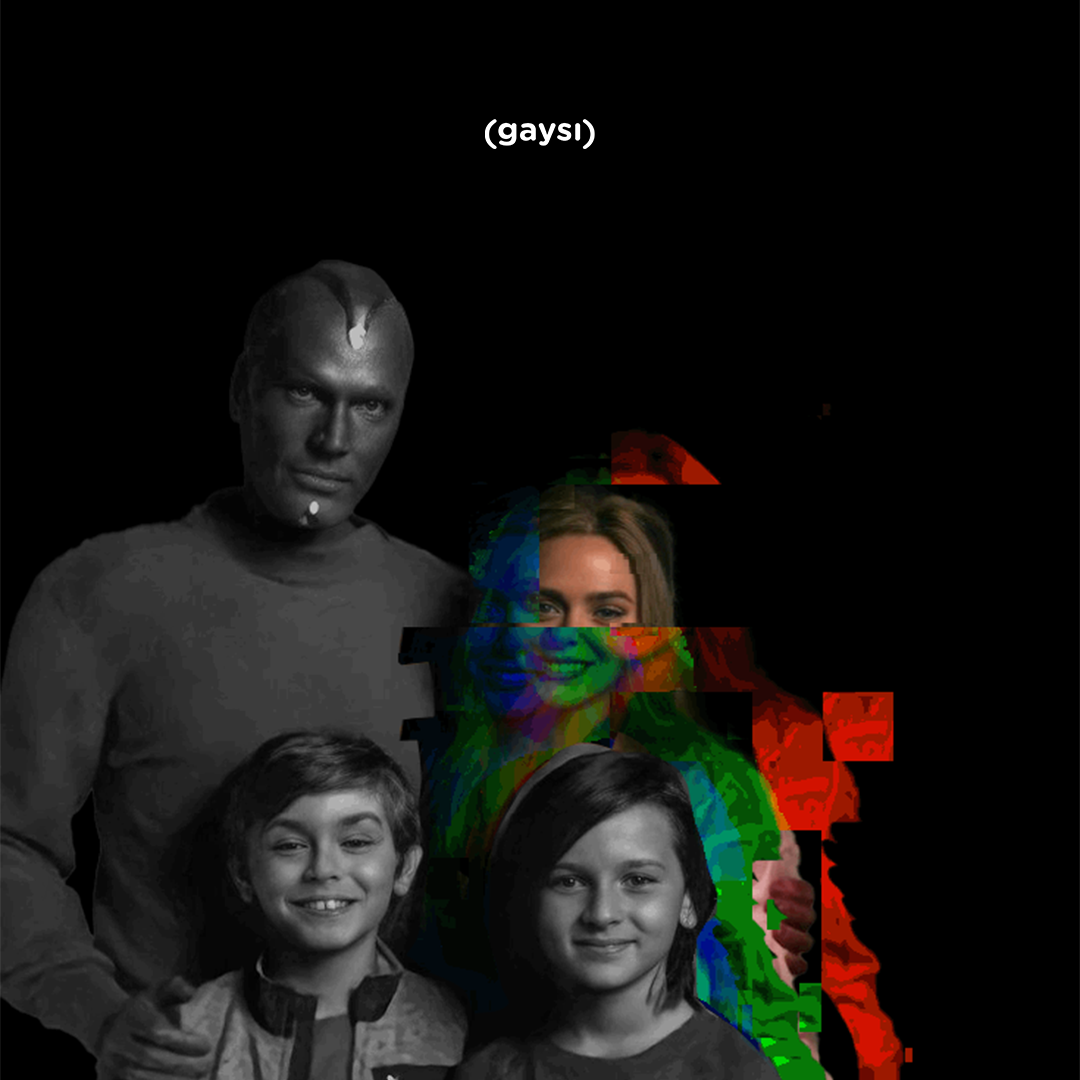
WandaVison ranks on the top of my list out of all the TV shows that have been produced by Marvel Studios so ambitiously and dare I say, overconfidently. It was an audacious project in the sense that it was challenged with the task of establishing a ‘diversity of genre’ within the Marvel cinematic universe and it was expected to not only maintain but also set standards for Marvel’s creativity and efficacy beyond the superhero action niche; and WandaVision nailed it! Not to mention that it was Marvel’s first project after Endgame — that adds a different sort of pressure considering the cinematic glory that it had achieved.
Through the course of the show, we transition from ‘what life can be’ to ‘what life is.’ That in itself is a heart-shattering theme, even without the context of Wanda’s tragedy. To dream of a perfect life knowing that there is no easy elevator that could transport you to this wonderland and there is only so much possibility that you might actually live it during this lifetime, is the real pity. Someday the delusion will fade and your imagination will disintegrate. As Thanos so wisely put it: “Dread it, run from it, destiny arrives all the same”.
Wanda protects her idealistic world by distancing it from the outside world, which in her context is ‘a world without vision’ or a world that leaves her alone; back to square one with absolutely nothing and nobody. We can construe it as a dark time that is antagonistic. Now let’s apply the queer lens to understand this. The world outside can be interpreted as heteronormative —queerphobic even—and the bubble within (i.e., Westview) is a place where you can live the “ideal” life by being the way of society and not the ‘exception’.
Now, a valid question that some of you might pose is why should we interpret Westview from a queer perspective. It can be seen through the perspective of any marginalized community or social class that stands accused of not fitting in the box of normality, right? Perhaps an escapist’s paradise with zero racism, or one with no poverty, maybe even a Westview for political and environmental refugees. It’s a fair point; but why the queer aspect becomes so relatable in this case for me, is because it is almost impossible to imagine a prosperous queer town given the biological infeasibility to reproduce biologically, especially given the social stigma and hate-crime that the community endures. In Westview, Wanda ‘creates’ her children with magic, saying, “That’s what every mother does” — read that again and you will realise how it is tantamount to our queer reality. Even in places where being queer is no longer a crime and queer marriages are legal, queer folx find that they can never fully assimilate with mainstream society. There will always be a sense of differentiation if not discrimination, pity if not hate; towards the LGBTQ community, in the subconscious collective mind, if not in deliberation.
The dream of a world that accepts and respects queerness is still nebulous. But what WandaVision does is that it gives us a glimpse, or at least nudges us to push our imaginations through the suffering and pain, just as Wanda does, to picture this far-away homogenous reality that none of us is likely to witness in this lifetime. Wanda eventually is seen as the authority, akin to a puppeteer who commands people to her whims, without actually wanting to or knowing that she could do this. I like to think that us queers, after years of ostracization, wouldn’t refuse the opportunity either.
Wanda’s dialogues are so relevant in the queer context. For example, when she speaks in Captain America: Civil War about how she perceives herself after gaining her powers: “I used to think of myself one way, but, after this (her energy glows), I am something else, I’m still me, I think, but, that’s not what everyone else sees”. This fits right into how a queer person might feel after going through a gender affirmation surgery or after coming out as queer.
Another dialogue from WandaVision, where Vision tells Wanda: “We don’t have to stay here (WestView), we can go wherever we want”; to which Wanda fervently says: “No we can’t.”
Westview as a space then becomes a queer-friendly society where Wanda and Vision can live their married life freely. This could easily be contrasted against all the places on the planet where the queer lifestyle is condemned. It highlights the restrictions of on queer community in terms of geography, choice of settlement, and cultural acceptance.
People relate to her pain, for pain is universal. Using pain in storytelling is often tricky; to deliver the right shades of tangerine tragedy, pink pity, scarlet sympathy, emerald empathy. and even a little red rage through the character, in the right amounts, is most crucial. Without it one cannot create that canvas of poignant excellence; it demands accuracy and personal experiences of loss. Death plays a huge role in this journey of trauma. Trauma lies beyond the scope of proactivity; pain is irreversible and is unapologetic, in the sense there is nobody left to place the blame on, and the void eats you alive.
Some things are just beyond human effort and need to be ‘accepted’. But when you have powers like that of the Scarlet Witch, acceptance becomes more of a choice than a compulsion, and this is the possibility that WandaVison capitalizes on. “Life could be perfect, when it’s made just for you” is literally a teaser-caption in the mid-season trailer for WandaVison.
Those promos for WandaVision, in the narrow context of Wanda are very direct and lacklustre. However, if you zoom out and take a wider look, it is a grim reminder that no matter how bad you wish, ultimately you have to reconnect with your reality — because that’s your truth, as Monica Rambau puts it. it doesn’t if you are the Scarlet Witch or an average human like me, facing reality is a ubiquitous experience, but WandaVison’s success lies in that small recess of escapism that derails the arrival of reality and allows us to vicariously live through Wanda’s story.
Wanda’s powers and their consequences in the real (heteronormative) world
Now let’s talk about how Wanda became a queer icon. She herself isn’t queer — or is she? I mean, she did fall for a robot! Perhaps, but the point is, Wanda wasn’t gay in the most literal sense, although her son Billy is — can’t wait to see him in Darkhold Diaries. It is Wanda’s powers that make her such a powerful figure not only in the physical sense. She is undoubtedly the most powerful avenger — nay, the most powerful MCU character — but also in a socio-political sense. She has the power to challenge the very fabric of reality; the very power to unthread every custom, norm and rule in society and respin it into whatever she desires. Imagine living with that power; imagine having the ability to change the world, eradicate racism, poverty, patriarchy, global warming and all other social evils by just moving your sexy fingertips!
But, there are other superhero or enhanced individuals in the realm of fiction who are and have made the world a better place. Why have they never been crowned the ultimate queer superhero title? The most reasonable answer I can think of is that most superheroes are designed specifically for a very cis-gendered heteronormative audience.
Like how Wonder Woman was made to inspire young girls and entertain a cis-feminist audience. Let’s take Thor for instance. His narrative follows a common route: a privileged prince, strong and tough, triumphs over adversaries, has a witty brother, experiences loss but never elicits pity—always the beloved choice of the mainstream audience. Despite being relatable, his abilities and divine appearance lack the transformative impact needed to challenge societal biases, such as those against the queer community. Thor’s journey in the MCU falls short in this regard.
Capitan Marvel, although queer-coded, hasn’t gained the popularity and love that Wanda has; it’s simply because she comes off as a very indifferent superhero. Wanda’s pain and emotion is so personal, nuanced and layered — something that a character like Carol Danvers cannot compete with given her
detachment from the ‘self’ and, in my opinion, unchanneled dedication to the extra-terrestrial cause. Take any superhero and there is a still the stink of heteronormative breath that distances them from the adoration of the queer community. Perhaps Jean Grey comes close, maybe even Charles and Magneto, surely Andy and Lorna (from The Gifted), but nothing beats Wanda Maximoff’s effect.
While we may not have the liberty to choose the path that Wanda decided to walk in the Multiverse of Madness, we surely can extract a sense of justice in Wanda’s killing spree. You can call this extraction of justice misplaced, because it is. I am not advocating sadism, the notion that we can be joyous when villains kill individuals of the society that wronged us isn’t ethically in the white. But there is undeniably a feeling of satisfaction; the satisfaction of seeing a character who you have been rooting for the whole time, who was been wronged by people and/or destiny, and hurt those people back so as to advance towards a happier place.
Now, I’m not saying that I was happy about the fact that those innocent sorcerers at Kamar Taj, the Fantastic Four or Xavier died — I was happy because the character I saw myself in was winning — there was nothing ‘the world’ could do to stop her; only she could stop herself. Why do you think Scarlet Witch stans are so crazy about her? Why do they defend her and worship her so superstitiously? Because it’s not Wanda Maximoff that they are worshiping, it’s her capacity to wreak havoc in a world that has wronged her — her ability to stand up and fight for what is rightfully hers, which in this case are her non-existent kids. That is how Wanda Maximoff becomes a symbol of revolt in a twisted way. The lengths to which she can go against the world are practically limitless and her chances of losing are almost nil.
Antagonizing Wanda was a big gamble. It could have worked out better or it could have worked out for the worst. Pitching her against the idea of the heteronormative world, i.e., the world that took everything from her, would have worked and it did to a certain extent, but in the process, it dashed her moral cognizance to the dirt.
Not only was she made to make the same mistake that she did in Westview, but her actions were far too violent and conscious to be pardoned this time. That was a blow to the scarlet-witch loving audience. In the end, she did become an object of pity and, even hate. There could have been plot-lines where her villainy arc could have been more justified and even dignified — poor creative choice by Marvel, if you ask me.
On the other hand, if she would have again jumped the lane and become a ‘hero’, we perhaps might have lost the sizzle that her morally-ambiguous, personal disposition was bringing to her story. At the end of WandaVision, Wanda’s sacrifice, which only a handful of us are capable of understanding becomes an element of rejuvenation. Despite all the pain and evil that the world has laden on her, she still identifies as a ‘decent human’, a mother and a person who understands the consequences of her actions. Hence, she earns our respect and is redeemed. But what she does in Multiverse of madness is beyond restoration. Wanda understands that, and hence the suicide.
That anti-hero image is a huge part of what made Wanda appealing to the queer community.
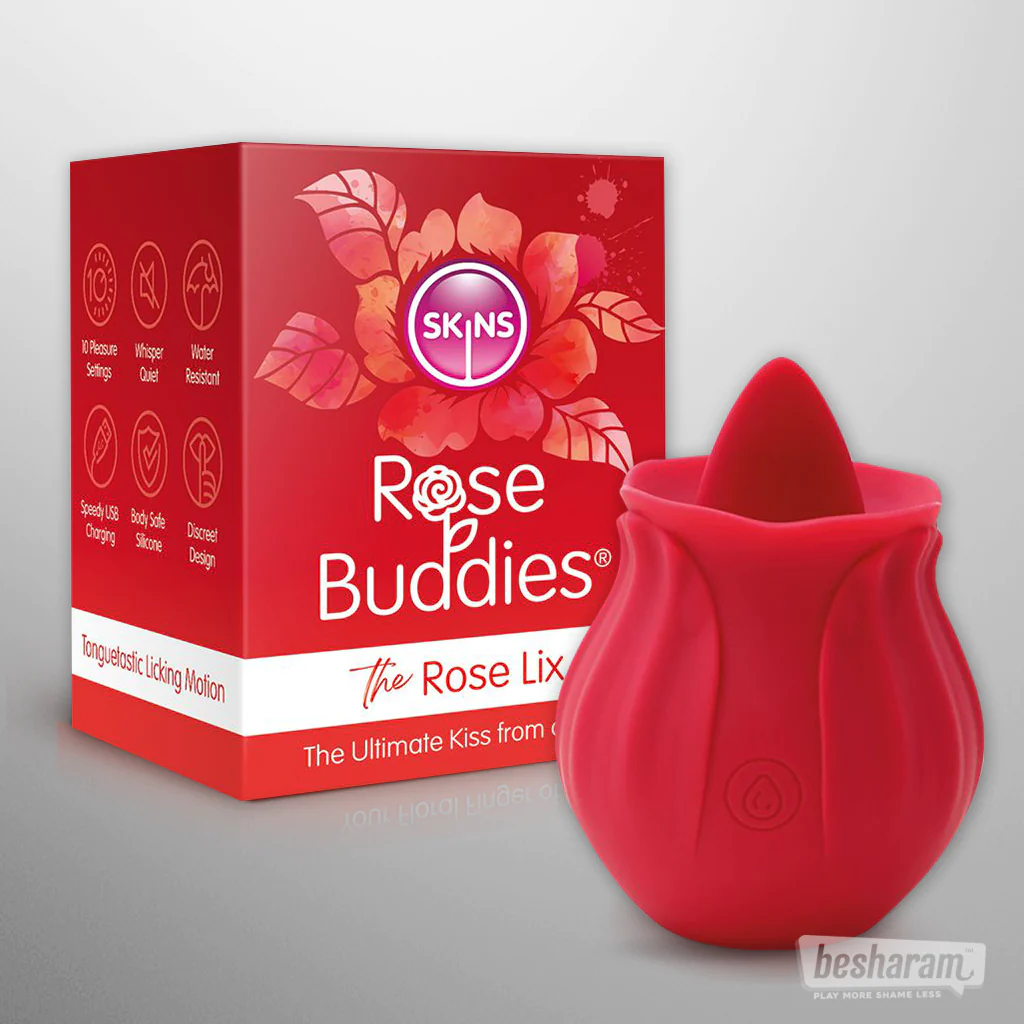
Taboo who? The sexual revolution is in full swing and sex toys are a playground for people everywhere to experience ecstasy and delight – their way. Sex toys are an amazing tool of bonding, exploration, and relaxation both by yourself or with a partner. And they’re oh so much fun! You know what they say – there’s no problem in the world a good wank couldn’t fix. Well maybe the wank won’t solve your problem… but it’ll sure as hell stop you from stressing about it! Because along with the pressures of life come the pleasures… and oh boy do we have options!
Gone are the days of awkward silences and muffled discussions about sex and intimacy. Sex toys have become the conversation starters we never knew we needed. Where do you like to be touched? How? For how long? Where else? Throw a sex toy in the mix and you might feel more open to express and enjoy yourself. Besides, the sex toy industry has embraced diversity in all its forms and has made products more accessible than ever. We’re lucky enough to have a kaleidoscope of sex toys with different shapes, sizes, colors, and functionalities – right at the click of a button! This inclusivity is empowering, breaking down barriers and celebrating the uniqueness of every individual’s desires. So, whether you’re into sleek designs or bold, extravagant shapes, there’s a sex toy out there with your name on it! Let’s take a look at some of the hottest ones on the market.
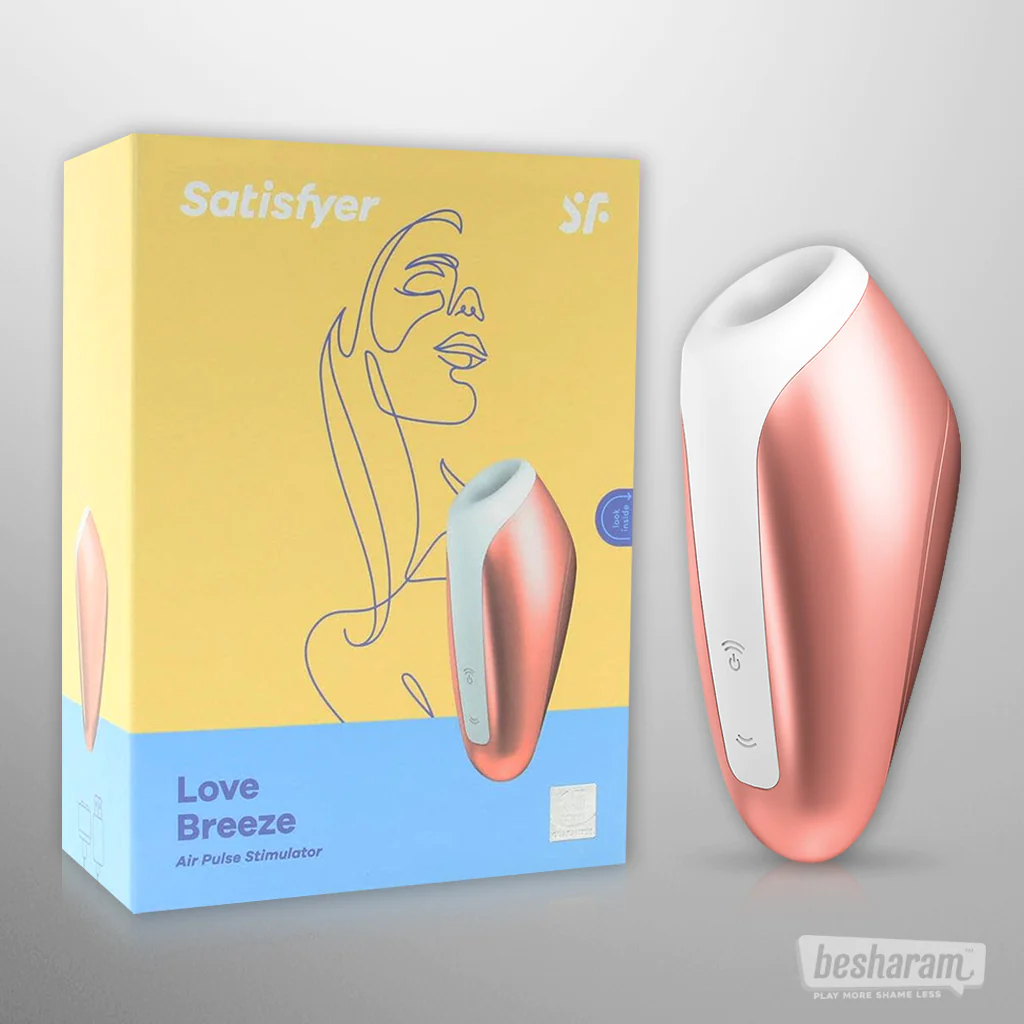
The world of vibrators is as diverse as the world of pleasure. And the Lovense Lush 3, a sex toy for women, is definitely a step above the regular kind. It’s a wireless remote-controlled toy with a bluetooth remote control – that means the possibilities with this vibrator are endless. Get your hands on this beast to enjoy it alone, with a partner, or if you’re feeling extra cheeky, you could be discreet and get frisky in public.The vibrating egg egg helps stimulate the internal g-spot while the extended tail taps on the clitoris for deeper double stimulation, especially for vulva owners. With 4+ hours of battery life, app and voice control, and non-existent sound, the Lovense Lush 3 vibrating egg will have you expanding just where you experience pleasure – from the bathroom to the swimming pool.
If you’re a penis owner on the lookout for a hands-off masturbation experience that’ll blow more than just your mind, look no further than the Lovense Max 2. This automatic, bluetooth-enabled masturbator can have you feeling hot and heavy without even lifting a finger! While the soft inner realistic sleeve gives a good feel, the device both vibrates while contracting on the inside to maximise your pleasure. So all that’s left for you to do is lie back and enjoy. You can even arch your back using a pillow for deeper penetration. With 360-degree contractions and easy to clean with airflow release, this remote-controlled toy by Lovense is designed for comfortable use and storage. Oh and the coolest part? With the app-control and synced vibrators available, this toy is ideal for couples in long distance relationships who want to keep the spark alive.
It’s a known fact that people who are assigned male at birth have a prostate or ‘P-spot’– in the anus. So a vibrating butt plug seems like a no brainer to get the vibes going. But even for those who haven’t ventured into anal pleasure yet or feel apprehensive, I’d say don’t knock it till you’ve tried it! Ecstasy can come from anywhere.Just keep the lube handy and you’ll be good to go. The Lovense Hush 2 Vibrating Butt Plug is a sophisticated way to enhance the fun in the bedroom, whether you’re a newbie or a veteran. It’s wireless, has customizable vibrations, and comes in 4 size options! And the wildest part? This toy can be controlled right from your phone via a handy app (you can wear it in public ;). So grab one of these and explore the unlimited vibrations by yourself or with a partner.
Some people like imagining another person pleasuring them while they masturbate, while some… are just plain old lazy. Whichever one of the two you may be, the Kiroo Keon Interactive Stroker could be your gateway to endless, toe-curling orgasms. This smart sex toy keeps the experience hyper realistic with a plush sleeve and a combo of vibrations and contractions, all operated discreetly with one click. Not just that – this fleshlight can even take your fantasies to the next level. This bluetooth- enabled toy and accompanying app gives users a chance to spice up their solo sesh with VR content, and 2D adult videos online. Not to mention, you can use this for long-distance play with your partner.
That’s not even the tip of the iceberg! Dive deeper into the world of sex toys and keep exploring.
“Shaming and insult were always a regular experience for me. I took every insult as a new learning, every rejection as a strength.” So writes Santa Khurai in her memoir, The Yellow Sparrow, which takes its title from a poem she wrote during her adolescence after an argument with her father. It tells the story of a sparrow born with yellow feathers hidden away by its mother and not allowed to leave the nest unlike its siblings. Once it discovers its unique identity, it joyfully embraces it in spite of the mother’s worries about how it would be treated in the outside world. Santa is the titular bird here. In her own words: “My desire to be a woman, a beautiful, fashionable woman, was so strong that I was not afraid of challenging anything that came in the way… I felt that I could bear anything but I could not live like a man…”
The challenges in her life have certainly been many. From within the family at home and the society at large in Khurai where she lived to the violence meted out by repressive state apparatuses and the rejections she faced from within her community, Santa has had to overcome a lot to be where she is now. She faced numerous barriers when it came to education and employment, particularly since she wanted to live her truth without any secrets or subterfuge. She writes: “The woman in me could neither be vanquished nor hidden somewhere in order to adjust myself to a world that was replete with selfish people and their selfish criticism.” Her father was firmly opposed to her way of living and she was considered to be the black sheep of the family. While her mother did support her in some ways and shielded her from her father’s anger, she also failed to truly understand her and often caused her anguish.
Community came in the form of fellow “homos” and a realisation about their shared identity at the age of sixteen. “‘Homo’ [in Manipur],” as Santa writes, “was a derogatory term, associated with all kinds of obnoxious characters, like men whose behaviour, physical features and character was deviant from the conventional idea of manliness or masculinity.” There was no distinction, as such, between gay men, trans femme people, or those who were non-binary. For the most part, this generalisation is maintained in the memoir although she also uses native terms such as “Nupa Maanbi” and “Nupa Maanba” to show differences. Since Manipuri is a gender neutral language, gender is assigned through names; pronouns themselves do not indicate identities. In this engagin English translation by Rubani Yumkhaibam, “he” is used for “homos”, be it ‘feminine’ men or transgender women, to maintain that neutrality.
So, Santa began to seek out friendships with the people similar to her who also could not shed the self that was at odds with society’s strictures: “It was a period of vital importance in my life, it seemed that the seeds of the future were sown in those moments.” Santa Khurai perfectly describes the inner worlds of queer people, their ingenuity and enterprising, their resilience, the bonds they form with each other as found families. This is not to say that they were all one-mind on every issue and there were no disagreements or fights. In fact, Santa got a lot of flak from the community for being intentionally ‘provocative’. She was frank in both dress and dialogue, not willing to make any compromises with her identity in order to draw less attention. She wore feminine clothes and makeup in public, refusing to keep conforming to her male assigned at birth identity, and their frequent criticisms hurt.
Santa states, “To conform to society’s expectations, at the cost of banishing my own self and the desire ingrained in my blood, was a form of slavery to me.” Such an assertion, accompanied by her bold attitude and forthright behaviour, came at the cost of alienation. The alienation was also coupled with violence in some cases, especially at the hands of other men who were probably threatened in their masculinity or did not like the disavowal of social norms, be it insurgents, police and army men, or just thugs encountered late at night. Restrained by the shackles of society, Santa and her fellow “homo” friends were always on the lookout for a place of their own where they could freely be themselves without judgement. There was no public space that was there for them, at least for long. They often resorted to deserted places and odd hours or visited each other’s homes or spent time together at small shops and vendors.
Love and romantic relationships were also out of reach for someone like Santa. She frequently saw her friends get into relationships with men who would later break their hearts and abandon them for more ‘traditional’ marriages. Her infatuation with a boy much younger than her ended in chaos and pain. Later on, her marriage to a cis heterosexual man turned abusive and she eventually left him as things escalated. It did not help that she was frequently in dire straits in terms of money and lived in precarity since she was not interested in the jobs afforded by her education. Her beauty parlour business, while an initial success, also folded after her partner left to start on their own and she became increasingly addicted to painkiller meds. But this proved to be another hurdle in her path which she overcame with sheer will. When she was successful in fighting off the addiction, a new phase of her life began.
“I want to be somebody with some worth,” Santa writes, “able to command respect from society.” An oft-repeated sentiment in her memoir, this is perhaps what draws her to people work and human rights activism when she begins working at All Manipur Nupi Maanbi Association (AMaNa) and Solidarity and Action Against HIV Infection in India (SAATHI). She clearly also has a lot of love for her homeland even though her life there has been rocky. The memoir showcases a strong sense of place about lived realities in Manipur with detailed descriptions of traditional festivals and celebrations. The political upheavals in the state also directly inform the narrative and are not relegated to just the background. Santa has become increasingly aware of how the Northeast is continuously sidelined in mainstream/mainland conversations around gender and sexuality. She does not claim to know everything and highlights her new learnings throughout the book. In her turn, she wants to strongly “advocate for a more democratic and secular transgender and queer movement.”
The utopian ideal of a world that is gender-inclusive is theoretical at best and currently does not exist. What does exist, however, is the reality around us where power structures and oppression dominate our lives. We are stuck in an unequal world where not everyone can be who they really are and who they want to be. There are two ideological standpoints for eliminating this — no gender distinctions or having numerous labels for diverse genders.
While both these positions aim to create a safe world for all genders, they do one thing differently. The former says that we are all the same and therefore do not need to categorize gender. While the latter says we are all different and therefore need several different categories. The current view is that gender is a spectrum, but this itself seems problematic to me. How many categories do we keep adding to define each person’s sexuality and romantic bent? Does there need to be a certain number of people identifying with a specific definition of sexuality to make it into the spectrum? And how many genders do we keep adding to exhaust each person’s experience of gender and sexuality?
On the other hand, what are we left with if we don’t have categories? The binary view of gender as a blue box or a pink box is ingrained in our society, history, and law. Without making gender visible, it would be impossible to fight these deeply entrenched institutions that insist on having a category of sex and gender defined for every member of its territory. Even if we do manage to fight the good fight of abolishing the idea of having gender entirely by making it arbitrary and taboo, there are still other issues at play. The major problem with not having a gender spectrum to fall back on is that sexual identity can often be messy and confusing. Without giving people options for their sexuality, we are limiting them to the already established hetero-norm. While we see gender as learned and performed, it is also deeply entrenched in our languages, commodities, and histories. In that sense, it is internalized to the point that without an alternative grammar of sexuality, it might be difficult for each individual to imagine a vocabulary of their own in order to define and own their gender and sexuality, distinct from the norm.
As we live, we become who we are and/or who we always were. People cannot be expected to know who they will be at birth. The same applies to gender, which is much more than just the biological grouping of males and females. Gender evolves in the context of the society that we are a part of, and without the community, we take away a queer person’s ability to accept their identity. The problem is the unequal system that we are all a part of. To change this system, we must identify ourselves as opposed to it. The LGBTQIA+ community does that while lobbying for change and making themselves heard and valid. The large number of people that identify with queerness gives the community a certain strength in numbers for advocacy, making it accessible to organize, protest, and rally for changes in law and institutions like religion, education and other cultural organizations with authority in the territory. This identity formation is a political mobilization and a face for rights and acceptance. This is done by identifying labels that allow you to present as a certain identity and by the relegation of privileges, which can only be fought for by making a gender beyond the binary visible. Without this, you have people living invisibly and with no way to organize.
The hope, however, is that we can get to a place where we can say no to discrimination and divisions. But there is first a need to abolish gender, and we must define it in all its multiplicity. Only then can we step back once people better understand their gender and sexuality without the binary, and eventually will not need these divisions and definitions anymore.
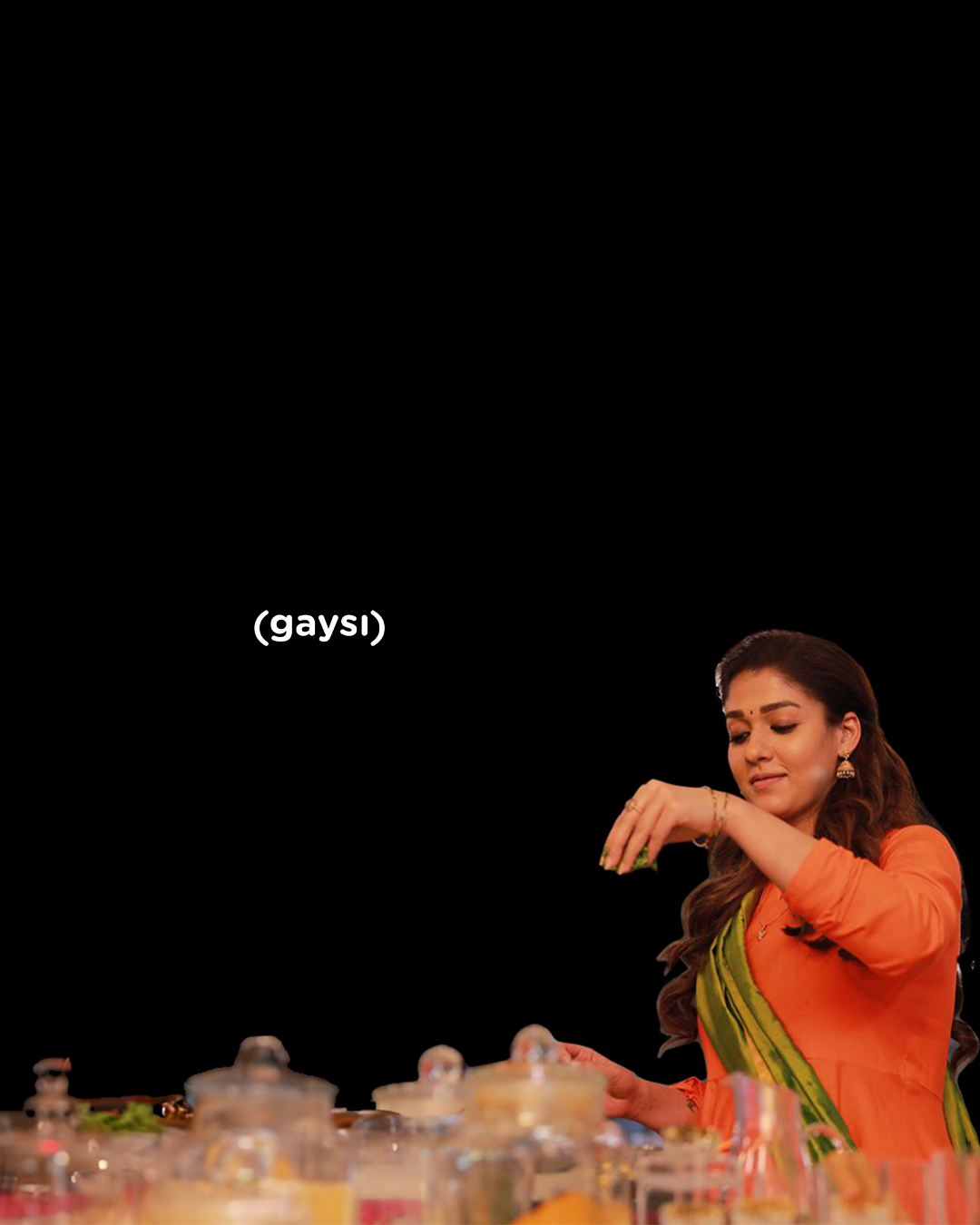
In one of the crucial scenes in the movie, ‘Annapoorani: The Goddess Of Food’ starring Nayanthara, the protagonist’s grandmother cites herself as an example of not following her dreams of becoming a classical dancer and performing around the world just like MS Subbulakshmi did with her singing. She then encourages her granddaughter, the titular character, Annapoorani, to ditch her own wedding and pursue her goal of becoming a chef.
‘Annapoorani: The Goddess Of Food’ is about a woman from a conservative Brahmin family who has dreams of becoming a chef. When seen from an apolitical lens, the movie seems to be talking about breaking societal barriers and pursuing one’s aspirations. But I wonder if a movie about a Brahmin character can ever be apolitical. The movie managed to garner praise from feminists, yet I couldn’t ignore the influence of caste in this movie. After all, what is feminism without anti-caste politics?
A large chunk of this movie revolves around how a Brahmin woman begins to eat and cook meat despite the stigma attached to it. Cooking and eating meat is shown as a barrier. But why? The slightest inconvenience to a Brahmin woman is shown as a barrier, but how relevant is it when compared to the ban on meat in campus canteens across several Indian universities, because ‘vegetarian’ youth from Brahmin communities wouldn’t share food or use the same utensils as their meat-eating peers? Let me give you another example. Annapoorani’s father Rangarajan works as a priest at a temple and he makes the prasadam. Him and his family enjoy the status of the caste they were born into. I happened to read a comment under a post about the movie after it began facing flak from Hindutva groups. The commenter spoke about having the choice available to ‘vegetarians’ to cook in ‘vegetarian’ kitchens for a ‘vegetarian’ crowd. These kitchens have, in fact, existed for decades, if not centuries; like the ones Rangarajan works in.
My point is that in the grand scheme of things, Brahmanism continues to exist and Brahmins continue to enjoy caste privilege in spaces exclusive to them. How relevant is a story that glorifies a Brahmin woman for overcoming an inconvenience that is the product of Brahmanism in the first place?
This film also tries to be secular. If there’s something Annapoorani couldn’t master to perfection until the climax, it’s the quintessential biryani. In the finale of the cooking competition Annapoorani participates in, she’s asked to cook biryani. I wasn’t ready for what came after. Annapoorani recalls what Farhaan’s mother (a Muslim biryani expert) had told her about her method of cooking biryani. Annapoorani wraps a black piece of cloth around her face as a hijab and offers prayers to Allah as if that were the missing ingredient. It didn’t sit well with me because I felt that this scene was equivalent to that one friend we all had who would suddenly become secular with the mention of biryani on Eid. The whole idea that a devout Muslim would make the best biryani and a conservative Brahmin would make the best chakkar pongal is itself flawed and extreme. The symbolism and the contrasting of it is unconvincing.
Farhaan supports Annapoorani as a good friend and eventually falls in love with her. But we don’t see Annapoorani responding in the same way. There’s still a question mark on what Annapoorani feels for Farhaan. It makes me wonder a tiny bit if the makers were anticipating ‘love jihad’ remarks. The movie has attracted hate from Hindutva groups over Farhaan-Annapoorani’s relationship. Personally, the ‘love jihad’ remarks and forcing the producers to remove it from Netflix makes zero sense to me. Would an inter-faith marriage be too much for this film? Honestly, the makers aren’t to blame when the hatred is so real!
The film revolves overtly around the father-daughter dynamic and the daughter bringing disgrace to their family by not adhering to caste supremacy. The writing is such that I wouldn’t be surprised if people empathised with Annapoorani’s father instead of the protagonist. Annapoorani isn’t an anti-caste protagonist. She doesn’t try to liberate herself from the patriarch in explicit ways. She tries to convince the patriarch about her goals and the means she uses to achieve them, without ever pointing out how flawed and discriminatory casteism is. What irked me the most was how innocently unaware Annapoorani was about her caste privilege, which is not an option for many. I was conflicted after watching it because my opinion didn’t go with the popular opinion of feminists, who lauded the film. It was one of the few films that made me think and even critique myself before critiquing it. The inherent refusal to address caste privilege and wrapping it the garb of feminism is perhaps what makes it hard to critique. In simple terms, ‘Annapoorani: The Goddess of Food’ is a movie that refuses to talk about anti-caste politics and caste privilege, despite being a movie about a Brahmin character. But does feminism without anti-caste politics make any sense?
Women’s football in India is really paving a path for itself and making itself known to the world. It is becoming popular. India also hosted the FIFA Under-17 Women’s World Cup in 2022. Within India, states have started organising women’s football tournaments such as the Karnataka Women’s League, the Delhi Women’s Premier League and the most anticipated Indian Women’s football competition, the Indian Women’s League. Many of these leagues are also broadcasted live. This is a huge step forward for Indian Women’s football.
However, as many institutions and public spaces are gender segregated only based on the two accepted genders, man and woman, football, like any other sport, also fails to recognise genders and identities beyond the binary. Being an avid football enthusiast and being a trans man, this aspect of sport is something I absolutely loathe.
Competitively, there is very low scope for identities beyond the gender binary to be recognised publicly. At the end of a game or tournament, one might identify differently, but will still either be considered as part of the men’s category or women’s. Of course sport claims to be divided in this way so that both male and female athletes have a fair chance at competing based on what their biological bodies can do. And since we live in a male dominated world, there is no doubt that female athletes have suffered and opportunities and resources for them have been limited. But why cancel out the possibility of trans and gender nonconforming athletes competing professionally? This is a battle trans people, especially trans women, have been fighting for ages.
Recreationally, there is a lot of scope for sporting communities or groups to organise and encourage mixed gender sport and tournaments. But most communities just end up considering mixed gender as consisting of equal number of women and men in the same team, again excluding non-binary identities.
Despite football, or any other sport, being heavily gender-segregated, there are many successful trans and other gender nonconforming athletes making a name for themselves. There are not many South Asian or Indian athletes who may publicly identify that way, but many do choose to represent themselves confidently and choose to be themselves without, perhaps talking about it. Even within the Indian Women’s Football Team, there are many players who sport short haircuts and coloured hair and dress in ways which will be considered more typically masculine.
Three years back, I got the opportunity to play as a left winger for one of the teams participating in the Karnataka Women’s League (KWL), 2021 -22. The KWL is the most anticipated women’s football competition in the state, with players coming from different parts of the country, different socio-economic backgrounds, speaking different languages etc. to give trials for the teams participating in the tournament. Once selected, training goes on for about two months before the one month period of the tournament commences.
At the time, I had come out to some of my friends in college but not to anyone within my squad. It was hard as I had to present myself as a woman and tolerate being addressed with the wrong pronouns. I made a compromise because I was finally getting to play the sport I adore at such a high level. While competitively and in the larger atmosphere of the tournament, I was still considered as a woman or female athlete, there was strangely a sort of comfort and feeling of safety regarding my gender identity amongst the company of my teammates and coaches, unlike any other I had felt before.
This comfort and reassurance came from the fact that my team, and other teams as well, had players similar to me. Many of them had short hair, some of them sporting fancy shaves and coloured hair. I mostly saw my teammates on the field where we were always in our training gears. But if there were outings, I came to realise that some of their sense of style and clothing were similar to mine—more masculine and “boyish” one would say. I felt a sense of belonging with these players. I didn’t know what they identified as or what their preferred pronouns were. I often wondered whether they were also closeted and had admitted the fact that they would, for obvious reasons, be addressed as women. Many of them also came from quite remote areas of the country, which sometimes made me wonder whether or not they had access to the proper resources to understand the depths of their identities. But whether they did or not, they seemed extremely confident about in the way they chose to represent themselves. And that was very encouraging.
These topics were not always discussed or said out loud. However, there was support and
acceptance from the entire squad. It felt good when they used to compliment my sweatshirts or my caps that I used to wear to training or classroom sessions. Few words were then exchanged regarding where these clothes were bought from. I get a haircut quite often because my hair grows out very fast; and because I cut it so often, nobody really notices. But in training, it used to become the talk and discussion of the day. There were so many compliments and questions regarding it, not just from my teammates but from the coaches and staff as well.
There were times when my coach and some of the players, who I am assuming identified as cis women, would refer to us playfully as boys or men. While it was said in a comical manner, I could see the joy and contentment in my fellow teammates’ eyes of being addressed as boys. And it was enjoyable because these comments were never passed to put us down. There was never any judgement about our dressing sense or comments about how we should dress up more like “women”. Our identities were validated within the squad without actually knowing what they are.
Many of my teammates were also openly in queer and same-sex relationships, within the squad or beyond it. In between the season, I was staying with the team in the accommodation provided by the club and I remember overhearing two of my teammates talking about their identities and relationships. “I know I can dress like this and be with girls while I am here but once I go back home… I mean at the end of the day, all of us have to marry men only, there is no other way around it,” one of them expressed. The second teammate just sighed and agreed. It was quite heart-breaking to hear that, although they were extremely comfortable with their identities and orientations, they were unable to imagine a future for themselves in which they could live the same way.
They did, however, imagine a future in football, pursuing a career in it and perhaps in many ways seeing it as an escape from the confines of spaces which would not allow them to live the way they would ideally like to. While there was an awareness that one was playing in a women’s tournament and that at the end of the day one would be considered a woman and nothing else, it wasn’t the most important aspect or something that was extremely bothersome. At the time, football was all I had got, a faraway space from all the confusion and vagueness which comes with coming out.
I stopped playing competitively recently. While football as a sport is something which will always be dear to me and a passion I will continue to indulge in for the rest of my life, I cannot participate competitively anymore because eventually being addressed as a woman in the larger sense was getting too much to handle. I also made that sacrifice because transitioning medically had become equally, if not more, important. When I tell people this, they try to encourage me by saying, “That’s okay! You’re so good and you can definitely play for a men’s team.” When I deny what they say and express that competitively I don’t have a shot at it anymore, they are always quick to assume that I am not confident about my skills in the sport. That is not entirely true. Many trans men do compete professionally in sports from the men’s side after transitioning medically. And while that may seem like a possibility for me, it is something which terrifies me as well; because I am aware of the toxic masculine culture in which we live and the kind of comfort and safety I felt within a women’s team is not something I can expect from a men’s team. And that was very important to me, the euphoria and solace that came with playing the sport and being part of a team.
Sport is supposed to be competitive and hard. Coaches are expected to be terrifying and athletes are expected to do well under immense pressure. But football was never that for me and I wouldn’t like it to become that.
For my fellow queer teammates, who are still in the game, working hard day in and day out to pursue a career in football, it continues to remain a safe space, to be themselves without feeling insecure and judged. It seems that is also the only way they can express their identities fully and safely. At the time that I was playing, it felt the same way for me. Some days definitely felt more dysphoric than the rest, but the opportunity to play the sport I love, and play it so often, without having to degrade or hide my identity, is something I will always remain immensely grateful for.
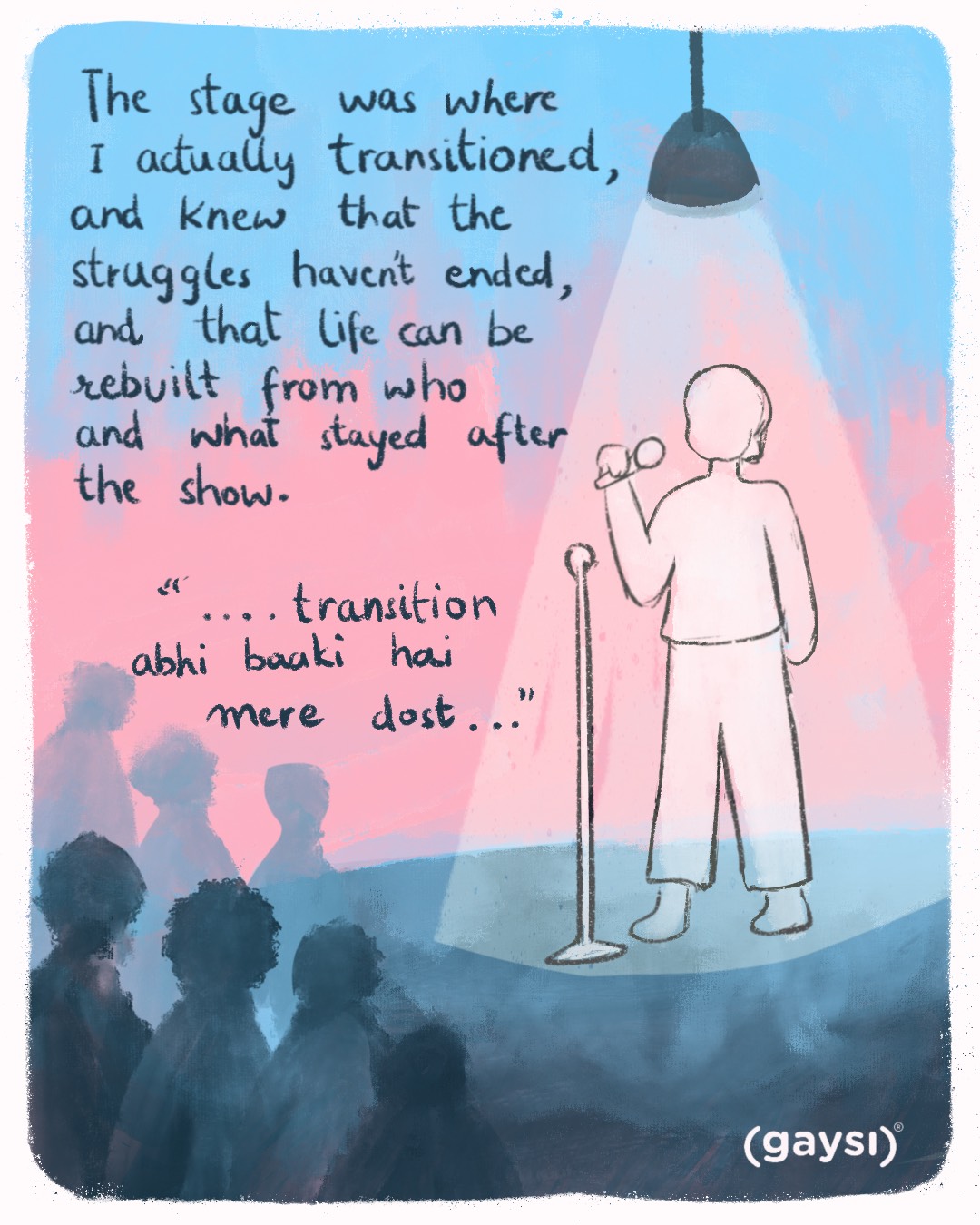
Many people who fall under the umbrella of ‘transgender’ choose names that differ from the names given to them at birth. It is usually a huge step that feels affirming to their gender identity. The names that they choose to leave behind are known as ‘dead-names’ and should never be used to address that person, unless the person themself requests you to do so under specific circumstances. These names are ‘dead’ because they do not align with the person’s identity. Name-changing is tedious and frustrating, even if they are not changed via the legal process; which is a whole different can of worms. The last thing the person would want is to explain the social transition to you. There is no one way to be a good ally but here are a few things to remember while being a better ally to someone who has just changed their name.
I recently chose a name for myself and saw that people around me were struggling to transition and address me by it.
Call Me, Chosen Name
You would be surprised to learn how many people forget to update their friends’ contact information. One of the first, easiest, and most affirming things to do is update with their chosen name. Add a cute emoji if you want, but don’t forget to do so. It can be a stinging feeling to see your dead-name pop up on your friend’s phone. Updating their name is a small but meaningful sign of support. Additionally, it will help you commit their name to your memory better, especially if you talk or chat often.
Back And Forth, What?
If your friend changes the way they want to be addressed, your only choice is to accept and follow through. If they go back and forth, or use different names in spaces that don’t feel safe for them, follow through with that. Your confusion or inability to remember is not their burden. It is not about you, it is about them. Your friend telling you this information is a very vulnerable experience. They trust you with something very personal. Let them find who they are and walk alongside them if you can.
What About Nicknames?
If you share a close enough bond to have a nickname based on their dead name, just ask them if you can still use that. Sometimes it is more about how you see them and not about the name. Your intention should be “This is my heart’s memory of you” and not “That’s just what I will call you”, there is a difference between the two. However, if they do not like that nickname either, respect their decision and just find a new one.
How To Say Sorry
It is completely natural to mess up when someone around you is going through a change like that. The easiest way to respond is to acknowledge the mistake, apologize once, and move on. If you notice them shutting off after your mistake, give them space to process and bounce back in their time. Over-apologizing puts pressure on the person to forgive and say “it’s okay” while elevating the pressure on you. It is easier for everyone to just say it once and then be careful after that.
Don’t Out Them, Don’t Assume
Make sure to ask which name to use before doing so in front of work colleagues, new friends, or family members. Some trans people are not out about their gender in their professional circuit or at the natal home. Their reasons may vary from safety concerns to simply their choice. Hence, assuming the usage of their chosen name can put them in dangerous or uncomfortable situations. Similarly, some people do not bring up their transition in professional or social settings. Nobody owes anybody else that information, regardless of which step they are on in their journey. Hence, slipping up with their dead name in front of others can out them too. Similarly, give them the space to choose the name that they would want on social media, work credits, and professional settings.
Safe Work Space
If you have the authority or agency to do so, try making changes in your establishment, where that is at the school, college, or in a professional setting. You can collaborate with local trans-led organizations to conduct sensitization workshops. Additionally, you can help develop a process that would update records with one’s chosen name and pronouns, regardless of legal changes. Try ensuring that this process is easy and seamless to avoid confusion, dead-naming, and causing dysphoria. If one’s legal name is required for any sector (like HR, accounts, or exams), ensure either sensitivity and discretion in these sections.
Discard The Curious Cat
While asking questions is a good thing, some questions are simply inappropriate. You don’t have to know or deeply understand something in order to respect it. I don’t know Chinese but I respect Chinese traditions. So, please never ask a transgender person their dead-name, intimate details about their body, transition history, or life pre-transition. Just don’t do it.
TW: Mention and description of sexual abuse, gender-based violence, genitalia;
My name is Meera (name changed, to protect identity). I’m a queer, trans 34-year-old AFAB person who has been floundering in the job market.
I lost 3 jobs in 2 years, and find myself often surviving on cornflakes and water, with the occasional treat.
My first encounter with sex work came with an existing partner. They didn’t work, and they constantly chided me for not making enough money. They got on a website designed primarily for hookups and signed us up. I took pictures I was uncomfortable with, but I felt like I had to prove my love for them in any way possible.
I’d earn money everyday, being humiliated, slapped, and spit on. I’d endure the most painful sex, absolutely raw, till I would almost pass out. And they took each banknote.
The next round came via Reddit, where I advertised my services at a fairly high rate. I attracted a lot of young men in their 20s, happy to nurse on my breasts without even taking their clothes off. Others would just come to fuck.
“Rates kya hain?”
“Kitne shots degi?”
“Boobs touch kar loon?”
– are some of the questions I was posed on an everyday basis. I battled anxiety and answered them daily, betting on my body and sexual autonomy. I felt like a fuck-toy, losing all inhibitions in front of these sex-starved humans.
But what surprised me was meeting the 63-year-old SPS. SPS is a professor, working in Warwick, UK. The moment we spoke, he shone as a Dom, a rarity in Delhi circles. It didn’t help that he had a smooth British accent. Right away, he wanted me to submit to him – mind, body, and soul. He is the one who renamed me Meera. He would often send me voice messages that I was expected to listen to as someone rammed their unsheathed dick into me.
“I’m your queen and I’m your whore…”
“I will only orgasm on command.. “
“You are my Master and I am your slave.”
What he did successfully was keep me financially stable. He would send me pounds after pounds, just to interact with me long distance. In exchange, I pissed myself and filmed when I tasted it. I scrawled “Sir” all over my skin, to show him who owned my body. I sent videos begging to cum, begging to be fucked, begging to taste him. I got an anklet that was a sign that I was ‘bound’ to him, as a slave, as his property.
I stopped seeing him once I met my current husband. I realised that what I had experienced was not love and devotion, rather it was me being groomed, to be shaken enough to put all my faith in him.
Am I free now? Nope. He re-sent the anklet. A sign of his wrath. He keeps trying to sign into my Amazon, and I’m not sure why. The worst thing? He has taken it to the cops, wanting them to arrest me for extortion, when all I did was provide services, however humiliating it felt.
As secure as my relationship is, I’m in a constant state of panic. This man is a monster, one who has both the time and money to turn my life upside down.
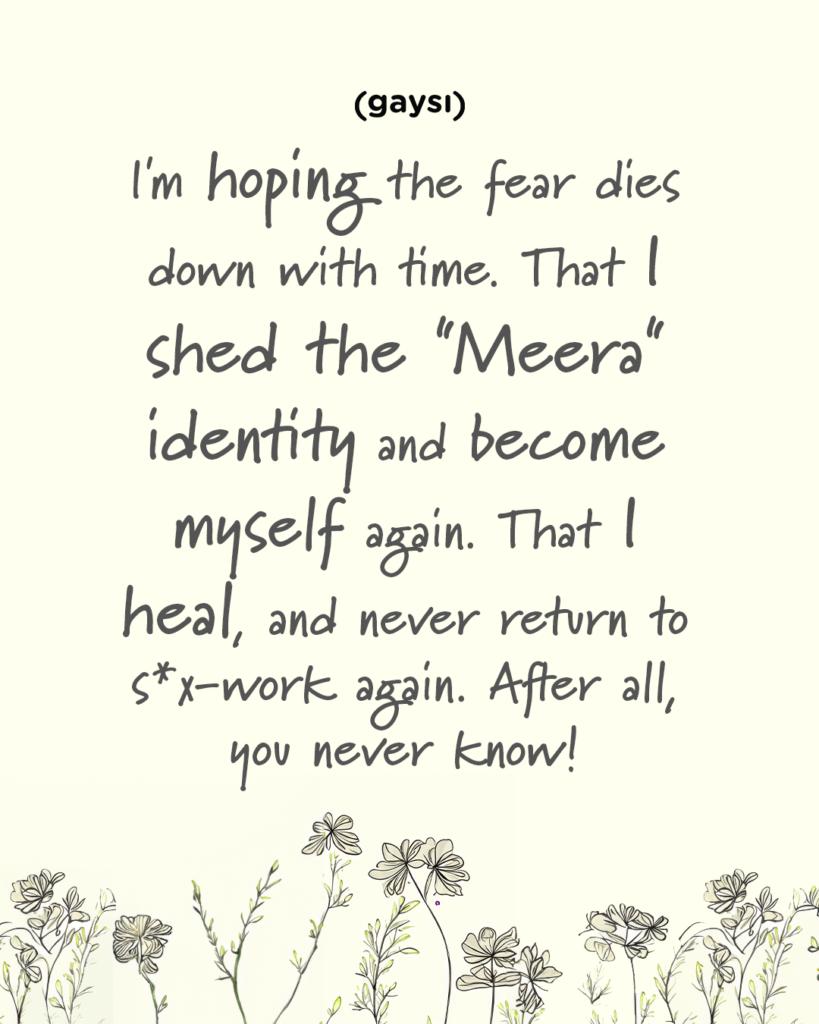
I’m hoping the fear dies down with time. That I shed the “Meera” identity and become myself again. That I heal, and never return to sex-work again. After all, you never know!
when we first touched, and loving showed awkward fingers entwined with awkward fingers sweat and paint, merging – leading to more paint under the netted warmth of the afternoon sun with the air coloured in Justin Vernon’s voice how well you understood my eyes how well we understood the nothingness of time
when we first loved, and emotion showed past constantly entering the present thrusting in, out, in, out, ooh ah ooh ah ooh ah hahaha thump throb thump throb thumppp throbbb aaah in the darkness of the night how well i knew the motion of your lips how well we misunderstood the poetry of tongue
when we first emoted, and language showed our prosaic lives lulled by sudden silence epiphanies fell like fruit from a tree in a crowded shrouded sea of truths i stood with a basket in my hands – running gathering containing – when i learnt the meaning of hijr – and our memory drowned in the weight of metaphor
You have lived in different houses in different cities and none of them welcomed you; the walls imprisoned you inside a circus of pretence and it smelled of loneliness. Your mother would glare at you from the other room, watch you make mistakes, and curse your existence. Your father remained oblivious and wished that everyone would just listen to him.
When you first entered this flat, it felt like it wouldn’t villainise you for being you. When you enter this flat now, it is the only sense of comfort you have. You go straight to the kitchen to pour yourself some water, but you plop down on the floor before you can even pick up the glass. The kitchen tiles swirl out of focus and make you dizzy. You feel a wave of nausea hit you and your brain tries to tell you that it was just a dream.
“Are you okay?” You hear a voice that is warmly familiar and pulls you out of your spiral.
You look up to find Bilal standing at the kitchen entrance, furrowing his brows to check if you are hungover, depressed or just tired. You wonder how to tell him that the reason you are on the floor with your legs curled up tightly against your chest is a possibility that you did not hallucinate what just happened – that you probably only have one more day to live.
You manage to mutter a ‘yes’. Just sleep-deprived. You try to focus your eyes but you see shadows moving in the periphery.
You offer to make coffee for the two of you. Both of you stay silent until the coffee cups are filled.
Bilal places his cup on the kitchen counter slab and you think about how he is never going to drink it in time. You think about how that cup will stay there until you have to do the dishes, until tomorrow. That’s when the pang hits. It starts at your chest and then your eyes burn. You feel tears flood the corners of your face, you hear a sigh, and you feel a hand on your shoulders. Until tomorrow; the word doesn’t sit right with you anymore.
You look at Bilal, the idiot who helped you throw your first dinner party and made you understand what home should feel like. It is in his room you first discovered the courage to wear clothes you actually liked. He told you that your gender could look like anything you wanted. It was revolutionary for a queer person in her early 20s, living in a world that asked her to hide more of herself.
You think of all the people you won’t get to say goodbye to, if today is indeed your last day. The cold morning chill of the autumn air makes you shudder and the heaviness of being awfully aware of the lack of time feels like a punch in the gut. You curse Death for not taking you right then and there.
“I sense a weird energy around you.” You remember Bilal’s impeccable intuition. You ask him what kind and he tells you that something is waiting to snatch you away. Then, he tells you that you are lost.
Your eyes find the dark corner behind the door, you think you see the shadow moving; you almost see a figure crouching, ready to pounce.
He asks what is wrong and you tell him that you are just sad. You tell him it will pass. He doesn’t push you to talk, he just stays with you for comfort.
As your time runs out, your mind forces you to think of 3 people you absolutely need to meet. One of them is sitting on the floor with you, the other two are in different parts of the city and far away from your life.
“Do you think we have enough time in our lives to have one last meaningful moment with the ones we love?” You ask. The figure behind the door pushes out its claws and you sense it grin. You can’t see it but you know it is there, waiting.
“I think no matter how much time we have, we will feel it’s never enough.”
You agree. You remember the time when you didn’t have anyone in your life who made you painfully aware of mortality. Earlier, mortality used to be a sweet thing, a reminder that the hurt could end any minute you wished. But then, you met people who gave you reasons to live; the hurt didn’t stop but they made it bearable. So, leaving would mean never seeing them again and that would hurt more.
You want to tell him that you’re grateful for his existence before this tender moment ebbs into nothingness. But you don’t find the right words, they fall short in the face of truth. Instead, you ask him to help you pick out an outfit. An outfit that you would wear on your last day walking on Earth.
As you both rummage through your cupboards for sleazy tops and printed shirts, he quips in with his philosophical thoughts and your heart warms up. You tell him that his coffee must have gone cold and you laugh. It’s the first time you laughed that day and the morning light has filled the room. The shadows keep a watch on you, but you tell them that you have one day left.
You turn restlessly on your bed, the ends of the blanket abandon your feet and the cold stings you wide awake. The sweet autumn air has turned foul this night. You have been feeling the uneasiness creep up on you, but you dismiss it, because it seems nothing out of the ordinary. Uneasiness has become as routine to you as the bodies on the news.
Your eyes fall on the shifting shadows on the ceiling, cast by the leaves outside your window; they seem to be dancing to the tunes of a song you can’t remember, but strangely can attach an emotion to. It reminds you of the time you were naive and young in college, and it reminds you of how on certain nights, you would sneak out of your PG room to go kiss a girl on the terrace. It’s been a while since you thought of her.
The sound of a child crying keeps you from closing your eyes again. It’s your neighbour’s newborn and you curse them for bringing another soul into this damned world. You sit up; you think of lighting a cigarette and going for a walk. So, you grab a jacket and head out. The buildings in your neighbourhood share thin walls and the streets reek of piss and dead rats.
When you finally found a decent flat with a decent roommate, who on the first meeting asked you for a cigarette and your pronouns, you moved in without delay. You needed to escape and this offered the best hideout in the city.
You walk with your head down and pick up your pace when you cut through a group of men, sitting on their bikes, smoking beedis. You can feel their eyes on you and a whisper runs through them. You hold your breath, you take the first turn you see and vanish from their sight. They don’t follow you, not tonight.
You find a dark corner pressed between a tree and a closed shop, and you sit there waiting for the uneasiness to pass. A feral cat prowls around spilt garbage bags. You look up to the sky but the moon refuses to peek out from the shadows. You had named yourself Chand, hoping to be like the moon, never static.
Your mother hated the name, much like everything else about yourself. You had taken a glass bowl and thrown it in her direction when she had screamed your dead name for the seventh time. It did not hit her, but you walked out that night.
You sit there flooded with memories, with patience you only found once you left your mother’s house. You watch as a few cars speed by in a trance, and as the creatures of the night howl and screech louder, you feel yourself drift into sleep.
When you jolt awake for the second time that night, your eyes hazily look around to find that the street lamps have gone dark and the crickets have stopped chirping. An eerie silence has filled the street, except for the sound of your own breathing.
There’s a stench that grows stronger and the fog falls heavy. You cling your jacket closer to your body. You want to stand up and keep moving, back to your flat maybe. But something keeps you there, immobile. The garbage bags ruffle, and you instinctively look to your side to find the feral cat staring at you in phantom silence. There is a sense of foreboding in its copper eyes and you can’t seem to look away. It lets out a snarl. The uneasiness in your chest has now consumed your entire body, and you can’t tell if you’re dreaming.
The cat shifts its gaze and you follow its blank eyes towards the street lamp directly in front of you, across the road. The thin black pole seemed to sweat under the cold night, possibly in fear of the slender, hooded figure leaning on it. You feel, for the first time that night, fear grips you by the neck. The hooded figure watches you stare at it and despite being black as night, you can tell that it’s grinning.
It starts walking towards you with such deliberate steps that you can hear the tapping of its foot against the concrete road. The tapping seeps into your chest and disrupts your rhythmic breathing until you let out a gasp. You can soon see that it’s a woman, with long fingers and a skeleton face. She draws out a scythe and you instantly know why she’s here.
She stands an inch away from you and traces the bends of your face with her long-clawed finger. You have forgotten if you’re breathing, you can’t remember if you want to. As she tilts her face, your gaze remains fixed on her hollow eyes, they seem to carry so much grief despite her grinning face. It unsettles you and at the same time, feels familiar.
She leans in and tells you, “I’ve come at last.”
She doesn’t give you any explanation. But you understand what she’s saying. She’s Death and she has come at last. Without uttering a word, you offer her your hand, you don’t understand if you did it willingly. You don’t know if your body is under your control or hers.
She looks at you, picks up her scythe and in one swift motion, cuts it through the palm of your hand. You expect to be obliterated. You almost see a pool of blood forming under your feet, but the sting of the pain never reaches you.
But you still stand there, hand held out, breathing. You find a singular tear on your skin, and no blood. You watch Death already starting to walk away. This is the moment that scares you the most. To be at the step of death and be thrown back into the world of living. You call out, “Wait, come back!”
She doesn’t stop, but her seething voice responds, “You have one day left.”
What do movies like Pathaan, Jawaan, Kisi Ka Bhai Kisi Ki Jaan, Gadar and Animal have in common? They were all smashing blockbuster hits in 2023. What else? They portrayed tons of hypermasculine rage, overly-dramatic narratives and intense, action-packed sequences – everything that currently sells in Bollywood—a formula for a blockbuster hit.
When The Archies, directed by Zoya Akhtar, hit Netflix this month, people were quick enough to point out the mediocre acting skills of some of the new actors in its cast, who also happen to be star kids. Amid the criticism, a sweet story of a small-town park that needed to be saved from big contractors was lost. But it also helped some re-discover the innocence of feel-good movies that have been missing from Hindi cinema for quite some time.
The Hindi film industry, while reaping commercial success from action-packed narratives, is overlooking the profound impact that simple, heartwarming stories can have on the audience. While there are still some family-based drama that get love from the audience (such as Rocky Aur Rani Ki Prem Kahaani), they are not without their fair share of melodramatic sequences and over-the-top dialogues.
The Dominance of Hypermasculinity
Recent Bollywood blockbusters have been marked by an overwhelming display of hypermasculinity, characterised by aggressive protagonists, intense physical confrontations, and a celebration of stoic toughness.
While these films enjoy commercial success, there is a risk of perpetuating harmful stereotypes and limiting the scope of diverse storytelling. For instance, in Sandeep Reddy Vanga’s Animal, Ranbir Kapoor’s character, Vijay, is filled with intense rage that drives his unjust actions, from murder and violence to provocative sexism.
While Animal may spark discussions, it falls short of delivering the substance necessary for a lasting impact. The film’s journey into shock value and superficiality, coupled with a meandering plot, creates a 3-and-a-half-hour spectacle that grapples with engaging the audience beyond the midway point.
The industry seems to have veered away from the subtleties of emotion and relatability that define feel-good cinema.
The Archies: A Testament to Simplicity
The Archies, a timeless animated series based on Archie Comics, serves as a poignant example of the art of simplicity. The charming narratives of Archie Andrews and his friends in the fictional town of Riverdale resonate with audiences, reminding us that complexity is not always necessary to create memorable content.
The story is simple – save Riverdale’s iconic Green Park from greedy contractors who want to build a grand hotel, threatening the beloved park that holds a special place in the residents’ hearts.
In the midst of hypermasculine narratives dominating the silver screen, Bollywood could benefit from a return to the basics of storytelling that evoke genuine emotion and connection in viewers.
The Missing Feel-Good Element in Bollywood
Remember movies like Dear Zindagi, Dil Chahta Hai, Kapoor & Sons, Queen, Zindagi Na Milegi Dobara, Wake Up Sid, Jaane Tu Ya Jaane Na, Jab We Met? We loved them and still do. These also happen to be some widely-recommended movies to re-watch, and for good reason.
Films featuring characters that bring a smile to your face and music that prompts you to hum along have consistently held a special place in the hearts of cinephiles. Whether it’s romance, comedy, timeless classics, coming-of-age stories, or contemporary hits, the world of Hindi cinema has always offered something for everyone. And we need more of it!
The Allure of Hollywood Feel-Good Movies in India
Movies such as It’s a Wonderful Life, The Devil Wears Prada, As Good As It Gets, La La Land, Pretty Woman and Bridget Jones’s Diary, among numerous other Christmas and Holiday movies have found a special place in the hearts of Indian audiences.
These films offer a perfect blend of entertainment and meaningful storytelling, providing a refreshing departure from the intense narratives that dominate Bollywood today. The popularity of Hollywood feel-good movies in India highlights the universal appeal of stories that focus on the human experience and leave viewers with a sense of upliftment.
Balancing the Scales
While hypermasculinity and rage may continue to draw crowds to theatres, it is crucial for Bollywood to recognise the value of feel-good cinema. The industry can strike a balance by diversifying its offerings, embracing narratives celebrating the beauty of human connections and the triumph of the human spirit. Movies like Dil Chahta Hai and Lage Raho Munna Bhai have demonstrated that feel-good cinema can resonate with audiences and leave a lasting impact.
Conclusion
In this age of hypermasculinity and rage dominating the Bollywood landscape, there is a pressing need to rediscover the lost art of making feel-good cinema. The classics stand as testament to the enduring power of simplicity and heartwarming storytelling.
By embracing a more balanced approach, Bollywood can create a cinematic experience that caters to diverse tastes, offering audiences not only the thrill of intense action but also the joy of relatable, feel-good narratives that stand the test of time.
It’s time for the industry to recognise that a movie’s essence can be just as impactful as its action sequences, and a well-told, heartwarming story can leave an indelible mark on viewers’ hearts.
The year 2023 had a lot to offer to create nuance and chaos in queer pop culture. At Gaysi, we are rounding up some of the best stuff and leaving out the worst (plagiarism scandal of queer video essayist James Somerton for instance). We are gonna look a little into the worldwide trends and then dive right into what the Indian media had to offer. This by no means is a definitive list, it’s more of an attempt to collate the best and worst queer culture offered us through the media in the year when we look back.
A lot has happened at the international stage right from Padam Padam by Kylie Minogue to Sufjan Stevens’ queer masterpiece Javelin, Janelle Monae’s The Age of Pleasure, twink anthem Rush by Troye Sivan, and more music by boygenius, Omar Apollo, and so much more (including the worst but irresistible song of the year Toxic Gossip Train) in the music scene. This was also the year of the barbenhiemer and then the chaotic influx of swifties led by the release of The Eras Tour Movieby Taylor Swift (who totally owned the year). Some of the queer movies and shows that we definitely suggest you watch (in no particular order) are at the end of this article.
In terms of memes and virality, this was truly the year of boy and girl dinner being served up, be it by the steamiest gay sex scenes in Fellow Travelers or the raunchiest female focussed buddy movie with Joyridewhose absurdity was matched by the equally violent queer high school losers comedy Bottoms. And while we had Barbie, which was peak white feminism; A24’s Dicks The Musicalwas a worthy antidote. In terms of gayming, Baldur’s Gate 3 sex scenes did make a splash and there are so many more queer gaymes one can explore. And lastly there were a plethora of memes from Roman Empire to Paul Mescal’s infamous run of the latest. “Rizz” might have been the word of the year but everyone was basically serving cunt.
Ganji Chudail, Trans Representation and Queer Coded Blockbusters
Within India, it seemed like a good year for some favorites to return and some newer shows to grow in prominence including some brand new queer icons like Ganji Chudail. Out of all the queer themed shows, Rainbow Risthais the one that was loved unanimously by everyone. It is also one of the rare attempts to delve into the intricacies of everydayness of queer people, or the marriage question at a time when the supreme court refused to grant the right to marry to same-sex couples. Featuring actor Trinetra’s first major role, the season 2 of the beloved show Made in Heavenreturned as well; while it was a stellar second entry for Tara, the character of Karan felt unjustified with a character arc that didn’t make sense and took away the essence of Karan and Tara’s friendship. The show was also marred with controversies around credits (which turned rather ugly) and representation, portrayal of Muslims, and its episode featuring queer women as the lead.
What was a worthy attempt to portray the lives of queer people was Kaathal – The Corefeaturing Mammootty as a gay man in the lead. Although the idea of a superstar playing a gay character received more praise than the delicate story of the movie and what it entailed for Omana and Thankan’s character (both at the margins), the movie is a sincere attempt to portray the dual reality of queer lives. Erstwhile, Netflix’s The Archiesmade a half assed attempt to include a queer narrative, the network’s Classdives into soap opera narratives instead of navigating issues of privilege, gender and caste in a honest way, Kohrrareceived mixed reviews around its portrayal of queer characters, Katrina Kaif’s fight scene in Tiger 3was received as queer-coded, and so was the tension between John Abhraham and King Khan in Pathaan. More on the OTT side, Sushmita Sen taking the mantle of trans rights activist Gauri Sawant in Taali received critical acclaim and reignited the conversation on representation.
Ektara Collective’s Ek Jagah Apniwith trans women in the lead was another definite standout. The film shed light on the everyday joy and struggles of securing housing as queer-trans individuals. While there certainly are demerits and valid criticisms the film also makes a character out of Bhopal as a city which was warm to witness. And while Trinetra and Sushmita Sen made some progress on the front for trans representation (it’s a question if it’s better to give cis women a trans role rather than a cis man), Nawazuddin Siddiqui continued his streak of transphobic roles with Haddi.
Another highlight was when trans rights activist A. Revathi took the lead in Sujith Sundram’s play Biryani Durbar. Even though the year 2023 was a landmark year for trans representation on our television screens, it was this play with its exploration around politics of food and an honest look into trans lives that left an everlasting mark (the kind and creative folks behind the play even served biryani to everyone). That wasn’t the only play that made the waves in 2023; Jyotsna Siddharth’s Clayalso became the only play with an intersectional caste and crew, and produced by a dalit queer woman. Trans rights activist Santa Khurai, who’s at the forefront of the LGBTQIA+ rights movement in Manipur also released her memoir The Yellow Sparrow this year.
And there’s much more in the art scene, from Navin’s comedy special The Good Child(btw, Navin is playing Queer-Rated Comedy with Aayushi Jagad and Madhavendra Singhin Juhu on 4th Jan so grab your tickets here!) to art exhibitions to drag balls to countless queer events that you should attend (whose updates you can get on Gaysi Family’s social media)! Other movies that came out include the odia drama T (based on the life of India’s first trans taxi driver Meghna Sahoo), Unwoman, Deepa Mehta’s I am Sirat, Thank you for Coming, Hunt (Telugu remake of 2013’s Mumbai Police), and the short No Stranger At All.
Lastly, some queer af movies and shows to check out from the past year include: All of Us Strangers, Aristotle and Dante discovers the secrets of the Universe, Fionna and Jake Season 1, Saltburn, Strange Way of Life, Down Low, The Last of Us Season 1, M3GAN, Joyland, The Ultimatum: Queer Love, Sex Education Season 5, Poker Face Season 1, Gen V Season 1, Abbott Elementary Season 1 & 2, What We Do in The Shadows Season 5, Heartstopper Season 2, Scott Pilgrim Takes Off, The Marvelous Mrs. Maisel Season 5, The Fall of the House of Usher, Yellow Jackets Season 2, Our Flag Means Death Season 2, Red White and Royal Blue, Theatre Camp, Ted Lasso Season 3, Mutt, Kokomo City, Passages, Interview with a Vampire Season 1, The Prince (a play by trans actor and writer Abigail Thorn) Wonka, The Color Purple, and Nimona among others. Are there any movies, shows and music recommendations that we missed? Do share with us in the comment section 🙂
In a largely unprecedented move in the region, Aarav, a trans-man, married Kalpana, a cis-woman, in Rajasthan’s Deeg district, which used to be a part of the erstwhile Bharatpur kingdom. Their marriage attracted viral coverage, from offline and online news outlets to Instagram meme pages. Almost everywhere it was announced that he had changed his gender to marry his wife. Rampant misgendering to highlight his transition and insensitive, misinformed sensationalism have resulted in enormous trauma and damage to the couple. Aarav, in particular, finds it tough to move past the misinformation that has outshined the simple-to-respect yet complex-to-understand reality of his gender identity. Excerpts from the interviews that they naively agreed to give were butchered, thrown back and forth, and seasoned to suit a selfish, harmful narrative that threatens to alienate the queer community even further. Aarav’s dead name finds place in almost every news headline.
Kalpana, a national-level Kabaddi player, has played for Punjab Panthers in the Women’s Kabaddi League tournament held in Dubai, where her team ended as the first runners-up. Sadly, none of the news articles talk of her remarkable achievement without making it about Aarav’s gender-affirming surgery. One of the two headlines (perhaps, among the less problematic ones) read “दबईु में प्रो कबड्डी मेंदमखम दिखाएगी भरतपरु की बेटी कल्पना, पति की वजह से थीं सुर्खियों में (translates to: Bharatpur’s daughter Kapana will prove her mettle, was in headlines because of her husband)”.
Aarav finds that his surgery has become so deeply correlated with his wedding that the former will never be an independent topic of discussion, no matter how frustratingly misleading it is. In a heartwarming gesture of love, the couple use the names Aarav Kalpana Kuntal and Kalpana Aarav Kuntal, and sometimes upload romantic clips and photos of themselves on social media. Sadly, transphobic comments owing to their much publicized marriage do not spare them.
Aarav feels that the majority of people judge him and Kalpana based on such articles, instead of really getting to know anything about them. Some articles even used the term “third gender” for Aarav, which adds to his gender dysphoria even more. In very simple words, with a lot of repressed gloom, he justifies his decision to undergo gender-affirming surgery, “इंसान कोई सर्जरी तब कराता है जब उसके शरीर में कोई दिक्कत हो। मैं भी अपने शरीर से खुश नहीं था (translates to: one undergoes a surgery when they find something wrong with their body. Similarly, I was not happy with mine)”. Blessed with a supportive family that has been with Aarav throughout his journey of becoming and being himself, he says that the absence of a male-child in his family could have been the reason for their support.
Interestingly, he tells us that he was interviewed by the local newspapers even before his marriage, after he underwent medical transition. Unsurprisingly, it did not have the ‘masala’ to be even half as viral as the coverage after his marriage.
The Supreme Court of India holds that transgender persons in hetero-normative relationships have the freedom to marry under the existing statutory provisions. Yet, one can count cases similar to Aarav-Kalpana’s marriage on their
fingers. That is because even in expanding binaries, the law is stuck within them. Only the transgender persons who transititon in every way possible (surgically and as per legal documents) have the aforementioned freedom. Meanwhile, gender is a very personal and subjective thing and not all trans people have the desire or the resources to transition.
Now, the ideal objective of journalism is to bring about awareness regarding the subject of such stories among the people who peruse them. If it results in the opposite, that is, even more ignorance in the readers and hurdles for the subjects, we are forced to wonder if people are no more than stories meant to be covered before a strict deadline. It also does not help that there are few queer journalists in India to bring the ‘queer gaze’ needed to sensitively bring such stories to the mainstream. This is not to say that heterosexual journalists cannot report queer stories. Sure, they can; if they actively try to understand the nuances of a particular human-interest story and realize that their coverage can affect lives, either positively or negatively. Instead, they move on to a new ‘breaking news’ headline in their glass-gilded newsrooms in the national capital, miles away from a newly-created district in eastern Rajasthan, where misinformed transphobia still haunts people.
As the saying goes, ‘Ignorance is bliss’; I personally feel that such ignorance it’s also a choice by those with the privilege of ignoring reality. Journalists living in metro cities with multiple degrees and caste-resourced, should simply do better than perpetuating such dangerous narratives.
Having lost all his faith in the media, Aarav declines most interviews. A PT teacher in a government school, he recently celebrated his one-year marriage anniversary. Affectionate and proud, he says that he wanted to take Kalpana on a vacation but she insisted on celebrating with family instead. He plans to have kids and live a happily married life where the ‘peculiarity’ of his union with Kalpana does not eclipse their dreams.
Green coniferous trees adorned with jingling bells and little trinkets can be seen stationed around every corner of the street; Christmas is here.
I may not be a Christian but I do celebrate Christmas with my Christian and non-Christian friends, just like almost everyone in my city. Christmas is a time when we all get to see our loved ones, have some freshly baked cakes, and exchange gifts of joy and togetherness. But, as a queer individual, Christmas can get overwhelming very easily. As this is the time when you are in close quarters with bothersome relatives and nosy neighbours, making it difficult to navigate conversations. A lot of my friends have confided in me about how this festival, where they wish to feel a sense of community, can easily become alienating and triggering. I also find myself dreading Christmas a little, now that I am more open and out to my family. Here is a list of things I recommend to ground ourselves, while keepin’ up with the festivities in our own ways.
Practising affirmations and grounding exercises:
An affirmation is just what it sounds like: it’s a thought that affirms and reassures you. Affirmations and grounding exercises can be your secret superpower while navigating the social settings of Christmas. Amidst all the traditions and holiday buzz, affirmations act like your personal cheerleaders.
Grounding exercises can provide moments of relief and help when dissociation hits. I have written 10 affirmations that you can use in situations that make you feel queasy. You can make your own affirmations and practise them however you like.
Here they are:
1) My life has meaning beyond what others think of me.
2) The people love me will be excited to accept the real me.
3) I deserve love without conditions.
4) I will give myself love unconditionally.
5) I am queer enough.
6) Others’ discomfort with who I am says more about them than it does about me.
7) I am deserving of happiness, regardless of societal expectations
8) I deserve to take up space.
9) I deserve to be listened to.
10) I choose love, both for myself and for those who may not yet understand.
Grounding exercises help reconnect with the present moment and alleviate feelings of stress or anxiety. Here are some techniques you can try. Experiment with these grounding exercises to discover which ones work best for you. You can also combine them or modify them according to your preferences::
1. Mindful Observation:
– Find an object around you and focus on it intently.
– Notice its colours, textures, and any unique details.
– Describe the object in your mind or out loud.
2. Grounding through the Senses:
– Identify 5 things you can see, 4 things you can touch, 3 things you can hear, 2 things you can smell, and 1 thing you can taste.
3. Body Scan:
– Close your eyes and bring your attention to different parts of your body, starting from your toes and moving up slowly toward your head.
– Notice any tension or sensations and consciously relax each area.
4. Box Breathing:
– Inhale for a count of four.
– Hold your breath for a count of four.
– Exhale for a count of four.
– Pause for a count of four.
– Repeat the sequence.
5. Progressive Muscle Relaxation:
– Tense and then slowly release each muscle group in your body, starting from your toes and working your way up.
Set Boundaries:
Embrace your limits. It’s fine to put your well-being first. You’re allowed to prioritize self-care. And yes, one more time just to be clear—you’re allowed to prioritize self-care! Being part of the LGBTQ+ community sometimes comes with this unwritten rule that we should always be advocating for the community, behaving in a politically correct way, and trying to maintain peace. But here’s the thing: you have every right to set boundaries that keep you safe, happy, and healthy. You absolutely don’t have to endure uncomfortable situations, like attending a Christmas service at a church from your not-so-gay-friendly past or explaining your gender identity to your aunt during a car ride. Feel free to share your boundaries with your family in advance, or if that’s not your style, set them and stick to them as needed. Your well-being matters!
Celebrate the holidays with your chosen family too:
Celebrate the holidays with your chosen family! Society often insists that the “right” way to spend holidays is with our biological families. In places like Mumbai, which I call home, there’s a cool thing called “Orphan Christmas.” It’s when friends who aren’t heading home, gather to celebrate it together instead. But why should hanging out with friends need a special label? It can just as well be Christmas, Diwali, Eid or Navroz. Many of my close friends are like family to me; we’re there for each other through thick and thin. We’ve shared living spaces, food, belongings, and even chipped in for each other’s expenses. From doctor visits to helping out with surgeries, we’ve got each other’s backs. So, remember to celebrate holidays with those supportive folks in your life, even if it means a virtual hangout for those who are not nearby!
Make an exit strategy:
If things get too intense, a pre-planned exit strategy will save you time and energy. You could discuss and dial up a friend during an emergency or say that you have to leave at a certain time. Give yourself permission to leave if things get overwhelming. You don’t have to stay super late. You can stay in a hotel or a friend’s place instead of sleeping on your parents’ couch. Do what you need to do to give yourself the out you need.
I am also writing a list of things you can do with your chosen family or by yourself to keep up with the spirit of Christmas when things get a little overwhelming with your biological family:
1) Cooking and Baking (and Eating):
Dive into the Christmas spirit by whipping up delicious treats! From Plum cakes to Wine cakes, let the kitchen be your holiday haven. Share the love by gifting these goodies to your chosen and biological family—or, if you’re feeling a bit selfish, keep the cake all to yourself. Who says a little dessert binge isn’t allowed?
2) Making Art:
Get crafty and add your personal touch to the holidays! Knit those ugly sweaters, design quirky gift cards, or create your own Christmas decorations. It’s a festive DIY extravaganza, and your artistic flair is the star.
3) Buying Gifts and Secret Santa:
Spread some festive joy by picking out thoughtful gifts for your chosen family. Personally, I love buying gifts. I love thinking about what the person likes and what will make them smile as they unwrap it. You could also do a Secret Santa exchange – it’s all about adding that extra sparkle to the holiday magic.
4) Queer Christmas Movies Marathon:
Grab some popcorn and indulge in a movie marathon! There are plenty queer movies with the backdrop of Christmas. (One of my favs is “Carol”!) . Xmas is the perfect time to cozy up and feel the warmth of inclusive stories.
(You could also watch sad lesbian movies and cry like I do. Crying is healthy cmon!)
5) Drag-themed X-mas House Parties with Chosen Family:
Light up your holiday celebrations with some fabulousness! Host a drag-themed Christmas house party with your chosen family, where self-expression meets glam. I don’t know about you, but the idea of dressing up as a sexy Reindeer gives me a lot of gender euphoria.
6) Xmas Workout??:
Keep the endorphins coming! Whether it’s a Christmas-themed exercise routine or a brisk winter walk, stay active and jolly throughout the season. PS: It also helps you deal with disordered eating, if you’re like me.
7) Blasting Out the Christmas Carols (a.k.a. Christmas Karaoke):
“Last Christmas I gave you my heart” Cue in the George Micheal and Mariah Carrey! Turn up the volume and bring out your inner popstar! Host a Christmas Karaoke session with your chosen family, and belt out your favourite carols for a night of pure, harmonious joy.
8) Write Letters to Santa:
SANTA EXISTS (Lemme hold onto my childhood please)! Write letters to Santa, sharing your desires, dreams, and quirkiest wishes. After all, ’tis the season for unfiltered joy and hope.
9) Go Church-hopping:
Make the holiday season memorable by exploring different churches with your chosen family. It’s kinda unconventional but nevertheless, a heartwarming way to bond, share experiences, and celebrate the faith. Do make sure that your safety isn’t compromised though, as homophobia can be an issue at religious places like churches.
10) Plan a Christmas Photoshoot or Make a Christmas Vlog:
Capture the holiday magic in style! Plan a Christmas photoshoot or create a vlog showcasing how we slay the festive season. It’s a unique way of sharing the joy with the world. There might be someone who needs to see queer joy during traditional festivities.
‘Tis the season for festive fun, so let the celebrations begin!
Editor’s Note: Last but not least, don’t forget the Palestinian socialist man whose birthday you’re celebrating and whose land is being colonialised and whose descendants are being terminated in a Zionist-led genocidal campaign.
Christmas is a time for queer festivities to begin, as mandated by our queen Mariah Carey whose eternal Christmas anthem All I want for Christmas is You is once again back to being number one in everybody’s hearts. Pop girlies including Ariana Grande and Kelly Clarkson have also had anthems climb to the top of the X-mas time charts. And of course, Sexy Santa with its sensual vibe has been a part of gay culture and forever-proclaimed Hoe! Hoe! Hoe! to add to this iconicity, Cardi B also released a very fun version of Last Christmas, which is sure to blow you away and make you laugh like anything.
And while Christmas has for long served as a way to cement traditions within the realm of birth-family as a social unit in the most straight manner possible, queer people have taken up the charge of kissing their partner(s) under the mistletoe and celebrating the holidays surrounded by their lovers, friends, pets, plants and whoever else makes up their chosen family. At Gaysi, we are bringing to you a list of the queer-est christmas themed movies that will have you laughing, crying and having the best time together.
The Classics
Tangerine (2015)
Make the Yuletide Gay (2009)
Frozen (2014)
Home Alone (1990)
The Nightmare Before Christmas (1993)
Starring Kitana Kiki Rodriguez in the lead, Sean Baker’s comedy drama follows the story of a trans sex worker on a christmas eve as she heads out to take revenge on her cheating boyfriend. Tangerine is remarkably unique in the way it instills all the applause it deserves through hardships and sass, particularly during the wig sharing scene at the end. Shot entirely on an iPhone 5S, it’s a refreshing trope on movies centered on friendship and festivities, akin to how 2020‘s Never Rarely Sometimes Alwaysis a heart-wrenching spin on male-dominated buddy movies.
The title of our second movie Make the Yuletide Gay, comes from the 1994 Christmas song Have Yourself a Merry Little Christmas. A movie ahead of its time, it was one of the first major plotlines in a Christmas themed movie focussing on queer characters. It’s light hearted and fun and is loved by queer people of all ages.
Disney’s Frozen might not have the sapphic Elsa that we all deserve yet but the movie has become a bona fide queer Christmas classic. Be it expanding upon the meaning of true love to beyond the cishet understanding of romance or having a coming out anthem like ‘Let it Go,’ or even Olaf as a snowman-companion, it checks all the boxes for a queer classic.
A classic listicle is incomplete without one of the most loved movies of all time, where you have Catherine O’Hara (the actor behind the iconic Moira Rose from Schitt’s Creek) playing an absent-minded parent. Tim Burton’s The Nightmare Before Christmas is perhaps the most critically adored movie in this list after Carol. It is also one of the greatest stop motion animation movies of all time where the convergence of halloween town and christmas town makes for an eternal story.
Sapphic Treats
Happiest Season (2020)
Season of Love (2019)
Carol (2015)
The lesbians are here and they know christmas better than anyone else, period. We start with Netflix’s Happiest Season that tackled not just love amidst festivities, but also the complex issues in a sapphic relationship in a delicate manner. It also won the GLAAD award for Film – Wide Release and the Kristen Stewart-Mackenzie Davis pair is returning (Stewart in multiple queer women roles actually) in an upcoming sequel.
Next up is Season of Love, which has been described as Love, Actually butfor queer people. A typical cheesy rom-com, it follows three sapphic couples as they fall in love over the holiday season. Notably, the movie is by Tello Films, a one-of-its-kind movie production and distribution studio with exclusive focus on lesbian/queer femme-themed movies and web series.
Rounding up the second section is Todd Haynes ‘s 2015 drama Carol. Starring Rooney Mara and Cate Blanchett in the lead, the riveting drama follows a tender relationship between a woman going through a divorce and an aspiring photographer. It is widely considered the best-reviewed movie of 2015 and the best LGBT-themed film of all time as per British Film Institute, and has been counted amongst one of the greatest films of the 21st century by BBC. Although tragically omitted by the Academy awards for Best Picture and Best Director along with being marred by controversies regarding it’s love scenes, Carol managed to garner cult status with the formation of a cult of Carol and a tribute comedy movie Carol Support Group. Some movies change your life forever!
Queer Christmas Reinvented
Black Christmas (1974)
White Christmas (2016)
Rare Exports: A Christmas Tale (2010)
Anna and the Apocalypse (2017)
Ofcourse, even the holiday spirit deserves some genre-bending; and horror and slasher has been the top choice. Even with multiple horror entries embedded into Christmas, Black Christmas is still the standard, decades after its release. And this is a slasher movie before the Halloween series was even a thing! It has been remade twice, with controversy arising both times from religious institutions for portraying violence during Christmas. Netflix’s Black Mirror alsodid an episode in 2016 titled White Christmas, one of the best and most-disturbing of the series so far.
Next is the Finnish horror comedy Rare Exports: A Christmas Tale, which you need to see to believe! It has been hailed as the R-rated origin story of Santa Claus crossing over with the horror classic, The Thing.
We round off this section by switching to comedy, through the Christmas zombie musical Anna and the Apocalypse. Once again, if you think comedies around zombies are fun and gory, wait till you see this one, as it’s based on Christmas and through music! I mean, what’s better than smacking zombies with a candy cane while caroling.
The 2020s Era
Single All The Way (2021)
Dashing In December (2020)
The Bitch Who Stole Christmas (2021)
All of Jonathan Bennet’s Gay Christmas (2020-present)
While we still wait for that one iconic queer Christmas movie, the 2020s have actually blessed us with cute, cheesy and funny Christmas movies. Netflix’s Single All the Wayis one of the best entries, starring queer icon Jennifer Cooldige in a supporting role. Others include romantic drama like Dashing in Decemberwhere Christmas meets country, extending to Ru Paul himself blessing us in The Bitch Who Stole Christmas, the draggiest Christmas movie ever.
Coming out at the top (pun intended) among all these movies, Jonathan Bennett is the Christmas movie guy and now gay as well. He has been consistently featured in christmas movies, most of which in the past few years have been gay-themed and even some of the first releases with a queer lead for studios and streaming services like Hallmark’s The Holiday Sitter. This year has a lot in store and here are some to watch out for – Christmas on Cherry Lane, A Holiday I do, The Holiday Exchange, Friends and Family Christmas.
Are there any Christmas themed queer movies that we missed out on? What Christmas themed queer movies are you excited to watch this year? Do share it with us in the comments!
I remember the first time I saw a queer film. It was 2006. Brokeback Mountain. Fresh off its Oscar hype and with the support of the liberal censors in the first UPA regime, the film had a limited run in India. In Kolkata, where I was then college-hunting, the film ran for two weeks, mostly relegated to off-peak time slots such as weekday mornings to avoid turning off family audiences and lure in film lovers and fags. I was both.
I remember how the stars aligned. New to the city and with no friends, I was destined to experience this alone. A solo adventure. My first time in a multiplex. A lot of firsts for me. The film was in its second week. The one remaining hall where it played was far from home, on the city’s eastern edges in a swanky new mall. Perfect for anonymity and affordable tickets at multiplex rates. After a fairly long trek, which involved three changes in transport – first by bus, then an auto, and finally, a rickshaw, I reached the hallowed mall. Confident but scared. Excited and wary.
I remember getting off, slightly hesitatingly, the auto. I was early. Now, that was awkward. So, I paced up and down. Smoked two cigarettes. Drank over-sweet spiced tea in red mud kulhads. I don’t remember buying the ticket, but I do remember a weird, part-smirky, part-incredulous look on the face of the security guard as he looked at my stub, punched a hole in it, and then padded me down.
I remember Screen 2. To the right of the escalator. The hall smelt of lime mist. Room fresheners. My seat was in the top row. I had to have the best seat. The hall was barely occupied. Seven of almost two hundred seats were taken up. Out in one of the front rows was a couple – girl and boy – who clearly, didn’t care for the movie. The other five were men – of various ages sitting far apart. Row B left. Row C extreme right. Row D to the side. All of us conscious of each other, averting our gazes. This wasn’t the kind of hall where you exchanged glances.
I remember the movie in all its details. A riot of senses. Gay love. Gay sex. Gay characters on screen. Love. Anger. Hurt. Heartbreak. Tender. Intimate. Beautiful. It was a movie of sights and sounds – nothing I had ever experienced. Nothing I will ever experience again.
I remember the taste of salty tears. My face cold and wet. A near-endless barrage. I smelled recycled air. Something I was new to. I smelled popcorn. Buttery and salty. Not the fresh, overwhelming smell that fills the kitchen when we pop a packet at home in the microwave. But the smell of stale popcorn. The ones you get on local trains in tiny portable plastic packets.
I remember how cold it was. The air conditioning disproportionate to the crowd in the hall. But I felt warm. Something tingly rose from my feet. Like a time-lapse video of a seed germinating and growing into a tree. Within the space of two hours and some minutes. The velvet new seats were comfortable. Its poshness lulled me into a sense of security.
I remember grief. Shattering. Intense. The tragic end. The bloodied shirt and jacket. Love. Self-doubt. Pity. Feeling. Not yet the flaming queen, yet so aware that I was one. Pre-Naz v NCT days. Before Obama. Before it was cool to be gay. The tragedy of the Ennis and Jack mirroring our lives. Reel imitating the real.
I remember feeling alone. Yet not. The five of us in the hall sensing each other. Distant and again, close. When a boy sitting two rows down to my immediate left, who was probably around my age, received a call from his mother, and he said he was in tuition class very loudly so as to drum out the noise of the movie, no one was annoyed. We all understood. The couple in front was too deep into their intimate world to care or notice.
I remember feeling lonely. Shameful. We five would never see each other outside. Three of us ran as soon as the movie ended. The couple took their time getting up and getting out. I remained in my seat. Sobbing. So did one other chap. I could see him from the corner of my bleary vision. Only the sight of the hall crew made us get up and move for the exit. I think the other guy and I exchanged glances. Maybe even a soft nod. But I don’t remember his face. Not anymore.
I remember the smell of solidarity. Rebellion. Five men who dared to watch the gay film alone. A coming out. Of sorts. On chat rooms – we had Yahoo then – and Planet Romeo, no one wanted to go. Each one of the men and transwomen I spoke to online wanted to watch the movie. But going to a public hall – that too, a multiplex with its sophistication and middle-class sensibility – was an act too far. It was inaccessible to many who could. The multiplex too aspirational and expensive.
I remember talking about it online. Who could I share this with? Others online? They had their means. Pirated low-resolution CD prints had started to pop up on the streets. Never displayed openly. But if you asked, slightly furtively, then the sellers would pull it out from a hidden pack where it was tucked in the company of softcore and gory porn films. Ang Lee’s masterpiece too controversial or, maybe, too lurid for respectable buyers.
I remember the hard, cold steps on which I sat outside the hall. I remember walking out of the mall giddy. Buying an expensive cigarette. Fantasising about Jake Gyllenhaal. Happy. Proud. I smelled, felt, saw, and heard city life around me. I tasted the acrid cigarette. Alive with a bad habit.
I remember watching Brokeback Mountain in the theatre. It was 2006. It was a different time. We were illegal. Not invisible.
There is no doubt that Time’s Person of the Year 2023 – Taylor Swift is having a career-spanning victory lap. With multiple number one songs, re-recorded albums, a record-breaking tour, a record-breaking concert movie, and being the highest-paid and the most streamed artist on Spotify, there’s nothing she cannot do. She also has a cult-like following among her fans (called Swifties), who for the most part are teenagers, women, and queer people. The Eras Tour movie also marks the second time this year that a movie saw cinema halls being full of women and queer people; the first instance marked by the release of Greta Gerwig’s highly anticipated movie, Barbie.
We only see such a passionate fervor and celebration during cricket matches or the release of sexist movies preaching violence – both of which were in abundance this year. Now that Swift has reclaimed the narrative of always being under scrutiny in the media, what are we missing? What is happening with vinyls? Who gets to access Swift and the nostalgia? What happens to those who are not a part of this “queer culture”? We all know she is everywhere but is she really where she’s needed?
Public Space and Queer Joy
Swift’s presence in movie theaters has more than made up for the fact that she didn’t tour in India for the Eras Tour. There is an inherent queer joy in her movie, which expands upon her iconicity. From belting out the bridge of Cruel Summer to old hits such as You Belong With Me or Love Story to singing out the iconic choruses of 1989; the 10 eras from 17 years of music are a delight to anyone attending the concert movie. It’s also heartwarming to see people dressed up in all vampy black in reference to the Reputation era or all pink, while aligning with the Lover era, marking a stark difference from the usual hollering in Indian cinemas that celebrates toxic masculinity by bursting crackers at theatres.
The fact that many men attended the Eras Tour also received praise, and there are some mesmerizing accounts of people listening to Swift, even in prison. There is also, of course, pushback on this. One, the discomfort while attending the concert movie. When I went to watch it, a group of men sat next to me only to make comments about the “girls” in attendance and on their outfits. They didn’t even have tickets for the movie. Two, the online trolling of anyone who is posting about enjoying the concert movie. Within the theatres too, the act of switching on flashlights by Swifities themselves, is annoying. This doesn’t warrant that we don’t celebrate the cult-circle during Willow, or shout 1..2…3…let’s go bitch during the fan favorite Delicate, or scream the 10 minutes magic of All Too Well, but I wish it were not at the cost of others’ comfort and wellbeing.
There’s Nothing Like A Mad Woman Unless…
The trolling is certainly unfair, particularly because women and queer people shouldn’t suffer for enjoyment themselves, although not always the case – Swifties themselves disrupt the experience for others by casting their shadows on the display screen while recording themselves ruthlessly, thereby spoiling the experience for others). One narrative that was prevalent during the release of Barbie also made a comeback, which simply involved referring to women as hysteric, mad, crazy and less rational for loitering in a public space like cinema or wearing bright pink or colorful clothes. There were even comparisons made about Swifties being like Salman Khan fans.
Unsurprisingly enough, a lot of Taylor’s work discusses reclaiming the identity of the crazy, mad woman that was imposed on her, so the blaming makes sense and adds to her discography, extending to the performance politics as well. On the contrary, some Swifties are eager to impose this identity onto people who simply don’t like or refuse to listen to Taylor Swift! If this isn’t hypocrisy, then what is?
All Is Not Too Well: Queer Joy Cannot Be Fiercely Apolitical Of course, there are valid critiques of Taylor Swift. Many swifties frown upon these, with some even distorting details about the death of a fan who attended her concert in Rio de Janeiro, due to extreme heat. There is also the accessibility factor; while it is refreshing to watch people recording videos of themselves while glammed up, it is limited to a certain class and aesthetic. This also ties back to the critique of Taylor Swift as a predominantly white artist. I’m not encouraging the bullying that people face when they are trolled on the internet, but there’s a clear difference when it is directed towards women and queer people from marginalized backgrounds.
The privilege that people who listen to Taylor Swift possess makes a difference in the consequences, particularly in dealing with trolling and queerphobia in public spaces on the internet. The point here is not to invalidate someone’s experience of being bullied but how it is different if the person is rich, able-bodied and privileged by race, while studying at a private school in a metropolitan city, versus a person at a government-run school in a remote area, with limited access to resources for support, and the internet itself. On Twitter, some swifties are severely islamophobic or go to the lengths of being discriminatory towards anyone who doesn’t agree with their opinion about Swift.
From the perspective of the music industry, Taylor Swift has disrupted the vinyl industry for the worse. While she has managed to break records in terms of vinyl sales, it has also left indie artists behind as they do not get slots to get their vinyls pressed. Following up on this, while re-recording albums has worked out in the favor of Swift, adding to her remarkable success, it has also resulted in artists who are still struggling being slapped with stricter contracts, some allowed to re-record albums only decades after its release.
Beyonce is being discussed a lot over X (formerly known as Twitter), arising out of an article on her apolitical-ness. And make no mistake, Taylor Swift is not any better. With the amount of coverage and traction she has received from political leaders, her comments on politics are limited to gender disparity at the minimum and double standards for men vs women at the most. Swift has been criticized before for supporting the queer community in a shallow way. While Beyonce has discussed the contribution of queer community, the lack of focus on raising AIDS-related awareness, has been brought under scrutiny. Both the stars have also been called out for screening their concert movies in Israel, at a time when the Zionist state’s genocide of Palestinians is being witnessed by the world.
Given how Canada has expressedly supported the genocide by Israel, while its Prime Minister has invited Swift to perform in Canada, I don’t see how Taylor or Beyonce will stand to loose any more than a fraction of their fanbase, if they take a stand. This is merely a reflection of the times we are living in today on the international stage, rather than forcing someone to take a stand. Even as Swift’s music defines politics for so many people around gender, culture and space, the question remains about what her politics are beyond this performance culture.
There is vital harm in overlooking queerness as not being political. And that is exactly what happens when queerness is defined by the aesthetics popularized by Swift, or any other pop star, for that matter. Given the fact that these pop superstars have made politics part of the values that they preach through their music, that should echo in their fanbase as opposed to the ignorant adulation that is characteristic of the fanbases of male artists. As mentioned by user @damnedmuddle on threads, invest in community rather than celebrity. It’s good that Swift’s music is bringing so many of us together but it depends on us where we take it from there.
It is entirely possible to celebrate the queer joy and access to public spaces that comes for women and queer people thanks to Taylor Swift; but it also extends into questioning the intricacies of who gets to enjoy it, what are the rules of enjoyment, how can pushback from patriarchy be dealt with, and where do we place politics here? In conclusion: while Taylor Swift is rightfully the biggest global superstar at the moment, who has made a remarkable cultural shift among Indian women and queers too, there is more to the story depending upon where you look for it.
Somewhere in the middle of The Archies, a conversation takes place between three high-schoolers where one of them explains to the other two who Hedy Lamarr was. Well known for being a Hollywood star, Lamarr was also an inventor. She came up with the blueprint for what evolved into the modern Wi-Fi. When the others utter disbelief at this new information, the first character questions, “Why can’t a person be both?” This ethos makes up the heart of this high school drama that ultimate evolves into something more.
The Archies, Zoya’s Akhtar’s latest, is a musical adaptation of the famous comic series, Archie. Set in the picturesque and fictional hill town of Riverdale, it tells the story of a few teenagers who staged a mini mutiny back in 1964. To be honest, I went into the film, rather wary of Akhtar’s choice of setting and genre. A high school musical? I was expecting something around the lines of Karan Johar’s Student of the Year series, but with a smattering of jazz.
Initially, it seemed to be going down that route. A picturesque town with curated houses and people, teeming with beautifully dressed teenagers breaking into song and dance at an alarming frequency. For the first few musical numbers the choice of going the Hollywood musical route struck a discordant note; the forsaking of a long tradition of homespun filmy geet felt unnecessary. Then there was the matter of the cast, most of whom are debutantes. It didn’t help their performances started off on a shaky note. The first half meandered at a leisurely pace, as Akhtar took her time building the world of Riverdale. But just as my attention started to wane off, the film made a sharp pivot.
As we begin delving into the larger community of the small-town Akhtar brings in a wholesome nostalgia that well-baked period films tend to possess. There are numerous references to the golden era of the sixties. From Shammi Kapoor to Ruskin Bond, there’s something for everyone. Conversely, the audience is also reminded of the conservative mores of that time. The class divides were much more pronounced with elite clubs having strict dress codes. A journalist father (Luke Kenny) looks down upon his son’s dreams of pursuing comedy professionally.
Simultaneously, through the interaction of her high-schoolers Akhtar brings in a touch of tongue-in-cheek contemporariness. However, it goes beyond the surface level references to Gen Z culture—the ‘thank ews’ and beatboxing were hard to miss. The film sets up the audience to expect a love triangle between three teenagers, and takes us on a wide detour. This detour comes in the form of a community space, “Green Park”, that is being eyed by a business tycoon to develop a snazzy hotel. The Archies gang rallies together to save their park.
This subplot allows for very interesting commentary around contemporary issues. The film becomes an explainer about the workings of capitalism and privatization. It openly explores what happens when corporate interest is juxtaposed with public interest—and how the former overrides the latter. It goes into the underbelly of ‘corporate culture’ and shows how bigger businesses can buy out smaller ones. How corporate lobbies can buy off political spaces, rendering ‘democratic processes’ meaningless; or how the freedom of press becomes a myth when it has to take into account vested interests of the corporation that owns the media spaces.
The film questions the amoral stance of capitalism through Hiram Lodge’s (the business tycoon) refrain, “It’s business. It’s not personal.” The film seems to question how far is this detachment tenable. The musical finally embraces its own Hedy Lamarr-ness with a number that explains to an ignorant Archie (Agastya Nanda)—who claims no interest in politics—that everything is political.
The Archie comics are known for the tension between the characters of Veronica and Betty, both of whose hearts are set on Archie. Akhtar puts a refreshing feminist spin to this stale ploy of girls fighting over a boy. Here Betty (Khushi Kapoor) and ‘Ronnie’ (Suhana Khan) volubly choose their friendship over a boy. Instead, Akhtar takes a song or two to explore the rather fuckboi-ish tendencies of Archie’s character. Though in the end his behaviour is excused with a filmy justification of being ‘dil phenk’ (passionate).
But where the film most shines is with the character of the sweet nerd Dilton (Yuvraj Menda). With the casting of Dilton, a closeted queer person in a small town in 1960s, the film ticks the box of authentic representation. Towards the end of the film, Dilton’s character comes close to being accidentally outed. The following scenes—mainly interactions between him and his crush Reggie (Vedang Raina)—are a great example of how to be supportive allies, and allow queer people their own agency regarding their stories.
The film picks up pace in the second half, when the scattered teenagers become a team in their effort to save their park. That is when the small town of Riverdale becomes a microcosm of the current world around us. Akhtar uses the ‘minority’ trope—first with its Anglo-Indian milieu and then with the protesting teens being ‘minors’ whose opinions don’t count—to posit her worldview.
Riverdale doesn’t ‘look’ like India, but then there are pockets in our country (like Darjeeling or Mussoorie) which do. There are many small ‘indias’ within the Big India, and they all deserve to exist. Archie, born in 1947—the year India won its Independence—becomes the seed of possibility for new India, when he sees he belongs with the bigger India. And he decides to root for his gang and participate in the protest against the park’s decimation.
Ultimately, when the ‘children’ succeed to save their beloved park, Akhtar leaves us with the hopeful feeling that perceived minorities can wield the power of community to bring about constructive change. As the enlightened Archie says, “The grass is greener where you water it.”
I am not talking about the excitement disguised as embarrassment that comes with a rather risque finding. I mean the feeling of unadulterated, pure fear.
That day I felt it because I had just typed in ‘am I gay?’ in that cylindrical search bar, all confused and hopeful.
I didn’t know what I was feeling but I knew the ‘how’ of it. I knew that I was more drawn towards men and not the women in the movies we watched. How I was not having love-affairs, crushes or those butterflies of lore when I came across a good-looking girl in school? What I wanted to know was the ‘why’ behind it all?
It was like my insides were tightly wrapped in the form of a big question-mark, a mystery waiting to be solved. So, when I typed those words into the search bar, I was expecting a lot and what appeared did not feel enough. All of it was foreign – the experience of a gay teenager in America was not relatable to me, an awkward teen living in New Delhi. After scrolling for a while, I came upon a BuzzFeed quiz asking me to fill in a rather bizarre form to tell me if & how gay I am.
I remember, funnily, a question that asked if ‘I was ever attracted to people of the same gender.’ Of course I was! And what kinda quiz directly asks you what it has offered to help you figure out? It was like asking a bird if it had wings in a bid to let the creature know that it is built to fly. Anyhow, once I hit submit, amidst bursts of confetti & a big ‘hurrah’, it was dramatically revealed to me that I was indeed gay and that was enough, at least for a while.
As the years went by, I grew into my sexuality a bit and finally began to feel the throes of its pubescence that I was hoping for and it was time for another Google search. It occurred on my phone, in front of one of those massive bungalows on SP Road. We were parked beneath a tree at night, my mum, I and my Dad. I don’t remember why we were there but my parents had both stepped out, maybe we were going through something monumental as a family. I don’t recall and I couldn’t care less. I typed in: how to come out to your desi parents, specifically adding the word ‘desi’, having learnt from my BuzzFeed saga.
What came up was a rather helpful and comedically written article telling young queers how to come out to their parents in an Indian setting. It asked me to assess how liberal my parents were about sex, lust and all things human. Tick, they were pretty liberal. Were they financially well-off? Yeah, they were doing alright. We were after all in an air-conditioned car, about to go to our fairly luxurious home. Another green tick.
Was I financially dependent on them? Yes, I was, which teenager isn’t? The article concluded on how there is a chance that the two people who I had always looked up to, the mother who smothered me with kisses every time she felt waves of emotions and the father whose laughs were easy and heart pure, might suddenly change and become hostile.
The fear came back. Will those kisses stop? Will the laughs turn into sneers and abuses? I couldn’t comprehend what would happen if I walked up to my parents one day and told them all about my gayness. Will I be thrown out? Will I have to fend for myself? All sorts of grim scenarios swirled within me. Is my sexuality worth starving on the road? Will anyone even give an 11th grade student a job?
With these thoughts in my mind. I decided against it. I knew my parents weren’t harsh, weren’t cruel but the ‘what-if’ stood in front of the closet I was so eager to come out of.
Well, I never came out. A series of events involving my silly elder sibling nudged me out of the closet and what I found was nowhere near what the stupid article had described.
The world out of the closet was strange, and still is, every single day. I made new friends out of the closet. My bestie was not some random kid from school anymore, but empowerment. It held my hand while I explained to my parents my feelings towards other men. It was the strongest when I uttered the words- ‘Mom, I’m gay’ for the first time and then burst into tears.
I still remember what my mother did. She kissed me and said ‘toh kya hua, ro kyun raha hai (translates to: so what, why are you crying?’) I knew she was scared but scared for me and not of me & that is all that mattered.
My father, whose heart was large and smiles wider, made me sit down that evening and asked me all about it. Asked me about what I felt, how I felt and if I was sure. I was damn sure. What I remember the most was that the wide smile faltered, but returned over the years. That day it surfaced in the form of a peck on the forehead.
The journey has been up and down ever since. There are dark days, but the world still amazes me, and it has become easier. It’s like I was stuck in quicksand all those years and I am finally out of it, able to use my legs again, standing, stumbling, but walking ahead nonetheless.
This is not another coming-out story; well it is, but it is also a story of how we tend to cook up things in our heads and sometimes need a friend to get a clear perspective. Queer people in the 21st century luckily have the internet.
And to think that it all began with a Google search! Who says that technology can’t change our lives? It certainly changed mine.
Organizing inclusive queer events that prioritize the comfort and well-being of individuals suffering from social anxiety can be tricky. There is not a lot of literature about how to be accommodative of people struggling with the condition. The onus of managing one’s anxiety in a public space is often on the people suffering. As a society we don’t generally think about accommodating people with chronic mental health conditions or disabilities, probably because such people are seen as an aberration and not as members of the general public.
Social anxiety can be a significant barrier for many, and by taking specific steps, event organizers can create spaces that are welcoming and accommodating. In this guide, we’ll explore how we can make events less daunting for those struggling with the condition.
Understanding Social Anxiety:
Begin by educating yourself and your team about social anxiety. Understanding the challenges faced by individuals with social anxiety is crucial for planning inclusive events and for offering the right kind of support. Social anxiety is more than just shyness; it involves an intense fear of social situations and can lead to physical and emotional distress.
Choosing the Right Venue:
Select a venue that is comfortable and not overwhelming. Smaller, more intimate spaces can be less intimidating for those with social anxiety.
Ensure that the venue has quiet areas where attendees can retreat to if they need a break from the crowd. If your event is huge, this is doubly important.
The Washrooms
Make sure that the washrooms are clean and that there are enough of them, especially if it is a larger event. Often people with social anxiety or even sensory issues will take a break in the washroom. If the space is dirty it can amplify the shame one may already be feeling about not behaving “like everyone else”.
Mindful Scheduling:
Consider the timing of your event. Avoid late-night events or long durations that might be too exhausting for some participants. In addition a lot of anxiety is just anticipation so release a clear schedule a week in advance. This allows the participants to have a clear view of what they should expect and can help dispel a lot of anxiety.
Communication:
Clearly communicate event details and expectations in advance. This includes providing information about the schedule, speakers, performers, and any potential triggers that attendees should be aware of. Transparency can help reduce anxiety.
Inclusive Programming:
Diversify your event programming to cater to different comfort levels. Offer a mix of activities, such as panel discussions, workshops, and artistic performances, to accommodate various interests and interaction preferences. Some people might want to be lost in a crowd, some might enjoy a group activity where they can concentrate on a task and not think about where they are.
Designated Safe Spaces:
Set up designated quiet or safe spaces within the event where attendees can take a breather if needed. These areas should be clearly marked and have the essentials like comfortable seating, plenty of water, few towels etc.
For events featuring performances or loud music, consider creating designated quiet zones nearby where attendees can still enjoy the event without being overwhelmed by the noise and crowd.
Supportive Volunteers:
Recruit volunteers who have some experience in mental health first aid so they can intervene if someone starts feeling under the weather. These volunteers should be approachable and ready to provide assistance or a listening ear to those in need.
Group Icebreakers:
Incorporate icebreaker activities that are low-pressure and non-intrusive. These can help attendees connect with each other at their own pace.
Accessibility:
Ensure your event is physically accessible for everyone, including those with mobility challenges. Provide ramps, accessible restrooms, and seating options suitable for various needs. Consider getting sign language interpreters or offer sub-titles, as required. Remember that social anxiety isn’t a condition solely experienced by the able-bodied. Repeatedly having to ask for accomodations to access regular functions can be triggering as well.
Online Engagement:
Offer online components for your event, such as live streaming or virtual Q&A sessions. This allows individuals to participate from the comfort of their own space, if they prefer.
Feedback and Improvement:
After the event, seek feedback from attendees, especially those with mental health issues and disability. Use this feedback to continually improve future events and make them even more inclusive.
When I was asked to write a piece about my first sex toy… my mind didn’t go to a traditional ‘sex toy’ at all. I’ve had so many brushes with DIY sexual everyday objects in my adolescence (as I’m pretty sure a lot of us have). I would be lying if I didn’t mention them. So what do I even write about?
Do I write about the first time I sat on the arm of a sofa juuuust right and it made me feel ~things~ I’d never felt before? I must’ve been around 8… just playing in my house when I happened to dangle on our single-seater sofa, when I felt a strange, new, good feeling between my legs.
Or do I write about my sadiyon ka masturbation saathi – our very own health faucet – that taught me the ABCs of clitoral stimulation at a young age?
Pure, innocent childhood curiosity led to pure, innocent pleasure. But I distinctly remember it not feeling all that innocent. Being an AFAB person born and raised in India, I’m pretty sure you can understand why and even relate. The invisible voyeur in my head – the male gaze, the “log kya kahenge” filter or whatever you want to call it – kept telling me what I was doing was “bad”, “wrong”, and “shameful”… even though it felt sooo good.
As I grew older, I decided to be brave, shirk off the fear, and to keep on leaning into the good feeling. I moved out of home, I started hooking up with people, and started exploring my sexuality.
But honestly, the day I decided to buy my first sex toy changed something in me.
Buying your first sex toy is a mix of excitement, curiosity, and a touch of nervousness. For me, it was maybe more than a touch! It was a significant step towards exploring and understanding my own idea of pleasure and my desires. Up until that point, most of the sexual experiences I had – mostly with cis men – were almost like a performance. I was performing sexuality for the other person’s consumption. I was performing sexuality for the male gaze. I cared more about whether the other person was having a good time and I was turning them on… rather than focusing on whether I was enjoying myself!
Getting my first sex toy was different. It was so strange at first. It’s funny how I could perform sexuality so naturally for cis men, but when it came to actually connecting with myself and exploring my own body, those old feelings of doing something “bad” and “besharam” came rushing back. That’s cause we’re taught our bodies are for everyone’s consumption but our own. Well… that basic sasta massager I bought sucked that sharam right out of me – and how!!
It opened up a whole new world – not just of pleasure – of a sense of self. It truly helped me come into my own and connect with what sex and sexuality mean to me and not just the social script that was shoved down my throat for years!
There’s such a sense of empowerment in choosing a toy that suits your preferences, whether it’s a sleek and discreet vibrator or a more elaborate and adventurous device. Of course, there are many factors to consider when buying your first sex toy – your budget, the kind of sensations you’re looking for, what areas you aim to please , whether it’s discreet (for desi homes) and not too loud, etc. Regardless of the kind of toy you get though, it’s a moment of self-discovery, as you begin to learn more about your body, what YOU love, what pleases YOU and what brings YOU satisfaction.
My first vibrator completely changed my approach to sex – even partnered sex! It changed how I show up in those interactions. I became more confident — focusing more on how I am feeling, what I want as opposed to how I’m being perceived. I think it taught me how to actually be present and enjoy sex for the first time.
Not to mention, a sex toy – like a vibrator – is a great litmus test for all vagina owners who happen to be sexually attracted to cis men. I remember a rather shitty ex of mine who felt so threatened by the thought of me having a vibrator. In hindsight, the dude was a total dumbass. If you want to suss out a man, whipping out a vibrator is a quick, easy way to do it. Does he view this device as an enemy or an ally? That’s a good question to ask yourself.
So yeah. If you’re on the fence or apprehensive about it, this is your sign to go ahead and order that sex toy! You never know what you may discover. <3
The day started slow and sleepy. It was as if the excitement of the past many weeks had also gone to bed. I woke up, got dressed in the crisp flowery shirt I had specially purchased, and we were off.
Anxiety had crept in since it was going to be the first pride of my life and that too in the year when I came out to myself and the world.
Throughout the car ride, I was silent because I didn’t know what to expect. I had friends coming but I wasn’t sure how my parents would react to seeing them in all their sparkly glory- some trans, some gay, some gender non-conforming, all beautifully queer.
Upon reaching, we were greeted with methodical planning by the volunteers of the pride, as if preparing for battle. First aid kits, bottles of water and kind people in reflective vests, all adamant about ensuring that we had a good time.
I had my ‘love is love’ badge on and so did my parents, all smiling but also cautious of the plethora of the humanity that was slowly forming all around us.
Anxiety increased when we saw the massive coterie of cops that had gathered there. Stories of cops abusing queer people in love & harrowing tales of harassment flashed in my mind for a minute. Should I just go back home?
Were they there to keep us safe from the world or the world safe from us?
The cops outnumbered us for a while, their khaki clashing against our rainbow. The difference between the ‘normal’ and the ‘abnormal’ stark in our faces.
Balloons in hand, posters ready, we started marching after a long wait. If someone had zoomed out and seen us from space they would have seen a beeline of rainbows, of happiness & of rebellion slowly creeping from Tolstoy Marg to Jantar Mantar.
Anxiety eased as the crowds swelled, the beats of the dhol increased & we got into the rhythm. The chant of ‘azaadi!’, ‘azaadi!’ was our war cry, demanding the rights that the world had so often refused to bestow on us.
‘Cheen ke lenge hakk, pyaar se lenge azaadi!’ (We’ll snatch our rights, with love we’ll take our freedom)
Amidst the chaos and the clutter, I was at peace. It was as if I had climbed a mountain for the last year, falling often, bruising myself, and had finally reached the pinnacle. The feeling of accomplishment was upon me. In the chaos of colour, gowns and goth, the world was at a stand still and we were marching from the beginning of time and will go on marching till the end of time.
We were marching for Stonewall, we were marching for all the queer babies that will be born, creating a safe world for them. A world where ‘coming out’ wouldn’t be necessary, where loving is simple and laughter in abundance. We were marching for all the kids who had died because of abuse, bullying, and for being different. We were marching because even though our lives were different, some easier than others, we all knew in our heart of hearts, the pain of being deemed different, abnormal and perverse.
The sea of humanity flowed onwards and I flowed with it. Somehow, in those thousands, all happy and gay, I was finally home.
In my journey of self-discovery, I’ve come to realize that I identify as non-binary and do not conform to the traditional male-female/man-woman binary. I currently reside in a bustling urban city. Living in such an environment has its perks, including certain privileges associated with both my city of residence and my social context. Yet, it also presents unique challenges due to my visibly queer identity, which I proudly express through my attire, makeup, and a touch of glitter –– a manifestation of my genuine self.
While this form of self-expression has been liberating and affirming, it has also brought about a significant amount of attention in public spaces. It’s a double-edged sword, where my visibility often elicits reactions from others. In some cases, this attention has taken an unsettling turn, exposing me to various forms of violence, harassment, and discrimination while navigating the public sphere. Commuting through public transportation, such as trains, has frequently exposed me to hostile encounters. Catcalling, persistent stares, and even mocking laughter have become disturbingly commonplace.
In one particularly harrowing incident, I was molested in broad daylight around 5 pm while en route to college. The assailant was an off-duty police officer, evidently intoxicated, and I vividly remember glimpsing his badge. What struck me most was the absence of any assistance from the people around me. In a crowded place, where dozens of eyes witnessed the incident, not a single person stepped in to help or even offer support.
I chose to suppress my emotions and continued with my day, attending my lecture as if nothing had happened. This incident left a lasting impression on me and reinforced my fears about whether anyone would believe my account or if they would blame me in some way.
It wasn’t until one day when I confided in a cisgender friend about this traumatic experience that I realized how profoundly misunderstood my reality could be. His response was shockingly ignorant, as he wondered aloud why I hadn’t taken immediate action. In my opinion, this reaction showed a big difference between what it’s like to be a queer adult like me and how people who haven’t been in our shoes see things.
For nearly a decade, I grappled with a sense of gaslighting in my interactions with most of my cisgender and heterosexual friends. It seemed that my experiences of abuse were often dismissed or downplayed. The incident on public transport was not an isolated one; it was just one example of the many challenges I faced daily. But these stories were met with indifference or disbelief, making me question whether I was responsible for the abuse I endured.
One poignant memory from my journey as a non-binary individual was an incident in a classroom setting. A professor publicly humiliated me for my choice of clothes and makeup. To add to the discomfort, some of my self-proclaimed “woke” and socially conscious friends laughed it off when I shared my concern later.
Only one person approached me after the class, expressing genuine concern for my well-being. Their kind words helped me and I will forever be grateful to them. This experience left me questioning as to why I was expected to take any action against the abuse I faced when it seemed that so few truly understood the impact of such incidents.
In navigating the complexities of my identity, I often find myself making decisions based on the comfort of those around me. I constantly weigh whether my actions will make others feel less threatened and less inclined to attack me. But there are also moments when I assert my authenticity without hesitation.
It’s strange how most people don’t seem to notice the unfairness that the marginalized face every day but get very sensitive when they see it talked about on the internet or in discussions. This big difference shows why it’s important to help people understand and express empathy for the diverse experiences of those who exist beyond the confines of cis-het societal norms. Again, the labor is going to be ours. Hilarious!
In sharing my experiences as a non-binary individual navigating a world that often fails to recognize the intricacies of my identity, I hope to shed light on the challenges and biases that persist.
As a child, I would read the most beautiful and profound love stories and ballads that would send my heart into a fluttering frenzy. It would send these jolts down my body – you know, the type that escape through your fingertips. I would think about those stories all day, and grin like a fool. I would obsess over fantasies of getting swooped off my feet by someone and giggling at their bad jokes. But it remained just that. A fantasy.
I remember getting jealous of my friends when they got into romantic relationships. That always seemed strange to me. Why was I jealous when my peers celebrated that relationship so much; when all they would do was giggle over every aspect of that relationship?
Initially, my answer to this was lesbianism. My queer friends would smile and say, “Society has conditioned you to believe that you can only be friends with a woman, while you actually had a crush on your friend.”
This would often make my jaw drop. Usually, when your friends say something this profound, you believe it. Because they have a point. Because…it happened to them. Because…. you have no self-awareness.
The actual problem began when everyone around me started actively dating. And here I was, still single. As a teenager I used to think that my ugliness was stopping people from dating me. When I was 20, I blamed my college for not having a suitable dating pool. Then, I got on Bumble, as one does. And I saw the problem staring at me. Why did I have no interest in talking to anyone whatsoever? Aren’t you magically supposed to start going on dates once you get on these apps? Isn’t that featured in their advertisements? I was flabbergasted. Here I was, 24 years old, with absolutely no desire to date anyone. Was I broken?
The answer to this problem came to me one night while I was scrolling through Instagram. It was as if it descended onto me from the heavens, a message carried by angels as a choir sang in falsetto in the background. The answer – aromanticism.
Like me, at first, many people assume that it describes someone stoic, cold-hearted, rude, and devoid of any desire for physical affection. Someone lonely, and isolated. While I was most of those, yes, did it have to mean that I was living my life as a Disney villain who gets saved by ‘love’ in the end?
Absolutely not. Suddenly a huge chunk of my life started making sense to me. I remembered that whenever I talked to someone way cooler, and smarter than me for the first time ever, I would feel this impatient, jittery, fluttery urge consume me. It would scream at me “BEFRIEND THEM NOW”.
I remembered trying to find every chance I could get to talk to that person, even if it was to mutter the most inconsequential of things. I would go out of my way to do things for them if only it meant that they would like me more. I remembered that I would feel devastated and disheartened when their tone would be slightly off. I remembered acting like a sick Victorian child when they wouldn’t respond to my texts. I remembered relating to angsty breakup songs when I would have a fight with them. I remembered the jealousy over being sidelined to make space for their partners. I remembered it all too clearly now. There was no deep, latent meaning in all of this that had to undergo rounds of psychoanalysis to be pulled out and brought to comprehension.
It was very simple: I was always living in the beautiful and profound ballads and novels that I used to obsess over as a child. Like the character in those tales, I felt what it was like to care for, dote on, and feel cozy around a person. Because I felt it around my best friend, my sister, and my friend group. I felt it around sweet acquaintances who would talk to me with sweet smiles and gentle touches. I felt the rush of love in the acts of platonic intimacy, holding my friend’s soft hands, and receiving a warm hug after a long day while laying on my sister’s lap.
If my childhood self saw me today, they would be absolutely heartbroken that the fantasies cooked up by their escapist mind were just that, fantasies. Myths. Tales. But I will always take relief in telling them the equally transcendental version of love I have experienced. That, if they had the grandiose lines from Pride and Prejudice to make them giddy, I had 5 little words that did the trick:
Rainbow Rishta is Amazon Prime’s new docuseries that puts the stories of queer people from different walks of life in India at the center stage. Screened at Jio MAMI Mumbai Film Festival 2023 and produced by Vice Studies, it stars Trinetra Haldar Gummaraju, Aishwarya Ayushmaan, Daniella Mendonca, Aneez Saikia, Sanam Choudhary, Soham Sengupta, Suresh Ramdas and Sadam Hanjabam in the lead; all of whom share their own stories across six episodes aptly titled – Virodh (Revolt), Badlaav (Change), Umeed (Hope), Faasle (Distances), Hausla (Courage), Mohabbat Zindabad (Love is the Revolution). Although by no means it is perfect, it does stand as one of the most intricate looks into queer lives in India. It stars queer people with most of the behind the scenes teams also being queer, already avoiding a lot of problems in the beginning itself that the media focussed on queer people faces.
What Rainbow Rishta does differently is place queer lives at the center stage and not the issues they face or the traumas they have battled, the former are there but they don’t form the essence of the story which also haunts the series as there is a visible lack of depth. It is established from the very first episodes that all queer people have some similar, shared experiences and also some unique hurdles that they need to tackle in their everyday life. Be it a rainbow wedding, or a drag queen going on her first date, a lesbian couple struggling to find a house being their true self, a gay couple’s trip with their nephew and niece, or a doctor’s stumbling blocks in the world of dating as a trans person.
Little Things That Matter
One aspect the show excels is at showcasing that it’s the small everyday things that matters and make a difference. The opening episode goes into the search for a shop that will treat a queer couple as their cishet customer and make wedding cards for them. This also reminded me of Deblina Majumder’s Gay India Matrimony, a documentary which largely focuses on the idea of marriage. While Debalina deftly captures the uncertainties and more specifically the question of Why Marriage?, ‘Rainbow Ristha’ is more grounded in exploring how and why queer relationships work at present, without daring to go into the questioning frame even for a bit. It is also useful to see the time whe this docu series has premiered, after a pretty disappointing verdict on the marriage equality case, which also didn’t provide adoption flights to same-sex couples.
The show is at its most successful when it delves into housing, a theme which is a part of everyday conversations among queer people but only few movies like Ek Jagah Apni (by Ektara Collective)explore it. There is a sense of fear of coming back to an empty home and the question comes up, what makes a house a home? We see this most prominently through Aneez and Sanam’s struggle to find a house as a queer couple, while also surviving in other ways. The assertion of them to find a house with their own identity is commendable, but it takes over other concerns that queer people have to deal with in terms of housing.
What It Offers
A part of the show also entails the discussion around loneliness and the issues that plague the community, similar to what has been discussed in the epidemic of gay loneliness essay. That is also where the show digs deeper into the anxieties associated with dating. Even here, the idea of in a way explaining why the dates of the characters make a certain choice seemed to push it into the territory of reality TV for a while. And while a reality TV show based on queers dating is more than welcomed, the docuseries seems like a rough place to even hint at that. We see the characters in the story mostly interacting within their family, friends and chosen family, which also sheds light on what it takes to make a community of support for ourselves.
I must say that every character’s story has something unique to offer and some unique takeaways as well. But when you cast a net as wide as this, there is a deeper understanding of queer joy that comes into play. While the introduction is arguably the best part of the docu series; from there, it only gets fragmented as we go into everyday lives of people which are vastly different. What definitely struck out more was the struggle to find a house as one’s true self and knowing that it’s a never ending process, and the lead up to the wedding of Daniella and Joel is absolutely heart-warming, giving us a peek into the important decisions that goes into celebrating, delving into how the optics have a cost. At the same time, there is a better sense of participation from parents, and how they place their queer child into a world which might not accept them. These are also the scenes that are the most heartwarming as they take away the biggest fear that queer people face while growing up, of abandonment.
Imperfect Beginnings
What it lacks is something which has been inconsistent in portrayal of queer lives in the media. Queer lives in India are diverse and there are some who get represented as the norm more often than not. The issue persists here as well. We do see a lot of ways in which queer people find their own homes and make space for themselves, yet it is not as strongly pronounced as it could have been. Even on marriage, the contention still exists within the community. While carefully not doing away with the crucial rights that marriage provides, the structural questions around it do hold importance which don’t find themselves in the movie. They are rather reduced to specific contexts within the life of the characters, which again, is at times relatable and at times, feels out of place.
The inconsistency persists as the episodes are not dedicated to one story each, instead, they overlap, at times, without making any sense. On one hand, Rainbow Rishta is full of queer joy, sparkled with moments of celebration in everyday realities as well the grandeur celebration of love. On the other hand, there’s a sense of hollowness with respect to the way intimacy, desire, belonging and loneliness are explored, leaving us wanting for more depth. Even though I felt joyous at its most heartwarming moments, something about the storytelling is a bit off but that doesn’t warrant away the reasons for celebrating what it does improve upon.
The sun painted the sky orange for us as a pleasant breeze caressed our bare necks, the way she was caressing my hair. Her adept hands, tussled my hair as if she was trying to give me a signature hairstyle. “I love your hair, it’s so fluffy” she said as she bent down to change the Spotify track. “Strawberries and cigarettes always taste like you” but her lips tasted better than anything I had ever savoured. For years, I had imagined what it would be like to kiss her, the girl who had been a muse for countless poems. Four years of waiting, fantasizing, and longing had led me to this rooftop terrace. And yet, no daydream had prepared me for the intensity of that moment. My mind was a storm, ablaze with emotion. I had written numerous poems on her, as if I knew, poetry is what we will become. And poetry is what we were, in that moment. I will not attempt to explain what I felt, for no words could do justice to the tornado of emotions I felt. It was the month of September, and processions for Ganpati Visarjan were all over the city. We were kissing on my rooftop terrace when suddenly fireworks from a procession nearby lit up the sky, as if it was a kiss from destiny, a blessing from Bappa himself. We chuckled shyly, to acknowledge; what felt like a scene from a cheesy rom-com.
Navigating Desire Amid the Echoes of Heartbreak
As I sit down to pen this article about queer desire, I recall the numerous drafts that preceded this one. None of them felt true to heart and how could they? I had wrapped my queer desires in muslin, trying to wring out the desire to feel again, what I felt that evening, on my rooftop terrace The girl I kissed on the terrace was long gone, and I thought it would be sensible for my desires to depart with her. What ensued, was the most intense heartbreak I have experienced yet, and I wished to never come face to face with that pain again. To make sense of the heartbreak (or to run away from it), I turned to my platonic relationships. My best friend became my companion, a pillar of support in the face of heartbreak’s turmoil. Both of us shared queerness as part of our identity, yet our queer circle remained small—until we ventured into our first queer event together.
Unapologetically Free: Discovering Queer Events
The very first queer event we attended was Gaysi’s Prom Night, an experience so euphoric, my brain exploded with queer joy. To be in a room full of queer folks, liberated me in ways I never knew. Bedazzling satin dresses, glittered cheekbones, studded leather belts and cowboy boots whispered stories of resilience. As I looked around, it was clear—we were free to be ourselves, to explore, and to be explored. I had stepped into a sanctuary where my identity could flourish unapologetically. Since that revelatory night, I’ve become a frequent visitor to queer events. Each gathering is a tapestry woven with threads of acceptance and joy. They’ve gifted me new friendships, bonds with kindred spirits who understand the intricacies of queer existence. Navigating the labyrinth of heartbreak, these connections proved to be an elixir, enriching my relationship with myself and my understanding of queer desires.
The more queer events I attended, the more queer friends I made, the more comfortable I felt exploring my own desires. These events became my queer safe space, they became a playground where I could learn and practice freedom and expression. My queer friends showed me what desire looked like from their perspective. I was water and my queer friends were vessels I’d pour myself into. I’d take the shape of these vessels, absorbing and empathizing with their narratives, only to realise that our experiences overlapped in some way or the other, and so did our desires. While emulating their perspectives, I realised that my queer friendships acted like a mirror, they made me introspect, explore and express myself in ways I had not explored before.
Queer Desire: A Kaleidoscope of Emotions
My queer friendships invited me into the world of queer desire, where connections are fluid, where the heart writes stories free from constraints. I walked down this realm where love knew no boundaries, where the bonds between individuals transcended conventional definitions. I learned that queer desire and identity often share symbiotic relationships, influencing and enriching each other. My journey to understanding my desires paralleled my exploration of my sexual orientation and gender identity. Embracing my desires, whether they aligned with societal norms or not, was a profound act of self-discovery and self-acceptance. Within this realm, I discovered a spectrum broader than I had ever imagined. This spectrum encompassed not just romantic and sexual attractions, but also the profound bonds of platonic love and the depths of emotional connections. Queer desire showed me that it has the capacity to weave together romantic entanglements, passionate connections, nurturing friendships, and even the unbreakable threads of chosen families. This multifaceted nature of queer desire not only validated my diverse experiences but also shattered the misconception that desire is a one-size-fits-all experience.
A Return to the Heart’s Desires
A dozen queer events, a 100 queer friends, and a million moments of queer euphoria later, I felt that my expedition on queer desire had come to an end. That is until, I started writing this article and found myself failing terribly. My drafts sounded like they were written by an AI – plentiful with knowledge but devoid of emotion, devoid of desire. I was approaching the topic of queer desire as an observer, guarding my heart from the pain of reliving moments like that rooftop kiss. It was as if I had hidden my own desires beneath layers of analysis and observation. I discovered and explored the multiple layers of queer desire as a whole, but I forgot, that beneath those layers were my own desires, the desires of a heartbroken queer. I reconnected with those buried desires when I stumbled upon a clip from the movie “Bottoms” last night.
Embracing All Facets of Queer Desire
In the clip, you see two queer cuties professing their love for each other (in the center of a completely packed football stadium!) culminating in a heartfelt, passionate kiss. Watching this clip, I felt a hint, a residue of what I felt on the rooftop terrace. I realized that I had been distancing myself from my own desires, protecting myself from pain. All this time, I was exploring queer desire as an observer, to shield myself from the pain I never wished to feel again. In all this exploration, I had forgotten to embrace the desires that defined me—the desires that coursed through my veins, the desires that belonged uniquely to me. All this time, I believed deep, emotionally enriching platonic connections could cement my broken heart. That I could repress and replace my romantic desires as a queer, with queer friendships. But on my journey of writing this article, I learned that queer desire is multi-dimensional and varies for each queer person; that exploring queer desire means embracing all the facets of your own desires as a queer person.
Rediscovering and Renewing
When I wrote the first paragraph of this article, I relived it all and quite frankly, I got a little teary-eyed. Writing the first paragraph, was essential to embracing my queer romantic desires, to remind myself that deep down, I desired to feel the queer joy of having a wholesome, cheesy rom-com like queer romance. My journey of understanding my desires as a queer person has led me to realise that every queer has unique multifaceted desires and running away from any aspect of our desires is futile. What makes us human, is our desires, and what makes us queer, is our queer desires. I think that is the beauty of queer desire, it is a landscape both vast and intricate, and it encompasses so much on macro and micro levels of our existence. And as I don my queer binoculars again, my journey of exploring this beautiful facet of being queer definitely does not seem to be ending anytime soon, and quite frankly, might last a lifetime.
And after writing multiple drafts over the past few days, I finally conclude this article, to usher in a new chapter of understanding and embracing queer desire. The journey continues, as does my anticipation of the next queer event, where I’ll be surrounded by kindred spirits, each with their own unique story of desire.
I don’t know who I am writing this letter to. Is it to my mother? Is it to my partners? Or is it to myself? I don’t know. Maybe, perhaps, by the end I will? Maybe not? Maybe it will take time. More time. One of my lovers-turned-friend told me that I am not very vocal while seeking help. Till date I agree with them. I am not. It takes every ounce of energy to seek help without my mind running in every direction to tell me how selfish I am being, how demanding, how needy…those words, that noise, all of it resembling fragments of my mother. My mother, whom I love dearly. I do. But I do not think I like her much. She can be a manipulative bitch at times. We all can be and are, that is true.
So, anyway, coming to how even though i do acknowledge what my lover turned friend has said, and I do understand the kind of plight that they had to go through while being in a relationship with me because of this part of me, I do not understand how do I comfort the tikla-D who, even now, at times gets to hear their mother tell them how needy they are, how demanding, how selfish. I write this and I remember the time my mother slapped me after one of the many episodes of my father threatening to kill himself and going out of the house. Of course, this time his trigger was his ‘young daughter’ being seen with a boy in the neighbourhood. I take full responsibility for that trigger. Though, I definitely wonder what my father would really do, if he, as well as I, knew that it was not just boys I was interested in! Who knows! Ow but yes, my mother did slap me for making my father take the path of death. I still wonder how my mother actually made her brain believe that – a 15-year-old girl, growing up in a middle class, Assamese Brahmin family with parents who lived through the assam movement and came out of it with the sorkari sakori – will have so much power that could make the father kill himself! Did you really not know ma, that he was not going to do that? Because I do remember that when he would do the same after a fight with you, you would just laugh at him and ask ‘kimaan baar?’
So what was/is it maa that makes you blame me for everything that goes wrong in that family?
I have multiple theories to this question. Some days the theory I believe in is that me being queer is why you do this, some days I play the theory that you might be scared to make a shift in your life by leaving your husband and son, some days, however, I like to believe in the theory that perhaps you have gotten too comfortable with all the ‘stability’ that comes along – while you play your part beautifully, elegantly, smiling, some days grumbling – with having a husband who will then get you a beautiful mekhela sador for you to wear to your school? Maybe somewhere I am trying to come to peace with your decision to be in that space, around those people, those things, those walls…maybe…but I know I do not want to be in there. But you do know the hollowness of that living, don’t you? Because if you did not then there would not be cries after maybe every 4 months to help you get out of it? Then why maa do you keep asking me to come back or make me doubt myself and my ability to desire, need, love, take care and be kind to myself? I know maa, your parents, your husband/my father, our neighbours, your colleagues, my school mates…everybody has told and shown us that this is the structure that survives, and that is supposed to survive. But have we not survived together maa even when all of these elements were there and yet not there? Were we not the only ones who had each others’ backs? Then what changed maa? What changed between you and me? Did you start believing in them more and in me a little less?
And that is what I think I cannot make you understand, N. And I know all of us who challenge the capitalistic cis-heteronormative structure in our day-to-day life, in our living, in our being, are tired and sometimes cannot find hope and feel/think that maybe in the end, this big demon of a structure is going to engulf us all, take us under its wrap, mould us to something that it wants, like – perhaps cannot be kind to fellow strugglers, be warm, hold them while they are also trying to hold themselves…and this is where i ask you for a little bit of kindness. Just a tiny bit. I am asking this because the politics that we believe in, the politics that we live in our day-to-day life is the politics that dwells in this very kindness as well, in this holding each other, in this sharing of warmth, anger, despair, guilt. I know I take less space, try to minimize me – like a program on our laptops – shrink myself and I know it irritates you, I know you know that it irritates me too and I know that this is your tough love speaking to me. Tough kintu still love, morom. And that is why I like you close – the warmth, the love, the likeness, the belief, the push…because unlike my mother you don’t blame me, you don’t take away your solidarity…you stay, you see, you talk, you scold (maybe sometimes too much and maybe in wrong situations) but you do. You don’t leave. Don’t leave.
Will the Truth set Palestine free? Don’t enough of us know the truth by now? Haven’t the Palestinians been trying to tell us for decades? Did we listen? No. Thankfully, that doesn’t stop them. 5,791 killed by airstrikes in the last 2 weeks — 2,360 were kids. The ones under the rubble are unreported as of now. Tens of thousands injured and barely any aid, food, water or electricity. Imagine if they understandably thought, “Well, the media narrative controlled by Israel and the western world has dehumanized us and made us terrorists and barbarians in people’s minds. No one cares. They all believe in lies even when proven wrong. We’ll just stop raising our voices.”
Refaat Alareer writes in Gaza Writes Back: “Sometimes a homeland becomes a tale.” The Palestinian people under Israeli occupation have ensured that everyone knows their tale, even when we rebuff them. They have been talking – for more than half a century – about their joy, their food, their homeland, their dreams, their love, their anger. The regular Israeli air strikes, the atrocities against their kids, how their movements and lives are controlled, the daily violence and stripping away of basic human rights, of their imprisonment in a country-turned-concentration camp. And we kept calling it a ‘conflict’ as if it were between two equal powers.
For the last two weeks, many of them have started adding “Today, I’m alive” to their posts and videos. A comment on Instagram said something like: “Thank you for speaking up about the ethnic cleansing for so many years that it has finally reached me. Now I can do something about it.” Protests are being held globally, and even Palestinians are surprised at the support this time around (in all these years, this is the fifth round of gen*c*de carried out by Israel). So, you see. We gotta keep talking.
Marriage equality? Trans rights? Rights of queer people in India or in Palestine? Talk about it. Collect data. Put up posts, put up stories. Start conversations wherever you can. Because do you see how many people see the truth about Israel all over the world now? There’s hope.
Just remember that this particular hope came at the cost of Palestinians being dehumanized, at the cost of their mental health where we made them repeat their trauma over and over, and then disbelieved them. Maybe hope is the byproduct of political resistance even when no one’s watching, and suffering that others think we deserve? I hope not.
We heard their “Israel’s ever-growing military is killing us and our neighborhoods are being razed” and gave them “Why did Hamas attack them then? Both sides need to be heard and empathized with.” They would yell, “The US is giving billions of dollars to the settler colony of Israel every year to carry out violence! Israel has been bombing hospitals, refugee camps, places of worship, and schools for years!” And we say, “Why are you yelling? Why can’t you just be peaceful?”
Ah, yes. Peace. The thing that I recently learnt (from @sbeih.jpg on Insta) is a shut-up-and-obey tool of the oppressor to keep the oppressed in their place. To maintain the status quo. You know how your queerphobic boss or parent, or someone who has real power over you, wishes you were ‘easy’, more ‘peaceful’, not so ‘disruptive’? If you’re not careful, stating your needs or demanding what’s yours – when your human or health rights are not recognised and deliberately taken away – can be called violent. You too will think you’re being unreasonable or even abusive if you start believing the oppressor’s idea of ‘peace’. Unlearn it actively and urgently so you can be disruptive.
Coming back to India, the extremist Hindus have one thing going on for them: they never disappoint. As soon as the first Muslim kid was killed in Palestine, sure enough, there they were. With their saffron flags waving all over social media: “Finish, finish Palestine.” They think the ongoing violence is about religion, of course. The same religion where the savarnas are perpetrators of, oblivious to, or don’t care enough about caste atrocities in their own country. People from oppressed castes have been speaking their Truth for the longest time as well. Their persistence is not palatable to many of us. It’s too … disruptive.
During the last two weeks of horrors, many apolitical and ‘liberal’ queer desis have proven to be disappointing with their ‘both sides’ narrative. Israel has been slowly wiping out the people of Palestine to expand the boundaries of the land they stole from the latter, and we think that it’s a very “complicated” situation – a tragic “conflict”.
Listen up. Whether it’s human rights for Palestinians or the anti-caste movement in India, neither of these is independent of our queer rights!
I’ve been thinking about this a lot, “Imagine if the oppressed only spoke up once, and never again.” Value systems and generations of joy, and deepest roots of culture will die with an entire people. The colonized people of Palestine, in all their hope and constant mourning, in all their survival and protecting the younger ones, always set aside physical and mental energy to tell us the truth. To soften and melt away the propaganda from our ears. To make us their witness.
Over and over. For years.
Did it finally work? Do we now think mass extermination is less complex to understand? Do we need them to die more or do we believe them now? I hope we do. Let’s make ‘hope’ something that we all carry together. When some need time off, others step up.
None of us would ever know the ground realities and the lies that the colony, or any dominant power, spins without the persistence of Truth. Grateful to the Palestinian journalists, civilians, documentary makers, photographers, writers and poets, and the children. Of yesterday and tomorrow. For having hope despite our ignorance and apathy. For reminding us that we too are accountable for every time we looked away. And to the countless Jews, especially the ex-Zionists, who stand against the occupation openly, saying: “Never Again Means Never Again For Anyone.”
————
A couple of facts:
Human Rights Watch said on May 15, 2023: “May 15 marks the 75th anniversary of Nakba Day, commemorating the more than 700,000 Palestinians who fled or were expelled from their homes, and the more than 400 Palestinian villages destroyed in the events surrounding the establishment of Israel in 1948. As the Palestinian human rights group al-Haq wrote, “the legacy of the Nakba events is that about two-thirds of the Palestinian people became refugees,” while Israel “imposed a system of institutionalized racial discrimination over Palestinians who remained on the land.” Today, there are more than 5.9 million Palestinian refugees, including the descendants of those who fled or were expelled.”
From a UN Human Rights Council 2022 report: “Living in the same geographic space, but separated by walls, checkpoints, roads and an entrenched military presence, are more than three million Palestinians, who are without rights, living under an oppressive rule of institutional discrimination and without a path to a genuine Palestinian state that the world has long promised is their right. Another two million Palestinians live in Gaza, described regularly as an ‘open-air prison’, without adequate access to power, water or health, with a collapsing economy and with no ability to freely travel to the rest of Palestine or the outside world.”
Recently, Baldur’s Gate 3 has caused some chaos among fans and YouTubers over its display of nudity and a sex scene involving a bear. For years, I have been playing the feminine characters in Mortal Kombat games or Diablo series as they channeled the glam and fun of queerness, which added to the thrill of gameplay. Through this list, I explore the presence of queer narratives in video games and how they have been explored. Youtuber James Somerton also did a fantastic video essay on Video Games and the Choice to be Gay.Somerton looks into almost everything from Nintendo to The Sims to calling out AAA games.
https://youtu.be/TQNKEkrPEfI?si=0huSQgD9E1aMvLZ6
Much like the dominant media, most of the times, queer representation simply means content featuring more cis gay men. Other times, gamers have also noticed that forceful representation can very well intentionally or unintentionally lead to bisexual erasure when a bi or pan character’s emphasized romance is only with another person of the same gender. Lastly, queerbaiting does exist in video games where larger companies have chosen to fill in tokenistic gay characters that do not make an impact. Perhaps the most crucial point that Somerton brings out is that the queer identity is a political one and the gaming industry is a place where it heads into capitalism. That being said, this list largely comes from the games I have played and saw being discussed often on Reddit.
The Last of Us (Series)
There is a phenomenon where video games have been turned into successful TV show adaptations, of which The Last of Us has excelled in every possible aspect. AlthoughThe Last of Us Part II ushered in queer characters and narratives as a video game, there was some criticism over its portrayal of a trans character. The Emmy nominated series successfully redeemed the faults in queer narratives in the gameplay through its series adaptation. Moreover, it saw a tender love story come to life in what is widely believed to be one of the year’s best episodes, featuring slutty Daddy Pedro Pascal (who has been very vocal and supportive of his trans sister) and non-binary star Bella Ramsey in the lead.
Hades
Supergiant Games’Hades is roguelike gameplay perfection. We play as Zagreus, the son of Hades in his attempt to escape the underworld. In general, the game has been noted for its delicate portrayal of family dynamics but beyond that, the different romances of Zagreus with other characters (particularly the one with Thanatos) are adorable and fun. A sequel titled Hades II is already coming up. If two queer dudes romancing it out in hell doesn’t sound fun to you, then I don’t really know what will.
While The Elder Scrolls series is among the best action role-playing video games, it is more like Game of Thrones meets GTA San Andreas. The fifth entry, set in the fantasy world of Tamriel (full of dragons, giants, vampires, etc.) introduced the option of romancing another character of the same gender and it just blew up. Being one of the games with a large number of types of mods (and also memes), it’s safe to say that it became a very queer game over the course of its release.
League of Legends
Arcane is yet another video game that has been adapted into a television seriesreleased on Netflix. Set in Riot Games’ League of Legends Universe (a multiplayer battle online arena), the fantastic story boasts stellar gameplay which found new fans after the critically acclaimed, Emmy winning show was released.
Stardew Valley
This 2016 simulation role playing game has been cited as one of thegreatest video games of all time. It won hearts of fans over its anti-capitalistic nature and the option for same-sex marriage although the lack of racial diversity received a lot of flak.
Mass Effect (Series)
Thisaction-role play series has featured a couple of queer characters and narratives although they have been largely surface level. It was with the release of Mass Effect: Andromeda that it saw diverse queer representation. And when the titular game’s legendary edition got a gay romance mod, it did make a lot of gay-mers happy.
Dream Daddy: A Dating Dad Simulator
I don’t think the game needs an introduction as its name more than covers almost everything it could offer. In this visual novel game, players canchoose from seven single fathers to date. The representation of queer characters was particularly met positively, especially receiving praise for not being stereotypical.
Celeste
Supported by gorgeous and hauntingly beautiful visuals, this platform game where we follow Madeline as she climbs theCeleste Mountain has been universally acclaimed for its portrayal of anxiety and depression. The journey is also of self-exploration and discovery with queer undertones that were appreciated by the friends. The story also features Madeline holding a trans pride flag towards the end of the game and the game has grown a successful speed running community.
The Missing: J. J. Macfield and the Island of Memories
This puzzle video game with horror elements follows J. J. Macfield has he’s searching for her friend and lover Emily. The game was lauded for being highly personal and what some critics noted as being “transgressive” in approaching queer issues.
Dragon Age (Series)
TheDragon Age series is another well known fantasy roleplaying video games series which has over time transformed into a queer affirmative franchise. The gay kiss in Dragon Age: Inquisition is one of the most widely celebrated queer moments in video games. Specifically, the character of Krem was received as a breakthrough representation of affirmative trans representation in video games.
Some more games that include queer narratives are The Witcher (series), Assassin’s Creed (series), Ironheart, Night In The Woods, and Cyberpunk 2077 among others. Tell us about more video games with queer narratives in the comments.
In a world where mainstream media often tiptoe around issues considered “sensitive”, representation of diverse communities in Netflix’s popular show “Sex Education” has been the refreshing to watch. The show is known for its unique take on an array of themes like gender, sexuality, and relationships, and similar topics. It took a leap forward in its fourth and final season by diving into something it had missed out on earlier – disability representation.
In season 3, the show introduced us to Isaac, its first disabled character. As a wheelchair user, seeing Isaac’s storyline challenge stereotypes about disability and sexuality through his relationship with Maeve was heartwarming. It was like discovering a missing puzzle piece that could finally fall into place.
In its fourth and final season, the show portrayed storylines towards disability representation, exploring a broader spectrum of issues, including inaccessibility and ableism. The show’s latest addition was Aisha, a deaf character, who challenged various stereotypes and instances of ableism through thought-provoking scenes. Her presence not only added depth to the narrative but also shed light on the unique experiences of individuals with disabilities.
Authentic Portrayal of Disabilities
The show’s authenticity in portraying disabilities was striking. As a wheelchair user, I could relate my own experiences with the narrative. Let’s start with the powerful elevator scene in the first episode, where Isaac meets Aimee for the first time. As they enter the lift, it gets stuck and he shares his frustration that the school could afford to have meditation room but not a functional lift. As someone who experiences inaccessibility due to barriers created by an ableist society, I could relate with his feeling of frustration of how accessibility is still seen as a luxury and not a bare minimum necessity. Further into their conversation, Aimee as a result of her biases assumes that Isaac likes art in order to “process his trauma of being disabled”, in response to which he calls her out. Though she does put in the work to educate herself further in the series it was a stark reminder of how casual ableism and inaccessibility manifest in real life. It highlighted experiences of people with disabilities and rang true to my own experiences.
Representation is everything: Why?
Why does disability representation matter? It’s not just about visibility; it’s about authenticity. It’s about having our experiences, challenges, and joys portrayed in a way that resonates with reality; being “seen” in a way that matters. It’s about breaking free from the clichéd tropes and tired narratives of pity and inspiration that have dominated mainstream media for far too long. Representation matters, and it’s not just about entertainment but about the impact it creates. It’s an opportunity to see ourselves portrayed in a way that feels genuine, stuff that makes you question your biases and make room for change.
Work in Progress Storylines: What could have been better?
As we appreciate the strides made in season 4, it’s essential to acknowledge room for improvement. For instance, the potential of Aisha’s character remained largely untapped. The series only scratched the surface of her character’s disability and queerness, mostly being limited to a few scenes addressing her deafness and that she is “ethically non-monogamous”, leaving a potentially strong storyline underdeveloped. With so many characters in the mix, the character arcs didn’t have much room to bloom and were limited to a few powerful scenes of raising awareness.
However, the existence of these challenges does not take away from the show’s overall effort. It’s work has opened up a pathway for shows in the future to depict more meaningful and comprehensive representation in the future.
Representation Beyond the Screen: Impact
The significance of the show extends beyond the screen. It contributes to the broader conversation about disability representation in media. It adds to the ongoing discourse on the subject further creating room for change. Through efforts for authentic portrayals of disabilities, the show has demonstrated the potential for shifts in perspective by reclaiming the narrative for inclusivity.
Conclusion
In conclusion, “Sex Education” Season 4 was not just another series adding a disabled character to check off its diversity list. It was a pivotal moment in the journey toward more meaningful disability representation. The characters introduced were not mere tokens; they were real people with real stories.
While it is important to acknowledge the areas where improvement is possible, the overall impact of the show on disability representation is undeniable. It has contributed to a broader discussion and opened doors for conversation and change.
In the end, it’s a call-to-action for viewers to reflect on our own perceptions, challenge biases and more importantly, to work on them. Representation matters, and “Sex Education” proved that when done right, it has the power to potentially create change.
Mya Mehmi is a Dalit Punjabi trans artist whose music video “Parivaar” features the legacy of Dr B.R. Ambedkar and Mya’s own personal relationship and ties to her family and cultural roots. Let’s get to know who Mya Mehmi is and why we should all be her number-one fan.
Interview:
Manu: If you were to give me a 1-2 sentence bio about yourself, what would you say?
Mya Mehmi: I am an artist, DJ, and cultural producer, who is also an extremely bad bitch and slag advocate.
*The bad bitch part is extremely important and the producers would like to reiterate this part of Mya’s bio*
Manu: Tell me a little bit about your family history. And what role (if any) did caste play in your upbringing?
Mya Mehmi: My parents were born in the UK, but my grandparents weren’t. That would make me second-generation. So with that, there’s a privilege already, especially in terms of the caste system. My parents were brought up here, in a world where caste didn’t matter as much, but still caused a lot of bullshit in my family’s lives through caste-based rejection and casteist abuse. The generational trauma is real obviously, from the Partition to then my grandparents immigrating to the UK, and then the amount of racism from British white folks. The community they had moved into, Bradford, there’s a strong Chamar community. They were the first generation of South Asians to be in Bradford at that time. And it was crazy. There were petitioners on the street that they moved into, saying “Get the Pakis [derogatory] off the street,” signed by every single house on that street, they’d be putting like fireworks and crazy shit through the letter box and banging on my family’s doors. It was really traumatic. My parents or anybody of that generation of my family don’t really talk too often about how traumatic that was and how that might inform their experiences today. Hearing some of these stories really helped me come to terms with my identity as a Brown person growing up and then when you get older and you start to see the caste thing–that’s like a whole other headfuck—cuz you’re like “wait what? Like I thought we were just Pakis! Now we’re Chamar? Like what?? Give me a break, bitch!” The first time I realized what caste was, was in school. I was young, before age 10. And somebody had called me a “dirty Chamar [derogatory slur]” on the playground or something. And I was like, “what the hell?” So I went home and asked my parents about it, and that’s when they had the caste conversation with me. But, you know, it seemed like we just moved past it, you know?
Manu: It’s survival.
Mya Mehmi: Yes, survival, you know? I remember my dad having this conversation with me, like “Oh it’s nothing, it doesn’t mean anything, it’s just a stupid word basically. This is the ins and outs of it.” He just kinda gave me the outline; it was very downplayed vocally to me by him but as I grew up, once I realized the distance, you start to notice things. “Oh, there’s only certain gurudwaras we are going to…” and there’s an effort to find a Guru Ravidas gurudwara everywhere we go, like it has to be that. It was seeing all my cousins trying to get engaged, and then get engaged, only to face pushback because of our caste, and the people they were getting engaged to not being of the same caste. The words that people were telling me, “this isn’t a big deal,” and what I was seeing actually happen around me were not adding up. So that’s when I realized “Oh this caste thing is actually like…a big deal…” And I kinda had to take it upon myself to do my own research, to figure out, “oh what does this mean for me?” It’s crazy, now that I think about it…there was definitely a lack of conversation about the importance of what caste is and how it has affected so much.
Manu: Thank you for sharing that. So something I’ve noticed is that Dalit people, we kinda have no choice but to know our caste, cuz it eventually will come up. And just like how you said that your parents had the “caste talk” with you. I’ve heard that so many times with Dalit people. Just like, “someone called me a slur and I don’t know what it meant, so I ask my parents, and that’s how I learned about our caste.” With me, there was a lot of jatt pride everywhere and I got asked if I was jatt by someone and I asked my parents if we were jatt. My parents wouldn’t even say the word chamar because it felt like a dirty word, or they would whisper it to me. Because our caste name has been turned into this derogatory term. There is shame in like “this is who we are, but don’t tell anyone. And if they ask you, just tell them you’re Punjabi. Tell them you are a Sikh. And that’s all they need to know.” I feel like that is our parents’ and our families’ way of sheltering us and protecting us. Because it is like survival, right? The more that you downplay something, the less you feel like it affects you and your loved ones. I’ve noticed that savarnas…they don’t have the “caste talk.” Because Dalit people; we don’t get to just not know or care. It will eventually come up. Do you feel that you can be out about your caste and talk openly about the caste system in your community?
Mya Mehmi: Yeah definitely! But people would call me divisive! It forces us to look at ourselves. I know if I was more vocal about casteism, people would call me the exact same things people call you. An “attention whore” and that nonsense. So I think that it feels pretty isolating and lonely, as I haven’t really encountered many people who really understand casteism. Or, if I do meet South Asian people in this space, they are often not of my caste, and so it’s a bit of a brief conversation. I don’t wanna talk to a jatt about the caste system you know? So, it’s quite isolating actually. In my experience being a Chamar, I haven’t really had people to engage in conversation about that with.
Manu
Manu: I resonate with that too. I would say isolating. I don’t quite feel community in the South Asian queer community, but then in the Chamar community, as a queer nonbinary person, I also don’t feel community. The cishet Dalit community here can be very homophobic and transphobic, including my own family and parents, so like…where the hell do we go? Navigating that and feeling that isolation so hard is what inspired me to find and reach out to people who are queer, trans, and also caste-oppressed. And building our own communities too is so important. How do you feel about the term and the label of “South Asian?” And do you feel represented within the South Asian queer community?
Mya Mehmi: I think the term South Asian-for me-is undercooked and I think that is because I just don’t think there has been enough effort to really be inclusive of the intersections within what being “South Asian” means, you know? I don’t think that when people say “South Asian” or when they say “Desi” they often think of [Eelam] Tamil people. I don’t think they’re thinking of Dalit people. I don’t think they’re thinking of Afro-Indian people so yeah it’s undercooked. And, do I feel personally represented by this “South Asian” label? Yes, to an extent. Because I am North Indian, I am Panjabi. I can’t ignore that privilege. At the same time, there’s so many conversations within the South Asian community that are just not being had. And until those are had, it’s not a space that I necessarily feel comfortable in or safe in.
Manu: I definitely hear you on like, you know, having light-skinned privilege and being North Indian/Panjabi. As a light-skinned person myself, people generally assume that I am like “upper caste” or “Jatt”. And having people assume that, despite how problematic it is to assume anyone’s caste, it is a privilege in the sense that people may not be casteist to me directly on the skin color assumption. Whereas, I also have family members who are a lot darker, and who have been made fun of for their dark skin. And they’re the ones who experience casteism to a worse degree than myself. Colorism runs rampant in my family despite us already being oppressed by caste. Speaking of family, I want to talk about your singing and music video Parivaar. I know you wrote it for your thaiya [dad’s older brother] who passed away–my condolences. You also have Sheerah, who is a Tamil model and social disruptor. It is so amazing to see them in the video—I recognized them right away. You also have a portrait of Dr. Ambedkar in the backdrop as you are singing. What inspired you to do that, and what was your relationship like with your thaiya ji? Can you tell me a little bit more about your project?
Mya Mehmi: So, what inspired me to use Dr. Ambedkar’s photo, this actually goes back to caste conversation and me figuring things out and how deep it goes. One time I was at a Gurudwara and there was a picture of Dr. Ambedkar there. And I was like “Dad? Which [Sikh] guru is that?” And he was like “Oh, he’s like a [Sikh] guru. He’s not actually a guru, but he is like one since he did so much work for us Chamars”. And then, later on in life, Pxssy Palace had an office space for a bit. And the person we were renting the space from was also a Dalit queer person. And they had the exact same picture of him framed in this beautiful pink frame. And that is when I did more research and…he was definitely a human, he was not perfect. But the work that he did for Dalit rights, and women’s rights, was just so inspiring to me. For me personally, in a world where I shot the music video for Parivaar, I wanted to give people a glimpse of what my identity is, what my Desi is. My Desi is Dr. Ambedkar, Sheerah, ZMARAKS, is this environment which is very immigrant household 101. And that is the environment I grew up in that informed my identity and what my identity means to me. So I just wanted to give people a glimpse of that visually. In terms of my thaiya: the reason for the song I wrote for him, it made sense to do that type of video and honor my identity in the video. Because he was so proud of our identity. He was so proud of being Chamar, so proud of being Panjabi. And I learned so much from him in terms of standing in everything that you are. Like yeah, and I’m proud of it, beeyaatch.” And he was fighting for it constantly. Fighting for people to just put some respect on us! And he did a lot for our family name. I just felt like it was the perfect moment to honor my identity and also pay tribute to him. Cuz he was so proud of who we were.
Manu: Yeah I love that! My dad was able to get an education because of the reservation system that was implemented by Dr. Ambedkar, and that’s how he immigrated to America. So to my family, Dr. Ambedkar is indeed like a guru. Because he really fought for so many Dalit people across India. It’s making me tear up. That’s so beautiful. And even when I was listening to the lyrics of Parivaar, it was all about grief. It made me so emotional. I just want your platform to grow, and I want everyone to know about you. Because you represent a lot of the identities that are kind of lost amongst South Asian queer people. And I know for a lot of Dalit people, that video, especially on social media…I think they felt seen for the first time. They felt inspired. So thank you so much for that. Keep up your beautiful work!
Mya Mehmi: Thank you so much! It’s an honor to be able to help people feel seen and represented, especially people like you who are really doing the work.
Manu: Thank you! How has your healing journey been and what inspires you?
Mya Mehmi: My healing journey is still very much happening. There’s a lot of trauma that I have to unpack and deal with. Mostly at the hands of men…South Asian men. So…yeah. It’s still very much on the go. I think a huge part of my healing (outside of therapy, which has been great), has been finding community. And what that looks like for me is Pxssy Palace, which is a party I produce alongside some friends of mine. And that is a party that centers Black and Brown queer and trans people. So already you’re dealing with a group that’s deeply disenfranchised. So I guess in that space, I feel like I have room to be my full trans, Chamar, bad bitch self. And feel comfortable and proud about all of the things that make me a “minority.” So, I think that has been a huge part of my healing. It is definitely not linear. I think that the more you learn, the more avenues you have to heal. Community inspires me honestly. The last time I felt inspired, it was just being around the people that I love. I have brought them into my life because they are all just beautiful, genuine, incredible people. And having euphoric moments with them…that inspires me.
Manu: That is beautiful. Thank you for sharing a glimpse of your life with me. The artist is indeed as badass as the art. I hope everyone follows and supports Mya as she creates radical art! Her ig is myamehmi_ ! Jai Bhim.
Manu is Dalit (Chamar), queer, nonbinary (they/them), chronically ill (USA Based)
This article is part of a special series at Gaysi highlighting the work of Dalit creatives, artists and writers curated and edited by BRC (positionality: Dalit queer trans neurodivergent). If you would like to be a part of this series, please write to gaysifamily@gmail.com with subject line “working with BRC” along with a pitch or proposal. All articles published are paid.
As I sat waiting for a judgment that decided our collective fate for the future, I couldn’t help but think of ways to break the news to my parents. They were hopeful, they wanted their son to have a chance at life – a life like they had lived, together, in joy and sadness. I had thought of multiple ways in which I could break the news to them – be it positive or negative. Somewhere in my heart, I knew the SC verdict wouldn’t be affirmative, stemming from a knowledge of the society that I have lived in for the last 30 years. Even during an interview recently, when I was asked about the same-sex marriage judgement, I had said that I didn’t expect for anything to change. But, still a glimmer of hope existed within my heart – a what if – a joy that we were all seeking so desperately. Reeling through a breakup last week, the verdict, if affirmative, would also instill some hope for my future in this country, personally. But as the 5-bench judge announced their verdict and news outlets started flashing the headline: “SC refuses to grant legalisation to same-sex marriage”, my heart sunk. I won’t lie by saying that I didn’t cry, I let my emotions out, cried for my hope being crashed yet again.
The day before the verdict, so many queer friends had messaged sharing their aspirations and hopes with me. A 70-year-old queer friend messaged me expressing how he wants to get married quickly because he doesn’t know if there will be a tomorrow. I had jokingly said to him that he should, and that I will fly to any corner of the country to attend it. My 40-year-old gay friend and his partner were waiting in anticipation to legalize their union. They have been together for years and were hoping that a social and legal sanction would enable their families to explain their situation better. A few of my Gen- Z friends, in their early 20s, also shared stories on how they would finally be able to find someone and settle down, if they had the option to legally do so. My contemporaries, the millennials, are already tired of the dating patterns of the modern world, like me. Stuck somewhere between the old-school love of the generation before, and the instant gratifications of dating app culture, we just hoped that there would finally be an option for us to have what we have dreamt of, what we have seen growing up.
I don’t know if my 70-year-old friend would be alive to see the day when same-sex marriages would be a thing in this country, if it ever does. I don’t know if my 40-year-old friends would be together by the time the law and government of the country decides to give equal rights to all of its citizens or if they will succumb to societal pressures. I don’t know if the dating patterns for the Gen-Z folx would change knowing that they are only going to have a future in the privacy of their rooms, and not in the eyes of the law. I don’t know if I would willingly want to live in this country, knowing that in the next few years, I won’t have the option to call my partner, my spouse. It is not only about the marriage rights, it is not only about the legal sanction, it’s about basic respect as a human being, as a citizen. It is about having the choice to legally have a spouse, irrespective of gender, to have someone you can name as the beneficiary on your life insurance papers, to have someone as a nominee on your bank accounts. Marriage is not just a social tie, it is so much more than that and that’s what the leaders of this country fail to realize.
Marriage is not “qubool hai” or “saat pheras”, marriage is a legal paper that ensures that two people have a responsibility towards each other that they need to fulfill. Marriage is a legal document that gives me the right to avail medical insurance for my partner, a joint bank account with them, adopt a child together and so much more. Additionally, in a society where marriage is so intrinsically linked to societal acceptance, I think an affirmative judgment would have helped change the outlook on queer people in the society. Call me shallow, call me a dreamer, I believe in the institution of marriage, and I want to get married someday. I want to have a partner by my side as I grow old, have a house to ourselves, adopt kids, travel the world together, and perhaps, spend the last few days of our lives with each other as we crumble into eternity. Sounds romantic, right? So, if this country and its legal jurisdictions don’t allow me to have that dream, I must go, I must find another place that will allow me to at least have this option, even if I decide to not opt for it.
Most of my contemporary queer friends have left the country, but I decided to stay back because I love this country so much. It’s home – the food, the people, the places, the festivals, everything makes me feel like home and I didn’t want to leave it behind to just have a life with a partner. And though, out of anger and frustration, I have started thinking of applying to universities outside India and shifting so that I can at least plan a future for myself, in the end, I will end up living here. I know that in my heart, but I am also fighting it so badly, at present. If the queers leave the country, who will fight for us? The verdict is disappointing, it broke so many hopeful hearts, but this is certainly not the end, and we must continue to fight the fight, in the hope that even if we are not able to reap the fruits of the struggle, our future generations would have a better, equal society to live in. We must continue our fight, and radically speak about queerness at every opportunity we get. If we can afford to, we must visibilise ourselves, show the world that we exist in all our forms and variations. But that doesn’t mean that we won’t grieve what we were handed down today.
Coming back to where I began from: once I had processed the news, I went to break it to my parents, to my mama. It was a difficult conversation to have, they knew the legalization wouldn’t be so easy but like me, maybe they were also hopeful that it would somehow work out. And as I proceeded to tell them, they said, we know. They were almost apologetic about the fact that it didn’t work out for me, for people like me. The most heartbreaking part was that they always wanted me to stay with them in India, but they were the ones who said I should start looking for options outside where I can have a life that I want to have. The pain that a parent goes through when they ask their child to leave because they don’t see a future for their child in their own country… It’s heartbreaking, and I am heartbroken for my parents and for so many parents all over India who just want to see their child happy. I am heartbroken for myself, for my former lovers, for my queer friends and for every queer out there who were hoping for something positive to come out of this. A few words of empathy from the CJI or the other judge who voted in favor won’t do us any good at this point, and it surely won’t mend our broken hearts. Words at this point have little value, it is the actions that would determine the future for us, and that is all we will be looking at.
Oftentimes, the narrative on social platforms like Twitter, is that “So what the verdict was negative, we must continue our fight and not fret over what has happened already”. But stop. Is it really something we must start right away? Don’t we need time to process what has happened? Don’t we grieve the dreams and the hopes that have shattered all in a day? We must do that. We must grieve, we must be angry, we must be disappointed. Take time to recognise that the country you call home has rejected your right to be equal, process it like you would prefer. Don’t let others tell you how to feel. But when the processing is done, when the grieving is over, we must be stronger than before in approaching the changes that we want for ourselves. We must file petitions, we must take to the roads, we must ask for accountability from our politicians. We must love, we must fight and we must not forget that until all of us are free, none of us are free. We won’t accept being second-class citizens in our own country, no matter what you feel about us. We will, as Gloria Gaynor sang, SURVIVE!
A few months ago, we, at the Restory Project, with the support of Gaysi Family had organised a support group meeting in Bengaluru for queer people to discuss their relationships and how they navigate it. We wanted to share some themes that had emerged during the course of our discussion:
On coming out – Some of us might feel guilty for not coming out to our loved ones “sooner”. Why do we feel like we owe all our loved ones information about our personal lives? “Coming out” can look different for different people, and some of us might choose to never do so publicly. By addressing our feelings of guilt and shame, stating and reinforcing boundaries, questioning our own long-held ideas about “coming out”, we can start moving towards accepting and embracing that choice.
Fitting in – While some of us struggle to fit in with largely heteronormative groups at work and elsewhere, some of us might also be struggling with fitting into groups in the queer community. We might feel like we are expected to live up to the “image” of queerness, or to fit into a box once again. Acknowledging how oppressive systems such as caste and class play a role in this, speaking more openly about the same, gathering support and moving towards what feels authentic to us, are some ways we can try to break free from this “ideal queer” image.
Hypocrisy and “the queer bubble” – As a community, we have work to do when it comes to our responses to minor infractions as well as serious allegations of abuse. We have to make space for nuance as we strive for justice. We might have to reflect on whether we believe that we’re inherently less “problematic” than other groups due to our marginalisation. Are we ignoring those within the community whose behaviour might be harmful/hurtful? How can we respond to those people in a way that encourages accountability, reflection, and growth, instead?
Uneasy compromises – In certain situations in our daily lives, we might have to make choices that prioritise our safety and well-being, which could be judged harshly by those around us, such as: not correcting homophobic relatives’ comments out of fear of losing shelter. Managing our relationships in difficult situations while staying true to ourselves will involve making some difficult decisions. It is important to make peace with them by not labelling ourselves negatively, giving ourselves time to learn and grow, and for factors around us to change with time.
The burden of representation – As members of the community, we sometimes feel pressure to be the most informed person around, to educate those around us, and never make mistakes. This can cause feelings of excessive guilt, affecting our self-image and self-esteem, and stifling our self-expression. Being present, open to experiences and being more compassionate to ourselves, and mindful of our needs, could help us in putting down the baggage that we may feel obliged to carry.
Navigating romantic relationships – We might find ourselves unconsciously viewing our relationships through heteronormative and compulsorily-monogamous lenses, or expect ourselves to be non-monogamous or in visibly queer relationships to validate our romantic/sexual orientations. We could also be judging ourselves or others for not meeting “relationship milestones” dictated by social norms. Trying to reflect on and working towards what might actually be healthy for our relationships specifically could be more helpful for us. Balancing our needs for intimacy and safety (from threats from the outside world), is also worth paying attention to.
I am Lobia Dal. I am also known to the Western world as Spiced Indian Cowpea soup. But let’s be honest, I am just your plain Jane ever-trusty Lobia dal.
To prepare me, you need a pressure cooker. In the pressure cooker, you must sauté, on medium heat, in ghee-
1 teaspoon cumin seed
1 big onion
3-4 green chillies, finely chopped
3 garlic, minced
An inch of ginger, grated
Once sautéed well, add –
1 teaspoon coriander powder
½ teaspoon turmeric powder
1 teaspoon red chilli powder
½ teaspoon garam masala
2 finely chopped tomatoes
1 cup soaked Red Lobia beans
and
Some fresh coriander, chopped
Pour two cups of water to the mix and set the cooker on medium heat.
After three whistles, all I need is a big squeeze of lemon and I am done. I taste best on the same day.
In the girl’s hostel in Delhi, I was served every Tuesday for lunch. The girls thronged the mess to get a piping hot ladle of me. Between the daily morning oily and bland versions of Alu Parathas and the evening spicy oily snacks like fries, macaroni, and Maggi, I was their oasis of comfort. When they would pour me over a bed of hot rice and then dunk some watery raita on me, I would merge to make a soupy mix that would remind them of their homes. I was not just dal anymore. I was a reminder of everything comforting and good about this world. No girl in the hostel cared about diet on Tuesday. All they cared about was filling their belly with some Lobia goodness.
The girls would sit for hours over me and discuss their lives in a weekly ritual. It is often said that good food brings people together, but by being the only decent food in the hostel I brought their hearts together. By the time the girls were done talking, it would be way past evening snack time.
I am told many girls went on to set up their own kitchens and replicate me there. I heard some of them were even successful. The girls said that I reminded them of their hostel days. Isn’t it funny that I once reminded them of their homes and now remind them of their college days? Maybe I am not just a plain Jane dal. I am a portal to their happy memories. Oh! dear world, how cruel I have been to myself? I never truly understood my own value. Occasionally, looking inward is not enough. We need others to tell us what we are worth. Sometimes, others can see what we can’t see in ourselves. We always tend to be a bit harsh on ourselves.
Dear world, I am not just Lobia Dal anymore. I have rebranded myself to reflect my true worth. I am now organic mildly spiced cowpea in tomato broth canned in a leakproof package, now available at your local supermarkets.
Since the early 1900s, films have transformed their status as a source of entertainment and a force for social change. Being powerful agents of storytelling, films captivated audiences across the world. The Oscars – cinema’s most prestigious awards brought around recognition for cinematic gems whose storytelling prowess played an essential role in bringing queer history into the light. For decades, Hollywood and other foreign film industries have showcased groundbreaking portrayals of queer characters and celebrated queer culture through love and identity, ultimately pushing the boundaries of queer representation.
Over the century, as films explored these narratives, they shined a light on many key issues the LGBTQ+ community were facing. These accolade-winning films broke stereotypes and challenged societal expectations through the intersection of film, art and activism.
Brokeback Mountain (2005)
Brokeback Mountain was a groundbreaking film portraying the same-sex love story of two Wyoming cowboys, Ennis (Heath Ledger) and Jack (Jake Gyllenhaal) and how it affected the lives of people near and dear to them. The movie, directed by Ang Lee, received critical acclaim, winning 3 Oscars (Best Director, Best Adapted Screenplay and Best Original Score) and led a widespread cultural conversation on gender stereotypes, love, identity and homosexuality. Its success also fostered greater acceptance and understanding of the struggles faced by the LGBTQ+ community and helped legitimize the same narratives which paved the way for more stories and representation of the queer community in mainstream cinema.
Call Me By Your Name (2017)
This 2017 Oscar Winner was a poignant coming-of-age’ film that explored the love and desire between two young men, Elio and Oliver played by Timothée Chalamet and Armie Hammer respectively. The film’s portrayal of a same-sex relationship in an ideal Italian setting helped normalize LGBTQ relationships on screen, emphasizing that love is a universal emotion. Winning critical acclaim through an Academy Award for Best Adapted Screenplay, Call Me By Your Name sprung into mainstream consciousness and won the hearts of everyone globally.
Moonlight (2016)
Moonlight tells the story of a young black man named Chiron who grapples with identity and sexuality in a tough Miami neighborhood, while experiencing the daily struggles of childhood, adolescence and adulthood. The film revealed the remarkable and challenging stereotypes around masculinity and sexuality in contemporary African-American life. It also characterized the effects of crime and drug abuse in modern-day America, especially on people of color. Mahershala Ali delivered a stellar acting performance that earned him the Academy Award for Best Supporting Actor along with 2 other awards for Best Adapted Screenplay and Best Motion Picture. This movie played a vital role in sparking conversation about marginalized communities in the USA, right about at the time same-sex marriages were legalized in the country.
Milk (2008)
Harvey Milk was one of the first openly gay elected officials in the United States who became an icon for LGBTQ+ rights due to his unwavering fight for equality. Starring Sean Penn as Harvey Milk, the film chronicled his life and activism and his foundation at the grassroots of the movement for equal rights. Sean Penn’s Best Actor Oscar-winning performance brought Milk’s story to a wider audience and inspired a generation of advocates fighting for the rights of gay people. This movie also celebrated Harvey Milk’s legacy as a beacon of hope and empowerment in a stigmatized and conservative world.
Philadelphia (1993)
Starring Tom Hanks and Denzel Washington, Philadelphia is about a lawyer, Andrew Beckett (Hanks) and his termination from his law firm on the grounds of his HIV diagnosis, and how he hires a homophobic African American lawyer, Joe Miller (Washington) to represent him. A groundbreaking film to fight society’s most avid fears in the 90s – AIDS and homosexuality, Philadelphia humanized the experience of people living with the HIV/AIDS virus and shed light on the discrimination and stigma faced by homosexual individuals and earned Hanks his first Oscar as The Best Actor in a leading role. The film went on to portray Beckett’s character as “just as any other individual” who deserves to be treated equally, despite his sexuality. The film evokes many emotions related to justice, discrimination and compassion as it highlights a tense discourse on equal rights.
A Fantastic Woman (2017)
A Chilean movie directed by Sebastián Lelio tells the story of Marina, a transgender woman who is mourning the loss of her older boyfriend while fighting for basic human respect and grasping the hatred towards her. The film was an empathetic and powerful storytelling experience that highlighted the struggles of transgender individuals, their acceptance and inclusivity in society. Daniela Vega, who plays Marina, became the first transgender woman to be an Academy Awards presenter in 2018, the same year that her film A Fantastic Woman won the Oscar for Best Foreign Language Film. After the film’s critical acclaim, Daniela Vega emphasized the need for understanding and acceptance of the transgender community and that parents, just like hers, play a pivotal role in helping their kids transition into who they are.
The Danish Girl (2015)
A groundbreaking movie on the compassionate portrayal of the life of Lili Elbe, a Danish transgender woman, one of the first known individuals to have undergone a gender transition. Eddie Redmayne, who plays Lili, delivers a transformative and powerful performance that won him the Best Actor Academy Award in 2016. The film contributed to the visibility and normalization of transgender issues, educating audiences worldwide about their fight for identity, equality and freedom from hate and discrimination. In later interviews, Redmayne would go on to describe his inspiration for this role as the countless transgender men and women whom he interviewed to understand their plight and struggle for identity.
Boys Don’t Cry (1999)
Boys Don’t Cry earned Hilary Swank her first Oscar for Best Actress in a Leading Role. A film renowned for its unflinching real-life portrayal of Brandon Teena, a transgender man in rural Nebraska, who finds himself in and love then falls victim to a brutal hate crime by two men. The gruesome end to the movie led to it being rated R by studios. After its release and critical acclaim, Boys Don’t Cry inspired advocacy and activism within the LGBTQ+ community, sparking conversations about the need for legal protections, societal acceptance, and improved support systems for transgender people.
All About My Mother (1999)
Pedro Almodovar’s masterpiece was celebrated for its nuanced portrayal of transgender characters all while challenging gender identities and stereotypes. All About My Mother is a unique story of a nurse Manuela, who travels to Barcelona in search of her recently dead son’s father, who is a tranvestite named Lola. The film was critically acclaimed and praised for highlighting key issues of motherhood, gender identity and the complexities of human relationships. Some heart-wrenching performances and strong writing won Almodovar his first-ever Academy Award for Best Foreign Language Film in 2000.
The Adventures Of Priscilla, Queen Of The Desert (1994)
TAOPQOTDis a vibrant celebration of queer culture, drag queens and transgender women. The film portrays two transgender women travelling the Australian Outback to perform their famous drag shows. Engulfed with a lot of humour and great musical numbers, the film promotes a nature of self-acceptance and empowerment and challenges primitive gender norms and societal insecurities. The film was also pivotal in highlighting the exquisite creativity of drag shows and how drag queens influenced fashion, entertainment and arts. Tim Chappel and Lizzy Gardiner, who were at the helm of the kaleidoscopic and colorful costume design won an Oscar in the same category.
Worthy Mentions
Capote (2005)
Philip Seymour Hoffman’s portrayal of famed author Truman Capote is a testament to the importance of authentic representation of queer storytelling. It also highlighted the significance and contribution of gay authors like Capote to literature and arts.
Dog Day Afternoon (1975)
A real-life story about Sonny (Al Pacino) who desperately attempts to rob a bank in order to fund his partner’s gender reassignment surgery. In real life, Sonny’s partner does get the surgery she needs.
Dallas Buyers Club (2013)
This 2013 biographical drama tells the story of Ron Woodroof (McConaughey) who is diagnosed with HIV/AIDS and struggles to procure medication for not his treatment but for other people riddled with the disease. The film also showcases his friendly relationship with a transgender prostitute, Rayon (played by Jared Leto).
Throughout the history of film, there are movies that have proved to be catalysts for change and empathy for the queer community. Each of the above films has not only entertained but also informed audiences that the struggle against injustice and discrimination is real and it requires every human’s support despite their gender identity. These films have not only highlighted conversations around LGBTQ+ issues and gender norms but have also broadened horizons and impacted society, history and culture in an ever-lasting narrative of LGBTQ+ history. These films remind us that through the lens of art and storytelling, society can truly shape queer history.
TW: for dysphoria relating to being unable to be pregnant, self-hatred, feminine rage, and graphic language.
I want to scream and cry at the injustice of it all. why can’t I carry babies? why can’t I be pregnant? why do I feel like an incomplete, worthless, and defective woman?
It should be me that’s pregnant. not my wife, not my partner, no one but me!
I feel dejected and despondent. how ever will I be a mother otherwise? don’t feed me tripe about sperm freezing! believe me “fathering” a child is the last thing I want to do. I should have been born with a uterus.
Don’t feed me the tripe about some cis women being infertile. JUST DON’T. I’m DONE! You hear me?! You hear me?!
Childhood dreams dashed and mercilessly destroyed because of the cruel nature of being born male.
I have two partners. Let’s call them B (they/them) and F (she/her). Recently, B texted F if they can both combine their resources to get me a pair of quality noise-canceling headphones for my birthday. I’m autistic, prone to sensory overload, and they have both been concerned about it since my last episode. They know what this means to me: the gift of quiet and of them getting along with each other.
F went out on a date with someone. I texted this person after a few days (with consent from all people involved) to tell her that she’s lovely. She tells me that my partner is lucky to have me. I said, I’m the lucky one. F and her make a good pair. After all, F chooses well.
Whenever I have a call with my mom, she asks about F and B. She’s invested in their lives, defends them, uses the right pronouns, and likes them a lot. She’s wise, a sweetheart, and a full ally.
B was really sick in August, and F was concerned. She checked in with me about them regularly. A couple of months ago, B was REALLY MAD when they got to know about how F was being treated at work. I received a lot of angry texts, which I promptly forwarded to F.
They have met each other twice. Once, they were at my place at the same time, and were respectful and playful. Literally playful! They played with a ball together, while I cowered in a corner and yelled at them to stop because, yes, I’m afraid of balls. No puns here.
When it was my 10-month anniversary with B, F wished me so sweetly. Both B and I had forgotten the date (Because what is time? How does it work?). F, on the other hand, remembered because her brain is a computer.
I recently got back on Hinge, saw the profiles of both my partners there, and sent each of them a text. A cute, fun reunion. I’m not sure how to tell non-poly people about these things, though. I no longer know how to answer the unsaid “But ‘how’ do you all do this?”
I sometimes have to take a step back when these very normal things are happening to me to remind myself that I couldn’t have thought of this life a year ago. These two had never been polyamorous, but they took to it like fish to water. Before this, I had convinced myself due to past events that the way I love is probably a road to permanent heartbreak. That I will not find the right people. That something is very wrong with me.
I remember that in the first 3 months of dating B, I kept waiting for them to blow up or be passive-aggressive in some way. I would be hyper-alert the whole time whenever polyamory was even implied – let alone mentioned outright. If there was no reaction, I would wait for one to build up in a couple of days. My therapist had to remind me gently that there were no facts at hand for my fears to be construed as true, and that I just needed time and healing to let go of the past baggage and conditioning.
I knew she was right. But I waited for everything to fall apart. For heartbreaking, sarcastic comments to come my way, for someone to tell me that I’m not doing enough for them, that this isn’t working out for them, that I don’t understand how it felt, that they needed time apart, that they wanted to leave.
It never happened. I’ve made space for B and F to gently express feelings of any kind whatsoever, but they’ve filled that space with even more love. I would reject this initially with a “No, you don’t know what you’re feeling, you should tell me if you’re feeling weird or insecure or jealous, I’m here to talk about it openly”. The constant assurances I offered to be there for them, and not believing them when they told me they were okay, made me forget that I have needs too. My conditioning of the last couple of years to anticipate and cater to a partner’s forever-fluctuating feelings made me abandon my own.
No one’s competing with anyone here. No one’s entitled to the other’s time. Everyone is capable of talking about jealousy and insecurity and their needs openly, just like monogamous folks ideally should too. And every single person in this entire romantic chain has respect for each other. It no longer baffles me. These people have given me new standards to uphold. It’s strange to think that I was ever playing by monogamous rules; both my partners make it all seem so easy and wonderful.
Love, when shared, multiplies. I’ve learnt new ways to be there for my friends and family because of this philosophy too. I’ve become a much better person and learnt to introspect on my own unhealthy patterns. Thank goodness for Instagram pages on polyamory, books and articles on the subject, chosen family and polyamorous friends.
I understand that people still react to me having two loving partners with a sense of novelty, but this routine has become so beautifully ordinary for me. It’s similar to when I first realized I’m bisexual, years ago. I spoke of it a LOT with my queer friends. And now … *shrugs*.
What I’m trying to say is that in a world where hate seems supreme sometimes, I hope we all have the capacity, privilege, health, and luck to create our own little worlds of ‘love’, however we define the word for ourselves. May we continue to learn that love flows, and can’t be boxed. And may it feel like the most natural way of being.
This debate began on a whim that went unsatisfied; it began that night when I received a phone call from my aunt (Khala). Being the eldest she took matters into her own hands. “I want you to meet some people,” she said. A little bit of context: I’m a transgender woman raised in a conservative Muslim family, where our inheritance is subjugation. I had recently moved out from my parent’s home, a decision that ended up infusing chaos into my family.
“What do you mean by some people?” I questioned. I coaxed her out of her initial hesitation as she explained that she just didn’t want to leave any strands of hope unattended, no options unused. The people were a group of ‘healers of the soul’ from the Sufi tradition, who wanted to have a conversation with me on matters regarding my sexual orientation and gender identity. Initially, my answer was a big NO, as it indicated conversation therapy; I decided to make my boundaries clear and my stance firm.
Moving out and settling wasn’t easy. I was struggling to manage expenses and facing constant pressure from my family to reverse my decision as they thought that it was not mine but rather one taken under the influence of the queer community. My unemployment added further distress to all this, and with the rent due, I was spiralling into an imminent burnout. I called my aunt and decided to meet those ‘healers of the soul’ on one condition: if I manage to convince them my Aunt will cover my rent for that month. The absurdity and optimism at the same time led to the most unexpected of events in my coming out story.
The meet-up was at Mujib Park in Jamia Nagar, Delhi. There were 3 of them waiting for us under the Java plum tree. Skepticism and fear took over me at the sight of 3 men in white kurtas greeting us. We sat down and after a bit of small talk, the main course needed to be served. My aunt began drawing a picture of what possibly went wrong with me, according to the collective perception of my entire family. That it was influence of Delhi University’s queer circle that had introduced me to the rest of the community. Meanwhile I was busy mustering an ounce of strength to speak up. Eventually I began by stating: “I believe you are all aware of the fact that I identify as a woman”.
I enquired what their stance was on this matter, to which one of them who was probably in his late 40s and a doctor by profession, replied that he respects the feeling aspect of it, but not what queer people make of these feelings. The queer agenda would irk anyone, according to him, and the other 2 men nodded in agreement. They had reduced an entire community to mere propaganda in my aunt’s curious, hopeful, and watchful eyes, knowing nothing of my pain. I decided to narrate my reason for being there, and that I was neither representing the community nor was open to discussing anything outside the realm of my individual experience and beliefs. I was there for the sole purpose of sorting my rent, and was not in the mental state to deal with moral obligations and toxicity. One of the younger ones decided to add to their own purpose of this meet-up – he was in his late 20s and a psychologist by profession and probably the keenest of them all. He said that he was there to understand and empathize with my suffering and to aid me in it, that it shan’t be that out of suffering that I make meaning as that is not stated in the word of Allah, and that I felt this because I am this, but Allah subhanahu wa ta’ala (the most glorified, the most high) is greater than my suffering and in his greatness I shall heal. The beguiled nature of his sympathetic smirk disguised as empathy reduced my identity to a refuge for my pain and mere propaganda. In theory, he talked about Carl Jung, Erick Erikson and Sigmund Freud to provide context to how I possibly developed this notion of identity that was not of the norm. To this, I ended up mentioning (in another session with them) why not include the theories of Andrea Dworkin, where it can be seen that she was a trans ally. It appalled me that they shunned all feminist readings as post-modern and misinformed, including readings on Islam!
Things actually went worse in a more recent therapy session that the youngest one of the 3 wanted to facilitate, under the pretext of calming out the distress between me and my family. The session included my mum and my aunt, and it was probably the most vulnerable I was since I came out. He wanted to trace the entirety of my childhood to figure out the genuineness of my feelings and intensity of my persona as a woman. He pointed out that my family never happened to witness any feminine traits (nazakat) in my behavior since childhood, to which I put forth that I never exhibited any masculine traits either and that because I had witnessed the bullying of other children who were effeminate, I knew what not to be. I explained all the painful instances that brought me to the acceptance that ‘I am a woman’. But by the end of session, I realized that for the therapist it was never about logic or creating space to co-exist but instead his own ego that he had confused with empathy under the disguise of duty (farziath). His final solution was for me to give one chance to let go of my gender identity and that would also require me to go under medication to curb the pain of such a sacrifice. The family therapy session ended with conversion therapy as a religious and medical option on the table.
[TW for mature and graphic content, explicit sexual references, feminine rage, gender-based slur reclamation, and graphic prose.]
I don’t want to be a girlboss. Wh*re to capitalism’s fucking whims I want to tear down all the power structures; Tear down all the skyscrapers; Tear down every last fucking corporation, With wildfires conjured by my hands.
Like Kannagi my sister, I too rip off my breast. Here it is!!!
I want to be a sl*t Fuck everything I want! And not be told to stop! I dare to strip; I dare to dress how I fucking want!
I am not your Madonna! I am not your exotic girl! I am not your toy! I am not your property! I am not your slave! MOST OF ALL I AM NOT YOURS!
[Editor’s Note: As we move closer to a new season with the Autumn Equinox 🎃, Preston offers up their playlist to usher in some fresh air into yours! Catch a new earworm – from Malayalam samples to K-Pop, this list has something for everybody!]
ASAP by New Jeans: The quintet of New Jeans has yet to put out a bad track since their debut in 2022. ASAP, like most other tracks in their discography, has an addictive hook but also manages to abandon the usual structure of pop music and in doing so successfully creates an eerie, techno-pop infused amalgamation. Growing up queer, girl groups and their music was pretty much most of what I listened to but it wasn’t “cool” to admit it back then. Through New Jeans’ music, which is heavily influenced by Y2K fashion and music trends, it truly feels like getting a second chance to celebrate all things girly-pop unabashedly.
Un Perai ft. Pritt by Reyan: English, Tamil and (a teeny bit of) Malayalam blend seamlessly in this great track where two people who have just met are not shy to proclaim their lust for each other. The lyrics are all about how they will treat each other to the best of what life has to offer but it’s the 90s-inspired music laced with drum beats that really sells this one for me. To me, this track is an updated version of the Tamil songs that used to play on television in the late 90s and early aughts – and the execution is just right.
Number Boy by Holland: This is the first track of Holland’s that I heard and was immediately captivated by his ethereal voice and the stunning music video (which also features a cameo from Kim Jiwoon). The song talks about how the queer artist felt like he was just another number rather than a person to his ex-partner, a feeling that I’ve personally experienced in the past. Watching it being portrayed so beautifully through his music just acts as a reminder of how important self-love is and how it can get you through the downs of life.
Rainy Days by V: A pop ballad heavily influenced by jazz music, this track acts as a love letter to an ex-partner. Stylistically, it’s not surprising to see V from BTS embark on his first full-fledged solo project with the likes of Rainy Days, but I was surprised by how much I liked it. The tone of the track is not something I would seek out but it works wonderfully well with V’s deep voice. The longing expressed to be with someone who isn’t physically close is something I resonate with and it is perfectly brought out through the lyrics.
Matsuri by Fuji Kaze: A friend suggested that listening to a particular song or album when on vacation will ensure that anytime you hear it again, you will be reminded of that trip. That’s precisely why I chose Kaze’s album ‘Love All Serve All’ when I travelled to Japan this year and Matsuri is definitely the standout of the track list. Not only is it a celebration of life and love, a reminder to live in the present, but it will forever remind me of the beautiful 2 weeks I spent in that country.
Oru Madhurakinavin by K J Yesudas: There’s only one tune I’ve ever heard my father hum, ever, and it’s this song. He only hums the chorus, over and over again, until he’s too consumed by whatever he’s doing, to continue. The last time I was home, I found the song on Youtube and played it for my parents. They watched it in silence, smiling. I play it often now, whenever I’m thinking about them.
ur so pretty by Wasia Project: Colours Of You by Baby Queen was the defining soundtrack to the first season of Heartstopper, while this one is my favourite from the 2nd season. The moment I heard it, while watching Nick and Charlie embrace each other, I was hooked. The heavenly vocals combined with the simple, yet beautiful, lyrics make this the perfect love song. It feels like a warm embrace every time I listen to it and I can’t get enough.
Thumbi Vaa by S Janaki: I play this every Sunday as I lie in bed, scrolling through my phone. The song is sung by one of my all-time favourite singers, but it’s more than just that that makes this one special. I heard this song for the first time when I was 5 or 6 and it has always managed to show up somewhere in the background over the years: on television, at the barber shop, a grocery store in Bangalore, the buses of Kerala and even as I’ve gone shawarma hunting in UAE. Nowadays, I seek it out every weekend. There’s a sense of comfort and familiarity there that’s incomparable.
City of Stars by Lee Dong Wook & Lee Su-hyun: I didn’t know this was a cover the first time I heard it. I did look for the original later but I’ve always come back to this version – to me, it’s unmatched. Maybe it’s the fact that it’s an unplugged version and there’s a subtle playfulness to the way it’s sung that’s missing in the original. Nevertheless, there are few songs where love and the yearning for it are expressed this well, both musically and lyrically.
Super by Seventeen: Let’s end this list with an absolute banger. K-pop, for all its glitz and glamour, hasn’t been very open towards its support towards the LGBTQ+ community. Seventeen is one of the few bands where the members have acknowledged their queer fans and this song is all about moving forward and achieving your dreams. The music lets you know from the get-go that this is a high energy track and the lyrics, which talk about showing solidarity with those sharing your life’s journey, and it is perfectly executed by the band’s vocals. If you’re looking for something to wake you up and give you a jolt of energy, this is it.
I have (and still do) struggled with debilitating social anxiety for almost 8 years. I got a diagnosis at 19, but I remember feeling intense anxiety in public spaces even when I was 17.
My social anxiety got particularly bad during my short stint at law school, where I was subjected to immense cruelty, sexual harassment, and public humiliation repeatedly. Everything that happened to me and everything I did became a topic of conversation and, eventually, controversy on the campus. I ended up dropping out in a year because things got to a point where I couldn’t even get up to go to my classes or the mess for food, which was merely a few meters away from my room. I did not want anyone to see me. If someone saw me there would be conversation about me and that conversation never felt kind. I’ll spare you the sadder details.
Even after I left, my anxiety continued to get worse. If I ever stood still in a public place and allowed myself to look around, I started anticipating what everyone passing by was thinking. I truly believed (and still do to some extent) that everyone who saw me thought something cruel about me and that they went ahead and told it to everyone they knew. So I simply never went out. I figured that if I don’t go anywhere and nobody sees me, nobody will gossip.
Even when I did end up going anywhere I tried my best to sit as still, as quietly as humanly possible. I never tried to socialize with anyone. If I saw someone whom I knew didn’t like me, I would immediately start having a panic attack thinking about every possible horrible thing that they could say.
But last year around May, I did something I am particularly proud of – I went to a public gathering that included someone I had a bad history with and I didn’t go through a panic attack after. I socialized, I spoke to new people, I had fun, and I came back happy. A year later I have gone to multiple such gatherings and I go out of my house almost daily.
Today I want to share how I manage my social anxiety in such situations:
I asked myself “why do I need to go?”
I sat down with a diary and pen and made a list of reasons I wanted to go. It was a heritage walk organized by a friend and I really wanted to support them. The walk dealt with urban heritage in Delhi and I found it very interesting. I hoped to learn to look at cities differently and hopefully use my new perspective to understand my own hometown better. I had never really walked around Old Delhi before, except for the popular spots and this seemed like a good way to start exploring the area.
Write down why you want to go to the event. Is it because you want to meet new people? Is it because the host is a friend and you want to be there for them? Is it because you want to see what it’s like? Is it because you don’t want to look at everyone’s insta story after and think ‘what if’? Writing down your reasons to go will help you visualize what a good time you can potentially have at the event. It helps channel your anticipation positively.
I put together an outfit.
This seems silly. This probably is silly, but I put together an outfit I would be excited to wear. I washed it, ironed it, and laid it out neatly the night before. This made me excited to wake up the next morning. I wanted to put on that outfit and go out somewhere. I don’t like meeting people or talking to people but I do like clothes. So I decided that the walk could be a good excuse to put on nice clothes and prance around.
You probably don’t like clothes as much as me or at all. That’s okay. You don’t need to plan an outfit. Figure out an equivalent to it. Do you like food? Is there a nice eatery on the way to the event? Maybe you can stop by before you go. This will help get you in a good mood before you even get there. It’ll also make you get out the door. When you have social anxiety, getting out of the door is the hardest part. This step helps make that easier.
It helps fool your brain. You’re not actually going to the big scary thing with lots of people. You’re just getting ready because the outfit is so cute. Now that you’re ready you might as well go out and take a walk in your pretty dress. You’re just going to have parathas at moolchand. You’re not doing a scary thing.
Think of it as a transitional or buffer activity between home and the goal event.
Made sure I packed my bag well.
I made sure that I had everything I could possibly need once I’m there. I kept a bottle or water, first aid, a book, a power bank and everything I could. This may seem like a doomsday bomb shelter kinda activity to a lot of people but knowing that your bag has everything you need can be very reassuring. It’s like a mental crutch. An aid within reach.
Here are some other things you may want to pack: ear plugs, sunglasses, stim toys, extra face mask, wet wipes, a deodorant, a playlist that you like and that help you ground.
Dragged my friends into it.
I asked a friend to come with me to the walk. I met them a little before I reached and stayed around them most of the time. It was nice to know that I’m not alone. I could hold their hand when I felt panic brewing. There was one person I trusted who didn’t dislike me and would never gossip about me at this thing. In case I actually ended up getting a panic attack they could be there for me.
Not everyone who dislikes me is cruel.
This I believe helped the most. Over the years with help from both professionals and friends I have managed to start being a bit less paranoid. A huge reason for my anxiety about meeting people is because in the past being disliked has been a real threat. People have said some very hurtful things and the gossip has been extremely cruel.
People, at least people in safe spaces, aren’t usually cruel. Yes, they may not like you. They may or may not have reasons for that but that doesn’t mean that they’ll go out of their way to make things difficult for you publicly. Most people don’t enjoy being needlessly unkind.
I was scared about things they might say or do at the event or afterwards but they didn’t say anything to me. I maintained my distance from them and so did they. The event ended and the world didn’t end.
Set boundaries with your friends.
I set a boundary early on in most friendships with regards to my various triggers. For my social anxiety I insist that none of my friends tell me about gossip that they heard about me unless I take the initiative and ask them.
Gossip is never constructive and it’s also not about you. The people gossiping don’t really talk about you that way because they want you to improve as a person or because they even care about you in any way. People gossip because it’s fun. They’ll talk about you and then move on to someone else who seems more scandalous. Nobody really thinks about anybody long enough.
This is not a bad thing but it’s also not something that warrants your attention. Knowing that you’re being gossiped about can cause a lot of strain on your socially anxious mind. If you get to know the specifics of the gossip you’ll dwell on it and if you don’t you’ll simply think about every terrible thing people can say about you. It’s much better to just not know if someone is being mean to you behind your back. If they wanted you to know they’d say it to your face.
Post the event a friend ended up ‘jokingly’ telling me that the individual tweeted something mean on their locked account. They refused to reveal anything more on account of the privacy of the individual. This ended up triggering me badly. Even though this was months later, I started spiraling in public view. It started as a spell of anger, then devolved into tears, and soon after I lost complete control of myself and started rage crying. Worst of all, they told me all of this in a public place at least an hour away from my house so I was overwhelmed in public and felt doubly vulnerable. My brain not only started thinking about every horrible thing that an individual could have said about me but it also, simultaneously, started thinking about how every single onlooker was judging me for making a scene. I was at the brink of complete insanity and I remember after a while that I began moving and talking on autopilot. I do not remember anything I said or did during that period except for crying furiously and my teeth vibrating and hurting badly.
This could all have been avoided had I not been told about something that this person didn’t want me to see anyway. Whatever they said was said on a locked account. If they wanted me to see it they could have said that publicly. Nothing really came out of giving me this information except gross violation of boundaries that two people explicitly set for themselves.
Reeling from a panic attack in a public place.
Usually what helps me if I have a panic attack due to social anxiety is going to a quiet place. I couldn’t go anywhere alone at the moment because I was in a crowded area with no washrooms or quiet areas anywhere. A friend who was with me made me sit down on some steps at a stairway and waited until I had grounded myself. Then I washed my face, ate something sugary, and guzzled a litre of cold water – all activities that can help activate the parasympathetic nervous system and restore some calm. Afterwards, I called someone whom I consider safe and went home with them. I tried to sleep off the after effects of the panic attack but it didn’t work.
Navin Noronha started his open mic journey in 2014, and has spent years crafting his solo comedy show ‘The Good Child.’ The show is a testament to Navin’s skills as a stand up comedian and has turned him into one of the most beloved and well known queer comedic voices in the country. ‘The Good Child’ has been defined as Navin’s life story told through jokes and he has traveled the country and Australia in 2020 mesmerizing audiences everywhere. He also loves the queer energy of Kolkata and cities like Delhi which have designated spots like Depot 48.
The anecdotal nature of the show helps to raise the bar high for the laughs immensely, starting from him coming out to his conservative mom multiple times – as gay, as a stoner and as an atheist. It feeds right into his time with his boyfriend, the quirks of the gay dating scene, and all the while offering a glimpse into the everydayness of growing up in Mumbai. Another reason the comedy solo works is the emphasis on anecdotes is personal which leads to relatability and that is a sure factor that makes everything fun. The everydayness of growing up in Mumbai involves hilarious and outright bonkers experiences of using toilets and interactions between mothers, children, cousins and neighbours.
In a short interview, Navin mentioned how comedy focusing on a queerness for him is coming from a place of honesty and is all about owning up to who he always has been. Due to the personal nature of the show, it has been cathartic and therapeutic too since we come to terms with the harsh reality and even laugh at it at times. He also mentioned that he doesn’t put much emphasis on labels as people change and there is more to life than being in a box. Additionally, comedy has been a calling for him and he views it as art from a queer lens.
On asking about the making of the show, Navin mentioned that it wrote itself through a constant process of performing and practice while on the road, which can be daunting as a queer independent artist. Sometimes, you perform in a room full of people, other times, in front of three people. He compares it to cooking where you present the raw version, then work it, and then present the cooked version. And being receptive also helps a lot to shape the show. There was a lot of queer artists who Navin got inspired from including Hannah Gadsby: Nanette (which he calls a revolutionary experience for him), Josh Thomas (creator of Netflix’s Please Like Me), HBO’s Looking, and also drag artists like Bianca Del Rio and Jinkx Monsoon.
There is no stone left unturned as the element of audience inclusion and response also takes a spot for highlight. This directly shows that the show is reaching to both queer audiences who are enjoying it but also to allies for whom it’s a different spin on expression of queerness. Navin makes deft usage of the queer audience, using multiple gay culture references which often receive a roar from the audience. In addition, these references are also sprinkled with the differences between millennials and Gen-Z, which does elicit well deserved laughs. His favorite bits of the show always include interactions with queer audiences, many of whom have come out to him during and post the show. As a comic, he wants the people to know that comedy as an art form has existed since long and they are not enemies, they are just inclined to make a lot of changes.
The solo also paces really well, partially through Navin’s charm and partially through Navin’s ability to switch from serious topics to taking jibes at the church or politics to sharing an incident that would be featured in the likes of parody movies. A whole section of the show is devoted to church, convent school, scary nuns and cultural showdowns with people from other states. Surprisingly, it doesn’t hinge on the trope of stereotype and rather jumps right into unbelievably funny incidents from Navin’s life. The interaction with cousins, or dealing with a whatsapp group of families, or an epic incident involving a towel, a fat baby, and a high Navin are sure to cause a laugh riot.
And of course, being a queer stand up, there is much discussion on the dating apps including mention of Grindr, tinder, bumble, okcupid, Planet Romeo, and blued among others. It would be a disservice to not highlight how Navin ends up creating humor from the most over discussed topics of queer culture be it dating apps or preferences of sexual position. Finally, the last sections of the show focus on politics, pride being political, and the constant tussle between left wing queers and right wing queers. Walking on a thin line, the solo delivers its point without compromising being overly critical of anyone to the extent that they feel offended.
The poster of the show done by the artist Gilheri is also unique and queer in all its aspects. It captures the dramatic flair of Navin’s solo comedy show and guarantees that this is gonna be epic. In an article by Deadant on the rise of queer comedy in India, Noronha has shared in detail his journey about venturing into comedy and the landscape shift in the comedy scene in India in the last few years and what obstacles he and other comedians like him have faced. In his interview with Gaysi, Navin also addressed that comedy has been about pushing boundaries of people and humor in itself isn’t problematic but the intent can be. Further, there are different forms like family friendly, observational, and dark energy. He also said that today clips can be taken out of context, which do not represent the show completely. Having said that, comedy is not about punching down people and can be akin to a salad with different ingredients tossed together, which might not be for everyone.
‘The Good Child’ is a refreshing, well thought-out, smart, and above all, hilarious exploration of queerness through comedy. Its subversiveness is established in not being misogynistic or homophobic in its approach to generate laughs. Rather, the show is honest, charming, and outright bonkers in some sections, making it a treat for audiences everywhere, and a special treat for queer audiences due to its high nature of relatability situated in the everydayness of growing up queer, atheist and a stoner in Mumbai. The hard work of Navin Noronha clearly shines bright and as part of the audience, it makes me really excited and anticipatedly waiting for Navin’s next work.
You can check out the upcoming show on ‘Average Adult Tour’ by Navin here. Navin’s first comedy special ‘The Good Child’ can be accessed here on YouTube. You can follow Navin on Instagram, Twitter and support his work on Paypal and Instamojo here.
Apart from the plant growing out of the kitchen sink, everything in this house is proper. The tenants are in love, their dog is aged 2, and their bookshelves are dusted every other week. The wind that blows through the bedroom window brings in the smell of jasmines at night and filter coffee in the morning. As Rhea turns on the radio at 7, the sound of a honey bee buzzing spreads through the house. They drink their coffee while listening to new indie music and a spread of three Indian newspapers. When they leave the teapoy, Oliver reaches into the fridge for a jar of overnight oats and hands Rhea a yoghurt. When she gets back from walking the dog, he’ll be working on their thrifted work desk.
Everything is proper, but the body in the attic is a map. If you follow the blue lines – the ones that look like veins – you’ll reach where I’m telling this story from. I am old and wrinkled, like history, but I hold certain whispers in the folds of my clothes. This one, I had tucked between two silk sarees. Now that you’re here, let me show you around.
There’s a body that’s dead but not rotten, and it belongs to the couple. When Oliver oils Rhea’s hair in the evenings, a cigarette between her lips, it stays forgotten here – the body, with its long hair and manicured nails. On its neck is a silver chain with a rose pendant, studded with cut diamonds.
In the kitchen, Rhea pours a spoonful of ghee onto the dosa she’s about to flip. Sambar’s boiling in a steel pot on the stove and coconut chutney is already on the table. When she winds it up, Oliver will be out on a lunch break, and they’ll enjoy a good meal, followed by a glass of masala tea. Rhea puts away the dishes and Oliver washes them before heading back to work.
Usually, this is the time of the day when she reads a book, scrunched up on the bean bag next to the bookshelf, but today, she’s taking a walk.
“I feel like I need some air,” she says as she slips a bag onto her shoulder, but that’s a lie.
Oliver, with another meeting to get to, nods. “See you.”
She kisses him on the cheek and steps out. The streets are deserted at this hour, with only an occasional rickshaw or scooter passing by. The hotel down the lane is packing up leftover lunch and preparing for the evening, frying banana fritters and uzhunnu vadas in hot coconut oil. Further down is the salon where Oliver cuts his hair. Rhea hasn’t touched hers in years. It holds memories that she’s not yet ready to let go of, like the touch of her mother who used to braid it when she was still little. She now runs her fingers through it, closing her eyes to the recurring image of her mother in a field of daisies, surrounded by a thousand dragonflies. When she opens them, the sky is blue with puffy clouds chalked onto it. It is a beautiful day to have your mother by your side, so she puts her hair up in a bun.
While she walks to where she needs to get, let’s get to this body’s skeleton. Five letters, two syllables – that’s all that it has ever been; all that has been murdered. That’s all that’s been abandoned in the attic with its hands and legs untied, free to breathe. A name – something to mean something – a metaphor. But the body in the attic is not just a name. It’s an atlas of trauma, diphthongs muted where latitude meets longitude. In time zones that do not cross the couple’s, she remains dead – Esther.
Rhea pushes open the door to the café and sits down next to the window. She takes out a book from the shelf and flips through the pages, waiting impatiently for someone. The coffee she ordered arrives in a ceramic cup. The couple at the farthest end of the store shares a slice of red velvet, spooning out bite-sized portions from two corners.
It was at a café like this that they had met. Oliver had been there to cover a book launch for the literary agency and Rhea, to attend it. He snapped a picture of the girl frantically scribbling notes onto the margins of her book, and under the guise of wanting to share it with her, approached to ask for her number. Rhea, already falling for the woman in the red tank top, asks her out for coffee.
And like that, over coffee, their love builds, and in a few months, they move into an apartment. Over the years, Esther changes multiple jobs and Rhea shifts entirely to freelance. They move to a bigger apartment and then to a house. They buy, thrift, and craft it into a home. And then, Esther buries the body that she doesn’t need anymore – her name – because a name is a body with hands that touch and feet that don’t move.
When the receptionist walks in, Rhea jumps out of her seat and rushes to the counter. She hands her a package that she carries out with a swelling heart. Today is the day.
Her mother used to say that her relationship was wrong; that it wasn’t proper. But she loved him and he loved her, and they had made a life together. Today, she will propose to Oliver with a platinum lapel pin, and ask him to be her partner for life. She will say, “I know we can’t be married in this country, not yet, but I hope this is forever. You and me.”
He’ll take the pin, wrap his arms around her, and say yes because what is more proper than a love that feels right?
You wish you could crush yourself out of this void. It’s too painful sometimes, akin to watching a train – the one you need to catch – slowly depart from the station. You chase after it, stumble on a stone, fall, manage to stand up, and resume running. The train moves slowly enough for you to jump onto it, yet you find yourself relishing the rush, the restlessness, the sweat drenching your body, and you continue running alongside the train instead of exerting the effort to board it.
You feel miserable, not because you’re all over the place, but because you feel like you’ve just missed out on a lot. This void is deeply ingrained in you, often leading you to question why you are the way you are. While you appreciate the contemporary notion of self-love, you wonder if it alone is sufficient. You question it every night, as the day ends and the hustle to achieve doesn’t make sense within the four walls of your rented house where lines of all the volitional acts seem hazy.
Love, desire, and walks… You can’t recall the last time you experienced that fluttering butterfly sensation for someone, and even rarer, when someone who reciprocated it. The memory of strolling while engrossed in conversation, listening endlessly without glancing at your mobile’s notification bar, has faded. You can’t even pinpoint when you last allowed yourself to be unguarded, revealing the vulnerable side that now only the walls of your room witness. You’ve found yourself blending into the crowd, believing you don’t fit into today’s generation, where hookup culture has become the prevalent means of fulfilling one’s desires. Yet, at the end of the day, you find yourself opening that dating app, hoping to encounter someone appealing and desirable. You voice your discontent about this contemporary culture to your friends and colleagues, your tone carrying a tinge of sadness, but could it be that you too are entwined in this very culture?
You open the app and begin swiping left and right for a while. You examine photos of people who align with your expectations, a noticeable bias emerges in your eyes, favouring conventionally attractive individuals. This bias, however, renders your profile unreachable to those who desire you. A similar dynamic holds true in reverse as well. You’re well aware that your desires often fail to receive reciprocation from those whom you desire. This cyclic pattern seems inescapable, perpetuating its own momentum. In this new dating era, mutual feelings appear almost traditional; you even find it peculiar when someone puts in the effort to perform a small gesture for you. You pretend to appreciate letters and flowers, but do you genuinely value these gestures when someone offers you with utter love and care? You find yourself mocking those who display affection, dismissing their emotions as acts of desperation.
You’re tired of the small talk on dating apps, but do you have another option? An alternative to find someone to talk to or share the same energy with, because queer culture develops on the internet, right? Unlike your friends, who fall for someone after seeing them in class or at the chai tapri, you don’t feel like you have the same privilege. Your approach to love must be cautious, ensuring that those around you remain at ease with your presence. You can’t merely spot someone and feel an instant urge to engage, owing to your identity. You love carefully, and with utmost care, you desire.
But that carefulness sometimes makes you a bit ‘picky.’ You have certain expectations from love, desire, and the concept of a date, often causing you to reject everything that comes your way. However, where do these expectations originate? You can’t simply create an ideal version of something without drawing inspiration from somewhere. This is where the role of the media comes in. Here, too, you are quite selective. Instead of watching what’s trending, you opt for films and series that you consider ‘hidden gems.’ You watch films like ‘Happy Together’ (1997), ‘Your Name Engraved Herein’ (2020) and ‘Joyland’ (2022), where queer love is portrayed as more complex, extending beyond the confines of coming out, perplexity, and society. In these narratives, queerness transcends, both within and outside. Beneath the surface, a latent yearning for a felicitous culmination resides, a depiction that encapsulates the enchantment akin to butterflies, much akin to the allure of the show Heartstopper (2022- present). You find yourself obsessing over that fictional couple. You realise that you may never experience what they share and how they love. It’s a utopian world where everything manages to find its place, but you’re not part of that narrative. Nevertheless, you persistently attempt to find your own space within it. You desire someone to be your ‘Charlie,’ someone who prioritises your well-being above all else. You long for that cosy, comfortable room where you, your dog, and your partner can sleep peacefully. And as you ponder this longing, you continue to reject what surrounds you.
You are in a constant state of oscillation between these two realms – one real and one ideal. You have an understanding that your perception of love and desire is derived from a utopian existence, yet the intense longing to attain that idealised state is so potent that the realm of void feels almost innate to you. You are akin to everyone, embodying them, me, and an entire generation that is entranced by this void. Within this void, the boundaries between queerness and heteronormativity gets blurred, and the emotions associated with it feel intimately known, echoing with familiarity and shared experience.
Gaysi Family and Studio Kohl are delighted to announce their first collaboration on ‘House of Cards’, a zine written and illustrated by Lisa A. Nazareth.
‘House of Cards’ is about the importance of friendships and platonic relationships in a culture ruled by romance and sex. In this zine, we follow a group of literal Aces living in the Kingdom of Hearts as they deal with the culture of romance and sex all around them. It speaks through the lens of the ‘A’ in LGBTQIA+ which is so often overlooked. In the author’s own words, “House of Cards is my attempt to make the A-Spec community slightly more seen, accepted, and recognized. Growing up different from society was a terribly isolating experience for me, and through this zine I hope for both A-Spec* joy and pain to be acknowledged, as well as for us to feel seen and represented.”
Lisa A. Nazareth (Lex) is an Agender, AroAce** person (he/they). Discovering their identity was a long process in a society that places too much importance on “relationship status”. Born out of personal experiences of the author and their friends, the zine was made in close collaboration with others from the A-spec community, and aims to talk about amatonormativity and the struggle to survive in such a society.
CREDITS
Editor: Aarthi Parthasarathy, Mira F. Malhotra
Illustration: Lisa A. Nazareth Design Mira F. Malhotra, Priyal Surana
Inputs: Priya Dali, Sakshi Juneja
Sensitivity Reader: Tejaswi Subramanian
*FOR INTERNATIONAL SHIPPING PLEASE EMAIL US AT – GAYSIFAMILY@GMAIL.COM
Refuge for me has been a discovery; it’s not something that I had inherently, not for the reconciliation of my gender identity, never. So I came out. Coming out as a transwoman to my conservative Muslim family was a ride in a wasteland, of elation for me and misery for all of us equally, more or less is best known to the respective individuals.
The thing about pain that such misery brings is that it changes your worldview, you begin to attract more of it, and you identify with it, it asks you for a call to action. I told a joke.
However, to tell a joke I needed a stage. Act two was where I met the stage. The world’s a stage and we merely play a part, I played my part without my character (before accepting my gender identity). Now that I trace back I see things that affected my being, but not me, because I simply was not there. However sometimes you have to break the fourth wall, and say that person is not me, I am someone else, and right here. To break such fourth wall in a conservative Muslim family is to be excommunicated not out of hatred, but out of worldview. I remember trying to imagine how the down spiral of chaos visually happened within this short span of time, when I moved out of my home during a wedding. The stage was set for my reckoning my sister outed me to almost every relative. I was in a place where everyone had their own wisdom, opinions, and judgments to give.
‘Stand-up began from a desire for a stage, to walking up on it with one leg shaking and not knowing whether it was anxiety or my Muslim tingle (of a ticking sound under the stage)’. That roughly sums up the intro for the act that elicited a conversation with humor for a comedian with her audience.
‘Hi my name is Eeva I use they/them and she /her pronouns, and the events of my story are true and all bollywood, because in my family we don’t call patriarchy, patriarchy. Instead it’s duniya ke liye aadmi, aadmi ke liye aurat, and I’m not an aurat.’ I said that at an event where trans people got a platform to tell their stories, where people like me, who shared struggles, battles that I could resonate with deeply, on a stage to an audience stranger and not, because it didn’t mattered. My story, the humor and the poetry of it was and is a reminder of my queerness, but the seemingly bizarre had no place for it on such a stage as this one, there was no coming out anymore. I already had a transcript on all that I wanted to say and in the manner I wanted it to reach the audience, but the surrealism of the event’s entirety, made my storytelling into a journey of rediscovery and reaffirming my identity, a journey of finding and loving my humanity. I realized that gender becomes irrelevant when one’s humanity is challenged, and all this time it was never about whether my own family was in acceptance of it, but I rather no longer appeared as human to them because of it.
I was taught that families stick together, but do they stick together by living together or by trusting each other, no matter how far or how different or distant circumstances seem. I know that it’s not their fault to be conditioned to react in the way they often do. To react in the way that strips me of my human desires, of my expression. The audience of the event changed it completely, I was no longer at mercy of people who were tolerant of me, and I felt equal and no more a misfit, among the beautiful I finally felt gorgeous for the first time in public.
The beautiful facticity of an audience in the first place was that they accepted the tremendous beauty of our individual stories, by simply choosing to be an audience. It meant that my story mattered, simply for the fact that I could share it with people. The stage was where I actually transitioned, and knew that the struggles haven’t ended, and that life can be rebuilt from who and what stayed after the show. In the end all I could do was show how grateful I was for them, that in this refuge they made me meet myself, and so my set ended with the lines, ‘mei aap sabki shukr-guzaar hu, aaj aap sabne mujhe meri chahat aur meine khudh ko apni pehchaan se milaya hai, thank you very very much, aur aaj iss baat pe yakeen ho gya ki ant mei sab theek ho jata hai, happies endings! Aur agar theek na ho, to wo the end nhi hai, transition abhi baaki hai mere dost…’.
As I sit here, writing this article, I can’t help but reflect on the incredible journey that brought us here to this moment. Growing up, I never imagined a world where trans women like myself could occupy the spaces I now find myself in! An interview with trans women working in Corporate India? The very notion seemed unfathomable, like an unattainable dream hidden behind a thick veil of societal norms and binary expectations.
As someone who only transitioned as an adult, I have navigated life with an undeniable sense of disconnect. I felt trapped within a gender binary that didn’t align with my true self, constantly wrestling with a suppressed longing to express my gender in a way that I felt was authentic to me. Yet, the world around me seemed to whisper words of doubt and limitation, suggesting that certain spaces were reserved exclusively for those who fit neatly into predefined categories.
But today, Zainab Patel (She/Her), Anubhuti Banerjee (She/Her) and Kavya Jaiswal (She/Her) are some of several incredible trans-women breaking through those very barriers and defying the limitations that society imposes on transgender folks. Kavya Jaiswal is currently employed at Godrej Properties as a senior customer relationship manager. Anubhuti Banerjee is Senior Manager IT, executive of the Chief Information Officer (CIO) and leads Digital Transformation and Strategy at Tata Steel. Zainab Patel, who is one of the petitioners in the NALSA Hearings and in the Marriage Equality hearings in the Supreme Court, works with Pernod Ricard India as the Chief of Inclusion and Diversity.
What motivated you to pursue the career you have?
For Kavya, it was word of mouth, and a conversation with Zoya, the diversity and inclusion specialist at Godrej Group of companies, that motivated her to take on the position. She already had the relevant and required experience for it. Kavya elaborated on how the inclusivity she witnessed and the respect she received during the interview process helped her decide. The safe space created by her organization had her convinced: “I can be who I want and still rock the corporate world”.
“When I was first hired at my initial organization, I encountered substantial discrimination, which made me acutely aware of being treated differently than my colleagues.” Kavya continued, “In those early days, I was grappling with numerous questions about my own identity, feeling isolated and alone in my quest for self-discovery. I have noticed a shift in how people perceive and approach me now. Individuals engage with me directly, seeking out conversations and interactions with respect.”
For Zainab, a trailblazer by all counts, the very fact that there were barely any people that she could look up to in these spaces motivated her to be the person who could potentially be someone that other queer folk would find inspiring. After working in health and human rights for almost two decades, she joined KPMG as the Diversity and Inclusion specialist. Through her work, she is opening the doors of many others to gain access to these spaces.
Anubhuti shared that, “Since my childhood, I have known deep within me that I am a woman. Being a self-made woman was something I chose as some sort of a goal, an ambition. And workplaces, and financial independence – along with social and emotional independence – were essential to be able to achieve that.”
“It is absolutely amazing, you know! When you are included somewhere, and when you speak others value you. That you are a part of the company, part of the people you know.” Kavya exclaimed.
What are the challenges you faced as a trans woman in the workplace and How have you overcome these challenges?
For Anubhuti being the first trans woman to openly transition at her place of work came with a unique set of challenges. Emboldened by the landmark NALSA judgment in 2014, she recalls joining a renowned group in India that has been around for 100+ years “I was expecting other visibly queer folks and maybe policies that are inclusive, only to find that LGBTQIA+ representation and awareness was scarce, if any.”
As a pioneer, she faced challenges that she didn’t wish others following in her footsteps would have to experience. Recognizing that her own coming out would contribute to this goal, she engaged with the chief diversity officer, discussing concepts of gender identity and expression. Although these terms were initially unfamiliar to the officer, they offered their full support and committed to minimizing any difficulties she might face. This support at that time meant a lot to Anubhuti.
Prior to the NALSA judgment, the legal and societal barriers were too high for trans-persons to overcome and be out at the workplace. Zainab, someone who was a petitioner for the NALSA judgment recalls working with NGOs and within the UN system prior to the Trans Act being passed; “at that point of time, gender transitioning, equal opportunity policy, and gender neutral washrooms were unheard of” During her transition, she encountered issues such as deadnaming, misgendering, body shaming, and pressure to conform to traditional gender norms.
Zainab experienced reverse-stereotyping/counter-stereotyping, “on literally a day-to-day basis.” She continued, “People have said it innocently, without understanding what the implication of this is – ‘Why don’t we see many such people like you, Zainab?’”
People often expect transgender persons to fit into their idea or image of what an acceptable and respectable transgender person should look like or behave. This can be a painful hurdle, for instance, if a transgender woman is expected to conform to traditional feminine appearance and mannerisms, she may face barriers to leadership positions or client-facing roles if she doesn’t fit those expectations. This type of reverse stereotyping can prevent transgender individuals from fully expressing their authentic selves, while hindering their professional growth and development. Something Kavya experienced in her first place of work.
Since Kavya did not look like their average employee (who fell into the gender binary), she ended up facing a considerable amount of discrimination. She ended up feeling really isolated and it sent her on a whirlwind of second-guessing and body image issues. Recently she saw someone going through the very same hurdle and was able to step in and support her. A new colleague at her workplace was facing difficulties in adapting to the formal corporate environment, as someone from a different professional and economic background. Initially, the person felt isolated during her joining period, but Kavya was able to offer her support and assistance, professionally and personally.
“The blanket statement of support” from the organization she worked in gave Anubhuti a significant boost in confidence, especially as someone who had previously doubted whether the world truly saw her. And if they did, did they see her as someone who offered value? The support from her place of work helped give her some much-needed determination. She organized her resources, sought legal advice, and began the process of sharing her authentic self within the workplace. Something that would have likely set a precedent for others who worked there or would work there in the future. Making their journey considerably less stressful.
The support that each of these trans women has been able to find within their places of work or outside of it has arguably been their greatest ally in overcoming the challenges they face in corporate India. Although Zainab believes that progress has been made, she acknowledges that there is still a long way to go in order to ensure that everyone feels accepted and included. Zainab mentioned the concept of “othering” queer individuals, where they are expected to leave activism at the office doorstep and conform to the status quo. This expectation undermines the potential need for advocacy and social change within the workplace and society.
Did you have access to Employee Resource Groups, support from HR or other transgender folks you could potentially discuss issues with?
“No!” laughs Zainab good-naturedly before continuing, “I mean, look at it in context to the time I am talking about – 2008 to 2014. Which is when I was socially and medically transitioning. Back then, I was working with NGOs or within the United Nations system, where there were no employee-resource groups.”
Change happened slowly for Zainab, “Only when I only joined the Bangkok regional hub in UNDP, as a policy analyst of human rights in 2015-2016 did I see representation. That’s when I met with the Global Group of LGBTQIA+ individuals, which identifies as the Pride Network within the UN. That’s when we first started talking about affirmative action.”
Zainab admits that things have come “full 360 degrees” since then. “I now lead the Employee Resource Group at Pernod Ricard India.” Even at her previous position in KPMG, she was the co-lead for the Employee Resource Group for Women, both in India and globally. “In fact when I was part of the ERG in KPMG, it changed the conversation and dynamic around gender equity for the group. I brought my experiences as a New World Feminist to the group.”
Anubhuti would have loved to begin this interview by talking about the wonders of ERGs. In 2016-17 she sought to have discussions with people from different organizations who were also driving the change for LGBTQIA+ inclusion in the workplace. She managed to meet Parmesh Shahani (Godrej), Ritesh Rajani (IBM, now Target) and Ramkrishna Sinha (then Intel, now Pride Circle). However, at the time, she was yet to meet a trans woman in corporate India.
“Initially, I didn’t have any visible trans-women as colleagues at my workplace. Honestly, I couldn’t find any visible trans women in all of corporate India.” She felt it was important to form an LGBTQIA+ employee resource group “called WINGS and it was one of the first if not the first LGBTQIA+ employee resource groups in the Tata Group and the wider manufacturing industry of India.. although I’m hesitant to use the term ‘first’ because the terminology is not clear.”
“Knowing that other organizations were also striving for change gave me a sense of solidarity that Tata had a parallel journey. We started the employee resource group. We ensured gender-neutral restrooms were available early on, and now they have become the norm in almost all our facilities, developed inclusive policies, and conducted a significant hiring drive specifically targeting LGBTQIA+ individuals. Having transgender individuals in our organization became a litmus test for inclusivity,” Anubhuti explained.
Anubhuti and the group’s efforts were recognized by the World Economic Forum, naming them one of the global lighthouses for diversity and inclusion. They were the only Indian company and one of the top 8 worldwide to receive this recognition. “One of the happiest moments for me was seeing the positive impact of having queer and trans women in the organization, particularly on the women already working there. I observed a significant transformation among women as we embraced inclusion. They felt encouraged to be their authentic selves at work, and this positively influenced their overall experience. It wasn’t solely due to our efforts, but it played a significant role in transforming the workplace.”
Kavya shared the same joy when she spoke about her involvement in an LGBTQIA+ resource group at Godrej Groups. This involvement allows her to support other LGBTQIA+ members and participate in and help with planning monthly calls and fun engaging activities aimed at educating people and encouraging them to be better allies to the community. She believes that taking such initiatives is crucial to fostering inclusivity for individuals with diverse identities and gender orientations. She expressed gratitude for the brilliant allies and colleagues in her organization who actively engage and work towards creating a more supportive and inclusive workspace.
Kavya recounted a moving incident she experienced when speaking at an event in Nasik. A woman in the audience felt emotionally touched by Kavya’s story and was moved to tears. She opened up to Kavya about the time her gay son came out to her. The mother found solace and strength through Kavya’s narrative, as it was one that reflected joy in it. Kavya feels that sharing her story allows folks to humanize trans-folk and our experiences, thereby allowing harmful and negative stereotypes to come undone.
Why is it significant to the LGBTQIA+ community that you are a visible trans woman?
“That’s a fascinating question, and one I’ve found myself wondering about” replied Anubhuti. “The two aspects of society that have the most profound impact on the everyday lives of transgender folks are the public forum, including government and societal debates, and the legal status. However, there are also private and public institutions that operate within our society. These institutions are governed by various policies, such as HR policies in corporations or educational policies in schools. These policies often take time to change and are most often influenced by individuals within the organizations. By being visibly present in organizations, like we are, makes it possible to initiate change from within.”
She continues with the fervor of someone who has spent many a night pondering: “From an external perspective, corporate positions or issues may not receive attention unless there is a stakeholder or someone within the organization striving for or directly affected by that change. Therefore, it is crucial to have trans/queer people visible in these spaces.”
Zainab illustrated how people seek examples of growth and success to identify with. “When they see individuals like Zainab, Rayyan, Trinetra, Anubhuti, and many others being visible and achieving success in various domains, it creates an aspirational roadmap for others. It’s not necessarily about becoming role models, but the visibility itself is important. While my journey may not be the same as yours, when you see someone out there in the world, it gives you hope that if Zainab can make it, then perhaps I can do even better. It took me 23 years to reach where I am today, so it’s not an overnight process for sure. But I’m here.”
In Zainab’s context, her recent entry and acceptance into the corporate world is atypical to her much longer career. “Five years ago I came to corporate, I joined at a time when inclusion was finally being taken seriously. Today, with the attention on diversity and inclusivity, people will have even greater chances of success when they immerse themselves in it. Moreover, there are more opportunities available today.”
Zainab Patel happens to be someone Kavya looks up to. Kavya was inspired by Zainab’s story, saying it gave her hope, and drive to imagine such realities for herself. Pushing her to take the current job up despite the self-doubt, “Initially I was unsure whether I would be able to pull this off, that is being in a client-facing role as a Relationship Manager. Having faced so much discrimination and internalized so much stigma, there was self-doubt.”
For Kavya, the meaning she derives from being able to support the community is fulfilling. “Fulfillment comes when you are fulfilled with yourself”, and being a support to other transgender folks and someone of value in her organization is something that has helped her find a lifelong yearning for purpose. “Today I am the only Relationship Manager who is a trans woman here. It occurred to me, if I didn’t do it others may not have thought it possible. Zainab really made it possible for me. Today I know where I stand and am able to talk to any client, any senior manager with confidence.”
Anubhuti also added, “Workplaces can undergo transformation simply by having trans individuals present. As you rightly pointed out, the mere presence of trans people challenges the preconceived notions we have grown up with. It helps break down myths and normalizes the idea that being transgender is perfectly normal and acceptable. By working together as colleagues on a daily basis, we can dispel these misconceptions and pave the way for positive change from within.”
Zainab left me with this parting thought, one I relate to: “I am 43 years old now, and when I started my journey, my only reference point were [trans people who were pushed out on the streets. However, today I no longer need to look at them as my sole reference point because there are even more visible examples of lived transgender experiences.” Zainab is one such example for this writer.
What are some of the most rewarding aspects of your job/ stability/ working in corporate India? How has your experience as a trans woman in the workplace contributed to your sense of joy and fulfillment?
“Let me clarify unequivocally, that the monthly financial remuneration deposited in my bank account on a designated day ensures stability and allows me to pursue my activism and social work unhindered.” stated Zainab honestly, “I refuse to hide behind the pretext of claiming that I love my job simply because I love it. Yes, I do appreciate certain aspects of my job, but I also value the monetary compensation it provides. My job secures my physical well-being, which is its greatest advantage.
“One of the most rewarding aspects of my job is the ability to live a life that was once unimaginable for me.” Anubhuti observed introspectively, “As someone who knew their true gender identity but was not seen as a woman by others, I aspired to be a self-made woman. Today, looking at myself, the work I do, and the way I present myself fills me with immense PRIDE. It makes the 10-year-old version of me proud as well, considering the limited visibility and opportunities we had back then, which unfortunately still hold true today. However, it is heartening to see people advocating for change in our society and organizations.
“I have been able to support my family” Kavya explained how her job and position has allowed her to support her family for whom she feels responsible. In addition to financial stability, it allows Kavya the opportunity to support the community through her work in diversity and inclusion – something that she finds deeply fulfilling and rewarding. Her position also contributes to her idea of herself and her identity.
Kavya explained that as someone who has faced discrimination and lives with the stigma that society holds around the transgender experience, people often see you for your gender identity using it to stereotype your personality. Kavya does not believe one’s gender identity constitutes their entire personality. “I just wanted a company to see me and say, I don’t care if you are trans man, woman, non-binary, whatever. We just care about your skills and what you can bring to the table for our organization” At work, she is seen and acknowledged for her work and the value she adds to the business. This contributes in positive ways to her own idea of self. “We are not just our gender identities, sure that is a major part of us, but besides that we have so much more to offer society.”
Zainab echoed the same, “No matter how low I may feel in my personal life, entering a workplace that embraces me for who I am, brings me immense joy. From the drivers, receptionists, hospitality and cleaning staff, to the kitchen staff and senior management, everyone recognizes and acknowledges my presence.”
For Anubhuti, “Being part of a company with a history of pioneering efforts is gratifying. Through my talks and engagements in various corporate settings, I witness the positive transformation happening in many workplaces. Knowing that I have played a role in this movement brings me great joy and a sense of fulfillment.”
Anubhuti’s experience allowed her to explore leadership opportunities and venture into new territories, “Even in my current role, I work with cutting-edge and niche technologies, shaping positions and strategies. This role was entrusted to me because I demonstrated a willingness to take risks, embrace change, and understand the evolving cultural landscape.” Anubhuti believes that transgender individuals possess a unique perspective on societal shifts due to the challenges we face in a world not built for us.
Zainab spoke about an ex-colleague who reached out on Linkedin to say, “I always looked up to you because you chose to dress in a way that was different. You brought color into the office, wearing sarees, while others wore business suits or muted colors. Even your attitude was vibrant. In my mind, whenever I saw you walk, you personified Durga. You exuded empathy, strength, independence, and articulate expression. You never hesitated to voice your own opinions or stand up for others.”
Durga is often considered symbolic of feminine strength and power. “Reflecting on this encounter, I realized it was a profound comparison. In the past, during a war between Pakistan and India, Atal Bihari Vajpayee referred to Indira Gandhi as Durga, a symbolic representation of her strength. Now, someone else was calling me Durga, and it deeply impacted me. Whenever I feel down, I revisit that message because sometimes, just being oneself silently empowers people who may not even be consciously aware of it.”
Regarding personal fulfillment, Anubhuti said, “The greatest happiness that I have found is simply being true to myself. Over the years, I have experienced moments of gender euphoria, both from creating the conditions for it and from unexpected encounters. I consider myself fortunate to have had opportunities to contribute and pursue my desires. While challenges still exist, such as finding housing as a trans woman … every small victory, like being called “ma’am” or finding love and friendship, adds to the happiness and fulfillment I feel. I hope to continue experiencing such revelatory moments and embracing the responsibility that we have to set an example for others. By sharing the spectrum of our realities, we humanize ourselves and strive for a more inclusive world.”
What advice would you give to other trans women who are looking for fulfillment in their careers?
“I am not going to lie, but it’s going to be difficult, especially if you are someone from outside the corporate culture and moving into the corporate culture. You may have to adapt aspects of your personality or feel pressured to do so.” advises Kavya. She feels it’s best to try to leave our baggage from our earlier experience and give it a fair chance. But for this you need to first accept and give yourself a chance, and believe that you can do it. She believes that through perseverance, hard work and some luck you can achieve stability and independence through your work, which is rewarding in and of itself.
“You might need to remind yourself, I’m doing this for me. I don’t want to live the stereotypes or be a statistic, that I’m going to be myself and rock this corporate culture.” Kavya also recommends doing research and looking up the organizations that you are considering working with or those that are offering you a job. Check their organizational policies, do they have a gender equality policy or an Employee resource group? What is their health coverage policy, do they cover gender-affirming procedures? “For example in Godrej Group they reimburse you for medical expenses incurred during certain gender-affirming procedures.”
Anubhuti too emphasizes on the importance of doing research into where one may plan on working. For instance, some organizations hire transgender/ minority representative people to fulfill diversity quotas into roles with limited career prospects. Anubhuti continued, “As trans individuals, we have the power to choose inclusive organizations and careers that genuinely fulfill us. Don’t settle for inclusion for the sake of it. Take ownership of your career and decide who you want to be.”
Zainab stated, “I believe that it is important to go beyond our current limitations and conditioning. Sometimes, due to our life experiences, we may have developed a sense of defeat. As trans individuals, we need to dare to be ambitious. No one will hand us a clear roadmap. The challenges we face may take different forms, and we need to have foresight, resilience, and a willingness to embrace change. These are things that are rarely emphasized for women in general, and especially for transgender individuals. We are often told to be grateful for the opportunities created for us, to wear our PRIDE on our sleeves, and simply go to work.”
Anubhuti observed that trans women often face economic exclusion, which can lead us to believe that we are indebted to educational or professional institutions for allowing us to be part of their organizations. “This belief is entirely false and misguided. We belong there because we deserve it. We are just as capable as anyone else, regardless of outdated notions of merit and educational qualifications. Embrace your own worth and stand up for what you deserve. Remember, it’s not a favor that anyone is doing for us.”
Despite the lack of a defined and clear path, Zainab advises that,“We should continue striving for our aspirations. We should never let anyone define our worth or limit our potential. Let’s challenge the norms, break barriers, and create our own success stories. It won’t be easy, but the journey toward fulfillment and accomplishment is worth it. Remember, as trans women, we are capable, resilient, and deserving of the highest achievements.”
Anubhuti, in conclusion, also reminds us to not take it all a whole lot seriously, “If you have a creative vision after working in the corporate world, go for it. Don’t let obstacles, insecurities, or fears of inclusion hinder your true self because we only have one life. Keep moving forward and choose yourself. Believe that you are ready for the responsibilities ahead or that you can grow into them. Whether it’s a career switch or becoming a parent, if you feel prepared and eager, don’t allow societal norms or legal institutions to hold you back. Every day brings new opportunities for us to be valued and equal parts of society. We deserve to experience not only the challenges but also the JOYs that may come with living in this world.”
Her eyes searched for something in my face. And when she couldn’t find what she was looking for, she lowered her gaze, releasing a sigh she had been holding in.
A cold rush grips our memories, almost choking the life out of them. She stares away at the horizon. Time pauses, as I look at her cheek, the wind gently blowing a few strands of her hair. A calmness descends on her.
What a tragedy, she blurts out, breaking the silence which was neither heavy nor avoidable. Her attempt at bringing in humour during serious moments remained the same. It used to make me smile.
Well, I am glad that I got to know somebody like you. I see a disappointment pass through her eyes. It’s true. I repeated.
I would understand even if it’s not. Finally, a smile appeared on her face, but disappeared just as fast.
Those moments were the hardest to process. When you know it’s awful, but every bad thing surprisingly reminds you of the good, what it used to be. Like hunger for a precise taste, but you can’t figure it out since it has grown unfamiliar.
She takes the cab. I take the train. To different ways, different lives. And thus, we begin letting go.
As the door closes, I am moving again. The train leaves the platform and as its engine noise surfaces, I see the light slowly withdraw from its source. I think about the morning sun rays as they fall on my window, and I try catching them with my bare hands. Silly of me to think I could ever fit them into the cusp of my palms. They were fleeting, like every moment that encompassed us, vanishing into thin air.
But how often do we come to realise that each of those moments has been specifically personal to our own language, to our understanding? Bounded by worldly expectations, a need for a soulful connection, preserving it for the future; how do we decide the terms on which life moves forward? There is a distinct sound of the universe that makes your heart recoil, where you retreat from a possibility of chaos. To think of how, from that very universe which was formed out of a chaos, I found someone like her. I would run too much, breathe faster than usual, make myself wander more than often. Something had been chasing me. I didn’t know what it was then. Now when I think of it, maybe it was time.
I have tucked away so many folds of memories that each one decides to unfold itself in a manner that is not strange, but surprising. A denim jacket lies in my cupboard, untouched, which I wore when we met for the first time. To this day, I still find myself getting lost in her remembrance. I would be lying if I said it makes me travel back in time. Instead, I want to run, all the way up into those alleys where light does not reach. To hide with her in corners where these fatal worldly rules will not bind us. Where we are not meant to part because we aren’t powerful enough to control the wheels of our fate.
My wants were so, so small. How often did I come across the idea, and also, how people hinted at dropping that attitude, to stick to a standard, because I deserve the best. I gave in to it, but a small voice in my heart had put forth a question, that unless you try and learn, how will you know? Since then, there have only been questions regarding the idea of love. To seek for something that is right. I want to know what was right—being happy that I chose someone who liked me back, or letting go because I can only settle for something that can preserve my sanity. I let myself flow along with the current, taking what it gives me. Not asking for more. Even if I did, what difference would it make?
When the train follows into the dark tunnel, I think of you and surprisingly, you are here. That instance feels surreal. You are right here. And there is nothing else. Perhaps that is how it is. You and I, and a dark tunnel into the abyss. Maybe I should stop. Stop seeking for care that comes on the run.
My eyes wander across your face. There is a mole on your right cheek, another one on your neck. The distance between them is unbearable. I remember when we sat on your terrace under the sky, smoking cigarettes, and I had gently whispered, you look like a dream. And in that same instance, we noticed two stars in the sky. The distance between them is the same as the moles on your cheek and neck. Even if I could not touch the stars, I had touched your face. Traced the space in between them.
Perhaps during intervals when we fought, we both chose to stick to ourselves. We laughed even after being mad at each other. Perhaps, it wasn’t about choosing, but more about being. That we could just be without any hesitance. All I will ever carry with me are these, and some moments of our belonging to each other. When I whispered truthfully in your ears, I love you. When you believed my words and held me tightly against yourself. When there was a hope of not hiding anymore.
If I didn’t care, I wouldn’t write. And if it weren’t for you, I would have never understood this feeling without writing about it. So when we finally reached the crossroad, we didn’t exactly let go. It was rather a promise, to keep our existence immortal, even if we were away, far away from each other. To exist with you, your head on my shoulder, your sighs, your breath on my neck, was the mass and matter enough to build another universe itself. Everything emerges from a chaotic core, and this isn’t the first time a galaxy had collided into another to change its form.
You left a spot. It passes through everything, but never lets anyone settle. And nobody can see it. You are an experience of a forever that haunts; a ghost in my life.
I remember spending most of my late teens/early 20s feeling rather flummoxed and more than a little annoyed at this all-consuming obsession with sex that everyone around me seemed to revel in, quite loudly, if I may add. Not a lot unlike young Isaac (Tobie Donovan), a high schooler from the very queer, very loved up Heartstopper gang that has been all over everyone’s social media feeds since the second season released on August 3rd, instantly becoming a global fan favourite, just like the first time around. The kids love it, and they’re shouting it from the rooftops of the interwebs, not unlike Nick at the beach last season.
And why wouldn’t they? How many fictional portrayals of queerness have we seen where we get to witness queer joy effortlessly co-existing with the quintessential queer struggle that is usually the sole focus of most LGBTQ+ stories? Watching a bunch of teenagers simply go about their everyday lives, owning their queerness (with obvious hurdles, of course; it’s not all rainbows and sunshine) and most importantly, laughing with and holding each other through their journeys with unbridled empathy—oof, that is quite the treat for sore, jaded hearts, as one of the older gay characters in the show points out in a poignant, wistful scene.
However, just like real world queer culture, the manifestation of queerness in the show is largely rooted in their romantic and sexual lives, with Charlie (Joe Locke) and Nick (Kit Connor) as the infuriatingly sweet boyfriends, Tao (William Gao) and Ellie (Yasmin Finney) exploring their newfound friends-to-lovers spark and Tara (Corinna Brown) and Darcy (Kizzy Edgell) being their lovely chaotic lesbian selves. All the while, a mildly bemused Isaac casts them equal parts endeared and exasperated glances as he makes his steady way through an entire library rack worth of books, most of them delightfully queer titles. He even suggests a bookstore meetcute when Tao is hunting for perfect date ideas, mirroring my own dream date aspirations after years of being on a steady diet of romcoms and cheesy fanfiction. There’s a scene where Isaac wants to know how Charlie realised that he liked Nick like that, which brought up many a conversation I’ve had with my friends about this seemingly obvious, universally known difference between platonic and romantic attraction that continues to evade me still. But when it is finally Isaac’s time to step into the shiny pink spotlight of teenage romance and animated fireworks à la Heartstopper’s other leads, Isaac has no idea what he’s supposed to feel and why his heart just doesn’t seem to be in it. While hiding in a hotel corridor after escaping an overwhelmingly couple-yTMparty (been there), Isaac shares a short kiss with his fellow bookworm and potential crush (or so he hopes), James (Bradley Riches), who definitely likes him like that. But Isaac ends up walking away, even more confused and anxious about his feelings (or lack thereof). All I wanted to do was walk right into the screen to give our boy a tight hug and say, I know, babe. It really, really sucks when everyone around you is caught up in their own private bubbles of coupledom due to which friendship ends up taking a backseat, even with the best of intentions. Somehow, Isaac’s closest friends never really seem to ask him about what’s going on with his life, engrossed as they are in their own romances.
Later, Isaac and James aptly meet in the gorgeous bookstore where James works and Isaac confesses that his beloved books never quite taught him what it actually feels like to be “in love”, so perhaps, there’s something wrong with him. James promptly reassures him that that is most certainly not the case and he probably just hasn’t met “the right person” yet. Another conversation that felt like an extract from the lives of everyone I know who is on the asexual-aromantic spectrum (aspec), and the number of times that people have told us the exact same things, often even going as far as to kindly suggest that there might indeed be something wrong with us. A closer look at this scene reveals Heartstopper creator Alice Oseman’s aroace novel Loveless placed just behind the boys in a subtle ode to Oseman’s own ace-queerness.
So when the very next scene sets the premise for Isaac’s queer awakening through an art installation by an aroace creator who introduces this reality to him, my own little aspec heart flooded with relief and mourning all at once. While I was immensely thankful that at least this fictitious 15 year-old would not have to spend his foreseeable future struggling with a largely invisibilized identity crisis, I also felt a piercing grief for the many, many aspec teenagers who do not have access to this vocabulary and struggle to find words for their reality in a world that revolves around sex and romance as the very foundations of human communion. In the final episode, Isaac finds a copy of Ace by Angela Chen in the library, hugs it to his chest with a soft smile and is surrounded by the show’s signature graphic leaves, this time soaring to celebrate his own budding journey of self-exploration and acceptance, a love story of its own.
I’ve spent the better part of the last two days scrolling through reviews of this season, and surprise, surprise, while they all applaud the show’s brilliant queer representation, very few of them mention Isaac and his quiet liberation. Even on the show, Isaac’s story is more or less sidelined, and his own friends simply assume that he’s into James. As Isaac himself says in an outburst that never gets addressed later, his lovestruck queer besties do not find his life interesting unless there is some “romantic drama” going on. Quoting Oseman, “If you don’t have [sex and romance], you feel like you haven’t achieved something that’s really important.” The alienation of aroace folks within the queer community, a reality that has saddened and enraged my aspec friends and me to no end, is thus reflected in this show, as well as a hundred other queer stories that don’t even acknowledge our existence, let alone celebrate it. According to GLAAD’s 2021-22 Where We Are On TV report, out of 637 queer characters, only 2 identified as asexual. Art imitates reality, clearly.
I do have hope, though. Twitter is overflowing with flocks of my overjoyed aspec brethren talking about how they finally feel seen and how Isaac’s journey gives them the courage to embrace theirs. I truly hope that the next season builds on the wonders of platonic love and found family that the show already portrays, and extends that beautiful support to our boy Isaac, to make him feel part of the main gang’s queer euphoria even if he doesn’t adhere to their ideas of romance and sexual attraction. I hope they write a story for Isaac that goes beyond merely his love for books and tells us more about what it’s like to be a queer teenager who doesn’t want to live the same life that his found family does, but has a lot of love of his own to share nonetheless.
I’m 26 now, and I wish I had an ace character to make me feel less alone when I was growing up and didn’t quite know why I felt differently, or never really wanted these “crucial” teenage experiences that most people around me seemed to crave and enjoy. Someone I found in my books, who’d say, hey, you’re okay, there’s a lot of us out here, and all our experiences are valid and wonderful! Representation may not be the end all of queer liberation, but when done honestly, it can be all sorts of life-altering. Isaac is going to be remembered and cherished by many aspec folks, young and old alike, on our own queer journeys that can otherwise be incredibly lonely and confusing when even our own community hasn’t fully taken us in.
Of course, there’s no singular way of being asexual and/or aromantic, and we have an entire constellation of unique stories to share with the world. Stories of joy, grief, friendship, freedom and so much love, because contrary to popular belief, love and intimacy exist infinitely beyond the boundaries of romance and sex. And I hope you’re all ready to witness our lives and loves in their full glory, purple-green hearts blazing.
Where does it end? It’s not that I don’t have an answer to this, but I wonder what kind of answer they are seeking. As a trans-woman from a Muslim family, I have been asked this question often by my parents, relatives and even a few friends. As with any coming out story, the reaction of my family members in a manner of haste was denial; part of the reason was my lack of articulation, and part of it was because the word transgender itself became a novel concept when I explained what it actually meant.
Novelty often incites fear more curiosity, and fear leads to control and abuse. Inherently, most of us aren’t really evil but scared. I was scared and still am that my loved ones are never going to accept me for ‘who I am’, and they were scared to lose me just as much. I believe I have begun to understand what they mean when they say that they are indeed afraid to lose me. There’s grace in their statement, although grace doesn’t mean that subjugation or conformity is acceptable in the matter of one’s identity. What it does reflect is that they are vulnerable just as much as I am.
For me my identity as a woman and coming to terms with it has been in itself a toll on my mental and physical health, but it brought a whole new meaning to live for and as. Coming out certainly is bravery, but on the other hand societal acceptance becomes a luxury dependent on a variety of factors. To simply put it, the acceptance of novelty without collective support strips away the very power to say, ‘Yes you’re my child.’
Rebellion is an act of appreciation, but it can also cause disdain and embarrassment. After all, we live in a transphobic world. My family and relatives have confused my rebellious spirit with indoctrination, manipulation, and even being brain-washed. Perhaps the grace present in their response is them trying to cover up for the lost sense of meaning or their understanding of the very reality we all share.
In the beginning my act of rebellion (moving out from my parent’s home) garnered all the obvious reactions. I was outed to my relatives; perhaps my honest heart and my charlatan mind trying to keep up with a man’s persona was the reason why they were not abusive in their own ways. While it doesn’t mean they were not toxic – they indeed were and are – but the fact of the matter is that they wished otherwise. They said: “if we were not Muslims we could’ve supported you.”
It became clear that I must offer a valid Islamic perspective; perhaps then acceptance could take place. I told them that yes people like me have existed even in Islamic culture in the name of ‘Mukhannathun’, which roughly translates to men who are effeminate and take the many roles assigned to women. Scholars have argued that the term was actually a reference to intersex people, but its interpretation changed for me when I found another word, ‘Murtajalun’, which roughly translates to women with masculine aspects and traits. It proved to me that gender-queerness differed from the binary sexes just as much as from being intersex, and hence 2 separate words. I was right in assuming that Mukhannatun were assigned male at birth; this alone should’ve been enough but it wasn’t. During a phone call with my mamu, I remember him saying that he agrees, ‘but, WHAT NOW?’ I had no answer to this then, and I don’t have any answer to it now, maybe all I wanted was for them to truly just see me.
Looking back I believe they indeed saw me, and that they agreed with the genuineness of my experience. Let me be clear though, it’s not whether they did the bare minimum or not. The fact is that circumstances decide the bare minimum. Days passed by and now we don’t debate anymore. Deep down we have realized that it was never about their capacity to accept, but what was at stake. Not everyone has the capacity to accept, but acceptance can come from anyplace. What I mean by that is that acceptance is not the luxury of the elites and rich, but rather the luxury of people whose life and its meaning isn’t affected by such. So whose fault is this patriarchy, the sex binary, and religion? The truth is that I couldn’t blame it on my parents, when all they knew (and continue to know) was that such is life for reasons not obvious but best known to them.
Does it mean that they are right in their own regards? My belief is that life is lived, and not given, while they believe the opposite. The answer is rather simple, no one is right, but no one is at fault either. It’s a labyrinth, isn’t it ?
A few weeks ago, I caught up with Saumyaa Vohra to talk about her debut book, One Night Only, which was released in May this year. I was more than excited to finally be able to discuss a book that I related to on so many levels with the author themself! The piece I have written as a result is neither an interview nor a review. Instead, I will leave you with 4 reasons that will help you decide if this is a book you want to pick up.
Read One Night Only for the…
… Bisexual protagonist!
One Night Only centers the story of Rubani, a bisexual woman and her friends, who have a certain degree of privilege and hail from an urban social setting, similar to the author’s. “I didn’t want to write this story set in a sort of heartland of India setting, because I don’t know that and it’s not my story to tell,” Saumyaa, who is Bengaluru-bred and Delhi-based, explained. “I firmly believe in people’s agency to tell their own stories. It bothers me when cis-men will call me to write articles about bisexual women.” This gaze often relegates bisexual people’s stories to inspiration porn about coming out and embracing their “true selves”. Obviously, there’s a lot more to our stories than just the labels.
Despite this privilege and freedom, there is still a lot that is buttoned-up in this section of society, and that is exactly what Saumyaa hopes to unpack through her book. “That’s part of what holds us back in a lot of ways, in the same way that I didn’t believe that I could have written this book earlier. We don’t expect there to be judgment-free spaces that can hold our muddled thoughts or our questions about the constructs of relationships. I wanted to write this book as a sort of safe space for readers.”
In our conversation, she also pointed out how bi-erasure often means that bi people end up coming to terms with their bisexuality later in their lives (as opposed to during adolescence, the traditionally-assigned period for self-discovery). “Most bi people do not pay attention to that feeling of ‘different-ness’ from the norm for a long time, because you’re also the same. Besides, queerness is deeply linked to suffering in all our heads. So, as a straight-passing bisexual person, I would often feel like I had not suffered the way others had been persecuted. So we tell ourselves that we are not queer enough, because we don’t have to deal with the rigours of navigating society as a queer person, the way, say a trans-person would. I put that into Rubani’s story as well, and it was meant to be cathartic to readers contemplating their own sexuality in a similar way.”
… Friendships that form the chosen family!
“In my own life, my friends have played an important role. This is quite intentionally reflected in One Night Only where although the characters’ families are described, they are never really part of the book,” Saumyaa pointed out while speaking with me. Her queer ethos about finding chosen family through friendships is something that people will likely resonate with in the community.
While pitching the book, Saumyaa was insistent that ONO be published by a mainstream publishing house, as she wanted them to invest in telling stories beyond the normative. “I am tired of books with queer characters being relegated to indie publishing houses. I wanted my book to be out there across bookstores. Some publishing houses told me that [Rubani] doesn’t have a happy ending because she doesn’t end up with a man! Some felt that their readers would not resonate with a bisexual protagonist.”
Saumyaa’s story about finding a suitable publishing house does have a happy ending though – she ended up finding 3 publishing houses after 7 long months, before she settled on Pan Macmillan.
The controversial ending in question? “The ending doesn’t wonder if Rubani will find a man or learn to love again,” Saumyaa clarified. “I don’t know if she will and I am not invested in that! But through the course of taking a vacation with her best friends, she comes back having questioned certain ideas that she had of herself, and having deepened the connections that really mattered to her – that with her friends! The big romantic gesture in the book is that 3 friends put aside their lives and took off 9 days to take a vacation to Goa with [her]. Who does that for you in this day and age?”
The dynamic in the women’s friendship is delightfully layered, without merely depicting feminist camaraderie as extremes of yas-girl!-ism or frenemy-ships. It also explores jealousy as an emotion that rears its head even outside of romantic relationships, which is rarely acknowledged! “The idea was to portray female friendships in a more real way than pop culture currently does. I have felt jealous of my friends at times or compared myself with them, and felt a little pinch when I haven’t been able to rise to the same level of a friend’s success. It’s the most normal thing in the world for friendships to be layered with insecurity, jealousy, comparison, to feel threatened by their other friendships, to feel a certain claim over someone you’ve known longer… possessiveness is not purely romantic! It’s an organic part of friendship and it makes them stronger for that – to feel all these emotions, because you’re emotionally invested and love each other.”
In her book as in her life, Saumyaa challenges this hierarchy by developing a dynamic between the characters that keeps you hooked. “Very often friendships are treated as a ‘side-thing’, an accessory to your life. It’s supposed to be understood that if you have to do something with your husband or partner, that will take precedence over friendships. People disappear into their marriages or return to their friendships once they’ve broken up. My own long-term partnership has never diminished the close friendships that I have, and I wanted to represent that in the book. My friendships are a source of strength that nothing else can parallel, including romantic partnership. The happy ending of this book is that they all come back closer.”
… Self-exploration beyond coming out!
How do bisexual people, especially women, explore their sexuality in a society that slut-shames them and stereotypes them? During our conversation, Saumyaa and I traded stories about how people like cab-drivers and policemen had tried to shame us for being in public spaces at night or in the company of men by calling us “prostitutes”. Both our responses in these situations was to defend sex work as a profession worthy of dignity and respect and therefore not something to distance ourselves from, leaving these men befuddled.
In the book too there is a conversation between friends about how hookups are associated with “that type of a girl”. Saumyaa explains: “That conversation was not about the women distancing themselves from the concept of being sluts. It was them feeling peeved with the idea of being shamed for being [sex-positive]. There is this construct that there are 2 types of girls – girls who don’t do ‘that’ and the girls who do. We should all be [glad to have the privilege] to be ‘one of those girls’.” After all, the rights that several waves of the feminist movement have fought hard for are not mere trophies to be displayed, but fruits of generational labour to be relished.
Saumyaa elaborates on this: “Rubani comes from a privileged household where her parents are accepting of her sexuality. They did not raise her with threats of abuse or violence if she chose to explore it. Even then she has this idea about ‘that type of girl’ and it’s her own construct of acceptability, and her friends challenge that! Her friends have different identities, there is somebody who has been single all her life and who is now in a monogamous relationship, somebody who married young and is in a consensual non-monogamous relationship (happy endings don’t have to be monogamous! Why isn’t popular literature reflecting that?), somebody who is seen as ‘chronically single’ – I wanted to normalize being friends with people whose relationship style is different from your own! Our friend group does not have to be homogenous. Through her friendships, Rubani learns to embrace sex-positivity for herself.” It’s worth noting that bisexual people are often labeled as hypersexual, promiscuous, or as unable to commit ‘to a side’, which may drive some of us into hiding or shunning our own sexuality.
… Genre-busting vacation read that it is!
“My issue with the traditional chick-lit genre is that there are a lot of tropes. The heroine is usually this bubbly, lovable character, and then there is this man who is always rich and handsome. And she starts off by saying something like not him, anybody but him[, but they end up together]. It’s 2023, this is not our story and this is not our happy ending. The people who are looking for these kinds of happy endings have enough and more of that! It’s the easiest genre to find. But where is that book about those good moments [in a relationship] that doesn’t result in forever. Why is ‘forever’ so important and stuffed down the throats of women, in particular? For a lot of women, marriage is a major milestone, but I don’t know any men who have been raised with that goal in mind.”
Read the book for the sensual descriptions that are affectionate and even erotic (not necessarily sexual!) without pandering to the male gaze. Affection, to me, is innately queer in most, if not all, of us. And it does not have to always turn into lust, regardless of the sexualities of the people involved. Even if it does, the people don’t always have to act on it, unless it is consensual. This theme of erotic affection emerged time and again in the dynamic of the characters that Saumyaa has created.
When asked about it, Saumyaa said: “This was intentional because the reader is often told things like a character is ‘beautiful’ or ‘stunning’ by the narrator. This bothers me because whose standards are we judging by? I wanted to give the reader some imagery to work with based on how I had imagined the characters as well, without passing judgment on it. There was also a very specific reason for the women describing each other. When women look at themselves, they are usually self-critical, because we are taught to do that to keep our bodies in check. Self-confidence in women is rarely well-received in society. But the way the women who love them would describe them would be very different… it would be with fondness. I wanted to write the characters through the gaze of their best friends who love them.”
The intercom is answered quickly. He hugs his coat around himself and waits for the buzzer to go. An old woman waddles up behind him, prompting him to hold the door open for her. She passes him wordlessly.
In the lift, he makes use of the mirror to check his appearance, inviting the woman’s judgmental glances. When he walks out of the lift a few floors before her, he makes sure to offer a respectful bow in her direction, as if out of guilt. She simply looks away as the doors slide shut.
Must be special, this building, Han muses. All the residents are hard to please.
“You can eat, right?” he lifts a bag up between them, then walks past his host without waiting for an answer. He’s too hungry and too tired to be polite.
“I mean,” Kim snorts, following a few surprised seconds. “Do I have a choice?”
“No,” Han calls out. He serves each of them a piece of fried chicken, setting down a large bottle of coke to share. Work has been shit. The weather has been shit. And as if that weren’t enough, his mother’s nagging for a daughter-in-law has taken on a new intensity in recent weeks. All thanks to his “successful” cousins.
Before either of them takes a seat, he turns to Kim with pleading eyes. “Tell me you have beer.”
Kim’s face is sympathetic for a moment before changing into something wilier. “Tell me you’ll stay the night,” he demands with the confidence of someone who knows he’ll get his way no matter what. The last time Han had tried to go against that edict he’d suffered cold shoulders and blue balls for three whole months.
“Do I have a choice?” he counters, projecting a boldness he does not possess.
Kim tilts his head in a what do you think way, before heading to his fridge.
Past this point, there are only two outcomes to the night: Kim getting blind drunk and forcing Han to stay up watching him overnight, or Kim bawling his eyes out and forcing Han to stay up watching him overnight.
As much as he wishes it were the case, there is no conclusion where they sit down for a nice meal and an intellectual conversation. Candlelit dinners of steak and wine are a faraway dream. They always eat in silence, then drink in silence.
A k-pop show of some kind plays on TV, idols crooning, fangirls chanting. Neither of them pays it any mind, it’s just background noise. Kim scrolls through updates on his insta, Han tries not to think of the presentation he needs to lead tomorrow morning.
The large greasy box of chicken is gradually emptied. The beer bottles start to accumulate to one side of the kitchen island. Once or twice, the sonic boom of a flight is heard from the direction of Gimpo. Once or twice, an ambulance snakes through the streets twenty storeys below. A newsreader temporarily occupies the screen for an update on the election.
“Oh, right. I heard they might start the air-raid drills again,” one of them mutters.
“Hmm, really?” the other answers. “I didn’t even realise they’d stopped. I should find a shelter close to my work.”
With that, their short exchange comes to a quick uneventful end. Han whistles while doing the dishes. Kim wipes the table clean. A bowl of fruits is produced, another pack of beers is offered. They take turns brushing their teeth and showering, walking out to the balcony for a smoke or just to stare at traffic. One wonders aloud if it’ll snow soon, the other answers with a noncommittal hum. The night continues to roll forward, unimpeded by either man.
Han has no one else to blame when he wilfully steps in shit.
“Is this what being married feels like?”
Kim is suddenly on guard. “What?” he frowns.
“I keep thinking. If all my friends are doing it there must be something really special about all that. But if it’s just… this,” he gestures around them. “Then I don’t get it. What’s the appeal?”
“Some people actually like just this,” Kim replies. His tone is oddly sharp, almost annoyed. On occasion he jokingly calls Han silly names but anger is a rare emotion between them. Sure, they argue—over what to eat or where to park or who’s going to win the National Song Competition. They argue over meaningless things, inconsequential things. Kim has never shown Han any form of ill temper. Perhaps because, as Han guesses, to direct any real emotion at a person one must care about them. And what does Kim reserve for him except a passing thought or two?
“Well. I’m not one of them,” he stretches and slides lower on the sofa, turning his attention to the TV. In the corner of his vision Kim is watching him. Studying him. The stare is a pair of obsidian fires branding a trail along Han’s limbs. Sometimes, when this apartment falls completely silent; when there’s no trace of sound except the occasional buzz of the fridge condenser, Kim’s wordless gaze rings aloud. It takes all of Han’s self-restraint to not meet its path.
The sight of a girl group eager to hear voting results is suddenly obscured by Kim’s waist. He stands, just a few inches away, a tower built from quiet demands.
“What?”
A sip of beer. An indifferent shrug. “Nothing.”
“So why’re you blocking the view?”
Kim moves closer in response. He smells like he always does—of room freshener and sesame oil. The first time Han had woken up with his nose buried in the other’s hair, he’d been surprised at how ordinary the man smelled. Considering the amount of time Kim spends grooming himself one would expect him to hold a more elegant fragrance.
The contrast isn’t off-putting, not in the least. If anything, Han had pressed himself closer, hoping some of the odour would rub off on him. It didn’t, it never does. But he continues to hope.
“Ah, what…?” he demands.
With perfectly calculated movements, Kim proceeds to straddle him. It’s not a sexual advance. It seems more like… a detective leaning in for a closer look at an important clue. As if Han is a strange mystery that must be solved.
I wish, he thinks to himself. There’s nothing remotely riveting going on inside him at the moment. There are no wild thoughts or abrupt fantasies. He just wants to cuddle and fall asleep. Really, there’s no other reason why he visits so often. If they fuck, they fuck. But what he looks forward to most is the peace of having Kim lie next to him, watchful and silent.
A hand slowly winds its way up his side, sliding over his arm, turning corners at his shoulder and neck and jaw. When Kim is at his temple, a thumb traces slow arcs on Han’s eyebrow. “So what do you like?” he finally asks, followed by another sip from his bottle.
Han cups his hands under the other’s elbows. This temperature, he wants to say. This proximity. This calm. This certainty of not wanting to go anywhere else, of wanting to stay as long as I’m welcome. He wants to speak his mind, wants to say how much he likes when Kim’s attention is for no one else, or when Kim’s hands rest on no one but him. Instead, he closes his eyes and leans his head back in submission.
“Doesn’t matter,” he murmurs, then chuckles. “I’ll just end up doing what you want, anyway.”
“Is that right?” Kim challenges, setting his beer aside. Long fingers cradle Han’s face. Bow lips descend and leave a kiss against his teeth, a recently developed habit. “You won’t regret saying that will you?”
“That’s up to you, isn’t it?”
“Hmm,” Kim nods slowly, combing through Han’s hair. “So…”
“So?”
“If I say, marry me. Could you do it?”
A rush climbs the length of Han’s front, starting at his stomach and covering several miles to reach his face. He blinks in worry, trying to find any trace of mischief in the other’s expression. When he’s really drunk, Kim can be cruel. He can say things that hurt his closest friends. He can sever any tie with a few swipes of his sharp tongue. Han tends to avoid being in the crossfire when the other is in that kind of mood. But tonight there’s nowhere to hide.
“Stop joking around,” he frowns.
“So you do care about that stuff,” Kim concludes, shifting positions to dump his weight a few cushions away.
“No, that’s…” Han struggles. “That’s not the point. What you’re talking about is impossible. Look at where we live.”
“So if we lived somewhere else,” the other counters. “Are you saying you’d do it then?”
A huff of breath answers the challenge. “Listen. It’s late. Can we please—”
“If I say we can’t sleep in the same bed anymore. Not until you marry me. Would you do it then?”
“Man,” Han groans tiredly. “Why are you being like this today?”
Kim shrugs. “I just want to know what you think.” He crosses his legs and arms. This is definitely not the evening of intellectual conversation Han had envisaged them having. This is Kim pushing buttons he shouldn’t push. This is Kim playing games he shouldn’t play. This is Kim assessing just how far he can take something until the other person reaches a breaking point and decides to walk away from him. He’s not doing this to entertain himself, no. He’s subjecting Han to a difficult test.
On his part, Han has never been smart enough to ace anything in his life. This won’t be an exception. “OK,” he admits, attempting to back away from the shit he has knowingly stepped in. “I’m sorry I said anything. I’ll keep my mouth shut from now on. Alright?”
“You.” Kim’s face takes on a surprisingly hurt expression. “If you think that’s what I want, I won’t see you again,” he warns.
“OK, OK,” Han raises his hands between them. “I’m sorry.”
There’s a fragile pause in the air before Kim sticks his arms out between them. Han finally allows himself to relax, moving into the offered embrace. As he settles his hips between a ring of the other’s legs it dawns on him: he doesn’t need to marry Kim. They don’t need to be living different lives in a different country. What they have is already enough. And he knows he’ll feel the same way tomorrow, when he wakes up smothered in Kim’s smell, when he asks if they can shower together, when he orders them a large serving of hangover soup. He knows he’ll be satisfied with just this for years, maybe even decades.
(But if Kim asks again, he might just say yes.)
“Are you going to keep drinking?” he asks between kisses to the side of Kim’s face.
“I don’t know. Are we fucking?”
Han lifts himself up a little, raising his eyebrows in question. “Mr. Kim. Are you telling me what you want to do?”
Kim makes a fed-up face. “I don’t know why I like your dumb ass so much.”
“I’m cool, aren’t I?” Han prompts, playfully nipping at the other. “Tell me I’m the coolest.”
“Know your own happiness. You want nothing but patience- or give it a more fascinating name, call it hope” – Sense and Sensibility, Jane Austen
I sometimes find myself pondering if intimacy has gone out of the window. To let one be, the way they want to be. How vulnerable can we be with friends, lovers, family or the world in general? I constantly wonder how one can become intimate with oneself to be the same with others. The self-love that we talk about. Is it a continuous will or a pressure or some blocks? Many questions are still unanswered, but I will keep looking for them. It has been 25 years since I have been getting young and am still discovering what my senses say and my sensuality addresses.
I have realized that I have severe daddy issues. I like people who are unavailable, toxic, abusive and cis-men or men who are more dramatic than the stereotypical queers. To break this pattern, that is what it is!
How many of us know about our senses? The intuitions, the instincts and expressions? According to the Oxford Dictionary, sense (noun) means a sensory organ in the body that includes the faculties of sight, smell, hearing, taste, and touch. And, sensuality (noun) means – the seeking or enjoyment of physical pleasure, especially sexual pleasure. These are words of subjection. What about being sensual emotionally or mentally? I have been deconstructing the meaning for myself to feel and seek what I feel. Also, like all incidents, this one made me question things even more.
Just before the winter ended in Guwahati before February, I went out with a person. Chats with them were intoxicating. It was as if my nerves were crying out to marry them. I could not express it though, as we all get a little comfortable about seeking comfort. I was there too. The morning meeting went on till midnight and later. We texted regularly, their texts also pulled me towards them more. Soon after the first few meetings, another event altered my thinking. It was April, before my birthday and after theirs. We went to a bar and that night seemed magically sensual itself. As if something was conspiring against us. We were seated on the roof top when the speed of the wind rose suddenly. My teal shirt hung loosely on me and started dancing with the wind. I was trying to calm it down because now it was not only the strong wind, but my emotions were running high too. I told them that it was gonna rain. The bar was out of time and we planned on sticking together for a little longer. They got their car out and we went for a drive. It felt like December in April all of sudden. The rain and the temperature fell so bad that the glass of the car got steamed and nothing could be seen. We decided to stop. The road was lit with white lights, while the rain crossed the beam of artificial rays and the tall trees covered some area of the road. The road looked relatively empty, of course, since it was 3 AM. The car started freezing up on the inside and suddenly the song Gravity by Sara Barellis came on. That track is super close to my heart since the time I regularly began watching ‘The Vampire Diaries’, where Stefan kisses Elena for the first time.
The person saw me rubbing my hands and calming myself because the AC chilled the car and we could not roll down the windows because of the incessant rain. They suddenly turned the heater on. The fog in the glass started fading, the temperature inside became warmer and the song reached its chorus when I asked if they would like to kiss me. That kiss triggered certain senses which made me want it more. We stopped until they kissed again. My head was pressed on the left glass near the driving seat while their lips were pressed on mine. They were on top of me, the rain, the song and those finger prints of mine in the glass of the car. Sounds filmy and yes, I realized I like it that way. We did not go much further, as now the rain was starting to slow down and we headed home. They dropped me off. However, the after-care was missing. Like the care, to talk about it – no such thing happened.
Ever since then, it has been replaying in my head. Those touches, those wet lips caressing my lips that reflected in the soul. My lips wanted more, I needed more. The kiss ignited all the cells in my blood. As I realized, I thrive on skin-to-skin touch. By my friends or my mother or my pets, but I don’t know how to break the blocks while communicating to lovers. I could never ask what I needed, like those touches and not penetration but kisses and cuddles. I thrive on that.
My mind restlessly needed attention since that cupid encounter. Each night as I scrolled through my phone lying in my bed, wearing my usual satin nightwear, I would tease myself and caress my neck. I realized that I was having flashes of that entire episode. My head was tilted back as I started changing the color of the lights in my room. All those images started flooding my head, one after the other. Insinuating my thoughts, driving me crazy. My satin pants slip on my thigh always as if it cannot hold the skin longer. My shirt started clutching my curves and my chest as the fold revealed some skin. Keeping it bare, exposed to the sensuous vibe I was releasing. I held a hand against my heart feeling the beats fastening. My breath became heavier and my own breath started turning me on! Damn! I pulled the bedsheet with both my hands as If I wanted to cry in untold pleasure.
The heat of the body could be felt in the room. I turned my face to the right as I bit my own skin to feel the urge surpassing my limits. I drive myself crazy with my feelings. I craved that kiss where I felt wanted. Where I felt needed. It took me months to convince the person to start being intimate with each other. Their kiss still feels different.
I realized how my past experiences shaped me to become so under-confident but this lifts me. For years, people have been shamed for being sensual with their senses. That ‘umm’ while having a meal could be sensual too for some. It is just perspective. But years after years, there were blocks that stopped us from accessing intimacy, be it our own self doubts on inflicted ones. We do hesitate to tell things openly and want the other person to understand. At times one has to take a step forward or back, depending on other factors! But sensuality is a boon that one cannot be ashamed of. They told me once, “Prasant, you are very convincing.” I am, I have become that recently. I wanted to make them feel wanted too, so I explained time and again why I need it in a certain way to feel in a certain way. I realize pleasure, intimacy, senses and sensuality are all interlinked with 1000 other emotions. Where do we run from those nymphs which are inside us? Wanting attention, wanting care and above all – love.
When you left me alone during break time to eat, I kept staring at the wall as if it could finally answer my questions. I felt it comforting to know that there’s a parallel universe around me glossing. To know that love and friendship are often the coat of silver on a rusted wrecking ball. To know that I don’t belong.
Every time when you all giggled in the corner, telling stories, my 11-year-old version thought one day I could also be one of them and talk to my friends in that manner. It felt as if there was a hollow trench in my heart waiting to be seen and felt. Those who talked to me gently felt sympathetic mercy.
When you told me how my ponies looked so nerdy, I thought it was me. It was a part of my personality then scraped from the surface. You made it clear that to belong you must be good-looking, with pretty eyes and a lovely smile.
Sun rays wrapped around my head signifying the crown I wear. I always thought my touch was a single, a burn. It was the dusty ash flying around the center of the universe. You made me believe that was true. I left pieces of me on the glass tray that you served because I was afraid I wasn’t enough.
When you left me in the crowd I felt lonely. There were a zillion faces passing by each second. Every known glory contains a pathetic story. I saw sonder in the eyes of gloomy faces. There were so many people but I was all alone. It felt like the worst way you could let me down.
When you included me in your group at the fair and left me in the crowd, I imagined myself as an ant in between zillion others, moving at their pace of life. Every known glory contains a pathetic story. I saw glimpses of sonder in every eye of the jostling crowd. There were so many people but I was all alone. It felt like the worst way you could let me down. Say I am a part of somewhere that I don’t belong. In front of all those I don’t know and I will never know.
Once someone asked me my favorite school year and I wondered if it was the one when I was least social or the one where no one made fun of me. Was it the one I really didn’t cry about or the one I wasn’t struggling with money? I realized that having every year as a better one was a privilege I didn’t see. They say time heals wounds but the older the unattended wound, the more it’s likely to get infected. I couldn’t answer the question. Every year I survived a room full of experiences I never lived.
When you told me I didn’t deserve it, I thought the same. I was put on the pedestal you made me climb. The center of attention and the eyes glanced at me. It quickly scanned my dress, my moves, and the way I expressed it. Their poison tongues spit criticism like verses of righteousness. Sometimes it does more harm than good to have your flaws pointed out.
The way you looked at my success made me think for once that I didn’t deserve it. But the second time you looked at me made me want to do it again. To relive the moment, to do it again, to show them that I can do it.
The parallel universe I didn’t belong to eventually kept running away from me. At a point, I accepted I can never be a part of the groups. It was fairly because I didn’t want to miss out on the part of me no one saw. I wanted to protect my inner child from the poison. I knew I couldn’t control their naivety being a threat to my identity.
Epiphany hits me like an elephant walking on an empty road. The elephant’s tusks are ivory, the devil makes things shine. I have adorned myself with the best of me, my dreams, my passion, my belief. I have shielded every part of me from those who hate me. At the end of the day, it’s always the cliche, when will I have a happy ending? The race is long and there are far too many barriers they say, but when the sun sets and I see my eyes in the mirror I can say that it’s who I believe is true and no lies in disguise. Am I the sin that they, the devil, tell me? They talk about blasphemy when they are the ones trading tusks of ivory.
Pride Month is a time of celebration, activism, and community-building for the queer community. Content curators, artists, and entrepreneurs within the LGBTQ+ space invest countless hours throughout the year in organizing events, fostering representation, and creating safe spaces. While Pride Month brings excitement and visibility, it also demands a significant amount of physical and emotional labour. As the month-long festivities come to a close, it becomes crucial for queer individuals and businesses to take time for themselves, to rest, recharge, and reflect. In this article, I delve into the concept of “queer rest” by listening to the experiences and insights of three individuals who have played essential roles in curating events and promoting queer art and business.
Juggling Queer Events Throughout the Year
For Inder Vhatwar, an entrepreneur and LGBTQI event organizer, Pride Month is just a part of their year-round commitment to organizing queer events. From hosting multiple parties every week to collaborating with various venues, the demands can be overwhelming. “What happens during Pride month is that we get calls from other brands that might not be involved in LGBTQ events otherwise, and so there is a larger number of events during that one month, but we are busy throughout the year,” he says.
Over the course of 12 years in this space, he has seen the number of events increase multifold. “Now, every 2nd venue wants an LGBTQ+ party. They will connect with us, or their clients who might be LGBTQ+. The problem is that when we organize, there is a pattern. Having done this many times, there is an order to things, but when they don’t reach out to organizers, it is not done as well. Sometimes, the staff might not be sensitized as well, which can lead to issues,” he shares.
This has disrupted any chance for rest for Inder. “The different event curators divide our weekends and venues so we are coordinated. This ensures that the events are not all happening simultaneously and ensures that the events see enough crowds,” he explains. This also means they must constantly be planning and thinking about what to do next.
Inder, along with their partner, rarely finds time to take a proper holiday due to their contrasting work schedules. “I work weekends, and he has weekends off. I work late nights, which takes a toll on my health, but I have to keep going,” he shares.
The absence of designated queer spaces on weekends drives them to continuously create and curate events, even when they yearn for a break. “There are not many pubs or clubs specifically for us. So we have to keep making those spaces- we have to create that space on weekends. When nothing is happening, we get so many calls, asking what they can do. So, it’s our duty to keep options open,” he explains.
Queer rest, for Inder, if he were able to make space and time for it, entails a simple desire – to be fully present in the company of loved ones, without the weight of constant responsibilities. “I want to go out somewhere, where I am not looking at my phone, with my partner, and close friends, and just catch up and connect with them,” he adds.
Fostering a Restful and Supportive Collective
As an artist and part of a queer artist collective called Stale Rumours, Koshy Brahmatmaj understands the importance of community support in practicing queer rest. “In a more theoretical or philosophical sense, queer rest is all about community and I see that between my friends and me. We communicate when we are tired or can’t do things, and because we are a collective, there is somebody to help, to have your back, and that allows that opportunity to take some time to rest and recover,” she explains.
She also adds that in a more practical sense, queer rest might look a little different. For her, queer rest involves a period of disengagement from socialising and social media. “After all the socializing that goes into being involved in participating in events, I run out of social battery. So, for a week, I need to recuperate. I will not talk to anyone, check social media, or even respond to messages,” she shares. Dealing with chronic illness, rest is a big part of her life, and it is something she ensures she makes time for. “I turn to K-dramas and SRK music videos. I am not an active person. If I had to choose between staying in bed or dancing, I will choose the former but there is strangely something about Chaiyya Chaiyya that makes me want to get up and dance, and it helps me relax,” she shares. Hula-hooping and embroidery, which also happen to be her source of bread and butter, help her relax, she adds.
However, the pressure of capitalizing on Pride Month for financial gain sometimes pushes them into overworking. “We run a small business, so there is financial pressure, and the pop-ups are where we make money. We have one month when people remember queers exist, and to get an opportunity another time during the year will be hard. I find myself overworking and I have to have a conversation with myself and remind myself that while I am tired, I need the money,” she shares.
How does she keep herself going? “I like monsoons. I dream of visiting Kanheri Caves. I plan for it. I tend to go by myself and have a day of revisiting my childhood and experiencing monsoon,” she says. However, she adds that she makes it a point to not get to the point of burnout. “I do have to force myself to stop sometimes. You need the energy to rest as well. If you are burnt out, you are recovering and not resting, and I want to be resting and not be in a space where I am constantly recovering from something,” she says.
They emphasize the importance of creating more equitable opportunities for queer artists throughout the year, which would alleviate the pressure during Pride Month. “Giving queer artists the same opportunities across the year, I think, would make June less pressuring,” she shares. Additionally, people who organize events should have better skills. “A lot of things tend to happen last minute, because of which the environment tends to be less accommodating. I was set up pop-ups in venues with no proper ventilation, which takes a huge toll on you,” she adds.
Prioritizing Self-Care for their Queer-Owned Business
Utkarsh and Syed, the co-founders of Cosmic Jalebi, a queer-owned business, experience the intensity of Pride Month both emotionally and operationally. The influx of opportunities and demands forces them to prioritize themselves and their well-being, even if it means saying no to certain events. “This year, it took us a lot of time to recover. All the opportunities were bombarded at once, and we had to say no to a few because it was not physically possible to do so. But, we still travelled and participated in events back-to-back. As a result, we even fell sick,” explains Utkarsh.
“It is important to take time, rest, and listen to our bodies. We have made it a point to listen to our bodies and nourish ourselves. As a small business, we don’t have a team working behind the scenes, or the structure in place to take on the operational and logistical aspects of handling multiple events in multiple cities. We have had to give up on sleep and worked overtime to get stocks ready this year,” says Syed.
So they decided to take a break of a few weeks this year, even if it meant not taking up some events and orders. The rest period has involved unplugging and taking a break from everything that causes stress, even social media. “We watched a lot of Netflix, read, played video games, cooked, and also made some time to discuss the big picture and future plans for the business, which we don’t really get to do when we are involved in the day-to-day,” they share.
While the acceptance of their audience enables them to be open about their rest periods, they acknowledge that marketplace platforms do not always allow for flexibility. “If we don’t dispatch orders within a certain number of days, we get penalized. So even during our break, we had to work for a couple of hours to ensure that Amazon orders were being shipped,” they share.
They call for a better distribution of events and opportunities throughout the year, reducing the pressure of an intense, condensed period. “The majority of small businesses like us, sell online, and we are not set up for such volatile offline events. We get called for events that happen in a span of 2-3 days, or even the same day. We have spoken to many biz owners, and they all share the sentiment of feeling bombarded in such a small period of time,” they share.
Doing things in a rushed manner makes it difficult to take full advantage of the opportunities. “These events should be more spaced out across the year. Besides multiple small events across the year would allow for better exposure, for both venues and artists,” they add.
The journey of queer rest is not just an individual endeavor but a collective responsibility. As Pride Month approaches, it is essential to acknowledge the efforts and sacrifices made by queer content curators, artists, and entrepreneurs throughout the year. By fostering a supportive community, recognizing the need for self-care, and advocating for better opportunities, we can build a more sustainable and inclusive future for queer individuals and businesses alike. As we continue to celebrate and uplift queer voices, let us also commit to nurturing their resilience through the power of rest.
Rejuvenate, Heal & Recharge
Ankur Bhatnagar, who curates queer events in Bengaluru, sees queer rest as a way to create space for themselves and others in the queer community to “rejuvenate, heal, and recharge after facing discrimination and challenges.” For Ankur, queer rest is all about fostering an environment where everyone feels safe, supported, and free to be their authentic selves.
After Pride Month, relaxation involves taking time to unwind, reflecting on the events, and prioritizing self-care. “Making space for relaxation means disconnecting from work-related stress, engaging in activities that bring joy, and spending quality time with loved ones, including our pet dogs,” he shares.
However, it is always easier said than done. One of the biggest roadblocks they face in this effort is societal expectations, discrimination, and the pressure to constantly be visible or prove their worth. A few ways to get past these hurdles, he says, is prioritizing self-compassion, setting boundaries with those who exploit the queer community for profit, and fostering genuine partnerships with brands and companies that truly support the community’s well-being and advancement.
Feeling Safe & At Peace
Queer performer and dancer Musiq say that queer rest means being able to feel “safe and at peace doing whatever they want to do without worrying about performing, masking, socializing, or social media-ing.”
After a month like Pride, resting, for Shraddha, involves taking a lot of naps, catching up with loved ones, staying indoors and cooking, spending time with their cats, going out dancing, as well as spending time with partners and friends. “As a performer and artist, it can be demanding, such that there aren’t clear days off. When I book a project, I have to prepare for it as well. I also work as a product designer, and that takes up a lot of my time, so it can be difficult to decompress after Pride,” they add.
Creating boundaries around their schedule, they say, has been helpful in their attempts to ensure that they allow themselves the time and space to rest and recover. “Working out flexible timelines while collaborating with folks or passing on a project if/when I’m able to, as well as communicating with friends and family (chosen or otherwise) about how much energy you have,” are some of the suggestions they have for those unable to make that space for themselves. This, they add, ensures that you feel supported and cared for and not isolated during a time when you need to recuperate and restore yourself.
Hey, hope you reached home safely. Thanks for making time to meet today. I thought we would be conversing about certain things and addressing certain bits in our connection for a long time, but it seems like it might not happen soon. I have spent a lot of time shaping and reshaping the conversation in my mind. I thought I would not send you this. Not today. But again, meeting you felt like I am holding an enormous truth in my throat, my nervous system pulling me down, restlessness growing under my skin where my hands can’t reach, and hundreds and hundreds of bees buzzing around my ears. You are my safe space, the last thing I want is to feel like this around you.
I recently read on Instagram how being in love with someone means being part of a thousand funerals of the old versions of themselves. I certainly can’t hold onto what we had, but I want to be conscious of what we have now. I am intentional about all the relationships that I have in my life right now. The difficult realization in recent times also has been that intention and love aren’t enough to carry a relationship. You know how I try to look at things not only personally but also objectively—with my politics and radicality. While it’s affirming many times to have a sense of control over my experiences, the distance between my reality and radical possibility confuses my mind a lot. At times like this, I take refuge in my body and its saying. My nervous system refusing you today brought me back to my mind, and now that I can’t seek grounding from my body, I am trying to write this with compassion and trust in you.
I love you. I know you also love me enough to hold my truth. In the past six years, there’s hardly been anything that we hid from each other, we used to speak every day, mindlessly VC each-other, made impulsive plans, have seen all the places we lived in different cities, know family secrets, past, and future aspirations, shared intimacy, laughed, cared and so much more. Though we haven’t explicitly talked about it, you know I like you romantically and have been referring to our friendship as a romantic friendship. Many of the things that you also bring to our friendship reinforce that. This is not to concretize any archetype of ‘romantic friendship’ or being hooked onto the label. It’s much more than that. It’s about affirmation. It’s about holding hands with complete cognizance that we both want it and I am not being clingy. It’s about shaping the meaning of our connection collectively. It’s about recognition of the feelings that are often looked at with a lot of suspicion in the larger contexts. The rejection of talking about this is a disappointment that I am carrying in this connection for a long time. There have been multiple occasions where I actively sought clarity and shared how this brings distress to me. How do I know what I really mean to you? What should I aspire to from this connection? What does that exactly mean when you say ‘I love you’ to me? If you know me well, you would know I am the last person to cling to heteronormative forms of any connection, this isn’t about it. It’s about my personhood in our connection. I am certainly not the side-chick who is supposed to fade out into the background when you talk about your girlfriend or other romantic interests at a party. I refuse to fade out. I want clarity, context, and reiteration of intentions.
I am tired. Going back to the truth that our connection is built on; our friendship. In the face of the terror that is intimacy, I tried to go back to our friendship in search of solace. Even when I let go of romantic expectations in our connection, I was heartbroken to find out that it was actually our friendship that I was disappointed in. When I look back and think about the needs and communication in our friendship, I realized in so many social spaces I was left alone, even after communicating how I feel and what I am expecting, my needs were repeatedly turned down. You are the kindest person I have ever met, but your generic kindness to people is a silent refusal of my needs in the friendship— which isn’t generic. Whenever we went to places to vacation, your emotional absence hurt me so much. All I wanted was your attention, you looking at me, holding my hands, holding my truth. My envying you for having intimacy with other people isn’t about me being bitter, it’s because I like you. My anger for not talking to you when you shifted to the same city isn’t about ‘I hate you’, it’s about how I really wanted to be there for you but you didn’t involve me. I want you to see me, and no, sending cupcakes isn’t enough. I don’t know how we have reached here where we often walk on eggshells around each other, but this just doesn’t feel right. The deeper I thought, I realized the fallacy of power in our connection. It has always been you who decided the tonality of what we are. When you wanted to cuddle, when you wanted to kiss or make out, or anything else. Your exploration of your identities doesn’t come at the cost of other people’s feelings. Your discomfort of introducing me as anything else but only a friend or mentioning platonic friends while posting about me or not really wanting to post our pictures on the Insta story—all of it feels strange. You do it without really talking or giving complete context. I end up reading between the lines and going back in my mind to make sense of it.
I am tired. I end up saying/doing things to you to elicit a reaction. Your indifference agitates me more, makes me spiral into feeling guilty, scares me over losing you, and then coming back to the home—hurt. I waited too long to collaboratively build boundaries, but I don’t see that happening. I don’t want to bring my magic into a space, where it’s not seen. The disappointments that I am carrying, they are completely mine. I am going to keep them safe in my tarot box. I give you memories—however you want to remember us, keep them safe. From now on, let’s just be friends. It might not be with the same intensity as before, but letting you go completely feels painful. I am letting go of anything romantic/sexual in our friendship. Again, I am offering compassion and space in case you want to respond to this, I will listen. I might not have anything to respond back to, but I promise I will be there to listen. If you don’t want to respond to this text, that’s also fine. I wish you everything that your heart desires and I really really hope you never have to carry disappointments in friendship alone—no amount of grief can help you to hold it in a tiny tarot box.
I first came across the term living by a rape schedule at the age of 18 when I was trying to articulate the steps I have to take while coming home from work, late at night, to a friend who is a cis-man. I started writing this article from a place of bringing to life the experiences of folks like me – people for whom constantly forced trade-offs for our personal safety are now entrenched in our muscle memory. I did a short dipstick survey to assess how much time and money people of different demographics in urban India spend daily because of the fear of sexual assault to understand this better.
“Never thought of it as living on a rape schedule. It’s so obvious when you think about it.” [29, Cis Woman, Heterosexual]
‘Living by a rape schedule’ is a phrase that is used to illustrate that women are conditioned to place restrictions on and/or make alterations to their daily lifestyles and behaviours as a result of constant fear of sexual assault. These altered behaviours may occur consciously or unconsciously. I have expanded the use of this phrase to understand the experiences of cis women and queer folks. 30 valid responses have been counted towards this analysis: out of this 2 identified as cis men, 23 as cis women and 5 as gender fluid, trans or gender non conforming.
The data highlights significant gaps in time and money spent among people of different genders. When accounting for religion, caste and sexuality, further differences emerge. While the data set is small, it is indicative of larger trends of time and money usage, resulting in reduced control over one’s lives and choices, if belonging to a marginalised gender. The respondents through their qualitative answers shared that this time spent was not just in public spaces but also in private realms: at home, workplaces, educational institutions etc.
“I spend more time than money because I don’t have the money to spend” [24, gender fluid]
A key insight that emerged from the responses was that being hindu or from an oppressor caste directly correlated with more access to financial resources to expend. As the ability to spend money increases, the time spent towards ensuring safety decreases to a fair extent. For example: if someone is able to afford to drive back in a personal vehicle from a late night at work, they do not have to spend longer hours scouting for transport that feels safer. In some situations, while the amount of money one could access or spend was lower, it was indicated that it was a large chunk of their income. The fight against sexual violence is an intersectional struggle and one that requires a material / class analysis. Money creates and expands choices, and there is an urgent need to build a community alternative that supplements these resource needs.
The survey also asked an open question, “What else do you do daily to ensure your personal safety against sexual violence? Are there impacts of it on your health, life aspirations or anything else?” This is a place where I discovered many insights and found my own desires and constraints reflected.
Consequences of living by a rape schedule
Apart from the increased daily effort and financial requirements, several converging concerns came up. Several folks stated they don’t use washrooms in public spaces because they often tend to be in more secluded places with very real effects on their health and personal sanitation. I have observed people joke about women going to the bathroom in groups all the time, and perhaps it is our survival instinct that has made us so. Many also stated that they have had to move cities, jobs, and let go of opportunities in their navigation of safety. Many respondents stated that they feel unfree in how they are able to experience where they live, they are unable to go about late at night or participate in experiences in their cities because of the constant sense of threat to safety. Joy, leisure and the ability to do nothing in public spaces is stolen from people as a consequence.
“There is this compelling need to be constantly aware of your surroundings and watch out for possible threats. My body language is different in public too – hunched shoulders so that my breasts go in, I don’t walk too fast or jump so they don’t bounce.” [26, Cis Woman]
The biggest thread that emerged was that of how these experiences lived on in the bodies of respondents. Almost all respondents, especially queer folks, shared that they had a heightened awareness of their surroundings, their bodies had adapted to being in survival/fight mode constantly and that they were always finding ways to shrink themselves to not draw attention. Over time this had led to seeing our bodies as a permanent site of violence and conflict. A parallel that emerged was the inability to engage with desire playfully or without a perception of threat to oneself, limiting the possibility of intimacies and connection. For one person their first encounter with expressed desire had been through harassment (being catcalled on the street), leaving an imprint for future interactions and a questioning of their own needs and desirability, “Can I only be desired in a way that violates my agency?”.
“What a privilege it is to be annoyed rather than afraid.”
“I dress differently in different places.” [27, Transwoman]
All trans, gender non-conforming and gender fluid folx and several cis women responded stating that they are always changing how they dress according to where they are. They control their personal self-expression and also limit the expression of their identity. For many respondents this was also true for them within their own homes. Presentation, clothing and overall attire is historically assigned heightened morality and narratives around this are used to control who is deserving of respect and who isn’t (i.e. respectability politics).
Responding to safety needs institutionally
The existence of this phrase and the conditions around it are a very real tangible expression of rape culture getting embedded in our lives. I remember friends in college sharing names of people to stay away from because of history of sexual violence and assault. However, if a policy of an educational institutional bans such communication among people of marginalised genders as an attempt to prevent such violence, that is where it further embeds rape culture into the system rather than addressing its causes.
Similarly, when organisations propagate self defence classes as a way to tackle sexual assault – they are embedding the ideas that (1) rape can and will happen (2) it is the personal responsibility of the potential victim to fight it off and not of the system to prevent it. There is an immense danger of stakeholders responding to this concept with efforts to institutionalise, what are currently personal measures. We don’t have to look far for such examples, it often starts within our own homes. Many respondents stated that they were forced to lie at home about safety needs, several had curfew restrictions or were not allowed to stay out at night.
There seems to exist a complicit understanding universally that there is a steady threat of sexual assault and violence for certain gender identities. However, the onus of resisting it seems to rest on them as well and not on the systems they inhabit. Such institutionalisation, amongst other consequences, can lead to further victim blaming when and if sexual assault does happen. What we need institutionally are efforts to enable the full participation of all people in every aspect of life alongside massive awareness-raising efforts that build understanding of and undo existing gender relations.
The fact that so many people could relate with and respond to the idea of a rape schedule is indicative of a systemic failure to care about or prevent sexual assault. Persistent rape culture has shaped dominant narratives of how sexual assault happens – building up the idea of stranger danger when 95% sexual violence is perpetrated by someone known to the victim, internalising in vulnerable individuals the belief that there is something we can “do right” to prevent getting sexually assaulted / or that there is something we must be “doing wrong” and that is why we deserve this violence. It is also related to people responding to the high incidence of sexual assault with further policing of those vulnerable to such violence rather than supporting our quest for liberation.
Queer Perfection, Twitter’s Homophobia, and Barbie’s Actual Flaws
It’s officially Barbenhiemer weekend, one of the most anticipated movie clashes Hollywood has ever seen. Barbie has already won the critics and the audience alike and while it is definitely a feminist take on the movie which works for most part, it can also be read as an ode to queer perfection with its queer campy aesthetics.
I remember playing with Barbie dolls, and asking for it specifically as a birthday present way back in class 6th. It was sort of a desire or an aspiration to be like her, which actually hurt a lot because being like that wouldn’t make sense. The movie deals with this fantastically, the idea that if people were actually like this, it would be totally bonkers. That is where the idea of queer perfection comes from, that queer people have to be way more than enough. Even though the film is aimed at everyone, it has quite a surprise regarding how Barbie isn’t just about the kids. It’s a lot more than that.
Unsurprisingly, Twitter is full of conservatives canceling Barbie for being too woke, featuring a trans Barbie, and for being anti-men in general. In India, the picture is gloomy as well, as mostly men have taken to Twitter to cite that gay men and cucks watch Barbie while real men watch Oppenhiemer. While there is no element of surprise here, it just goes on at length to show how people in general feel about these movies. Barbie still represents the feminine as something deviant for men, and as being powerless for women. Ironically, the movie is exactly about busting these stereotypes and yet this discourse shows the real world is going to be messed up.
Having taken these into account, Barbie still represents it’s feminism as “white feminism” and it’s goal of Barbie becoming a real world woman has transphobic (or trans exclusionary) undertones unfortunately where it does becomes about the genitals. So, while it it’s a timely jab at patriarchy and gender roles, it doesn’t really adds more to the picture and that should be the critique of the movie rather than it being too woke.
A Meta Commentary On (Almost) Everything
The history of Barbie has been turbulent with Mattel receiving a lot of flak for putting a Barbie who’s pregnant or who has a television attached to her. The movie also features the character of Allan (Ken’s buddy), Sugar Daddy Ken, and Earrings Ken, all of whom are the outcasts along with Weird Barbie. While the movie is not an attempt to correct these mistakes, it does take a jibe at them, whenever it can. At the outset, it’s a fun commentary on power, feminism, and womanhood. The film tackles Barbie’s realization that while she aimed to make every woman in the world be powerful and awesome, the real world is very far from that goal.
Some of the particular scenes where the movie nails it involve Barbie’s first venture into the real world where she gets uncomfortable with men staring at her. Led amazingly by Margot Robbie, it’s a devastating realization of how the world sees you, where she says that she’s not conscious but it’s herself she’s conscious of. Even the little things like Barbie saying that if she had flat feet, she would never wear heels is a sign of what all women have to go through to fit in this world. It is here the movie gets interesting as on one hand, Robbie’s Barbie realizes the real world is a messed up place for women and on the other hand, Ryan Gosling’s Ken realizes that it’s a man’s world after all.
Ken’s story is also weaved carefully and sometimes, takes over as the larger narrative. Although I am not sure what to make of it in its entirety, it does deliver the right message aimed towards men – about identity, power and what it feels like to be a woman in a man’s world. Both of them have queer undertones as they struggle to find their place in a world which largely restricts them or allows them to be there only in a certain way. The comedy scenes center around cellulite, genitals, or the Kens having as much power as women in the real world are again reflections upon the everyday pressure of the gender binaries.
Viral Marketing And A Very Gay Soundtrack
While the movie criticizes consumerism, its marketing has been all about consuming more and more of whatever is coming out of the Barbie pipeline and also out of the Barbenhiemer pipeline. Starting with putting up selfies with the filter of “This Barbie is XYZ” to buying t-shirts, shoes, iconic barbie outfits, to wearing pink or being dressed like Barbie or Ken when going to the theater for the movie is epic fun, but also a very capitalist ideal. It’s a win for Mattel, for the marketing team, and for the audience as well since the movie has generated hype and is delivering on its massive cultural moment.
It’s unusual for so many artists to come together and work on such a stellar soundtrack. But since this is Barbie’s soundtrack, the soundtrack absolutely slaps with appearances from pop stars like Billie Eillish to queer icons like Sam Smith. The soundtrack has been curated keeping in mind the themes of the film and works absolutely amazing. Lizzo’s Pink is literally the vibe for the movie, Dua Lipa’s Dance the Night is a certified bop, then there’s Ice Spice and Nicki Minaj’s spin on Barbie World (already a top 10 hit on the billboard Hot 100), Charlie XCX’s inescapable Speed Drive, and Sam Smith’s Man I Am.
While these are amazing songs on their own, the spotlight stealers are Ryan Gosling’s I am Just Ken, a power ballad about identity crisis which fits very well into the overall narrative of the movie. The Barbie equivalent for this is Billie Eillish’s What Was I Made For? The song also forms the part of the movie’s most heartbreaking moment where Barbie discusses how she’s not enough. This is also the movie’s strongest point, where it brings the narrative of how even dolls, which are representations of womanhood, are drowning under the weight of the ideas of perfection. One can only imagine what it means for women out there in the real world.
Verdict:
Barbie is a fun adventure that delves right into patriarchy, ideals of beauty, queer perfection, and consumerism amongst a host of other themes, which for the most part, is satisfying thanks to its sharp humor. It’s a tribute to the bittersweet cultural legacy one of the most iconic femme-gay icons of our times, and leaves us with a strong desire for rethinking the way we approach many aspects of our identity. And it’s flawed especially with an end that’s biological essentialism, actually putting Barbie as transphobic to an extent. It’s a win-win situation for the audience and particularly for consumers which are predominantly girls, women, and queer people who share a strange connection with this iconic doll.
Coming to Chandigarh a year ago has been somewhat of a blessing. Here, I have been able to find a queer community that lets me express myself for who I am, which was rare in my hometown. The ability to be in openly queer spaces, without the fear of a sneaky relative questioning me, or the fear of getting harassed, has liberated, and relieved me. But, the more I engage with the friends I make here, the more I feel like an imposter.
I am a pansexual cis woman and my long-term partner is a straight, cis man. We have been together since before I came out, and it has been the most fulfilling relationship of my life. We took a year to open our relationship so that I could fully explore my sexuality without the guilt of infidelity. Even though I have known that I am definitely not straight, probably since I was in middle school. Watching Winx Club and having a crush on both the fairies and their warlock partners was an early indicator.
Nonetheless, that one year of my life taught me so much about my own heart and body, which I was previously a stranger to. Like how much I love the softness of my Bumble date’s fingertips when she glides them over my face, counting the moles on my cheek. And how other-worldly a girl’s cherry-coloured hair looked in the sunlight, which made my heart full of warm, cosy energy when I gazed upon her laying on the grass. How the little jingling of a woman’s jhumki made me smile as I crossed her in the hallway, her eyes full of warmth, and mine filled with awe.
But even now, when I share my experiences with my queer friend circle, I feel like it is unimportant in some regard. This is despite the fact that it has been made clear to me by my friends, who just so happen to be the most genuinely loving and ardent people I have ever met, that I am in an accepting and safe environment. But when one of my friends is a trans-masc, asexual, non-binary person with a disability, another a transwoman who comes from an unconventional family and another, a bisexual man from a traditional household who is still (mostly) in the closet, my own problems take a backseat, at least in my head. Sometimes I feel I lack the necessary adjectives before my name to solidify the queerness in my identity.
In queer gatherings, I have openly been made fun of for dating a cis, straight man. My queerness has been invalidated on multiple occasions. I have been told, quoted verbatim: “Tujhe to hum ginte hi nahi hain” (we don’t even count you in) by a lesbian acquaintance.
I have been challenged to kiss a woman to prove that I am “really queer” knowing full well that I am in an exclusive relationship. I have been made fun of for the way I dress, on multiple occasions by gay men, because it is ‘too fem’ as per the standards they have for queer women’s fashion.
My mother took my coming out surprisingly well, and although not fully on board with the idea, my safety and happiness are her main concerns. My dad, bless his heart, still doesn’t fully understand the concept of not being straight, but will always ask questions and try to learn.
But the problems I face with my family never fully translate into conversations with friends, at least not to their full severity. My paraplegic mother, slowly learning to live as a disabled person in her 50s; my aging father, who is losing the grasp on his memory and bodily functions without the realization; and my unaccepting, conservative elder sister, whose mind functions like that of your average WhatsApp uncle, has sometimes made me want to escape reality and go someplace alien.
My mental illnesses have taken a toll on not just my mind but also my body. From walking several kilometres with ease to struggling to leave my bed, it has been an experience I wish upon no one. But even when I want to communicate how I feel, I always end up holding myself back from unloading this tsunami of emotions that is trying unrelentingly to break free, in front of my friends. Because I know for a fact that they are going through battles of their own; battles, which have left them tired. And no matter how hard I try to convince myself that it is not a competition, my friends’ struggles always take the gold, in my head. My friends know what I am going through, just not the full extent of it. And I prefer it to be that way, they have a lot on their plate already.
Countless times I have asked myself if I should colour my hair a brighter shade of red, get more piercings (maybe a septum?) or change my clothes, just to look queer enough. Because on more occasions than one, I have been labelled “straight-passing” by fellow members of the community.
For 18 years of my life, I have tried to find comfort in the way I am, hoping to find a haven for the weird cousin I was at every family gathering, only to now be the unwanted cis-woman at a queer event who just happens to be there. At 23, I was blessed with a community of like-minded folks who not only inspired me but also taught me some of the most valuable lessons of my life. And while I will be forever grateful for the genuine support I have received from the community and the abundance of love that has been showered over me, I always seem to not validate my own identity.
When will I be enough to just exist? When can I stop trying to prove to people that I am queer? Queer enough!
The internet is full of labels about our identities, which can be overwhelming for some of us. While it can offer comfort initially to find a label that finally ‘fits’ our experience, it can also be limiting when we find ourselves going through something outside of that label’s definition. A lot of queer folk feel an “imposter syndrome” about their identity or label, they can also feel anxiety about “appropriating” the labels and taking up space that they think is meant for someone else. This is LIES. Labels are meant to liberate, not limit us. Labels are meant to serve our understanding of ourselves, rather than us trying to fit into the box of that term.
Find A Label
Take your time. Go through as many of the terms as you can find (look up online resources and talk to other people who identify with them) and think about it, talk about it and see how the word rolls off your tongue. Know that you have the right to adopt any label that truly resonates with you, speaks to your physical, emotional, social or sexual experience, and feels true to you at any time. There’s no hurry to find one, nobody is waiting with a deadline and a form for you to be included into the community.
Find another Label!
Collect your pokemon! You don’t have to limit yourself to the “one” label that will define all of you. That’s impossible. We are all multifaceted, constantly evolving Pikachus that will need different terms for the different parts of ourselves. Give yourself that space for multiplicity.
Allow Yourself to Move Between Labels
We don’t move in linearity through our life. So neither do our labels. You don’t have to “progress” or “have an arc” from one label to another. Allow yourself the freedom to move back and forth between different labels. If an idea or an identity was rejected before, that doesn’t mean you can never go back to it again. They’re not your ex!
Provide consistent compassion to be lost
This is hard work. The world that we inhabit has preconceived notions, labels, boxes that you are expected to fit into and will receive hostility if you “deviate” from them. While it sounds easy to say that one should be more compassionate, it can be really uncomfortable to do that for ourselves when the world around you sends out the exact opposite message. By being queer, we’re not just opposing heteronormative ideas, or rejecting patriarchal structures of being but also taking on paths that have never been traversed before. Therefore, it is natural to feel confused, lost or uncertain. Remind yourself that it is okay to go round in circles. Straight lines are for straight people.
Build and find support
We can’t understand ourselves or our identity in isolation from others around us. It’s okay to be selective about who you want to involve in your journey of discovering yourself. Therefore, it is important to surround ourselves with those who can be supportive and compassionate towards us during this time. Try to make sure that you build that support system by also offering compassionate, patient support to other queer folk when you can.
Brown liquid in a green cup. I brought this cup from a fellow queer potter friend at the Queer Made Weekend in Mumbai. Mumbai, that is where I sit everyday while I have this brown liquid, my coffee. My friend believes in Camus’ work quite a bit. I am still trying to grapple with Camus’ absurdism while living with my own Nihilism. Working at the Queer Made Weekend as a volunteer was an experience that made me believe in this absurdism a little more.
Two days of explosive, massive queerness! The day began with running around, ensuring that the venue, our canvas, was ready for the influx of people. Like vibrant hues in a palette, the people were the soul of the event; the event, a work of art. The day ended with conversations with new friends, screaming along to Lady Gaga with old friends and having the warmest meals in the coolest downpour. What more could I ask for? I love working at queer events. I love working for causes I believe in. I love working with people who believe in me. I love working, I’m a workaholic.
I start typing on my laptop, the liquid stays the same; the tiny green cup, though, is replaced with a tall black mug today. My mother gifted it to me on my birthday. The cup is pitch black with a few orange engravings saying “Coffee break”. Coffee has never been about a “break” to me. As if I completely know what break means. I do not know how to relax, but God! I am trying so hard to learn how to take healthy breaks. “Isn’t it funny? Isn’t it counterintuitive to try hard? To learn how to take breaks?” I think to myself and then take another sip of my coffee. I used to have 2 energy drinks a day and at least 2 cups of coffee a day, until I crashed. I don’t even like the taste of coffee anymore, but that’s not why I have coffee anyway. As a workaholic I want to get so much done in so little time, as someone with ADHD, my brain simply refuses to cooperate. That’s where coffee comes in, my elixir. Killing all brain fog, making me believe in life again, colouring my day with yellow and green. But at what cost? I can’t breathe.
My ADHD is like a beautiful gown that I can’t take off; on special occasions it makes me shine, but wearing it everyday can be very inconvenient. Being neurodivergent makes me unique, I can solve problems in creative ways, I can easily come up with out-of-the-box ideas and if a subject really interests me, I can hyperfocus and devour any related task, within half the stipulated time. But it’s not all shiny. If I’m not interested in a task, I get distracted very easily and the time blindness that comes with ADHD doesn’t help. Because my brain has lower dopamine, it is hard for me to begin a task and stay on track unless I am hyper focused. Coffee helps me stay focussed, helps me blend in with neurotypicals, and allows me to function like the workaholic I am. There is a study that says more than 30% of workaholics meet the criteria for ADHD. “Is my ADHD the cause of my workaholism?” I wonder. I take another sip of the brown liquid, it’s 2am but I am hyper focused, I can’t stop until I finish writing.
I learnt about rest from my two queer designer friends. They intrigue me so much. Their brain so creative, their hands so adept, their work ethics absolutely banger, their procrastination though, off the charts. They don’t take breaks from work, they work in between their breaks and they somehow end up creating such beautiful art; I am always in awe.
I got to work at the art table during Queer Made Weekend. At the art table, we learnt how to make stamps and got to colour some printed sheets. I usually have a hard time at big events because I get overstimulated very easily. The loud sounds and never-ending group conversations that initially entice me, easily become overbearing thanks to my ADHD. Colouring at the art table, made it facile to overcome these barriers that come with my neurodivergence. At the table, I had very interesting conversations with strangers without having to take my eyes off of my colouring sheet. The melodious, but loud performances became like the background music I listen to when I need to hyperfocus. I was able to be in my zone, without feeling alienated, without having to mask. The art table provided me with a space, where I could work but also feel rested. Art can provide me with a space that allows me to be productive while also helping me stay grounded; this revelation has gotten me closer to finding out “what qualifies as rest?”
The definition of “rest” varies from person to person. My neurodivergent brain is wired differently and hence, what counts as rest for me, might not be the same for my neurotypical mates. Everyday I am learning more about myself, more about how to rest without feeling anxious. I have a long way to go, but I have realised that maybe, I don’t need to have copious amounts of coffee just so my neurodivergent brain cooperates. Maybe, my self-worth isn’t based on how productive I am. Maybe, I should have a little rest. A little queer rest.
In a world where stories about the LGBTQ community are still not commonplace in the mainstream, a group of artists from the Aravani Art Project in Bengaluru have found their voices through the lens of a camera. This remarkable journey is beautifully captured in the documentary “Kathegala Kanive” (The Valley of Stories) by filmmaker Vikas Badiger. The 30-minute film has received accolades, including the Best Documentary award at the prestigious Madras Independent Film Festival, and has been selected for the esteemed Chennai International Documentary and Short Film Festival.
“Kathegala Kanive” delves into the lives of transgender artists, who, under the guidance of the Aravani Art Project, were given the opportunity to explore photography as a means of self-expression. Led by Shanthi, a talented wall artist and documentarian, the artists embarked on a journey to document their connection to the city they call home – Bengaluru.
Supported by the non-profit India Foundation, the photography project brought together professional photographers from Kanike Studios to teach the eight transgender artists the basics of camerawork. Generous donations of digital cameras allowed the artists to immerse themselves in the art of photography. They clicked around 70 pictures each, capturing moments that spoke volumes about their lives and experiences. These photographs were displayed in an exhibition, with some even being sold.
Shwetha, one of the artists, reflects on the significance of learning photography and says that with begging and sex work being the most predominant occupation within the community, gaining the opportunity to learn a new skill like photography was exciting for them. “My only experience in terms of photography has been in my childhood when my father used to take me to a studio to get my pictures clicked. It was a very routine thing for me then, but now holding a camera, it feels very different. I feel more confident that I am now a photographer,” she shares.
Vikas, who had quit his full-time job to focus on filmmaking was contacted by Poornima Sukumar, the founder of the Aravani Project. Recognizing the engaging narrative, he decided to document a behind-the-scenes look. Over a period of three months, Vikas shadowed the artists for approximately 10-15 days.As Vikas conversed with the artists, he realized the immense educational and storytelling potential that lay within each individual’s journey. With the camera as an extension of their creative expression, the artists opened up, sharing their experiences and perspectives.
In “Kathegala Kanive,” these artists share their stories and shed light on the everyday topics that shaped their lives. As they capture images of the essence of Cubbon Park, young children, older citizens, trees, animals, and even bangles through their cameras, they reveal stories about the prejudices they have faced. They hold nothing back, speaking candidly about their struggles with finding work, the cultural shock of moving to Bengaluru, and the discrimination they face in public spaces.
“I think the biggest [struggle] was people coming and asking me questions as to “en akka en madtidira?” meaning “What are you doing sister?,” says Shweta. Explaining that I am a photographer or that I am working on a project did not come easy. “Working on a regular job or having a normal life amongst people is a difficult task for us. To keep all those feelings aside and be part of society, learn, and teach, was a huge thing. There have been people who told that this will help the trans folks get a job, but there are also people who said, how can trans folks click pictures? But most importantly we are here to learn and when we are in a society, we can and should be able to do the jobs anyone else can,” adds Shweta.
“It’s painful when people cherry-pick identities”.
Nadia says, as we (Praveen and Jo) ask her about her experiences of sitting among the wildflowers of her intersectional identity. A person of colour (POC), Bengali Anglo Indian on her mother’s side, Punjabi on her father’s, from Nottingham, queer, and a young changemaker, Whittome has been the UK’s youngest elected member of Parliament, representing the constituency of Nottingham East since 2019. We approached Nadia to speak to her primarily about her work as an MP, her love for her community, where she learns her socialist politics from, and where she wants to go in the future. We say primarily because this interview is filled with other tidbits – where to go in Nottingham to explore, what politicians can usefully do to support social movements, and what banging music Nadia is listening to for those of you who are looking for new reccs.
A need for better role models: Introducing Nadia Whittome
As brown activists living in the UK, we were and have been ashamed of the divisive, discriminatory and violent politics of some brown ‘role model’ politicians like Rishi Sunak, Sajid Javed, Priti Patel and Suella Braverman etc celebrated by the UK diaspora. Their politics have alienated the working class, are elitist and focus on preserving inequalities based on class, race, and gender over the needs of the working class and marginalised across social structures.
Politicians of Indian origin in the UK had a mixed bag of political views right from the early 1900s. The first Indians in the UK Parliament included some who were involved in radical pro-worker progressive politics, for instance Dadabhai Naoroji and Shapurji Saklatvala, both playing a pivotal role in the UK’s labour and socialist movement, fighting for their rights and those of other marginalised groups. On the other hand, Mancherjee Bhownaggree, who was elected as an MP based on campaigning against Eastern European Jewish migrants, worked with the far right movement. Indians from dominant castes and class have had important roles to play in the colonial project at the expense of people from oppressed castes. With the development of prominent brown people as the face of capitalist and people-hating politics, this is history repeating itself in the neo-colonial world of today.
Nadia Campaigning with other MPs for climate action in the run up to COP26
While we were searching for role models we can get behind in the diaspora as political citizens interested in bettering working conditions across intersections, we came across Nadia Whittome. Her commitment to progressive politics and the working class is a breath of fresh air to a political landscape that often ignores or marginalises these groups. She stands out as a politician, who represents the progressive Indian diaspora, while arguing for her own brand of socialist ideas, such as only taking a worker’s wage (£35000 after tax) for her role as an MP and donating the rest to causes she believes in, in solidarity with people on low wages like nurses and care workers. She identifies as queer and has been vocal about her support for the LGBTQ+ community, pushing for inclusive policies that recognise and protect their rights. Identifying as a queer person and pushing for the rights of queer/trans and intersectionality adjacent communities is in itself a remarkable achievement. Especially because of the stigma that still exists around queer/trans identities in many South Asian communities. Additionally, Nadia has been consistently supporting worker’s rights in the UK and abroad, especially those who are among the most marginalised and under recognised; migrant, refugee and sex working communities.
The first part of this article follows Nadia’s journey as a UK activist turned politician and her guiding forces and inspirations.
Praveen: What are some of the political movements you have been working with?
Nadia: I have been a labour rights activist for a long time. When there was an election to select who would be the Labour Party candidate, a group of us decided to run a candidate because we wanted bold and unequivocal positions on three main things. Number one was a Green New Deal, to tackle the climate crisis and social injustice at the same time. The second one was trade union rights, so a commitment to repealing all anti-trade union laws. Not that I have the power to do that, but fighting for that to happen. Third, was dismantling the hostile environment and extending free movement as well as defending existing free movement. . That’s the platform that I stood on and reflects the work that I’d done so far and I’m still doing now, like campaigns for migrant rights. The support for industrial disputes, for workers’ struggles for their rights, came from my background of being a care worker. I was in a trade union then, but it’s a very under-unionised workforce. And as a result, the pay is very poor. The conditions are very poor as well. I also built connections beyond my own workplace and sector – for example, I joined a brilliant campaign for delivery riders, who went on strike for the first time ever. I also joined the campaign for taxi drivers in Nottingham.
I wanted to be an MP who amplifies the voices of people in my community and their demands, and who builds a link between what is happening in all those incredible movements outside Parliament and what can be done from within Parliament, even if it’s limited in opposition.
Nadia returned to care work to help during the pandemic and was effectively sacked for speaking about the lack of PPE.
Jo: How do you see solidarities among class, caste, race, queerness, transness, disability functioning in your work?
Nadia: For me, solidarity is integral to my socialism, it is not an optional add-on. What I am striving for is liberation for everybody. I want every person to be freed from the constraints of oppression and poverty, and to have more power and control over their lives. Therefore, I think it is important to recognize that we can achieve this goal by working together and standing in solidarity with each other. We have the best chance of winning for all of us when we realise that our interests are not in competition with each other. Instead, they are dependent on one another, and all of us succeed. Some of the things that inspire me are initiatives like “Lesbian and Gays Support the Migrants” and the recent community efforts to oppose far-right demonstrations against drag queens. People standing with their migrant neighbours to physically prevent their deportation is another example. Moreover, when I look at struggles in India, they are often being led by individuals like Nodeep Kaur, a Marxist trade unionist. Many of these struggles, whether they are related to climate or industrial issues, are being led by the most marginalised and oppressed people. This has been the case throughout history, no matter where in the world you look.
Nadia on a picket line in Nottingham with striking telecommunications workers
Praveen: What are some of the lessons you have learnt in your work in political advocacy?
Nadia: I’m the first MP of colour in Nottingham, and given that Nottingham’s population is 40% Black and Minority Ethnic backgrounds (BAME), it’s particularly important for me to not only speak for our communities, but also stand with them and amplify their voices. The wider community has been suffering and have been treated so badly by Conservative governments, and things were only getting worse.
I’m also the first Gen Z MP in the UK, so representing the generation of youth climate strikers is important to me as well. In my feminism and my socialism, I want to be working with and standing up for and with the most marginalised people, people who are often excluded even within progressive or left-wing spaces, and definitely very rarely represented in Parliament. So I’ve done lots of work with trans people, with sex workers, migrants and people who have lots of those intersecting identities. I guess it’s taught me that the struggles of working-class people are deeply interconnected – whether that is the fight to access healthcare or workers rights, for better pay and conditions in the workplace or whether it’s the hostile environment towards migrants. It’s by advocating alongside those who are most marginalised that we can improve everyone’s lives.
Praveen: Who were some of the role models you grew up with, in life, as well as politically?
Politically, a big one for me is Jayaben Desai, the woman who led the Grunwick strike, because she was one of those workers who were disregarded, not just by their bosses, but also by the labour movement. They were written off as Asian women who didn’t have any power and who wouldn’t be listened to. Her quote, “We are the lions, Mr Manager”, I think summed it up. And not just her, but the whole movement that she was part of, challenging people’s stereotypes about Asian women being docile and submissive. I think, as an Asian woman today, that these are stereotypes that we still deal with. I can’t even imagine what it must have been like then. All of them smashed those glass ceilings.
Another one is Tony Benn. I was 16 when I got involved with the labour movement and community organising. It was when the “Bedroom Tax” was introduced by the Conservative-led coalition government, which basically meant that if you had a spare room in your council home [British public housing] that you would have to pay a tax on it. I was part of a big group of people who organised a rally in Nottingham against the Bedroom Tax and against austerity more widely. Tony Benn came to speak at that rally and it was just inspirational to watch him, as he was a huge hero of mine. I didn’t know that much about political theory at the time, I just knew that I was sick of what was happening in my community. Those three years of austerity at that time honestly felt like a lifetime. All of my formative years, like the whole of my teenage life, happened under Conservative governments – and we still have a Conservative government today.
Another person I look up to politically is John McDonnell [another socialist Labour MP, in West London], particularly since being elected. I thought about what kind of MP I wanted to be, and how I could use this platform so it’s a useful contribution to Nottingham and the labour movement. I saw how over the years he’s brought people into Parliament. It seems like he never misses a picket line, he’s done the relentless behind the scenes work as well as the amplifying and making arguments outwardly, particularly with people who are the most marginalised, like unpaid carers and sex workers. I thought, yeah, that’s what I want to be able to do.
I’ve never been under any illusions that change comes from politicians, and I still don’t really think of myself as a politician. I’m not alone in that because there are those of us, certainly on the Labour side, who have been activists before we were politicians. I think that it’s movements that will make the change so I see my position as an MP as a person who can be useful to my constituents, and to the wider group of people who are trying to win change.
I also think as humans we put people on a pedestal, naturally. But it surrenders our own power and autonomy, and we become crestfallen when they make any mistakes. We can, as much as possible, find hope in movements and adopt a culture that is more forgiving of other people and ourselves when we make mistakes. Because we’re always going to make mistakes.
Nadia at Nottingham Pride
Praveen: What are your ambitions for your political career, and what is the best part of being in politics?
I want to use my position in Parliament to platform the voices of movements and causes that matter. Standing up for my community, in all its diversity, is my priority. If that means taking on a more senior role in the party, then great, I’m fine with that. However, I’m also content with being an effective backbencher. The most important thing for me is to do right by my constituents and my community.
On working and being in politics, it’s really important for me to emphasise that it’s not just me working alone. I have an incredible team of young women who are phenomenal at what they do. Despite the unfairness and injustice stacked against people in the system, my team always finds ways to push open even the slightest challenge and achieve victories for individuals. They have successfully helped people reclaim money from the DWP (Department for Work and Pensions), prevented deportations, and secured rehousing for those in need. Working with my team is truly one of the best aspects of my job.
Another thing is that, I have the opportunity to meet amazing people in Nottingham who are making a real difference. From those involved in mutual aid initiatives to those teaching children how to read, and even organisations like POW, Prostitute Outreach Workers, founded by sex workers themselves, which empowers sex workers and provides them with essential support for health, benefits, and housing. It’s a privilege to connect with these individuals who I might not have met otherwise.
Nadia finds immense value in being part of the wider movement, like her inspirations, she has consistently stood on picket lines with workers, and these political actions outside of the walls of parliament remain important to her, even before becoming an MP. Figures like Nadia show us how crucial it is for elected representatives to support and stand alongside workers during such challenging times, such as strikes.
On Identity, Safety, and Intersectionality
Unfortunately, even as an MP who is widely appreciated for her work, Nadia faces some of the same issues that other folx with intersectional identities face. As she explains, is sometimes not counted as an MP of Indian origin, and her queer identity is kept out of conversations.
Jo: I’ve always wondered whether it becomes painful that your progressive views, and your intersecting identities have ended up becoming reasons why you are not seen as a role model for the diaspora. What are your thoughts on that?
Nadia: I have been giving this question a lot of thought since I first saw it, although I had previously considered it in different ways without formulating it explicitly. It can be a painful topic. I believe it depends on how we define the diaspora, because I receive numerous messages from young Asian women and queer individuals who see themselves represented in me and the things I do. One aspect that I particularly love about India, and that fills me with pride regarding my heritage, is the immense diversity in terms of religion, language, and culture. I see myself as a product of the movements that have fought for a pluralistic and secular India. However, it is a common experience for individuals with intersecting identities to feel like they don’t fully fit in many spaces. This can be true whether it’s as a queer person in a diaspora community or as a person of colour in queer spaces. These instances serve as examples of how I have not been fully recognized. For instance, during the 2019 election, Labour Friends of India released a statement highlighting that one of my colleagues, who is also of Indian descent, was the only Indian candidate selected in a safe seat. Even though I too am Indian, with two Indian parents and four Indian grandparents, and I was actually selected in a seat with a larger Labour majority than the one mentioned in the statement, however, I was not included on the list. I believe it is important to acknowledge that sometimes people tend to gate keep and impose their own definitions of what it means to be Indian or South Asian. It is crucial to recognise that we are no less a part of that identity than anyone else. I’m out and I was out to a lot of people before I was elected, and then about a year in, I didn’t have a public coming out, but I just mentioned that I’m queer. But it’s not something that anyone in the local Asian community I’m part of has ever spoken to me about.
Nadia attending a Diwali event in Nottingham (left) and Nadia at home with her dog, Hattie (right)
Jo: Is there a heavy silence around it?
Nadia: Oh, there’s this palpable silence when it comes to it. It’s like they’re perfectly fine discussing everything else, but as soon as it touches queerness, it’s like the conversation comes to a screeching halt.
I am very much aware of my class privilege now, considering I used to be working-class before becoming a Member of Parliament. I can’t help but wonder if things would be different if I weren’t an MP. Perhaps my position offers some level of protection, but I can’t say for sure. I don’t want to assume what people are thinking. However, I do hope that the presence of openly queer South Asian individuals and the challenging conversations they have with their aunties and uncles, both publicly and at the dinner table, are gradually bringing about change.
There’s definitely a disconnect, though. On my mum’s side, they’re Catholic, and I was baptised Catholic, while on my dad’s side, they follow Sikhism. However, they’re extremely secular because my granddad was a communist, and my dad followed suit. So, they aren’t particularly religious. Nevertheless, I do recall going to the gurdwara occasionally when I was younger, and it struck me how there seemed to be a contradiction between the concept of a genderless God and the prevailing narrative around masculinity, which isn’t unique to the Sikh or Punjabi community. It’s a universal phenomenon.
A lot of spaces where identities intersect are not really safe spaces for those who hold within them multiple experiences. Often, places demarcated as being safe, don’t end up being safe for its members, nor is safety a static thing. The safety we feel changes based on what we learn, how we grow, how people around us learn, grow and behave with us, so one cannot expect to feel safe in the same place every time we experience it. The safety of a space cannot also be pushed onto people with this false premise. We asked Nadia where she feels the “safest”, in all the vagueness as well as specificity of the word and the feeling:
I feel different levels of safety depending on where I am. There’s a strong sense of rootedness and groundedness in Nottingham, which has been my home my entire life. Certain places in Nottingham, the ones I used to frequent as a kid or teenager, still hold a special place in my heart, and I even hang out in some of them now. However, in a more abstract sense, the places where I feel the safest are in queer black and Asian spaces.
It’s comforting to know that many of us have had similar experiences. Even before I came out, it was tough because, well, I’ve always been on the quieter side. But even before that, I faced challenges due to my mixed heritage. Being raised by my mum, I’ve had more exposure to her culture and upbringing. My mum’s side of the family hails from a different part of India, which meant that I was often viewed as an outsider in both communities. However, I’ve had the pleasure of meeting people from various regions in India and other parts of South Asia. It has been enlightening to explore different aspects of my identity and discover the commonalities we share. Despite being part of the same country, the cultures can be vastly different.
There’s no way we’re ending this conversation without asking Nadia for recommendations for those visiting Nottingham, so here they are:
Nadia’s Recommendations!
Book I’m reading right now: Honey and Spice, by Bolu Babalola
Let’s start with The Bodega, which is one of the best night’s out. On Friday nights, they have this event called Pop Confessional, and the DJ wears a dog collar. There’s even a confession booth where you can confess and get a free shot. In fact, they did ask me once if I wanted to do a guest confession. I think it’s because I’ve been going there for so long, and being the local MP adds to the fun. It’s funny because I often get casework feedback at The Bodega. I remember one person came up to me to let me know that I’d helped them get their visa that day. It was surreal. I even asked my uncle, who is a priest and baptised me, what he thought about the pop confessionals. I was hoping he’d say it would be a laugh, but he said, “No, you can’t do that.” So, I had to pass on the guest confession idea.
We have many beautiful green spaces in Nottingham, which is one of the things I love the most about living here. The football club is also called Nottingham Forest, and has a fan club called Punjabi Forest! We often take our dog for a walk along the river since we live nearby. It’s really refreshing, so definitely explore all the green spaces around.
Nottingham has some really cool art galleries too, with a thriving independent scene. The biggest one is Nottingham Contemporary. When I was around 13, I was part of the youth group at the Contemporary, and it was one of the first things that really politicised me and allowed me to express myself in a productive way. So, it holds a special place in my heart. But there are also other amazing art spaces like Backlit, Surface Gallery, and Primary. They all have a very chill vibe.
Oh, and let’s not forget about the fantastic food places! There are so many around my constituency. For Indian sweets, you should definitely check out Berridge Road. And if you’re into vegan options, the vegan market is a must-visit.
You can read and know more about Nadia Whittome’s work here. Here’s to more queer, progressive faces for our movements!
I spent most of the recent Mercury retrograde watching Please Like Me. As I watched its 4 seasons, it almost felt like I was reflecting on my own experience of being in my 20s. Josh (the character, not the actor) and I have a lot in common. We both came into our queerness in our 20s, and it seems like our friends noticed our queerness long before we did. We are both only children with parents who are separated. There’s even a segment that depicts Josh going on a date with an aboriginal person where he goes into a spiral of colonizer guilt. While I certainly don’t relate to being White, I definitely related to a period of time in my 20s when I was grappling with my Savarna guilt, only to find that I had cocooned myself in a Savarna world where people didn’t know how to hold me accountable.
One thing that stood out to me in the show’s exploration of sexuality was the depiction of engaging in a threesome. While most shows worry about representing sexuality “right”, Please Like Me – probably because of the creator’s own reckoning with it – doesn’t fall into that trap. This particular threesome begins on all the right notes – all 3 of the partners seem willing and attracted to one another, and even test their shared chemistry by kissing each other. They seem to have talked about it, as implied in the scene where they meet Josh’s roommate Tom and his girlfriend, Ella.
To share a bit context, the show’s protagonist, Josh and his partner, Arnold, have been in a relationship for a while. They are not monogamous and have discussed the nature of their relationship. They go out dancing one night and Arnold finds them a sex-unicorn, Kyle, whom he introduces to Josh by saying that they’ve already kissed. Josh asks Kyle is he should kiss him too, and they do. However, things go awry when they actually begin engaging in the act, because Kyle and Arnold seem to be into each other more than their interest in involving Josh. This leads to Josh feeling left out, and he excuses himself to go get some water.
This is beginning of the end of Josh and Arnold’s relationship. It reveals the cracks in their equation as Josh realizes that he finds himself soothing Arnold’s insecurities a lot, whereas he is not expressive enough and minimizes his own emotions, which doesn’t give Arnold the chance to understand the depth of Josh’s experiences and feelings. I think it is quite brilliant that the 4th season begins with the threesome and follows the relationship as it tragically (but in a manner that felt cathartic to me) falls apart over the next few episodes.
In sharp contrast is the depiction of the threesome that Lucy and Tom have with Annie, who propositions them, in the first season of Easy. Lucy and Tom are married with a toddler, and the scene even shows them being interrupted by the baby monitor going off. What worked for me is the level of care shown in the act towards one another, the expression of desire, the involvement in undressing and various acts of foreplay, the check-ins. It’s evident that this experience has brought Lucy and Tom closer and that they probably went on to discuss it with each other after Annie’s departure the next morning.
Many a time, people think that my being open about being adventurous with my sexuality and wanting to explore kink means that I can be expected to jump into non-vanilla scenarios from the get-go. However, my 20s served as a learning experience that I don’t have to rush into anything to prove my adventurous nature, and more often than not, my instincts work in service of my pleasure. While the causal sex and FwB culture that some folx often glorify in their 20s (in contrast to some other folx in their 20s who romanticize long-term, monogamous commitment) does facilitate experimentation and exploration, it also comes with shattered hearts, poor focus on emotional and sexual health, and blurry boundaries.
A lot of this comes from the trap of purity culture that most queer people seek to escape, owing to the complete lack of space in it for us. Being intentional doesn’t come easy, because we often don’t know what to focus our intentions on and what healthy outcomes could possibly look like.
Using honest media representation like these are often helpful to that effect.
It was a very long working day, not unusual for the most part. long lectures and other academic commitments drained me. But I was able to find some time for myself. It was essential to find some part of the day just for myself, be it going on a solitary walk around the campus or enjoying a cup of coffee on the terrace at sunset. More than leisure, these acts were essential for my self-preservation.
That particular day, I found myself in a dance room with mirrors from the ceiling to the floor. I usually love dancing around the room, looking at my reflection. The movements and sounds make me feel liberated and alive – they help me ground myself. But, that day, I felt highly uneasy seeing my reflection(s).
I kept glancing back and forth between my reflection and my physical body. These visions seemed oddly different from my perceived understanding of my body and self. At one point, my reflection started haunting me. I felt uneasy looking at the mirror. It was as if a stranger was staring back at me. I became unrecognizable to myself. My face and body suddenly did not make sense to me. I stared back at this stranger. I looked into their eyes. Their eyes became a mirror that showed a version of me that I did not want to see. I felt way more masculine than I ever did. That disturbed me. An overwhelming sense of gender dysphoria consumed me.
I questioned my gender performance. I became unsure of my queer-trans identity that is often expressed and experienced through these expressions. I felt like I betrayed myself. I thought, “How do I claim to be trans-femme if I looked like this?” And that bothered me. Because I know that gender identity and expression are different things, and the performance of one does not have to reflect the other. But even then, a tiny part of me lost hope. And I couldn’t help but think it was the space I was in that caused this rupture.
For the first time in the 4 months after moving to this space, I realized how much the rigid heteronormative gender-binary constitution of it had affected me. Moving out of a safe queer-friendly environment affected me in more ways than I thought it would. While, I knew it would challenge my queer expressions, this was beginning to feel like more than a challenge. The lack of systemic support and mechanisms to address queer grievances and avenues to experience queer joy and solidarity was debilitating not just to my expressions but also to my sheer existence.
I remember writing in my notes: What does it mean to be trans? Am I not trans enough? Why do I have to perform to be perceived? Why can’t my idea of self be easily communicated to others? Why do I have to put myself through so much pain just to be understood as how I understand myself? How can a space have so much control over my self and body?
I was not able to give myself answers that day. Honestly, I still am not able to. Even as you are reading this, I can assure you that I have no concrete answers. But I find it imperative to talk and write about them.
Writing this piece is part of the process of answering those questions. Or at least an attempt at getting me to be in a process, on a journey, to find answers. There may be no real answers, and the search for the same can go on forever. Regardless, it is essential for me to be in this journey, to be in motion, not hold myself stationary, aligning to a status quo. All of the expressions, movements, writing, and thinking are part of my journey that traces back to a larger journey of a queer collective finding itself.
It pains me to see that the queers in this aforementioned space have been silenced over and over. We have been subject to surveillance, to a gaze that does not look at us as equals, but with disgust and suspicion. I have often felt my body being constantly scrutinized by eyes and stares that don’t welcome my presence in their space. My queer existence invariably becomes othered. In such instances, I am lost in the conflict between wanting to become invisible, for my queerness to be tucked away and not be questioned, and being hyper-visible to make my mere existence challenge the established and much-normalized notions of heteronormativity and gender binary. The constant pushing and pulling of myself, body and mind, is draining and exhausting. And doing all of this on my own would have been debilitating. Fortunately, I was never entirely alone.
In the last 4 months, I have made acquaintances and friends, queers and allies. They helped me learn and unlearn about myself and the space. They held me close when I was falling apart. My friends, both old and new, constantly reminded me about the importance of care. It is not an unknown fact that queers and their allies have always come together in communities that are built on the ideals of care and solidarity. For me, finding this community is a matter of self-preservation. The sense of a solidarity group based on caring allows me to sustain myself in an otherwise hostile space. However, these communities are also political, as they challenge the established systems through their visible performances.
My hopes for the future are no-frills. I want to heal and be comfortable in my body. I want to be with my friends and queer comrades as we navigate the complexities of our life in the space to sustain and rebel in ways, big and small, to make sure the space becomes safe and supportive for all of us, and for our queer peers yet to come. Because, in the end, the dream is not a space where we sustain or preserve ourselves but one where we celebrate each other and thrive together.
A note for the readers:
I have chosen not to name the space/institution because doing so would afford more power to the said space, in my opinion. I wanted to provide visibility to my queer experiences and not the space. Those who know me will know the space I am talking about. And those who don’t, I hope you wouldn’t have to encounter it.
On the 16th of April we at RAQS (Resistive Alliance for Queer Solidarity), an Allahabad based queer collective planned an event commemorating Dr. Bhimrao Ambedkar’s birthday but as a result of violent shooting the night before, section 144 was implemented and the internet was suspended throwing a wrench in our plans. We ended up having a private event where our guest of honour Disha Pinki Shaikh, a dalit transgender poet and the spokesperson of Vanchit Bahujan Aaghadi (VBA) from Maharashtra shared her journey and how Baba Saheb’s teachings have helped her move forward in her life.
After the initial introductions, Disha took us through her childhood days as someone from a ghumantu (nomad) family who had to start working as a ragpicker at a young age to survive. “Mai bahut buri zindagi, bahut acche tareeke se jee rahi thi” (I was living a very difficult life quite well), she says contentedly. She follows it by accepting the vices that she had growing up; conservatism, communalism, patriarchy, etc.
But all of this changed when she met a young man associated with Marxism-Phule-Ambedkarism ideology and was close to Comrade Sharad Patil. He had started a study centre in Disha’s area, but she had no interest in it. However, since she was attracted to the guy handling the centre, she began going there just to impress him. When she became a regular at the centre, the guy gave her two books to read, Annabhau Sathe ka Samagra Sahitya (Collected works of Annabhau Sathe) & Baba Saheb Ambedkar’s Majhi Atma Katha (Autobiography of Baba Saheb Ambedkar). She had only read a few pages of the latter when she closed it out of boredom as she couldn’t connect with Dr. Ambedkar. Initially it all seemed alien to her but when she began reading Annabhau Sathe, she was able to finish his book in just two weeks as it talked about people like her, living in the conditions that she did which gave her the clarity to see & understand the problems in her life and living conditions.
This made her go back to Dr. Ambedkar’s autobiography. When she started reading him again, she realized that while Annabhau Sathe was telling her about the problems, Baba Saheb was giving her the solutions. While this immensely comforted her, seeing that neither of them talked about same-sex attraction or the queer community made her feel that that part of her life was still excluded. This sense of exclusion affected her mental health deeply, and she decided to become a saint. She believed that if she goes on the path of sainthood it would help her get rid of such ‘sinful’ attractions. But even this journey was short lived as she soon realized that even saints aren’t devoid of politics, lust, power, money etc. After a fellow disciple of her guru tried to harass her, she asked the guru for permission to leave.
From there she found her way to Mumbai where she came across a pamphlet of Humsafar Trust in a toilet. She visited the Trust with much hesitation & uncertainty, but with time she opened up and received free consultation to understand herself and also made new friends. They helped her come to terms with her gender identity. This newfound understanding of her identity clarified many things for her. But since she wasn’t formally educated, she couldn’t find a proper job. She ended up making someone her guru in the traditional hijra gharana. They soon became close and she started to live her life as a disciple of her guru. As a hijra person, she had to learn to beg to earn a living. The first time she had to beg at a crossing, she looked at the coin someone gave her and cried for hours. It was only then that she realized the difficulty of begging and having to put one’s self-respect aside while doing so.
In 2008, she again fell in love with a man whom she would later describe as a patriarch and who used to treat her “like a wife”. Those days she would feel that everything was going well, and she didn’t feel the need to be involved in any sort of movement. Her happiness came crashing down in 2014 when her partner’s mother started to pressurize him to marry. Initially he tried to resist by saying that he was already married to a woman from a ghumantu janjati (nomadic tribe) but eventually they decided to separate. This heavily affected her mental health which led her to question the lack of acceptance as a ghumantu and a transwoman. That’s when she realized that she doesn’t need to fight an individual but rather many ideologies. This led her to share her thoughts on several personal and political issues on Facebook. Her writings garnered attention and support from several progressives, Ambedakarites and leftists. Eventually, she read Dr. Ambedkar’s Buddha and His Dhamma which gave her perspective and clarity from within which motivated her to carve her future.
Over time, Disha felt a strong resemblance with several political decisions taken by Prakash Ambedkar, and decided to join VBA. Eventually she was appointed as the spokesperson of the party for Maharashtra and became the first transgender person to hold such a position for a political party. She shared an incident that transpired during the 2019 elections. TV9, a Marathi news channel rescinded their invitation to her as the spokesperson from VBA after finding out that she is a transwoman. The party stood with her and demanded that the channel should apologize. The party choosing to stand with her made her truly feel respected. She also mentioned how many bigger parties have people from the LGBTQIA+ communities as members but none of them get the opportunity to put forward the demands of their community or speak for the party on any important issues.
While we had aimed for the event to be a loud and clear message for everyone to understand the importance of Dr. Ambedkar’s politics for the marginalized, and specifically queer community, this was instead transformed into a silent protest amidst forced internet lockdown and section 144. This event, though private, was a public disobedience against the state’s undemocratic and unconstitutional excesses.
Poet and convener of Pragatisheel Lekhak Sangh (Progressive Writers’ Association)Sandhya Navodita shared that it was refreshing that finally transgender people are getting the space they deserve to share their opinions and aren’t treated as a spectacle, however as a society we still have a long way to go. Meeting Disha Shaikh was a privilege as she had broken several stereotypes imposed by the society and stated her reality honestly, she narrated her struggles as they were and never romanticised it. Our host, Dr. Nidhi, said that the simplicity with which Disha narrated her experience and how seamlessly she progressed towards the relevance of Baba Saheb in our lives as well as politics was inspiring. Her assertion that her politics included people from all marginalized sections, inspires us to do the same. Our evening ended with her reading her poems of which I would like to mention one which was especially moving:
(TW: R*pe)
क्यों रे छिनाल, रेप ही हुआ है ना तेरा?
इसमें कौन सी बड़ी बात है?
रेप ही हुआ है, सबके साथ ही होता है।
दूसरी पूछती है, कितने लोग थे रे? क्या-क्या किया? हैंडसम थे क्या?
अगर मैं होती ना, पार्टी दे देती सबको!
तीसरी बोलती है, ए धंधे वाली रांड कंप्लेंट के बारे में सोचना नही हो।
बहुत मादरचोद लोग है और हमको तो वही जाना-जीना-रहना है।
चौथी बोलती है, चल शॉपिंग को चलते है मुझे कल के लिए कुछ लिपस्टिक और सैंडल खरीदने है।
पांचवी बोलती है, साला झक मराये हमने यहाँ आ कर, इसको समझाना फ़िज़ूल है।
फिर छठी बोलती है, चलो यार यहाँ से।
इतने में वो भी समझ गई के कुछ नही कर सकते, वो उठ के हाथ-मुँह धोती है।
फिर कबर्ड से एक सारी निकाल के बदन पे डालती है और उन छः लोगों से पूछती है, मैं कैसी दिख रही हूँ?
और ये सुन वो सभी शांत हो जाते है और उसको गले लगाकर रोने लगते है।
और उन लोगों ने अपने रोने की आवाज़ उस कमरे में बंद की और निकले बाहर बेपरवाह बन कर, हंसते हुए खिलखिलाते हुए।
अब उनको बलात्कार की आदत हो चुकी थी।
(Translated to English by Chittajit)
Hey, you whore, you’ve only been raped, right?
What’s the big deal?
It’s just rape, it happens to everyone!
The second one asks enthusiastically, how many were they? What did they do? Were they handsome?
If it would’ve been me, I would’ve thrown a party!
The third one says, don’t you dare to even think of filing a complaint.
These motherfuckers, I tell you! and we have to live here.
Fourth one says, let’s go shopping, I have to buy some sandals and lipstick for tomorrow.
Then the fifth said, why on earth did we even come to explain anything to her!?
Then the sixth one said, let’s go, it’s of no use.
She had understood by now that nothing could be done & splashed water over her face and washed her hands.
Then she opened her cupboard, wrapped a saree on her body and asked, how am I looking?
A silence dawned on them and they all hugged her and began weeping.
They trapped the sound of their cries inside that room & came out carefree, laughing amongst themselves.
Within days, Pride 2023 will be upon us. A day of celebration and hope across the globe. This time of the year finds me reminiscing about the birth of my desolation.
It was a lonely period, a darkness that would linger for a long time and cast a permanent shadow. Growing up in India in the nineties, there was no Pride month, nor Pride parades and certainly no pride in being who I was : a sensitive preteen in a world which didn’t tolerate difference, conflating it with deviance. Later in the 2000s, as a queer, closeted adolescent I was brimming with questions and sexual curiosity, cloistered within a heteronormative, conservative, and patriarchal macho-man society. Dogma dictated : Boys didn’t cry, they didn’t need to help at home (but my sister was expected to), boys were meant to play sports, dress as they wished (my sister couldn’t even wear shorts at our grandparents’ home) and be entitled brutes. Religious orthodoxy superimposed a layer on a culture that often demands one-sided “respect for elders and tradition” and, invariably, pushes many into silence.
As a susceptible, empathetic soul, my identity was at odds with my environment. The dissonance between my inner world and my life was crushing. I do not wish anyone the self-loathing and fear I experienced back then. Lost and confused, rainbows in the sky meant nothing to me. In fact, until quite recently India had limited, if any, authentic LGBTQIA+ representation in mainstream media. Hurtful caricatures in the form of flamboyant or camp stock characters in the past only engendered a great deal of stigma and misplaced hatred. There was a glaring lack of diversity and visibility which meant people like me had no vocabulary of self growing up. These were times before the internet, before slow dial-up connections would introduce us to email and websites and, definitely, long before social media would appear on the scene with its positivity and self-help revolution. Before the world came to our desktops, where was a gay kid supposed to look for self-worth and feel hallowed pride? I had no answer.
When I moved abroad, at the age of 20, toward so-called “liberal” western cultures, I had a radical awakening. In some ways, my sexuality felt normalised and this was a step forward. Yet there too, none of the gay celebrities or pop culture icons looked anything like me. None of the queer students I encountered at international universities were from the subcontinent. Meanwhile, there I was — a skinny, nerdy, bespectacled brown South-Asian boy, forever feeling invisible amidst a crowd — only this time the ostracism and othering came in a cold foreign land. That boy quietly internalized a great deal of shame and his solitude festered into something more sinister.
I recall those bouts of alienation as being particularly insidious: I could not really share the core of my despair with close friends, most of whom were heterosexual or back home in India. So our brown boy stopped loving himself and his core was damaged through a hateful, racist, superficial discourse within a deeply bigoted gay community. Even within the egalitarian, white, western LGBTQIA+ world, I felt and continue to feel like a misfit. Mine is a story like that of many others who are made to look on from outside. In the confetti, euphoria and jubilation of ‘Pride’, we drown the silent voices of many underrepresented LGBTQIA+ folks, people of color, trans individuals, people with disability or any form of divergence from the idealized, dominant queer identity.
Bruised and isolated, I learned to grapple with politics of sexual and structural racism by doing what I’ve always done: read. I educated myself through the words of James Baldwin, a literary hero who was also queer. Decolonial works in French by Aimé Césaire made me feel empowered. I read to find answers, to learn about my own history, to unearth the roots of racism, to glean counter-arguments against narrow mindedness whenever I was made to feel like I don’t belong in the meeting room or gay app. To occupy space and stand in my own truth, isn’t that the kernel of pride? Regrettably late in life, I also embarked on a mental health journey to heal, to reconstruct my own identity.
Recovery and self-love are part of a long process as most queer folks know; I am still learning. Along the way I have met inspiring people of colour abroad and online, through activist associations and NGOs that provide safe spaces to minorities within the LGBTQIA+ community. I continue to read social commentators, poets and writers of colour and alternative sexualities who have engaged meaningfully with themes of sexuality, identity, race, decolonialism, social justice and mental health. Toni Morrison, Reni-Eddo Lodge, Angela Davis, Robin Di Angelo and queer icons like Virginia Woolf are just some of my heroes.
Through self-education and inner work, I realise how often anger, anxiety and hurt reflect internalised racism, fomenting a sense of inferiority. None of us are fully immune to hate. In fact, body shaming, toxic masculinity, class elitism and racial profiling are tropes peddled so callously and nonchalantly within the wider gay community. You only need to log into Grindr or Tinder to see easy hate in profile bios that declare “No blacks, no Asians, no Browns, no fat nor femme.”
When I discovered the French Instagram account ‘Personnes Racisées Vs Grindr’ (People of Colour Versus Grindr) that captures real racist conversations via screenshots on the popular app, I was not appalled. Some of my white acquaintances in Paris were; they had naively and comfortably assumed, “It can’t be so bad! Racism doesn’t really exist in 2023!”. This unchecked ignorance is also a privilege. Instead, seeing the many screenshots, I felt vindicated and, once more, profoundly hurt and somewhat triggered and angry. So many people spew bigotry from behind their screens. The comfort of online anonymity only divulges the truth — it doesn’t invent monsters, it merely grants them impunity. That activist Instagram account proved my experience on such platforms was not an exception to the rule.
In India, given the recent Marriage Equality petitions, we might burnish a veneer of being united and emancipated as long as we identify as queer and have access to social media to voice our opinions. But deep down, how many of us stop to ask: who’s being left behind in this conversation? Who is not invited to the table? Martin Luther King said, “Injustice anywhere is a threat to justice everywhere. We are caught in an inescapable network of mutuality, tied in a single garment of destiny. Whatever affects one directly, affects all indirectly.” The apathy of many queer folks to intersectionality and social justice helps while upholding harmful stereotypes helps none of us.
Unpopular or cynical as my opinion might appear, I continually struggle to feel pride in belonging to a hypocritical “community” that asks for equality from the world while perpetuating discrimination based on body types, beauty, race, caste and other petty criteria. We often overlook our own privileges, rarely hold ourselves accountable for the wrongdoings within the community (I include myself in these oversights). We say ‘Love is Love’ and, simultaneously, we hide behind our blind spots, proclaiming defiantly: “Everyone is allowed to have some preferences.” The line between prejudice and preference can turn into a convenient escapist refuge, one that needs constant interrogation if we are to achieve true equality of thought and action.
Despite these critiques, I am not a fatalist, nor pessimist. I do experience solidarity standing for and with a flag that represents, ideally, all kinds of love, all the diverse colors of a rainbow. I am grateful and cognizant of the sacrifices others have made to lead us to where we are today, on this long march. I feel brave, compared to the boy I was. The courage to share my story arises from empathy, from my own intersectional, triple-minority experience as a non-white, immigrant, gay individual. Even so, I acknowledge my privilege of being an urban, educated, able bodied, cis-male with access to and ability to contribute to international worldviews. The goal is not shame or proselytize, it is to champion others who aren’t being seen and heard.
In a world obsessed with raising walls, empathy is imperative. In a majority group, most individuals lack experiences of marginalization that nurture compassion for those on the fringes. Empathy and vulnerability demand courage to speak our own truths. The march isn’t over until we take everyone on board. For us in India, this includes trans, non-binary, Dalit, asexual, single people and all other hues of our vibrant community.
Wanda Sykes, an outspoken Black lesbian comedian says in her Netflix special: “We are not all the same. No, we are all different but we are all worthy of love and respect”. Queer kids need to hear this, early on. Perhaps, the peoples, governments and Supreme Courts of the world need to learn this too. Today, I wish I could hold that self-effacing, lonely teenager in my arms & tell him: do not let others’ opinions chip away at your self-esteem. If he’d heard it sooner maybe he would have learnt to love himself the way he can love others. Maybe someone else reading this needs to know that they are loved just the way they are.
Indeed, few people ever fully understand us — that is the predicament of the human condition. Even fewer care about our stories but we still deserve to tell them. To me, therein lies the beginning of true pride. A humble, sincere and gentle pride: of occupying space and self-affirmation. Even from the unseen hinterlands of a glittering, ostensibly homogenous minority.
Today, in India, numerous social media accounts, media platforms, authors, volunteer groups on the ground are working towards equality. Not acceptance, nor tolerance — no one goes around accepting left handed people or blondes, so why “accept” queer folk? This is not a fatuous analogy; the language of our struggle should be wary of the implicit heteronormative power dynamics in popular discourse. We are here, we are more than enough so we don’t want just crumbs. We exist as equals, that is the whole and simple truth. As I see the landscape of representation and activism evolve in our country, I am heartened. There is increasing scope for cohesion, taking in myriad voices into our fold, engaging with our differences. So this time of the year, I’m also filled with vibrant, glittering queer hope.
As for that scared brown boy who made himself smaller, I say: you’re going to be okay. You’re more than okay even when you don’t feel like it. Sure, you’ll be ignored and made to feel invisible, unworthy and misunderstood. The people who invalidate you don’t matter, even if rejection and ignorance always hurt. Education is strength, vulnerability is a super power and community is a work-in-progress. We have to hold on to the dream of one big, chosen family.
I know now that we have to love ourselves, even the broken, wounded, unsatisfactory parts of us. We have to find those who mirror our light. And like my attempt here, we have to keep speaking our truth.
There is no better way to make your heart race, your palms sweat, and your toes curl than with sex toys! For those who are yet to dip their toes into this world of pleasure, sex toys can seem overwhelming, but trust us when we say that incorporating sex toys into your intimate life can be an absolute game-changer. From spicing things up with your partner to exploring your own body in new and exciting ways, adult toys have the potential to take your pleasure to the next level.
That being said, with so many options out there, you might be wondering where to start. But, look no further! We’ve put together a list of 9 amazing sex toys that are perfect for beginners and veterans alike.
So whether you’re flying solo or looking to add some excitement to your partnered play, buckle up and get ready to explore the wonderful world of sex toys!
Fifty Shades of Grey Nothing But Sensation Nipple Teasers
These nipple teasers are a part of the Fifty Shades of Grey collection, inspired by the popular erotic novel by E.L. James.
Designed to provide heightened sensitivity and arousal to one of the most erogenous zones on the human body, these nipple teasers are a perfect example of the adage: size doesn’t matter. The two tiny, but firm cups that will fit over your nipples will create gentle suction as you squeeze them, taking you to new heights of pleasure.
The teasers are adjustable, allowing the user to control the level of suction and pressure on the nipples, making it suitable for people with different levels of sensitivity.
Made with soft, smooth materials and featuring a powerful motor, this little powerhouse is designed to provide you with intense and satisfying sensations. With its discreet size and quiet operation, the Soft-Touch Vooom Bullet is perfect for those who enjoy a little solo play or those who want to spice things up with their partner. The compact size makes it easy to carry with you wherever you go, so you can enjoy the pleasures of this bullet on the go.
It features a powerful motor that will allow you to enjoy a range of different sensations, from gentle to intense. The single button operation makes it easy to switch between the different modes of vibration, so you can customize your experience to your liking.
Easy to clean and maintain, this you will be a
long-lasting addition to your collection of sex toys. It’s also waterproof, so you can take it with you into the shower or bath for some wet and wild fun.
Bodywand Fashion Edition Mini Massager
The Body Wand Mini Fashion Valentine’s Special Edition is a mini massager that is not only adorable but also packs a powerful punch.
Don’t let its compact size fool you, as this mini massager is engineered to deliver strong and continuous stimulation. With a flexible neck and soft-touch head, you can reach all those angles you crave.
Let the smooth and velvety surface of the massager glide over your skin and transport you to a world of pleasure. The petite size of this massager makes it easy to handle, carry with you while traveling or for discreet play.
Wth its one-touch button, the massager is a beginner’s best friend; press and hold the button to turn it on, and you’ll be ready to go in no time.
To enhance your experience, pair it with your favorite water-based lube. And when you’re done, clean it with a toy cleaner or mild soap and water to keep it in pristine condition.
BSwish Bfilled Classic Unleashed
Indulge in the ultimate pleasure adventure with B Swish Bfilled Classic Unleashed, a wireless remote-controlled vibrating plug that will take your pleasure game to the next level.
Featuring a unique tapered tip, this vibrating plug is designed to tease and tantalize your sweet spot until you reach new heights of ecstasy.
The plug comes with a remote control that lets you explore 5 different functions of vibration, pulsation, and escalation. The remote control has a range of up to 10 meters, so you can let your partner take control and surprise you with the different sensations. Thanks to its broad base and pull strings, you can rest easy knowing that you’re in complete control at all times.
One of the best things about the B Swish Bfilled Classic Unleashed is its compact size, making it easy to insert while its body-safe silicone material makes it easy to clean.
This plug is perfect for beginners, as well as for those who are more experienced in the world of anal stimulation. If you’re new to anal play, we recommend using a water-based lubricant to enhance the experience and make it more enjoyable.
Sex & Mischief Red Rope Flogger
Step into the tantalizing world of BDSM with the Sex & Mischief Red Rope Flogger! This seductive flogger is the perfect tool for couples who enjoy the delicious mix of love and punishment.
Let the soft and light ropes caress your partner’s torso or thighs, and then give them a sharp strike on the buttcheeks or nipples. The flogger is made of soft, red rope material that feels gentle on the skin. With its lightweight design and braided handle, it is easy to handle and delivers just the right amount of impact. The gentle flicks from this flogger are enough to tease and excite your partner, while harder swings will leave them begging for more.
With approximately 13 inches of tail length made from a polyester blend, you can reach all those hard-to-reach spots. The 6-inch vinyl fabric handle fits perfectly in your hand, providing easy handling and a tighter grip.
Whether you’re new to BDSM and hoping to test your boundaries or an experienced enthusiast, this is a great tool for you.
Screaming O Vibrating Mascara
This sneaky little guy looks just like a regular mascara, but don’t be fooled – it’s actually a powerful vibrator that will give you the kind of pleasure you’ve been dreaming of.
With its super discreet design and four different functions, this mascara vibrator is perfect for women who want to enjoy pleasure wherever they are, discreetly.
The tingle tip on this vibrator is super soft and perfect for rolling against your clitoris, providing intense stimulation and a powerful orgasm. And the best part? This little toy is water-resistant, so you can take it with you in the shower, pool – the options are endless.
Bijoux Indiscrets Pom Pom Feather Tickler
Awaken your senses and ignite your passion with the Bijoux Indiscrets Pom Pom Feather Tickler: the tool you need to explore the most delicate and sensitive areas of your body.
Bijoux Indiscrets is a brand that knows how to celebrate the beauty of our senses, and the Pom Pom Feather Tickler is no exception.
The feathers of the Pom Pom Tickler vary in length and texture, ensuring that every touch is unique and stimulating. Glide it over the back of your neck, the arch of your back, or your inner thighs, and feel the pleasure coursing through your veins. The handle is designed to fit comfortably in your hand, allowing you to effortlessly glide the tickler over your lover’s body.
Pair the tickler with a blindfold to heighten your sensitivity and take you on a journey of pure bliss. Or, for the ultimate domination experience, use handcuffs to explore the limits of your submission.
LUST! Card Game for Two
Indulge in an intimate game of lust and pleasure with your partner, with Lust! Card Game For Two. This game is not just any ordinary card game, but a gateway to an endless world of passion and sensuality.
The game comes with Love-Making Cards, each one depicting a tantalizing foreplay act or sex position. Let your imagination run wild as you shuffle and pick the cards to create your very own erotic adventure.
Say goodbye to monotony and let the game take control. With over 30,000 possibilities, every round will be a new and exciting experience. This game is the perfect tool to spice things up and reignite the fire in your relationship.
With its compact and portable design, you can take the card game wherever you go. Whether you’re on a romantic getaway or just lounging at home, this game is guaranteed to set the mood and leave you and your partner craving for more.
Secret Play Massage Oil
Are you ready to indulge in a world of sensuality and pleasure? Look no further than the Secret Play Massage Oil. This luxurious oil is the perfect addition to any intimate experience, enhancing the senses and leaving the skin feeling silky smooth.
With two tantalizing flavors to choose from – Peach & Sparkling Wine and Strawberry & Sparkling Wine – this massage oil is sure to ignite your passion and awaken your desires. The dispenser allows for easy application, ensuring that you can focus on your partner and your pleasure.
The Secret Play Massage Oil is more than just a luxurious addition to your foreplay routine. It contains a truffle extract that naturally stimulates sexual desire, making it an irresistible attraction for anyone. With 50 ml of oil, you have plenty of opportunities to explore and experiment with your partner.
Take your intimacy to the next level with the Secret Play Massage Oil. Let your hands and lips travel over your partner’s body, exploring every inch and creating new levels of pleasure.
The first time I read ‘Gender Trouble’ by Judith Butler, what troubled me most was not the ‘question’ of my gender identity but the dense unparsable language of the text. I wish I could still say the same. Gender for me posed a trouble that I honestly didn’t want to deal with unless I had to. For the longest time, I ignored and avoided any thoughts about my gender with a steadfast determination. The thing with queerness, I feel, is that once you see it, you can’t un-see it. The aftermath of the acceptance of my sexuality has been full of such disabling grief that the prospect of delving more into my queerness scared me; it still does sometimes.
My journey with my gender has been like a closed gated labyrinth. It has been tiring and exhausting. I’ve lost ways, I’ve found parts of myself, and a part of me knows it’s never going to end. But at the end of the day, I have to in some way or other keep it contained within my mind and body depending on the space I inhabit.
I did not grow up with dysphoria except with some struggles to perfectly fit the stereotypical feminine mould of a ‘woman’. This was mostly attributed to my gangly height, dusky colouring and often short hair. This also, I noticed only in hindsight. But then I grew into my looks, my complexion turned more towards fair and the world felt like a different place. So, I can safely say, beyond the usual frustration that comes with being the ‘second sex’ as Beauvoir called it, I never hated being a woman. I knew I’d never choose to swap to being a ‘man’ even if I got all the privileges it comes with.
Gender became my Achilles heel the day I realized it can be more; more than ‘man’ and/or ‘woman’. I never thought I could be anything but a woman. The moment I realised I can be, I wanted to be everything AND a woman. I felt too infinite to be contained in one definite category of one particular label. With this reckoning came the struggle of acceptance and dissonance. And all the ‘anti-queer’ discourses I’d come across, all the transphobic things I’d read, would make me want to crawl back further inside my shell and never come out.
This was followed by an onslaught of self-doubt and shame. Could I be really non-binary and more, if I didn’t feel dysphoria? Am I really struggling with something or, am I just seeking attention? This also makes me really sad how universally integral feelings of oppression, pain and grief have become to the queer experience that, the occasional absence of it really makes one question their queerness and its authenticity. But obviously, one only has to wait, for sooner or later, the trauma does follow.
I had my first run in with dysphoria when I was presented with a dress-code at an informal university party. The implication was dress shirts for men and saree for women. I ended up not attending the event but I remember feeling sudden panic and a deep repulsion at the idea of having to wear a saree. This was a shock because, usually I enjoyed wearing a saree but now the idea of it made my skin crawl. The association of a particular gender with it made me hate something I used to love.
However, for the most part, I have felt my genderqueerness through the moments of euphoria it brings me. I still remember that one time a person addressed me with a gender neutral pronoun in a very cis-het space. They did not know me, my name or my gender and they didn’t presume it. I don’t even remember what the conversation was but that moment filled me with such joy and elation, I knew it was going to stay with me forever.
Believing in my own joy and reality was a hard learnt experience; it took me one year of trying to finally say it loud to someone,”I am genderqueer.”. I felt very fragile and nervous in my confidence about who I was. I feared being questioned about my assertions. So for the longest time, I avoided putting myself in the position of having to defend my claim to my gender identity. I remained closeted.
This is why I hate any sort of ‘gate-keeping’ to the community. One has to overcome so much of insecurity and self-doubt to develop the courage to even accept to themselves that they are someone; and having that meet with anything but genuine acceptance and belief can do incomprehensible damage to one’s psyche and their sense of self worth and identity.
I struggled with my gender presentation and it also made me very acutely aware of the lines between society and me i.e. where it begins, where it ends and all the spaces it blurs. The intricacies of perception and existence. How real and valid can I be if I’m not seen and acknowledged? Invisibility does not mean non-existence. Later, I’d be shocked by the trials and tribulations of hypervisibility. I’d learn visibility can also be suffocating, especially in cis-het spaces where you’re only one of you around. It would be a process to shake off the not so subtle expectations and curiosities to perform your gender, or more precisely androgyny.
Eventually I did grow more confident in myself and was able to come out to friends and other people. And I was indeed faced with responses like, “How do you know?”, “I would have never guessed, you always seem so intrinsically ‘woman’” and so on. But by that time, I was expecting it and was ready for it.
Another thing I’ve noticed is the unintentional self-censoring at the extent of my gender presentation. This obviously feeds into the responses of those around me. For instance, I’ve had responses like, “But, you’re not a man, right?’ and I would elusively reply, “Not exactly.” and would avoid exploring that side of me in that particular relationship.
But as I grew more and more confident in my own identity, the perceptions started to matter less and less. Exposure to other non-binary folks and literature on the same was also very helpful. I learnt that I was not alone. There are many of us. There always have been. And we don’t owe anyone androgyny. Knowing all this has been a really empowering experience. It has also brought a lot of peace in me.
I’ve learnt to take joy in my femininity. I feel most comfortable with they/them pronouns, but I feel no shame in going by she/they in many places because I understand the limitations of spaces I live in and it at least gives me an allusion of agency. I do not feel like an imposter to people I have not come out to and I feel no pressure of having to ‘come out’ as such. I know I’m never going to come out to very many people in my life and I know it does not make me less of a queer person. I am learning to pick my battles.
It’s my gender and I get to decide how I perform it or if I want to perform it at all. I still feel the walls of the labyrinth that is gender around me, especially in public spaces but they feel permeable now. I’ve seen it, accepted it and found that belief in me. I am who I say I am and no invisibility can erase that existence.
Sometime in the middle of November, I got into my very first relationship outside a surgical store, somewhere in Chandigarh.
She made me giddy, nervous, and tingly. Finally, I had a support system. I should have been excited, exhilarated even. But, beneath all the nerves, I only felt one thing: a pit in my stomach. A pit that acted like a vacuum, slowly sucking my energy away. This drop in my mood was not her fault, technically. She just wanted to support me. That was her sole purpose.
In my eyes, however, when I agreed to take her home, I was making a grand proclamation to the world: I desperately need this support. I am weak without it.
In the first few days I spent with her, we faced difficulties. I had to learn how to align my pace with hers, and hold her at the same time. It was tough, but we survived. At the end of our first month together, I felt lighter and more hopeful. I was walking better and for longer.
We took our first trip together soon after. We went to Shimla, desperate to wind down and see the pretty sights. It was just us and two other people. What could go wrong, I thought to myself.
The problems started when I took her to majestic, ethereal, and perfect places. I had to fight to keep her by my side at these pretty sights. My travel partners demanded that she should be put away, hidden, from all the photos; as if she was marring the beautiful scenery. As if she served as a reminder of the bad times that would taint the memories of this trip forever.
And they were right. Well, slightly. She was a reminder of the bad times. But she only served as a symbol of the ease of these bad times; of the transition into a period where I would be supported. Always.
When I debuted her at my university, I was bombarded with questions about my body, I was met with looks of pity and over-the-top displays of help. It was as if everyone was seeing my true nature for the first time. The suffering that I was hiding for the last two years, suddenly became public. For all to see. I felt strangely vulnerable, aware of the gazes of everyone on the two of us. Our relationship was available for everyone to scrutinise, analyse and criticise.
My walking stick has been called many things. An unnecessary accessory, a sign of giving up; she has been treated as my mistress, and asked to be kept away in front of guests and at grand family events. To some, she is a constant reminder of everything that is wrong with me.
She is a lot of things to a lot of people. But, over time, I decided that what actually matters is what she is to me. She helps me explore my surroundings by being an additional limb. She keeps me up when my bones are singeing in pain. She helps me climb up and down hills and valleys. She is always by my side, supporting me as I navigate the world.
The truth is, she DOES remind me of what’s wrong with my body. She DOES proclaim to the world and me that yes, I am weak without her. But, strangely, that’s a good thing. Because with these reminders, comes the indication that I need to rest, I need to take it easy, I need to choose my comfort, and I need a respite from the world. These indications help me take care of myself a little better and help me be a little gentler to myself.
Sure, she makes me the center of attention everywhere I go, but, with that, she gently reminds me to take up space, to exist and to demand accessibility without any hint of shame or embarrassment.
Keeping these reasons in mind, I can now proudly proclaim to the world that this relationship – between my walking stick and I – is of the utmost importance to me.
It’s hard not to smile watching Starbucks’ new campaign, #ItsStartsWithYourName. While the brand may have gained a reputation for getting names wrong, this campaign shows they are striving to improve. Directed by Gaurav Gupta, the heartwarming 2:04 minute video features a touching interaction between a transwoman (played by Siyaa) and her estranged family (Rip Kapadia and Avantika Akerkar).
Directed by Gaurav Gupta, the 2:04-minute video shows a short interaction between a transwoman (played by Siyaa) and her estranged family (Rip Kapadia and Avantika Akerkar). The contact name and photo on the father’s phone of a man named ‘Ankit’, immediately followed by the entry of a young woman who joins them, quickly tells the audience of the premise. Here is a father meeting his child, who has struggled to accept. But, as the family waits for their order, the father notes, “Your habits have not changed”, almost as if he were reminding himself.
The short film delivers powerful messages that resonate with anyone who has ever felt different or marginalized. It emphasizes that people should not be defined solely by their gender identity and that acceptance begins by seeing beyond our differences. The campaign highlights that it’s not difficult to call someone by the name they prefer, and small acts of kindness can make a world of difference.
The casting of Siyaa, a trans model, in the lead role, is a significant step forward for the on-screen representation of the LGBTQ+ community. This campaign inspires warmth and acceptance, reminding us all that even small gestures can have a big impact on someone’s life.
Despite the negative comments, the campaign’s message of inclusivity and love has struck a chord with many viewers for being a step forward for LGBTQ+ representation in advertising.
Just a few days into the new year and I’m already rewinding the past. Revisiting the past might sound entertaining to a lot of people. For me, it brings back a lot of trauma. As a closeted gay person with a career in filmmaking, family functions were not my thing. But sometimes, even I couldn’t avoid them.
Most of the family functions begin with fat shaming me and end with tearing me apart because of the career choices I’ve made. For the rest of the function, they keep themselves entertained by criticising how I dress and lecturing me on how I should start ‘acting’ like a lady. “Who will marry you if you keep acting this way?” But were any fucks given? Not one. I was never a person who would go with the traditions that society has stitched to their lives. And that too with a guy? It cracks me up every time.
The universe has played elaborate pranks on me. One of them was during my first year of college. Getting into a degree college was not a big deal because everything remained as it was. Same classes, same faces. But things were about to change.
I was moving on from a crush of mine. For some time, I didn’t have a crush on anyone. I was in a space with just myself, listening to Sufi songs. Traveling from Matunga to Borivali didn’t seem much because of Kun Faya Kun. I was one with All Mighty. But as always, He had other plans for me.
It was a few days after my birthday when I entered the college and went straight to the canteen. The five-minute journey stretched to thirty minutes with all the socialising I did on the way. My friends joined me. The canteen was the cure to our boredom.
Relaxed, I ordered tea for myself. I sat with my friend. She waited at the exit after I was done. I went to pay for my tea and a person I don’t really talk to approached me and explained how her friend wanted to talk to me. So, I went with her, forgetting about my friend who was waiting for me. I wasn’t expecting much.
But then I saw her.
She was sitting in her seat and when she saw me, she got up and handed me a chocolate. I was confused. But I took the chocolate and asked her in Marathi, “Kay zala? Chocolate kasha sathi?” (What happened? What is the chocolate for?) Her friend replied to me “Tu tujhya birthday la tila chocolate dilas tar ti tula parat dete aahe chocolate.” (You gave her a chocolate on your birthday, so she is giving it back to you).
I didn’t remember shit.
I shared chocolates with everyone. It wasn’t just her, so don’t blame me if I don’t remember. I thanked her and told her that she didn’t have to. But she was very humble and thanked me for giving her the chocolates even though I didn’t know her. I still didn’t remember shit but she helped me remember where we met. It was outside the library with one of our mutual friends. I thanked her for the chocolate.
As a 90s kid, I was very much into Bollywood and drama, so naturally, I have a bad habit of flirting. I flirted with her for some time before I remembered my friend who was waiting for me. I said my goodbye and quickly exited the canteen. I looked back again to steal a glance at her. She was not at all my type. And nothing other than the fact that she was older than me came to my mind then. I went to my friend who was quietly observing everything. She gave me a teasing look. “What’s up?” she asked knowingly. “Nothing. Just flirting.”
“Just be careful and don’t get hurt again.”
I should have listened to her.
Two months went by and I did everything physically possible to be with the chocolate girl. Let’s address her as UJ. For the first time in my life, someone was interested in me. I was happy and more confident. I was spending my entire day with her. I sat for all the lectures she attended. It is insane to think about now but, it’s wild “the things you do for love”. I was falling hard and fast for her. UJ was showing signs that she liked me too. I thought something was happening between us.
And that is when the first red flag appeared.
One of her friends mentioned her having a boyfriend. I was shattered into a million pieces but somehow managed to gather the courage and ask her about it. But she avoided the topic as fast as she could. I was confused but gave her the benefit of doubt. A big mistake on my part. When I think back, I regret not having made things super clear then and there.
A month went by; we were in a situation ship. It definitely was not a relationship. We used to go on dates and make out in the back seat of an uber, in college, in movie theaters etc. Let’s just say we made out a lot. I was in a happy place. I felt lucky for being loved and cared about instead of it being one-sided.
Red flag number two hit me then.
Her friend started talking about her boyfriend. I was visibly in shock when she said that he was her fiancé now.
The first thing that came to my mind was, what is this person that I’ve become? I was the person she was cheating with on her future husband. What was I doing? Things needed to stop then.
When we were alone again, she hugged me trying to explain what was happening. She was being forced into the marriage. Her parents were forcing her into it because of her past. She didn’t want to marry him. My response changed from flight to fight in no time. I was ready to be there for her. Anything she needed at all! I was furious but needed to keep my cool.
I shared this with one of my friends. At this point, only two of my friends knew what was going on between UJ and me. UJ had asked me not to tell anyone about our situationship, so she was not aware of them. But talking about her made me so happy that I had to share things about her with someone. My friends warned me, but my rose-colored glasses were on and I couldn’t see the red flags anymore.
Four months went by in our situationship, and our summer vacation commenced. She had to leave to go to her native place. I needed to do something for her before she left. So, we both agreed to go to ‘the snow world’. I booked everything and prepared for everything that was needed. We got a cab and started towards our destination. As usual, we made out a little in the backseat. We were about to reach the destination when she shifted to the other side of the car. I looked at her and asked her what was up.
She looked at me and without any hesitation, not even a little, she said, “I want to marry him. I love him and he is the person I want have a future with.”
I was confused and hurt. What happened about her being forced into this? What about when she said she didn’t love him? Nothing made sense. I was so fucked and hurt; I was done with everything.
“Okay then. As you wish. We’ll stop seeing each other from now on. Nothing should happen between us from this point onwards. I’ll make sure not to cross the line and you shouldn’t cross it either. We are done being whatever we were.”
After saying such an intellectual thing, I balanced it out by saying the stupidest thing I’ve ever said in my life when she asked “But, you’ll be friends with me right?”
“Of course!”
I cried the whole time we were in the snow world and she was trying to cheer me up. But once the harm is done, it’s done. You cannot undo it or try to bandage it.
Life doesn’t work that way.
I lost contact with her after she left for her native place. She didn’t have much time because of all the chores that she managed there on her own. My patience ran out after fifteen days of not talking to her, so I called her brother. He told me that she didn’t even have time to look at her phone with the number of chores that she was handling. And it turned out that she was at the native place of her husband-to-be. So being the daughter-in-law, she has to do all the chores and be the ideal wife. I was out of my mind when I heard what he was saying. I was frustrated. I treated her with so much respect, love and care. I always made sure she was treated right. Why was she being treated like that by her in-laws? I reminded myself not to cross any boundaries.
One day I got a call from her asking me to meet her again. I agreed.
I was sure something might happen and I’d get tangled in some trouble again. To avoid that, I took a friend with me who knew about us. UJ still didn’t know that two of my friends knew everything about us.
We met. After talking for a while, habitually, I went with her to the station to drop her off. As my friend and I were about to see her off, while exiting the college gate, I saw a very beautiful girl standing near one of the food stalls waiting for someone. I pointed out to my friend that I really need someone like her to be my girlfriend. UJ didn’t waste any time in saying what she said next.
“How can you like a girl? That is not right.”
That was so ridiculous. I couldn’t believe what I was hearing from her.
What was she saying? What about the six months that we were together? Making out anywhere possible? She didn’t just dismiss my sexuality, but also my love for her.
“There is nothing wrong about liking girls. I’ve liked girls and I thought you would have known that by now.”
She pretended not to know a thing because my friend was with us. Something in me switched then and I bid her goodbye outside the gate instead of walking her to the station. I made up my mind to never cross paths with her again.
Family functions felt like a piece of cake after that. Family’s judgment was nothing compared to your so-called ex-girlfriend’s closeted homophobia. She tried her best to contact me but I made up my mind to not look behind and I did so, religiously.
While writing about this, so many years after it happened, I looked her up online. She is still single and hasn’t married anyone. She’s pursuing her dream of being a Bharatnatyam dancer and was hopefully happy. Looking back, I should have confronted her about dismissing my love for her. It would have been okay if she wouldn’t have accepted our relationship. But my love?
I have recited this story so many times to so many people but not once did I think about what I would have done or said differently for the situations to be better. In this mess, I understood one thing about myself. Whatever happens, once I fall for a person, I don’t care if that person is with me or not. I just want them to be happy and nothing else.
Indian patriotism, and by extension our current strain of nationalism, is deeply rooted in patriarchy. It views queer and inter-faith/caste marriage equality rights as a threat to its ability to organize society and wield power in the manner that it has.
Patriotism and Patriarchy are bros
Ultimately, the term “patriotism” is derived from the Greek word “patriotēs,” which means “fellow countryman.” It in turn comes from the root word “patris,” meaning “fatherland,” where “pater,” means “father.” The term “patriotism” is defined as the love, loyalty, and devotion that a person feels toward their country or nation. It often includes a sense of pride in the country’s leaders, heroes, history, culture, and achievements, and a willingness to defend and promote its interests.
In India, patriotism is often translated as देशभक्ति (“Desh-bhakti”) in several regional languages. Where Desh (देश) refers to a person’s or a people’s native land and Bhakti (भक्ति) refers to devotional worship. So a ‘bhakt’ is usually a devotee who is directed toward one supreme deity or practices “emotional devotionalism,” particularly to a personal god or to spiritual ideas.
Desh-Bhakt is not unlike the concept pati- parameśvara in a Hindu marriage wherein the husband is considered the lord and the supreme deity for the wife. The wife should serve her husband with love, devotion, respect, and obedience, and regard him as her protector, provider, and guide. Or how in Indian Muslim and Christian societies, the husband is considered the head of the household and is responsible for providing for his family. Duty towards one’s conjugal family is a necessary virtue of the masculine practitioner of faith.
However, patriarchal cultural norms can be conflated with religious teachings, leading to the marginalization and oppression of women. This can take the form of denying women education or employment opportunities, restricting their freedom of movement, and limiting their participation in public life.
In the Indian context, Patriarchy and patriotism are intertwined and both seem to operate with the objective of maintaining the hierarchical power structure. To understand how these concepts are intertwined, imagine a ‘typical’ conservative patriarchal Indian family.
In this family, the father expects his children and wife to be obedient, just like how a country expects its citizens to be loyal. The patriarch may use fear and punishment to enforce his authority. The wife or children may feel trapped by their roles and unable to speak out against the patriarch’s actions, out of fear of retribution. Not unlike today in India, where individuals who dissent or critique the government may face British-era sedition laws or UAPA.
However, this unbridled loyalty is often undemocratic in its nature and does not allow room for dissent or questioning. In India, this loyalty is usually driven by our need to be dutiful and fulfilling children to the Motherland. The country is viewed as a mother figure, “bhaarat maata” (भारत माता), who needs our devotion and sacrifice, without acknowledging its flaws or problems. Blindly following religious leaders without considering their motives or actions is pervasive, and individuals tend to conform to gender norms that favor men over women and suppress their individuality.
The Patriarchy Vs Same-Sex Marriage Equality – Supreme Court
The debate in the Supreme Court of India for marriage equality challenges the premise of patriarchy in several ways. It presents marriage as a sacrosanct institution, one that is supposed to only occur “between a biological man and biological woman” according to the Centre, with the stated purpose of procreation.
“The petitioners want to re-write, re-structure and re-engineer the special marriage act to suit their requirements. Would an enactment be read in such a way that it applies in one way to heterosexuals and in another way to the same sex?” – Solicitor General Tushar Mehta speaking for the Center in the Marriage Equality Hearings.
Chief Justice of India DY Chandrachud later countered the argument by stating “there is no absolute concept of a man or an absolute concept of a woman” for the Indian government based on how the Transgender Persons Act of 2019 is read. Senior Advocate KV Vishwanathan argued for the petitioners that “Centre says that … we cannot procreate. Is procreation a valid defense … None of the marriage statutes prescribe any upper limit for marriage. Women … who are unfit for pregnancy, are allowed to marry. Heterosexual couples who cannot have children are allowed to marry”.
This is probably why SG Tushar Mehta also said in court, “Right to marry can’t mean compelling the State to create a new definition of marriage.” In the eyes of the Centre any other kind of marriage is outside the very definition of marriage. He also stated, “There are prohibitions related to age of marriage, bigamy, who you can and cannot marry, the concept of marriage is not only a union of two individuals but also a union of two families”.
Marriage historically and even today, is a social tool used to maintain ‘purity’ of caste, class, religion etc. According to a report by Pew Research Center, most Indian families still prefer marriages arranged within their religion and caste. Today with the fear around supposed ‘Love Jihad’, marriages outside the rigid boundaries of religion often lead to violent consequences, including “honour” killings. “The caste system is hereditary, and the practice of marrying within the caste ensures that the hierarchy is perpetuated”. Srinivas Goli observes, “Inter-caste marriage among Dalits is an expression of their resistance against the oppressive social order and an assertion of their human dignity”.
“To say that heterosexual marriages are the norm and are foundational to the existence of state has a similar ring to the theoretical underpinnings of the miscegenation statutes law” Adv Vishwanathan stated (Miscegenation refers to interracial sexual relationships). Drawing similarities between the opposition of same-sex and interfaith marriages prevalent in Indian jurisprudence and society.
Our society often views marriage as the only legal and socially legitimate relationship of any respect and value. In the eyes of the Centre much like Mother India, this sacrosanct institution of marriage needs protection. Lest it be corrupted by the influence of the west and elite. This is why the opposition to marriage equality is often couched in the language of religion and culture. However, this argument is a smokescreen to hide the real reason for opposition – that it threatens the existing social hierarchy.
Whether it is in the matter of queer marriages or interfaith marriages, marriage equality is viewed as a challenge to the existing social hierarchy and patriarchal gender roles, which are based on heteronormativity and the binary understanding of gender. SG Tushar Mehta said, “Who will be a wife in a man-man marriage?” In case a partner died for claiming support, who would be called widow/widower, he asked. Highlighting the fear around destabilizing the prevalent gender roles.
The majority vote of India did not decriminalize queer relationships, the supreme court did. Something the Centre seems to assume has not changed since 2018, “Societal acceptance is needed for recognition of a union and this has to be through the parliament and if it is done by the court then it is detrimental to the LGBTQIA+ community since you are forcing something against the will of the people.”
‘Let us be blessed just as heterosexual couples are (in the eyes of the law)…Not elite at all. So many people have called me…from Hissar, Chhattisgarh, Surat…Let the union bless us just as they do any other couple’, Adv. Nundy said for petitioners. Adv. Arundhati Katju remarked how “Every progressive country has recognised same-sex marriages… We are no different, and we ask for the right to not be different”
The demand from the petitioners of the court and their fellow countrymen is a plea to be seen as equals. This very demand for equality and justice is looked upon as criticism of the country, the ruling government, the patriarchy and our culture.
Criticism and dissent do not equate to a lack of love for our country. In fact, it’s quite the opposite. When individuals point out the problems within our country and work towards resolving them, they are showing their loyalty and love for the country. It takes courage to speak out against the status quo, and we should be encouraging this behavior rather than stifling it. However, in India, this notion is still not fully ingrained, and we still seem to have a long way to go before we can truly call ourselves a democracy that values free speech and dissent.
The intertwining of patriarchy and patriotism in India has led to the marginalization and oppression of women and the LGBTQIA+ community. This is evident in the current strain of nationalism that views queer and inter-faith marriage equality rights as a threat to Bharat Maa. Blind loyalty to the country and its leaders without questioning their actions or motives has become the norm, leading to a lack of dissent and acceptance of individuality.
The ongoing debate in the Supreme Court of India for marriage equality challenges the patriarchal, sexist and exclusionary notions of marriage in India. It is time for India to recognize the flaws in its patriarchy-coded patriotism and work towards building a more inclusive and equal society where everyone can live with dignity and respect.
Sources
“Reforming Family Law in India: Uniform Civil Code vs. Gender Justice” by Dr. Archana Parashar
“Personal Law Reforms and the Indian Constitution” by Flavia Agnes
Growing up, all the stories that we read, all the music we grooved to and all the images we saw, we had to deliberately write ourselves into. Queer classics is our attempt at creating a pop-culture queer canon where the stories are ours and about us.
Our hope for the 8th edition of The Gaysi Zine is that it will be an heirloom we pass onto future generations: a collection of joyful imaginations and possibilities for young folx to hold onto and older ones to find themselves in. This is the book we want you to curl up with on an armchair. This is the book we excitedly tell our friends about. This is the book that talks to us about us. It’s joyful and light and features us at our best.
What kinds of stories can be a part of this edition?
Think of that song you’d listen to on loop, or that film you saw ten times or the book which has dog ears from being flipped through a million times and think about what it would’ve been like if it was written specifically for you.
You can take a piece that has resonated with you deeply or you can pick up a narrative that has irked you because of how it represented someone or something. You can even rewrite tropes of romance or friendship or family or courtship.
The aim is to look at the pop-culture narratives that have populated your life and years growing up and to redo them in a way that could have reflected and included you in them back then. It’s to rewrite the stories that were left incomplete because they didn’t quite include your experiences.
These reimaginations don’t just have to be about love or romance. They can be about chosen families, queer friendship, coming-of-age, the themes are endless, and these can be comics, advertisements, films, songs, music videos whathaveyou.
A non-exhaustive list of examples:
Films: Sholay’s Jai-Veeru and their mighty friendship. Did you see possibilities for stories of queer friendship?
Advertisements: Queer folx and families on ‘Humara Bajaj’ scooter?
Songs: Mere Saamne Wali Khidki Mein. Who was in your saamne vaali khidki (window in front of your house)? Often we are drawn to songs whose lyrics we might resonate with, and even use, yet the picturisation reminds us all too quickly that they are meant for a cis-het audience. How would you reimagine this?
Shows: Shakalaka Boom Boom with Sanju and his friends. Did you perhaps see beyond codified representations of gender in the binary?
Think editions of luttappi, tinkle, magic pot or chandamama, think of the words and music of Rahman, Euphoria, Band of Boys, Viva, Bombay Vikings and Indian Ocean, think episodes of Shaktimaan or Hip Hip Hurray or even Kasauti Zindagi Ki, Minnukettu, Dil Mil Gaye or Cinemala, or the advertisements of Bajaj Scooter, Joyalukkas, Popy Kuda or Nirma.
And it goes on! Here’s to us creating our queer classics.
Why queer classics?
Since its inception, Gaysi has strived to be the space we needed and to give ourselves the stories we couldn’t find otherwise. When stories and experiences of fellow desi queers were hard to access, we created a blog space so we could find each other. When we wanted to see our stories of love and desire, we sourced and platformed narratives of queer desire. When we wished for stories we could’ve seen ourselves in as children, we created children’s books.
Pop-culture narratives are meant to capture, and sometimes dictate, the spirit of its times. They influence our desires, our hopes and our plans for the future. Pop-culture tells the story of a generation. But how can it, when it leaves out entire communities? As we know only too well, pop-culture doesn’t always represent people well, or even represent all of us. In fact, pop-culture is often full of unhelpful and problematic tropes.
This edition, we want to rewrite, reinvent and recapture the zeitgeist to include our stories.
Our joy is as much a story of resistance and endurance, of thriving in the face of insurmountable odds, as it is a story of celebration. Now, we at Gaysi want to go back to the stories that made us and remake them into stories we can cherish as a community.
This edition we’re here to put out stories we craved growing up: stories of queer joy, hope and resistance.
What are the guidelines for submission?
The deadline for submission is 17th May so please make sure your proposals have been sent to gaysifamily[at]gmail[dot]com by then with the subject line ‘Issue 08: Queer Classics’.
Only original and unpublished work will be considered.
We are looking for original fiction, non-fiction, essays, photo essays, illustrations, poetry, art, graphic stories, scribbles, notes, quotes, or any other explorations on the theme ‘queer classics’.
Narratives that are of ‘Indian’ sensibilities, talking about issues or stories that are inimitably Indian and picked from popular culture of the subcontinent are encouraged.
To help us gauge more closely, we suggest you send in an abstract of the submission you’re planning to send. It should include a thorough outline that introduces your piece proposal and how it plans to explore the theme.
The maximum word limit for textual submissions is 2,500 words; there is no minimum length. Do share a brief bio and your SM links with your submission.
All visual art submissions, your pitch must include the following details:
Title of the piece.
Nature of the piece (graphic narrative, illustration, photo-essay, photo series, collage, etc.)
Brief overview of the concept and how it relates to the theme.
Rough breakdown of the piece (in order to gauge how the concept will be expressed, please provide a few details such as the sequence of panels, or quick key points that the piece will cover).
Color treatment (B&W/4-color, etc.)
A little about yourself (a brief bio and your SM links).
4-5 samples of most recent/relevant work.
Any content that is even mildly offensive or in any form derogatory to the LGBTQIA+ community will not be considered.
Due to the volume of queries and submissions normally received, do allow us two weeks to respond from the date of receipt.
I don’t know what I was expecting when I gradually started warming up to the idea of my bisexuality, but my love life was the classic crickets-chirping meme. I was generally challenged when it came to expressing emotions, but more so when it came to women. After my first heartbreak from a woman, I sat up and took notice of this odd habit.
Towards the end of my twenties, I found that magical unicorn—a queer affirmative mental health practitioner. Within the safe container of my psychologist’s office, I first wondered, “How come I had never had one of those dramatic infatuations for women that I felt for cis het boys all my life?” This question was also the primary reason my relationship with my sexuality had been regularly peppered with self-doubt.
I have often found myself disarmed with how easily my queer friends profess their attraction for a passing stranger on a street. The best I could do was acknowledge, after a respectable gap of 6 months, that the intense ‘feelings of friendship’ I was feeling for a friend—such friendships often crumbled under the weight of my unexpressed feelings—was actually that raging crush I never quite allowed myself to feel.
It was relatively easy to give in to my hormones when it came to masculine presenting people. I remember my initial months in an all girls’ school. Prior to my eleventh grade, I was bred in co-educational spaces. There was this ‘tomboyish’ person—short hair slicked back—with the most dazzling dimples. I remember following them once in a trance, like a creepy stalker, through the empty corridors. But every time I caught a glimpse of their maroon skirt, I would flinch. And if it was a ‘girly’ girl, I could only confess my attraction in hindsight or only when they were not real timey people in my actual orbit.
This pattern remained unnoticed, unchanged, until a heady autumn towards the end of my college. My then bestie forced me to read Jeanette Winterson. I ravenously devoured her words. “There is no discovery without risk and what you risk reveals what you value,” Winterson wrote. Beauty, and truth, I valued both. Ergo, I shyly began noticing women in packed sweaty buses, just like I had so far noticed the men. One such long bus ride back home, my head was deeply buried in my book, when the girl next to me dozed off. Her head flopped onto my shoulder. As if conjured by Winterson’s words, all the passion I had strove to push down the drains came out all at once as an intense sensory experience for this girl whose face I had not even dared to look at. All I knew was she was wearing a salwar kameez, a soft shade of pink, and I wouldn’t mind if her stop never arrived.
Every time I beckon that memory, a parasite sneaks in with it. The very same which led to a stiffness of feeling, whenever I would sense the slightest hint of emotion for any woman in my immediate vicinity. Since my adolescence, I fancied myself a poet, yet I struggled to feel the full potency of my emotions for women. Because the full potency implied platonic, romantic and sexual arousal—not always in that order. After many back and forths with my psychologist, I conceded that the pesky parasite who clawed at me—giving me tiny electric shocks anytime I tried to explore my feelings for anyone who was not a cis het male—was shame.
When I came across the character of Adam in the web-series, “Sex Education”, I was overcome with recognition. As Adam grappled with his bisexuality, feelings of confusion and shame mired him. Which he inadvertently projected onto Eric, the object of his intense amore. Amore is a better shape for what I feel in love – affection mixed with electric passion. But the latter part is often discomfiting to me because shame accompanies it. I don’t remember the beginning of this shame. Maybe it was the older cousin telling us about her embarrassing experience of watching the film “Fire”—which was one of the earliest cinematic portrayals of Sapphic love in an Indian context. Or the word ‘lesbian’ being underlined ‘dirty’ in red by a friend in the dictionary, or a culmination of many such homophobic micro-aggressions over a lifetime.
This internalised homo-negativity is incredibly tricky to spot in a culture that encourages heteronormativity. Our socio-cultural conditioning quite insidiously and systematically ingrains within us the belief that that sexual attraction towards the same sex is ‘dirty’ and ‘unnatural’. It’s easier, therefore, safer even for a bi or pansexual person to develop heterosexual feelings in a social setting where that’s expected and encouraged. However, the awakening of the ‘other’ part of us is laced with feelings of inadequacy, inauthenticity, and shame.
Feeling deeply and truthfully into my queer attractions was a muscle that had nearly atrophied. Though the shame was unconscious, the unlearning of it has been a very conscious effort. Now when I feel myself awkwardly shuffling around a woman, I embrace that discomfort too, instead of resisting it. That’s a risk I am willing to take to discover all parts of me.
The first time he had felt attracted to a boy was when he was just eight years old. Maaz was playing football with his school friends when a young boy approached them with a big, friendly smile on his face. He had just moved into the neighbourhood and wanted to play with them. Maaz was immediately taken by the boy’s beautiful smile and big bright eyes. They had soon become best friends and spent all their free time together. The other boys noticed how close the two friends were and would sometimes tease them by calling them lovers and making kissing noises at them. Maaz and Faaris, Faaris and Maaz, the inseparable duo. To be fair, neither of them really minded the teasing. They knew they had a special friendship and they were happy just to have each other.
But life is unpredictable and the best friends were soon separated when Faris’s father, who had a transferable job, was once again transferred to another city. The two 14-year-olds embraced and cried desperately on their last day together. They promised to find each other and get together again sometime soon in the future. Even though he was too young to really act on his feelings, Maaz knew even then that he was in love with Faaris. But his mouth could never form the words to express that love and he never dared to cross over the boundaries of platonic love into something more. So that first love remained unexpressed and unrequited. A bundle of frustration that, ever since then, always weighed heavy in his heart.
As he grew older, in Maaz’s mind, the real Faaris transformed into a figure of idealised male beauty. Faaris had been taller than him, more athletic with a sturdy build. Faaris had been an excellent football player and the two of them had often played together, this shared interest drawing them nearer. Now that Faaris was gone, Maaz often had little crushes on similarly sporty boys as he watched them play football or kabaddi. Their lithe bodies, the dirt on their legs as they kicked the dust, the sheen of sweat covering their bodies, the flecks of grass on their faces and limbs, all seemed to excite Maaz into a secret passion.
Yet, Maaz never dared to express this passion in any way. No one ever came to know of his homosexuality. The people around him related homosexuality to extravagantly feminine behaviour or looks in a boy. But Maaz did not fit into that stereotype. He was sporty himself, one of the best footballers in his locality. Everyone wanted him on their team and no one who subscribed to these stereotypes would ever guess that he was gay.
Maaz knew that the society he lived in, the value system that he existed within, had no place for gay people. Any homosexual expression would be immediately condemned as a sin. It would be seen as something so shameful and disgusting, so abhorrent and disruptive that most definitely his own parents would kill him and throw his body to the dogs. There would be no funeral, no tears. He would be simply exterminated, all traces removed, as if he was a pest, a cockroach. All this Maaz knew with absolute certainty and so he hid his true self from everyone around him.
Then, one night, when he had just turned eighteen, his parents announced that they had found a suitable girl from a well-off family for him and that an agreement had been reached between the two families. The engagement and wedding would take place within the next month. Maaz was still in school and had been in the process of applying to various colleges. He hadn’t given marriage a single thought. All he had thought of was applying to the farthest college and leaving home. He wanted a life, a job far away from the small town where he grew up. He wanted to spread his wings, live more freely and find his own way to a better place. But now he was expected to get married and join the family cement and stonework business. That night he fought bitterly with his parents but he was told that there was no alternative. A deal had been made; the family’s word given. The match promised to be a great business alliance as well. Maaz was told that it would not be honourable or feasible to go back on the given word.
That very same night he met the boy in the well. He hadn’t been able to sleep at night. The air seemed stale and he felt suffocated inside. So, he rushed out to the veranda to weep into the cold night. His sat on the edge of the family well and cried, bemoaning his fate to the starry sky. But when he turned his face down to the deep waters of the well, through the tears that blurred his eyes, it seemed to him he saw a young man stare bemusedly back at him. What should have been his reflection did not really seem so to him. To begin with, the boy didn’t seem to be crying. His face was contorted by the ripples in the water but didn’t he seem to be laughing at him?
Maaz was angry and berated the boy, “Hey you, stop smiling. What is so funny? Can’t you see I am in distress?” The boy replied, “My beautiful one, forgive me if I seem to be laughing at you. I am not. I am admiring you from down here. It is so rare to see a face as lovely as yours that my heart is happy to behold you. My pretty one, what ails you?” Charmed by the boy’s words, Maaz relayed all his pain to him. Every day, at the same time at night, Maaz would meet the boy in the well and converse for a couple of hours with him. It always seemed to make his heart feel lighter to do so.
Soon, though, words were not enough. Maaz wanted more, so did the boy. They confessed to each other their love and longing. But the boy expressed his inability to leave the well. And Maaz could not possibly think of a way to go down to him. And so, the affair continued with ardour unabated, unquenched.
The pressure was building, the engagement happened, the wedding was due soon. Maaz’s head was boiling. It felt to him that a leash had been put on him and like a dog he was being led down a path in life he had never planned to take. He felt lonely, trapped and depression set in. His only solace came at night when he got to see that beautiful face, like the white moon reflected in dark waters. Hounded by a sense of despair, one night, Maaz left his bed and came to the well. The boy called to him softly, lovingly, “I want you, my dear, I am alone in the well. I long to hold you.” And Maaz replied, as if in a dream, “I am happiest with you. I want to be happy always.” After saying this, Maaz turned his back to the world and jumped into the well.
Not the way we want a love story to end, but unless things change for the better, tragedies on a similar scale will keep occurring, in several silent and lost corners of India.
I remember the days leading up to the 377 verdict – anxiety peaking, clammy palms, involuntary tears, loss of sleep, constant fear-mongering, trying to stay hopeful and up-to-date with any news in relation to it. Followed by the day that it was to be announced – the eerie silence of not being able to see what was going on at the courts – twitter feeds blowing up with updates, instagram DMs with people who were helping petitioners; knowing I was a mere 23.7kms away from the court where the verdict would be given; the gripping fear of ‘what if we don’t get decriminalized’ and in response to that being literally frozen under my best friend’s quilt as she went on about her regular Thursday.
This lead-up to 377 being struck down is how I’ve spent my days ever since the hearings on marriage equality have started. Hopeful, yet ridden with anxiety. I am glad we get to listen-in on the court proceedings but I didn’t account for the lack of motivation to do anything but process all that was being said and how it would grip me and take me out of my everyday life!
On Tuesday, I was pretty much functioning on auto-pilot, getting to the office and sitting at my desk. I don’t have any memory of how I got there because I was so invested in all that was being said, I only remember that I cried on my way there.
Luckily my employer understood and didn’t ask me to shut it down.
It was overwhelming trying to listen to the biases that highly-regarded, articulate individuals hold, who were supposed to be representatives of the state.
Somehow, between work – I listened in and it still took me until 7pm to finish hearing it all. That was only Day 1, my brain was fuzzy.
My partner and I were on edge all throughout the three days and my moods were all over the place. I was snappier than usual – experienced higher disassociation levels; all the while trying to be present for fellow queerios as much as possible.
On Wednesday I felt a brain shutdown coming on. I started to scribble words and sentences being spoken during the hearing on several sticky-notes, words that felt insensitive and words that felt empowering. That entire day went by just listening in.
By Day 3, I tried my best to stay as hopeful as ever, but when they announced that the hearings may go on longer – I worried what would happen before hearings could resume – would there be rioting, would certain religious organizations take to the streets, would the BCI make a fuss? How was I to keep the hope alive like I’d promised?
All this discourse when I’d been holding onto a ring for almost 10 days, the one that I wanted to give to my partner as a grounding moment for us – not as an engagement ring but to say I am here, I am staying, I love you for a long long time and we may not have it figured out but I want us to figure them all out together.
On Thursday, I decided I would no longer wait for the hearings to commence, finish, or the law to decide whether we receive the rights that are literally ours, to be ruled in favor of us or not. Instead, I dedicated my time to cleaning up our home – the one my partner and I share.
I wished to do this at home – a place we’ve built together, where we live out our days, our domestic life, in the middle of our usually busy mornings, the ones we cherish the most – that’s when I gave her the ring: on Friday morning.
This was our silver lining, our rainbow glory. Almost immediately after – the sense of calm that washed over the both of us was soulful.
The life we’ve built and this love is still ours. A ring or no ring, having the choice to marry one another is a basic human right and I don’t understand why anybody needs to contest it.
My partner and I envision our lives together, we someday wish to adopt older kids that almost never find families that are willing to take them on. We want to be able to build a community space for fellow queerios to rest their heads and experience love, friendship and family.
I lost my father nearly two years ago now; the fact that it was a hassle-free handover when it came to releasing his deceased body to my mother haunted my mind. Because what happens when we find ourselves in that situation and either one of our families refuses to “allow us” or “grant” access to us to be able to do the same?
What happens if we want joint bank accounts or put money down for a home loan together?
Where is our access to having hopes or dreams of a life together in society when we aren’t even considered anything but a mere “other”?
None of this will be possible until we keep working towards all the rights that ought to be a default setting instead of a fight for and by the community.
Reading down Section 377 was just a foot in the door and countless people are trying exceedingly hard to ensure that the door keeps opening wider for us. We will fight until we are accepted and seen as people who deserve to live as respected members of society, whether married or unmarried!
Aryavardhan Singh, who goes by the name Trixie, recently took to social media to share her experience after being subjected to conversion therapy at the hands of Karauli Baba (@karauli.shankar) from Kanpur, Uttar Pradesh. The incident occurred on 8th April 2023.
Trixie, who had been living in Delhi for the past year, had returned to her hometown in Gwalior, Madhya Pradesh, for her birthday. “I had moved away from home because my family was toxic growing up. They were controlling and abusive, and I had to move away. But, I had just lost a job and it was my birthday and I went home because I thought it would be a good break,” she shares.
Trixie never came out to her family; she was outed by her brother. “About 3-4 years ago, I was secretly seeing a guy in my hometown. He had been unwell and I was checking up on him. I got up to use the washroom but left my phone behind. My brother, who had a habit of checking my phone read my messages. He told my mom,” shares Trixie, who adds that she was robbed of the opportunity to come out on her own terms.
Her mother, who didn’t know to approach the situation opted to be neutral. While she would suggest that they needed to find some sort of treatment, she was not hostile. “I used to tell her that I met a guy, or that I would never want to marry a girl and she was just neutral. So I didn’t expect this from her. My brother, on the other hand, used to act like he was approaching things positively, but he wasn’t,” she shared.
Until two months ago, the situation was kept a secret, even from her father. When Trixie’s father was finally told, he didn’t take it well. “He went to a doctor for advice, and he was told that there was nothing wrong with me. This changed things. While he is not as toxic as he used to be, he is also not supportive. He was not the one to force me to go to the baba. My mother manipulated him emotionally. But, he also didn’t stand up for me, so I blame him as well,” she adds.
When asked what changed between the time she was outed and two months for her mother to take such a drastic step, Trixie shared that it could be that she had come to better terms with her sexuality. “When I lived in my hometown, I dressed in men’s attire. Maybe, I would play around with men’s clothing, by opting for brighter colours or by layering, but it was not so apparent. But once, I moved out, I started dressing more femininely. I started wearing women’s clothing and donning long hair, and long nails. I was finally being myself,” she shares.
The Ordeal
Image Source: Google
The family drove down to Kanpur on the 6th of April and stayed with a family friend. On the 8th, they visited the Lavkush Ashram, on the outskirts of Kanpur. Her mother had learned about the Baba after watching a video by Dr Sachin Kathuria of Delhi’s Ganga Ram Hospital. Dr Kathuria had previously taken his son to the ashram. The Baba told the man that his son was possessed by evil spirits, which were causing him to be “girly”.
In retrospect, Trixie says, that the fact that the ashram is located so far away from the city, is also suspicious. “One reason may be that they wanted a big piece of land, but I also think it’s because they wanted to stay away from the eyes of the mainstream. He is famous among a specific audience, but the people in Kanpur don’t know him; my father’s friend, who we stayed him had never heard of him. Funnily enough, people in Delhi had heard of him. I feel they are trying to stay under the radar to avoid opposition and protests,” she shares.
Trixie was not informed that the purpose of the visit was to “consult” the Baba. By the time she realized so, she tried to leave, but she was forced to stay by her family and the people of the ashram. Doors were shut to prevent them from people. They didn’t shy away from physically restraining her either. For 2-3 hours, she was subjected to witness black magic, after which they tried to tie ie a hefty rope to Trixie’s waist and a kalava to the wrist. She was asked to wear them for three months, but Trixie managed to remove them the moment they got out of the ashram.
“I watched my parents fork over 1.5 lakhs to cure me. What did he do? Nothing. He humiliated me in front of 400 people, performed some puja, and claimed that prayers will save me,” says Trixie, who managed to take videos of the ashram and post them, sparking outrage.
Trixie’s relationship with her family has become strained since the incident. “Soon after the incident, my mom apologized. She cried and told me she never wanted to hurt me and asked me to forgive her. I did,” she shares. However, when Trixie decided to share thevideo, her mom was upset and asked her to take it down. “She was upset that people were criticizing her and she was upset that she was being dragged into the middle of this. But, this is the only piece of evidence I have, and she was a key part of it. I didn’t put her in the middle, she made it happen. She is guilty and she should also bear the consequences,” says Trixie.
Her brother, who didn’t agree with conversion therapy, did not oppose the situation as it was unfolding. “While I was fighting against what was happening he told me that sometimes for others’ happiness, you have to sacrifice some things. But now, it seems like he is worried about my safety and mental health. I guess, at the end of the day, he is my brother and he does care and worry for me,” he says.
Trixie informed her dad that she had posted the video as he isn’t on social media. “I told him, now, it is about my well-being, self-respect, and mental health. He just said that he is with me, whatever I decided to do. It is nice to see that at least one parent is on my side,” she shares.
It was not just queer people. People suffering from non-curable diseases, people with autism, and other conditions were given the hope that they will be cured. “I want him severely defamed so much so that he cannot run this business built on fooling people and hurting them. He is preying on innocent and desperate people and looting their hard-earned money by giving false promises. People should know he is a fraud, and his business should shut down,” opines Trixie.
Conversion therapy is a form of psychotherapy that seeks to change a person’s sexual orientation or gender identity. It is also sometimes referred to as reparative therapy, reorientation therapy, or sexual reorientation therapy. Conversion therapy has been widely discredited by the medical and scientific community and is widely viewed as unethical and dangerous.
In 2022, the National Medical Commission (NMC), the apex regulatory body of medical professionals in India, wrote to all State Medical Councils, banning conversion therapy and calling it “professional misconduct”. In a letter dated August 25, it also empowered the State bodies to take disciplinary action against medical professionals who breach the guideline. The letter said the NMC was following a Madras High Court directive to issue an official notification listing conversion therapy as wrong, under the Indian Medical Council (Professional Conduct, Etiquettes and Ethics) Regulations, 2002.
Despite the ban, bizarre rituals, hypnosis, and other arbitrary practices continue to be touted as a way to change the gender identity or sexual orientation of queer people.
“It is not my mission to not just shut down Karauli Baba, but all similar babas out there. We can’t just wipe out one and hope for change. They all have to go,” she adds.
Tomorrow, a five-judge Supreme Court constitution bench is scheduled to start hearing a batch of petitions that are seeking the legal validation of same-sex marriages in the country among other rights for same-sex couples. The judges that will sit on the bench are Chief Justice D.Y. Chandrachud, Justice S.K. Kaul, Justice S. Ravindra Bhat, Justice P.S. Narasimha, and Justice Hima Kohli. Here’s a brief look at the judges and some crucial cases they have presided over.
CJI D.Y. Chandrachud, the 50th Chief Justice of India was part of a nine-judge bench of the Supreme Court unanimously affirmed that the Constitution of India guarantees a fundamental right to privacy. He also wrote a concurring opinion in Shafin Jahan v Ashokan KM (2018) upholding Hadiya’s choice of religion and partner. Another concurring opinion was in Navtej Johar v Union of India (2018) where he cited the decriminalization of Section 377 as the first step in guaranteeing the queer community their constitutional rights. Justice S.K. Kaul was also a part of the nine-judge bench that ruled in favor of The Right to Privacy being a Fundamental Right.
Justice S.R. Bhat delivered landmark judgements in the areas of Intellectual Property Rights, Drug Regulation, and Right to Information. Justice P.S. Narasimha has served as the Additional Solicitor General of India and appeared in the Ayodhya Title Dispute Case in his capacity as a Senior Advocate, where he argued that the site was Lord Ram’s birthplace before the construction of Babri Masjid. Justice Hima Kohli is only the 9th woman to be elevated to the Supreme Court as a judge and gave the judgment in the Amazon-Future-Reliance Dispute.
It’s been a constant tussle over the past few months where the government has maintained its homophobic stand on same-sex marriages. Erstwhile, some organizations and commissions have come in open support for the same, while others have followed a queerphobic path echoing the government (including a group of not-so sanskari former judges). While the composition of the bench is mixed without any queer representation, all eyes are on this bench composed of some Justices whose work has constantly been around human rights and Constitutional Issues to direct hearings towards a favorable path.
The hearings will be livestreamed and can be accessed here.
In Tamil Nadu, there has been a growing movement demanding for horizontal reservation for transgender people, which takes into account caste inequalities among the community.
Over a year since Justice MS Ramesh of the Madras High Court ‘strongly’ recommended that the Tamil Nadu government provide a specified percentage of special reservation for the transgender community in public employment, there has been no remedial action taken by the administration to address this need.
The Trans Rights Now Collective had filed an appeal in this case and members of the collective were also staging protests in Chennai earlier today when cops arrived on site and began roughing up the protestors and detained a few of them. Prominent activist, Grace Banu, is reportedly one among them.
These protests have been growing since the collective brought to light the stories of 6 transgender folx who have qualified for government jobs, but whose applications were not being processed towards an employment offer. Despite being allowed to write the examinations and qualifying for a police job, the Tamil Nadu Uniformed Service Recruitment Board has rejected 5 of these candidates; the sixth has been disqualified from a teaching job. This is despite the relaxations prescribed by the court, which also issued an interim order to create a vacant post for the candidates.
At present, the Tamil Nadu state government offers reservations to trans persons under the Most Backward Class (MBC) category. Those trans persons belonging to the SC/ST community are given reservations under those categories. The Collective is demanding horizontal reservation so that withing the reservation for transgender persons, caste inequalities can be accounted for.
Chief Justice of India DY Chandrachud has approved landmark initiatives to promote the inclusion of the LGBTQIA+ community in the Supreme Court. Nine gender-neutral restrooms will be built at various locations in both the main building and the additional building complex of the Supreme Court. Additionally, online appearance slips will now be available.
The online Advocates Appearance Portal, which was launched by the apex court in December last year, has also been made gender-neutral.
There is an active proposal to rename the Gender Sensitization and Internal Complaints Committee to the Gender and Sexuality Sensitization and Internal Complaints Committee. This change is believed to help broaden its scope.
Senior Advocate Dr Menaka Guruswamy has been added to the committee to ensure representation from the queer community.
These initiatives aim to raise awareness and promote the inclusion of the LGBTQIA+ community, ensuring a dignified work environment for them at the apex court.
The move came following a request from Rohin Bhatt, a queer, non-binary lawyer, to Justice Hima Kohli, the Chairperson of the Supreme Court Gender Sensitisation and Internal Complaints Committee, requesting infrastructural inclusivity in the Supreme Court. Bhatt had requested gender-neutral bathrooms on every floor of the Supreme Court. In November last year, Bhatt had written to CJI Chandrachud requesting a modification in Supreme Court appearance slips to include an additional column where lawyers’ pronouns can be added.
This progressive decision is a significant step forward in promoting equality and inclusivity in both public and private spaces. The lack of gender-neutral restrooms and the requirement of gender-specific appearance slips can cause considerable distress and discrimination for LGBTQIA+ individuals, who often face challenges in accessing basic facilities.
The court’s decision acknowledges the need for transgender and non-binary individuals to be treated with dignity and respect, and to have access to facilities that reflect their gender identity. By mandating gender-neutral restrooms, transgender and non-binary individuals will be able to use restrooms that are safe and comfortable spaces without having to face discrimination or harassment. The inclusion of the third gender option in appearance slips for online transactions will help eliminate the need for individuals to disclose their gender identity, which can often be a source of anxiety and discrimination.
Seeing all three of them walking at the Manish Malhotra X Lakme LFW Finale Show is one of my most cherished experiences at LFW. At par with what it felt like to see Saisha Shinde’s – the first transgender fashion designer to have a show at Lakme Fashion Week 2023.
Left to Right, Anjali Lama, Glorious Luna ‘Suruj’, Gaia Kaur walking for Manish Malhotra at the LFW2023 Grand Finale
This was the first fashion week I had attended since 2020, the first one I was attending as someone who identified as transgender non-binary. In the time between these editions of LFW the impact of seeing other transgender/non-binary folks be visible, and occupy spaces that weren’t traditionally accessible to transgender folks had a massive effect on me. Seeing queer and transgender folk ‘living’ made living my transgender reality a possibility to me.
Although Gaia, Luna and Anjali have all walked the ramp at LFW before, this time all three were official Lakme Fashion Week models. Anjali Lama is the first transgender model to have ever walked at LFW (2017). She finally made it through the tryouts after two earlier failed attempts in 2016.
Left to Right, Anjali Lama walking for NYFW, Glorious Luna ‘Suruj’ in an article for Vogue India, Gaia Kaur for Abu Jani & Sandeep Khosla’s Latest Campaign shoot.
They are each successful models who work with designers and brands throughout the year. Paving the way for so many Indian transgender and non-binary models. That is not a hypothetical statement!
Although far too less for this writer’s satisfaction – there has been an increase in transgender/ non-binary actors in TV and Films and models working with the fashion and beauty industry. A result of the decades of hard work by activists, writers, and legal professionals alongside the trailblazing work done by queer artists, Drag performers, models, actors and content creators.
At the end of the day modeling is a profession, and like any other profession, you have a place of work and colleagues to work with.
What was it like backstage at LFW?
Backstage LFW2023 images, Anjali for Namrata Joshipura, Luna for Ritika Mirchandani & Gaia for Saisha Shinde. Creds-FDCI x Lakme Fashion Week / RISE Worldwide & @saishashindeofficial.
“No one has any bad spirits or energy, backstage” Anjali replied, remarking on just how supportive the experienced models had been to her. Anjali currently lives in New York and hails from Nepal, an international model who has worked with Calvin Klein and walked at New York Fashion Week 2022. “I had a great experience overall and found considerable acceptance and understanding from my colleagues backstage. In my experience at LFW I haven’t experienced any direct transphobia or discrimination the likes of which trans folks often experience in schools/ colleges.”
Anjali added, “Just like others everywhere else you get along with some folks and maybe not that well with others, but overall you could say it’s like a sisterhood/community”. Both Luna and Gaia testified to this sisterhood-like feeling when speaking about their experiences with cisgender models backstage
Luna said, “Oh yea, yea, these models are quite lovely. There were some really successful models in my pool, and they are really nice! I absolutely loved working with all of them. They are very kind and generous. Rachel Bayros actually gave me medicine once because I had a sore throat. So yea, there is a sisterhood there for sure! Yas, because there are so many women there no, they know how to work in a community.”
Gaia, who studied engineering, dropped out and has studied fashion. She had already walked a few editions of LFW for designers and previously said “It’s always nice for me being there, the models are welcoming and warm-hearted. The makeup artists, models, and backstage crew tend to be sincere and accepting.
Glorious Luna wearing Anavila. Creds- FDCI x Lakme Fashion Week / RISE Worldwide
One pickle that Glorious Luna (an enby drag performer and Makeup artist themselves) repeatedly found themselves in was during makeup. Makeup Artists often work as per the binary for shows. Do this for ‘male’ models and this for ‘female’ models. This habit carried over to this edition of LFW. Although there were a lot of gender-neutral/fluid models and fashion. Luna gave us an example, “One time I had a prolonged discussion with this one makeup artist, she insisted on doing the masc makeup, I was like no you are supposed to do eye-makeup as well cause I am wearing women’s clothing” – Luna walked mostly in femme or gender fluid or gender neutral outfits this season.
Are there any challenges you face at work that maybe your cisgender-identifying colleagues do not understand?
“NO” “NO” “NO”
Anjali Lama walking for Antar Agni at LFW2023. Creds- From FDCI X Lakme Fashion Week / RISE Worldwide.
“The requirements are the same for all, as a model I believe. The process during fittings and backstage is the same as for all. Whether someone is of a different gender or color, the profession is the same right? Everyone is doing the same work. So no, there aren’t any such challenges” Anjali replied, sounding confused by the question.
Gaia Kaur walks the ramp during One Infinite Presents Disha Patil Fashion during Lakmé Fashion Week 2023 at Jio gardens in Mumbai, India on 11th March 2023.
“For me the process and work is very smooth. For example there are only two changing rooms at the venue, I of course use the woman’s one, and everyone is cooperating and on board with it. Trans women are women, there are no specific requirements” Gaia said, reinforcing Anjali’s experience as well.
Luna walking for Sejal Kamdar Designs. Cred- FDCI x Lakme Fashion Week / RISE Worldwide
Luna, who has been featured in Vogue, Grazia, and Femina remarked, “Honestly other than the makeup thing there really isn’t anything else. For example when I tell them, no you have to color correct my beard area, they usually say that isn’t what they have been briefed. So then I need to tell them, I was born a man, so you have to color correct the beard. I don’t want my five o’clock shadow showing. Following which they shall get confirmation from their directors and then only continue makeup.” Exclaimed Glorious Luna with ample shade.
But other than this issue with the femme vs masc makeup – which is tiring admittedly – but also one that Luna is able to navigate with considerable ease. There aren’t really any differences, requirements, challenges, hiccups or roadblocks that keep transgender/ non-binary models from walking the ramp at LFW or the world over.
*Well other than systemic transgender and gender non-conforming phobia that is woven into the fabric of the industry*
Why is it important for trans/ enby folks to be their own representation and why is it important that folks like you are given the same opportunities that others get in these spaces?
Left to Right, Anjali Lama for Vaishali S., Glorious Luna ‘Suruj’ for Nirmooha, Gaia walking for Akaaro, designers at the LFW2023. Creds- FDCI X Lakme Fashion Week / RISE Worldwide.
Anjali said “I think it’s important that we represent minorities like black models, plus-size, short, older etc that conventionally did not have access to these spaces. For us transgender folks it’s not only important in fashion but all other industries where we have the skills and talents to be a part of. Yet for the most part we are discriminated against and not given access to these spaces.”
Left to Right, Anjali Lama for Hiro, Glorious Luna ‘Suruj’ for Ranna Gill, Gaia walking for Nitin Bal Chauhan,at the LFW2023 show. Creds- FDCI X Lakme Fashion Week / RISE Worldwide.
“Being transgender is still considered taboo for some people and tends to come with stereotypical beliefs of what we do. These people need to know that this community exists and that we are able to have fulfilling lives. What they assume isn’t always correct and we need to show them that” stated Gaia, elaborating on why she feels positive representation of the transgender community is key in dealing with transphobia and hate.
Very often we transgender folks ourselves don’t believe it is possible for us to occupy spaces, to which traditionally we have not been allowed access. The stigma, misrepresentation and invisibility of transgender folks in many industries has a lot of us convinced we do not belong in these spaces.
Anjali believes that they have gotten to this point in their career through hard work and developing the required skills for the job. Similarly, there are many transgender people out there that are qualified for specific jobs, but due to stigma and misrepresentation of the community, these positions are often denied to transgender people. This is why it is important to have more minority representation to work through this stigma and misinformation.
Gender roles are socially constructed. The way women should act and dress, as well as how men should behave, was established long ago and fashion happens to be one of the biggest ways of assigning gender. Glorious Luna explained how this has put queer folk whether they are the famous Gay fashion designers in India or the world over, or transgender and non-binary folks at the forefront of fashion explorations. It is now obvious to all, just how much queer culture has influenced the mainstream from the days of William Shakespeare to Madonna and Voguing.
“Why do I put on makeup?” Luna asked me rhetorically, “Just so that I feel feminine, right? It’s a way for me to engage and express gender. Queer people are using fashion and beauty as a language, so it’s only fair for these spaces to include us, because we are often the pioneers of these spaces. From famous gay designers like Halston to numerous trends have been begun by queer people and the current makeup trends being influenced by drag culture.
Fashion 2008
Even in Fashion 2008, queer folk have been shown all flamboyant, shown holding a little diary and managing things backstage. But we are never in the front of the stage, there it’s just very pretty and skinny cisgender girls. So when we have been behind the scenes for so long, it’s about time we should be given opportunities in front of the camera – it’s only fair.”
“When I was growing up, I didn’t see anyone at all! What I saw in mainstream representation, was usually cisgender gay boys, and then too they were the comic relief. I always had dreams of walking the ramp, but then reality hits you – oh you can’t do it because there is nobody.
I remember hanging out with queer friends in Mumbai, like whenever gay people from Mumbai’s fashion world get together, we would all do a “runway show” and emulate all the supermodels, Elton would say ‘Luna just walk like Naomi, show us how Naomi walks.’ And I would strut. I never did think I would be living this fantasy!” Luna said with glee.
What do you think it means for queer folks when they see you at LFW.
Me: Has anyone ever come up to you IRL or online and told you that you had impacted their life in any way?
Luna: Oh Yea, you are one of them! Hahahaha
Fan art of Glorious Luna by @souchaaaaaaa and Anjali Lama with a fan at LFW.
They continued, “So many queer folks use fashion as a language to justify their ‘queerness’, so yea a lot of them do reach out to me to say how seeing me in these spaces has impacted them. So much so that there are some super cute kids who do sketches of me! It is such an amazing sensation of feeling for a bit that you can actually be an inspiration to others before my imposter syndrome kicks in. I hear them say ‘You slay on the runway’ and I realize that it is also a part of their fantasy like it had been of mine when I strutted as Naomi Campbell in friend’s homes.”
“I get a lot of appreciation from folks, who feel good when they see me here” Gaia recalled fondly, “I also get queries from queer folks who also want to model. They ask me how they should go about it, and I absolutely love to take time out and respond to them as much as I can. Because I want them to be here as well. I would be the happiest when others also make it here.”
Gaia also advised aspirational models, “Everyone is blessed with some or the other quality, so we have to work hard and develop our skills. Believe in yourself, manifest and work hard and you will achieve what you want to.”
“I completed five years in this industry. If it was just a fad or trend, or I was being hired because I am trans, my runway career would have ended already. But it isn’t so. It’s because I have skills and talents that I have worked hard on and developed over the years. I would advise that all those seeking a career in modeling understand this.” advised Anjali Lama.
She recalled, “In 2017, when I was the first transgender model at LFW, but now when I see there are significantly more, this time there were three in the pool models itself, Gaia, Luna, me. Even outside of LFW there are more names that are upcoming, I am so happy and grateful. We are getting opportunities and progressing.”
Breaking the binary fashion and Left to Right, Toshadaa walking for Manisha Malhotra, Anjali Lama walking for Iro Iro, Glorious Luna walking for SIX5SIX and Gaia Kaur walking for INIFD Launchpad show.
“When I hear, ‘yaas hunney you are serving the fantastyy’ I realize that is literally what we are doing as transgender/non-binary models walking at LFW. I am hoping that it gives way for a lot more queer folks to have this fantasy and work towards living it as well.” Glorious Luna said in conclusion.
… Writers observation outside of interviews;
Show Directors though. Amongst them, there seems to be a fairly discernible yet not universal trepidation to working with transgender/ non-binary models. Just like all of society today, the fashion industry too is polarised. One end attempting to maintain the status quo and the other trying to lift the often oppressive and arbitrary rules of who gets to be seen and who doesn’t – who gets to wear what. You know breaking the binary(s) stuff. While this LFW edition had plus-size models, age inclusive representation and non-binary representation – there was also some pushback. Some of that was from show directors, some from media
Rama is one of the most fun artists doing super amazing work with tattoos. Their instagram handle also has a highlight of their hand-poked tattoo work and it’s marvelous in every possible way. Their artwork has been part of exhibitions and their artwork is surreal, revolutionary with a tint of sarcasm, and of course very queer. rum’s instagram bio reads “doing it for the gays, the ladies, and oscar wilde.” they’re also open for mural, painting, and tattoo as well as other related commissions at their email rumnpoke@gmail.com.
Veer Misra draws queer intimacy among other things. They’re open for commissions and their merchandise (especially really cool t-shirts) can be accessed here. Their work is a prolific attempt to explore the themes of love, masculinity, intimacy, and mental health. It’s also done through a peculiar medium of story-telling, which puts up lived experiences of queer people at the forefront. From a queer reimagining of Taylor Swift’s august to making an artwork humming the tune of Robyn’s Honey, it’s a dive into the infinite tenderness of being queer.
Shoi is a Dalit Queer artist who engages with “The gay way of doing things and making art.” One of the first posts on their account is a phenomenal artwork with the line my body is a temple and i am an atheist, rallying the themes of body positivity. Shoi also explores how “dalitness” shows up in our everyday conventions set around conventional norms on beauty among other norms. Shoi’s artwork is also supported by narratives that exemplify their understanding of their “self” through the way of art. They also make fun stickers.
Gaurav is an illustrator and visual storyteller. Their website reads, “A creative who experiments in the realm of Illustrations, graphic design and comics, under the pseudonym of Gaurav Vikalp.” Gaurav’s website is a repository of a ton of breath-takingly thought provoking illustrations and comics (especially some work around the quarantine is a must watch). Gaurav has also worked with Nyaaya.in, People’s Archive of Rural India and Billdesk on their online products, and been associated with art residencies like Kochi Biennale foundation and Farside collective. Their work deftly questions the age of the internet, social media, gender and society. Their website can be accessed here.
Praveen is a visual artist based in Bangalore who takes different forms situated in the themes of written and unwritten histories, queerness, gender, asemic writing and the various intersections of these fields. They were also among a group of incredible artists at the Savitribai Santhe. They have worked as an artist with Gaysi, Almaarii, and Agents of Ishq among other platforms. Their larger body of work can be accessed here along with some really amazing films exploring gender, sexuality, and identity among other themes.
Meghna Menon is a solar powered enthusiastic creator of internet things and a thinker of silly thoughts. Meghna’s work includes portraits, self-portraits, designing book cover(s) for Penguin India, illustrations, campaigns on mental health and fan art. Meghnas’s work is also focused around community-building and the accessibility of knowledge and experiences. Meghna’s linktree can be checked here, their super awesome work can be accessed here and they can be contacted here meghnamenon94@gmail.com.
Harshinee is an artist that works on illustrations, murals, and comics. She is an enthusiastic learner dabbling in multiple fields all clutched around art, and also holds a degree in architecture. Her marvelous work through murals and interior murals is truly out of the world and also extends to illustrations for childrens’ books. She was also a part of a cohort of artists at the Satrangi Mela: All Day Queer Festival at Indiranagar Social. Her body of work can be accessed through her instagram account and also here.
Jyotsna is an alumnus of National Institute of Design, Ahmedabad, specializing in Animation Design. Her work involves a mix of animation, illustration, dancing and writing to tell stories. Some of the work that everyone should definitely tumble upon includes Character Design Research: Visual Notes from Fieldwork, a short comic on intimacy, and stop motion animation video (which is super awesome and creative) among other exciting projects that can be found here.
Asad Ali Zulfiqar is a Karachi-based artist who uses new media to elevate the mundane and explore compassionate, possibly playful ways of looking at times with intentionality. Asad is an artist who brings lived queer experiences of their own, and the joys and struggles of living in Karachi within their brilliant art and written work. They are the recipient of multiple prestigious grants and have also been featured in multiple anthologies through their creative writing, artwork and poetry. Their work Thoughts That Keep Sakina Sleeplessis set to be featured in kal FICTIONS, an anthology centering queer voices in/from/across South Asia, in 2022. Their website can be accessed here which features their vast array of work and their artwork can be accessed at behance.
Ritika is a queer artist/freelance illustrator. She experiences the world through images and feelings that conjure in the mind. She has done phenomenal work that truly portrays so many queer emotions through a variety of art mediums and always so full of color that you wouldn’t want to take your eyes off them. She has also worked with Revival Disability Magazine, Gaysi, India Autism Centre, and ART XV. As part of Revival Disability Magazine, her work revolved around the theme of neurodivergence, disability, disabled rest, codependence, community healing etc. and its portrayal through art. Most recently, she also did illustrations for the upcoming Yaari: An Anthology On Friendship by Women and Queer Folx (edited by Shilpa Phadke and Nithila Kanagasabai). Her truly breathtaking portfolio of artwork can be accessed here. For commissions, Ritika can be contacted at ritika1splendid@gmail.com.
Some of the other artists whose work you can check ou include @pocketvenus_48 (Remya), @dame_drawsalot (Sharanya), @vishnu.tv_ (Vishnu Valsan), @alafiya.tried (Alafiya Hasan, who did amazing illustration for The Queer Muslim Project’s The Queer Writers’ Room) and @shiksha.jpg (Shiksha) among others.
Have you come across the work of these amazing artists? Do you know other queer artists who inspire you with their artwork? Tell us about them in the comments!
[Note from Author: The title of the series is ‘Excerpts’ and the main idea behind the series is to look into queerness at a more intimate and individualistic level. A queer person makes a diary entry on a regular basis and documents their life and experiences while navigating heteronormative spaces and dreaming of a queer utopia simultaneously. The series revolves around ideas of home, love, relationships, identity, solidarity and hope in the context of queerness. In a way, it is very much like ‘Perks of Being a Wallflower’, but more queer and more personal.]
Dear Diary,
I went out today, but I felt like a fish being forced to swim in an ocean of sand. I don’t belong here- in a world where I have to pick a side and if I choose for myself- it’s too much; it’s too real. Am I too much? Am I not enough? I guess I should tone it down. I should dress up more like a ‘man’. But what does it mean to be a man? Or to be a woman? Or to be all of it and none of it, all at once? Should I just stop being a fish and turn into a crab so I can bury myself under the layers of sand till I can’t think? But I do think and I think myself to numbness. I spend my days in nothing but thinking. I need to stop thinking. I need to stop rambling.
It took me some time to get out of my room and leave. But the minute I entered the street, I felt them staring at me – their eyes crawling up my spine. They said something, and it was the same thing I have heard before.
The same slur. The same mockery. The same hate..
Honestly, it isn’t the words that bother me, but how they look at me; this violation. As if I am not supposed to walk on the same ground as they do. Is it the way I walk? Or is it the way the red of my hair flickers in broad daylight? Why should I tone myself down when they refuse to see beyond binaries? I think I swam my way into a nest full of lobsters.
I remember the first time it happened- the explicit act of violence and humiliation that always begins subtly, like the blooming and withering of flowers; like decaying of fruits. It always begins with the stares and the whispers. The part that fascinates me is that no one bats an eye when it happens. It is also what haunts me. The hysterical normalcy of this is what makes it even more absurd.
My crime?
All I dared to do that day was wear my favorite jumpsuit and put on a bit of makeup. Never knew the bruises would match the color of my eyeshadow. I have grown quite fearful of the color purple ever since. God! I feel like I have said too much and honestly, I don’t have the strength to put down the details into words, the incident is better left alone between my sighs and trembles.
It is important for anyone to dismantle such experiences into speech – to talk about it with someone. I did try to talk to my friends about it but they feel more distant than ever. They don’t have much to say about this. How would they? They are nothing like me. No wonder it is easier for them to turn an ignorant eye. But I don’t judge them for it because I have started doing the same. It is better to look away than to look at them right in the eye. My eyes would rather crawl out of my skull and run away because they know the cost of gazing back. Things might get worse than before. I might end up butchered and beaten up without a name, or a gender, or an identity.
I might exist without a being- like those broken containers you keep at the back of your cupboard in hopes of discarding them in the future; but you forget. I don’t want to be forgotten, but I don’t have much to treasure as memories.
I do want to talk about these things instead of writing them down. I do happen to have a lot to say, even when the language I stammer in is borrowed. I want to go back home and fall on Mumma’s lap and cry my heart out, the way I did back in school but I haven’t spoken to my family for quite some time now. But the mere act of going back home feels like a distant dream. The last time I called Mumma, there was this strange silence. As if we have run out of words to throw at each other. It has been a long time since we talked over the phone or since I went back home. I don’t know if I should call it home anymore.
So I stayed in my room, my happy place – wallowing and wailing with no one else but the humming of the ceiling fan to hold a conversation with. I stayed there lying on the bed. The air got heavier and the humming ceased to exist. I realized I have built a prison for myself where even the light can’t touch me. And when it got too much, like all things do, I decided to go out. I tried to get out of my room and luckily I did. I looked at myself in the cracked mirror of my bathroom, did the whole ritual of getting ready without the (unnecessary) romantic appeal of it and, when I thought I was done, I put on a bit of purple over my eyes. Purple will always be my favorite color, despite the fact that it still scares me a bit. I reached out for a pair of earrings but couldn’t find any because, well, the reason is too heavy for this entry and it has to wait for another one.
So I went out today. Maybe for the sake of finding someone I can talk to. Maybe in hopes of finding my way into a river that will take me back to the sea I yearn for. But for me to find my way, I guess I have to put up with the seagulls hawking over me.
Kamla Nagar is a commercial place in Delhi, where one can find items of every kind – from international brands to local products. Students of the north campus of Delhi University can be found there roaming around, captivated by the rainbow-colored products, and appreciating the contribution of this market in normalizing and embracing queerness. But when you think about it, you will comprehend that the sellers have no tangible idea about queerness. It is the capitalists who are capitalizing on the struggles of the community. The movie Gulmohar is no different.
Cinematic visions of queerness are considered to offer a different account of the world, thereby providing alternatives to narratives entrenched in capitalist, nationalist, hetero, and homo-normative imagery which can make the world legible (Schoonover & Galt, 2015). So, the question here is, whether Gulmohar acted upon those intentions and achieve its goal. And if not, then why are the queer characters depicted? What roles do those characters play in the film?
A typical upper-class family drama with a predictable emotional rollercoaster, Gulmohar displays two same-sex relationships without any depth in the characters. It is to follow the trend of depicting queer characters on the screen that is expected to entice a younger audience. The queer representation in the film is mere tokenism, and is used to construct the illusion of diversity. Though the representation of queer characters usually creates a platform for further discussion, such tokenistic characters never offer a viable space to do so because the character itself lacks any substance or depth.
The queer characters, when written or portrayed by queer people, exhibit tenderness, a certain inner depth, and ardent attachment, whether or not they play a significant part in the plot. Aligarh (2015) and Geeli Pucchi (2021) are examples of such projects that show the expression of queerness in such a manner. However, glancing at the characters of Gulmohar, one might wonder whether there was any queer involvement in the film, or if there was, then why we, as an audience, were unable to connect with them. Here the question arises, what makes a queer representation considerable, and what precautions the director can take to not hurt the sentiment of the community? I believe there is no specific answer to this question, but the writer and director’s initial intention is critical in this regard. If they are thinking of putting a queer character in a heteronormative family drama, then they should ask themselves: why is it important for them to put a queer character? Why and how do they wish to represent it? Is it to appeal to a certain set of audiences? If so, capitalism is unquestionably attempting to capitalize on the existence of marginalized communities through the director. If not, the writer and director should exert extra effort to fully comprehend the intricacies of the character, work on their backstory specifically so that the audience feels a certain kind of connection while watching the movie, and appropriately determine the character’s inner conflicts.
The plot’s involvement with the queer characters, or vice versa, is very minimal, which led us to believe that the director did not get a good hold of the characters as he was working with an ensemble, each with a different backstory. However, as one sat with this thought and gave it careful consideration, they will realize how much time and significance the other characters—whether it was Arun (played by Manoj Bajpayee) or Reshma (played by Santhy Balachandran)—had been given to nurture and develop their narratives. On the other hand, Amrita’s (played by Utsavi Jha) story is largely unremarkable; aside from being queer and breaking up with her boyfriend, who believes she is seeing some other man, she played no other significant part in the narrative. I was oblivious to the character as it exhibits some persistent strangeness until the intimate scene between her and Deepika (played by Tanvi Rao) appears which also seemed too sudden and forced.
The basis of Amrita and Deepika’s argument was unclear prior to their meeting at the shelter home. The audience was directed to think that Deepika was attempting to resolve the issue between Amrita and Ankur, until she asks, “How long will you keep avoiding us.” This is gripping because Amrita’s vague reaction, and the word ‘problem’ that she used while addressing their relationship, give the impression that she is unsure of her relationship with Deepika. So, the conflict was evident to the audience until the director had some other confounding plans for us. A moment later, we see Amrita holding Deepika’s hand and gazing at her very intimately. If the director wanted to explicitly locate Amrita’s sexuality, there are other ways to do so. Deepa Mehta’s Fire (1996), through various allusions to female intimacy such as oiling each other’s hair, and pressing each other’s feet, which explored lesbian desire and eroticism. So, without forcing the character into an explicit intimate scene, director Chittella could have depicted Amrita’s sexuality. This clearly demonstrates how these characters have been left unexplored and the possibilities of other scenarios have simply been ruled out.
At the same time, we also need to acknowledge that the director’s decision to illustrate the intimate homosexual scene in a public space questions the liberal claim for queer human rights as being dependent on privacy. However, the stance of the director in this scene and his coyness in representing gay desire makes it difficult to determine whether it was a conscious attempt or a result of how the story was written.
As the scene continued, Kusum (played by Sharmila Tagore) caught a glimpse of them together. Immediately, the scene changes and we see Indu (played by Simran) saying, “I do not understand our kids,” to Arun on the phone. It felt like the earlier scene had been created just to justify this statement of Indu. As Aditya’s (played by Suraj Sharma) character is already established as a son who is estranged from his birth-father, the writers only needed to give Amrita’s character a conflict in this scene to support Indu’s claim. And what conflict could be more compelling than queerness itself?
Let us now look at the coming out sequence. Most of the directors handle coming-out scenes very delicately, whether they are on not-so-good shows like The Fame Game (2022) and Class (2023) or decent projects like Made in Heaven (2019) and Evening Shadows (2018). But, in Gulmohar, the director used this opportunity to tell us an altogether different same-sex relationship that Kusum had with her friend Supriya. It is like someone is telling you about their depression and you are forcing them to hear your stories of sadness; here the intention is not to compare depression with homosexuality, rather the attempt has been made to draw parallel to the insensitive outlook of the director.
Kusum: It was a very special time, but short-lived.
(Supriya kisses Kusum, and Kusum leaves the library)
Kusum: I reasoned with myself; it was not meant to be
Here, neither the writers nor the director explored why this was not meant to be; was it the physical touch that made the character feel uncomfortable or something else? They leave the audience with a wide range of interpretations and do not even bother to direct them to something and for an audience when the range of the possibilities increases the depth of the story and the character is lost.
The story of Supriya and Kusum is left the same as that of Deepika and Amrita’s, incomplete. However, the story of the former is brought up again at the end of the movie through the last set of dialogues when it is established that Supriya had retired and moved to Pondicherry and that Kusum had previously announced her intention to do the same. And the movie ends with Kusum giving Amrita a wink as she turns to look at her. So, the director was craving to connect the dots for the audience and it felt that the narrative of homosexuality is simply introduced to elicit awe from the audience. To do so, the director forfeits the complexity of queer relations. The story of Kusum and Supriya came to an end in a cycle that embodies the last resort. As the reason for Kusum’s separation from Supriya is not clear, it appears that she is tired after all the struggles of a heterosexual marriage and wants to return to her lover to resume living her identity at the age of 70. This embrace of sexuality in exhaustion could never be emboldening for queer people, rather it creates a sense of hopelessness.
Understanding female sexuality in isolation from class, the economy, and society is difficult. Society privileges men and stifles women’s desires, through various institutions like marriage (in this case, between Kusum and her husband), romantic relationships (between Ankur and Ambika), and forces women into compulsory heterosexuality. Director Rahul V. Chittella, who touches upon these subtleties, could have explored more by emphasizing the narratives of desire and longing while connecting critiques of heteronormativity to understandings of other social norms.
Work Cited
Schoonover, Karl & Rosalind Galt, The Worlds of Queer Cinema: from Aesthetics to Activism, ArtCultura, 2015
I was diagnosed with a chronic condition and invisible disability in February 2021. I didn’t realize it back then, but that was the moment my whole life turned upside down.
Upon gaining knowledge of this illness, my friend asked, “Is it because of your weight?” This was their first thought, and it set the tone for the next 2 years of my life.
You see, when you’re fat and disabled, you get to see a very interesting side of this world. People already believe that as a fat person, you’re a ticking bomb just minutes away from death, and they are always ready to pounce on you with blame and accusations the moment you get sick. When you add disability to this treacherous equation, people’s pity for your condition gets blown into pieces and it is replaced by the thought: “Oh, you did this to yourself.”
I purchased my first walking stick in the middle of November 2022. Before that, when people saw me retreating to a corner at events in pain, they used to attribute it to my introverted nature or the classic stereotype of ‘fat people get tired quicker’. With the walking stick, my disability became visible. “What could go wrong?” I used to think. A fool I was.
Amusingly, now, every time I walk down a street, I feel people’s constant gaze burning into me. People feel obliged to my explanation for my condition and I recite the same answers to every acquaintance in a monotone. I take constant cover as people from all corners shower me with their unsolicited pieces of advice in the form of gharelu nuskhe (translates to ‘home remedies’). My favorite piece of advice was given to me right after I came out of the ICU. It was, “You should start believing in God. The only reason you’re going through all this is that you don’t pray.”
Strangely, people have a habit of asking me the reasons for my pain. Maybe if they knew a cause, they would be able to give better advice. Maybe they would decide their emotional reactions accordingly. But, when I don’t bring up my mere existence in a fat body as the cause for my pain, they frown, perplexed. In the end, they bring it up anyway, desperate to attribute the disease to something, waiting to tell me to lose my weight.
Sometimes I feel grateful for my disability because it allows me to rest, and do things at my pace. It calms me to know that now when I am clumsy or am unable to climb a rock or a big step, at least people won’t laugh at me and attribute these trivial mistakes to my fatness. At least now I can justify it. That’s what happens when you try to navigate this ableist and fatphobic world. You keep excuses and justifications for the ways in which you eat,walk, stand, sit, and exist, in your arsenal, ready to deploy them whenever necessary.
I have been compared to folx who had the same illnesses as me, who were thinner and more active, more agile. It was as if surviving this condition was a race, and I was losing badly. I have searched far and wide, from social media chatrooms to subreddits, for people who had the same experiences as me, for folx with whom I could share my story. But even the communities that had the same illnesses as me gave a lot of importance to weight and demonized fatness. As if, losing weight would magically rid me of all the illnesses in the world.
The truth is, I am tired. I am tired of being blamed for a body that is a gift from my ancestors. For being blamed for the way I exist in spaces, for the ways in which I take up space. I am tired of defending my glorious body that works so hard to keep me alive. I am tired of shrinking myself to appease and make others comfortable. I am tired of hearing things like: “So, you’re just giving up?”, “did you even TRY to lose weight?”, “Have you tried yoga, meditation, walking, acupuncture, that will fix everything”, “maybe you should look into ayurveda, homeopathy”, or “there is a problem in your astrological chart, go get it fixed, you will be fine”. I am tired of aunties, strangers on the street, classmates, and family friends who surface from every corner with their version of a miraculous cure.
Existing in a body like this, you feel your autonomy slip away. My doctors and family make decisions about what sustenance and movement my body needs. Classmates and strangers ask me questions about my body and are quick to form opinions on it. Suddenly, there comes a situation where you have no say, whatsoever. Because the judgments have been made, and you’re both the culprit and the victim. Congratulations.
In the year 2014, The Anti-Homosexuality Act, 2014(which was called Kill the Gays Bill) was struck down by the parliament of Uganda as unconstitutional by the Constitutional Court and it also received a lot of flak from international spaces. Following up on this, in May 2021, sex work and same-sex sexual activity was criminalised, and of recently, a new bill called The Anti-Homosexuality Bill, 2023 was passed by the parliament that criminalizes queer identifying individuals with up to life-imprisonment and death penalty as punishment for committing offences. It further bans the promotion of homosexuality as well.
The final bill is yet to be published but the discussion points included the following pointers (culminated by BBC News) which also codifies brutal punishments of life imprisonment and death penalty:
1. A person who is convicted of grooming or trafficking children for purposes of engaging them in homosexual activities faces life in prison.
2. Individuals or institutions which support or fund LGBT rights’ activities or organisations, or publish, broadcast and distribute pro-gay media material and literature, also face prosecution and imprisonment.
3. Media groups, journalists and publishers face prosecution and imprisonment for publishing, broadcasting, distribution of any content that advocates for gay rights or “promotes homosexuality”.
4. Death penalty for what is described as “aggravated homosexuality”, that is sexual abuse of a child, a person with disability or vulnerable people, or in cases where a victim of homosexual assault is infected with a life-long illness.
5. Property owners also face risk of being jailed if their premises are used as a “brothel” for homosexual acts or any other sexual minorities rights’ activities.
The bill follows the The Anti Homosexuality Bill, 2022 which considers homosexuality as a creeping evil against the order of nature that threatens the stability and survival of family, and brings up the “concern” that children are being lured into it. It provides for protection of such children as well where the magistrate can pass a protection order. The offenses of “homosexuality” includes touching another person with the intention of committing homosexuality, or holding out as a gay, lesbian, queer, trans or any other gender identity other than the male-female binary.
The punishment for committing the offense of “aggravated homosexuality” is ten years imprisonment (in the previous edition of the bill) with mandatory checking for their HIV (Human Immuno Virus) status. Even the attempt to commit homosexuality and/ or aggravated homosexuality will be considered a felony, punishable by two years and ten years of imprisonment respectively. “Aggravated Homosexuality” includes committing homosexuality on someone who is below 18 years of age, simply being HIV positive (the bill uses the term offender), if a parent/guardian commits homosexuality against their child/ward, being a serial offender, committing homosexuality against a disabled person, administer drug to someone to commit homosexuality, and committing homosexuality over someone where one exerts any form of control.
The bill notoriously defines (section 5) victims of “homosexuality” which is a vicious tool that can be utilized by homophobic people to attack and criminalize queer people by filing a case against them on the grounds of attempting to commit homosexuality. It also provides for protection, assistance, and payment to the victims of homosexuality with consent of a victim not being a defense which points to sheer attack on ways of living, being, and surviving for queer people. Further, revealing the identity of the “victim” is also codified as a crime with punishment and liability to pay fine.
Perhaps, the most shocking aspect of the bill is criminalisation of those who are aiding or abetting (even conspiring) homosexuality, which puts every supportive friend/family, ally, organizations working on queer rights, and communities that are support spaces for queer people in grave danger, with the aim of their extinction. Further criminalization is also instituted for procuring homosexuality by threats, detention with the intent to commit homosexuality, brothels, same-sex marriage, and promotion of homosexuality whether by an individual or an organisation (whose registration will be cancelled) and whether be in media form or in any other form. It also completely sever any representation of homosexuality in the media as well.
Volker Turk, the U.N. High Commissioner for Human Rights condemned the bill as it is inherently discriminatory towards the lgbtq+ community in Uganda. Even though homosexuality has been present in the country in pre-colonial times, it is widely believed that homosexuality is a post-colonial or a western trend. The troubling notion is that this year a record-high criminalizing bills towards the queer and trans community have been presented all over the world.
This is not just an anti-homosexuality bill but also a bill that provides protection to queerphobic people in the society and allows them legibility and state support to crack down queer people. The bill should not exist and its language presents homosexuality as a severe crime which is a threat to so-called “normal” heterosexual people who form heterosexual families. It is also troubling that we do not outrage over criminalisation of homosexuality in under developed country, or one whose population doesn’t represent the gay white, able-bodied, upper caste and upper class cis gays and lesbians.
One needs to ask where are all the corporates, those who promote pink-capitalism, and those who work on diversity and inclusion? Where are those who claim they’re all about inclusion during pride month when queer people are being driven out to their extinction forcefully? Where are the allies when queerphobic people are presented with legal protection to aid in convicting people from the LGBTQIA+ community for simply being themselves?
The bill is an attempt at genocide by stripping away citizenship, any involvement in the economy, and sustenance through community along with taking away the ways of being, loving, and caring for queer people. While the bill portrays where we draw the lines of morality, desire, family and community in conservative spaces like Uganda; the international reception, engagement, and outrage deals with how even the notion of inclusivity and protection is limited to a certain specific section of people of the queer community.
To further read about state sponsored homophobia, check out ILGA’s report on State-Sponsored Homophobia here.
Rei scans over the output that ‘FleeceAI’ has produced. It’s a drab, murky muse of a woman holding the palms of another, a tiny plant sprouting from where their blurred hands meet. The plant is a dirty brown, with crumbling leaves and withered flowers.
She sighs as she scans over the final picture, mentally calculating the amount of rework needed to create a decent final portrait.
“This thing just can’t get fingers right, hm?”
Astra’s breath is a whirlwind storm in the cool air of the apartment, warm and grounding against Rei’s skin. She peeps at the muse and walks away, scoffing at the “pure banality of AI-generation software,” as she always puts it.
“I don’t know what you want me to do other than use this thing, Astra,” Rei mumbles as she picks up her digital pen to draw. “I have no idea what a plant is supposed to look like.”
When Rei was four, her mother told her of a fairytale past: of an Earth covered in green and blue, of forests and jungles cascading across continents. As years passed, it was clear to her that this was a family heirloom: lore passed down from her grandmother’s ancestors to remind them of a world that once was.
But now, things are done a little differently. “Greenery is archaic,” she remembers her science professor saying. “The biosphere has evolved. And our tech can tackle anything. We don’t even need oxygen to be made by plants anymore. It is as easy to manufacture today as the gravity boots you young people wear.”
“Then why don’t we grow one?” Astra says. Rei blinks at her, eyes fleeting for a second to the loose strand of lilac hair hovering over her tan face. She wants to reach out and tuck it, then pull her in for a kiss. “What?”
“Why don’t we…grow a plant?”
…
The idea is redundant. Rei watches on as her best friend sows a few seeds that were delivered five minutes ago, after they scoured vendor lists across the world. “Sourced straight from Brazil,” Astra whispers as she covers the seeds in the soil. “Now all we need is some sunlight…” she says as she climbs up Rei’s ladder and onto the roof. “And some water. We should have a plant baby in…this dossier says about three weeks.”
Rei huffs as she climbs onto the roof and watches the sunlight curl across the plant-friendly metal pot placed on the railing. “Did you just say “plant baby”?”
Astra’s brown eyes reflect the blazing heat overhead, irises blown out as her cheeks, dusted in pink, swell with a smile. “Yep! We’re officially plant parents now, Rei,” she says seriously, and Rei can’t help but shake her head. “I don’t even know if this is gonna work. But sure. I guess I’ll be your plant wife.”
Astra turns away and waters their little plant pot, only before Rei catches her biting her lip.
…
“Okay. Serious business. What are we naming our babies?”
Rei strokes the tiny leaf sprouting from the pot, humming to it as it were sentient. Electricity crackles around them as a drone flies past in the afternoon sky, on their trip to release oxygen for the day. “Hm. I’m not sure. But if I had to, I would name her Gayle. You know, after…”
“Your childhood dog, yep. Totally. So, Gayle is gonna be here in a week and a half…”
“You speak like this is a human child.”
“…so how are we gonna split custody? Does she spend one week with you then one with me? I’m new to this whole parenting schtick, Rei.”
Rei’s throat fills with an intense urge to grab Astra by the shoulders, shake her and yell, “How am I not supposed to fall in love with you?” But for now, she settles her gaze on her soft lips.
“Relax, Stra. We’ll take turns watering her. You can come over every day. I mean, you practically live with me.”
Astra’s face flickers with an expression Rei can’t place, before going back to her normal, full smile. “Maybe I should just move in with you, then.”
Rei feels her face heat up, and she looks away from Astra’s knowing smile. “No way. You have terrible hygiene.”
…
“She’s here.”
Rei’s skin buzzes like lightning when their shoulders bump against each other, bent over to look at Gayle. She’s as magnificent as Rei imagined, leaves full of life, green in a way that Rei has never seen in her digital sketches. The AI muse does it no justice. She’s alive now, in her full glory: their marvellous, little, plant baby.
They hold the pot together, hands touching, gazes too full and too much to even meet. The day is serene, and Rei dreams of it, carrying Gayle downstairs and placing her in a preservation pod so she can stay with them forever.
“You know, this reminds me…” Astra whispers, fingers inching closer to Rei’s wrist. “…of everything we have missed.”
“How so?”
“A century back, this was all so normal. Growing a plant. An entire forest, even. But now, even though we can manufacture oxygen and water in labs, freeze our bodies and transfer our memories to fully sentient bots, we spent so much time and care trying to bring this one to life, the old way.”
Their eyes meet, and suddenly, the warm breeze feels frozen in place.
“But back then, there were so many things that.. weren’t normal,” Rei says as her gaze dips to Astra’s lips. “That you could spend years nurturing and…even if it came to fruition, things would just wither away.”
Her friend’s lip curls into a smile. “Well then. Thank god for bad AI art and Gayle.” Their laughter rings loud in the empty rooftop.
When they lean in, over Gayle’s happy swinging in the wind, their touch feels weighted. Normal. Natural, and all too new.
But mostly, this kiss feels like a new seed, planted in fresh soil.
“Yeah,” Rei whispers as she pulls back. “Thank god.”
When you receive a call from an unknown number that asks, What’s your favorite scary movie?, and that person on the call can see your moves, I think it’s your time to be stabbed.The sixth installment in the Scream franchise isn’t here to play dull. At a time when sequels are mostly lack-luster, money-grabbing machines, Scream VIis here to make you scream at its violent, adrenaline filled chase sequences, absolutely brilliant use of legacy as a trope, and a definitive, vicious return to form for the series.
Scream VI is the sixth installment in the scream franchise which was started by Wes Craven in the late 90s. A mix of slasher genre, black comedy, and “whodunit” mystery, it sets itself apart when it toys around playfully with the general tropes of slashers, sequels, or film franchises. Sections of the film deal with not trusting anyone, never being alone, and other rules to avoid being killed if you’re in a slasher movie. The star power of returning actors along with Jenna Ortega only adds to its glory. Though Neve Campbell’s Sidney Prescott is dearly missed (the actor didn’t return over a pay dispute as she wasn’t being paid a fair offer).
If you’ve been following the social media coverage of the highly anticipated horror film, the marketing strategy has been remarkable. There has been coverage of Ghostface randomly appearing in cities, the sightings leading to distressing 911 calls, stabbing enthusiast Ghostface being a diva on Twitter, a series of marvelous posters to support the movie with captions like “the killer is on the poster,” a scream themed stabby meal at a restaurant, and of course a website to receive a personalized phone call from none other than Ghostface.
Campy, Adrenaline Charged, And Intense
Last year, Scream (2022) made amazing use of how movies find fans, especially horror movies, and how the Stab movie franchise in the movie universe led to a series of murders dubbed “Woodsboro Legacy Murders”. The meta narrative and satirization of cliches is definitely a smart move but it works best when it becomes actually exhilarating. As an audience, there are moments in the film when you’re absolutely terrified of Ghostface. There are scenes of blood and gore in the chase sequences delivering an edge of seat experience.
This is crucial because we all know that people will die in a slasher movie but the kill count, the ways people are getting brutally slashed, and the story arcs makes the audience root for the characters. There are plenty of moments where you’ll hear the audience gasping at what they’re seeing on screen. And curating this tense environment is a testament to effective horror movie skills.
As a horror fan, Scream VI also makes the most of its campy undertones. The plot follows the sister duo of Sam and Tara Carpenter as they struggle with yet another life threat as Ghostface is back (no surprises there). Sam and Tara are joined by their friends Mindy and Chad form the new “core four”.
Legacy Roars Through Suspense And Smart Thrills
Wes Craven has undeniably made a great impact on the horror genre by being at the helm of movies that still remain a cultural juggernaut. And it’s no easy feat to follow up on his work with direct sequels and make it even better. In 2018, Halloween was released as the direct sequel to the 1978 slasher of the same name, and while Halloween was absolutely thrilling, the other two sequels that followed were lackluster. Scream VI almost lived in the same territory as last year’s Scream was a direct sequel to 1996’s Scream. Naturally, this follow up to a more than two decades old cult classic had a lot of expectations to deliver and it nerve-wracking delivers on it.
Not only it keeps the trend of satirizing the cliches of slasher genre explosive than ever through its meta commentary, it deftly ties in all the characters that have been a part of the previous movies, and also does it in a way that the characters are not disposable. The story is centered around Sam Carpenter, the daughter of the serial killer Billy Loomis, Ghostface in the first scream and it’s a riveting approach to utilizing the legacy of horror movies but what makes it effective is it’s fast pacing, gripping storyline, and plenty of heart-stopping kills. It only helps that Sam is dealing with rumors about being labeled as the true Ghostface, carrying the legacy of her notorious father Billy Loomis.
Compelling, Inventive Set Pieces
In a time when horror movies are trying to be more inventive and creative, mostly situating themselves around the themes of social commentary (a welcome change for our times), it’s always good to go back to good old fashion slashers. We have had movies like Smile, M3GAN, X, Freaky, and Pearl in the past few years,, some of which follow the tropes of a usual slasher and others give it an exciting new twist.
What sets apart Scream VI from this never ending list of slashers is a true commitment to the basics of the genre while also being so damn electrifying and creative. If you have been following scream movies, you know that there’s an opening scene, some chases and murders, ending with a killer reveal. Scream VI has all these aspects. There’s no subversion of expectations, instead, it’s just more dense, more thrilling, and more bloody.
Supported with a positive word of mouth, the movie became the no. 1 film worldwide earning a $67 million weekend opening, which is a record setting feat for the Scream franchise. Rotten Tomatoes’ consolidated review for the movie reads, “Certain aspects of horror’s most murderously meta franchise may be going stale, but a change of setting and some inventive set pieces help keep Scream VI reasonably sharp,” with an audience score of 94%.
With Scream VI, the emotional stakes are at an all time high as the “core four” escape their way through the murderous rage of Ghostface. The chase sequences are set in small, closed spaces, making it a gripping experience to watch while we root for the characters as they traverse blood and legacy in New York City.
Scream VI was released on 10th March, 2023 and is playing in theaters near you.
A model walks the ramp during Lakme Fashion show by Fashion Designer SAISHA during Lakmé Fashion Week 2023 at Jio gardens in Mumbai, India on 12th March 2023.
Photo : Perfect Shadows / FDCI x Lakme Fashion Week / RISE Worldwide
Photo : Perfect Shadows / FDCI x Lakme Fashion Week / RISE Worldwide
Here’s the thing about transgender and non-binary identifying folks living in a cisgender and gender binary conforming society – we are often – be the sheer act of existing considered political or to be activists. In my opinion, Saisha Shinde’s Intertwined collection is political.
Very often due to misinformation and transphobic representation in mainstream media, people around us do not tend to actually know much about transgender folks and their experiences – beyond the stigma. Therefore we find ourselves inadvertently being activists as well.
Whether we do it visibly as Saisha Shinde – often credited as India’s first transgender fashion designer – has done through her transition and the representation she creates for the community, or by simply answering the inane questions we get asked in public. For example, at the cinema purchasing popcorn and being asked if I am on hormone replacement therapy, and what is that experience really like. Would I be doing ThE SuRgErY? All being asked by a cisgender person I met literally seven minutes ago. Or even if we only ever had to explain to our own family that we aren’t actually monsters but human beings, and that their ideas and assumptions about us are unfounded. We are activists.
Here’s the thing about Lakme Fashion Week and the fashion industry in India – the vast majority of them try their level best to be apolitical. And can you blame them? We live in a highly polarised time, not the greatest economy and surmounting unemployment. Where brands, celebrities, and others can get taken down for being on the ‘wrong’ side of the polarization. The pragmatic, capitalistic and smart thing to do would be to remain apolitical. I personally do not believe everything needs to be political.
But when your very existence is political, who you love and who you can marry or even whether you can marry is political, then I guess you resign to the fact that you just can’t be apolitical.
I have been attending shows at Lakme Fashion Week since 2016. In all that time I have seen what issues and topics designers tend to highlight through their work and also how these issues changed over the years, as we got to 2023. A time of national self-imposed censorship and silence, including my own.
Honestly, if someone as much as says that their collection is inspired by Kashmir, I would easily consider it to political in this climate.
When asked about the inspiration behind the Intertwined collection Saisha said, “The starting point was this outfit I had custom-made for Deepika Padukone with the Criss cross trellis weave – which has become synonymous with the label. I was listening to the song “Kashmir” by The Yellow Diary on loop … and that’s how the idea of taking inspiration from Kashmir came around. I’ve always been fascinated by architecture and local crafts That’s when Kashmir came in and the idea of Kashmir was important because it’s battling and at the same time it’s beautiful. It’s pretty much what trans-woman in this country are, they are beautiful but they are battling.”
Source: Lakme Fashion Week
Now we are definitely beyond guessing if this Queen is being political with her art. I was super excited about her show, from the moment it was announced. I knew that I wanted to be there, in that room, didn’t matter if I was sitting in the corner (I was). But I wanted to be there for this moment. So we did the fashion week hustle, DMs, introductions, stalking and Saisha Shinde’s PR was able to secure a single invite for me.
“The collection finds inspiration from The Kashmiri specialty of wood carving known as Khatam-band which has geometrical patterns beautifully done on the wood, while the colour story is inspired by its beautiful landscape. Kashmir’s eponymous “Tilla-WORK” lends motifs and technique.”
We often talk about the importance of queer joy, and that is what this moment was. It is a massive win and a milestone for this community. Sushant Divgikr, Jason Arland, and other queer fashion icons were present in celebration of Saisha. We cheered as soon as the video came on for Saisha’s show announcing that she can’t afford to have celebrity showstoppers and still fairly pay her really showstoppers, “The real showstoppers of this show are the models, backstage team, hair and makeup team, masters, tailors, assistants, the show choreographer and above all the clothes.” “FUN FACT :- I was the ONLY ESTABLISHED designer at fashion week without a show stopper … something to think about !”
We cheered and were filled with glee when Nehal Chudasama – Miss Universe 2018, walked out in that first incredible outfit.
A model walks the ramp during Lakme Fashion show by Fashion Designer SAISHA during Lakmé Fashion Week 2023 at Jio gardens in Mumbai, India on 12th March 2023.
Photo : Perfect Shadows / FDCI x Lakme Fashion Week / RISE Worldwide
Photo : Perfect Shadows / FDCI x Lakme Fashion Week / RISE Worldwide
Photo : Perfect Shadows / FDCI x Lakme Fashion Week / RISE Worldwide
When snapped our fingers with love and approval when Gaia walked in that beautiful Pacific Ocean Blue gown that is worthy of the red carpet they didn’t have at the Oscar’s this time.
A model walks the ramp during Lakme Fashion show by Fashion Designer SAISHA during Lakmé Fashion Week 2023 at Jio gardens in Mumbai, India on 12th March 2023.
Photo : Perfect Shadows / FDCI x Lakme Fashion Week / RISE Worldwide
Photo : Perfect Shadows / FDCI x Lakme Fashion Week / RISE Worldwide
Photo : Perfect Shadows / FDCI x Lakme Fashion Week / RISE Worldwide
When Saisha walked out at the end of the show we lost it, those of us who weren’t already standing like me stood in applause, as the lights went off and we all collectively struggled to avoid the tears because it was early afternoon and we had to get through the rest of the day with our makeup intact.
A model walks the ramp during Lakme Fashion show by Fashion Designer SAISHA during Lakmé Fashion Week 2023 at Jio gardens in Mumbai, India on 12th March 2023.
Photo : Perfect Shadows / FDCI x Lakme Fashion Week / RISE Worldwide
Photo : Perfect Shadows / FDCI x Lakme Fashion Week / RISE Worldwide
Photo : Perfect Shadows / FDCI x Lakme Fashion Week / RISE Worldwide
In all of the 25 years of the history of Lakme Fashion Week they have not had an openly transgender fashion designer. Let’s be honest about some more things, Saisha had to do a lot to be accepted in this world.
Yes, the fashion world is friendly of gender expression so much so that the first time I even openly experimented with my gender expression in a fluid way was at LFW in 2017. But let’s not forget that this is also a highly competitive and closed world. It has at times and in places been conformist, able-bodied, sexist, misogynistic and toxic.
Let’s be honest about one more thing, within the realms of the fashion world, cisgender gay men wield considerable power and influence. Some of the top designers of India today are cisgender-identifying gay men. Historically speaking and to some extent even today, the cisgender gay community tends to be exclusionary of the transgender community.
There has been massive progress on this and the situation is definitely not the same as it was pre-trans act, but the stigma within the community still exists. I felt it at LFW this edition, which was the first time I went since I came out as transgender and began using she/her/they pronouns. In the little time I spend peaking into this industry, I found folks who were friendly with me pre-transition find it difficult to be around me this edition. I found that they behaved in a certain way – taking in my entire femme experience and accepting it – and then behaving another way when I corrected them on my pronouns and realised I am a transwoman and not an effeminate gay man.
Saisha’s is even more significant to me, because of our shared experiences of transitioning “late” in life. Seventeen years Saisha had been in the very industry that she had to then “come out” to, uncertain as to what would happen – because literally, no one had done it before her.
Another aspect of late transitions is the struggle with the concept of the “self” and confusion around accepting yourself. Those who are out early or transition early might grow up with themselves and may have worked through this confusion (although not always). The confusion of where you begin and where the social constructs take over. “For seventeen years it was this confused identity”, Saisha observed about her collection the show.
To work and operate in this industry and make it here, was enough for me to want to celebrate Saisha Shinde as a transwoman. Then to witness her collection that was inspired by her work in a movie that is highly significant at this time and to pay homage to Kashmir on the very day I was paying tribute to my own Muslim identity and now I am also applauding her for what she chooses to do with her art and privilege.
Rayyan Monkey, Saisha Shinde and Nehal Chudasama at the Press meet.
The fashion industry has long been dominated by heteronormative ideals, but that hasn’t stopped queer Indian models from making their mark. From the traditional catwalk to the digital sphere, these inspiring models have taken matters into their own hands and created a space for themselves in a competitive industry.
From rising stars to veterans, this listicle will explore some of the most influential queer Indian models making waves in the fashion industry, and what are some of their greatest takeaways from their time in the industry.
‘Learning to Express Oneself’
Chetana Salunkhe, dancer, actor and poet began her journey as a model with Miss. Gaurav pageant in 2019. “I have always been a dancer and an actor, and I simply participated in the pageant for the experience,” she says. The thrill of being on stage, and being able to express herself individually through her walk and the clothes she wore were some of the things that drew her to modelling. “It helped me learn about myself and come out of my shell. I used to be introverted, but being on the ramp or the camera made me feel free to express myself,” she shares.
Her struggles, she says, have been that of anyone trying to make it in the fashion or acting industries. “There is a struggle to prove yourself, but if you want to make it here, you have to keep going,” she shares. While the general narrative is that queer people don’t have a space in the industry, she disagrees. In fact, her experience has been a little different. “I think, there are a lot of queer people in the industry, but what I feel is that there is a lack of professional behaviour among a few, which resulted in some stereotypes. The behaviour of a few has been taken as the standard for what queer people would be like on set, but what people also need to realize is that there are unprofessional people, queer or otherwise,” she says.
This stigma needs to change, and the industry, she suggests, needs to look at queer models as individuals and not just as someone from the community. “Judge us for our own calibre and give us roles beyond our queerness. Let us audition and give us work beyond Pride month or Pride campaigns,” she says.
Despite these struggles, there are many things that keep Chetana going, including her passion for her work.
“When I am doing a modelling or acting job, there are different stories to follow, which allows me to do a lot of different things and explore different sides of me,” she shares. She also recognizes that her line of work has given her some standing in the community. “What I say and do matter. When I post on social media, members of the community look up to me. So, now I want to give back, and also be seen by the straight community,” she shares.
‘It’s a Love-Hate Relationship’
Suruj Rajkhowa, who is popularly known by their alter ego, Glorious Luna is a drag performer, actor, and model. While Glorious Luna, in some version of a fantasy drawing has been a part of their life since childhood, it took a while for them to make their way to it as their career. “ I studied architecture, and I found it too rigid,” they share. So for a while, they did theatre, stayed in Auroville, and finally, moved to Mumbai to pursue acting. “I didn’t have a solid plan. Growing up I didn’t see queer people on TV have that dream. But, for years, I did small gigs or took the roles of extra in ads,” they share. It was post the pandemic that things began to pick up for them. “I started working as a drag queen so people saw me as having a certain number of skills. I do feel that for the most part, I am hired for those skills and not for how I look because I am vocal about my identity and put my ideas across on social media,” they share.
Over the past few years, Suruj has been able to work with some renowned international brands and some of the biggest designers in the country. One of their greatest source of frustration through all this has been being the token queer person on set. “I don’t I have found a way to deal with it, and I do get pissed off about it. I do hope to move towards something geared towards performance in the future,” they muse.
However, they acknowledge that there is a small, nascent space that is being created in the industry by platforms such as Dirty magazine and Vogue, where they are attempting to change the narrative. “There are new fresh energies and better ideas coming in but it’s still run by men and men can be exploitative. So, all-in-all, my relationship with the industry is a love-hate one,” they share.
What they do love about being a model is being able to perform. “I am here, I love being in front of the camera or walking the ramp, wearing these gorgeous clothes and posing and of course, the attention. It does allow me to fulfill a lot of fantasies,” they share.
What they hope to see in the future of fashion is equality. They hope that as more queer people and women find their way in front of the camera on the ramp, they also find their way to being behind the camera. “That’s what will bring the change; having women and queer non-binary trans people directing the show,” they add.
‘Being My Most Authentic Self on the Inside and Outside’
Reena Barretto, who works in Social Media Marketing and Artist Management, is also a hair model. “I didn’t plan on becoming a model. One day, my best friend in college told me that I should cut my hair short and I thought it was an interesting idea. Soon after, another friend came up to me and asked me to be a hair model for a competition with Jean Claude Biguine. That was the turning point of my life. I stood 3rd and the rest is history,” she says.
She sees models as people who carry art on their bodies/souls and add their essence to the art blending creativity with energy. “I love how beautifully a model can just express so much without words, and how the camera is able to capture the depth, details, poise, essence of my true authentic aesthetic self,” she shares,
Reena’s journey as a model has been, thankfully, devoid of any major struggles. “The people around me were always supportive of my gender fluidity. There have been times when people have stared or passed comments at me, but it doesn’t bother me. I know what I am and what I choose to be. I show up as my innermost true authentic self on the outside every day,” she shares. Being true to herself, she says, has allowed her to be happy, and given her the courage to try new things and live with a true sense of freedom.
She hopes, however, that more people learn and educate themselves on the various concepts and facets associated with LGBTQIA+ and start welcoming more people from the community. “Accept people for what they are, and what they want to truly be,” she adds.
Bring Indian Queer Models to the Mainstream
An artist, writer, blogger and model, Anwesh Sahoo is a man who wears many hats and wears them well. His claim to fame was when he was awarded the crown of Mr Gay India in 2016, at the age of 20, making him the youngest recipient of the crown. “I started modelling in 2014 or 2015. My first gig was for a friend. We used to shoot on the streets of Delhi. We would carry our clothes, change at a nearby Starbucks and then, take pictures,” he shares. At the time, queer representation in the modelling industry was next to nil, save for a few names such as Sushant Divgikar. “I tried to get signed by a few agencies that I wanted to work with. I knew exactly what kind of work I wanted to do, and which brands and designers I wanted to work with, and working with agencies gives you a lot more opportunities. But, that didn’t work out,” he shares.
His growth in the industry has largely been driven by word of mouth. “Independent photographers started reaching out to me and over time, I managed to make a space for myself,” he shares. The industry, he says, is still far behind in terms of knowing how to use queer models the right way because they are unable to envision them in various contexts. “I am queer man from Orissa. People who look like me are rare to find on magazine spreads or on TV. So, I started creating these digital art pieces of me, which are essentially pictures where I have adorned different outfits, in varying settings, so I am able to give people a vision in terms of how I can look in front of the camera,” he shares.
Homophobia, he says, is still very much a driving factor in the industry. “It is not necessary that the brands or designers are, but sometimes it is even the viewers,” he says, sharing an incident where an ad campaign was cut short and redone to only feature images where he didn’t seem to be perceivably gay after the investors noticed some homophobic comments from the audience. But, he believes that there will be a change, and the work that he is doing indicates and will bring about that change. “I want to bring to the mainstream what it means to be an Indian queer model, and I want the queer vocabulary to find space in the industry through my work”, he adds.
Empowering Others to Express Themselves
Tattooist and graphic designer, Letitia Mendes were approached by brands, photographers and casting directors at a time when she was on a journey of exploring themselves and breaking through the shackles she felt had for the longest time through childhood with regard to being themselves. “When I started to truly become myself, I began being approached for modelling gigs. Receiving feedback from an audience about how empowered and inspired they felt is what made me explore modelling even more,” she shares.
One of the biggest challenges she has faced in the industry has been related to the lack of knowledge about a non-binary masculine presenting person. “I have been asked constantly to give auditions for hetero, cis-gender roles which resulted in extreme dysphoria,” she shares. Additionally, representation for a queer non-binary model in the industry is extremely low as compared to cis-gender and heterosexual models, and the number of projects she receives in a year is few.
While these challenges persist, what she loves about modelling is that it gives them an opportunity to express and showcase their identity in a way that is not possible in other industries, especially in a society that has been traditionally binary. “I didn’t realize that showing up as my authentic self, inspired others to do the same. Being able to help and empower others by just showing up as myself made me love modelling even more,” she shares.
But, there are many things that need to change in the industry, including having queer representation throughout the year and not just for Pride month. “We also need to create a space for Non Binary queer models where we are understood better and have room to increase the kind of knowledge and information people have about non-binary models in the industry,” she adds.
Making Unconventionality a Superpower
Tejeshwar Sandhoo started off his journey as a blogger. “It started in 2014. There was a lack of male influencers in the country and especially in Delhi. I felt that there was a unique perspective I could bring to the table as a gay man,” he shares. Since influencers model brands in a way that is different from catalogues and lookbooks showcase them, brands approach influencers, which fueled his journey as well. “I don’t really call myself a model, maybe a digital model,” he explains.
Now, he models for brands and walks on the runway. While there are no challenges per se, he does feel that people see you as not the norm. “People see you as having an unconventional body type, hair type or height, but you end up finding your own space. Most queer, positive models are so fierce that bring our own unique voice to the table and that unconventionality becomes our superpower,” he muses.
There is a lot of inclusion, and change is happening, according to Tejeshwar. “I was just backstage for a Manish Malhotra show and seeing people like Roshni and Toshada Uma also on the backstage, between a cis-het audience, for me, is an example of the community being accepted,” he says.
Some of the best things that have come out of being a model for Tejeshwar have been the confidence, the ability to put himself out there and the visibility he has been able to achieve not just for himself but the community as a whole.
2 PUMA India athletes Viren Sushil Barman and Dhruv Sushil Barman recently made a transphobic “joke” about which ‘ladies’ they would bed in Thailand – hint: not trans-women. Apparently, they’d use Viagra to see how their genitals respond to it so they can screen women with penises. What next? Slipping roofies to see which “ladies align” with them? Asia A emailed us about raising the issue with Puma India via their Instagram handle, who in turn deleted their comments. So much for the ‘Propah Lady’ campaign.
Brands that normalize rape culture, transphobia, and racism in sports have blood on their hands. We demand accountability and that sexual harassment and anti-racism policies be activated to bring about sensitivity and inclusion in sports.
For years, trans-women in Thailand have been fetishized by the white gaze and have been referred to with racial slurs, while being forced into sex work. The country does not recognise them and they face much bigotry with little aid. Publicly platforming such a ‘boys will be boys’ attitude is peak patriarchy, and also a sign of how Instagram algorithms and community guidelines do little to protect queer folx and women.
At this time, while the post has been taken down by the athletes after we commented from our account, there has been no acknowledgment of the harm that such rhetoric causes. It also seems like their page is filled with similar stereotypical ‘punching down’ humour (if we can even call it that!).
Gulmohar on Disney+Hotstar is Rahul V. Chittella’s feature debut after working with Mira Nair since The Reluctant Fundamentalist (2012). Co-written with Arpita Mukherjee, Gulmohar premiered on Disney+ Hotstar on March 3.
The movie follows the final four days of the Batra family living in their 34-year-old family home. As the family packs their lives away, secrets they had tucked away in corners start coming out. Over the span of a few days, the family grapples with the consequences of their choices. As each member of the family deals with having to choose between holding onto their roots or venturing out for new possibilities, they grapple with some complex questions about relationships and identity. And through the course of the movie, they try to answer the question: What is family?
Is it only the family that you are born into or its also the relationships that you collect over the course of your life? While for the most part in desi households, the familial bond has always been kept on a pedestal, the reality is that sometimes our families fail us. In unfolding through the various relationships in the movie, a sentiment that seems to echo throughout the movie is, “If you love, you love.”
While the Batras have decided to move, one character, Arun (Manoj Bajpayee), a man who imagines generations living in that home, really struggles with the idea of having to move on. As the movie progresses, we are made aware that Arun is adopted, and this had been a source of contention to his paternal uncle, Sudhakar (Amol Palekar). As the family members try to navigate their way through the various layers of complexities that define a relationship: the ego born out of wanting to make your family proud, the distance brought on by knowing you have betrayed a loved one, and the fear of not being accepted. So when in the penultimate scenes of the movie Kusum, the matriarch of the family (played by Sharmila Tagore)says that she built a home, not made of brick and mortar but of loving relationships, she means to say that connections made of the heart can withstand anything.
It is almost similar in sentiment to what Kusum tells her granddaughter, Amrita (Utsavi Jha) when she sees her exchanging a kiss with another woman, Deepika. Ammu, a musically inclined DU student, at the start of the movie is shown as being in a relationship with her fellow bandmate, Ankur. Her family is aware of the relationship, to the point that when Ammu tries to avoid his calls, Ankur reaches out to her mother, Indu (Simran). While it is clear from the get-go that she wants to end things with Ankur, she hesitates. While initially we are left to wonder if it is only because she is afraid her family will not take it well, we can quickly catch on to the fact that there is more to the story. Ammu, herself, has not fully come to terms with the fact that she is attracted to a woman. In fact, right before the kiss, she dubs her feelings for Deepika as a “problem”. So it feels all the more wholesome to see Kusum not only embrace her but encourage her to be herself.
“Do you love her”, she asks, to which Ammu hums a yes. “Then? Why are you scared? In our times, it was difficult but now you can live freely,” she says. Kusum then lets Ammu in on a part of her life she had once written off as “not meant to be”. That she had too loved a woman. Except, her relationship with Supreya stayed hidden between stacked shelves of a college library, cycle rides and dates in far-away woods.
In the end, Amrita manages to break things off with Ankur, and she is able to come to terms with her feelings. While her arc seems to have been concluded on a positive note, it is Kusum’s story that fills you with hope. After years of putting her identity aside, she not only able to come out but also have the chance at living the life she was forced to set aside. And finally, by moving to Pondicherry, where Supreya now resides, Kusum can finally live her life for herself, just as she asserted to her brother-in-law early on in the movie. It almost feels like a moment of vindication. And, now, I imagine Kusum is sitting in cute cafes, and walking through the bougenvilla-covered streets of Pondicherry hand-in-hand with Supreya.
The fear of sex manifesting as being chased or attacked by a snake in dreams is a Freudian theory, later explored by Carl Jung. While Freud is a problematic figure in modern-day psychology, his work on psychoanalysis, especially Interpretation of Dreams and Three Essays on the Theory of Sexuality, is still a profound analysis of the depths of the human mind. The snake is said to represent the phallus symbolically, and dreams about snakes often have sexual connotations, which are discussed in modern Internet forums and websites. The fear of sex often manifests in several aspects of our lives, both conscious and unconscious. Since the two cannot be separated, it is worth looking at signs from the unconscious mind and how they manifest themselves in reality.
The fear of sex or “genophobia” or “erotophobia” is something I dealt with as a child and a young adolescent. It came from an obvious source of abuse but lived in the shadows of my subconscious mind for many years. When I finally voiced what I had been through, I thought the fight would be over, and the fear would subside as the truth of my experience came to light. This was far from the reality; I was met with victim shaming and verbal sexual harassment, which further triggered my PTSD. I took to therapy and the internet to find a community of supportive people willing to show me compassion rather than force their opinions on me and demand change.
We are cruel to each other regarding sex and sexuality because we can be. Virgin shaming is just as rampant as slut shaming, and an attempt to accept women’s sexuality is a ridiculous parading of body parts falsely termed empowerment. People who are married or have consistent sexual partners claim the ultimate happiness to belittle single people. Marriage and intimate partnerships are rewarded by society and seen as an achievement. Society perpetuates that it is better to be in an unhappy marriage than be single. Suddenly, sex is validated because it leads to procreation that can be tracked. After all, it guarantees that only one person could have impregnated the womb carrying the child. This is also why polyamory and sexual affairs outside marriage are deemed unacceptable.
The fear of sex does not blockade sexual attraction. Instead, it is a harrowing experience of paralysis where individuals experience anxiety and discomfort from sexual activity or even the thought of it. This can occur because of trauma and sexual abuse but is not limited to these experiences. It can be as simple as performance anxiety or the literal closing down of muscle walls when it comes to a specific form of penetration. In contrast, while these are physical symptoms, a more holistic understanding of mental health and healing points to psychological causes.
There is a tug-of-war between recreational sex and the control of sex as a tool of morality. Most of us fall somewhere on this spectrum between these two extremes. Recreational sex or sex for pleasure has been demonised historically with slang such as slut, whore and slag or, in the Indian context, randi, bhadvi, and several other swear words that exist in every language imaginable. The policing of sex is the policing of bodies and also of procreation. On the other hand, the fear of sex is often an internal policing of one’s own body because these ideals of morality are inculcated at a young age and are hard to deviate from even later on. Many people experience the culture of shaming for masturbation or having too many sexual partners. These can often be internalised to such an extent that what seems to be a mechanism of self-control is exaggerated into fear.
The problem with fear is that it prevents you from certain experiences that you desire. This is further complicated by our unhealthy relationship with sex and sexuality and our inability to talk freely about our sex lives and sexuality. Sex is seen as dirty or impure, which in modern times has been converted into a belief that sex is only appropriate with the right person. The idea is that each soul is divided, and each of us are made for one specific other. It leads to the belief that emotional and physical intimacy somehow completes us, which is a farce that makes sex with anyone other than our ‘soulmate’ a mistake. On the other hand, we have an opposing belief that we need to kiss a few frogs before we find our prince, which dehumanises partners who may not have worked out for various reasons. It also validates the idea that one has to find their soulmate and that relationships are discovered, rather than built. This only heightens the fear of sex because either there is too much pressure placed on finding the right person or there is the threat that you may have to go through many negative sexual experiences before you find one that works for you.
In the 1990s, one of the first clubs to host a gay party in India was Voodoo in Mumbai’s Colaba. Today, some of the prominent cities that host parties exclusive to the queer community, or ‘gay parties’, a few times a week are Bangalore, Mumbai, Delhi, Hyderabad and Pune among others. Most people who attend these parties are in their 20s and 30s. A majority of the attendees are also cisgender gay men, though the spaces see a more diverse set of queer and trans people in attendance, especially on specific events like pre and post Pride parties. Since having access to these spaces depends on class and caste capital, most of the attendees are usually Brahmins. Based on 25 people that I was able to chat with and obtain opinions from through an anonymous survey, more than half the attendees earn usually more than 6 lakhs per annum.
A Safe Space to Unwind In Queer Culture but Exclusions Persists
The parties are a space for people from the community to unwind, meet more people from the community, and also for hookups. It is also a place where queer culture thrives through drag shows or strip shows. More than that, it’s a good space to explore with friends or perhaps with a date. In the words of Lady Gaga such spaces are akin to “the dance floor I fought for” for the gays. As per Kareem Khubchandani, “Queer dance at nightclubs and parties then is not merely an escape from politics, but a chance to revel inside them, letting power, meaning, bodies, aesthetics, and affects collide and find each other in new ways, inventing alternative realms to inhabit through sweat, sways, gestures, jatkas, and matkas, driven by the timely pursuit of beauty, sex, friendship, and intimacy.”
There’s a sense of exclusivity as one respondent said, “[these spaces] feel intimidating because they seem expensive and everyone’s dressed fashionably which I can’t afford.” There’s also a prevalence of mixed feelings in terms of acceptance of the crowd. While some people mingle easily, others take their time and it also depends on the kind of groups as some people are very welcoming while others can be exclusive and gatekeep-y. At the same time, it’s crucial to ensure you’re not being taken advantage of. Insecurity or nervousness is also common if someone is going to such a space for the first time. Unfortunately, there have been instances where people have been molested or groped and they push for a safe room or someone designated who can be approached in terms of any untoward incident, other than a bouncer.
In a queer sense, there’s the freedom to style the way you want to in your own unique way. At the same time, there’s some pressure to dress in a party appropriate manner as well. Adding to this, such party appropriate clothes can be expensive and make someone question if they look gay enough? The posters for the party present the ideal body type and most people don’t pay attention to the same. Hence, they do not feel the need to be represented on the poster.
I attended a gay party in Bangalore where cishet couples were allowed to enter as a couple and pay a reduced fee. However, the same was not offered for queer couples, which is really ironic since the space specifically catered to the queer community. Otherwise, queer couples and polycules usually enjoy such spaces as they can also be engaging in PDA without any worry about nonsensical laws on obscenity.
Partying as Entitlement is a Dangerous Precedent for Conventional Idea of Queerness
One of the other prominent issues with these parties is that there comes a sense of pride and entitlement with these spaces, especially among gay men, when ‘partying’ comes to represent a singular space led by cis gay men for the entire community. For instance, back in November 2022, when Bangalore based group All Sorts of Queers (a safe space for women, womyn, non-binaries and trans-people) organized a party exclusively for queer people and allies except cis men, there was a lot of uproar from the community, specially cis gay men.
While arguments around how you decide someone is not cis other than through their words is debatable, it was as simple as having a space for queer people who are not cis men. When cis gay men have multiple parties every week, they do not have any right to argue for their forced inclusion in a party that is organised once a year that caters to queer people outside of cis men. They can afford the courtesy to the community to have their own space for once. This is a sense of entitlement to partying and equating it to queerness that sets a dangerous precedent by defining what conventional ways of being queer is, marginalising all those who transgress these very norms in their everyday lives.
Pinkwashing But Make It Gay
Even though gay parties are queer spaces, they also play along to the drums of pink capitalism. I remember seeing one event where an alcohol brand was endorsing the event. More than that, their focus was more on allyship. While this is good for support or maybe the fact that most queers are alcoholics is what some companies think, we’re still living in times where we do not have many fundamental rights, and that begs the question: where is the true material support from these companies and brands?
The community members do find the space to be a safe one but also one that caters to ‘high fashion crowd,’ which is different from camp – a signature queer aesthetic. While ‘high fashion’ is different from channeling inner diva through Sridevi or Madhuri Dixit, there is also a pressure to adhere to ideals of queer glam or the dating scene as per one respondent. At times, it is not a welcome space for queer people who are not the ideal body types with six pack abs. The massive difference in reaction of the public on Harry Styles and Sam Smith (the latter of whom are comfortable in their body) only proves that queer community does suffer with hatred and being judged.
This brings forth an important point to discuss – even though queerness is rooted in breaking the normative structure; there are still conventional ways of being queer that are deemed more respectable, moral and are rooted in the shackles of neo-liberal capitalism.
What Can Be Improved? Affordability, Accessibility, and Gender Neutral Spaces
Some of the most common suggestions are to have more open space (especially when most pre and post pride parties are like a raging furnace due to the very high number of people in very little space). Another is to have a gender neutral washroom, which unfortunately is not within the structure of clubs that host these parties a few times a month.
The question of affordability is a crucial one as many people still are unable to afford the entry charges, which becomes even more difficult in cities like Bangalore where travel charges are also high. Most of the time people end up spending around Rs. 500 on travel alone by cabs, add 500 entry charge and if they drink or eat anything in the club, it also costs a fortune. It’s also notable that usually people spend somewhere between Rs. 1500-3000 on drinking (pre-gaming, though, costs a bit lower) and this makes the act of partying, as a celebration of queerness, exclusive.
Another pertinent issue is the hypersexualisation of these spaces to an extent where there’s no sensical boundary or understanding when someone is flirting with someone, which only gets worse when people consume alcohol irresponsibly. In response to a tweet that claimed “Pride is a protest” after the Delhi Queer Pride Parade in 2023, one twitter user quipped, “A protest that ends at Kitty Su”. This statement unfortunately reflects the sad state of affairs today in spaces hosting gay parties.
On one hand, queer parties in India offer safe spaces to unwind as your true self, meet the members of the community in a setting with no judgment, find people to hookup with, or just revel in the talent of queer performers. On the other hand, class, financial status, and appearance are still markers that decide if you belong to that space as they are limited to mostly the upper echelons of the society. ‘Partying’ often takes offers a false representation of the community through hegemonic masculinities and the exclusion of non-binary, trans, and gender non-conforming people. In the words of one of the respondents, “Gay parties feel safe, yet [it’s] sad that access to [them] is behind paywall.”
Sexual wellness is an integral part of enhancing your overall health and happiness, and one of the best ways to improve your sexual well-being is through the use of sex toys. As society becomes more open-minded about sexual expression, more and more people are embracing sex toys as a fun and healthy way to explore their own bodies and desires and also connect with their partners.
Sex toys should be inclusive, regardless of sexual orientation or kinks, because as IMbesharam believes, everyone deserves to experience pleasure and satisfaction in their sex lives. So whether you prefer solo play or simply want to up your game in the boudoir, or are simply curious, we got you. Here’s a list of the latest and most fun sex toys from Imbesharam that can help enhance your sexual well-being and overall happiness.
Unihorn Heart Throb Clitoral Stimulator
The Unihorn Heart Throb Clitoral Stimulator is a small but powerful sex toy that is designed to create magically powerful orgasms that will take you on a journey to a realm of fantasy.
What sets this toy apart is its deluxe dual motor that is hidden inside, providing super powerful vibrations for the ultimate pleasure. Thanks to its 20 mix ‘n’ match pleasure settings, you can choose between a gentle massage or an intense pulsation to take you to the heights of pleasure.
The compact size allows you to take it anywhere you go and its rechargeable lithium-ion battery ensures that a good time is right at your fingertips whenever you want it. Using an orgasm gel with the stimulator will increase sensitivity and allow for a more intense experience.
SugarBoo Coral Crush Vibrating Bullet
The Rocks-Off Sugarboo Coral Crush Vibrating Bullet is a stylish and powerful sex toy that will take your pleasure to the next level. This bullet-shaped vibrator is covered in a unique coral design that is both playful and elegant.
With its powerful motor, the bullet has 3 speeds and 7 patterns, this vibrating bullet is designed to deliver intense and satisfying orgasms. Its efficient and ergonomic design makes the bullet vibrator versatile enough for solo play or paired with other sex toys for an enhanced experience. Its flexibility allows for experimentation and easy manoeuvring, providing you with endless possibilities to achieve earth-shattering orgasms.
Bijoux Indiscrets Finger Vibrator – Better Than Your Ex
Experience pleasure like never before with the Bijoux Indiscrets Finger Vibrator – Better Than Your Ex. This innovative sex toy is a small, compact vibrator that is designed to fit on your finger, for an orgasmic touch. Designed to provide intense stimulation and ultimate pleasure, the vibrator can be comfortably worn over your finger making it a perfect addition for your bedroom play.
The sleek and stylish design of this finger vibrator makes it both discreet and easy to use. The compact size allows for effortless maneuvering along your erogneous zones, while its powerful motor delivers intense vibrations for an unforgettable experience. The 10 different vibration settings along with its flexible and adjustable design, will allow you to create an experience that will rock your boat.
Made from premium, body-safe silicone that is soft and smooth to the touch, the toy features a soft, flexible ‘tongue’ that can tease, and lick your clitoris till you climax. The vibrator also features ten different vibration modes that allow you to customize your experience and find the perfect intensity to suit your needs. It can also double up for stimulating nipples, perineum (men also deserve fun), and anus
The stimulator is also waterproof, so you can enjoy it in the bath or shower, and it’s USB rechargeable, so you can take it with you anywhere. Whether you’re a beginner or an experienced toy user, this vibrator is sure to provide you with a mind-blowing, intensely stimulating experience that you won’t forget.
Rocks Off Rushing Vibrating Stroker
Get ready for an explosive ride with the Rocks Off Rush Vibrating Stroker! This palm-sized powerhouse will take you to the peak of pleasure with its intense vibrations and sensual textures. Its soft, textured silicone will wrap around you, providing a personalized fit that’s just right for you.
With its 10 vibration levels and ergonomic shape, you can easily customize the pressure and intensity to suit your desires.
Whether you want to take the lead or let the rush take control, this stroker is an amazing companion for your solo playtime.
Schag’s Beer Can Stroker
Sensational chambers, ribbed textures, and perfect suction control, all come together in Schag’s Beer Can Stroker to create the perfect experience for you. It’s self-lubricating, so just need to add a little water or saliva and get ready for a slippery ride! You can choose from three exciting styles – Sultry Stout, Arousing Ale, or Luscious Lager.
Schag’s Stroker has a soft and erotic feel that’s perfect for stroking and massage. And with the PerfectFlo™ suction valve control, you can remain in charge of the suction power you desire for the ultimate experience. Thanks to its super-soft and flexible design, Schag’s Stroker will fit any shaft size while remaining snug for optimal grip. So why settle for a real beer when you can have Schag’s Beer Can Stroker for the ultimate pleasure experience?
Rocks Off Silhouette Be Mine Kit
Get ready for triple the pleasure with the Rocks Off Silhouette Be Mine Kit! The kit includes a powerful bullet vibrator, a unique vibrating cock ring is designed for couples and two soft silicone sleeves that can be combined for even more intense stimulation.
With 7 settings, the bullet is ready to rock your world as it stimulates your erogenous zones with a calm vibration or sudden shivers. Add one of two penis sleeves to transform the bullet into a vibrating cock ring or anal beads. Make your partner’s entire body shiver like never before with this easy-on-the-pocket kit.
Gum Job Oral Sex Gummy Candy Teeth
Get ready for a sensational night of oral pleasure without the risk of scratching your partner with Gum Job Oral Sex Gummy Candy Teeth Covers. Made to fit over anyone’s teeth, this product is perfect for beginners or those looking for extra safety while going down on their partner. Please your partner without worrying that you will hurt them.
With three delicious flavours to choose from, Cherry Pie, Wild Watermelon & Succulent Strawberry, the fun never stops. Explore more from our Foreplay and Oral Sex collections for a night of wild adventures. Available now in all cities across India!
The harsh reality is that as a Transgender/ Non-Binary identifying person, you DO NOT have the freedom to travel anywhere in the world. You are denied this privilege/right because your “humanity” is not acknowledged legally in various parts of the world.
The fact that you identify/ express/ are perceived as transgender or Non-binary LEGALLY RESTRICTS YOUR ENTRY FROM A NUMBER OF NATIONS.
As someone who was born and raised in Dubai, UAE before moving to Bombay, I can testify to the total lack of acceptance for the Transgender community there. There is absolutely zero on-ground acceptance, visibility, or tolerance for trans folx in some of the Middle East and GCC countries.
The local queer communities (because of course they are there, just #facts) are usually very discreet and underground if at all. They are persecuted, imprisoned, tortured, abused, and do not receive their rights as full citizens/humans in their own countries.
Unfortunate and deplorable as it might be, we end up putting ourselves in high-risk and low-security situations by entering these nations.
Most of the GCC countries (Bahrain, Kuwait, Oman, Qatar, Saudi Arabia, and the United Arab Emirates.) have similar inherently homophobic and transphobic laws & attitudes by those responsible for enforcing them. But cities like Dubai, Doha and Muscat are actually urban centres that exhibit such progressive attitudes – hosting international celebrities and events – at the same time, even as their laws remain the same, causing this intense confusion. Because of course none of their tourism departments are advertising these in their campaigns with the digital Influencers from India.
Earlier this year, in January, Shahzadi Rai and Zehrish, two transgender rights activists at the Gender Interactive Alliance, got their air tickets cancelled by Flydubai when they were about to take the flight to Kathmandu via Dubai for their annual meeting there! Yes that happened!
THEY WEREN’T EVEN GOING TO DUBAI! It was just a transit stop.
@surkhina on Twitter said: “Today ShahzadiRai was barred from boarding flydubai flight KHI-DXB-KTM. This is hijraphobia and we urge the Pakistan Foreign Office to look into this matter ASAP.”
“Transgender persons are part of the mainstream in other countries but Flydubai doesn’t allow x-gender cards for travelling, which is transphobic behaviour by the airline. If they don’t allow travel on their planes then why even issue us tickets,” Shahzadi questioned while sharing her ticket issued by the airline.
And here is where the problem lies. Nin Kala actually has an officially recognised transgender ID card. But as you can observe, that would not have worked either, and it would have led to a stronger barrier to their entry. In fact, if Nin had got the third gender marker on their official IDs, they may not be in this situation because their flight would not have been booked to Muscat at all, and that is sad and real.
Me In Nepal – (Never Colonized)
I personally know that NEPAL has no known history of foreign occupation (read they were never actually directly colonized – just like Thailand), I have videos in my Nepal insta stories highlight covering how relaxed the immigration at the airport was. Infact only in December, 2022 I was in Nepal, for a convening held by The Queer Muslim Project. We were a group of queer folks, including trans and non-binary folks like myself from Pakistan, Sri Lanka, Bangladesh and India. And because we have the privilege of living in countries that have already recognised genders beyond the binary in some way or the other, we all made it to Nepal and had our convening.
Here’s another example of how this confusion can happen and how easily people can be unaware of the ground realities in these countries. Just look at the purpose for which our sister was trying to go visit Dubai:
Thai model Rachaya Noppakaroon arrived at Dubai International Airport with her team of 14, she was looking forward to putting up a grand performance at Expo 2020, where she was set to appear at a Muay Thai event.
Describing the ordeal as a “nightmare during which [she was] fully awake”, she recounted how she was made to sit in the men’s waiting room and subjected to intrusive questions by an airport employee, such as whether she was able to have children, whether she had “done it all” and the size of her breasts.
Noppakaroon tried her best to prove her identity by showing them clips of her work. “But he didn’t really care and was more interested in sex.”
So what can we do right now?
Unfortunately, for now all we can do is increase our own awareness and avoid visiting any of these countries. That is the pragmatic reality of the situation.
In a post-377 and Trans Act established India, we have a burgeoning queer culture that is just taking hold of the mainstream discourse. There are young queer folks in India and the world over, especially in urban centers who are growing up in a much more loving and accepting world. They see a culture that celebrates them, they have local and international queer icons today.
I grew up in Dubai, and honestly, the way it markets itself and portrays itself, I would not blame the international community for mistaking them as tolerant. After Dubai’s success, all the major cities in the region followed suit, called over western advertising and marketing agencies to sell their countries to the world as a lovely tropical paradise for work and play. This is precisely why Doha, Qatar hosted the world cup 2022 despite have homophobic and transphoic laws and abysmal human rights records.
So pragmatically speaking, we can avoid these nations and here are some resources for you to refer as to where you can and can’t go:
The folks at @humandignitytrust have done some incredible work on this, and have put together this useful map which highlights Countries that Criminalise LGBT People. The map also has filters for gender expression.
It has maps and also details out the various legal status in various countries, sharing the penalties as well, and it’s a long list of nations tbh.
Whenever you are making travel plans look these things up and spread this information around.
So what can we do in the long run?
We know that when it is to do with us transgender/ non-binary identifying folks, nothing is going to move immediately. Of all the examples shared above of these incidents taking place, nothing has changed since. In the long run, we need to work with the local communities. Remember that they exist, and they are struggling in these nations living in tyranny.
The lovely folks over at @queeringthemap have put together a community-generated counter mapping platform for digitally archiving LGBTQ2IA+ experience in relation to physical space. You can see on this map that there are queer folks sharing stories even coming in from all the places that Human Rights watch list cautions Queer folks to avoid.
We need to respect their position and struggle and acknowledge our situation and privileges. We can enable and support them in their local movements and struggles. We can apply pressure by talking about this in media, and raising it with our foreign affairs ministry. We could shame those organisations that are Indian, and celebrate us here on PRIDE but also profit from running businesses in these nations.
But honestly beyond that, and there is nothing we can do. I would urge all transgender and enby folks out there, to do as much as you can to avoid these situations and the trauma it can cause you as much as possible.
To talk about my queer relationship, it’s essential to talk about my relationship with queerness itself. Relating to queerness as a kid was scary because I experienced repeated sexual assault by girls then. That’s how I figured I was gay. Or, at least, that’s why I denied my queerness. My identity had always felt like a matter of shame. While finishing school, my suppressed past would haunt me. I was going to go to an ‘all girls college’ and I dreaded the idea of a potential ‘college romance’.
My first month there, I looked at a girl’s hands and felt like they looked as beautiful as ocean waves. I cried my eyes out that day; it was a moment of catharsis. I gradually felt more secure to open up. Another turning point was falling in love with my best friend and being oblivious to this fact, which was so visible to everyone else. We were in denial but I’d never felt safer, in my skin, with her. I think a reason we don’t go for our best friends is our belief that they deserve the best and we perhaps hate ourselves too much.
For me, this self-hatred landed me in a relationship with someone I now regret. I had thought this would be different from my heterosexual past; that it would be based on equality and respect, and would do away with the power dynamics that I faced with men. It wasn’t the case.
We gave it one last chance because they proposed going to couple’s therapy. We started living together but I felt suffocated. I wanted us to do better, but we stopped the therapy. One’s partner also needs to feel ready to do that work upon themselves. I faced every kind of abuse and domestic violence within that relationship. The sexual abuse took me back to my childhood encounters. I tried to leave many times, but felt confused and responsible. Letting it go was difficult in the face of promises of change. Love had become synonymous with power and unhappiness. These ideas were derived from our heteronormative parents, but blaming them is easy. In the end, we need to take accountability for our actions.
Inventing love is difficult. A better, healthier kind of love.
I finally moved out mid 2022, but I still didn’t feel free. I couldn’t believe that I had accepted this form of love. I thought I would feel like myself again but I never did. I’m going through a lot of loss. I have felt disillusioned and felt like giving up on being queer, if not on life.
‘Aadha Kamra’ is the title of my original song. It is about an alternative imagination, a room that is built on dreams. I felt heartbroken singing it. How could I see hope in this hateful world when the one closest to me hurt me within the promised walls of safety. I had felt hopeless and experienced a nightmare-like reality while sharing a room with my lover. Aadha Kamra is a part of a film. I do wish sometimes that life was a movie.
I tried to look for support. It made me question our community spaces. I’ve seen queer activists defend abusers and influencers make casteist comments. I got cheated on in ‘polyamorous’ relationships. I saw feminine traits being looked down upon and non-binary people behave like cis-men. All this made me more disheartened.
This is not to put blame. I feel like queer people have very different life trajectories. I feel we’re beholden to our teenage tendencies and we need more awareness and sensitivity, and need to take on more responsibility. I didn’t have the right knowledge or tools to properly address what I went through. I hope we can do better.
Until then, I’m trying to make space for myself with my family that listens to me more now, and I speak up more than ever. I’m learning to accept my identity and all the intersectionalities that it occupies. Therapy is helping me with boundaries and coping. Amidst the complexities, my chosen family doesn’t fail to call me out. We make plans to move to Auroville someday…to settle there, haha! Maybe in the future I might not deny safe love when it knocks on my door. Oh, and sometimes, I see my abusers with a bit more neutrality now. It’s still a long, long, long way to go. But since I’m queer, I know the lesson I learnt on day one. The answer is love, never hate.
As I lie here today Cradled in the warm infinity of her arms I think of that first time On that one September night Cold and grey and dark Till she walked in With her fists full of sunshine. I was blinded then, momentarily For I knew not of such a light That could lift shadows from the mind.
I see her now as I saw her then Bright and brighter still With hair radiant like moonshine Eyes like doors to a million galaxies Her lips always full of timelessness And all of her made me see That I had been living out my life In others’ half finished stories.
As I hold her hand today I think of that first time She put her hand in mine. There was a war afoot, A war of conventions Pitting normal-love against strange-love As if they were so different. Her fingers clasped mine While hatred gave the clamouring food And I knew she would wreck me But that wrecking would be so good.
I remember it well, love I had asked her then If she were ever afraid Of the fire that kept burning louder every day? She then smiled and said, “Nothing lasts forever” So this too shall end And when it is over We’ll make art on the stones they threw at us And dance on the mounds of ashes We’ll take the rot out of their hearts And grow flowers in the decay A kiss on the lips Ends the war I kiss her lips, today.
The roots of AI Art goes back to 2015 when ‘automated image captioning’ allowed AI to give text to images and partially that’s where the idea of reversing this process came around i.e. making images out of text. However, it’s not as easy as it looks, especially when one concerns the ethics involved. The most glaring issue with AI art is that it requires usage of dataset to mimic them in order to create a new image. And this dataset is composed of many images, taken without the creator’s permission as per their copyrights. More than that, there is mere violation of consent of these artists as they are not asked before their artwork is put into the database.
Another pertinent issue is the connection between artificial intelligence and authorship of art. For instance, in 2018, a portrait generated by a machine learning (ML) algorithm called a generative adversarial network (or GAN) sold at Christie’s art auction for $432,500. The algorithm in this case was trained through the paintings of Renaissance masters, sourced from WikiArt. This points very clearly that AI Art is not something created entirely by algorithms as it rests on the works of so many artists.
Although people involved with AI art call it ‘prompt engineering,’ there are a lot of gray areas around the artwork which are used in the dataset without the permission of their creators. Even with many popular softwares like midjourney, the issue is with the input that requires a dataset which leads to output. All this database is full of art which has been taken without the permission of artists, thereby violating intellectual property rights.
When I wrote a piece about AI Art that was centered around queerness, I was amazed at how ‘queer’ it seemed in an optical manner, unaware that this inspiration comes from decades of queer art. More than that, we have seen how so many AI chatbots have picked up unfortunate abusive behavior from their interaction with humans. Similarly, there’s a high chance there will be a spew of misrepresentation or fetishization for the worst,, which has been already floating around the internet. For instance, a post about Bengali wedding recreation by AI art simply stereotyped them as fish eaters.
There is also a question of access when it comes to AI art as it provides access to everyone for making art, which is nothing wrong in its essence. But it’s the demolition of art as we know it. If we can make something through a few words, why would someone buy a painting from an artist? If accessibility is one aspect, it leads to an unfair world, which is already hard for artists and AI Art is only going to limit their creative potential. What value would an artist bring if everyone can do the same thing? But the difference is they are doing it through words while artists put long years of labor, hardwork and techniques in their work. The promise of AI that someone with zero experience can create the same image as someone with years of training is in the direction of replacement of artists.
Steven Zapata Art in their video The End of Art: The Argument Against Images AIsprovides the most informed and nuanced understanding of what’s wrong with AI Art. The video essay points towards the flawed, unethical and deceptive AI system which is almost the definition of ‘unartistic’ as it violates consent and basic ethics. The basic argument is that these text to image based AIs cannot improve upon themselves as they rely on exploitation of creative works all the while marketing themselves as authentic or ‘game-changing.’ The video also extensively decodes the companies working behind the scene and how they are exploiting in the name of creating something between a for-profit and a non-profit (called as ‘capped profit’) which unfortunately doesn’t come under any pre-existing legal structure.
No one is contesting that AI art is art or not? The question is around future and ethical implication when some of these AIs have not disclosed how they make their dataset work. AIs are not tools for artists, they are replacement unfortunately. One of the comments on the YouTube video which I highly resonate with reads, “If they take away the ability and the incentive to create, we will only have the desire to consume. And deep down, it’s just that, consumption and more consumption. This is a strong step towards a less “human” humanity. Not to mention that there will be fewer and fewer jobs in which one can learn and enjoy what they do. This is horrendous, almost straight out of a sci-fi horror movie.”
Art since long has been an instrument of protest and revolution for many marginalized identities. It has been a key element in contemporary social activism because more often than not, it takes visuals and imagery to get an important message across. When AI art is self-generated and highly targeted, the authentic art would take a backset. It will also rob the artists of a space where it matters to them that they told their story. There’s also a Black Mirror-ish possibility where AI begins to interfere with all the intimate information it already has and the control it already exerts over us.
One instagram handle which uses midjourney software arrogantly asks in their bio “Who’s the better artist, man or machine?” without talking about how whatever the machine creates is actually stolen from the artists. In a video essay titled “Is Art Meaningless?”, transgender actor and philosopher Abigail Thorn asks the question about art – “If I don’t get it? How do I get it?” The pertinent question that comes up here is trying to understand the artist’s intention. But coming back to the controversial relationship between authorship and AI art, whose intention are we looking at in terms of art made by AI? Whose subjectivity are we referring to? Are we equating AI as having human-like abilities or are we actually going to talk about the artists that fill up the dataset.
[In collaboration: Cripplentine’s Day is a project by Revival Disability Magazine rooted in the belief that all kinds of love should be celebrated because love is a revolution. An accessible Valentine’s Day should be one that not only includes an able-bodied kind of love between two heteronormative lovers. During Cripplentines, we’re no longer waiting for a valentine to buy us roses, or taking back our ableist exes. Instead, we’re disrupting able-bodied heteronormative myths of dating and reclaiming our own, we’re reclaiming disability affirmative pyaar, whatever that looks like, with our fabulous decorated mobility aids that give us agency and make us feel loved. Perhaps home lies in the nooks of our disabled bodies, something that our past lovers have overlooked.]
When folks get you, the less you are made to feel different, the more unapologetically queer you are. When I was in ninth standard, I downloaded Wattpad to read books based on the slice-of-life genre, and unbeknownst to me, I came across a gay story. The plot was great, and as I read on, I realized that it was a love story about two men.
You would think I would be SHOOKETH, but I was not. I continued to read and well- it led me to search for more gay and lesbian plots. I had never felt this intense teeth-chattering excitement. It also eased my loneliness and turned out to be effective in helping me forget about being isolated in classrooms and group dining conversations.
I, then, realized that not many people read queer books, so I would try my hardest to hide my toothy grin whenever I fantasized queer plots/scenarios in my head. However, I wanted to talk to someone about this, badly.
So one evening after school, on the kitchen counter I blurted out that I read gay books and asked them if they found that weird. I was also super anxious but I managed to appear nonchalant.
“No, that is not weird at all. Gay or not, everyone should be heard out in literature”, my sibling replied, to my surprise. “Shit, I know right! Yay! I have a book to recommend! Do you want to read?”, and that’s how I made my first queer ally friend- my sibling. A few years later, my sibling would come out as queer.
Fast forward to the year 2020- the year of my self-discovery, I made my first queer best friend on Reddit, with whom I am still very close.
Thereafter, I got introduced to the deaf as well as the disability community, where I made more queer deaf/disabled friends and I never looked back. It redefined my idea of friendships. I finally felt less alone. I finally felt validated, and I finally understood what it meant to have a friendship with no red flags that is also disability-friendly, and that you could customize your friendships/relationships.
Initially, I thought that I could have had commitment issues because I didn’t want to find myself in relationships in spite of feeling very intensely toward them. I also wondered if it was the fact that I couldn’t distinguish platonic and romantic feelings, but it turned out that I simply viewed platonic friendships differently. In short, I was extremely confused; but after I recently spoke to one of my queer friends, M, in her usual bubbly, cute self, she said,
“I wanna kiss all my friends!”
And it instantly clicked with my approach toward friendships as well as non-monogamous relationships. It turns out that I perceive sex as intimacy which is not limited to sexual and romantic relationships but also in platonic relationships/friendships– sex is, like a hug between friends, another way to show that I care about them deeply, being vulnerable with each other and to know more about each other. It felt truly liberating and I felt so seen. The guilt of breaking off romantic relationships in less than a week went away.
Neurodivergent queer folks often promote labels that do not exclude other identities and that was so important to me since I view relationships and friendships differently compared to the checklist-ed socially normative relationships.
As a deaf person, I miss out on a lot of information and awareness about disability and queerness, hence I rely on people I know. It is thanks to them that I was able to learn more about my queerness and disability, and their intersectionality. It was mind-blowing to me that there was a lot to know/learn about disability and queerness.
Deaf queer friendships are on another level; I was able to freely share my experiences of ableism and enbymisia without feeling burdened, unlike when discussing it with abled people, who either make excuses or beg us to understand from their perspective.
For example, when I complained to my abled friend about being cut off from the group conversation, instead of sympathizing with me or assuring me that they wouldn’t do it again, they claimed that I wouldn’t be interested in their topic, that is straight crushes, and that because I am queer, I wouldn’t get the problems in straight relationships, especially those concerning “cis-men”. In my head, I was thinking, “Well, yes and no, yes because I wouldn’t go for partners who are cis-normative, and no because I continue to be seen as AFAB and not AGENDER”.
Instead, I shook my head and cut them off.
The more you talk to folks who share your experiences, you contribute to sharing a collective empathy with society as a whole. It is through these journeys of wholesome friendships, I take their wholesomeness and do the same for them while building my self-love.
[In collaboration: Cripplentine’s Day is a project by Revival Disability Magazine rooted in the belief that all kinds of love should be celebrated because love is a revolution. An accessible Valentine’s Day should be one that not only includes an able-bodied kind of love between two heteronormative lovers. During Cripplentines, we’re no longer waiting for a valentine to buy us roses, or taking back our ableist exes. Instead, we’re disrupting able-bodied heteronormative myths of dating and reclaiming our own, we’re reclaiming disability affirmative pyaar, whatever that looks like, with our fabulous decorated mobility aids that give us agency and make us feel loved. Perhaps home lies in the nooks of our disabled bodies, something that our past lovers have overlooked.]
My first online relationship ever was with a guy with whom I used to argue a lot. The only thing we had in common at that time was anime and it honestly did not even feel like he could understand me well. So when he asked me out, the only reason why I agreed to get into the relationship was because it seemed impossible for me to ever get asked out by someone in the real life because I have a very visible physical disability and I just wanted to try something new. It was terrible, honestly. I felt like the only thing he liked about me was how I looked in the pictures that I used to carefully pick due to my insecurities of being seemingly disabled. And then one day, he told me that he had a crush on another girl who happened to be slightly older than him. But strangely enough, the fact that he liked another girl did not bother me as much as anyone would think. I was actually pretty calm and told him to break up with me and confess his feelings to that girl. He was quite taken aback but he did as I told him and they started dating.
Now that I think about it, I was more concerned about whether he would be happier with the other girl who was not disabled and thus, would not be a “burden” on him. It was just my internalised ableism at its peak. It’s not like I was completely okay and unbothered with the break up. I would be lying if I say that I did not regret my decision at all. It was my first relationship ever and I felt like I just ran away from it because of my own insecurities. But then I met another guy who was two years younger to me but seemed to be way more understanding than my ex boyfriend. After spending a considerable amount of time, I half-jokingly asked him if he wanted to be my boyfriend. I honestly was not expecting him to agree, but he did.
Although we had some differences, we got along well. But sometimes I still felt like I’m not “good enough” for him because I could not do a lot of things that other couples did. One of those things was talking on calls.
Because of the guilt of not being able to do much for him, I once forced myself to do a video call with him. The experience ended up traumatizing me. I was frozen still but my whole body was burning as I tried my hardest to breathe properly and get myself to say something in response to his questions that I could not even hear clearly. But before I knew it, the call ended.
I was quite confused and asked him if the call got disconnected by accident, but to make things worse for me, he said that he ended the call because I was not saying anything.
Things got painfully awkward after this incident and by the end, I felt so suffocated that I broke up with him.
After that, I thought I would not get into a relationship again for a while, however, after a couple of months, I met another guy through a (very annoying) mutual friend who thought we would be perfect for each other because of how similar we seemed to him. But to my surprise, he was indeed extremely similar to me and we instantly became close. We chatted every single day and we both felt comfortable enough to share things that we can’t easily talk about.
Turns out, we both had a fair share of trauma and I felt a strong urge to make him feel happy and loved. And after another couple of months, I asked him out and he was very happy about it.
For a year, we got along so well that it almost did not feel real. He made me feel comfortable enough to share short voice messages on rare occasions and we did a video call once too. He told me that I did not have to force myself to speak and we just waved at each other while smiling. After the call ended, he called me cute and said he would always be there to help me get over my fears and insecurities. But as time passed, it felt like he was struggling so much that he gradually started growing distant be from me and when I tried to talk to him about it after about half a year, he said he wanted to end our relationship before it could hurt more later on.
I was adamant about not letting the relationship end and tried my best to convince him to stop worrying about things that were not actually happening but his mental health issues kept on worsening. In the end, I did agree to break up with him but only in hopes of getting back together sooner or later. It took me several months to realise that the relationship was over and several months more to get back to feeling like a person instead of a messy mixture of grief, anger and regrets hiding behind a fake smile.
I am truly grateful that I did not stop meeting new people and learning new things after the break up because I got to know a lot of things about myself and the world and made a lot of good friends. I found out the exact name of my disability and realised that I am in fact very queer which helped me find the communities where I actually feel a genuine sense of belongingness.
I am now in my first online queer polyamorous relationship in with a lovely trans woman who accepts me as I am. I no longer let my internalised ableism get the best of me and try to be as honest as possible with my partner and my close friends as well.
I understand that a lot of people might find online dating tricky because it comes with a lot of risks and uncertainties. But as someone who has to think dozen times before just stepping out of the house and finds texting a lot more comfortable than talking face to face and struggles find people who truly understand and accept them as they are, online dating seems like a blessing to me and probably a lot of other queer disabled people.
Nothing comforts the soul like watching a well-made and accurately represented queer storyline on a lazy Sunday. After decades of suffering through sad and tragic storylines, 2022 was quite literally a queer bonanza. Not only did we get representation, we got authentic representation with actual happy endings! There were so many beautifully portrayed LGBTQ+ characters that have since burrowed deep into our hearts. Due to want of time and space, here are my top 6 picks of Queer movies and TV Shows of 2022 that I’d kill to watch again for the first time.
6. First Kill (TV Show-English)
It’s the lesbian vampire enemies-to-lovers trope we always deserved but never got – until now. The chemistry between the leads sizzles like drops of rain on hot charcoal. Although the plot is shallow and predictable at times, we loved it all the same. Well, don’t we deserve all the fun, sappy, and stereotypical plots in the world too? You bet we do. The premise of a vampire and a vampire-hunter falling in love is just too hard to resist. Also, the catchy music definitely makes up for it all. When you’re down for a night of casual watching, just prop your feet up on the couch and put on First kill. I promise you; you won’t regret it.
5. Natchathiram Nagargiradhu (Movie-Tamil)
Centered around a drama troupe set in the picturesque city of Pondicherry, the female lead is an aspiring actor fighting against the dual horrors of patriarchy and casteism. Although the two queer couples, one lesbian and one gay, are not the major focus of the film, it was still good representation. After ‘Super Deluxe’ and Sudha Kongara’s ‘Thangam’, this is perhaps the best queer representation in mainstream Tamil cinema to date. Overall, the movie was intersectionality depicted at its best. The enthralling music and dance-cum-drama sequences make it worth more than one watch.
4. Badhaai Do (Movie-Hindi)
Badhaai Do was one of the best desi representations we got as a community this year. The word ‘gay’ literally means fun and to think we never got our fun Rom-Coms (sigh). Anyway, Badhaai Do changed that sad reality, armed with a trope-y plot of a gay police officer and a lesbian P.E. trainer getting into a marriage of convenience to keep their families and that one nosy aunty off their backs. It might have been trope-y but it was entertaining as hell and the chemistry between both lead pairs was through the roof. We loved Shardul‘s character development from being a highly closeted gay man to one who proudly wears the rainbow masquerade mask at a Pride parade! Pessimists might call the ending unrealistic, but then, it’s the unrealistic happiness and sappiness that we seek in movies and TV shows after all. And that, Badhaai Do provides in all its glory. I’ve watched it thrice now and so should you.
3. Cobalt Blue (Movie-Hindi)
Our very own Indian ‘Call Me By Your Name’, but with a twist. A bisexual Oliver seduces a brother-sister duo and then cons them both. That’s the worst bottom line I could give you, but I swear the movie is nowhere near as boring. A film rendition of a book of the same name, it was directed by the author, Sachin Kundalkar, himself. The cinematography is so poignant with the titular cobalt blue just about everywhere in the film. The characters are deeply layered and fight their own wars against society. Cobalt Blue has this mystique air of quaint sensuality that makes the viewer feel so much. Set in 1990s Kerala, we go back to a time when homosexuality was scorned upon. When both siblings fall for the unnamed paying guest who’s obsessed with a particular shade of blue, drama ensues. It’s the best film to watch when you want something intricate, intimate, and inspiring.
2. Heartstopper (TV Show-English)
The most hyped queer series of the year, it was perfect in every possible way. The tooth-rotting fluff literally gave us cavities, but we’re not complaining. The show overflows with the innocence and softness that only teenage love can bring about. Every time Charlie and Nick are in the vicinity of each other, we get the butterflies with them. The cute and heart-warming graphic leaves, hearts, and other digital art add a beautiful touch of the original webtoon to the show. We loved the Elle-Tao storyline as much as the main leads and Yasmin Finney is so gorgeous, I spent half the show simping over her (#NoShame). The ending left us wanting so much more and we can’t wait for season 2 to come sooner!
1. Young Royals S2 (TV Show-Swedish)
Perhaps one of the most awaited sequels of 2022, season 2 of Young Royals definitely did not disappoint. Don’t we just love the trope of a modern royalty show with gay titular characters? Although this season was filled with pining and angst, we were all for it, because it hurt so good. The fact that Wilhelm is ready to throw away all the money, fame, and even his family for Simon, pulls so much at our heartstrings, it’s almost unbearable. The final scene, where the prince of the nation professes his love for a nobody, live on national television, was heart-melting, to say the least. The fandom unanimously agrees that Wilhelm must be protected at all costs. Period. And of course, I cannot end without an honourable mention of the extraordinariness that was the background score.
This past year gave us an equal mix of light-hearted and fun storylines with intricate, layered, and moving ones. Indian cinema is becoming queer-conscious and that in itself is something to celebrate. We can’t wait for all the queerness 2023 has in store for us! What are some Queer movies/ TV shows of 2022 that you’d kill to watch again for the first time? Let us know in the comments down below!
A few days back, Kit Connor, the breakout star of Netflix adaptation of Alice Oseman’s Heartstopper tweeted
“back for a minute. i’m bi. congrats for forcing an 18 year old to out himself. i think some of you missed the point of the show. bye.”
Unfortunately, this was a forced coming out of an 18 year old after vicious accusations of queerbaiting levied against the actor. Twitter has been on fire with discussions around queerbaiting, pink capitalism, and where do we draw the line for representation in the limelight. What we do need to understand is there are a few things at play here – queerbaiting, representation, acting, coming out, and marketability of openly gay actors (especially in Hollywood).
Queerbaiting Is Something Else
The queerbaiting discourse has been used to demand accountability from corporations and shows which exert a cultural influence and have queer-coded characters or characters with queer undertones, but who never explicitly identify with queerness on any spectrum. Another idea closely attached to this narrative are the tropes of ‘bury your gays’ (queer characters being killed off), ‘fridging’ (queer characters being killed off because there’s no possible way for the creators to carry on their story in a meaningful way), and ‘queer as evil’ (the trope of queer-coding villains, especially the media representation of trans people as serial killer).
To negotiate authenticity between creator and fans, demands of legibility of sexual orientation or gender identity defeats the purpose of having inclusive, progressive narraitves. In his podcast titled The Outing of Kit Connor (Special Podcast Episode), James Somerton discusses the thin line between queerbaiting and representation. At the same time, he also discusses that how the people who funds the movies in Hollywood are mostly old white men and they don’t believe that actors who are openly gay are marketable. And while the queerbaiting discourse is the one to tackle, there is no denying that the idea that openly gay actors aren’t deemed marketable by Hollywood.
The demand from the section that you have to come out and without it, you’re ineligible to play a queer character is just illogical. Coming out unfortunately still has its cons where there are consequences to the kind of films you’ll do, the kind of roles you’ll get, and what direction your career will take. Along with this, queerbaiting is an accusation when the people who are engaging in queerbaiting profit off their media. Or when they do things like Disney queer-coding villains but not streaming the show Love, Victorand instead pushing it to Hulu. This is definitely different from Harry Styles talking about what is the right way of portrayal of gay sex in movies and in his own way, reinventing what closet is supposed to be, through a very white-man dominated narrative (what Nicole Woods and Doug Hardman calls social queerbaiting and cultural queerbaiting ).
Queer-baiting is a term used in media literacy and cultural studies. And Kit Connor is just 18 years old, he doesn’t have a fan base or cultural influence at par with Harry Styles. Particularly at a time when the movie Bros. with two lead gay characters (regardless of how the movie was) bombed spectacularly at the box office, there has been a furore over Netflix tagging their documentary Monster: The Jeffrey Dahmer Story as LGBTQ+, and Harry Styles had been making weird comments about movies and gay sex, Kit Connor is one the most wholesome and awesome things to happen to Hollywood, especially in terms of the story it’s telling for and about queer people.
Representation is Complex
The aspect of representation is complex because queer people lie at the intersection of multiple marginalizing social positions, and that makes the activism space that asks for representation very competitive. This also takes back to trashing of Vogue and Harry Styles by Billy Porter when the former appeared on the cover of Vogue magazine. While having a position of a celebrity does lead to an exponential rise in the increase of demands of accountability, it can’t be asked of an 18 year old person who’s just starting out in a place that literally had The Hays Codewhich banned movies from depicting any form of non-alternative sexuality.
We need to at least discuss if we really want only queer people play queer characters because then what about the queer actors who aren’t out. I had a lengthy discussion with a friend and only then I realized that this idea is faulty. Representation is something we all should strive for, but we should also strive for queer narratives and portrayals that are not stereotypical or harmful. And at the same time, support shows which actually show a positive narrative, and one that is affirming one. No one can decide if you’re good enough of an actor to play a queer role only if you’re queer enough. And this is vastly different from cisgender people playing trans characters in a horrific manner that stigmatizes them more.
Forcing Authentic Identity has Disastrous Consequences
One particular incident that comes to mind is the military science fiction short story I Sexually Identify as an Attack Helicopter by Isbael Fall. The story follows a Barb, who has been assigned the gender as an attack helicopter to make her a better pilot. The story rammed intro controversy and criticism that increased her gender dysphoria to a point where the author had to ender a psychiatric hospital due to suicidal ideation. The author, who identified as trans, dropped out of their transition process citing in an interview, “If other people want to put markings on my gender-sphere and decide what I am, fine, let them. It’s not worth fighting”. There are consequences to overindulge in people’s sexuality or gender especially when they have a platform.
Heartstopper explores queer joy, and premises itself on taking time and space to figure out your identity. And it’s a show that’s aimed at pre-teen and teenage audiences without discussing explicit adult themes. It’s not that explicit adult themes are not respectable but given the moral climate of people, it’s easier to watch queer shows that don’t have excessive sex or drugs but instead focus on tender love and heartwarming moments. I echo James Somerton’s words for conclusion, “It’s not fair to force anyone out of the closet if they’re not being a cause of bad for the community.” And it’s high time to retrospect we expect of queer people, especially those who are representing us or who seem to be representing us.
Valentine’s Day is a special time to celebrate love and intimacy with your partner. Sex toys can enhance your sexual experience and bring excitement to your intimate moments. They can provide new sensations and bring variety to your routine, leading to a deeper connection and satisfaction. Furthermore, sex toys can be used solo or with a partner, allowing for greater exploration and expression of one’s desires. So, purchasing a sex toy as a gift for your partner or for yourself can be a meaningful way to show care and appreciation on Valentine’s Day. Here are some of our favorites from IMbesharam’s Valentine’s collection.
1. Sweet and Spicy Mini Dress Set
Unleash your seductive side and make heads turn with the Penthouse Sweet and Spicy Mini Dress Set. Featured in Cosmopolitan, this stunning mini dress is the perfect way to show off your confident and irresistible side. The transparent mesh fabric is tantalizing to the touch while the floral design and matching thong add an ultra-erotic flair. Available in Red or White, the S/M size fits a bust of 82-90 cm, a waist of 59-75 cm, and hips of 88-100 cm. Made of 73% Polyester and 27% Elastane, this dress is soft to the touch and is a visual treat.
Complete your look with some sexy jewelry from the Romance collection for added impact.
2. System Jo Oral Delight:
Indulge in the ultimate oral experience with System JO Oral Delight. This arousal gel not only enhances the pleasure of oral sex but also adds a delicious flavor for the giver. The cooling effect of the gel will have your sensitive zone shivering with ecstasy, making your intimate moments even more unforgettable.
With 30 mL of pleasure in each ergonomic pump bottle, you can choose from four irresistible flavors: Vanilla Thrill, Cherry, Peppermint, and Strawberry.
3. Tenga Deep Throat Cup
For a deep throat stimulation experience, Tenga Deep Throat Cup is the toy for you. This disposable product allows for easy control of suction and creates an unparalleled level of pleasure. The pre-lubricated menthol lubricant provides tingling sensations, while the curve of the cup offers a snug fit. The cup even creates slurping sounds for added stimulation. It is easy to hold and easy to move along your shaft, making this the best toy to have at your disposal for ultimate pleasure.
With a total length of 15.5 cm and an insertable length of 14.7 cm, the Tenga Deep Throat Cup offers realistic blowjob sensations. For those who need more room, the U.S. version of the cup is 20% bigger. It is designed for single use but can be reused with proper care. To enhance the experience, use a water-based lubricant and clean the cup with a toy cleaner after each use.
4. Orgie Sexy Vibe! Hot Orgasm Gel
The Orgie Sexy Vibe Hot Orgasm Gel offers an exciting sexual experience. Enhance your intimate moments by applying the kissable, strawberry-flavored gel, which contains Amazonian plant-based ingredients to produce a warming effect. With its safe and delicious formula, you can enjoy enhanced sexual pleasure with ease.
The 15 ml bottle will rock your world by creating a mix of teasing tingles, warmth, and sensual vibrations. Whether you’re in the mood for some passion or not, this gel is sure to deliver.
For extra pleasure, pair the gel with a lubricant. Say goodbye to unsatisfying nights and hello to unforgettable orgasms with the Orgie Sexy Vibe Hot Orgasm Gel.
5. Chocolate Seductions Game
Indulge in a tantalizing experience with Chocolate Seductions Game. Sweeten up your foreplay with body chocolate and turn your partner into the centerpiece of the night. Try something new this Valentine’s Day and indulge in some sploshing and create a messy and delicious scene with food. Being covered in food can be both, visually and sexually, exciting. And chocolate, being an aphrodisiac, will only elevate the experience by enhancing the feelings of attraction and love, along with heightened arousal.
The specially crafted kit comes with 1oz of rich milk chocolate comes with 36 seduction cards, a brush, and a die. Start the game by following the instructions on the cards or let yourself get carried away and just enjoy licking the chocolate off.
6. Gift Set Loveboxxx- I Love You
The Gift Set Loveboxxx- I Love You is the perfect way to show your love and affection to your partner. This pleasure kit comes with seven sensual props that are guaranteed to enhance the mood and make your intimate moments even more special.
This gift box is perfect for couples who want to add excitement and passion to their relationship. With romantic rose petals, a sexy dice game, a mask for mystery, handcuffs for dominance, a tickler for teasing, a bullet vibrator for added stimulation, and a vibrating cock ring that multiplies your stamina, this gift box has everything you need to have a night full of sensual pleasure. Take it up a notch and add an orgasm gel for heightened sensations and a water-based lubricant for a smoother experience.
Show your partner just how much you love them, by buying the Gift Set Loveboxxx- I Love You so you can enjoy a night of unforgettable passion and romance.
7. Satisfyer Love Breeze Stimulator
Invest in the Satisfyer Love Breeze Stimulator for ultimate pleasure and convenience for years to come. With its compact design, it’s easy to take with you wherever you go, so you’ll never be caught without your go-to toy.
The combination of air pulses and negative pressure stimulates the clitoris in a unique way that you won’t find anywhere else. The 11 different intensity levels can be easily controlled for the perfect sensation every time. The application head is made of body-friendly silicone for ultimate comfort and is waterproof for added convenience. Rechargeable batteries and a USB charging cable make it easy to keep the Love Breeze ready when you need it.
Ensure your stimulator has a life as long as the orgasms you enjoy with t by cleaning the toy before and after every use.
8. Bijoux Indiscrets Flash Patties
Valentine’s Day is a day to celebrate love and intimacy with your partner. Make it extra special by surprising them with the Bijoux Indiscrets Flash Pasties. These pasties come in two dazzling shades – gold and silver. They are easy to apply and comfortable to wear, making them perfect for a night of seduction. And, the best part? They are reusable, which means, the seduction never has to end!
9. Orgie Sex Therapy Lips Massage Kit
Ready for some electrifying oral play? Then it’s time to add the Orgie Sex Therapy Lips Massage Kit to your toy collection! With a kissable oil and a flirty feather, you’re in for a wild ride. Whether you prefer the sweet and juicy taste of Strawberry or the playful Cotton Candy, this kit is sure to turn up the heat in the bedroom.
Imagine your partner tracing the sweet drops of the oil on your body, with the feather adding to the sensual experience. And when it comes to oral sex, the Sexy Therapy Oil is designed to be kissable, making every moment even more delicious. The accompanying guide will show you how to make the most of the feather for maximum pleasure.
Don’t for a plain old kiss when you can add some extra zing with the Orgie Sex Therapy Lips Massage Kit? And if you want to take things even further, pair it with a pheromone spray or some sexy lingerie for a truly unforgettable night.
10. Edible Candy C-rings
Get ready for a wild ride with the Edible Candy C-Ring! This delectable treat is perfect for couples who love to indulge in both food and sex. Not only does the C-ring improve your partner’s erection by restricting blood flow and making it harder, but it also adds an extra layer of fun to your intimate moments.
Imagine your partner savoring the sweetness of the candy before diving into the main course. With a range of flavors and colors to choose from, your intimate moments will be as delicious as they are steamy. Each package comes with two rings, so you’ll never run out of sweet treats to tantalize your taste buds.
Grooming is more common than we would like to acknowledge and much of it is due to lack of awareness, accessible sex-education, and non-judgmental support systems. Being queer might make someone even more vulnerable due to these reasons. Here are some ways you can spot a groomer in your (or your loved ones’) offline life (online grooming requires addressing on its own!), and nip it in the bud.
Age Gap – This is a tricky and subjective parameter. Subjective in the sense that there is no set number of years that translates to being a universally identifiable age gap that would lead to grooming. But there is usually a gap in the breadth of lived experience, education, professional or social position, such as that the groomer (so to speak) seems to occupy a position that is aspirational and enviable. For instance, if you’re 14, a 19-year-old can seem intimidating as well as attractive because they go to college and have a lot more social freedom than you do. However, a 5-year age-gap may not seem as vast as you grow older and gain more life experience yourself. But while you’re still 14, this can lead to precarious power dynamic.
Charm Offensive – You might have heard the phrase about some people being able to ‘charm your pants off’. They seem to take note of your insecurities, idiosyncrasies, interests, and so much more, and play their cards just right so as to be able to take advantage of them. They encourage you to do things that you might not do in other circumstances, without really discussing the pros and cons, the resources you might need to feel safe and ready, and so on. Sometimes these can be sexual in nature, but it could also be invites to events and places that you are probably not old enough to enter, but they whisk you in anyway. They might push your buttons just a little bit, negging you, and follow it up with a compliment – a heady mix that could feel thrilling to receive, in the moment.
The ‘Knight in Shining Armor’ – You might have just had a falling out with your friends or need a safe place to take refuge in after a rough time at home. You may be in a financially precarious circumstance or be generally feeling misunderstood by your loved ones. It’s a vulnerable position to be in, and someone with intentions to groom you might swoop in like a knight in shining armor. They offer you everything you seem to need in the moment – exciting social opportunities, a job, a loan, a place to stay. In such times, feel free to ask them about their intentions.
Other times, they might ask you to move cities for them or give up your regular plans with friends or time for your hobbies or even nudge you to miss classes/work. They may criticize the people you hang out with to the point that it might seem like your responsibility to manage their emotions about someone else. This is usually to isolate you and to make it seem like you’re the cause of their distress or pain. Remember that you are not responsible for their emotions or actions, and encourage them to seek help elsewhere. Do not entertain ultimatums to choose between them and another person/opportunity.
Thrusting Trust – Trust is built over a long period of time, through conflict, establishing boundaries, and having some mutually-uncomfortable conversations. Through it all, there has to be curiosity and respect for each other. Thrusting trust means that they are asking you to trust them without any reason or proof, especially in matters that you have little knowledge about. They might suddenly share a ‘secret’ without checking in with you first. They might tell you that they know you better than you know yourself (what? You’re the only expert on yourself!). They might ask you to trade favors by saying, I’ll do this for you if you do something for me. Even if you do agree to do something for them, please remember that you can always change your mind if you do not feel resourced or safe.
Abuse followed by profuse apologies – Sometimes they might do something to hurt you, emotionally, physically, or sexually, only to bombard you with repeated apologies and not really respecting your need for distance from them. They might push you to give in to forgiving them by telling you how special the relationship or you are to them.
Golden cage – The golden cage is built when one entity (whether it is a person, couple or organization) promises to give a person everything they need, and gets upset when that person seeks connection, fulfillment outside of the relationship. This can often be done under the guise of loyalty of some sort. When it is breached or even questioned, the entity may turn around and call you names, shame you, or play on your insecurities (‘where do you think you’re going to find better?’).
As we are coming quickly to the end of the first month, it might seem like a good time to reevaluate the resolutions you decided to keep this year. Be it trying to lose weight or save more money, resolutions are always a great way to set a goal for yourself. These goals don’t need to be just for you, on an individual level. What if these resolutions were designed to make your relationship stronger and healthier?
We spoke to 9 queer couples and found out what their goal for 2023 was, as a couple for themselves, for each other, and for the community.
Acceptance, Equality, and Inclusion
Ankur Bhatnagar and Dido Sharma haven’t kept a resolution for 2023, but they aim to enjoy the life that they finally have after all the hardships they have endured. “We plan to do everything now that we couldn’t do as a couple earlier,” he shares.
As a couple, they hope to continue their efforts to promote acceptance, and equality for the LGBTI+ community. He believes that it is essential for all members of the LGBTQ+ community, including gay couples, to continue advocating for greater acceptance, equality, and inclusion. “We recognize that despite the progress that has been made, there is still much work to be done to ensure that people of the community are able to live their lives freely and openly, without fear of discrimination or violence. We will work to educate ourselves and others on the importance of respecting and valuing all relationships, regardless of sexual orientation. We will also work to create a more inclusive and welcoming society for all,” he shares. This work should involve legislation that protects the rights of LGBTQ+ individuals, he adds.
Growing Together
Raga Olga D’silva shares that they don’t set resolutions any and instead, they set intentions. “Our intention is to continue growing together and use our time, knowledge, resources, and love to support our LGBT community. We have pledged to each other to do everything we can to ensure our physical and mental health is at its peak,” she shares.
This year, Raga and Nicola will be moving into a new home. “This is the UK”s first LGBT affirmative housing. We will be the first lesbian couple to move into this unique new housing, which we hope will only grow and expand to house our communities. Imagine living in a place with our chosen families. We will be living that dream,” she shares.
For the community, they hope that this will be the year they get to see a change in the legislation around same-sex marriage rights in India.
Travel As a Family
Shreya Shetty and Varisha Tanna aren’t keeping any resolutions this year either. “There’s a line in one of “our songs” which goes, “I don’t believe resolutions gonna change me, that’s an awful lot of bullshit, ain’t it, baby?” So, no, there are no 2023 resolutions; we will continue to concentrate on growing and loving, supporting, and thriving with one another through all that life brings our way, just as we’ve done these past two years together,” shares Shreya.
On the last day of each year, the couple writes letters to their future selves. This also gives them a chance to read all the things they had written the year before. “This year when we read out our letters, we’d both hoped to have traveled at least to one place with our two fur babies, as a family,” she shares. This year, they plan to make that much-awaited vacation a reality. “We’re hoping to wake all snuggled up in a lovely cat-proofed home someplace close to the sea so they can enjoy a large and endless litter box,” she shares, chuckling.
For the community, they hope that the fabric of society evolves to be more Queer-centric for once. “I’m honestly quite tired of the unabashed hetero-loving and living convenience and narratives. From banks to hospitals, every place that requires paperwork should be able to recognize my partner as not just a friend and give them the respect they deserve,” she opines.
Work Lesser Together
Shruti’s (pawlyamorous) 2023 resolution is to give her partner, Pooja the space to sulk and throw tantrums. “When that happens I tend to freak out, which makes the situation all about me. So the resolution is to allow her the space to have her feelings,” she shares. As a couple, they hope to work less together. “We work together; we are both faculty at QACP and we have written a book together and we do training together, so maybe we just need to work less,” she shares, chuckling.
For the community, their hope is that doctors and mental health practitioners start providing discrimination-free services to members of the community.
Self-growth and Creating Inclusive Communities
A and Z who have been together since February 2022 aim to step back a little and focus on themselves this year. “We want to grow, evolve and blossom into the best version of ourselves and bring that best version into this relationship. We knew very early on in the relationship that A would be moving to Vancouver for her Ph.D. So, we have been all up in each other’s business and space, and so we wanted to consciously make space for ourselves,” the couple shares. The growth has been easier since they are in a long-distance relation. Apart from the time zone difference, A is a morning person, while Z is an evening person, allowing them to have the space and time needed to simply focus on themselves. “Making time for each other, while making time for all the things that are important be it school or work, or even journaling, or going to the gym, is difficult. Working on that compromise in terms of time, space and communication is important to make this work,” shares Z.
A hopes to see Z do well in her Ph.D. program this year. “I know it stresses her out, but it is something she really wants for her career, so I want to see her do well,” he shares. As a couple, he hopes that they find the growth they are working towards. “We are young, and we have a lot of time, and we took last year to focus on our relationship, so now, we want to take out the time to find ourselves in the world,” they share. Coming from a Gujarati community, they also aim to work through the toxic mindset of people pleasing and learning for themselves first.
As co-heads of the Queer South Asian Women’s network, they hope to move away from the pandemic mindset and organize in-person events this year. “We are contacting community organizations that can sponsor us while we provide training on making queer people safe in their space. We are working on providing those resources with the expertise to the community, such as trans research or non-binary folks,” shares A. While trans and non-binary folks are already a part of the network, they hope to make an active effort to ensure that the network is inclusive and educate more service providers on how to be inclusive of the South Asian queer community so they can feel at ease accessing these services. The networking activities, they share, also help people find friends and even love. “It was so difficult for us growing up to find queer south Asian people, and you would feel so alone, and that’s not the case so much anymore,” adds Z.
Be Kind and Reassuring
Siaan and Wanda have kept resolutions that are complementary in nature for them as a couple. Siaan aims to be kinder towards each other during conflicts, while Wanda hopes that they become more understanding and reassuring towards each other.
Siaan, who has been bitten by the travel bug after meeting Wanda, says that this year they look forward to going on more holidays together.
This year, they hope to see some improvement in marriage rights. “I wish to see some kind of understanding between the law and government towards the queer community, be it about identity or any rights,” they add.
Focus on Career Growth
Aryan Somaiya and his partner have not kept any resolutions this year. “We have done and are doing a lot of personal therapy so that we grow as individuals while holding our relationship together,” he shares. While they have compassionately supported each other needs so far, he agrees that it can get too much, “At that time one of us takes up more work as the other is too much in pain. That is the strength of our relationship. Hence, we try to hold a range of feelings for each other and not get into rights and wrongs but fully experience each other as human beings and not just identities,” he explains.
Individually, they are both aiming for career growth and navigating their relationship through this as there is a chance this focus might take them to different countries.
Having seen clients from the community, they hope that people build the capacity to see each other more compassionately and start building the space to make mistakes and then repair them together. “People should see each other as a whole and not only as the result of their past experiences,” he shares.
Make their Relationship a Safe Space
For Leena Muriel who had just stepped out of a toxic relationship last year, getting back into one was difficult. “Now that I am in one, I’ve decided to be more kind, patient, and loving towards my partner and me. More importantly, I will not let my previous experiences tarnish and take away what my new life has to offer me,” they say.
Being in a long distance, this year, the couple is looking forward to spending as much time as they can together. They hope that they are able to make communication their key to understanding each other’s love language and make the relationship a safe space for them.
Much like many others from the community, the couple hopes that 2023 is the year that same-sex marriage gets legalized in India. “Marriage is a union of love and I don’t think anything else should be a reason for us not being able to do the same,” they share.
Support Each Other
Ma Faiza & Anuradha Sharma’s resolution for 2023 is to keep supporting each other to be the best version of themselves as individuals and in their relationship. This year is an extremely important and exciting one for the couple. “We finally will get married this year in the UK, where same sex marriage is legal. And we couldn’t be more thrilled that its finally happening after the many challenges we faced during Covid, including being unable to plan ahead,” shares Ma Faiza.
Their hope for the community for 2023 includes equal rights. “This includes legal marriage, and the hope that the sceduled Supreme Court hearing will address the lack of equality in our community with swift changes in legislation,” she adds.
The film addresses the notion of queering Delhi as a space, which over the last few decades has earned a queer reputation, pedalled by the queer movement. The filmmaker Anureet Watta when asked about Delhi being the quintessential queer setting for this love story said, “Delhi has already been queer, there is the Jamali Kamali, a testament to love that has survived more than five centuries, there are stories of Djinns that caress each other under the structures of the city, there is Hazrat Nizzamuddin and his ballad of love. Queerness isn’t new to the world, and it isn’t new to Delhi”.
And even though Delhi is so queer, queerness still exist in fragments and the film is an attempt to pay homage to the queer history while also carving out space for a queer present. Perhaps what’s one of the most important sub-themes of the film is that this queer desire doesn’t lay beneath the four walls of a private space. In a post Section 377 era, it traces the places where queer people have always loved and will continue to love.
Memory of A Love Story
The film can also be described as a memory of a love story, which I see as an attempt to subvert the ways in which we usually experience love stories on our screens. As per the filmmaker, memory of love keeps poetry alive. Anureet further added in their interview, “I made this film try to juggle two limits – that of a love story, and that of memory. Often, in love you are blessed with this panic of having to remember everything, for the next moment is uncertain. You collect memories like a buffer stock, something to live off of when love ends. And here within the film, this memory is quantified. 12 photographs. Beckoning the photographer to decide what to click and what to leave out. It leads to this race, where you want to take 12 photos (or memories) that capture the whole love story.” This also speaks volume about the sheer creativity that has been used in the movie as we all are familiar with the sounds of a shutting camera and what kind of moment is captured for us. Either the pictures capture everything within that sound of a click or they capture nothing at all as love also exists outside those frames.
Conflict and Resistance as a Theme
Conflict is one of the prominent themes of the film, especially since queerness lies at odds with religion, the normative idea of family etc. The line “how can you believe in god when he doesn’t believe in us?” explores the same and the filmmaker believes that love cannot exist without conflict. Anureet also delved into themes that have plagued their friends and them especially given how the film touches on the promise of radical queer politics that aims to abolish structures like family and religion that oppress us.
Even the experience of filmmaking has been nothing short of exhilarating. Even though this was Watt’s first movie with a crew, they handled their script (which they call as their literal baby) with utmost trust and also had to shoot in public places by hook or crook since they didn’t have permission to shoot.
There has been a lot of discussion lately around what constitutes queer desire and how can one portray the same. Unfortunately, most of the portrayals are through a cis-heteropatriarchal gaze, or movies about gay people made by straight people for other straight people. Oranges in the Winter Sun challenges the dominant narrative and paves the way for a fresher perspective. Watta had to say that the film is filled with their knowledge of the world and the love, and by virtue of which they ae queer. They further added, “It is the language that inhabits me and hence the gaze was inward looking, I looked at my own world instead of barging into someone else’s. The first audience for a film you want is always the people you love. What good can a film do if it does not bring joy to those you know? Thus, without thinking, I’d like to believe this film is a film made by queer people for the whole world.”
Stunning Metaphors of Desire
The word orange itself holds a lot of meaning especially for me as a queer person as one of my queer joys has been the time spent with a friend where he’d peel oranges for me. It’s such a caring act, cutting fruits, peeling oranges. It took me back to days when I was learning to peel oranges and my mother would spray some in my eyes to tease me. And watching the gentle hands of your lover peeling oranges is a very wholesome experience. Of course, it is definitely an ode to sex as well. But as Watta says, “For me the orange represents a canyon of meaning but I’d love it if for someone who watches the film it is simply a mundane fruit, being peeled and shared. Love is about the small things in the end, sometimes just the joy of sitting and rejoining some oranges in the winter sun.”
One of the most peculiar scenes of the entire film is the scene filmed within the Delhi metro where there is a space for acting on one’s desire but the sound from the metro or the announcements sounds like a fascist leader making commands for the citizens. It somehow reminds me of the line “love is a dagger” from the show Loki, since there’s love, which requires transgression of certain norms, and that’s very dangerous but then that’s also the only way.
Another brilliant point put forward by the movie is that sometimes nothing has to go wrong, also setting a precedent that challenges the normative notion of relationships where people just tend to work things out, no matter what. For me, this is a way of incorporating a queer narrative, perhaps one of time and space since nothing goes wrong in the film on surface. As per Watta, “It is not so much about working things out in a relationship, but working around things which are unfixable, like the world.” And if this doesn’t scream the quintessential queer experience of finding ways of loving, living, and caring in this world, then I don’t know what else does. It again takes me back to another show The Good Fight which explores the idea if two people with opposing political ideologies can work out a relationship with each other, which at times, ends up happening for queer people because we all see our queerness with respect to the world in a different way. We all respond to our queerness through expressions and also to our partners in different ways, which at times, are at odds with each other.
A Meditation on Queer Love, Grief, and Desire
Towards the end, the film represents a triumph reading of queer love in Delhi, ending with both a heartbreak and a hope. The heartbreak comes through the withering of the orange, which represents the short times when love touches in and then it just withers away and also hopes for a better world, for an alternate dimension where we are able to fight against the structural powers and ideologies that oppress us. The heartbreaking ending is a testament to pursual of queer love in today’s world as we see the photo of Kalki leaving. This, in the words of the filmmaker, is about how we get to keep the memory, and not the love. Oranges in the Winter Sun ultimately queerly meditates on love, grief, and desire.
The Drugs Control Department of Karnataka has issued a circular to pharmacists in the state prohibiting them from selling oral contraceptives (such as the i-pill and birth control pills), condoms, and anti-depressants to those below the age of 18. This was a reactionary directive following an incident at a school where the school authorites found condoms, cigarettes and whiteners in the bags of certain students.
According to public health expert, Dr. Sylvia Karpagam, the steady rise in awareness about contraceptives in the state over the past decade was largely attributable to ASHA workers, who began their work in 2005 (source).
However, in October 2022, a survey revealed that 45% of the men in the age group of 15-19 years believed that “contraception is a woman’s business and a man should not have to worry about it”. (source).
In the face of misinformation, lack of sex-ed resources and contraception education, it is often women (and people with uterus) who end up getting sterilised. In fact, according to the National Family Health Survey (NFHS-5, undertaken in 2019-20), 57% of the women in Karnataka undergo sterilisation procedures (a.k.a. tubectomies), which is higher than the national count of 38% (source). Tubectomies are more complicated and lengthier than vasectomies (for people with penises) and can also lead to complications like bladder infections and other consequences if the patients have pre-existing conditions like diabetes or anemia. Possible long-term effects include ectopic pregnancies and menstrual disturbances. Vasectomies done through the no-scalpel technique do not even require incisions or stitches, and patients often return to their daily life a day or 2 after the operation.
Given the state of reproductive health in the state, one wonders if the ban on access to contraceptives for teens is a sensible idea. What if a teen gets pregnant as a result of not having access to contraceptives or due to a sexual assault? Will abortion services be provided while ensuring their safety and privacy? What about STDs?
These questions need to be raised in the face of the NFHS-5 data from the state, which showed that 21% of the girls are married before the age of 18 (source). Public health experts often advocate delaying pregnancies at least till the age of 18, making this a cause for concern. Pregnancy rates from 5 districts in the state that were surveyed, showed no signs of dipping, when the results of the 4th and 5th NFHS were compared (conducted with a gap of 5 years). In fact, during the 4th survey, contraceptive use was calculated to be about 54.3%, whereas according to NFHS-5, this number had dropped to 50.1%. A casual analysis of this data might persuade most to improve access to contraceptives and related counselling, however the state authorities have chosen to take a different route in response to a single incident that is being interpreted as a malpractice.
As recent as August 2022, it was noted that the Karnataka State Commission for Protection of Child Rights was without a head (source). The Commission has an acting chairperson, which limits its scope of work such as taking suo moto cognizance of child rights violations in the state. The term of all 6 members of the commission too ended in July 2021. As a result, there are as many as 366 pending cases, which is the highest ever since the commission was formed in 2009 in line with the United Nations Convention on the Rights of the Child. The Commission receives an average of 15 cases per day, as per reports. After receiving flak, in October 2022, K. Naganna Gowda took charge (source). Several activists raised concerns about his qualifications to deal with POCSO cases. This was especially flagged when in December 2022, in Mandya, the headmaster of a school, who had a history of sexually harassing the students, was suspended after a group of girls chased him out and beat him up with brooms (source).
Following the incident of finding condoms in school bags, the members of Karnataka Private School College Parent Associations Coordination Committee urged the education minister to introduce state-prescribed sex-ed curriculum in schools, but to no avail (source). This seems to be in line with the State’s tradition of dismissing the importance of sex-education, as in 2007, the then-Minister for Primary and Secondary Education Basavaraj S. Horatti had rejected a programme proposed by the Union Government in cooperation with the National Council for Education Research and Training (NCERT) and the National AIDS Control Organisation (NACO), to provide sex-ed as part of a ‘life skills’ module targeting students between the age of 6 and 12. (source) Although, in 2015, the State decided to introduce a 16-hour manual pertaining to sex-education, it doesn’t seem like there has been a concerted effort to deal with the myriad of issues that confront young people in the state.
All things considered, this move of banning access to contraceptives can only be considered nonchalant of child rights in the state.
While AI making art is not new, AI making queer art is an even though it’s marvelous looking , it comes at the cost of simplifying creativity and artists’ labor. At the same time, AI based art is also perpetuating stereotypes and adding to misconceptions about people and culture. For instance, the recent artwork by AI on stereotypical representation of people from different states or of how marriages look like in different states has been nothing short of a mockery of cultures. For instance, Bengali people were shown in a marriage setup with a fish. When we come to the queer identity, it already is stigmatized and in a political position where queer people are fighting to take control of the narrative and ownership of their experiences and its representation in the media. In such times, we need to infer if we really need AI based artwork around queer people which works on a set of sentences provided and is devoid of any subjective or queer experience or it’s representation in the artwork.
Mid-journey is an AI based software that generates images based on detailed text based prompts. Hridaye Nagpal is a queer creator, whose work is based around the same idea, where they use the software to generate images around Queer Fiction.Some of their work has been titled as The Forgotten Queer Crime Fighting Gangs of the ‘90s, Queer Gods, A Gender Queer Utopia, and The Queer Cure: A Pulp Fiction Alt History Queer Horror Story. When I first saw Hridaye’s artwork, the first thought that came to my mind was how queerness is all encompassing in its approach. There’s nothing that could be simply left out of its purview. During a conversation with Hridaye about their artwork, they also maintained that queerness transcends gender and sexuality and goes into any thought, feeling or action that defies traditional societal convention. They further added, “I always felt that for the most part in traditional popular media, queerness has been limited to characters who have been looked at as either a “joke” or as someone who needs help and very rarely as the hero or for that matter a God. So ideas for these concepts came from just wanting to see something I haven’t really seen before.”
The audience reception to the artwork has been fantastic as they have been cementing some of the work into themes like Indian Cyberpunk Vibes and as a consumer of the artwork, I found three specific themes to take precedence and also make it a queer art form. The first would be queer reclamation that is strange and weird. The artwork tackles many themes that we have been growing up with, especially from a lens of sci-fi. However, while the sci-fi elements of pop culture have always been strange or weird in their own ways, this is a rare time that there has been reclamation of the queerness inherent to them. This is also a reminder of slightly or explicitly queer sci-fi elements of pop culture like The Rocky Horror Picture Show, Ariana Grande’s Music Video for Break Free, and Alien.
The second would be representation and visibility as there marvelous beauty in the artwork, some of which feels like it’s out of a Sanjay Leela Bhansali movie. Similarly, Queer Gods is infused with visuals of royalty, divinity, and queerness – anti-thetial to the religious indoctrination towards queerness in most places around the world. The third would be subversion as there is a retelling of queer narratives but it’s also from a perspective which doesn’t marginalize them more. Instead, it owns up to their rebellion against the world. And in a world where queerness has been made a taboo, fiction is a perfect way to make these stories heard. My personal favorite is Intergalactic Pride Party, which looks like something out of a Lady Gaga music video but there are certain qualms I have.
However, having said that, a large of queer theory led by queer theorists such as Halberstam have questioned the importance we give to academia for instance, as a discipline which heavily emphasizes on lived experiences of queer people. In the same breath, the argument can also be extended to the institutionalization of AI and the science around AI, which has been dominated by not only upper caste/class white men, but also has been hand in hand with the ideologies of capitalism and neoliberalism.
What this means is that when there is consumption of art by AI in a world where artists are already struggling due to technology entering every aspect of our lives, and making the manual work of artists seem very minimal, where do we draw the line? Moreover, this becomes about which art do we consider as queer? Do the artists have to be queer? Does the art itself have to have some queer connotations? And how do we gauge the identity of other people involved behind the scene within the larger AI industry, which has been dubbed by the media as an infringement on freedom due to too much data collection, making us dependent solely on technology, and also defining new notions for creativity.
If we assess the art created by AI on the same level as those created by artists, are we also marking a grave shift in our understanding of ‘creativity’ and ‘queerness’? The history of art itself has been political, especially queer art and art by queer people which have been a part of protests and civil rights battles. Even recently for the FIFA World Cup, there was much uproar against the very apparent queerphobia of the hosting country. So at a time, when art and queerness is more political than ever, we need to find strange avenues to find a way to appreciate the ‘queer art’ created by AI and by queer artists but also hold such mediums accountable as they do have the tendency to commercialize and simplify subjective experiences of human being through a very mechanical thinking.
Hridaye’s take on the debate around what creativity lies at the intersection of AI versus humans creating nuanced, subjective, and truthful art is that they see AI as a powerful tool that can disrupt the key way in which we produce art, whether it be music, movies, or commercial. They see it as a form of AI revolution, which provides increased access to resources, ability, connections and skills to produce ideas. They further add, “AI makes, making art and expressing your feelings and ideas accessible to practically everyone and I think that’s beautiful! AI will aid human expression not compete against it!” Having said this, there have been recent instances where mods banned artists on reddit sub because they thought that it has been made by AI. As per another viral tweet, AI is supposed to make life easier so that humans and artists have more time to create art. We do not need AI to create art, and at that, definitely not artwork which caters to a specific group like the queer community.
While I do agree there can be transformation of the ways through we which capture art, but, at the same time, we need to ask and reflect if AI is actually capturing experiences of queer people based on words or there are certain things that the human beings can do, which AI cannot do owing to the complex nature of human beings. While this is a part of a larger debate, Hridaye’s work is refreshing but still leaves something to the imagination about what forms queerness can take, especially in a setting that is fictional, fantasy based or maybe replete with elements of magical realism. And while it is interesting to see how the AI imagines queerness to be, it also asks the question of if this can somehow lead to more policing for queers, and how much of queerness is merely based on one’s appearance.
And given AI itself has raised many questions around ethics, I feel that this aspect should be acknowledged and looked at critically; while at the same time, there should be space to just explore ideas which is what Hridaye has aimed to do. In their own words, “ they are just stories or ideas that pique my interest at the time. It’s been only about 2 years since I came out to my parents. So I have only truly begun exploring my queerness freely in my mind since coming out to them. Which is why I think it’s finding its way into my work currently. I think as I keep telling stories over a range of mediums the topics will change, with some not being inherently queer stories but they’ll always be told through my lens which is inherently queer. Within this marvelous looking honest depiction of queerness through AI which is so deeply embedded in our everyday life, we do have to ask if the art as we know will die as a consequence, and what worth does this dictate to queerness, creativity, and artists who spend days and months on their artwork.
Shreya Shetty, a Bombay-based photographer and educator, will be showcasing her series, Bodies: A Fine Art Nude Series as part of a group exhibit at the Midsumma Festival in Melbourne Australia.
Shreya will be one of 11 Australian and international LGBTIQA+ artists who will be displaying their work at the exhibit. A Sophia College & Aegean Center for Fine Arts (Greece) alumna, Shreya draws inspiration from all art forms. While she dabbles in various forms, photography is her bread and butter. Her work includes a wide range, from fine art nudes to wedding photography to even pet portraits.
The series Bodies: A Fine Art Nude Series was inspired by a series of events in her own life, as well as her own relationship and struggles with her body. “I knew I wasn’t the only one who’d ever struggled to see myself, to accept wherever I was in my body journey, or to sit with the discomfort of it all. This inspired me to document people’s journeys within themselves and their bodies,” she shares.
The series is a celebration of the body in all its flawed glory. “My aim with this photo series is to document each person in the present journey that they are on with their own bodies. It is a love letter in the form of a photo essay from each of the muses to themselves,” she shares. Through the series, she aims to not only document, as authentically as possible, that relationship but also capture people in their truest element.
The series has been in the works for the past 7 years and has been shot on two mediums using four different cameras: Analogue – using a TLR and an SLR; and Digital – using a 5D Mark 3 and 5D Mark 4. These images are very rarely treated apart from removing identifiable tattoos or birthmarks from the frame.
Her first muse for this series was a person who she’d known for a very long time. “Once in the middle of a conversation they told me that they wanted to see themselves the way I’d see them. That they were at that stage in their journey where they were ready to feel closer to themselves and accept their body as it is,” she shares. Her muses have always been people who’ve volunteered or reached out asking to be a part of the series.
Making the muses feel comfortable is an integral part of the process. “I make sure that I take them through my entire process once over email, calls and in person. I take their consent right from the beginning and check in throughout the process to make sure that their hearts still in it. I learn about their lives and their personal journey; it’s through conversations and ensuring a safe space for my muses that I conduct each of these sessions. There’s a few steps and guidelines to follow that I send across to my muses before each session to help them ease into it,” she explains.
One of her biggest challenges has been carving out the time to photograph for this series whilst juggling her other jobs. “My struggles are limited to me. I’m trying to continue to fund this project on my own,” she shares. The most rewarding part of all the hardwork and love she pours into the project is the ability to create a space where a person trusts her with their stories, life and body. “I have the honour of being able to translate their stories through my gaze – that’s my biggest takeaway and most rewarding aspect of this series,” she muses.
Shreya, unfortunately. lost a large chunk of her work in 2016. “It took me a long time to move on from that. In 2022, I decided to showcase my work in queercentric and accepting spaces like the Satrangi Mela and SoHo House where along with selling limited edition prints of this series, I put up a poster for people to sign-up to be my muses,” she says. Since then, it’s an ongoing series, which she plans to continue to work on for next three years. “If my work speaks to you and you’d wish to be my muse – you can get in touch with me at preciselypicturesque@gmail.com or connect with me over instagram @preciselypicturesque,” she adds.
In the 10th year, which Shreya aims to showcase the series as solo exhibits around the world during its 10th year and eventually publish a Photo-book titled, Bodies: A Fine Art Nude Series. “We are all skin and bones; it is the most natural state for us to exist in and yet, nudity is seen only through the lens of discomfort; called dirty and is deemed undignified. So as much as I want this to be each of my muses’ personal revolution, I do want it to be a conversation starter,” she explains. People, she hopes, will be forced to think about why nudity offends them, or what the pieces mean to them.
Shreya will be showcasing her work at the Midsumma Festival as part of The Pleasure Project, the brainchild of Tor Evans and Madeline Ferme. It is an annual exhibition that highlights queer women and gender-diverse peoples’ experiences of sex, sexuality, intimacy, and pleasure.
The theme for this year is I Admire, I Desire. The other artists on display are Clitopatra, Frances Cannon, Ggggrimes, J Davies, Jasmine Crisp, Kitty Chrystal, Laura Du Vé, Little Eyes Alien, Sara Lorusso, Shreya Shetty, and Wee Moody Judy. While the works on display vary in mediums — paintings and sculptures to photography and digital drawing — they are unified in their goal: celebrate the fluidity of admiration and desire through a queer, intersectional lens and highlight the nuances of queer intimacies and identities. The exhibition will be staged at BLACKCAT Gallery, Australia from 25 January to 5 February 2023.
The Indian literary landscape witnessed a promising shift in 2022. First, translated works were celebrated like never before. Tomb of Sand, Daisy Rockwell’s English translation of the Hindi novel Ret Samadhi by Geetanjali Shree, winning last year’s International Booker prize was an incredible feat for South Asian literature. It featured a Hijra character deftly woven into the narrative. Second, there was a flood of queerness in literature — especially in the mainstream publishing circle. For example, the Booker-winning novel The Seven Moons of Maali Almeida (previously published as Chats with the Dead in 2020) by Shehan Karunatilaka was a second-person narrative told by a dead queer photojournalist.
The examples above may feel like the West’s approval is behind their successes. But both these novelists were well-celebrated in the subcontinent much before the international visibility that they’re enjoying today came their way. Instead of getting stuck in the circular arguments, it’s time to leverage visibility. While queer literature must be celebrated throughout the year, here’s a brief list of books published in 2022 that I enjoyed reading the most.*
Memoirs
I Am Onir, and I Am Gay (Penguin) by Onir, with Irene Dhar Malik, and A Small Step in a Long Journey (Zubaan) by Akkai Padmashali, as told to Gowri Vijayakumar, are the two most candid personal narratives to have been published last year about growing up at a time when there was no vocabulary for queerness. Leave alone dating, at the time, expressing your desires in an openly queerphobic environment was akin to inviting death threats. Both the filmmaker and the trans-rights activist have documented their lives as-is. Not only do these accounts dive deep into multiple issues facing queer people in India, but they’re also narrations of locating queerness in a particular region and how differently it plays out against the popular imagination of what queer lives are.
Narrative Non-Fiction
The Hidden Case of Ewan Forbes: The Transgender Trial That Threatened to Upend the British Empire (Bloomsbury) by Zoë Playdon was an explosive read for me. I wondered what would’ve happened if Ewan Forbes’ gender-affirmation surgery had garnered worldwide attention. It’s another such example that shows how cleverly fundamental rights were taken away from queer people and they’re marginalised by select state machinery for restoring their “pride” — whatever that means.
On the other hand, Maya Sharma’s Footprints of a Queer History: Life-Stories from Gujarat (Yoda Press) does the opposite. It notes how vociferously a set of people wanted to be themselves and be visible for who they are. In this book, she documents their triumphs and struggles in their voices. Before We Were Trans: A New History of Gender (Hachette) by Kit Heyam is a unique work that collects multiple histories of transness erased on purpose for establishing a gender-binary world order. With this book, not only does Kit establish why we need better queer (his)tory telling but also notes that the stories about curious characters and anomalous behaviours we were told were full of queerness but were dismissed for the same reason.
Fiction
From science to literary fiction, some of the finest works of fiction were published last year. While Jerry Pinto’s The Education of Yuri (Speaking Tiger) offered a queer teenager’s existential crisis, After Sappho (Pan Macmillan) by Selby Wynn Schwartz celebrated several historical queer-feminist figures that championed individual freedom, liberty, and lesbianism under oppressive regimes. It’s an extraordinarily original work. It’s a shame Booker prize judges didn’t consider it for the shortlist.
Neel Patel’s Tell Me How to Be (Penguin) is a perfectly tender novel that was as much about queerness as it was about the twisted mother-son and sibling bonds that South Asians share. SB Divya in Machinehood (Hachette) too refused to comply with gender norms in the otherworldly setting. The robots in her science-fiction novel were nonbinary and it was intentionally done as she told me in an interview, noting that writing such characters “should become less awkward for writers.” Douglas Stuart’s second novel Young Mungo (Pan Macmillan) didn’t make it to the Booker dozen, but it was second to none. A heart-rending story of a young boy that took us through the horrifying outcomes that a queer body must endure living in an extremely heteronormative society.
Children’s Literature
Personally, it was very rewarding to find books for young readers celebrating queerness, giving parents a vocabulary to help embrace nonnormative desires. Two books were particularly interesting. First was Ritu weds Chandni (Puffin Books), written and illustrated by Ameya Narvankar. A wonderful tale about a toddler’s uncorrupted will to celebrate her cousin marrying her (same-sex) partner amidst unwelcoming environments. And the second one is Anshumaan Sathe, who celebrates a young person’s desire to break away from the pink-blue binary that one is associated with in their growing up years and embrace all the colours they want in their lives in the wonderful book, The Many Colours of Anshu(Gaysi).**
*Of course, there must be several noteworthy works that were published last year, but this list only includes books I read last year. Not only it’s a subjective list, but it’s also an incomplete list. For example, I am still reading Hungry Humans — loving it so far but can’t include it because I haven’t finished reading it.
**Neither was I influenced nor commissioned this piece to include Gaysi’s book in this list.
The LGBTQ+ community has often turned to the arts as a way to find a safe space to express themselves. Dance has always been seen as a vehicle of expression, a way for a person to use their bodies to convey a story.
However, within the world of dance, gender binaries have held strong. Dance has often been seen as a feminine activity, even though several narratives contradict this thought and suggest that dance, as a concept, is masculine in origin. These notions, unfortunately, have made it even harder for those from the community to gain the kind of visibility they do deserve. The lack of representation has not only allowed these preconceived notions to thrive, but it has also left many queer, non-binary dancers struggling to find their place within this art form. Despite these challenges, there are many who have managed to let their love for the art rise above it all. We spoke to five dancers from the LGBTQ+ community, who have made their mark in the world of dance, about their love for the art, the challenges they faced, and more.
‘I want to narrate genderless stories’: Patruni Sastry
Patruni Chidananda Sastry is a classical dancer and drag queen, who started dancing when he was as young as 4 years old. “I was born and brought up in a small town. My father was a Carnatic singer, and so, I always had roots in dance,” he explains. Watching Ramya Krishnan in Padayappa (a 1999 Tamil film) was the final push he needed to start learning the art form. He started learning from his aunt, who was a Kuchipudi dancer. By the time he turned 13, he had also started learning Bharatanatyam. While dance took a step back between 10th-12th standard, he picked it up again soon after.
Soon after he moved to Kolkata, and started performing, and using dance as a language. “Once I started performing, there was a conflict. I was unable to talk about my queerness through my dance,” he shares. The parity in gender expressions that are maintained in classical dancer forms, he says, makes it difficult for queer, non-binary artistes. “When a non-binary dancer enters the stage, they don’t know which box to put us in, and I want to narrate genderless stories,” he opines.
Trained in Expressionist dance, he began to develop his own style called Expressionism. “I wanted to create something that does not have any kind of template so that I could express myself and my thoughts and use dance as an outlet to identify my gender in a safe space and put it out in the society,” he shares.
Additionally, he adds that certain ideas that dominate the field of dance need to be done away with. “You are expected to have 20-30 years of training to be seen as a mature classical dancer. Rural trans people don’t have the facilities to pay for dance classes if at all they are able to join one. This disparity makes it impossible for people from the community to make a space for themselves as classical dancers,” he says.
Dance, he shares, should be seen for what it is: a genderless form that allows people from all walks of life to express themselves, against music, using their bodies. “We should be doing away with this labeling and copyrighting of dance forms, and make it more open. Allow it to be the safe space it is for many,” he shares.
To this end, he has been working towards taking dance to a space where it takes its own space. He has started an exchange program of movement. “It is a drag cypher, where drag queens come together and present a movement and go back. It is a circle to share ideas of movement in a different way,” he says. He hopes that over time, dance, as an art form, is able to transcend divisions and become more accessible.
‘No matter what challenges might come your way, just keep pursuing what you love’: Smitin the Artist
Smitin Bhosale, a Biology teacher based in Hyderabad, is also a Kathak dancer. “Dance is an integral part of my life. I am still training and simultaneously performing for various events. I have not taken it up as a full-time career, but I look forward to it down the line,” he says.
Formally trained in Kathak and Kuchipudi, Smitin also likes to perform Maharashtra Lavani, Jazz Funk, Bollywood, and even contemporary and semi-classical forms. But, Kathak, he says, is his first love. “It’s the form I picked up first and the one that I have learned more in-depth,” he explains.
One of the greater challenges in pursuing dance, for him, was finding an authentic and supportive teacher. “It’s very important to find a dance school or a teacher who accepts you for who you are. Obviously, I am not out to all of my dance teachers, but I have to make sure that even if they come to know they should be okay with it and not harm my training,” he shares.
There is a responsibility that comes with being a queer artist, according to Smitin. “Dance is a way to express yourself, but when I am on stage, I am also representing the community. I have to talk about the community through my performances and convey things in a way that people can understand and appreciate it,” he elaborates.
One thing he wishes to do to make life different for the upcoming and future queer dancers is to make available proper platforms for them to perform and express themselves. Queer artistes are often judged based on their gender identity and sexuality. “I want to create a safe space, where they are seen only as a dancer and performer. We are all artistes and art is not restricted to any gender, religion, or caste,” he says.
It is never too late to pursue your love for dance, he adds. “Don’t give it up on your dreams. You can start at any age. I started at the age of 24. No matter what challenges might come your way, just keep pursuing what you love, and you will or shall find how wonderful it is,” he adds.
‘When I perform as a drag king, it affirms my identity’: Siaan
Siaan, AKA Mx. Stallion, is a content creator and a drag king artiste, who found their way to dance at a very young age. “My mom is a dancer. While I have not learned dance professionally, it has been a part of my life, and has been my way of expression,” he says. He takes to social media and drag performances to experiment and express themselves.
He mostly does freestyle and is inspired by all the things he has seen as a child, from Bollywood to Hip-Hop to breaking. “Being a queer artiste makes me want to be more authentic every single day. It makes me want to express and embrace the things I like in my everyday life and discover something new about myself every day,” he shares. Movement and dance, he adds, had helped him with his dysphoria. “When I perform as a drag king, it affirms my identity. I get to break those gendered notions around movement with these performances,” he confides.
The idea that dance needs to be sexy, has allowed trolls to be hateful on social media. “When you are born in a certain body, being in a patriarchal society, people, especially cis-men tend to comment on the way you are choosing to move. But, I like to look at it differently. It is not about how a dance looks, but all about how a person is expressing themselves through that form,” he shares.
The way dance makes him feel and the energy release it offers is what he loves the most about the art form. “Every art form has the power to make you feel a certain way, and that understanding has helped me in my everyday life,” he explains. Everyone should be allowed to enjoy dance, whether they have learned it professionally or not. “People should be able to express themselves the way they want,” he adds.
He hopes to see more queer people learning dance. “But this depends on the privilege you have and the forms they want to pursue. So, I want to see more opportunities, and safe spaces, where people can move the way they want to without being judged,” he adds.
‘I will use my expression to prick the most rigid minds’: En Lai
chow En Lai, who hails from Assam, moved to Mumbai in 2017 to make a career as a choreographer/ dance artist. “I have always been very fond of the industry. More importantly, it was my love for the camera that brought me here. The decision to make a career in dance was not something I had to think about so much,” he says. Every day he danced, every competition, and every choreography he worked on, simply grew his love for the art. His mom, he adds, used to drape Mekhela chador (Assamese ethnic saree) on him and take him to cultural night events for performances. “I think all of these things really help us choose for ourselves and I am happy I did because it made me happy!” he says. Currently, he is practicing heels, whacking/waacking, and contemporary movement.
To him, being a queer artist means being unstoppable. “Every opposite force is trying to hold me back. There are questions about my choices and it’s impossible to convince everyone to consume my art. But, am I going to stop? No! I am here to stay and even though I don’t care about being relevant, I will use my expression to prick the most rigid minds,” he shares.
The lack of roles for queer artistes is a huge challenge he faces. “Job opportunities for authentic roles and people like me are few. Yes, you can be a dance teacher, or a choreographer, or a movement director, but I want to bag roles on camera,” he shares. This dream is dependent on people, who are ready to think outside the box and create such opportunities. “I do see it happening, but it’s also not on a large scale,” he muses.
Dancing, he says, enables people to say the unspeakable. And, doing so in a safe space allows one to tap into their vulnerabilities. To future queer dancers, his only advice is to not wait for opportunities to come knocking at your door. “Create your own opportunities, please! We are blessed with resources like social media. We haven’t come this far to just look back and enjoy,” he adds.
‘I hope performers and teachers prioritize being kind and compassionate’: Musiq
Shraddha Kutty, also known as Musiq, is a queer performance artist from Mumbai. Trained in ballet for 9 years, they also dabbled in Salsa and Latin Ballroom dancing, until they fell in love with Hip-Hop and Breaking. They also enjoy Afrobeat dance and Samba Carnaval. “I started dancing when I was around 6 years old, and just fell in love with the stage and performing. That’s when I decided to do more of it and to keep doing it all my life,” they say. Musiq, is also a cat parent, model, actor, and UX designer.
“I feel empowered to be and express myself as a queer artist. I draw a lot of energy and freedom from being an artist because it allows me to step into different parts of myself and create new or different kinds of experiences both for myself and my audience,” they share. The process, they add, helps them play with how they want to present themselves.
The rhythm they feel in their body when hearing and understanding a song’s groove for the first time is what they love the most about dancing. “It’s how I get into a song. I need to keep listening to it to explore the different ways I want to dance to it,” they share. Working in a toxic and cisnormative industry is what they consider one of the more exhausting parts of being a professional dancer. “Having to navigate this while trying to establish oneself or continue working in the industry is challenging. It takes patience, willpower, and a lot of support,” they explain.
The one thing they would like to do to life different for the upcoming and future queer dancers would be to try and create safer spaces for queer dancers and continue the de-gendering movement. “My hope is that more performers and teachers prioritize being kind and compassionate in this space and imbibe that in events and shared spaces. Dance is such an act of joy it needs to be shared and experienced, and not gatekept,” they add.
The year 2022 saw mainstream media flourish, making remarkable strides for queer experiences in the wider pop culture. It both served as a testament to the power of the queers, and also taught us important lessons about how to further improve the narratives.
Cinema Stole the Rainbow Spotlight!
In terms of movies, Joyland from Pakistan showed the world what exactly constitutes a queer movie. The movie, following a budding romance between a married man and a trans woman, is a scathing critique of patriarchy and exposes our obsessions with strict gender roles, while also getting back once again to who bears the brunt of all this. In Hollywood, on the other hand, we had Fire Island, which is unlike any other queer movie we have seen in years and was just so much fun. The line “I knew I smelled some bottoms” became instantly iconic. Unfortunately, Bros, which was supposed tobe the first major romcom featuring queer leads, fell apart unfortunately.
The year also saw the queers getting back in the horror genre in They/Them, Bodies Bodies Bodies, Hellraiser, Scream, Nope and Fear Street Trilogy, even extending to shows like Chucky.
However, if a queer movie had to define the year 2022, it would definitely be Everything Everywhere All At Once, which deftly captured so many emotions in a fun, frenzied, and tear-jerking manner. Additionally, Cate Blanchett cemented herself as a lesbian icon in Tár.
Other movies like Aftersun and All the Beauty and the Bloodshed also garnered acclaim, and TIFF saw the much awaited queer coming of age romance’s premiere in Aristotle and Dante Discovers the Secrets of the Universe, which is expected to hit theaters sometime next year. Amidst headlines of Harry Styles being the ‘King of Queerbaiting,’ the pop star starred in My Policeman in a queer role and the film was absolutely trashed due to his apparent lack of acting skills. While he was teaching us what “gay sex” is or “what constitutes a movie,” Styles’ other movie Don’t Worry Darling was the shit storm for the media this year.
Within India, we had a divisive Badhai Do, an amazing rendition of Cobalt Blue and Madhuri Dixit herself playing an unabashedly queer character in Maja Maa. While things have improved certainly, given the political climate and the opposition to same-sex marriage rights, there’s still a lot to be done. Trans persons’ representation was again at an all time low as Rajpal Yadav portrayed a trans character in Ardh, and Nawazuddin Siddiqui has declared to do the same soon. He also played an effeminate villain in Heropanti 2 which is nothing but long overdrawn use of the gays as evil trope. While Hollywood made attempts and strides, and some major breakthroughs, Bollywood just succumbed to its old tropes of making money over stereotyping.
The Music Was as Unholy As It Could Get
The music scene was as vibrant and gay as it could be. The best queer albums include Dirt Femme by Tove Love, Ivory by Omar Apollo, Muna by Muna, Ugly Season by Perfume Genuis, Night Call by Years and Years, and other works by Dave Cameron and Hayley Kiyoko. But some of the songs that absolutely smashed it were some of the biggest hits seen in a while. This includes Booty by Saucy Santana, Hold me Closer by Britney Spears ft. Elton John (also Britney’s comeback song after the end of her horrendous conservatorship), Chosen Family by Rina Swayama ft. Elton John, and Beg for You, a classic lesbian anthem by Rina Swayama and Charlie XCX.
Troye Sivan also released a couple of songs, and then there was Christopher Street by Kevin Atwater, an absolutely heart-warming and heart-wrenching song. But perhaps the greatest pieces of music were Beyonce’s Renaissance, which absolutely took over the world, and even paid tribute to the black and queer roots of house and disco music. The other one was Unholy by Sam Smith and Kim Petras, which had one of the most memorable hooks and also a stunning music video which will inspire drag looks for a decade. Other releases included Midnights by Taylor Swift, which took over the top ten spots on billboard Hot 100, The Loneliest Time by Carly Rae Jepsen, which is sacred for the gays, and finally the queen Mariah Carey, gaining back her throne as All I want for Christmas is You is again at the peak of Hot 100.
There were some shows which ended, some for good reason and some canceled outrageously. While The Good Fight ended its stellar run of six seasons, Netflix’s First Kill, a breakthrough for lesbian representation was canceled after just one season, and finally Derry Girls also ended, after giving us one of the most relatable lesbian characters ever. Station Eleven and Our Flag Means Death offered fresh queer perspectives as the former presented a dystopian setting and the latter a hilarious exploration of masculinity in the most outrageous manner possible – through pirates.
Streaming and Television: The Gays are Trying to Murder Me
HBO’s Euphoria was amongst one of the most talked about shows of the year and perhaps one of the most devastating ones. Other showstoppers include Heartstopper, Young Royals, and Heartbreak High. A worthy mention also because these shows feature queer actors playing queer characters and not just some straight actor in their 30s playing a teenage character. On the animated front, The Owl House and Harley Quinn broadened the scope of queer representation on television, and so did Luca, if read as an allegory for coming out. However, the best of the queer animation was Pixar’s Turning Red, which expand on Pixar’s formula of showcasing adult themes through animation.
While Stranger Things and Uncoupled fell in their queer representation, The White Lotus actually took the crown by having the television’s first sort of happy ending for a lesbian and also exploring the trope of evil gays. Another show that was in the critics list was A League of Their Own. To sum it up, 2022 has been the queerest year we have had in a long while, especially after the pandemic. It marks significant achievements for so many creators from the queer and trans community, breaking barriers, charging new perspectives, and all in all, making sure the future is queer-feminist.
These barely cover the wide depository of queer media we had in 2022. Do comment your favorites or the one we missed out below!
Zines are independent non-commercial booklets, usually self-published and printed in small circulations. It may be the self-published nature that has allowed zine creators to use this format to express revolutionary ideas. Zines have been considered to be radical cultural artifacts that attempt to change people’s perspectives on topics as varied as body positivity, sexuality, and even sustainability or art.
Zines attempt to find, and nurture communities that are often considered minorities or outliers by describing a world different from what mainstream media tried to perpetuate. Zines are anti-establishment in ethos, having roots in a radical, anti-capitalistic culture, which has allowed creators to call out the status quo.
Print and online zines have been flourishing in India over the past several years, and queer zines are even more so. Through these publications, creators attempt to change the narrative around queer communities and allow their readership, albeit a small one, to understand gender identity, sexuality, queer rights, and more in a nuanced manner.
If you are interested in exploring the world of zines, here are 8 queer zine makers that you should look out for:
Thephosphenemag: The phosphene magazine, created by Vani, Erum, Rush, and Parth, is a quarterly print and e-magazine that features a mixture of photography, writing, and digital art. “Our zines usually cover themes that are related to experiences of the intersections of caste, gender, sexuality, and neurodivergence,” explains Vani. Since its inception in September 2020, Phosphene has worked with almost 20 artists to create 6 editions ranging from diverse themes like the relation between queerness and nature, the kink community and explorations of sexuality, art as an outlet for grief during the pandemic, and many more. While Phosphene is for everyone, its target audience is primarily queer people, trans people, non-trans people, Dalit and Adivasi communities, and the allies who wish to witness a celebration of art and intersectionality.
“Our inspiration comes from bringing Dalit/Adivasi and trans narratives or art and expression on the forefront of an arena dominated by Upper Caste non-trans people,” says Vani, before adding, “We hope to convey that no topic is off discussion limits in queer and trans spaces. We want people to be fearless about who they are and express themselves in all ways possible.” Through each zine they hope to provide a home for everyone and convey the idea that queer and trans bodies are beautiful, Dalit identities are worthy, and artists living in margins deserve everything that big media productions, art houses, galleries, and magazines fail to provide.
Bogus Blue Lotus: Neelima P. Aryan is a queer feminist graphic designer and illustrator who creates zines featuring mixed medium in the form of hand-drawn as well as digital art.“I’ve been telling stories through my art for years now, but the medium of zines is not something I explored until recently. Telling stories through a medium that makes my art and my thoughts accessible is what led me to make zines. I started with one zine and before I knew it, I was having a lot of fun telling stories through this medium,” she says.
Her zines celebrate loud women with large bodies, self and queer love, and intimacy. “My stories have always been about representation – about large bodies, on being queer, about intimacy, and the loneliness that we do not talk a lot about even while in a relationship. They arise from my experiences and from those around me. They come from listening, empathizing, and finding connections,” she explains.
The one thing she hopes to remind her readers is that they are not alone. “I have found that sense of community in the zines and stories of others that I have read. We all exist in our isolation feeling like we are going through something unique that no one might understand. There is a lot of loneliness in that feeling. If through my zines and my stories, I make even one person feel seen or heard, I think my art has done its job.” she adds.
Hansika Jethnani: Poet and visual artist Hansika Jethnani, uses her zones to explore a variety of themes as well as mediums. “I like to think of my zines as a place where all the mediums I like to work in come together. I paint, I draw digitally, I photograph and I write; my zines allow me to bring all these mediums together in a singular format. I think of my art as a medium of cathartic self-expression and healing,” explains Hansika. Usually, her zines find inspiration in her personal stories, traumas, history, and her journey toward healing. “Usually a zine idea comes to me because I know there’s something I need to create, let go and release. Some of my zines are also just my poetry and art coming together, but the essence to be honest still lies in catharsis and healing,” she adds.
She hopes that her zines act as a reminder to anyone and everyone that pain can heal and change us. “Our pain is what makes us human and our humanness is what makes us alive. Healing will change us, but change and growth are the only constant we have in this life. I’m creating to share, to heal and if someone finds some solace in my art and words, that feels like a big win to me as an artist,” she explains.
Find out what Hansika has been creating on their Instagram page.
Jose: Jose is a non-binary illustrator from Kerala who aims to bring to life experiences often kept out of the mainstream, mainly around the themes of gender, sexuality, and mental health, with a bit of the paranormal thrown in. “I first learned about zines around the same time I heard about the Gaysi Zine Bazaar, back in 2018. As a creator who’s always wanted to make comics and graphic novels – but the task seemed too intimidating – the concept of short narratives excited me. Having finally found a place to dive into the many ideas in my pocketbook, I started with baby steps of 3-page comics where I dramatized the little things from my life” explains Jose. Over the past few years, they expanded from traditional layouts to exploring new ways to present stories to their audience.Through their work, they hope to challenge perspectives on gender identities. “Gender binary is one of the most entrenched notions held by us as a society. My zines – through their representation of characters as well as the sticky situations they are faced with – attempt to show how rigidly gender is viewed – determined by genitalia and dividing everything from choice of color to rights neatly into two boxes. I try to pepper in situations and questions that make the reader think about this, into whatever narrative I tell through my zines, which usually engage in broad themes of surrealism and horror,” they share.
You can view the surreal world designed by Jose by following them on Instagram
Kokila: Kokila discovered zine-making entirely by chance. “I write and draw a lot of notes and sometimes strung together they happen to make sense. And sometimes other people like to keep it. Poetry, questions (a lot of questions), and music have helped a lot in this journey and so have revelations from therapy,” says Kokila.
Initially, creating content on issues they worked on, where art, stories, information, anecdotes and call for action effectively interested was a struggle. ‘It started with speaking about the truth about the aftermath (ongoing disaster) of the Bhopal Gas Tragedy. I was tired of publishers refusing to take up dead issues or unconventional and often controversial themes. Consequently,y self-publishing becomes the last and only resort for folks trying to document unpopular realities,” they explain.
Through the zines, Kokila aims to dig deeper into the socio-political issues of the country. “Personally, I’d like my readers, which could be anyone with a heart, to know the power and beauty in vulnerability,” they add.
Follow Kokila on Instagram and stay updated on their work.
Stale Rumours: Stale Rumours is a collective of Mumbai-based artists and makers who aim to start conversations, blend art and craft, and do what sparks joy. They discuss a range of topics from mental health to dissent to experiences of living in a city like Mumbai, through their zines that they hope to make their readers both laugh and think. “Most of our zines are per-zines created based on our personal experiences. It is the adventures of living everyday life that inspires our zines. Personal is universal. We work in both digital and analog mediums and techniques range from collages to illustration to text-based design,” they explain.
Mental health and neurodivergence feature heavily in their zines. “Through them, we hope to create little cracks of acceptance, that can eventually create a big enough space for acceptance and conversation. We’ve seen people pick up zines like Brain Fog and Anatomy of A Panic Attack, and it’s been eye-opening to see how many people either relate to the experiences in these zines or are curious about understanding us and mental health more,’ they say.
Preston Olakatu: Preston Olakatu is a writer and illustrator who likes telling stories about the mundane things in life. Their work includes zines such as Faith: In Four Parts a poetry zine that explores their relationship with organized religion, Things I Worry About And Other Comics, a collection of four comics that deal with different personal topics and show how they have learned to deal with and Beginnings, which started a note they wrote for themselves.
As their zines mainly deal with life and personal experience, they are targeted toward adults who may have had similar experiences or simply might find their stories amusing. “Since I consider myself a storyteller, my goal is to mainly reveal a part of my life or experiences through my words and illustrations. The hope is that the reader finds it comforting, relatable, or even funny. If the zines in any way bring them joy as a reader, I feel like I’ve done my part,” they share.
Nayanika: Nayanika creates zines on topics that are special to her..”I did look up zine prompts at first, because I just couldn’t find the inspiration to get started. Those prompts really helped me; I came up with a recipe zine for mustard fish, a dish that I hold very close to my heart. I decided to illustrate a song, and that had to be Blackbird by the Beatles, which is a song that has been a guiding force for me whenever I needed the extra push. I also collaborated with friends to make some zines, which really helped me explore this medium,” says Nayanika.
The topics she focuses on are personal but relatable, and so for her, the hope is that the zines reach people from all ages and walks of life.
If there exists a god of love, then she’d be my religion. I decided this the first time I saw her, when she came out of the car and tripped over her heels. I was there to say ‘hello’ to all the guests who walked in. Though unsaid, everyone knew to say ‘hello’ back to me before they walked in to congratulate the bride and the groom. It felt like I waited an eternity till she and her parents reached the entrance to greet. Was this the time-stopping symptom of love? I had met her parents before and charmed them enough for them to like me, thank fuck.
However, I hadn’t seen her at the other functions. If I had, I’d have made friends with her (at the very least). I had already imagined three different conversations that we could have had at the functions. “That’s way too much sitting and not enough dancing”, and I would’ve held her hand gently and brought her to the dance floor. “I love your mehendi, see mine”, and I would’ve meant to ask if her mehendi was so dark because somewhere her hands knew they’d fall into mine; my love for her preceded our actual meeting, it seemed. Right then, however, was the third conversation that I had practised multiple times in my head till she walked down to me from the car. I turned on my charm to welcome her parents: “Hello uncle aunty, I missed you, badi late aaye hain aaj toh”. They laughed, as did I, and she smiled.
I asked her why we hadn’t met before, why had I not seen her at the other functions, and all she had to give me was a small smile and a quiet “I was just caught up with exams”.
“Do you have friends at the wedding, then?” She shared a look with her parents and told me that she knew some people. I knew I needed her to stay with me, but not while I had to say hello to other kith and kin that I didn’t even know had existed. “I’ll come find you in a bit, then. Someone told me the chaat counter is great, we’ll go have some.”
I didn’t expect her to say anything to me back, considering she had only spoken about 7 words to me, but she met my eye for half a second and then said, “I’ll wait”. I never rehearsed this bit of our conversation in my head. WHO THE FUCK SAYS THAT TO SOMEONE YOU’VE JUST MET? God, my heart felt light, did she see me see her the way I did? Does she see me the way I see her too? I swallowed and wiped the deer-caught-in-headlights look off my face, and nodded courteously.
I saw her walk further down till she mixed in with the crowd. I could point out where she was even in a huge crowd of people with clothes that took about half a metre radius of space. I was getting impatient with the number of people who wanted to come into the wedding and be welcomed. Once, maybe twice, definitely twice, I could see her eyes trying to find someone in the mass of people. I didn’t know who. But then, the next time I looked back at her, her eyes met mine from across what felt like the entire world, again… and I could’ve fallen to my knees and sung the love songs I heard at the sangeet to her. She looked like she meant it when she said “I’ll wait”.
Lord, save me before I sin amidst a huge family of shitheads and homophobes.
I had to call in the big guns. I called my cousin to the entrance urgently. “You need to come here right now, I’m falling apart” is all I had to say before he arrived hurriedly. He was visibly confused because I seemed fine-
“Tu theek toh hai? Kya hogaya?”
“Pyaar, bhaiya. Pyaar. Please helloji wali duty lagalo yahaan. I need to go get her.” My cousin was more worried than pissed, he didn’t want me falling for straight girls at a wedding where they might just sacrifice me at the mandap’s fire for committing lesbianism. Valid concern.
“I promise this isn’t one of my usual endeavours, I’m in love and also very hungry.” He wasn’t convinced about letting me go, and more than that, it’s a tedious job to say namaste with a smile so many times to so many guests. But maybe the stars were in our favour that night. He traded his ’ache se khaana khana, kuch laakar du aapko’ duty with me, in the name of love and food.
I knew where to look. She, perhaps, didn’t know where to find me anymore because I wasn’t at the main entrance. Her face changed from hopeful to slightly disappointed. I started walking faster towards her till the sole of my heels came off. This is it. This is how the world ends. I didn’t want to lose her in the crowd while I fixed my shoes. I quickly took them off, picked up my lehenga and scanned the ground before I started brisk walking again. I couldn’t lose her, I don’t even know her. I shouldn’t have prided myself on my ability to spot her in the crowd: khudki nazar sabse zyaada lagti hai. I kept walking, slightly aimlessly now, how could I not find her again?
I headed towards the chaat counter, almost texting my cousin that maybe we should swap our duties back. At least that way I would be able to see her leave, if she were to leave early. Thankfully, I never had to hit “send” on that message. She was standing alone in a corner next to the aloo chaat stall. If there is a god of love, it was her whom I’d worship.
She took a plate of aloo chaat from the station, only to look up and find me fumbling to form a sentence. It would’ve been a witty “mere bina khaana shuru kardia aapne?” or “I see you didn’t wait like you promised” in another universe. I only actually said “Hi” with nervousness. Now’s not the time to have stage fright.
It was as if she had already known about all the things I wanted to say and grinned at me, “I told you I’d wait.”
I called upon all the 11:11s, there must be an 11:11 happening in some country, some planet right now, to grant me the wish of mustering up a few words and finding my lost voice back, to say: “I hoped for nothing more.”
I took a step towards her and she came in closer too. Our shoulders were brushing, I couldn’t breathe. One of her hands was holding aloo chaat and the other was mindlessly resting against mine, hidden behind our huge clothes. She laughed a little: is it because she knew we were going to fall in love over this plate of aloo chaat? She offered me some of it and I hoped the aloo wouldn’t slip off my toothpick, my hands were trembling. I tried to put in a little distance between us so I could at least have some aloo chaat. But when I raised the hand that was against hers, we realised her georgette dupatta was stuck in my bangles. I tried to untangle it but the more I tried, the more my hands shook. So she brought her hand to mine and fixed the problem. Thus, began the new, more pressing problem of her hand having touched mine so actively. It was so cold but that small part of my skin felt torched.
When my newfound lover asked me what had given me the shivers, I confessed (carefully and hesitantly), “Beautiful women might do that to someone with a weak heart”. I was so afraid the minute this line came out of my mouth. I didn’t have to wait too long before she one-upped me, “Then why am I not trembling like you, hm?”
Even aloo chaat couldn’t save me from falling face-first in love with her.
Written by Jyoti Rajan Gopal and illustrated by Art Twink, My Paati’s Saris(Kokila, an imprint of Penguin Random House, 2022) is a multi-layered story.
Paati in Tamil means grandmother. The story is about a child who finds comfort, joy, and security in his grandmother’s saris. This simple narrative has the potential of becoming a starting point for having an array of discussions with young readers, particularly among South Asians, about gender, clothes, and their interrelation (or lack thereof?).
It is perhaps that Jyoti Rajan Gopal — who has experienced diverse cultures owing to her childhood being spent across multiple countries — is a Kindergarten teacher and also a parent, that she is able to delicately represent a child’s thoughts; their fears, desires, and joys in simple, straightforward language. Supporting her text, and, in fact, enhancing it in many ways, are illustrations by Art Twink — a Bengali-American, multi-disciplinary artist.
They have infused feelings through their illustrations in this story. Not only is each page eruditely structured with the scenery but it’s also the thoughtful choice of colours that uplifts the scene. Especially the gorgeous saris, which are at the heart of this story.
For me, the book can be read in more ways than one.
First, it’s a critique of society, which has gendered clothes and as a result has visually categorised the world into the gender binary. But it depicts that children don’t discriminate; until and unless the world is organised before them in clear-cut, segregated compartments, they’re quite open to accepting it as is.
Perhaps the world would be a different place if, neither at home nor in educational institutes, were children taught to represent their gender by wearing certain kinds of clothes, and feel shame in wearing the other kind(s). If they were taught that clothes have a utilitarian role and in no way do they provide information about a person’s identity, like what gender they identify with and who they are romantically attracted towards, I believe that there would no need of sensitizing them as adults such as in workplaces and civic spaces. However, given the current circumstances, there is a great need for this and books like My Paati’s Saris are a great help.
But besides the deep socio-political connotations it exudes, at its heart it is a deeply personal story. It is about the bonds a child creates during these tender years and remembers and lives with their warmth throughout their life.
While it is always the people who are remembered sorely, often it’s also the material things associated with them that remind us of them. It can be the fabric, as it is in the case of this book. Sample this sentence: “From then to now, from old to young, a thread that weaves through the years and joins us, a family.” It is also about having an identity: not only a collective one, for example, that of a family, but also of an individual, as this boy notes — “my paati’s saris invite me to EXPLORE, DARE, BE.” How expressive is this young child who is able to offer multiple reasons as to why, for him, the saris means so much more than just a piece of cloth that his Paati wraps herself in! For him, they symbolise a private world in which him and his Paati peacefully rejoice in.
Growing up as a kid who never took time to question my sexuality, I struggled quite a bit when I was hit by the queerness truck. Given the taboo, exploring this part of my identity was often confined to books and shows. Years have passed, but I always revisit these beacons, stitched into my early memories as a little bisexual kid, wading my way through uncharted territory. And each time, that comfort that curled into my gut like warm coffee refuses to stray away.
Towards the end of the year, I find myself infinitely grateful to these fictional characters: from before, during, and after I found sanctity in my queerness.
Nico Di Angelo (Percy Jackson)
As a huge Percy Jackson lover, Rick Riordan and his masterful writing had me in a chokehold for the better years of my early teens. But Nico, one of my first introductions to a queer character in fiction, is a character I have a soft spot for. Maybe it was the way his character was fleshed out or the way he slowly came to terms with his sexuality. His initial panic, followed by that mellow acceptance, was something that I went through at 15 while reading the series. Nico Di Angelo was the fictional solace that held my hand through those wobbly first steps. For Nico, I am grateful to have seen his progression, from feeling secretive about his queerness, to feeling normal, and even open, encouraging me to evaluate my own thoughts.
Yuri Katsuki (Yuri On Ice)
Despite my early introduction to anime, Yuri was the first queer anime character I brushed shoulders with. Given his initial meekness, I assumed that Yuri’s acceptance of his sexuality too would be like Nico’s – slow yet steady. But Yuri gave me the courage when I was 16 to be spontaneous and unpredictable with queerness. His head-first dive into his relationship with Victor, and how unapologetic he was, encouraged me to explore my queerness without overthinking. And that brashness might have hurt me at times, but if it wasn’t for my young self binging ‘Yuri on Ice’ and realising, “Hey, this is what gay people in love look like. Happy, dripping in skating bling, but most importantly, not any different from other couples on screen,” I would not have had it easy. For Yuri, I am grateful for his Pisces self and the way he spread his wings: fluttering at first, but glorious all the same.
Rosa Diaz (Brooklyn Nine-Nine)
Headstrong. Aggressive. Quick to cut. But, soft on the inside. Vulnerable, even. Rosa Diaz is a character that patted me on the back with tough love, yet held my hand through rocky roads at 17, when fear regarding my future as a bisexual woman reared its head. An episode that stays with me to this day is Rosa’s coming out to her parents: in 20 minutes, Rosa pretty much summed up every hope and fear I have ever felt as a bi woman. To see a reflection of my innermost thoughts through a comedy show hit hard – and this was never a one-off situation with Rosa Diaz. Stephanie Beatriz’s queerness also played a huge role in my gratitude to her character: to see a bi woman be proud and loud and in her skin as a character as impactful as Rosa made all my days. For Rosa, I am grateful for the mirror she holds up to all my dreams, demons, and possibilities.
Viktor Hargreeves (The Umbrella Academy)
Watching Viktor’s tender love with Sissy in The Umbrella Academy was an absolutely blissful experience. Their domestic affection made me want to skip episodes just to get to their story. Viktor and Sissy’s love, no matter the tragedy, was a pivotal part of the story that had me hooked: maybe even quelling my queer thirst for seeing people like me head over heels in love. His journey from shutting out everyone around him to coming out of his shell for that special someone made me shift perspectives and appreciate those in my life who did just that. Viktor’s journey in Season 3 as a trans man, and the succeeding acceptance and protectiveness by his siblings, was a gravitational plot point that pulled me in and kept me at the center of a storm of vicarious happiness. For Viktor, I am grateful for finding contentment in his skin, while helping me feel comfortable in my own.
This is, by no means, an exhaustive list of fictional characters that I am grateful for as a queer person (especially given the broad spectrum of pop culture I consume). Although a fraction, these characters feel like lifelong friends and allies in whom I find new pieces of myself, regardless of whether I was 16 (someone just grappling with the idea of bisexuality) or 21 (someone finally grasping the beauty of it). Mostly, I am beyond grateful to my special someone for introducing (most) of them to me, because I also happened to find their pieces through these characters.
Recently, I was talking to a friend about shows with mainstream popularity that enjoy a devoted fanbase of queer followers. In conversation, Ai Yazawa’s 2000s y2k series Nana cropped up, with my friend describing it accurately as a “straight show for gay people”, which got me thinking further about all the media I’ve consumed over the years. I was thinking specifically of those shows with or without explicit queer representation, but which have nevertheless come to the forefront of queer discourse in online spaces, particularly amongst young people. Which brings me to SKAM.
Starting out as a niche Norwegian teen drama about school life, young love and female friendship, SKAM, which aired 2015-2017, more or less became an overnight sensation among global audiences when its third season premiered, with Wikipedia statistics stating that “it broke all streaming records in Norway, along with viewership records in neighbouring countries Denmark, Finland and Sweden, and attracted an active international fanbase on social media, where fans promoted translations.” Clips of the show were religiously distributed across social media, often shared through discreetly linked Google drives and online archives, all maintained by devoted fans. By the time the fourth season aired, SKAM was pretty much a one-woman success story: the director, Julie Andem, had won multiple prestigious awards, several international remakes of the show had been greenlit and it was outranking popular and well loved big-budget shows like Game of Thrones when it came to word-of-mouth generated buzz.
I was there through the entirety of it. Through its entire air-time, I was an ardent SKAM fan, reading fanfiction on Tumblr, running a fan-page dedicated to my favourite pairing and live sharing my responses to each episode. I can say, with certainty, that where shows like Euphoria and Elite zero in on dark, racy themes and explicit sexual content to market themselves as realistic, SKAM was grounded and quietly compassionate towards its young audience – managing, within four short seasons, to address with tact, issues as multifaceted as bullying, sexual harassment, homophobia, Islamophobia and academic pressure. It was definitely a rare gem of a show, one that did not sacrifice its ethics in favour of glamour and shock value to cater to young audiences.
And yet.
Andem marketed the show as an educative story for young girls. With that in mind, I decided to re-watch the show from a queer female perspective, and what I discovered was a troubling insensitivity in its approach to lesbians and any sort of queer female desire. Jokes are constantly made by the characters at the expense of lesbians and the only scenes that can remotely suggest any sort of Sapphic desire are either simple queerbait or actually harmful lesbophobic rhetoric. I divide my observations among the scenes of three main female characters: Eva (the lead of season 1), Noora (the lead of season 2) and Vilde (a recurring character).
Eva
When SKAM begins, Eva Mohn is a quiet and disillusioned 16 year old, reeling from a nasty friendship breakup and dealing with being a school outcast. Her relationships with the guys around her are unsatisfactory: her boyfriend, Jonas, is condescending and secretive, and Chris, the senior boy she pursues at school, already has a girlfriend and a bit of a nasty reputation. Amidst this, Eva meets Noora, a pretty and outspoken feminist, through a classic meet-cute in a bar. The two girls soon partner up for classes and become fast friends, with Noora becoming Eva’s support system through her ups and downs.
Any queer person can easily see that Noora plays the role of Eva’s new love interest in season 1. Nearly all of the scenes they share are mirrored by other canon couples in the series, including Isak and Even, the gay romance in season 3. Eva stalks Noora online (just as Isak does to Even), accidentally sends her flustered messages, and is giddy with relief when she sees the other girl has accepted her friend request. Noora serenades Eva (once again, a direct parallel to Isak and Even), playfully flirts with her in class and sticks up for her against her bullies, something even Jonas is unable to do. Had Noora been a boy, nobody would find it weird to ship them. Then why are they firmly relegated to “just gal pals”?
Further, the trailer for Eva’s season shows her languidly embracing other girls in dreamy, romantic lighting and telling the audience, “Sometimes, when we are drunk, we make out with each other,” a claim supported by the many scenes of Eva drunkenly kissing other girls in parties, usually as boys look on gleefully. Why was this necessary in a supposedly educational show? Why is female queer desire simplified to drunken urges between straight girls?
Noora
Perhaps worse than Eva’s is the queerbaiting around Noora, who is quite possibly the most popular female character of SKAM. Noora is confident, beautiful, altruistic and a vocal feminist. While I have mentioned before that she is set up as a will-they-won’t-they love interest to Eva, she also seems to cultivate a rather passionate distaste against lesbians, which is strangely at odds with her picture-perfect persona. There are multiple scenes of Noora looking disgusted as two girls kiss at a party, and these scenes reinforce that queer female desire is something wild and shameful, violating public ethical code. When a friend asks her if she is a lesbian, Noora laughs outright into her face and later wonders why gay people are so interfering and “determined to think of everyone else as gay.” Later, when she wakes up at a party, the thought that she might have slept consensually with a girl is shown to be as frightening as the thought of being sexually assaulted. This is frightening rhetoric for a show apparently aimed at young, impressionable girls. It must also be noted that Noora’s season revolves around her heterosexual romance with an older boy, but the trailer shows her waking up in bed next to a woman and looking terrified. Why is lesbian sex demonised and sensationalised in a season of straight romance? What was the necessity of baiting queer girls with the hope of Noora’s sexual awakening (indeed her friends often jokingly refer to her “secret girlfriend”) only to have it shoved at us as something dirty and scary?
Vilde
Oh, Vilde. Practically every scene of this character screams lesbian with intense internalized homophobia. I am not joking, there is practically a scene in season 2 when she says that she kisses Eva and certain “feelings arise”, but they surely don’t mean she is a lesbian, right? There is an infamous scene where she is unable to feel sexual excitement with a male partner, with Noora famously saying “I can make you horny”. To top it off, Vilde is shoved into the arms of a male side character despite her innumerable scenes of speaking about how it is completely okay to be with a girl (usually as a recurring joke, thanks Julie!). I wonder, if the show was really about guiding young girls, why was the third season dedicated to a male queer romance instead of making Vilde a central lesbian character and giving her a coming-out-journey? It would be a powerful story that addressed themes of comphet and sexuality. So why was a male lead only necessary when it came to the queer storyline? Why are lesbians completely written out of the script except as a joke or a threat?
Looking Ahead
Since it released, the SKAM universe has expanded to the aforementioned remakes, and while many of the remakes faithfully copy and propagate the casual lesbophobia of the original, certain remakes like Druck (German), SKAM España (Spain) and SKAM France have actually made alterations to include Sapphic female characters into their storylines and create a safe space for young queer girls. While Druck has several casually queer characters, (including a central romance between a Black lesbian and a Vietnamese bisexual girl), SKAM España made history for directing the first Sapphic POV of the SKAM universe – the coming-of-age of a young bisexual Spanish girl named Cris. I am happy that these remakes, while paying tribute to the source material, have also dared to make their own changes and bring queer girls to the forefront, because we deserve representation beyond offensive jokes and titillating scenes for male attention. As a bisexual girl, I can acknowledge that SKAM was a very important show for its time, while also recognising that it had glaring flaws and a very deliberately tailored lesbophobic approach to its female characters. We can only hope that future female-directed teen dramas will be kinder to us, because funnily enough, one of the many catchphrases of SKAM was “Be kind, always” yet somehow the kindness did not seem to extend to lesbians and other Sapphics when it actually mattered.
Finsta is here to give an unapologetic voice to brown queers across the globe inspired by desi diasporic artists like M.I.A., queer pioneers like SOPHIE and Cakes Da Killa. I came across Finsta’s music last year on my quest to find queer producers and rappers from India. Her debut EP Jimmy Vogue – which pays homage to the vogue/ballroom scene in Portland, Oregon left such a big impact on me.
I finally found a trans artist who doesn’t care for respectability politics and says it like it is, because as of now desi queer representation in the music industry is scarce and the handful of artists releasing original music mostly remain underground and in most cases “apolitical”. Needless to say, imagine my excitement when I met her to get the lowdown on her debut album CUNTYGRRRL which released on 20 Nov 2022 on International Trans Day Of Remembrance, the album takes her even further from disco — inspired by the 80s Riot Grrrl punk-feminist movement, it’s an explosive political statement, weaving together postpunk/metal sounds with skits and voice samples drawn from the trans rights movement in India, USA, and elsewhere.
Her politics look toward sociocultural futurity – Queer and BIPOC liberation
Finsta’s journey with disco began with “Aag” — an explosive, erotic disco track about a queer club romance — and then, for Pride 2021, “Stonewall” — a fiercely political ode to the 1969 riots that gave rise to both 70s disco culture and modern queer culture.
Ms. Worldwide: Portland to New Delhi
Within months of arriving back in Delhi, Finsta is already taking the scene by storm. She has made guest appearances on projects by Dhanji, Gair Kanooni, Frappe Ash, and more. 3 days after landing, she was on stage performing at Beat Street Festival at JLN Stadium and various nightlife venues like Summerhouse cafe and Raasta.
An exclusive (and very emotional) listening session left me eager to know more. Read on for an exclusive BTS interview with Finsta:
ANG: I want to know how Finsta was born? How did she find music, who and what inspires her, what pisses her off? Tell me everything!
FINSTA: FINSTA was born from Bollywood Disco. I’ve been making music since I was a kid, but Finsta only began a few years ago when I rediscovered 70-80s disco culture. No matter how far i’ve gotten from the sounds of ‘Aag’ and ‘Stonewall, I think the spirit of disco is always with me when I make music — disco was not just fun dance music, it was music that came from the queer underground, a place where we were allowed to feel forbidden emotions, wear forbidden clothes, have forbidden sex. Queer people had to fight for the right to disco. This resonates with me because it acknowledges both how difficult and painful queer resistance (disco) can be, but also how creative and pleasurable it is. I also love disco because it doesn’t have a single origin — it’s as at home with Sylvester, Gloria Gaynor, and Grace jones in America, as it is here with Nazia Hassan, Runa Laila, and Rupa. I’ve had a diasporic life since I was a kid, so I’ve always struggled with feeling at home in a place or aesthetic. I feel like there’s no “outsiders” or “strangers” in a discotheque, there’s only those who are giving and those who look awkward.
ANG: Cuntygrrrl has such an interesting flow to the songs, especially the intro, interlude and outro which gives it authenticity and really makes an impact on the listener, in such a short time. Was the brevity intentional?
FINSTA: Honestly I just don’t get much time to make music, so whenever I do I have to make it count. :’) There aren’t any drafts that “didn’t make the cut” for any of my projects — usually whenever I make something, planning each song and each bar long before I start producing or recording. The ideas for cuntygrrrl had been floating around in my head since november 2021, but i only produced the first song, “CAUSING TROUBLE”, 3-4 months later.
I guess it’s also short because it’s such an intense project — I dont think it’d be healthy for me to spend too long in that sort of anger or grief. It was really consuming to create it, both emotionally and technically. Like, I rerecorded “TRANS AND BROKE” probably 6-7 times, and the guitar solo in the middle took me about 2 months to finalize. And even a few days before sending it for distribution I was considering not including it in the album, because of how vulnerable I felt making it. I really can’t afford to have that sort of relationship with what I make, it needs to be more fun, I need to be more forgiving and lighthearted with myself. (I’m a capricorn.)
ANG: You talk (rather rap) a lot about your experiences in the queer community which I absolutely love cuz we were told that these micro aggressions (within the community) are not for the world to know, but our burden to carry in order to “protect the community”. What are your thoughts on that?
FINSTA: Well the album isn’t really made for people who aren’t queer. So definitely a heterosexual or cis person listening to the album should feel like a voyeur. But I dont feel like the shade I’m throwing at other queer people is about microaggressions or just “internal issues” — when lesbians treat me like I’m a monster and not a woman they could be attracted to, or when rich gay men dont like me because I hate rich people, those are attitudes that affect everyone around them, not just me or other poor trans people. We cant isolate queer politics from the rest of the world. One day “queer” wont be as much of a buzzword, but the way we treat people around us and how we live our lives will persist, and the shade I throw at people in this album has to do with how they treated me, whether they’re queer or not.
ANG: I absolutely love the visual aspect of your music! The album art made by cum curator – talk us through the process of creating these 3 characters and what they represent.
FINSTA: Yes omg first of all cumcurator is an angel!!! We worked late nights together to realize my vision of CUNTYGRRRL, and I’m so grateful for how receptive and dedicated he was to my ideas. 🙂 When we first started working the idea was to create a comicbook story revolving around these 3 characters: there’s the angrypunkbitch, who does “CAUSING TROUBLE”, “WHITE FEMINISTS”, and “KILLJOY”; there’s the insecuretranny who does “TRANS AND BROKE” and “KILLING THE MAN”, and there’s the cyborgbadbitch, the “TRANNY WITH A GUN”. Initially we were even going to do an animated music video for “TRANNY WITH A GUN”, where the insecuretranny is playing a video game and creates the cyborgbadbitch, who escapes the video game and wreaks havoc in the world, killing all the people who bullied insecuretranny, but also killing her family which causes them to start hating each other. But the video fell through for logistical reasons. (I didn’t have the time or money to get extra hands to help out with it.) Overall, the 3 characters show us 3 different ways to be trans: the angrypunkbitch wants to start a revolution and doesnt care about whether you like her or not; insecuretranny just wants to feel loved and attractive, she worries deeply about passing and being accepted; and the cyborgbadbitch doesnt think about the past or the future at all, she just goes around shooting cis people who fight with her, fucking cute people who flirt with her, and being a bad bitch.
ANG: Feels like your music is constantly evolving – your last EP Jimmy Vogue which was more of a fun, humorous way of subverting the male gaze to your new album CUNTYGRRRL which feels more angry, heavy, vulnerable and much more daring. What changed from then to now? And what have you learned in the process of making this record?
FINSTA: I made Jimmy Vogue for the ballroom bitches — during that time of my life I was more involved with the Portland ballroom/kiki scene, I was practicing to walk categories, and all I cared about was making cunty music. when i started making cuntygrrrl things were very different: I had only a few months left before my visa expired and I had to return to India, I was done with college and was working shitty food service jobs that exhausted me, I had just started hormones and began to feel terribly dysphoric about my body and attractiveness, and during this time I had to cut myself off from my family, personally and financially. so it wasn’t about being cunty anymore, it was just about trying to get by, trying to feel safe, and finding the strength to keep fighting against a world that seemed to hate everything about me. I stopped feeling at home in the Portland ballroom community as well — as much as I love them, most of them were white, middle class, and had familial support, and I grew resentful about the fact that I didn’t fit in there. That’s when I started listening to punk music, and discovered the riot grrrl movement. I never listened to that much punk growing up because of how white the genre sounded to me, but I think at that moment I was able to connect to the rage, and felt convinced that I could somehow harness the punk sound in a meaningful (trans) way.
ANG: I’m not a big fan of respectability politics especially when it comes to policing queer & trans folk, which puts us into categories of what a model (adarsh) queer or trans person must look, talk and sound like. Your music and lyrics stood out to me the very first moment I heard it because it was a big F U to the cis heteronormative system we are still very much conditioned by and prescribe to. Could you elaborate?
FINSTA: Yeah definitely, I made CUNTYGRRRL right when I realized that I can’t be the perfect trans woman that I wanted to be. The trans women I saw in the news and social media were beautiful, sexy, confident, told their transition stories with certainty and pride, were getting all the money they deserve, and seemed to have reached their “destination”. I made CUNTYGRRRL at a time when I felt ugly, insecure, living paycheck to paycheck, and I was nowhere near the point where I had a story to tell about my transition. All I knew is that I felt like shit, had done fucked up things that hurt people I loved and that I lived in a world where you have to sell your body, emotions, and time to just continue existing. I could have just taken that rage and sadness and lived with it, or buried it within myself, but I didn’t want to do that. I wanted to put it out there and make it everyone else’s business, because I had no interest in continuing to live like this and sometimes when people know about how shitty your life is, they can help you change it. I was convinced I’m not the only bitch who feels this way about her life and the world. The lives of well-behaved and good looking trans women don’t matter more than mine.
ANG: How has your experience been so far in terms of moving from Portland to New Delhi as a trans woman of color but also as a musician? What is the difference in cultures, community and also the gig circuit in your experience?
FINSTA: It’s not been easy. None of the “brown” postcolonial politics in the US prepared me for how rough it’s going to be, being a trans woman without financial support in Delhi. I feel way less safe and free in this city: in the past few months since I moved back, I’ve faced more assault and isolation than I had in all the years I lived in portland but I feel more empowered to figure it out and fight for what I need here, mainly because i’ve been blessed enough to find queer friends that I love and trust, and because I know that the sun shines best on a femqueen feeling herself.
As for the gig/music scene, it’s full of mid rapper-producer bros who want to replicate the American record industry and the forms of success and fame it has and that’s about to change. I’m surrounded by more and more brilliant queer musicians and performers in this country who’ve been hiding for so long. After CUNTYGRRRL season is over I’m excited to start putting out some of the queerbops I’ve been working on with these cuties. The new queer wave in this country isnt just about making music about gay sex or love, it’s about changing the ways in which music is distributed and performed in this country. We don’t just want to get signed, make hits, and get famous, we want venues where women feel safe, where poor people can afford the tickets and drinks. We want money to go to artists who aren’t just upper caste men and the promoters, labels, and organizers are going to listen to us because we make better music and because it’s not a fanbase behind us, it’s a community.
ANG: A piece of advice for bb queers who are starting out on their journey as musicians, rappers, artists & performers.
FINSTA: 1. Don’t be afraid to listen to music that’s not cool right now, or that the people around you dont like. A lot of the music that’s being played around you will make you feel like you don’t belong, or that you need to be prettier or richer or more productive. Sometimes listening to music that was made far away from you, or long ago, can help you find who you want to be.
2. Do not worry about visibility. the more queer culture gets commercialized in this country, there’s a pressure for queer creators to be hyperproductive, to represent all queers, and make queerness intelligible to the general public. This is not important, and it won’t last, it’s more important that you find a creative process that you can grow with, that nourishes and seduces you. Fans and gigs will come and go, what will stay is how you live your life and the community around you, no matter how many followers or streams you currently have. This is something that the music industry will never teach you.
3. Stop dating straight people.
4. Find other queers and do mundane things with them. 🙂
CUNTYGRRRL is available to buy now on Bandcamp and available on all streaming platforms from 25th Nov 2022.
Earlier this year, Netflix released Heartstopper, the screen adaptation of Alice Oseman’s bestselling series of the same name. With pastel colours, an upbeat soundtrack and a sugar-sweet queer romance at its heart, Heartstopper has proven to be an instant hit among young and young-at-heart LGBTQ audiences. But what to read after you have already binged the series and devoured the novels? Well, while we wait for the second season of Nick and Charlie’s story, here are ten wonderful graphic novels by queer creators, with LGBTQ representation that will charm all readers.
Written by Mariko Tamaki and illustrated by Rosemary Valero-O’Connell, this novel follows Frederica “Freddy” Riley throughout her struggles with her on-again, off-again relationship with the eponymous Laura Dean. Illustrated in black and white, with pops of pastel pink, Laura Dean Keeps Breaking Up With Me is perfect for Heartstopper fans intrigued by the Ben-Charlie dynamic!
In this gorgeously illustrated sci-fi comic, a young girl named Mia joins a ragtag maintenance crew aboard the spaceship Aktis. Her aim? To find her estranged girlfriend Grace who lives in The Staircase, a lonely and formidable part of space. While the tone of the novel is very different to Heartstopper, Mia and Grace’s secret relationship while at school has similarities to Nick and Charlie’s story. Bonus: you can read the comic for free, online.
In late 19th century France, Prince Sebastian plays his role dutifully by day. But by night, he puts on daring dresses designed by his best friend, Frances, and takes Paris by storm as the fabulous Lady Crystallia―the hottest fashion icon in the world capital of fashion! Fun, heart-warming, and with full-colour illustrations, this is the sort of read that would probably make it to Charlie’s bookshelf.
This popular webcomic centers on vlogger and figure skater-turned-ice hockey player Eric “Bitty” Bittle as he deals with hockey culture in college, as well as his identity as a gay man. Needless to say, Nick Nelson fans will adore this sweet story, with its themes of sports culture and gay romance, which is available to read online.
Fence is a sporty comic series about Nicholas Cox, the illegitimate son of a U.S. fencing Olympic champion, who aspires to become a fencing champion like his father. However, events become complicated when he manages to get into the elite boys’ school King’s Row, only to discover that his No. 1 rival is his roommate. Sound good? You bet!
If you are looking for something that captures the softness and yearning of Nick and Charlie, then Bloom is a perfect choice. In this comic, Ari, who is just about sick of rising dough and hot ovens, meets Hector, a carefree guy who loves baking as much as Ari wants to escape it. As they become closer over batches of bread, it seems like summer love is brewing. Of all the entries on this list, this one captures best the blushing and fuzzy feeling that Heartstopper evokes.
Skilfully blending three colours to depict the worlds of the past, the present, and fairytales, The Magic Fish is a semi-autobiographical graphic novel telling the story of Tiến Phong, a second-generation American Vietnamese teenager, who helps his mother learn English through fairy tales while struggling to tell her about his sexuality. If you were left teary-eyed at Nick’s coming-out scene to his mother, then this might be the book for you.
When a smart, antisocial lesbian is pressured to join the cheerleader squad alongside her former friend (a people-pleasing trans girl), the two rekindle a friendship they thought they’d lost and soon start developing feelings for each other. A multicoloured, youthful comic focusing on high school life, Cheer Up combines Nick’s sporty vibes with Elle’s narrative of transitioning in high school.
Set in a wonderful, whimsical fantasy world reminiscent of Studio Ghibli, this comic follows the life of Greta, a blacksmith’s apprentice who comes across a lost tea-dragon in the marketplace, and is soon swept up in the world of dragon care. While it is worlds apart from Heartstopper, The Tea Dragon Society is still an adorable comfort read with ample LGBTQ rep and a colourful art style.
Finally, this graphic novel is a poignant look at the author’s journey towards exploring their gender identity as well as coming to embrace their asexuality. While the other novels in this list center around queer romance, Gender Queer is a personal and introspective journey of an individual navigating a world of binaries and established rules to attain self-fulfilment.
The Pakistani film ‘Joyland’ finally got a limited release across the country on Nov 18th. It had already been cleared by the Censor Board in August of this year. But close to its release date, complaints started to come in about the film’s “highly objectionable material” which “does not conform with the social values and moral standards of our country.”
However, the response to Joyland abroad has been phenomenal. It was the first Pakistani film to premiere at the Cannes Film Festival and bring home the Jury Prize as well as the Queer Palm.
“Again and again, we are told that those who speak the truth in Pakistan are painting a negative image of the country. All Joyland has done is win Pakistan praise and accolades around the globe. It has generated a conversation on the brilliance of Pakistani art. What image does banning it paint?” said Rasti Farooq, a cast member.
The heart of the story is a complex and thoughtful portrayal of a middle-class family from Lahore as they navigate the most human trials and tribulations of everyday life in our society. As a young queer person in this country, seeing our stories on the big screen was a fantasy. To have our stories told by us with respect and complexity seemed impossible. Joyland brought so much joy to the LGBTQ folks in this country. For the first time we weren’t the butt of jokes or caricatures, but mere humans with joys and sorrows similar to everyone else.
If morality was the real issue at hand, we would have seen the ban of many Pakistani films this year for the “portrayal of heterosexual romance amongst the unmarried.” But none of these prior releases saw a ban. Using morality as an excuse to be transphobic is shameful. This was an entirely manufactured and insidious campaign of hatred and the use of transphobia to gain political support amongst the right-wing masses. Since the beginning of this year, an inside operation has been brewing against the Trans Act of 2018, seeking to strip the indigenous Khawaja Sira trans folks of the most basic human rights. This year has also seen an extreme rise in transwomen being murdered which has been called a “trans genocide” by many activists considering its extent.
Art is always a source of joy and resistance for marginalized communities everywhere. And the first step to strip a community of its power is to steal their ability to tell their stories. To counteract the right-wing narrative, so many young queer folks, their allies as well as progressive folks took to social media to trend the hashtag #Release Joyland. This effort led to its partial release this week. However, filmgoers in Sindh and Islamabad were shocked to see the film butchered. Multiple scenes and crucial dialogue had been censored, taking away so much of the film’s essence and hurting its storytelling. I hope to see the uncut version on a streaming platform soon.
According to Malala Yousafzai, who serves as an executive producer on the film, “Joyland is a love letter to Pakistan, to its culture, food, fashion and, most of all, its people. It’s a film about the ways in which patriarchy hurts everyone — men, women and children. It’s a film about the healing powers of female friendship and solidarity. It’s a film about the costs of ignoring our own dreams to conform to society around us.”
This isn’t only about Joyland. This is about a fear of everything good, true, and beautiful, of everything meaningful. This is about all the lives that are lived in this place, all the lives that must be seen. There is nothing else worth telling if we can’t tell this.
Being around Suparno always felt too close for comfort.
Even before I had met them in the flesh, they had taken over my thoughts. And my feed. Given my dopamine-hungry brain, I had spent most of my time in lockdown scrolling through the Twitter app. It was either that or to spiral into nightmares about the miserable state of our world. At least holding the phone in my hand felt more grounding.
Anyway, 2 years of seeing their gorgeous thirst-traps online alongside some very queer hot-takes made it easy for me to fall for them before I even met them. On the other hand, the only thing they knew about me was a piece I wrote for a literary magazine.
“Is it Suparno, like in Bangla?” I had asked them when we first met, trying to demonstrate my knowledge of a culture beyond… uh, Mylapore. I folded up my lower lips to enunciate the ‘sh’, drew out the ‘aa’ and nonchalantly ended it with a casually upturned ‘oh’ sound. I wanted them to know that I had taken the pains to learn every bit of their aesthetics and sensibilities, and that I would take every pain to learn their every whim and fancy, every curve of their body, the slip of the light tongue…
“Actually,” they giggled. “Suvaro, Sukarno, Suparno – I go by all three names.”
“Sukarno like…like the Indonesian leader?” I audibly struggled to regain my intellectual footing in the conversation.
“Actually,” they began again and my heart sank at the thought of feeling bested once again by this person who was carelessly cradling my whole heart on the edge of their open, slightly-bent wrist. “Karno, as in Karna. The OG bastard-child, binary-buster of the Pandava-Kaurava dichotomy, and also a proponent of body-mods and piercings I-M-O.”
I couldn’t help falling helplessly further in love with them. I had flashes of falling down backwards down the stairs as a 6-year-old. My heart raced with anxiety and pining, settling into a heady cocktail of emotions that nothing could have prepared me for.
Part 2
That night, I hung about them like a clingy bedsheet-ghost. Drunken with spirits and pumped with hormones (having just visited the doc!), I was desperate to give into the erotic flurry that they stirred up in me all evening by merely existing. The power they had over my poor heart felt cruel. Being a simp for every bit of dopamine I could get after the terrifyingly lonesome lockdowns, I followed them around like a lost puppy, tongue hanging out, eyes swollen with UWU-ness.
“Can we talk, Choy?”
Finally. The moment I had been waiting for.
“I need some space. You’ve been hanging over me like the sword of Damocles all night, and it’s making me antsy. Maybe you should go home. You’ve had lots to drink, I can see.”
Sometimes when you’re walking through a wintry night, the cold wind slaps you in the face. Numb, you brave on. And that’s how I went home, fighting my tears for fear they would hurt more against the cold draft.
Alone, I trudged to meet my nightmares. Abandoned by my object of desire. To my nightmares, where Suparno’s pointy incisors would chomp down on my spine, crushing them under their delicious weight and incisiveness. That’s how deliriously I had given into my desires, only to have them rebuke me. To be asked to leave their party where I drank myself sillier than the crush I had on them.
TW: Mention and description of knife-violence, CSA, tumultuous homes and domestic abuse, explosives
It’s 11:30pm and I’ve resorted to a last meal of oatmeal porridge with peas—yuck—because I’m scrambling to make the coast train into the city. If I’m late I’ll catch hell from a guy who considers himself God’s gift to humanity; a charming and sexy guy nonetheless but not someone you want to get on the wrong side of, especially when he’s just been through a shift, in what might be considered the nearest place to Hades, in Copenhagen.
Welcome to Hotel Jay. Come along with me to the sibling hotel of the one I’m meant to be working for but because the night receptionist has decided to accompany his famous conductor boyfriend on yet another global tour with an orchestra, I’m filling in a gap. A canyon is more like it. I ought to be getting danger money but I grit my teeth and bear it because without the extra wages, I can’t pay my course fees.
So far so good. We’re past the corner where the drug dealers operate from and they’re not out yet. That gloomy street corner is just one link in a supply chain that stretches farther back along the canal. The drugs come in from Albania, reportedly shipped from South America. If you’re looking for highs, don’t choose these ones. They’re often cut with filler and might be contaminated. The real stuff comes directly from Colombia and into the hotel in suitcases. We found that out last month when cops followed a tip-off and busted the guests in room 47. There is a bullet hole in the wall there now. The dealers will be out later, for sure though. Let’s get inside.
Handover complete, we are now alone. Well, I’m alone. You’re with me in spirit. Financial constraints mean that I’m supposed to manage an entire hotel by myself from midnight till 7am. Seven hours doesn’t sound so long but time is always relative and the less fun you’re having, the farther it stretches. The guests are the ones meant to be having fun—I’m just the help. Out of season, the night receptionist can generally cope. Tasks are few: take care of late arrivals and bookings, attend to enquiries, let adventurers in and out and slice stuff for the breakfast buffet. Since I do all this in the other, quieter hotel where my regular shifts occur—more specifically a gay hotel and much more private—I can handle the practical stuff. What I find difficult to handle is the pervasive sense of dread that has come home to roost, a dread based on traumatic experience and one that gets compounded with each shift.
You see, guests do have fun. A lot of fun, but what is fun, really? It’s relative too, because a party of boy scouts is looking for a different kind of fun than a predatory pedophile is. Yep, unfortunately anyone can stay at a hotel (especially a gosh darn cheap one where a dorm bunk costs $15 per night—with breakfast!) and it’s not really possible to vet most folks beforehand. It’s not really the accepted practice to reject folx based on gut feeling or intuition either. A hotel is a business that goes under once it starts getting picky and choosy. So, unfortunately, we had that ugly incident in the communal showers where the pedophile wanted to show the boy scouts how skilled he was at masturbating. That occurred just as I was handing things over to the morning staff and found myself obligated to stay and clean up the mess. Oh, we’ve run out of bleach, really?
Compared to what else goes on during my delightful (oh so many) cover shifts, that event was just like a warm up act before the stars get on stage. To be fair though, I do encounter people in genuine need and when that happens I respond to the best of my ability. Chalk that up to the occasions where teenagers attempt to run away from home and come crying into the warmth when the reality of the city jungle bites. The Copenhagen winter can be particularly bitter because of the wind coming in from the sea and the way the landscape is so flat. The wind can toss bits of broken glass into your face along with snowflakes. Therefore, it is hard to not give the odd stray a room some nights if one is empty, let them bunk in a dorm (at their own risk) or even crash on a couch in the basement—on prior notice of eviction 30 minutes before breakfast is served. My heart bleeds for mothers with children running away from violent spouses. They always promise to go to the police first thing in the morning. You tend to wonder if they were followed, y’know, if the violent spouse is coming too and what he’ll do when he gets here.
I’m not entirely without security measures. There is a button right under my desk that alerts the police to an emergency in progress. It was installed after the first series of robberies and is meant to prevent more. What no one told me was that one of the drug dealers outside is an ex staff of the hotel. And the door code hasn’t changed since he left. So this guy (with a brick shithouse physique) keeps swanning in and using the toilets to bag his cuts in. He gives me a million-dollar smile every time he passes the desk that still manages to make me shudder inside. It seems that this guy had a word with the robbers because the next one tells me to keep my fucking hands away from that button as soon as he comes around the desk. His knife goes into my ribs—not right through but hard enough to say he’s serious. He gets the cash in the till because my boss told me not to be a hero for him.
Whether he is aiming at punishing infidels, making a political statement or just in somebody’s pay, the same toilets are a magnet for my next violent guest. Thankfully, the outer door is thick and fire-protected, stretching from the ceiling all the way to the floor. The bomb, which wasn’t actually meant to go off inside the hotel, does and injures its maker. The bang has an odd effect on me. It’s obvious that something really nasty has just happened but my mind prefers to go into shock, kind of waiting for the person who’s meant to deal with nasty stuff. In the midst of that shock, a scruffy guy with a bleeding face comes limping past and exits in a big hurry. I call the cops and listen to my quivering voice talk to dispatch. It’s not a new experience for me; I’ve had to do so for assaults on guests, thefts, people refusing to settle bills and the like but this time the quivers could make a milkshake. Soon after, I hear a helicopter. A man hunt is on.
My baton-man, Lars, gets quite a surprise. He seems a little jealous that he can’t tell the story in the first person. A Chinese student who has been doing some weekend shifts quits over the phone, following the incident. The boss is worried about how to fill the gaps.
I go home to sleep. I’m back in school tomorrow and I’ll catch hell if my teacher finds me dozing off again. She thinks she’s God’s gift to humanity. Since my course is the whole reason for my being in Copenhagen, I can’t let anyone down. Least of all myself.
Meera lay flat on her bed, replaying the few moments that had turned her world upside down. Her head hurt; she hasn’t been able to get much sleep in the last couple of days.
“What you thinking?” Zack interrupted.
She didn’t answer. Her chest tightens when her mind longers on the events that happened almost a month ago. Better to leave things as they are. But it wasn’t that easy, there is too much to hold on to, too much to let go.
“You want to talk about it?” Zack broke in.
“No.”
“Did she call?”
Zack got no answer, but he understood her thoughts. “It’s alright, we’ll figure something out.”
Meera took in those words. ‘Figuring out’ was the overarching theme of her life, it seemed like. From the day she moved out of her parents’, her city, she’d been walking through these realms that expanded according to the instances in her life, and her truth that felt like a stab each time she was confronted.
“What do you think about Nyra?” Zack began when he noticed her spacing out of her reality.
“What?” Meera glared at him.
“You went out with her.”
“Zack…”
“Just saying, she’s a doctor; might be good for your heart.” He grinned while heading for the door. “I’ll see you soon. Don’t go into hiding.”
“I will. You are invading it.”
He rolled his eyes and walked out.
She met Nyra soon after her breakup; Zack had set them up. It was there she mentioned that she was a pathologist. Meera was taken aback at this, but the rest of the conversation had turned out pretty interesting. They were supposed to meet for dinner at her house today, and she thought it would be a good distraction.
By the time she reached Nyra’s, it was getting dark. Nyra poured them some wine, and sat down next to Meera. She was beautiful, Meera thought.
“How are you?” Nyra asked.
“I am okay,” Meera sipped on her wine. “How’s your work going?”
Nyra gave out a little laugh. “Well, that’s where my food comes from, so can’t complain.”
Meera’s mouth curved into a smile, but quickly disappeared. She found her charming and strangely, comforting. She didn’t ask much about her life, which was exactly what Meera wanted.
“Would you like to stay over?” Nyra asked her when they were almost done with dinner.
She felt a paranoia kicking in. It is true she did enjoy her company, but she wasn’t sure if it would be right to stay over. Thankfully, before she could refuse, Nyra’s phone rang. There was a quick exchange of words, and she looked back at Meera apologetically. “I’m sorry I have to leave now. There’s an emergency.”
“It’s okay. I’ll go back home.”
“No, umm,” Nyra thought for a while. “Why don’t you stay here? It won’t be much long.”
Meera stood surprised at this proposition. “No, it’s okay, really. I’ll just go home and sleep. We can meet later.”
Nyra didn’t say anything further. She watched as Meera walked up to the door and waved at her.
On the way back, Meera stopped by at a pharmacy. She needed some sleeping pills to relax and easily doze off without any trouble. And she felt a guilt creeping up on her for turning down Nyra. Maybe she wanted company when she got back from the hospital.
She brushed her thoughts aside and turned the key to her door. All the lights were off, except for the ones in her bedroom. And from where she was standing, Meera could see someone lying in her bed.
At first, she thought it was Zack. But as she inched closer, she could make out from the light that it was a woman who appeared to be sleeping in her bed. Something told her to run, but upon further observation, she was hit by a sudden paleness. It made her freeze.
To her horror, the face of the woman was none other than her own. Meera placed her hand over her mouth to repress her gasp when she heard a noise from the kitchen. At once, she saw a silhouette move towards her bedroom with a knife in their hands. She wanted to scream, she wanted to push aside the figure and save her lookalike. But it was too late. The knife had been plunged in and blood sprouted everywhere. She felt her own blood go cold.
Meera sat up in her bed with a jerk and felt her heart beat rise to her ears. Sweat covered her forehead. There was a silence as good as the dead. She heaved. Another nightmare.
Just then, she heard a faint scuffle in the kitchen.
It is already late October, and splashed all across social media are carefully curated pictures of fall: hot coffee, cozy sweaters, and twinkling fairy lights. But it’s also the time to get into good ol’ fashioned spooky Halloween mode – be it binging on all the artsy A24 horror movies or getting ready to slip into an ingeniously crafted (or should we say, crafty!) costume. While us desis aren’t big on celebrating Halloween per tradition (and often make space for Diwali instead), it never hurts to curl up with a wonderfully spooky book on an autumn night and lose yourself to it. In this listicle, I bring to you 7 horror fiction books that are written by, or centre on, queer people and their experiences with the supernatural and the uncanny.
Cemetery Boys by Aiden Thomas
To prove himself as a worthy brujo (practitioner of magic) to his Latinx family, Yadriel performs a complex ritual in the hope of contacting and releasing the spirit of his murdered cousin. However, the ghost he summons is actually Julian Diaz, the school’s resident bad boy, and Julian is bursting at the seams with questions about his own death, determined to tie up some loose ends before he leaves. While he is initially reluctant, Yadriel agrees to help Julian to their mutual benefit. But the longer the boys spend in each others’ company, the more difficult their imminent parting gets. Blending magic and mystery with themes of heritage, transgender identity and queer love, Cemetery Boys is comforting, and just the right amount of spooky.
A Lesson in Vengeance by Victoria Lee
Perched upon the Catskill Mountains, the exclusive and prestigious Dalloway School has had witchcraft inextricably linked to its history. Rumoured to be haunted by the spirits of five dead students—girls who some say were witches, the corridors of the school are rife with whispers and secrets. Not that it matters to Felicity Morrow; all she wants to do is recuperate from the death of her girlfriend and be done with her senior thesis. But then, the Dalloway Five aren’t easy to forget. And what’s more, the new girl, an eccentric, brilliant prodigy novelist, Ellis Haley, needs Felicity’s help in researching the arcane history of the school for her new novel. Attracted despite herself to Ellis’ magnetic presence, Felicity must learn to make sense of the darkness around her, before it claims her again. Wonderfully atmospheric and creepy, A Lesson In Vengeance is an expertly crafted dark academia thriller with a pivotal, complex lesbian relationship at its centre.
The Many Half-Lived Lives of Sam Sylvester by Maya MacGregor
Sam Sylvester, a non-binary, autistic teen, moves to the small town of Astoria, Oregon after a traumatic experience in their last home in rural Midwest America. Their life seems to have taken a turn for the better, with new friendships and the potential of romance on the horizon. However, Sam is fixated upon the death of a teenage boy in 1980s Astoria, and is convinced he was murdered – especially since Sam’s investigation sets off a series of spooky events in their town. Threatening notes and figures hidden in the shadows begin to disrupt Sam’s life. Nevertheless, they doggedly persist in trying to find the killer, only to realise that the revelation might be more than what they bargained for – would they risk their new life for a half-lived one? Creepy, yet comforting, this book is the perfect blend of paranormal narratives with effortless queer representation.
The Gilda Stories by Jewelle Gomez
Gilda is a vampire. She is also Black, a lesbian and living through 19th century American racial politics, as she moves from Louisiana to Yerba Buena to Missouri and beyond. Spanning nearly 200 years, Gomez takes the reader through a beautifully written journey of political horror – where vampirism serves as a motif to underline the need for community, sororal love and social acceptance in a vitriolically racist and exploitative US. While it is not run-of-the-mill scary, the novel explores horrors of a different kind- racism, slavery, segregation, the threat of war and the fault lines of nation building. Originally published in 1991, today the lush and evocative masterpiece that is The Gilda Stories has become a seminal work of Black horror fiction as well as lesbian literature.
Hell Followed With Us by Andrew Joseph White
Benji, a 16-year old transgender boy, is fleeing from the fundamentalist cult that raised him, the same cult which unleashed the Biblical Armageddon and wiped out all the population of the Earth. Eager to find shelter away from their prying hands (desperately seeking the bio-weapon he was infected with), Benji is rescued by a ragtag group of teens from the local Acheson LGBTQ+ Centre, abbreviated as the ALC. Their leader Nick is gorgeous, autistic, and a deadly shot, and what’s more, he knows Benji’s secret – that the cult’s bio-weapon is mutating him into something beyond anybody’s reckoning. Still, Benji is taken in by the ALC and he is happy to belong. However, unbeknownst to him, Nick has a few secret motives of his own. Gory, explosive and chock-full of body horror, Hell Followed With Us is the perfect read if you are looking for an intense experience.
Gideon the Ninth by Tamsyn Muir
Pitched as “lesbian necromancers in space playing Among Us in a haunted house”, this sci-fi fantasy deals with the necromancers and cavaliers (swordsmen) of 9 interplanetary houses, staying together in an ancient and formidable mansion. They must grapple with enemies and make alliances in order to ascend to lyctorhood, under the omniscient eye of the Emperor. We follow their journey through the perspective of Gideon Nav, an indentured servant and cavalier to the cloistered Ninth House. Think re-animated skeletons, grisly murders, evil, scheming women and LOTS of bone jokes. With a butch lesbian and a homoerotic relationship at its centre, Gideon the Ninth is scary, but also, very queer and very darkly funny.
The Taking of Jake Livingston by Ryan Douglass
Jake Livingston is one of the only Black kids at his academy, a matter worsened by the fact that he can also, apparently, see the dead. It’s not that bad usually, most ghosts are just harmless and reliving their deaths in loops, keeping to themselves. But then Jake meets Sawyer, a troubled teen who shot and killed 6 kids at a local high school the previous year, before taking his own life. Now, Sawyer is back as a spectre, and he has grand plans for his afterlife – which, unfortunately, include Jake. As Sawyer begins relentlessly haunting Jake and bodies turn up in his neighbourhood, high school soon becomes a cat-and-mouse game of survival – one Jake is not sure he’s going to win. Whether you are in it for the gay rep or the frightening sequences in the vein of Get Out, you won’t be displeased either way!
Hulu’s Love, Victor, the spin-off series to groundbreaking movie, Love, Simon, follows the closeted gay teen, Victor Salazar, as he navigates the ups and downs of high school. The show ran for three seasons from 2020 till 2022 and could be easily placed within the company of shows like Young Royals and Heartstopper. All of these shows explore the intimacies of being queer with an emphasis on problems that comes with everyday life of being young, queer, and often closeted. They deal with the theme of queer joy and optimism which is, for sure, an emancipatory experience of many closeted queers all over the world. In fact, Love, Victor even has a more realistic depiction than these shows. For instance, the plot around Victor’s mother’s difficulty to come to terms with his sexuality has been refreshing, even if tough to watch.
Love, Victor is also peculiar among these shows as it’s not produced by Netflix or other similar streaming services. It comes through Hulu, and was supposed to stream on Disney+ until Disney decided that it’s queer content was not within the limits of it’s family friendliness.
The decision did impact Love, Victor which was almost groundbreaking, albeit a safe bet, in its first two seasons and then came crashing down in its closing third season with a thud. Hulu president Joe Earley said, “We are proud of ‘Love, Victor’ and are excited to bring it to the widest possible audience on June 15 by making the full series available on both Disney+ and Hulu to celebrate the final season and LGBTQIA+ Pride Month.” Unfortunately, a month before its premiere, the show was pulled out from Disney+ and only released on Hulu even though Disney was the parent company that ordered the show in the first place.
According to EW, sources confirmed that the reason the show was being moved from Disney+ to Hulu was because of the depiction of alcohol consumption, marital issues, and sexual exploration. They figured that Love, Victor required a more adult audience, even though it was still a coming-of-age story. This is probably fitting, considering Disney’s got quite the track record with leaving queerness as a large question mark in the air with its history of having queer coded characters, most dominantly villains[1][2][3] and making movies like Encanto, Luca, and Raya and the Last Dragon and all its Marvel properties with strong queer subtexts, but no confirmation. None of them have been explicit in their portrayal of queerness and sexuality.
Love, Victor, for the most part, follows Disney’s safe formulaic plot of a teenager figuring out his life that people of all ages can enjoy without rolling their eyes. There are elements of alcoholism, marriage and separation, complexity of identity that might seem heavy but they’re also dealt with with care and patience in the show’s first two seasons. When we do talk about making queer friendly content for children and adding queer narratives to family-friendly shows, it’s not about adding elements of explicit sexual content. Disney has more cultural sway over the media than any other organisation in the world and the company essentially shapes culture and it has done so for generations. The idea that sexuality is explicitly about sexual content needs to be done away with. It’s high time we did away with age-restrictions around what James Somerton has called ‘Queer Fear.’ On the contrary, we need more voices like Rebecca Sugar’s Steven Universe and shows like Adventure Time.However,animated shows can only do so much and that’s where organisations like Disney have a moral obligation to also churn out narratives that are true to what their young viewers might be going through.
As per this review of season 3 on IGN, “For every two steps forward, season three takes two steps back.” It was further rated 5/10 with the synopsis – “Love, Victor final season loses sight of who it was originally for, getting lost in scatter-brain subplots.” The third season utterly fails everything that the first two seasons set up the show for. It’s disappointingly sad that the writing was just quick enough to tie all strands together but not smart enough to sustain the brave themes around exploring queerness from a marginal perspective that the first two seasons curated so delicately. While the writers suggested that season three marked the end, there’s no doubt that support from Disney could have allowed it to bloom more, even into a full-fledged universe.
When Love, Victor was initially announced, I distinctly remember that Love, Simon was banned from release in India and the CBFC’s sole explanation was that films on homosexuality do not have audience in India. I was largely mad at the board’s decision because Love, Simon was something I’d definitely want my parents to watch, to introduce them to how life feels as a queer person and how love, support, and acceptance is all I need from them. So when Disney announced that Love, Victor would be released on Hulu, I was beyond happy as Disney+ Hotstar is something that almost every household watches these days and it could have been the perfect chance to introduce my folks to queer content that won’t put them off.
Love, Victor could have been the perfect chance for Disney to bring to its audience a “family-friendly” show that explores what it’s like being a young queer person in a very realistic sense while also providing a sense of hope, faith, and optimism that we place in our friends, lovers, and family. However, due to Disney’s widely shared notions around morality, respectability, and family-friendliness, the show ended up being a lost opportunity – a messy end on a low note for a series whose origin material still stands as groundbreaking, warm and iconic as ever for queer narratives on the big screen.
At Parippu Bus Stand, after walking for about half an hour, Chandran came across a rugged tea stall where an old man appeared to be sitting inside with a newspaper. He’d punctured his cycle wheel and he had barely met half the distance to be able to continue the rest on foot. The Kottayam-Parippu road hung onto silence in the afternoons. A green playground remained void of any toil and foot by young boys as they played. Parippu High School remained in its place like a mark.
As he was about to call, another figure emerged from behind the old man. A tall, dark physique, wearing a white shirt and beige pants. His shirt had attained a wet patch near his torso, along with two blotches on the white fabric near his underarms. Small whiskers conjoined his beard, boxed into a untrimmed face. His eyes indicated a steadiness. He wasn’t looking anywhere but at him.
Chandran really had to look up in order to match his gaze but the man was already moving toward him, and crouched on his foot to get a closer look at the wheel. It had to be changed, and he asked him politely to wait a little.
Chandran couldn’t tear apart the image of him even when he went behind the old stall and brought a new wheel to replace the punctured one. The dark undertone of his skin held bright secrets. While he clutched the brake tightly, veins in his palm popped up and his forearm muscles leaped out. He released the brake and loosened the axle nut to remove the wheel. Chandran spotted beads of sweat on the scruff of his neck, as he struggled to install the new wheel. One slipped forward to his throat and hung sneakily. He inserted the wheel back in its place, wiping off the sweat on his forehead and gave Chandran a smile, getting up on his feet. It is fixed.
The sweat drop near his throat slowly trailed down and dissolved in the cloth of his shirt. Chandran noticed it. He noticed him noticing it.
Born as the only child to Vasudev Pillai and Brinda, Chandran was a slim young boy when he started playing for Parippu Football Club Association. It was only after a while he realized he wasn’t made for it. He took part only because his father had been an active member of the football club. After completing school, they found out Chandran’s knack for writing, with the amount of books he read and his desk almost littered with pages, crumpled or torn. An average player in the team, Chandran did not complain about playing for the club. Rather he was content at being able to spend time watching the boys play. Later, he got bored of it, and he brought up the idea to apply for a Master’s outside his hometown. He applied to Delhi University, the sole purpose of which was to get out of his parent’s sight and experience living independently. Of course, it came as a shock, again, but he was able to convince them to let him go.
Chandran was ecstatic when he finally started his classes at a new college. There were so many people – different cultures, a spectrum of diversity, and most importantly, a life waiting for him. The first six months were hard; staying at the boys’ hostel made him feel lonely. They were indifferent to his ideals, either sleeping late or boozing in their rooms. His roommate hung all his sweaty clothes over the small balcony leaving no space for Chandran. Even though he disliked their manners, there wasn’t much he could do about it. The only distraction that was available to him was reading books borrowed from the library.
This nonfamiliarity grew on him. And a few months later, he found himself not complaining. But he wanted to leave behind his loneliness; the grudge he felt in his home, the overtone of his town, closeness of a community; he wanted to break away. But he didn’t know what lay next, the moment he was able to.
A year and a half into the course, Chandran made up his mind to go home, the first time since he came to stay in Delhi. His exams were still a couple of months away, and mentally he had decided upon staying not more than a week. His parents were overjoyed upon hearing of his return and he wondered if he could create a space for himself again back at home.
The familiarity of his house, the sight of his land made him feel nothing. His mother was upset that her son had lost so much weight; she was busy making puris and idlis for him. But, he had missed the shape of his room, which did not smell like sweat as it used to back in his hostel in Delhi. He breathed in the only safe familiarity of his life, where he dreamed of writing stories and escaping into one.
His old cycle remained in his father’s garage. After he left, his father took great care of it, cleaning and mending anything that was damaged, to feel like his son was closeby, right in his home.
When Chandran was young, he rode his cycle for hours with his childhood friend, Raamdatt. Sometimes, they both rode on the same cycle, with Raamdatt sitting behind and crossing his arms around Chandran’s waist. They would travel to the Kodoor river to swim. Chandran enjoyed every dip. Raamdatt did not know how to swim, and preferred sitting on the bank as he read a book. That was how Chandran picked up the habit of reading. Their friendship remained intact till they both passed out from school. Raamdatt had long before decided to leave Kottayam and pursue his studies elsewhere. Chandran believed it to be a joke till it turned serious. That was the first time he experienced loss.
Raamdatt had tried convincing him to come along. “People know too much here,” he had said. “Let’s not get involved with that.”
But Chandran found it difficult. How could he leave behind his parents?
Raamdatt gave a reply that cracked their friendship. “They’ll leave us too, someday. What will you do then?”
He was angry at him for uttering such a phrase. Now, he understood the meaning. They lost touch because of their views, but his habit of reading stayed unlike Raamdatt.
The only thing from the past that remained with him was the cycle. So he took it out, to feel the old days along with the breeze on his skin. That was when he encountered the stranger who almost took away his breath.
Chandran’s mother invited his aunt, her children and his grandfather home that same day. The house was beaming with sudden laughter and chit chat that echoed through every room. When he parked his cycle outside and walked towards the door, his aunt’s children came running and jumped in his lap. He was surprised, yet felt an affection fill his heart as he adored them. Not much about the presence of his aunt or anyone else mattered to him. But the children brought him absolute joy. A smile remained glued on his beardless cheeks.
“Chandu!” His aunt came forward and pulled him into an embrace. “You’ve grown sooo thin! Now that you are with your mother, try eating more. Must be hard to get idlis there, right? You miss home everyday, isn’t it?”
So many questions at once. Maybe staying in the hostel wasn’t that bad after all. “Not really, there are several food joints that serve South Indian platter. Sometimes it tastes as good as home.”
“But not very healthy, it seems.” His aunt chimed in.
Her self contentment is more annoying than her questions, he thought. “I did not know you were coming till now.” Why did his parents invite them without asking him once? His gaze landed on the table across the living room, filled with all kinds of delicacies that he loved. He silently wished to sit down and eat peacefully.
“Have you completed your studies?” His grandfather asked during dinner. “Are you writing stories anymore?”
He nodded. “I hope I can write a novel one day.”
“One day? Why not now?”
The old man remained the same, he noted.
His father sat across the table and added to the conversation. “He will, don’t worry. He will write, then do a job and finally get married.” He laughed loudly as if he had cracked a brilliant joke. Chandran lost his interest in the delightful food served in front of him. Words affected his sense of smell and taste. They made everything taste bitter.
At night, in his room, he found his typewriter lying inside his cupboard. A nostalgic rush descended upon him as he brought it out and blew off the dust. It was a gift from his grandfather, the only person who was proud of his writing. He had received it before he had joined college for his Bachelor’s.
Placing it on his desk, he remembered his encounter with the man again. Did he live here, in Kottayam? Was he a visitor or neighbour? But Chandran had never seen that man before. He was only away for almost two years. Anyone who left this town never came back, those who did not leave never thought of going out. Then who was he?
He let his fingers run over the keys – something he did repeatedly to gauge if a story was close enough to his fingers to type. And there was one that day.
Chandran retained a memory that spun along with him each time he went out. The new wheel. Running along with him. With an image of the man in white shirt. Sweat patches. His beard. His gaze. But for a while, as his eyes kept looking for heads which, when turned around, did not reveal the person he kept looking for, it was quite long before he caught sight of him again.
Kodoor river was the old trading route between Alappuzha and Kottayam. Chandran had visited those banks with his father when he was small. But now he visits them alone, like he did when he was in school with Raamdatt. Walking along with his cycle, a solitude came upon him. Far away, little boys were fishing and swimming in the water. The river remained subtly beautiful.
In a streak of sunlight basking over the entire river, a man seemed to cross the road and go straight towards the children who were fishing. He picked up one of them and placed him on his lap. His smile was radiant. And recognizable.
Chandran walked with his cycle towards the narrow laid down path; some boys were lying over the grass, some went closer to the bank to fish. And the man had his head turned towards the water. As he approached him, he slowly looked back.
In a minute, he was up on his feet. As he walked towards Chandran, he glanced at his cycle and gave a small smile.
“I hope it has not troubled you again.”
Chandran’s eyes shone. His voice sounded like an antidote for people who were heart sick. I am heart sick, he thought. At the same time, a familiarity lingered in his phrase.
Chandran shrugged off his thoughts in an instant and went ahead. “No, it has learned to tackle and resist more since then.”
He wore a dark grey kurta. The top two buttons were undone. And the Kottayam heat made him sweat. Almost deliberately.
“What is your name?” Chandran felt the inside of his mouth go dry.
“Kumar.”
“You come here every day?”
“Not in the day. At night mostly,” he paused. “And you are?”
“Chandran.”
“Chandran,” his name on Kumar’s lips sounded like a note from a melody. “Do you come here often?” he asked it lightly for he was aware of the close knittedness people shared here.
“I haven’t been around for a while.” He responded as he put down the kickstand of his cycle. Kumar nodded with a smile.
“Where did you go?”
“Delhi. For college.”
“Good for you. It is hard to escape such a small town, everyone knows everybody.” Kumar looked towards the river. The boys made a little cheer as they caught a few fish. They gestured Kumar to come.
“One minute,” he mumbled politely and ran towards them. He mumbled something to them in Malayalam that sounded even sweeter. Chandran kept staring at him, watching him being childish with them, when Kumar looked at him and asked him to join. The sun had just begun to set and their shadows fell on grass, blended together.
On their way back, walking side by side along with the cycle, Kumar remarked. “I am surprised we never crossed paths,” he began. “Considering the closeness of this town.”
Chandran glanced and smiled at him. “I left for college only two years back. Because of this very reason.”
Kumar asked. “And now you are back?”
“I will leave again in some time.”
“I see.” Kumar nodded in approval and Chandran stared at his neck.
“You said you go to the river every night. Why not in the day?”
Kumar let out a small laugh at which a thrill ran down Chandran’s ears. Every small action of this man tickled his senses somehow.
“I go swimming at night. That is when it feels the most peaceful, you know. When the water is still and you are the first one to break. Would you like to come?”
Chandran felt his heartbeat rise to his ears. He had not gone swimming in a long time, probably after Raamdatt left. But this new found man who swam in the waters at night had a shroud of mystery around him.
***
“Help me with the clothes!” Chandran’s mother shouted from the terrace. The clouds were about to break anytime, accompanied by thunder. Afternoon sky quickly turned into a dark grey peril. While he had dozed off in his bed, hearing his mother shout, he quickly shot up and ran up the stairs. A drizzle had already started.
“Hurry, hurry,” his mother took off a few clothes, while Chandran took off the ones hanging on the other. A few of them fell on the concrete, and his mother shouted again as they both struggled to pick up the clothes. “What are you doing?! Ehh, look, look!” This expression of hers made him laugh.
“Where are you lost, Chandu? You look distracted nowadays.”
“I am writing a new story,” Chandran replied with a smile. “I am thinking about that only.”
He brought his hand on my chest, tracing the wet skin slowly. The touch sent shivers down my spine. I breathed heavily while his hand went down from my stomach to the pelvis. I noticed him gulp as his hand came into contact with my warm erection. I gasped and he hungrily kissed me on the lips. I imagined myself at the seashore, the waves splashing against me, making me wet.
When he played with water, its droplets reflected crystal clear upon his palms. Chandran knew, he had little time, between the dissolving sunset and a full moon night. Their legs dipped in the cold current ascended a new sensation in his body. This side of the river was bare; the other, surrounded by lush, acting as a screen to be shared by lovers. Kumar admired him when he played with water with his finger tips; eyes glazzing as he took in his naked look. Chandran let his eyes travel from his neck to his bare chest, covered in water droplets, and followed how slowly those drops came down near his navel and disappeared in his wet shorts.
Kumar splashed some water on his distracted face. He laughed like an old man with a look of wild youth. I am heartsick, his mind and body echoed.
On their second night, they lay down on the bank after swimming for about fifteen minutes. There was no moon in the sky, few faded stars scattered here and there in the atmosphere.
“It feels like you came out of a story,” Chandran voiced his mind and turned his head to look at Kumar.
“Really? And are you the author?”
“Do you want me to be?” His eyes brightened as he gazed at Kumar.
There was silence for a while before Kumar spoke again. “A long time ago, my grandmother told me a story of a man. A tall man swam across a river at night, under the stars and among the dark wilderness. Some called him lonely, with nothing to do and nowhere to go. But each time he took a dip in water, he came out as a different person.”
He turned towards Chandran. “That story stayed with me somehow. And each day, even after my grandmother passed away, I grew curious and obsessed about this man till acchan broke my whim. Then much later, one day, I told myself, ‘If I can’t find him, I can become like him.’ That was when I actually learned how to swim. And I had to go with acchan to the rivers daily so I was able to practice well.”
“So, do you think, you have become that man?”
When Kumar gave a smile this time, Chandran swore he could see his eyes smile too.
“I don’t know. But one thing is for sure. I have become myself.”
Kumar gazed up at the half lit stars again. Chandran scooted a little closer, so that their shoulders were touching. Kumar did not look at him, as if it all of it was natural. He brought his face closer to his shoulder, smelling the natural odour of his firm body. While he inhaled, his aroma painted the cells inside his brain.
“I think, I will become myself, one day, if I finish writing a novel.”
At this, Kumar brought down his gaze and turned fully towards Chandran. “Why are you already drawing a finish line?”
Chandran noticed the seriousness on his face.
“Because you feel like you are stuck?”
“Maybe.”
A slight smirk became visible on his face. “What makes you think you will make it to the finish line? You may not live the next moment.”
Surprise quickly struck Chandran’s face as he heard those words. But Kumar’s smile only grew wider.
“Come, lets go to swim.”
Kumar made the jump, leaving Chandran behind. In his utter confusion, he felt afraid of jumping in. Kumar floated to the surface to see him looking bewildered.
Then lying on his back, as he swam across, he shouted, “Don’t think Chandran, just write. We are no one to draw the finish line. Start drawing your story now!”
Chandran was only home for a week. This unexpected encounter and bonding with Kumar made him stay back in Kottayam. Most days he did not come out of his room. He told his parents he was writing seriously and would not like to be disturbed. He ate his breakfast, lunch, dinner in his room. The only time he stepped out was for a bath. In three days, he was able to write a brief about what his narrative was about. And with a little hope in his heart, he showed them only to Kumar.
They met twice in a day now; during daylight as Kumar studied through the words written by Chandran and at night when they made love speaking a language of their own.
On one such night, while swimming, Kumar felt a little weak. “Must be because I am hungry, for you.” He winked at Chandran as he got up from the water and sat down at the bank. Chandran bit his lip and remained in the water, floating and looking at the sky. He heard Kumar coughing softly, and slowly closed his eyes to enjoy the water. Each time he tried to concentrate, Kumar’s light cough came to his ears and it made him smile. But then, the coughing didn’t stop. It kept going on and on and it tugged at Chandran’s heart.
He quickly swam to the bank and saw Kumar, lying on the ground, crooked through his continuous coughing. As he coughed, he kept one hand on his chest for the pain to subside. Chandran quickly sat on his foot beside him and began to rub his bare back, in hopes of comfort. But the next thing he saw made him stiffen at his place. As he coughed, he spat out blood in his palm.
As he calmed down, Chandran brought him up on his feet and helped him to his house. He had never been there before. But all he wanted was for him to rest, and the blood stains stuck in his eyes like nails hit with a hammer.
For a while, none of them spoke. Concern spread all over Chandran’s face, unable to express. Kumar read his face at a glance.
“It happens once in a while,” Kumar’s voice was weak. “I am okay.”
“I saw blood in your hand.”
Kumar stopped talking.
Monsoon hit Kottayam in the coming few days. Rains took over the drainage canals, overflowing them. Streets were empty and flooded due to continuous overpouring from day till night. That was the first time Kottayam ever faced such a gloomy cloud over in the recent years. The situation worsened so much that the officials reported locals to stay inside houses and be precautious. The alleys and ponds filled up entirely.
Near the window, Chandran sat with his typewriter, unaware of the weather outside.
He is too good to be true. He is too good to be true. He is too good to be true.
But the next moment, he pulled the paper out and crumbled it before throwing it at the corner of his room. Several pieces of paper lay on the floor, here and there. But nothing he wrote gave him satisfaction.
He remembered the moments with Kumar, the first time he touched his skin, the first time his hands lingered around his chest, unaware of what came to pass. In those days, when he did not see him, a dull anxiety lingered in his heart. It was impossible to go for a swim then as well as to even go out and meet him.
One morning, around five o’clock, the rains obtained a control over its downpour, although the streets remained flooded from the previous days. Chandran, carrying an umbrella and a torch, folding his pants above his knees, made his way through water. His heart signalled he would find Kumar awake at this hour. Crossing the flood rage, he stepped on a stair to his door, and without thinking, knocked on it twice.
The door opened, and Chandran saw Kumar, standing in a pair of shorts and a gamcha on his bare shoulder. Chandran was unable to smile at him. Kumar let out a sigh as he let him in.
Upon closing the door, Kumar hugged him from behind and whispered in his ears.
“I am happy that you came.” Chandran felt shy and looked down.
“Let’s go,” he came around, pressing his hand on Chandran’s shoulder, stroking his skin with his thumb. “Care for a swim?”
Chandran looked at him in disbelief. He squinted his eyebrows.
“I don’t think its right to go out.”
“Why? Swimming in rain is the best, I promise you that.”
“You should take care of yourself. Your health is not okay.”
“I am alright. Can’t you see that? I am fit and fine!”
“Stop lying to me.” Chandran almost said in a hiss. “The other night, I saw blood in your hands. These sudden coughs overpower you. Please tell me what is going on.”
Kumar blinked a few times. “I am fine,” as he repeated the same thing, Chandran lost his cool.
“You are sick!”
Kumar’s eyes expanded at the sudden outburst. Tears formed in Chandran’s eyes and Kumar’s hands involuntarily found his face, pulling him close. He slouched on the floor whispering, “Don’t go, please. Don’t go for swimming. It will affect you more. Please, stay at home-”
Kumar removed the hands from his face that carried concern and affection for him. He got up and sat on the corner of his bed.
“You are asking me to do something impossible. You are asking me to stop breathing.”
“If anything happens, what will I do? What will I do without you?”
“You will go back to your life and finish what you have started. Your novel perhaps. Don’t prioritize me over your art.”
“You are mad. You are going to kill yourself.”
“Maybe. And I guess it’s better to die doing what you love than staying away from it.”
Chandran remained seated on the floor. Perhaps he was trying to process the hardness of the words that have been spoken to him. The tears stopped forming. His eyes remained puffy.
Kumar understood the pang in his heart; he came and sat next to him, rubbing his back.
“I do care about you. All I am asking for, is do what defines you. Don’t make it hard on yourself.”
“Did you go to the river in these last few days?”
Kumar slowly nodded. Chandran said nothing. He felt a bob in his throat and swallowed hard to make sense of what was said and what is to be done. Whether to hold everything in his heart or nothing at all.
He had an unfinished life in Delhi. His hometown had now challenged the loneliness which drove him out of there. As if the universe was giving him a choice to pick out which loneliness he wants to suffer from. There was no way to feel better. He could do a lot of things to be better but not feel the same. The problem was that he could change his exterior– his environment, the people around him, things he disliked. But in the matters of heart, none of those would change anything from within.
When Kumar passed away, nothing could hit him hard or shake him up from the emotional layer that coiled him. Before that, nights appeared scary to him. He never looked up to gaze at the stars or the moon. He made himself discrete as if to appear small and unimportant to everyone in his town. He did not want them to know too much about what he did. But a lot changed under the fading light of the stars, in the darkness of a new moon phase. Yet the water remains still. In the darkest hours, it lures Chandran to visit the banks everyday. When he did, he imagined whether the river wept at it’s master’s demise. He splits the water with his jump every night, fearing no death, fearing no one around. He manages to go deep, within the hollow, yet the waters push him back to the surface, as if it is not over yet. As if someone needs him. He floats, remembering his lover. The man at the river calls him mad.
Directed by Anand Tiwari, and written by Sumit Batheja, Maja Ma, which claims the title to be the first original Indian movie released on Amazon Prime, attempts to “normalize the conversation” about gender and identity. And they do so with an interesting approach.
The movie follows Pallavi Patel (played by Madhuri Dixit Nene), a middle-class, middle-aged woman who is a dutiful homemaker, a devoted wife, and a loving mother. And like in many Indian households, she is placed on a pedestal by her son. But, she is also a person in her own right, an important and respected member of her society, and a dancer and an artist. As the trailer reveals, the premise of the story rests on the fact that a rumor about Pallavi, that she is a lesbian, starts going around, as discussions around her younger son’s engagement are underway.
It is clear from the get-go, the rumor is not a baseless one. The main trajectory of the movie is to showcase how Pallavi handles the situation, and in turn, becomes a journey to accepting and owning her identity.
Every character in the film has an arc that seems to tie in with the main plot. Her son, Tejas (Ritwik Bhowmik) wants to get married to Esha (Barkha Singh) but has extremely ridiculous in-laws who think it’s their right to poke their noses into everyone’s business and subject them to lie detector tests. So naturally, when the rumor breaks out, the engagement suffers. Then there is her daughter, Tara (Shrishti Srivastava) is a social worker for the LGBTQ community. Tara plays the brand of an activist that is so vocal, it is borderline abusive. And, lastly, there is Manohar (Gajraj Rao), who wants to reignite the fuel in the marriage because the Vrindavan society’s questions about his manhood hurt his ego. However, this quest takes on a more humorous tone, which probably acts as a sort of respite from all the heavy emotions of the rest of the family.
The fact that there are so many sub-plots that it takes away from the attention of the real issue, works for me, here. It feels telling of the way in which everyone assumes this rumor to be about their ways to come to terms with it. For Tejas, it is about getting his mother to go on a lie detector test or visiting a Baba to “cure” her. For Tara, it is about getting her mother to break away from the shackles of her conditioning and accept her reality. And for Manohar, well, it is about sex.
Pallavi’s journey to coming to terms with her identity is also her journey to finding her agency. Throughout the movie, it seems like decisions are made on her behalf. In fact, it is only Sanjana (Shruta Rawat), who heads the organization that Tara works for who offers her some agency. When Tara urges her mom to come out, Sanjana says, “The call has to be hers. She is the best person to decide what is right for her. Only she can decide what she wants to tell anyone and when”. While Sanjana posits that the choice is hers, it seems like a weighted point to make in a movie where she has not exercised any choice until that point. It takes her a while to see and assert that along with being a mom, and wife, she is also a person with her own identity. The height of this realization was when she finally tells Tejas, “You put me on a pedestal like a God and took away my right to be a human.”
You can’t help but care for Pallavi. Maybe because, you can’t help but think about the possible countless others who have lived their lives in the closest, those who might have gone on to fit themselves into the heteronormative world. You root for Pallavi also because of the moments of deafening silence when she is alone which stands in stark contrast to the moments of noise and opinions that seem to surround her.
You empathize with Manohar, who seems to be clueless. Manohar’s reaction to the truth (not the rumor) seems to be the only one that is justifiable. Pallavi’s assertion that he should have wanted to ask her about her desires felt veering towards the zone of gaslighting because, at the end of the day, she did lie to her husband for years.
However, outside of them, most of the characters are annoying. Tejas’s obsession with marrying Esha to the point that he closes his eyes to his prospective in-laws’ constant attempts at humiliating his family is cringeworthy. In what world is asking your mother to subject themselves to a lie detector test okay? That he needs the whole runtime of the movie to come to that realization is flabbergasting.
Esha and her entire family don’t make sense. Yes, it is a widely known fact that many NRIs tend to be more orthodox than “Indian Indians”, but with the Hansraj’s it feels excessive. I can accept their distrust of “Indian Indians” and maybe even that they are millionaires of great importance that scandals about them would be splashed on the New York Times, as Bob likes to claim. Their regressiveness almost feels like they have been reduced to caricatures created for moral posturing. It doesn’t seem like there is an ounce of openness or goodness in that family. This type of moral absolutism is annoying; no one is all bad or all good, and I feel that the Indian audience is evolved enough to understand that. And Esha, who stands in stark contrast to Tara, never goes against the expectations of her parents. It almost makes sense that Tejas chose someone so spineless, but the final speech by Tejas, where he concludes he is not worthy enough of her because she is able to love and accept her parents for who they are almost seems like we are applauding tolerating intolerance. And, even the fact that Tejas credits her with accepting his mother seems ridiculous, when her exact words were, “I know she isn’t. I mean, it does not matter to me. But it matters to our families,” which is just a roundabout way of saying it matters to her. The movie definitely turns around the idea that the generation gap or exposure is not the missing factor when it comes to being open-minded.
Do I judge the movie based on the premise or the actual telling of the story? The premise is a good one; a great one even, you could argue. But the actual movie, I am not so sure about. Yes, it manages to get a lot of things right, but it also missed out on a lot. Save for a brief flashback, we get no insight into Kanchan and Pallavi’s relationship. While it seems to assert a sense of purity to being a lesbian, because they only ask her if she had sex with a woman, and not if she had been in love with one, it also in a way takes away the reality of desire, which exists in lesbian relationships. The ending seems to be too neatly packaged, with no real insight into these women’s past or future. And all we went end up viewing is an apology for her past. At the end of it all, the revelation changes nothing. Wasn’t she claustrophobic living a lie all these years? Didn’t suppressing her desires affect her at all? The way the movie posits her story, Pallavi was fine until the rumor broke out, and when she owns to it, she is able to continue with her life. The audience could interpret the final scene as more, but in the face of things, Pallavi never breaks away from her marriage, upholding the traditional system, and continues to be the dutiful wife and mother.
Talking of autobiographies by transgender rights activists that have come before her, Akkai Padmashali says that people usually read those books from a position of sympathy. She wants to break the totalizing narrative of victimhood that chains transgender people to only one kind of story. In her preface, she states: “I do not want those ayyo, paapas. I do not want that sympathy. I want to claim human rights. I want to speak my dignity. I want to say that you and I are alike.” For Vrinda Grover, who has provided a Foreword, Akkai’s writing is a political act that leaves you unsettled. In her words: “Her truth-telling sears through her writing and compels you to confront your own prejudices, fears and lurking phobias towards sexual minorities, specifically from the working-class.”
In the Acknowledgements, Akkai confesses that though she has been wanting to write a book for a long time, she has always preferred speaking over writing. As a result, she took the help of her friend, Gowri Vijayakumar, who is a professor at Brandeis University, to help her. Gowri enlisted her students to collect media articles and materials about the activist’s life as well as recording a series of life-history narratives. She says, “I organized my narration into themes, and Gowri asked questions to help guide my reflections, fill in the gaps, or make sure events were told in order.” In such a fashion—through a laborious process of transcribing, compiling, and editing—the memoir finally took shape, the result of a back and forth process between the two of them.
A Small Step in a Long Journeyexudes a lot of warmth and Akkai displays brazen optimism in the face of constant challenges and daily struggles. It is a recounting of her life from a small child to a transgender rights activist. One can easily discern parallels between her and A. Revathi. The latter’s memoir, The Truth About Me: A Hijra Life Story, also follows a similar trajectory. They both worked for Sangama, a queer rights NGO based in Bangalore, so their paths have crossed, naturally. They share a lot in terms of familial experiences too. As transgender women, they both were initially rejected by their families. It took time and effort to bring them around. The commonalities show the limited options of trans people coming from weaker socio-economic backgrounds, which are often historically oppressed due to caste in India.
She lucidly explores how transgender individuals are discriminated at every turn and at every level. They are usually not readily accepted by their families, and the State as well as its institutions refuse to grant them legitimacy and treat them as equal to their cisgender counterparts. More often than not, without familial and institutional support, there is a lack of financial stability which forces them to do sex work and beg for survival. While these two forms of earning a livelihood have been linked to the hijra community in South Asia, they are taken up because all other doors are closed and no other opportunities are available. The State, by criminalizing these activities and throwing obstacles in the process of self-identification, is adding to the discrimination they already face and increasing their precarity.
It is here that the importance of community is felt. Akkai describes at length the inner working of the hijra community, its structures and divisions, its rules and strictures, and the ways in which it can be an emancipatory shelter that is defined by solidarity. She writes: “Hijra culture is a culture of great plurality. You can be a Brahmin and can be a chela to a Dalit. You can be a Muslim and you can be a chela to a Christian… Hijra culture is not about the class or caste you come from. It’s built on your femininity.” Still, the avowed ideals often fail to be fully realized. She herself admits that discrimination still exists within hijra culture, condoned as it takes the form of old customs.
Although she is a member of the hijra community and enmeshed within the tradition of gharanas and jamats, the guru-chela relationships, Akkai does not refrain from pointing out how patriarchy has taken root within those circles too, especially with respect to strict adherence to outdated, restrictive gender norms. In the memoir, she writes: “If you have long hair, you’re a full hijra. If you pierce your nose, you are properly feminine.” She fights against these norms even if it leads to fines and censure for there’s no one way of being a woman. She says, “To attain complete womanhood—from sex change, to breast implants, to removing facial hair—you undergo many processes. Why is that so necessary?” As a result, she is always advocating for social change to allay these demands.
Repeatedly, throughout the book, Akkai admits: “It took me such a long time to understand it. I myself used to question it.” This uncomplicated and simple acceptance of her own past shortcomings, ideological or otherwise, show a person who is always learning new things and changing her viewpoint after fresh experiences. She neither claims to be a perfect activist nor does she situate herself as the authority on queer issues. She is subject to prejudices and failings as much as the next person, but what sets her apart is her thirst for knowledge, her desire for understanding others, and her initiative to better society in as many ways as is possible for her. She is not a staid intellectual individual and she takes pains to emphasize how continuous evolution in thought is necessary.
Akkai wants this memoir to be “a comma, not a full stop”. In her view, “When I tell a story about my experience, those who hear that story are going on the same journey along with me.” In a short Afterword, she writes: “This book is not a solution. It’s a question. What is next? And what is next should come from society… My story may be like this. Tomorrow, someone else’s may be different.” It is a self-conscious disavowal of the spotlight where she relinquishes the stage and leaves the centre empty so that someone else may take up the baton and step into the limelight to take this fight forward, to realize Akkai’s vision of a future where “we are all born and die simply as human beings.”
Picture this: after being vanquished in a battle that decides the fate of the world, a young girl lies next to her dying best friend while it rains down on them. It’s a moment of exhaustion, of wanting to let go and finally rest. But she is relentless. “I promise I will save you!” she vows to her friend. “I’ll do whatever it takes to save you! I’ll come back again and again and again!” And now, picture this: she does it. She goes back in time, over and over in a loop, and fights against fate. She watches her friend die, in a hundred timelines to a hundred magical battles, and every time, she undoes it all. Every time she defies destiny, rewriting history – all in the name of saving the girl she has made a promise to.
What is that if not love?
For me, watching this episode of the twelve-part haunting and magical series Puella Magi Madoka Magica was an out-of-body experience. Homura’s undying devotion to keeping Madoka safe was every bit as important to me as Catra and Adora saving the world with their kiss in She-Ra and the Princesses of Power, or Korra and Asami walking hand-in-hand towards their happy ending in The Legend of Korra.
Yet, while the two examples above were hailed as the stepping stone to queer representation in Western animated TV, Madoka Magica remains a coded, rather than explicitly spelt out, narrative of Sapphic love and is usually regarded as an afterthought when articles bring out their annual Pride Month lists of beloved anime couples. But Madoka Magicais important- not just to a young desi Sapphic like me – but to the thousands of Sapphic people who have found sororal acceptance and community in mahou shoujo anime- the subgenre of Japanese animation centred on young girls who transform into sparkling alter egos to channel their magical abilities. Be it the iconic 1990s anime like Sailor Moon and Cardcaptor Sakura, experimental subversions of the genre like Madoka, Princess Tutu and Revolutionary Girl Utena or even just the good old magical school charm of Little Witch Academia, mahou shoujo is firmly entrenched in Sapphic culture, and continues to be one of the queerest anime genres, full of colour, vivacity and femininity.
But what makes magical girl anime so irresistible to Sapphics all over the world? The answer is actually far more complex than you would think. It is not just the pretty character designs (which, trust me, help a lot), but in the conventions of the genre itself. There is something so unequivocally liberating about young girls attaining self-fulfilment through beautifully animated magical sequences. Aside from their aesthetic value, these sequences also speak of change, growth and becoming the best version of yourself. Mind you, it’s not a 360̊ personality change: Haruka doesn’t let go of her teasing, flirtatious nature when she turns into Sailor Uranus, Homura remains sombre and collected even as she is ready to fight witches. Think of these transformations more along the lines of personal improvement, rather than a personality swap. To Sapphics, magical girl transformations is a lot like us becoming a truer version of ourselves after our own journeys of queer awakening. This is helped by the fact that so many magical girl alter egos are essentially secret – for a lot of us, our true selves are either closeted, or kept hidden, only to be exposed to our queer peers, or in online spaces. Thus, the figure of the magical girl becomes symbolic of our inner, unadulterated queer self. There’s also the fact that most of mahou shoujo focuses on female dynamics and found family – think the Sailor Scouts, the Mitakihara Magical Girls. How many Sapphics actually have an open and accepting home life, living their lives unbound by secrecy? I know I don’t. It’s so important to me that these girls can only be their true, amazing selves when in each other’s presence. Magical girl anime places women at the centre and emphasizes on finding community and acceptance in a circle of female friendships.
Mahou shoujo also empowers young Sapphics by its commitment to breaking down hetero-patriarchal institutions. Utena resists conventional norms of femininity to label herself as a “Prince”, reclaiming her own identity and enabling her to revolutionize the world through self-determination – “I’ll be the prince. I’ll beat you, World’s End! I’ll get the ring back and then I’ll save Himemiya!” One of the most powerful narratives in animation ever is Madoka resisting becoming a Magical Girl until the very end of the series, when she uses her power to change the lives of young girls through space and history, relieving them of their burdens and ultimately becoming a God-like figure herself. Parallel to this is Homura’s war with fate to save the girl she loves, culminating in a quasi-biblical Rebellion in the movie. All of my examples, incidentally, are powered by the magical girls’ love and devotion for their female comrades. These stories are extremely compelling because a queer reading shows one that liberation and Sapphic love will break down the unfair laws of the universe and reshape the world to make it a better, more forgiving place for girls.
Finally, Madoka and Homura may not share a kiss and Haruka and Michiru’s status as a couple might not be “obvious” to straight audiences, but seen through a Sapphic lens, these are all absolutely queer love stories, and we need to stop assessing them by Western standards of what constitutes a “romance”. Not many young Sapphics have had active love lives or have had smooth sailing while navigating their identities. Subtext is good, it is important. A young girl living a secret life of female friendship, powerful transformation and acquiring agency is just as important as on-screen kisses and explicit proclamations. As a Sapphic, I will always treasure magical girl anime and the hope it brings to millions of queer hearts across the world with its promise of a life lived in freedom and love.
I loved watching Scooby Doo as a kid. I would watch all of the releases in the franchisee – movies, adventures, live-action films, kids edition. And when the ‘gang’ got together – Scooby, Shaggy, Fred, Daphne, and Velma (and sometimes Scrappy Doo) – it always seemed to me like they Velma was written to stick out a little. Shaggy and Scooby would be bound to each other at the hip, while Fred and Daphne seemed to have an unspoken romance going on. Velma on the other hand was the one who was openly disabled (the running theme about her being that she cannot function without her glasses) and always remembered to wear a warm turtleneck as the group went out into the misty evenings to unravel mysteries.
From what I can recollect, Velma didn’t care much for Fred’s attention (what a relief that this wasn’t some jealousy-infused “love” triangle) but I always thought of her friendship with Daphne as queer-platonic. Shaggy didn’t particularly strike me as cis-het either, and seems to display shades of ace-ness and has a penchant for Mary Jane, which probably gives him the munchies. In the eponymously named 2002 live-action movie, Scooby Doo, wherein all of the characters seem to be encountering their ‘shadow selves’, Shaggy was drawn to a girl called Mary Jane, while Velma abandons her “sensible clothing” for something better-suited for a tropical-seeming island, if you ask me. What stood for me in this movie is the soul-swapping scene between her and Daphne. I sense a slight tension and affection between the 2 characters, and it was a joyous relief to learn that they kiss for their souls to return to their respective bodies. It was a scene that got cut and the actors have publicly shared their desire to see it in the DVD version. Fred was also supposed to come out as gay, and the actor portrayed the character as so – which in my opinion bodes well, considering the boys’ scouts scarf his character often wears in the animated version.
Back to Velma though – Hayley Kiyoko, a lesbian actor, was cast as Velma in the 2009 movie and its sequel thereafter. And she joined us in delighting the announcement that Velma is indeed gay. Not bi!
Not queer! GAY.
I remember booking Velma in 2008. It was my first big role in a movie. I also remember thinking ‘I wonder if they know they hired a lesbian as Velma’ here we are, 14 years later……😂 love you all so much
Velma displays her attraction to another woman openly in the latest Halloween Special released by the franchisee with her trademark-remark, “Jinkys!”.
The internet cannot get enough of this and twitter is awash with queer-glee after years of queer-baited tension among the show’s audiences.
Of all the characters that have been force-fitted into a coming-out segue in long-running series, this one was, like Velma would probably say, “right under our nose, gang”!
“Are you from Dubai?” she asks me while I am busy teaching my juniors how to make friendship day cards.
“No, not at all,” I respond without thinking. “I am from Delhi.”
“Ohhhhhhhhh….” she says. “But, if you’re Indian, how’s your hair sooo straight?”
I wonder why she thinks Indian girls can’t have straight hair. I have grown up envying so many of them who didn’t need straighteners or chemicals for their hair to look good.
“Well, they’re permanently straightened,” I reply.
“Okay,” she laughs. “When I saw you for the first time, I thought you were from Dubai like the other international students here.”
“And when was that?” I ask. “When was the first time you saw me?”
“Last week, di,” she replies. “When you and your junior friend almost got black points for sneaking out of your dormitories past lights out.”
The thing about being in a boarding school is that everyone knows everything about everyone, even if it is something as small as being given black points for breaking rules. I had initially thought that I would be too invisible to the students around me. But with time, I have come to the realisation that no one is unimportant here.
“Do you have a junior best friend?” she continues asking questions.
“No, I am not a fan of boarding school traditions,” I say. “I don’t think I want to pick a junior…”
“Can I be yours, then?” she cuts me off.
“Sure,” I respond hoping she would forget about this soon, just like most boarding school friendships are forgotten once people get bored of each other and have no reason left to talk.
I stay with my juniors for a few more minutes and then head back to my dorm. Sunday is the only day I get to oil my hair and improve my math and spending more time than necessary with them wouldn’t help with that.
However, when I hear all the noise coming from my dorm, I realise that friendship day would make it impossible for me to study today. So, I spend the entire day writing letters to my friends and completely lose myself in all the emotions I feel while doing so. I manage to gather myself back only when I hear the bell for the night assembly. And then, I suddenly feel guilty at the thought of how bad I am at calculus.
I absentmindedly shout ‘present’ when my name is taken during attendance and walk back to my dormitory thinking of all the work I have left. Just then, I hear someone call my name. I look all around cluelessly, trying to figure out who it is. As I follow the sound of the voice after hearing my name for the second time, my eyes fall on her.
There she is, leaning over the second-floor balcony’s railing, beckoning me with her hand to come where she is standing.
Once I am standing below the balcony, she drops something for me to catch. It is a blue handmade card with ‘Happy Friendship Day, Di’ written on it.
‘Thank you,’ I mouth with a smile before leaving.
I can feel my anxiety disappear.
The next morning, I find myself almost dozing off in English class. If literature is going to be this boring at university as well, I’d rather study psychology.
“Carry a blanket and pillow for her from tomorrow!” jitters run all over my body when I hear the English teacher shout in my direction.
To my great relief, she isn’t talking about me but the person sitting next to me. A laugh escapes my mouth when I look at my partner who is leaning on her elbow and sleeping. I cover my mouth and try to wake her up only to hear the bell for the next period.
“Yes, who are you here for?” my English teacher asks someone standing at the door before leaving our class. I turn towards the door of my classroom and find her – the junior who gave me a card last night – standing there. She points towards me as my English teacher grins at her nervousness.
“Is it fine if I come here to meet you…once in a while?” she asks me after my teacher leaves.
“Of course,” I say.
She switches from making colourful cards to writing letters after she figures out that I would appreciate them more. In some of them, she describes how her days have been and in others, she expresses her grief about this being my last year in school.
“She asked me not to let you study,” a close friend of mine says to me one day while talking about her.
“And why is that?” I ask.
“She wants you to fail so that you wouldn’t leave school,” she replies.
This is something I have read multiple times in her letters, so I decide to brush it off as one of her immature jokes.
I feel addicted to her letters – they calm me down and keep me going at a place where survival seems so difficult. It scares me to think that she might stop writing to me altogether if I stop responding to her. But, in my heart, I know that that won’t happen. I can see that she is adamant to make our friendship last. She is, after all, one of those who don’t give up on people easily.
A month passes by with the two of us making each other happy in the smallest of ways.
It is raining heavily today and we have been asked to return to our hostels. I breathe a sigh of relief at the thought of not having to go for evening games. Had games not been cancelled, I would have had to look for another excuse to bunk and another secluded spot to hide.
Upon entering the hostel, I hear her shout my name from the balcony, the way she usually does. She waves at me with cup noodles in her hands and asks me to come upstairs. I hurry to the second floor, knowing that if the two of us get caught, we’ll receive black points for being in possession of outside food which is ‘illegal tuck’ according to our school authorities. But I can’t care less about getting penalised for food during my last school year.
By the time I reach her floor, she has already added hot water to the cup noodles and partially cooked them. She hands me the noodles, but I refuse to take the first bite – they are hers. She shakes her head in response. So, I open the lid of the container, twirl the noodles with a plastic fork, wrap them around it and bring the fork near her mouth. She takes the bite I prepared for her.
We spend the next fifteen minutes feeding each other noodles and I return to my dorm with a happy heart and a full stomach.
I must have done something right to deserve a friend like her who simply gives without expecting anything in return. I really want to thank her for everything that she constantly does for me. To repay her in some way. And then, I remember that it is her birthday in three weeks. Perhaps, the best thing for me to do would be to make her a card – one that is prettier than the ones she has made for me so far.
Having decided that, I spend the next few weeks working on her birthday card whenever I get time between afternoon and evening prep. On some nights, I stay back in the prep hall after everyone is done studying to colour the cartoons I somehow managed to draw on its cover. I then add some quotes from my favourite books inside it with pop ups in the middle and a few ‘Dear Junior Bestie’ letters in the end.
The night before her birthday, I praise myself for having created such a masterpiece with whatever limited stationary I could gather. The only regret I have is not having been able to find a peacock feather for her, which she has been looking for desperately. I know for a fact that she is in love with the peacocks who stay with us on campus.
On her birthday, I see her wearing a pink frock – something only birthday girls from junior classes are allowed to wear – and cheerfully distributing chocolates to her classmates. She stops midway to wave at my friend and I when she sees us. The moment our eyes meet, I rush to my classroom, grab her card and hand it to her. She immediately hides it in her school bag without opening it or even looking at its cover. I don’t mind that – it was my job to make it for her and now, she can do whatever she wants with it.
It is only next evening that I find out from one of her friends that she spent hours the previous night taking in the smallest of details of the card.
“She said she’ll make a more elaborate one for you on your birthday,” I hear her friend say.
But my birthday is two months away and the thought of receiving a card that day doesn’t excite me all that much. What excites me, instead, is knowing that I’ll be home in a few days because I must take the SAT exam.
“I wrote something for you,” she says to me as she hands me a letter.
It is an innocent collection of phrases like ‘you are my first love, first crush’, ‘do you ever wish you had a boyfriend like me’ and ‘we are like sisters, loving each other’.
She extends her pinkie and I intertwine it with mine before we part.
At home, I tell my parents everything about her and they are happy to know that I have finally met someone who makes my days better. But, as soon as I busy myself with things I cannot do in school – such as checking my phone, watching a few episodes of my favourite TV series and enjoying my personal space away from the twenty-three students I share a dorm with – I forget her altogether.
Once I am back, she greets me with her warm energy – something I am too homesick to return. I find it difficult to explain my frustrations to her, so I simply hope for her to understand that my indifference is a result of how much I miss home.
Before lying on my bed in an overcrowded dormitory at night, I count the number of nights I’ll have to spend away from home and fall asleep with an empty heart.
The next morning, I can’t get out of bed when the house matron comes to wake us up for morning games. My head feels heavy.
“I am not feeling well,” I tell the matron.
“Another excuse to bunk games?” she asks.
“No,” I say with irritation. “I am feeling nauseous.”
She places her palm on my forehead and says it is warm.
To my great relief, I have a fever and am given permission to sleep in the infirmary for the entire day. This means that I will be able to miss both games and school. I now know for certain that the person who said poison kills poison was absolutely right – my physical sickness seems to have cured my homesickness.
I fall asleep on the infirmary bed and wake up only when the nurse asks me to take my meals or medicines. When I wake up for evening snacks, I am certain that I have viral fever because I can’t taste anything that I eat or drink. The saddest part is that I can’t use this as an excuse to go home or to call my parents here because I just returned to school – it won’t be wise to spend more money on train tickets. As this realisation hits me, I decide to go back to sleep without complaining.
For the next three days, I spend all my time in the infirmary as my fever shows no sign of going away. All my classmates seem busy practising for the founder’s and sports day – the most important days in our boarding school calendar – and no one really pays me a visit here, not even her. The nurse somehow cannot digest that and keeps asking me why I am so lonely all the time. I don’t make any efforts to explain to her that I am the very definition of a social loner – a person who might receive a lot of cards on friendship day but would still never get prioritised over sports day practice.
I am a little comforted after a batchmate decides to pay me a visit on my third night here.
“Why aren’t you doing anything on sports day?” she asks.
“Because I had to take the SAT last week and have been unwell all of this week,” I respond with annoyance.
“People think you’re just lazy and are faking it to get away with not doing anything on sports day,” she continues.
“And I think you’re stupid for saying that to someone who has been stuck here since the past three days,” I snap.
On my fifth day at the infirmary, I drag myself back there from the hostel after taking a shower. I am exhausted and overwhelmed at the thought of having to spend another night sleeping on the infirmary bed. It sickens me to acknowledge how out of place I feel right now. Perhaps, I haven’t adjusted here the way I thought I had.
As I enter the infirmary, I find the doctor sitting at her usual place and smiling broadly at me.
“A girl came here and left some stuff for you,” she says to me once I am near enough to hear her. “Fangirl?”
“Just a junior friend,” I smile back at her.
I step into the room I occupy here and find an envelope on the bedside table with #loveletter written on it. As I open it and take the letter out, a peacock feather falls on my bed. Boarding isn’t all that bad, after all.
It is not easy to organize an orgy, if not cautious enough, it could be a nightmare both logistically and emotionally. The first and foremost ingredient is the people who would want to be part of group sex. You may get many interesting candidates for the fun weekend, but who would be the right fit – that’s altogether a different matter. Leo and Mars had just gotten back to their city, ever grey and wet. Fully recovered from jetlag and all the tiredness, they were back at it again. The sofa in the hall carried their bodies, Leo on top of Mars, Mars’ face squinting, a grim face with an occasional smile, his cock inside Leo. The humidity in the room made their bodies sweat, Leo’s back rubbed against Mars’ hairy chest. He was supposed to shave it today. Leo raised his arm up, Mars sniffed his pits, his hands tightened his grip on Mars’ legs, to keep him in a nice, balanced position. They have done it several times on this sofa, an old sofa, a symbol of their first romance and fuck. The sofa had been cleaned, and renovated many times that it would be impossible to say it was the same object, the same sofa that witnessed their first lovemaking. But it retained that creaking noise, that incessant, rhythmic sound, whenever they were on top of it, merrily fucking.
“I have an idea. Before we go back to our routine life, let’s have another vacation,” Mars says, getting off the sofa. He puts on his T-shirt and goes to the kitchen, his half-erect dick wet, dripping the last bits of cum. He toasts two slices of bread himself, spreading a thick layer of peanut butter, and starts eating. He was feeling hungry. Do you want some, he asks Leo, still on the sofa lying down, relishing the hormonal surge in his body. He shakes his head no. No, he didn’t want to eat anything now.
What do you mean by going on another vacation, he mumbles to Mars.
“Well, not exactly a vacation, as in going on a trip, sightsee and all. But something different. Let’s have an orgy,” Mars says, sitting on the sofa, his beard betraying a tiny chunk of peanut butter.
“Group sex? Are you sure?” Leo asks. There’s a hint of surprise in his voice. It’s been a long time since he’s been with another man besides Mars. But he finds the idea interesting and exciting. “Have you ever had group sex? Like a foursome, or a threesome?”
They park the idea for now and move on to their daily chores. They have to prepare lunch. They have to do laundry also, so many clothes were waiting to be washed.
Mars tends to their plants that were neglected while they were away. The potful of Sansevieria had flowered. Have you ever seen flowers in a snake plant? Mars wonders, bending down to check the plants, his shorts, low waist, showing a bit of his behind. “Threesome, yes, a few times,” Leo replies, continuing their earlier conversation. “Foursome, once. Not more than that. A couple of visits at the gay spa but it wasn’t an orgy.”
“How about you? Have you ever had group sex?” Leo asks, concluding the inspection of his tiny garden on the balcony. The neighboring apartment was silent.
Lunch was ready: pasta with sauteed vegetables, mushrooms and meat. It was the quickest thing to cook. They sat and ate their lunch, checking their phones occasionally. There was a knock on the door. Mars got up. It was the next-door neighbor, a hunk of a guy, asking if they can feed his fish in his absence for two days while he is out of town for work. Sure, no worries, Mars replies.
“Have you met the neighbor yet? Seems a nice chap,” he asks Leo.
“Not yet, but have seen him around, good-looking and hot. Should we invite him for our upcoming orgy?” Leo asks jokingly.
“Sure, why not, if he is up for it. Besides he looks pretty gay to me,” Mars responds gleefully. He wouldn’t spare a man in the world his fantasies.
“So yeah, I have been to an orgy before, only once. It was a long time ago…” Mars seems to have just remembered Leo’s earlier question.
**
It was 5 years ago, much before I met you. I wasn’t new to the city but somewhat new to the scene. I was still figuring it out so, I wasn’t meeting anyone much. I had a friend, Raj, whom I had been meeting regularly. We both were horny and young. He had a farmhouse just outside of the city where we would go some weekends. He once asked if I would be interested in joining in on some group fun. I had never been with more than one guy, together, so it was new for me. It sounded interesting. Imagine a sea of naked men, making out, fucking. I was game for it. Plus, I had just submitted my thesis and there was still some time before I would start my new job. I hardly knew anyone here, so Raj did most of the work in finding the guys. He texted a few acquaintances, called a few fuck buddies. Finally, we were supposed to be a total of nine people together, though two guys backed out last minute. They had some other commitments come up that day.
The farmhouse stood in the middle of a large piece of land, apparently owned by Raj’s father. The walled boundary was paired with a line of big, billowing, green trees, their roots deep in the earth for many years. The rest of the land wasn’t particularly maintained. The wildflowers, plants, and shrubs, tangled with vines, crowded the land. The monsoons had started, the rains would come in the evening, and after the shower, fireflies moving into the space, in a sort of Brownian motion, would light up the moist surroundings. We reached there on a Friday afternoon. I couldn’t help in finding the interesting parties, so I offered to be co-host. I made fruit punch and vodka jelly. We got some snacks and food. I borrowed a small projector from a friend. We would play some movies, regular or porn, on the walls of the hall in the farmhouse, to make our sweaty trysts more stimulating. We were sincere hosts, so who wouldn’t want to join us?
The guests came around eleven in the morning. Sam, Dean and John came together. Rahul, who didn’t live very far from the farmhouse, came on his bike. Raj’s friend Sameer was a tad bit late. It was only by coincidence that he became part of the orgy. Sameer was visiting the city for work and wanted to party over the weekend. He pinged Raj if they could hang out on Saturday and Raj pitched the idea of the group. The six of us started with a tour of the property, each with a glass of punch, fumes of whiskey and rum, with the aroma of fruits. Once back inside, we settled ourselves. We put together a bunch of mattresses and a few chairs in the big hall next to the equally big kitchen space. The counter was topped with bowls of snacks and food.
Before we got to do our thing, we felt it’d be a better idea to get to know each other. By this time, everyone had changed into comfortable clothing. Though, clothing was optional today. Sam and Dean were business partners, John was Sam’s cousin. I didn’t ask which level of cousin he was. Rahul was a student, in the final year of his post-graduation, and a part-time artist. He showed me a few pictures of his artwork, mostly portraits, commissioned works. Raj, well, we all knew him, he was supporting his father in their family business. I was just a petty researcher, nothing fancy. We discussed the various positions that we enjoy. It wasn’t just a matter of luck that we were all versatile, but thanks to Raj himself.
The sun was out, and it was a little humid. The high roof of the hall kept the temperature a little cooler. Rahul and John had removed their trunks and Rahul was on his knees blowing John. Sam got up and joined Rahul, sitting on his knees, slobbering all over John’s balls and Rahul’s face. Dean came to me, removed my t-shirt, and played with my nipples. My dick hardened like a log. He felt it over the cloth of my shorts, and pulled it out, my thighs tickled with each throb that my hard penis took. We kissed, we rimmed. Raj and Sam were making out in the kitchen, Raj put some ice cream on Sam’s dick, licking it off, the sensation of cold ice cream and his warm mouth must have felt surreal. Sameer called, he had just arrived, and he was at the gate. Raj put on his clothes, walked to the gate, and opened it for Sameer. There was nobody else on the property beside us; Raj had sent the caretaker for a little holiday for the weekend.
Sameer was in his formals. He had come straight from a brunch with his prospective clients. His dark green shirt fit neatly over his body, his nipples erect. I walked over to him, licked his nipples, wetting his shirt. I bit them maybe a little too hard. He said, gently please. He touched my neck to stop me from biting. His touch felt warm and fuzzy. His eyes, sweet and dulcet, flickered with a sweet admonition. I felt a strange attraction towards him, familiar and alluring. Raj offered him a seat and a glass of water. He gulped it down. His Adam’s apple throbbed, a few sweat beads condensed in the little hollow of his neck. I had never felt so parched before.
He washed up and got out of his clothes. His penis, not hard yet, dangled between his hairy legs as he walked around. He surveyed what was happening, deciding carefully whom to join. John was on Raj – they were kissing, their cocks and balls wet with saliva and sweat, rubbing against each other. Sameer decided to join them. He licked John’s ass, parting the hair with his tongue before deep diving. He fucked John with his tongue. I got entangled with Rahul. Sam and Dean were in a corner, emanating the subtle body heat with their shared chemistry. Were they together? They came over to us. Rahul fucked Sam first and then Dean. I watched them, edging myself. I wanted to fully enjoy it, and relish it. The perfume that each of us had worn was wearing off. The house now reeked of perspiration.
We rotated. I was with Sameer and Raj now. They were fucking. I touched their bodies, felt every jerk and shiver in their bodies. The atmosphere seemed to have an ambiguous temperature profile. Not too cold, not too hot. Raj was feeling a little tipsy, he went to the kitchen, drank some water, and ate a handful of chips. I fucked Sameer first. Then he fucked me. We flipped a couple of times. Raj was now on another mattress, alone, a little tired, watching the sex. Mars? My name as a question. Mars, is that you? Sameer asked me again, his cock still inside me. Yes Sameer, it’s me, Mars. How drunk are you? I asked him laughingly. “No Mars, it’s me, Sameer. Sameer.” He was out of me now. I felt a sudden shift in the temperature of the room. I wasn’t sure if everyone else felt the same tension that was taking shape between me and Sameer. “It is me, Sameer. We know each other. Or rather, knew each other”. I remembered him now. Sameer. How could I forget anyone? How can I not remember him? “Sorry, I didn’t recognize you, you seemed to have changed.” I felt sorry, embarrassed. How can I not remember him? I asked myself this time. Sameer was my ex from college. We were together for almost four years. We graduated and moved on with our lives. We might have had a breakup but the details were a little fuzzy in my mind. Still, it was strange not to know that it was him. I had issues recognizing faces and names, but that was with the new acquaintances. He also hadn’t recognized me. It was as if our shared memories, together, were misplaced somewhere, in the deep corners of our minds, in our skins. It was weird that we started reminiscing our past in the middle of an orgy. Most of the crowd was occupied, and didn’t seem to notice us, except Raj who looked at me with a frown. I didn’t really care much. I was overwhelmed and a little tired. Do you want to go out, somewhere else, away from here, I asked Sameer. I couldn’t continue there, and I knew Sameer too felt the same.
It was late afternoon, a little before the rain started, when we left from there. We went to Sameer’s hotel room, had food, and talked about our lives. “I still can’t believe the way we met today”, he said. We were still drunk and horny; we made out in his room. He had his return flight in the morning the next day. I stayed over and saw him off to the airport. I wasn’t sure if I would meet him again. Nevertheless, the ruins of our shared past were exposed again, perchance waiting for a restoration.
It was a month since we’d last met when he called me. “Hey, I am in town. Let me know if we can meet up this weekend.” My job had started by then and I had moved to a new place. I didn’t have any furniture yet. “I may not be free, I have to buy some house stuff. You are welcome to help me with that,” I texted back. We met on Saturday and went to the furniture store. I got a sofa, two chairs, a small dinner table and a bed. Comfortable enough for me. “I didn’t call you all this while because I wasn’t sure if I could meet you. I got a job abroad and I’ll be moving there next week,” he told me while we cuddled. “That’s ok, it’s good that we get to meet before you go,” I told him. His dick tasted familiar once again. We fucked until we got tired. He was taking time to come. “Do we really have to come?” I asked him, trying to make him relaxed. It provides a sense of closure, he said. Maybe we don’t need that, at least not yet. He complained about the sofa making noises and suggested I get it replaced.
**
Leo and Mars planned their upcoming group fun. They wouldn’t invite more than four people. Even five would be a crowd in their apartment. They would ask their guests to bring their own alcohol. They could get some nice lights, they would make playlists of songs that can be played along with all the copulation they were imagining. By Friday, everyone had backed out for one reason or another. In some ways, they were relieved, they were feeling a bit nervous about all this. Maybe we don’t need anyone else, Leo said taking Mars to that misaligned, and somewhat incongruous, sofa. They had the whole night now.
I leave you one chain, four grams of gold. I was just born when you acquired it.
Outside the door, you and Paati laugh about something. I turn away from the noise and face the newly installed air conditioner. The renovated bedroom is littered with statues. Women made of gold wearing gold ornaments wrapped in gold sarees. Outside the window, serial lights dangle across the wall. Speakers are tied to poles. Preparations for the wedding.
You shout at the men from the rental company. “Not like that, pa. A little to the left.” Paati agrees with you and mutters, “These men, they’re so careless. All they want is money.”
I grab the pillow and squeeze it around my head. But I still hear your voice from all those years ago, grumbling in my ear. Suddenly, I’m a child, and you’re lying next to me, whispering the story of how she slighted me. I listen to you and see it unfolding.
It is the nineties. The moonlight filters through lattice windows and coconut tree leaves, casting patterns across the white walls of our bedroom. Thathaa approaches me. Owls hoot and crickets chirp like anklets as he hooks a golden chain around my neck. You, my mother, dishevelled from soothing my crying, clutch the chain and look at my father.
“It doesn’t feel like eight grams of gold,” you whisper.
“Four grams is enough for a second girl child,” Paati snaps coldly.
I leave you one ring, eight grams of gold. I watch its stones glint in the morning light. “Yeah, yeah, it’s a nice ring. Now get out of the way,” Athira shouts. I jump off the new veranda. Men from Lakshmi catering follow her, carrying a giant tawa onto which they will be making parottas tomorrow. I’m surprised the arrangements have started four days before the wedding. You’ve invited a lot of guests, haven’t you, Amma? So many that you need to pitch a pandal with colourful fabrics atop what once was our garden to accommodate them for the feast.
I wander underneath the canopy. The gate is cracked open. No one’s around. No one would notice if I were to slip out. I’ll leave my slippers so they’ll think I’m bathing. By the time they figure it out, I’ll be long gone. Kani can buy me new slippers. There are ones that only cost a hundred rupees.
But Athira comes out, a scowl on her face.
“You remember how we used to run around here when we were younger?” I ask.
She sighs. “Enough, di. Come inside. You’ll become dark in the sun.”
I remember the garden’s once-lush grass brushing my feet. I am nine years old—lean limbs, quick fingers, folding my maths question paper into an airplane and running with light steps. Athira runs behind me, and we jump in puddles. In those early years, we were inseparable. Thatha, tending to his enormous ixoras and overflowing jasmines, raises his stick and shoos us away. As he grumbles, you walk through the gates.
“Bonus from my company,” you announce.
That one sentence brings the family buzzing around you. Thathaa and Paati converse loudly about what a shame it is they don’t have a TV to watch devotional songs. My sister and I jump around, shouting about how we want to see the new Rajnikanth movie, the one where he swishes his hand and produces a rose. We wave our hands that way and expect to see roses, too. But you glare at us and announce you’ll be investing the money in our future instead.
Next day, we take an autorickshaw to a jewellery shop on Hundred Feet Road, the kind with glass windows and crystal chandeliers. From their many velvet trays, you pick a filigreed, white-stoned ring and slide it up my finger. Perhaps if you had taken Athira’s hand, none of this would’ve happened. But you have a mental calculator that displays the grams of gold meant for each of us, and you’re trying to even it out. My sister glares as she sips Mirinda from a glass bottle. You watch the weighing machine confirm the ring is 8.37 grams and wait as the shopkeeper packs it in an absurdly large jute bag.
Next morning, when you’re doing the dishes, Paati glares at me, muttering to herself about a television. You say, “If we keep buying television sets and going to the movies, how do we save enough gold for our daughters’ weddings?”
Paati huffs and plucks the bunch of spinach leaves with renewed fervour. “No good family will want wives from a house that ill-treats its elders.”
I scurry away from their bickering, past Athira who sits on the steps, reading that week’s Kumudam for celebrity updates. I nearly trip and look down to see Athira’s leg. She smirks. “Here comes the queen of England with all her gold.”
That evening I swipe the ring and tiptoe into the garden. In the purple-gold glow of the setting sun, I dig a hole, bury the ring, and pour a cup of water onto the dirt, certain that a ring tree will fix our problems. When you search for the ring a month later, I explain what I did, assuming you’ll appreciate my effort. You slam the back of a spoon thrice against my elbows. I shriek and snatch my arm away. This time, you hit my knuckles but I barely see you through my tear-blurred eyes. We dig up the whole garden, but the ring is never found, and I beg Athira to change places with me so I don’t have to sleep next to you anymore.
I leave you one necklace, one haaram, and one pair of earrings, seventy grams of gold. Athira hooks them around my neck one after another. “You should’ve melted these, made something new,” she tells you.
Athira’s husband talks to my father in the background. I imagine my fiancé standing with them, running his fingers through his hair, discussing the price of petrol, the recent cricket match, or whatever the Pakistanis or Chinese are doing at the border. He turns to me, catches my eyes. I shudder and look away.
“Now look, all these designs are old-fashioned,” Athira continues, as if anyone cares.
“The boy’s parents care only about the weight,” you reply. “And besides, they’re what started our shop.”
You turn and look at me, and I am thirteen again.
It is early morning. The stabbing in my stomach has awoken me. I assume it is the plate of masala puri I swallowed the previous night and head to the bathroom. When I turn on the lights, I’m greeted by red splotches on my favourite lavender skirt. I’m certain it is a weird sort of cancer. I rush to the bedroom but you’re not there, and Athira is snoring with her head rested on her engineering entrance exam prep book. The front door is open. I step into the garden.
At first, I hear only your bangles. Then I see you. You’re bent over a thorn plant with a cloth bag in hand. You’re collecting something from its branches, something that glints in the moonlight. Hearing my footsteps, you spin around, spilling the contents of your bag. On the ground is a scattering of golden rings, filigreed and filled with white stones like the one I’d buried. You sigh. There’s nothing you can say to explain this—not even the truth. If you’d asked me to keep quiet, I’d have made you bribe me with a Hero pen. If you’d screamed at me, Paati and everyone else would’ve woken up. But you don’t do either. You look at me and say, “Pick it up.”
I don’t have a grip on reality—blood drips from between my legs, and the golden rings I once planted have sprouted, grown, and borne more rings. I sigh and bend over as if you’ve accidentally spilled pigeon peas all over the kitchen floor. Once we’re done, we head back inside, fanning our sweaty necks and trying to dislodge the dry soil stuck underneath our fingernails.
You finally ask why I’m awake. When I show you my skirt, you hurriedly demonstrate how to use a pad. In the morning, you tell everyone I’ve ‘come of age’, and I deduce that this must be normal. My grandmother insists I take seven days off school. On her instruction, you relegate me to a make-shift bed in the corner of the house along with a steel plate and tumbler.
For seven days, I am confined there. Athira, sympathetic, moves the television inch by inch when you aren’t looking. We watch music videos of men in sunglasses with women in colour-changing sarees dancing around them. Athira picks out my clothes—drab churidhars with opaque shawls. I put on the top and the bottom, but not the shawl in the heat of Coimbatore’s summer. Paati screams at me to wear it. You roll your eyes and tell Paati to shut up. But you teach me how to pleat the shawl so that it conceals the shape of my breasts. I experience a newfound dread of my body, this thing that houses me in a way I may never escape.
I don’t understand this until I meet Kani years later. After correcting someone for misgendering her, she turns to me and says, “Do I really look like a boy?” I don’t know what she wants to hear, so I don’t respond. She narrows her eyes. “I want to be a girl and look like a girl, but I don’t want to be a girl and look like a girl. Does that make sense?” I laugh and nod and tuck my hair behind my ear. But that is much later, and I shouldn’t muddy my memory of her.
On the seventh day of my exile, you pull me to my feet. You bind me in a silk saree, comb my hair into a thick braid, and deck my neck with jewellery. “Your aunts and uncles paid for these to be made for you,” you explain. When I see myself in the mirror, glittering with silk and gold, I am nauseous. I feel my ghost move inside me. “You look so pretty, no?” you say, your lips curled into a full smile. “We are starting a jewellery shop. These are some of the designs.” You point at my neck. I look into your eyes. But all I see reflected—the same image I see today in the mirror as Athira smiles from behind me—is the gold.
I leave you one pendant, four grams of gold. When you ask Athira to exchange some of our useless gold for a new watch, she brings the pendant to you. You frown, say that it’s mine and cannot belong to the boy.
“We shouldn’t have to get him a watch.” I say. “It’s illegal to ask for dowry anyway. What are they going to do? Fight us?”
“Take some of the rings instead,” you tell Athira, ignoring me as usual.
Ages ago, you store rings in the kitchen, heaped in a red bucket placed between ponni and basmati rice. I am fifteen and I don’t think to ask why you can’t just sell some of the gold and build a big house and buy an air conditioner. Instead I stand guard as you scoop handfuls of rings into cloth sacks. You pass them to the goldsmith, tell the family that you have convinced your boss to invest in a jewellery shop. In return, we receive velvet boxes—golden chains, necklaces, and chokers sometimes; armlets, rings, and bracelets other times. You discuss making gold anklets and my Paati is vehemently against it. “You don’t put something valuable on your feet,” she says. We only receive anklets for the next two weeks, and you walk around, tapping your feet every time Paati passes by.
Outside, the plant has unfolded and burst into a dense shrub. Thathaa can no longer garden—he is confined to his bed, muttering to himself about how my father and his ten siblings should go out and count the cows. His ixoras and jasmines have succumbed to dementia as well, browning and wilting. After Thathaa dies, my father tries adding eggshells, digging a compost pit, spraying a chemical fertiliser, but nothing helps. He wants to tear up the thorn plant, but you scold him. “The tree brings Lakshmi, the goddess of wealth, to our home.” Everyone thinks you are insane. I know you aren’t.
You wait to show off your wealth to my father’s siblings—the ones who blamed you for not having a son, the ones you most want to impress. When we receive an invite to a cousin’s housewarming, you are ecstatic. We buy our first car—a Mercedes Benz. You hire a driver, make him wear a tacky white uniform and open the door for you. You step out, push your glasses further up your nose and grin at our relatives. You’re dressed like an evil mother-in-law from a soap opera on Sun TV. Even your blouse is embroidered with gold beads. My sister follows you, her head held high. I cannot move.
When you yank me out of the car, I slap your hand away. I tug at the armlets and the nethi chutti. I run my fingers along the rough ridges underneath my necklaces. The cold metal itches my neck. The heavy silk strangles me. I imagine myself a balloon floating above my body. From there, I puppeteer my limbs and walk my body inside.
At the housewarming, you make a show of handing the host a velvet box. My aunt and uncle hurry up to you, shocked. They thank you profusely and refuse the gift, but you wave it all away. It’s from our shop, you tell them. “What’s the point of prosperity if you can’t share?” It is this that makes my aunt show up at our house every Deepavali after. And it is this that makes my ten aunts and uncles get together, buy a four-gram pendant, and hand it to me, apologising for what my grandmother did when I was a baby. You snatch it up and keep it in your cupboard as if it’s a medal of honour.
When we leave the housewarming, you grab a ring from your bag and slide it down your finger. Just as we turn out of the parking lot, you lower your car’s window, remove the ring, and hand it to the security guard as if you are Pari Vallal giving away his chariot to a climber. As he thanks you, you smile and wave it away. I sigh with relief and remove my necklace, finally descending back into my body, but you scream when I mimic you and hand it to the guard.
I leave you one house, two stories, looking over the Mumbai skyline. My fiancé calls via Skype to show me the house you bought us. The phone shakily zooms in on the balcony outside the bedroom. It pans across the colourful walls. Athira sits next to me, grinning, telling him to show this closet, that bathroom. She asks me which of the three bedrooms she and her husband will be occupying when they visit, but I don’t respond.
Seeing it there, furnished enough to move into, but unfurnished enough to be mine, it’s too real. I try to imagine dragging Kani into it with me. In the mornings, I peel my eyes open, and she’s sitting by the window. While I mix the dosa batter for breakfast, she chops onions and tomatoes for chutney. In the evening, we sit on the couch in the living room, watching a Hindi movie, complaining about how they stereotype South Indians. At night, she reads the International Journal of Environmental Science while I embroider flowers I find on Pinterest.
My fiancé lifts the camera to his face. My sister hands me the phone and disappears. We sit in silence.
“You asked my parents for a watch?” I say.
“I’m not involved in that. It’s all my parents. They want to brag. It’s always about relatives, isn’t it?”
He waits for me to smile, but I don’t.
He looks around as if to check if someone’s watching. “Look, Rahul and I want the master bedroom. I can alter the guest bedroom so it’s just as big. What do you think? Maybe you should talk to, erm, Kanaka? Karthika? Kaikeyi? You know, your partner.”
“It doesn’t matter. Kanimozhi and I broke up.”
“What? Why?”
“Because I’m getting married to you?”
“That’s too bad,” he says. “But if she can’t stick through this, she doesn’t deserve you. The dating scene is good in Mumbai. I’m sure you’ll find someone.” He pauses for a moment. “So I’m guessing we don’t need to alter the guest bedroom?”
I cut the call and throw the phone at the pillow.
In the hallway, Athira is holding up a hanger with her husband’s ironed blazer. He mutters something about a wrinkle she’s left unfixed. She says it’s unnoticeable, but he’s already walked away. Athira pauses by my doorway, her lips quivering like he’d slapped her. Our eyes meet. She knows I’ll tell her she shouldn’t iron his clothes. She’ll tell me it’s her job as the woman. I’ll tell her gender is a construct. She’ll tell me just because it’s a construct doesn’t mean it’s not real. I’ll tell her just because it’s real doesn’t mean she should do it. The cycle will go on.
I pick up my phone and scroll through my contacts, looking for Kani’s phone number. It’s not too late. Kani, with her edgy undercut, sharp cheekbones, and low grunt of a voice. I can see her so clearly.
I’m seventeen and I’m at Banupriya Institute of Technology studying sociology. I’m that girl everyone knows is there only because of her parents’ wallet—very different from Athira, who went to Madras Institute of Technology. But I didn’t care. I saw my sister work her ass off only to get married and let her diploma gather dust. I might as well enjoy my brief freedom.
You send me fifty thousand rupees. I send you pictures of the things I’ve bought—a quilt, a carpet, a short dress with lace trims, brunch with friends. You send me yellow thumbs ups. I ask for more money. The bank alerts me that my new balance is fifty thousand rupees.
I first meet Kani sitting in the hostel cafeteria with a mutual friend who’s going through a breakup with a long-term boyfriend. I’m buying our friend ice cream and everyone’s consoling her. When she sobs and says she wishes she were a lesbian, Kani is the only one to roll her eyes. We talk, she lures me to her room with the promise of murukku. We stand on her metal cot together and adhere a pride flag to the bare brick wall. When we’re done, we drop onto the bed where we find ourselves surprisingly close to each other. I am the first to slip my hand under her shirt, and she is the first to slip her fingers into my pants.
When I wake up at six next morning, she sits on the dusty floor, eyes closed, bare back stiff. The sunlight draws golden lines across her neck as she rests in meditation. My cheeks fluster with warmth. I get off my bed carefully, but the box of a room doesn’t allow much distance between us. I fling myself at her, bored of silence. Her eyelids flit open. She’s slightly annoyed. But she kisses my lips.
After nine, we hurry to our classes. She’s an environmental science student holding a battered flask of tea, dressed in thrifted shirts too big for her (“It’s sustainable, babe.”). I’m a sociology student leaning next to her, guilty I photocopied my book on Marx, Durkheim, and Weber instead of using the e-book (“It’s ok, babe. I still love you.”). We eat warm Maggi from the tea shop in the evenings. When she says my name, I feel more like myself than I have ever felt. Unlike the straight couples, we are not bothered by anyone from the university when we hold hands or sleep in each other’s rooms. Everything is perfect.
Then you ruin it like you ruin everything.
I leave you half of the jewellery shops you’ve opened. I find the document—a will with your sign—as I’m leafing through the family’s certificates in search of mine. It’s not technically mine to give you, but I don’t want to inherit it anymore. I shred it to pieces and slide the crumpled remnants into its slot. I text Kani that I’m sorry, that I miss her, that I don’t know what I was thinking when I said I didn’t want to leave with her. I wait for her response, find my certificates, but none of my messages are ‘received’. Her black and white profile picture is not visible. Her last ‘seen’ is the date I left her. She blocked me. I look her up on other social media, but every profile is locked. I spread my certificates on the floor—birth certificate, voter ID, community certificate, Aadhar card, passbook, diploma for my BA in Sociology.
Athira peers in. “Wow. You’ll have time to pack after the wedding—a week at least.”
“I know,” I say. “I’m just preparing early and grabbing copies just in case.”
I wonder if she suspects something, but she nods and loads the scanner. While Athira makes copies, I grab my phone, open LinkedIn, and scroll to find Kani’s name. In the picture, she stands with her graduation cap on. I open its chat function and type in a message. I pray and pray she still checks it though she doesn’t seem to have updated her profile in years.
I remember the day that picture was taken. I’m twenty-two, tossing my mortarboard in the air, flinching at a camera’s flash. I’m saying goodbye to BIT. I hate to see Kani remove the pride flag, but she promises someone else will put it on their wall next year. Kani gets a job with an NGO in Coimbatore. I work as a content writer from home, making peanuts. She visits every weekend, this time on her bike. She squints at the gold plant, confused why she can’t place the invasive species. I tell her it’s for luck and that it just sprang up.
I climb on her bike and cling to her as she drives through fiery gulmohar orchards. I lift my hand and brush yellow flames along highways. I shower in the purple petals of rare jacaranda trees. Their leaves and petals are caught in my curls until the next day’s shower when they whirl down the drain. I collect their pods. They dry in my purse.
Kani usually zooms away before you or anyone can see her. But that day, you and Athira are outside because we are renovating the house. When I head inside, Athira stops me. “Do you think we don’t see what’s going on here?” she asks, staring after Kani. “The way you look at her and the way she grins… It’s wrong.”
“Shut it,” I snap.
You pretend not to notice as you speak to the contractor. For a moment, I think it’s my turn to do things and leave them unexplained; your turn to fall behind unquestioningly. But the next day, photos of boys start to arrive to my WhatsApp. Then their families appear in our living rooms. My body is bound again in a silk saree, and I float overhead. You give my body a tray of snacks, ask it to serve them. The families ask my body if it can cook and clean. It is hard to make my body serve coffee, impossible to make it speak naturally. There are too many strings controlling its vocal cord, tongue, facial muscles, and I twist into loops trying to make it talk. When I fail, they tell you they’ll think about it, which is a longer way of saying no.
Then, one day, someone claiming to be a potential match texts me that he wants to talk before his parents visit. I meet him at a coffee shop, hoping to dissuade him, save myself the ordeal of meeting his parents. He buys us each a pricy frappuccino, talks about how he likes my watch. Finally, I say, “Look, it’s nothing personal, but I like someone else.”
His smile melts, revealing nervousness. “I know,” he says. “I know you’re queer—we have a mutual friend. My boyfriend is sitting over there in that booth.” I turn and look at a boy in a collared shirt, stirring an empty cup two tables away. His eyes widen on seeing me. He lowers his head. “We have a proposal for you.”
That weekend, I sit across from Kani in a bakery. Horns blare as busses and lorries drive past. Kani buys us a plate of chaat. I poke at the puris drowning in curd. She wears a churidhar this time, a cheap brown one with embroidery threads peeking out of the top. Her cheeks are plump, and she looks nonchalantly pretty as she does in everything.
“Imagine it, Kani!” I say. “You and I in Mumbai with none of this crap. My parents will think I’m married. My sister won’t be there to bother us. In a big city like that, maybe no one will care that we’re together.”
Kani spoons a puri into her mouth, strangely expressionless. “They don’t speak Tamil,” Kani says. “What do they even eat?”
“Come on, Kani. You were okay with Kannada in Bangalore. Be serious.”
She drops her spoon on the plate. “Fine,” she says. “What happens when your family visits? Do I hide under your bed?” I hadn’t thought that through. “What about my family? Does your fiancé have a boy I can marry?” I almost suggest my fiancé’s partner when I realise she’s making a point. “They’ll want you to have children. What happens when they pressure you?”
“Really?” I ask. “You’re afraid I’m going to sleep with him?”
Kani tuts. “My point is, no matter what you do, there is no getting around how your family feels about us. I know it’s hard. But the good thing is, we don’t live in a fucking period film where we have to look longingly at each other’s ankles. The court and the law are with us.”
“My parents won’t stop looking for boys.”
“Then let’s leave,” Kani says. “Let’s get away from them.”
“And go where?” I ask. “We don’t have anywhere.”
“Come to my home,” she says. “My parents say they’re okay with us. They want to meet you. They’ll help us find a home. Things will be fine.”
I look at the cup of water next to me and imagine the tall frappuccino from the café. I want to smack myself for thinking like you, but maybe sometimes you are right. “We don’t have money.”
“We’ll save up. You’re making some too.”
I look down at her dress again, find a hole on the bodice. I imagine staying up late, writing over my required word count at work just so I can come home and announce I’ve gotten a bonus. Kani sighs—we can finally fix the fridge. Her father wants me to invest in a fixed deposit. Her mother thinks we should treat ourselves for once—movie and a fancy dinner. In my imagination, no one asks what I think, and for the second time in this conversation I feel a flash of empathy for you that scares me. “I don’t want to be a broke college student forever.”
Kani shakes her head, eyes on the dahi puri. We are quiet as we finish our plates. Once there are no more plates to hold us there, she stands. “I’m not going to stop you, Abi. It’s tough. And the choice is yours. But I just came out of my closet. I don’t want to live in yours.”
“I want to go to Mumbai,” I say. “I want to have a good life.”
“Fine,” she says. “Then go.”
I leave you all the rings in the back of the house and the secrets we share. I take only some of the clothes you bought me before I left for college. I stuff them in a duffel bag and throw in my documents and a handful of gold rings. Then I dig the rings back out. I don’t want to bring you with me. But as I rush from the room, Athira steps forward to block the door, and I realise she’s been keeping an eye on me.
“How much does she make?” Athira asks. “How would you survive?”
“Why do you care?” I ask her.
She looks at the bag. “You can’t steal from your own mother.”
I almost tell her that I’m not, that I couldn’t even if I want to. Then I realise that by carrying your secret, I’m carrying you. “You know the rings come from the thorn plant, right?”
She doesn’t reply, so I move towards the door again. She bars my path. She’s frowning—at the piles of rings, the thorn tree, the picture of my grandfather. “She told you?”
“Yes,” I say. “You don’t have to do this.”
She shakes her head. I’m not sure what she’s denying— the fact that gold rings grow on trees, that my mother told me but not her, my statement that she doesn’t have to do this. But it doesn’t matter. She grabs the bag and wrestles it out of my hands.
“It’s not my fault she didn’t tell you—”
“No,” she says. “You’re not… you’re not thinking straight.”
“Come on, Athira.”
She shakes her head and leaves the room with the bag. I drop to the floor and wrap my hands around my knees. I sob into my pants. Something shakes within me, and I’m lifting, floating out of my body. I’ve never come untethered before when I’m not wearing gold. But I suppose it’s time for me to learn.
It is four a.m. when I arrive at the wedding hall. My sister, her husband and my cousins stand outside, arrange arathi plates to welcome the groom. Athira won’t talk to me or look at me, and you don’t even notice. You walk me into the hall, past the stage decorated with fresh flowers and the photographers setting up cranes and drones. We enter the bride’s room, its one bed, one dresser, one chair drowning in velvet boxes. The beautician carefully unzips each of them.
You smile at me. “Remember what they said when I had you? Only four grams for a second girl child.” You touch my cheek and I flinch at the bite of your rings. “They told me I was a failure for not giving them a son, that your marriage would do nothing but drain all our money. They don’t know how much I’m capable of. But that will change today.”
I stare. You still believe that the very marriage and gold that ruined you are worth passing down to me. But I don’t argue. You’re not someone who learns from words, and I don’t want to teach you lessons. You leave, and the beautician unfurls the saree and waits for me to undress. I wish my body luck and lift myself out of it again. I don’t tug at the body’s strings, but the beautician manages to keep it from slouching. That’s when I see the saree for what it is—a six-yard puppet string.
Athira hurries into the room at around four thirty p.m., sweating profusely. It’s nice to see her from above where nothing is real. She asks the beautician if they’re hungry, sends them off to get vada and coffee. “You still did it, didn’t you?” she tells my body. Her voice breaks. She paces back and forth, an eye on the door.
Kani pushes through the door, folds her hands to her chest and glares.
“No,” Athira says. “It’s too late. You can’t do this to her. Not in front of everyone.” She turns to my body. “Don’t even think about leaving, Abi.”
“She’s not there,” Kani says. Athira frowns. Kani lifts her chin and looks right at me. “Come back down,” she says. I’m surprised she sees me, surprised enough to float closer to my body. Athira follows her gaze. She gasps and backs away, letting Kani through. Kani rips off the necklaces, the neat pleats, and I am back again, breathing hard, eyes darting around the room. She pulls me into a hug, and I am confused by the warmth. “Get up,” she whispers.
Athira steps out of our way. Our eyes meet for a moment, and she almost nods. Outside, the tiny crowd that had trickled into the hall watches us in stunned silence. My brother-in-law stands in his crisp blazer, my cousins clutch the shawls of their shining half sarees. As Kani and I slip out, Athira scrambles to the dining hall. You’re likely tasting payasam when she rushes in and tells you. You’ll drop the cup and stare. Maybe you’ll even dare to be confused.
But outside the wedding hall, as vaagai flowers peek at us from the trees, Kani lifts her bike, kicks its stand aside and takes a seat. “They’re going to charge me with kidnapping you,” she says.
“Then get me out of here,” I say, climbing onto the bike, giving her more than I’d ever leave you.
Les Demons De Dorothy (The Demons of Dorothy) is a French movie by Alexis Langlois about the creative vision of a queer person named Dorothy. The protagonist yearns deeply to make a ‘glitter core’ lesbian film, Biker Chicks in Love. In its script, they use a variety of pulp fiction-ish plotlines to symbolize queer oppression by the patriarchal nation-state, hinting at its use of the military-entertainment complex to produce culture in society that is suited to its own interests, instead of encouraging the free expression of people’s true desires.
Langlois remarked on this subtle commentary made by the film: “The film criticizes the people in power who decide which films are made, which ones are given money or not…So obviously, some people feel targeted. And then the queer images that the film conjures upset a lot of people too.” For me, the depiction of the lesbian protagonists’ bodies is particularly refreshing. It is sexual and titillating, even though it does so without the lecherous and ravenously exploitative nature of the male gaze. When asked about this, Langlois said: “XXL breasts, like surgery, are a symbol of all the people criticized for their physique or for what they are. Here, what is mocked becomes armor. It is also a queer cartoon-ish fantasy, a way of saying that with cinema, we can have the body we dream of. In my films, artifice becomes reality.”
I personally resonated with this as a person who has dreamt of transcending the gender binary (and its impositions on my body’s aesthetics) since the day that I learnt that society, at-large, was deeply invested in force-fitting me into it. For instance, my love for lifting weights would often be criticized out of concern that I would end up looking ‘too masculine’. This was ironically right alongside being made painfully aware of how my cleavage was beginning to spill out of my button-up shirts, as is very natural, given the shape and form of breasts. Feminine aesthetics are a tightrope to walk, as is evident in its representation in normative cinema, wherein the narrative of the character’s own relationship with their body is dismissed, while engineering a salacious response from the viewer by employing the mechanics of the male gaze. On the other hand, Langlois’ lesbians were free and safe in their bodies with XXL breasts, a dream for most of us in our private as well as public lives. My response was a deep sense of awe in the liberation and bodily autonomy that they embodied.
“People say that [the representation of these cultural symbols] is not universal. That these stories aren’t going to reach the general public. It’s funny, because when they say mainstream, they mean the rich heterosexuals who make ‘realistic films’. Anyway, I think a cis-het [film-maker] wouldn’t have had problems [to raise money for their films], but I think a cis-het couldn’t have written this movie!” said Langlois, in an email interview with Gaysi Family.
Cut to real life, Dorothy’s film is rejected for a grant in lieu of a trendier film-maker, Xena Lodan, who seems to have established themself by using the resources made available by their “rich papa”. When Dorothy’s producer, Petula, urges them to write less activist-y, more intimist scripts and be “less Dorothy”, our protagonist seems to experience an episode of psychosis, possibly influenced by the campy vampire-slayer show they’re watching.
In this dream state, Dorothy’s demons spill out of their literal closet – first in the form of their mother, the archetype of internalized patriarchy, who belittles their talent and keeps saying that their film will never be made. To escape her, Dorothy locks themself up in the closet only to discover that it is a cavernous portal, filled with stage props and masques, leading to Petula’s office. This plot device reminded me of Neil Gaiman’s Coraline; an experience threatening to burst open the protagonist’s psyche with fantasies coming to life, but not quite like how they imagined. Visually, it was a lot like the 1990 fantasy comedy horror film, The Witches, that starred Angelica Houston.
In confronting their demons in the closet, Dorothy’s belief in telling their story on their own terms is reinforced. Rife with pop spectacle a la (one of) Dorothy’s inspiration, Ulrike Ottinger, Dorothy’s film features queer lovers sporting “Lolo Ferrari-boobs”. Ferrari’s body aesthetic represents the cultural symbol that Langlois grew up with. “At the [height of her fame], everyone criticized her: they said she was a freak, that she was too sexual, stupid… this struck me. I believe that, as a child, Lolo made me feel seen as a queer person.” This imagery and storytelling reckons with the pressures of the dominant male gaze in mainstream cinema, that likes for women to be represented as delicate, shy, self-evasive, and cowering from its intrusive attention. On the other hand, Dorothy’s characters are audacious, gaudy, brazen, and hedonistic. Among them, Dorothy finds comfort as well as euphoria, and hopes to offer this to the audience as well.
Dorothy’s journey mirrors Langlois’ own story as a film-maker. “For me it is important to tell [stories about] the violence that our communities live [with], but it is also important to overcome this violence and to show that together we can do beautiful and crazy things. That’s why I like [the horror] genre in films; you can dream up worlds, bodies and stories. We can move away from reality to make it change! We can create images that make us dream, that make us laugh and that give us strength to face the world.”
The horror and fantasy genres in films and books have always been a playground for the imagination of the oppressed. Queer folx, black and brown communities, women, indigenous tribes, are all reclaiming what horror really feels like, having lived in a globalized world with structures that uphold white supremacist, patriarchal ethos at the cost of their lives and communities. Moving away from the deeply racist and ‘othering’ gaze of Lovecraft (in books such as Dunwich Horror) to the externalized introspection of Mary Shelley’s Frankenstein about anthropocentricity and Jordan Peele’s reading of the performative wokeness of white culture in “post-racial Amercia” that was ushered in with the election of Obama as US President in 2008, in his film Get Out, has opened up new ways of depicting horror. Langlois shared their own vision for this genre as a queer person: “Films that deal with the violence we experience, but films that also offer other perspectives. Films that exorcize reality! Films with strange and beautiful images. Funny movies that don’t take themselves seriously. Because for me, queer is obviously camp! I like it when movies poke fun at the seriousness of cis-hets! Let’s be monstrous, funny and flaming!”
For too long, the queer community has been a punchline in terrible ‘comedy’ performances, films, and shows. Even today, we see terrible artists treat cross-dressing or feminine gestures as a gag on mainstream television shows. It is appalling and it definitely acts as a barrier to queer phobia being eradicated from society as the evil that it is. What we need is not just better comedy, but also more conscious comics. And who better to talk about the community, than those who belong to it?
Here are six queer artists who joke about everything under the sun- without believing in punching down- and leave your stomach hurting from laughing too much!
@queernaari: Ritushree Panigrahi is one of India’s first openly Transgender Women Stand-up comedians. When on stage, she jokes about her personal journey of coming out of the closet as a Transwoman and the social stigmas surrounding her identity and journey. As an incredibly active Twitter user, she freely expresses her opinions (especially on politics). Once someone on Twitter told her that satire is not a Transwoman’s cup of tea- and from that day she has made it not just that but also her bread, butter, Nutella, and wine!
As lawyer, DE&I professional, Queer rights Activist, Columnist, Corporate Speaker and Stand Up Comedian, Ritushree wears many hats. She has performed in many well-known Comedy clubs and events in India. She has also recently performed at the Kashish Queer Film Festival Closing and Award Night. Currently, she is touring across India with her one-hour solo stand-up comedy show “Coming Out”.
Talking about the need for more queer stand-up artists, she said, “Historically, comedy was always at the expense of the caricature of marginalized society. For long we have seen, and still see , most Stand-Up comedians punch down with Homophobic and Transphobic jokes. Some- like Dave Chapple- also win Grammys by doing this. These jokes have traumatised the community for a long and it’s time the Queer artists take the place and tell the world their stories and their point of view. Till the community doesn’t come forward and take back the Mic, no one is going to speak for us…Also the Queer community needs to step forward and show their support for Queer artists.”
@goaty_einar: A pansexual artist, Goaty Einar uses the pronouns she, her, and that bitch (Lizzo would be proud!). She has done a few sets previously in comedy ladder’s Queerrated comedy. Her comedic process is very much like Mary Poppins’ anthem about a spoonful of sugar making the medicine go down- for people do find it easier to be receptive to others when they are laughing.
Giving the example of doctors who distract little infants while giving them injections, Goaty explained how she thinks about connecting with the audience during her shows, “All they will feel is “it was fun ..I laughed a lot…I didn’t know when they put the medicine into me…but I can feel the change inside “. Comedy is therefore an easier and safer medium to communicate about our community loudly.”
@houseofnorohna: Navin Noronha’s journey as a comic is extremely closely tied with his public embracement of his queerhood for believe it or not, he actually came out to the audience in an open mic event in 2014. Navin, however, did not do this for shock value, but because he saw the community being laughed at- instead of being laughed with. He felt that there was a need for queer comics to take back the narrative, and he did exactly that with his sets, which he has performed in India and abroad.
Off the stage, Navin works on many projects as a queer consultant and writer, but he is perhaps best known for his podcast, ‘Keeping It Queer’ which touches upon various issues concerning the LGBTQIA+ community. Navin believes in using the stage that he stands on- literal and metaphorical- to raise awareness and highlight important conversations and perspectives. Therefore, he makes sure to bring diverse guests to his show. Unlike a lot of cis-het comedians who have a lot more privilege than him, Navin is using his platform to pass on the mic. And to deliver punchline after punchline, so that you are laughing, unlearning, and learning at the same time.
@shorthairedbrownqueer: Prarthana is a 24 year old queer content creator on YouTube and other social media platforms. The content that she makes aims at offering a genuine perspective on queer and desi experiences along with suffusing a hearty amount of humour within the story telling process. She has previously worked with global companies such as Buzzfeed, Grazia, LookUpLive. She has also spoken at sessions by various colleges and organizations centered around LGBTQIA+ sensitization and education. She wears a lot of other hats as well, as she is also an entrepreneur, an ardent reader, and an enthusiastic baker!
Sharing her process, Prarthna explained, “Humour has been my number one defence mechanism for as long as I can remember. It feels like the most effective one too because it’s hard for someone to make you feel bad about something that you’re already laughing about. If you took my queerness and my humour away, you’d be taking away about half of my personality so they are both very close to who I am as a person.
I think queer comedy helps bridge this gap of isolation we feel as queer folks. We always feel so alone in our thoughts and feelings. Seeing jokes about your deep dark secrets can feel so freeing. It’s exactly how I felt when I first came out and saw youtubers cracking jokes about lesbians moving in together too fast or always wearing plaid shirts.
Serious discourse is endlessly important. But humorous discourse on queer and desi experiences is so rare. Which is part of why I love doing it so much!”
@vasuprimlani: As a comedienne, environmentalist, marathon runner, and somatic therapist, Vasu Primlani wears many hats- and each suits her better than the last. This over-achieving queer artist is amazing at observational comedy, and her sets are usually packed with tight punches delivered one after the other. She often discusses socially relevant issues in her sets and takes the audience on a journey through her perspective. This globe trotter has performed all over the world including Sydney, Dubai, New York City, and Mumbai!
When Vasu is on stage, the laughter echoing in the hall is recognition enough of her immense talent, but this star shines equally bright off the stage as well. Amongst the many honors that have been bestowed upon her for her environmental work are the California Governor’s Environmental and Economic Leadership Award (2003), the U.S. EPA Region 9 Environmental Achievement Award (2003), the Global Ashoka Innovators for the Public Social Entrepreneur fellowship (2004), and the Government of India’s Nari Shakti Award (2015).
@swati.sachdeva95: Sassy and hilarious, Swati Sachdeva started out as a comic in 2017, when she would treat her sets as a hobby. It was the lockdown that ended up giving her the time and space to concentrate on her writing, and we were all better for it because she came out- literally- with one of India’s most hilarious stand-up sets. Swati went viral recently for a video that captures this legendary performance which she begins by coming out to the audience as bisexual.
The jokes that she goes on to deliver are interested in more than just visibility- they are carefully crafted punches that give an insight into her perspectives and experiences as a member of the queer community in India. She talks of bi-invisibility, being in straight-passing relationships, and familial issues. As of today, this video has more than 1.3 crore views on YouTube. However, Swati is far from a one-hit wonder for she continues to engage her fans on stage and off it through her social media presence. As far an up-and-coming comics go, she is the one to watch out for!
With crisp narratives and organic characters, short films often leave the kind of impact on us that makes us reflect long after the credits roll. When it comes to queer cinema, one often looks for a plot that goes beyond the ‘coming out’ narrative and centers around its queer characters instead of putting them in the periphery. is an LGBTQIA+ streaming service that has a whole host of such award-winning flicks in its list of offerings, and these five WLW shorts are sure to leave you wanting more:
The Two Companions: Directed by Nilimesh Kar, this modern queer adaptation of O. Henry’s ‘The Gift of The Magi’ has been recognised at the KASHISH Mumbai International Queer Film Festival (2018) and the Chennai International Queer Film festival (2017). It has also won awards for Best Film and Best Cinematography at Dream World Film Festival in Vellore (2017). While the iconic short story has been adapted for the screen many times over the years, ‘The Two Companions’ definitely stands out for being at once a soulful rendition of pathos in the narrative and a political statement about demonetisation. The fact that the story is set in Bengal makes it even more lyrical, for the beautiful language makes the love between our two protagonists – Antara and Ananya – even more poetic. 18 minutes long, the film does not waste a single shot to cater to the ‘idea of India’ and instead stays authentic to the voice, dreams, and journey of our characters. Aishi Roy and Priyanka Bhattacharjee are well cast and do a phenomenal job. Do watch out for the one emotional sequence in which they look at each other as Bengali brides. That shot itself makes the entire film worth it.
Marguerite: Directed and written by Marianne Farley, this nostalgic film is a 2019 Oscar Awards Best Live Action Short Film nominee. Beatrice Picard plays the titular Marguerite, an aging woman who now needs help for basic tasks like bathing and changing. Sandrine Bisson is cast as her kind-hearted nurse, Rachel. We meet our characters on what is a regular day for them – they have clearly been through this routine multiple times. However, their interactions are far from mechanical for they have clearly developed a friendship and genuinely care for each other. When Rachel gets a random call and tells Marguerite that it was her girlfriend on the other side, the older woman is taken through a walk down memory lane that makes her embrace her feelings from decades ago. The film more than deserves the awards that it has won at more then twenty LGBTQ+ film festivals. This should definitely be your next watch if you are looking for something heartwarming and reflective.
U for Usha: ‘U for Usha’ is the kind of story that firmly grounds itself in the belief that love makes us want to be a better person. Directed by Rohan Parashuram Kanawade, it conveys this message through our protagonist, Usha. Played wonderfully by Kiran Khoje, Usha is a warm woman with an infectious smile who is bound in her role as a labourer in the field and a mother in the home. The monotony of Usha’s life is broken when she feels herself becoming attracted to the village teacher played by Arpita Ghogardare. This affection becomes the catalyst in her life that inspires her to learn how to read and write. This beautiful narrative has won many accolades including the 2019 Inside Out Toronto LGBT Film Festival Audience Choice Award, the 2019 Hong Kong Lesbian and Gay Film Festival Best Short Film Jury Award, and the 2019 Munich Queer Film Festival Queer Mixtape Audience Award. With heart-touching Marathi dialogue and brilliant acting, this film is definitely worth a watch.
The Letter: Amongst other recognition, this film is the winner of the Dramatic Short Audience Award at the Outfest Los Angeles LGBT Film Festival 2015, and the Best Short Film Award at the Mexico International Film Festival 2014. This short employs my favourite romance trope of all time – meeting a past lover once again. When weaved into a queer narrative, this trope usually gives us a ‘we did not realize our feelings/did not have the privilege to explore them’ past, and in this film that is done beautifully through the story of Lupe and Rosalía. ‘The letter’ in question is one that was written to bid a childhood friend farewell, but is now presenting itself as the opportunity to say hello to a possible lover. Dealing with questions of identity, emotions, and second chances, this is a dramatic romance that leaves you wanting more. Directed by Angeles Cruz, the film may be in Spanish but the acting and storyline definitely transcend all language barriers. There is a universality of the queer experience in this narrative – a ‘coming home’ in more ways than one.
Eva menos Candela: This one is another Spanish short, and comes to us all the way from Colombia. At just eighteen minutes of length, ‘Eva menos Candela’ manages to take us through the high and low beats of a relationship. Directed by Ruth Caudeli, the film explores the relationship between the titular characters outside of the male gaze. What we get, therefore, are some genuine moments of tenderness and female longing. It asks questions about closure and intimacy after a break-up, and gives us amazing performances by Alejandra Lara and Silvia Varón. Do not go into this one seeking high stakes, because it actually uses common relationship issues to pay attention to the deep emotions behind them. With relatable and realistic characters, this film is sure to feel familiar. At just eighteen minutes long, it is sure to have at least one moment that resonates with you or reminds you of a long-forgotten love.
A picture might be worth a thousand words, but for these phenomenal photographers from the queer community, it is worth a million that have been left unspoken by generations of LGBTQIA+ artists in India. Every single time one of the photographers on this list takes a picture and captures a moment, they force time to stop and let their perspectives take up space in the international artist community online. In no particular order, here are today’s top trailblazer photographers:
@satarangi_panda: Dhaval Bavaliya is a photographer and Digital Marketer from Ahmedabad. Dhaval’s photos often capture motion in little and big moments to tell a story. Often finding muses in the natural world, he captures a lot of flora and fauna, though the striking colours of the rainbow are never away from his lens. From black and white photography to extremely detailed and nuanced shots, he has mastered it all. For Dhaval, however, photography is not just a profession and passion, it is a way of life. As he explained in reference to how he sees his art, “A window into the outside world that leads to my inner sanctum. I see my life as snippets, and hell yeah, what a splendid movie I am living in!”.
@shreyashetty.s: Shreya Shetty brings aboard a lot of her personal emotions and artistic experiences into everything she shoots, and her work reflects that. She has captured a the whole range of emotion on the spectrum. On the subject of her artistic process, Shreya confessed, “It’s important to my shooting process to understand and learn about the person in front of my camera, to know their stories, to do justice to their current authentic selves when they choose to trust me in an intimate act of being photographed by me. I value this process above all.”
@apurvaa_jadhav: Apurva Jadhav is a 24 year old Video-Photographist and Cinematographer who started taking pictures in 2012. Since then, they have worked with multiple musicians to capture melody in motion. From music videos to concert images, Apurva always makes sure that the musician’s essence comes through on film. Talking about their medium of expression, they explained, “I try to capture the essence of what I perceive at that momen t- be it a live performance or a music video – because I want other people to experience that feeling as well. Photography soothes me, it helps me relive the past or the moment that doesn’t exist anymore.”
@_boragraphy: Amlanjyoti Bora graduated from NIFT, New Delhi with a degree in Fashion Communication and has a Master’s of Design in Photography Design from NID Gandhinagar. Currently based in Delhi, he has been shooting commercially since 2018 for a variety of projects like publications, documentaries, fashion campaigns, and editorials. Rather than becoming an obstacle between himself and the person in the frame, Amlanjyoti believes that his camera helps them come closer. As he explained, “I can be my best when I am with my camera. It is my way of communicating. Clicking your photo is what helps me connect with you.”
@daintystrangerphotos: Raqeeb is a photographer and writer from Kolkata based in Delhi, India. His works attempt to provide an antithesis to mainstream masculinity by capturing it in all forms. He started his Instagram page to deal with his own body image issues, but slowly it became bigger than that. Currently, his works explore the idea of intimacy, sexuality and love. Explaining the need to stay authentic to the subject, he said, “I try to look at things as they are. I feel oftentimes when we photograph, the aesthetics come to the forefront and we try to whitewash the photographs in a way that seems appealing to everyone. For me, that does not matter. I try to document subjects as raw as possible, and very little editing goes into that process. I like to keep things real and unabashed. I don’t sugarcoat images to fit into the paradigms of what it means to be a photographer.”
@monishaatpd: A Mumbai-based LGBTQ+ activist and entrepreneur, Monisha Ajgaonkar is known for her stunning commercial and wedding photography. Founder of The Photo Diary, she found her way to freelancing for the Mid-day and Bombay Times. Slowly, she ventured into fashion photography, shot for Rolling Stone Magazine, and started her own company. Monisha has been using her skills and talents from early on to work on several projects that shed light on the challenges faced by the LGBTQ+ community in India. Apart from her photography, she has also made some short films that portray her fight for equality for the LGBTQ+ community. Her project, ‘L for Love’, won an award at the 2018 DMA Asia ECHO Awards. She previously collaborated with Mumbai’s very own Drag Queen, activist and artist Sushant Divgikr where they created a stunning coming-of-age photo series called “Blossom”. She is also the mind behind various projects such as, ‘Love: No Boundaries,’ ‘Unmasked’, and ‘L: Love Matters’.
@sanj_nanodkar: As someone who grew up in various places across the country, life was ever-changing for Sanjana. The only constants were the images that brought with them a familiarity and a semblance of home. For Sanjana, capturing an image has always meant pausing and editing out a moment from the many, many experiences we gather through life. She believes that a photographer imprints their experience into that one frame by observing people and places and absorbing the energies and the essence. Talking about the lessons that the life behind the lens teaches her, Sanjana explained, “It is my duty, as the one capturing that fleeting moment, to hold not just what’s seen, but all that’s unseen in order to discover myself and the world. My work as a visual artist is to bring the beauty and truth of a moment into the work and pass it on to the viewer.”
@keya_art: Keya Arati is a photographer and Graphic UI and UX designer. They have worked as a freelance events photographer with Dharavi Project and volunteered as a photography teacher at Awaaz-E-Niswaan in Mumbai. Their work includes the beautiful documentation of male and female Lavani Dancers for the documentary feature, ‘Natale Tumchyasathi,’ and the book, ‘Sangeet Baari’. In reference to their creative process Keya said, “Being a shy and introverted person, I add those qualities in my work- especially in candid photography. When I take any photograph, I look in my subjects’ eyes to connect with them, injecting my gentleness and feminist outlook to capture them in their essence.”
Are you sick of seeing travel influencers post sponsored stories from their travels while you’re stuck in the office? Or maybe, you are tired of seeing your friends catch flights when you can’t even catch an auto because the driver refuses to make his way to the narrow lane that houses your PG. After being stuck in our homes due to the lockdown, a lot of us have caught the travel bug, but reality often forces us to repress that wanderlust instead of celebrating it. Books, however, have always been one-way tickets to magical places and, sometimes, those destinations just happen to actually exist on this planet. From New York to Japan, the queer books on this list take you all around the world (and many times, give you a sneak peak into the lives of queer people of different cultures/nationalities). While travel guides and books usually take a ‘how to’ approach to help tourists navigate a trip, the books in this list are the ones that provide such organic insights into the locations that the protagonists live in/visit, that they make you feel transported in that very moment.
One Last Stop by Casey McQuiston: New York, New York. Need I say more? The second novel by this best selling author is everything queer and warm. If you’ve always wanted to go to the concrete jungle, then congratulations, because this book will take you all around it! From queer parties to seances, it will give you a sneak peak into parts of the Big Apple that will make the city feel like your far-away home. Add to that the fact that there is a literal queer time traveller in the book and you’ll realise that the book will also give you a chance to journey through decades! A large part of the narrative actually takes place on a subway train so the feeling of being ‘on the move’ is omnipresent in the protagonist’s life – and will be in yours too, long after you’ve read the last page.
Recommended reading spot: Read this one in a metro or while you’re on the road to relate in real-time to the subway setting!
Less by Andrew Sean Greer: This book might just be my favourite Pulitzer Prize winner ever. Let me ask you a question: where would you go to avoid your ex’s wedding? Believe it or not, the protagonist, Arthur Less, chooses to go EVERYWHERE. He is a queer author who literally accepts a year’s worth of invites from literary events all around the globe in an effort to avoid having to answer the invite with either ‘yes’ or ‘no’. Umm, making a spur-of-the-moment overdramatic decision to avoid an awkward situation? Relate much? As a result, we go everywhere from Japan to Mexico with Arthur as he tries to recover from heartbreak. The book, however, is much more than a sightseeing tour. At fifty, Arthur is reflective and we get to see the many facets that make our protagonist who he is – this makes the book a visceral inquiry into what it means to be human, and how and why we love. The writing is witty and heartwarming, and though the book does have critics divided over the narrative style, that is actually one of the things that I loved the most about it!
Recommended reading spot: Read this one while relaxing in your book nook with a glass of wine in your hand to feel like you’re attending one of Less’ book readings/literary terrace parties!
Orlando by Virginia Woolf: Very few correspondences are as famous as the letters exchanged between Virginia Woolf and Vita Sackville-West when they were smitten with each other. It is those beautiful interactions that prompted Virginia to write ‘Orlando’ with Vita as her muse. Like most of Woolf’s work, this novel goes beyond the mundane and ordinary. The novel plays around with the concept of binary femininity and masculinity, with the protagonist’s gender ‘changing’ midway. While we witness the protagonist’s life journey (which seems to last over three hundred years), we are also journeying through London, England. From the London Bridge to the Thames, the city of London is a huge part of the narrative, with Virginia making the beautiful literary choice of including interesting descriptions of the city. However, the book is a lot more than that. Woolf’s narrative style differentiates between the author and the protagonist to the point where the interaction between their two perspectives becomes an absolutely unforgettable part of the book. Of course, the feminist nature of the book has always set it apart from most of its counterparts, but the fact that it is seamlessly progressive is what makes it the perfect read for any season. It’s also a great study into how the concept of a ‘muse’ can be celebrated in the absence of the reductionist male gaze.
Recommended reading spot: Read this one while sitting in your balcony and sipping chai in the rain to really appreciate the romance that prompted this classic.
Queer Intentions by Amelia Abraham: This book essentially tackles the question of what it means to be queer at this particular time in history. Though it is a pre-pandemic exploration of what queer life is like in different parts of the world, it still feels relevant because of how wonderfully refreshing Abraham’s perspective is. From interacting with a genderless family in modern Stockholm to chilling at one of Turkey’s secret LGBTQ+ parties, we get to accompany the author as she brings her journalistic eye and personal reflections to every experience. Another bonus point is the fact that Abraham shares the conversations that she has had with queer people from different cultures on topics like capitalism and spirtitualism, which gives you more than a ‘touristy’ feel of the places that her pen takes you to. Abraham also does the impossible task of taking the spirit of community and acceptance and placing it in the palm of our hands as she takes us right into the middle of pride parades in different places. If you are one of those travellers who opts to interact with locals instead of doing the planned city tours, then this is the absolute perfect pick for you!
Recommended reading spot: Read this one while sitting in the cozy cafe of your city that serves your favourite comfort food and is beloved by locals, to compliment the organic flow of the book.
Who gets to decide which clothes end up on which side of the binary-gendered aisle? I know this sounds like a rhetorical question, but it actually has a concrete and predictable answer: cultural norms. Which in this case, have been determined not just by gender norms, but also by the North American and European domination of the global fashion landscape.
But first, let us talk about Brad Pitt. Because apparently, his skirt is what global media would rather discuss at length – in most cases, without even mentioning how queer people have been killed for wearing clothes along the same silhouettes. When Pitt turned up to the Berlin premiere of his action movie Bullet Train in a linen skirt, most media outlets and social media platforms had a field day. However, as this Washington Post Op-Ed highlights, the problem is that we are celebrating a rich, white cishet man for something that queer children and adults are still tormented for all over the world. The problem is not with letting Pitt wear what he wants to – it is that he is being grossly, disproportionately celebrated for something like this. A small moment on the red carpet does very little to move the needle to actually take us towards a more ‘gender-neutral’ norm for clothing. If Pitt had used that media attention to give a more direct statement about standing with the community – perhaps even spoken up for the queer children and adults in his own country by speaking up against the ‘Don’t Say Gay’ bill or the various anti-trans legislations that American states have passed this past year, it would have felt like his outfit was going beyond queerbaiting. Despite what clickbait headlines will make you believe, Pitt is NOT a trendsetter. What he is, is a privileged person who can wear whatever he wants whenever he wants because his race, public identity, money, and fame act as a protective bubble that keeps him safe and away from most forms of discrimination and harm.
Closer to home, we have Ayushman Khurana- the flag bearer of woke progressiveness – who appeared on the cover of GQ during the promotion of a film (why isn’t it the person playing the trans character, if anything?) with the words ‘Gender Fluid’ written next to him. The idea that a queer identity can be treated like a literal aesthetic by a celebrity is exactly the problem. Actual genderqueer folks face gross discrimination in India at both institutional and social levels affecting the quality of their lives in deeply painful ways, but a celebrity is hailed for painting his nails and standing next to these words as if they are a trending hashtag. Ranveer Singh, on the other hand, keeps making headlines for his clothes, which often include skirts. It is true that he faces a lot of trolling for his wardrobe, but the fact that he is a rich and famous cishet man means that the very real threat of facing violence for his clothing choices is probably not one that is omnipresent.
Just the fact that a random celebrity wearing a skirt makes headlines is telling of what a big deal the garment still is today, despite many versions of a wrap-around bottomwear being in existence for ‘men’ across various cultures. One need only look at the Scottish tradition of kilts signifying manhood or the West African Wrapper that is typically worn by everyone across the gender spectrum or even the lungis of South India to understand that the idea of flowy garments being ‘femme’ is a North American import to the rest of the world. The racial element of this dominance cannot be denied – just like White Supremacy sees the White cis-Man as superior to the White cis-Woman who in turn is superior to White people of other marginalized genders, it also sees him as superior to men from other nations, races, and identities that it considers ‘lesser than’. (Of course, that would make the Scottish kilt an outlier, but Scottish influence on global fashion has been minuscule compared to other European and North American nations.) This definition of who is ‘superior’ and who is ‘inferior’ drives our norms. This is why women wearing pants is (mostly) okay- they are aspiring to look like one who is ‘greater than’ them, but men in skirts are embracing what is ‘beneath them’ and is therefore a threat to patriarchal racism. It is also obviously why Western clothes are worn a lot more in Eastern countries than the other way round.
Our clothes are a way of expressing ourselves, and a skirt could mean anything from ‘this is what makes me feel like I’m being authentic to who I am’ to ‘I was feeling hot today.’ No matter which side of the aisle clothes are hung on in a store, the fact remains that there is nothing ‘natural’ about them ending up there. It is years of racism and queerphobic patriarchy that has convinced us that certain garments are appropriate for certain people. Our bodily autonomy and freedom of expression, however, state otherwise. What we need today is more vigorous advocacy and support for queer freedom of expression and stronger institutional and legal regulations that protect the community. Not celebrities being hailed for something that is a literal threat to queer people’s lives, without emphasis on the latter.
Like the charm of old lore that floats in the veins of blue heavens, the glamour of clouds and wind carried a certain magic as it gently stirred the leaves under the blue sky. The cumulus clouds hung onto the air like giant candy floss, adding a very contemporary aesthetic vision. Sunny bright days complimented the city. The beauty of Kolkata rejuvenates in the month of September-October, one hailing from this region can naturally hear the call or awakening for Durga Puja, from anywhere in the world.
Kolkata is special for many reasons, one of them being nostalgia. The month of Durga Puja can make any Bengali person travel back in time when plastic pistols and the smell of siuli wrapped them in an innocence that was hard to defy. Even if one criticized the community for inertia, the pride of traditions and cultures always settled cozily in their hearts. And if one falls in love, the ebb and flow of intense satisfaction will fill up their stomach like the scent of street foods.
Riddhima sat up in her bed. The four days of puja are the most awaited occasion, yet those days pass by like the speed of an express train. The waiting is hard, and before you know it, it’s Dashami. And things have become harder since the coronavirus outbreak. After contemplating for a while, Riddhima decided to get dressed up and go out to the nearest pandal. She felt like being out there, in front of the mighty idol, taking in the essence of power, art, and its vision. It is amazing how the idol stands tall, almost like a metaphor for keeping our heads high every time. Without any second thought, she grabbed the towel from her sofa and went straight for a shower.
In half an hour, Riddhima decided on what she would wear and quickly wore an off-white saree, with a sleeveless pink blouse. She tied up her long hair in a bun and put two white roses around it. Her mother had gotten them for her, as she was aware of her daughter’s craze for flowers. She loosened the sides a little bit to let two strands of hair fall on either side of her face.
A pair of jhumkas and a bindi completed her look. The mirror reflected her own attire with a natural glow. She smiled to herself, not thinking of any moment before or later, just the present. She loved how she looked.
Riddhima took a small handbag that carried the most important accessory of all time – sanitizer and extra masks. The fact that she was going out alone made her feel relaxed yet a tiny bit nervous. Apart from all these things, she wished to choose a path for herself, without being led by anyone else. And what could be a greater way than to start on an auspicious ceremony? With these thoughts in her mind, she slipped on her favorite pair of heels and stepped out.
It was easy to spot a crowd during puja days. But this year mostly affected a major part of the population and left them dreaded. The hubbub of people, packed-up footpaths, and food stalls were considerably lesser than normal. Everything felt incomplete somehow. For a moment her eyes couldn’t believe the scarcity of human beings. Mass entry was prohibited. Riddhima stood outside the entry gate, the mighty idol of Maa Durga was visible right there, with a rope in the middle so people didn’t gather right in front of the mandap. What a tragic sight, thought Riddhima. Another attraction of the pandal was the richly enormous chandelier hanging right above our heads as if we all were a part of a royal fusion.
Riddhima remembered the time she came here with her mother when she was a kid. She hated the crowd for sure, but the present remoteness of the place stood unusual. She conjoined her hands as a rush of devotion ran through her heart upon the sight of the idol, closed her eyes, and prayed for goodwill.
When she opened her eyes, at her right side stood a tall figure, dressed in a black kurti and jeans. Mask covered her face except for her eyes, hair open, she looked at Riddhima with a gaze that seemed to be smiling at her.
“Hi!” That voice sounded familiar to Riddhima. She stared at that female figure’s face, blinking a couple of times, unable to recognize it. A bit of quizzical hesitance flashed in her eyes. The seemingly smiling figure took off her mask, and Riddhima almost tripped onto her, slightly embarrassed and surprised upon recognizing who it was.
“Took you long enough!” The not-so-unfamiliar woman joked, but her familiar voice made Riddhima travel back in time. If nostalgia had a face, it was that of Aarya’s. Aarya Bose. The girl she became friends with before graduating from college. Even before they became friends, Riddhima knew her only by name and face. Somehow her own group of friends didn’t like her much, but she always found Aarya interesting and was curious to know more about her. For Riddhima, Aarya was the definition of being cool.
Riddhima spoke in a voice of surprise, “I thought you were in Bombay? After a long time, how is everything?”
Aarya was all smiles throughout. This tall figure almost seemed impeccable in Riddhima’s eyes. “Hold on, woman. One question at a time. First, tell me how are you doing in this pandemic?”
“So so,” Riddhima replied in a soft voice. “A lot has changed since… the beginning.”
“It has,” Aarya agreed. “But you know what didn’t change? The essence of Durga Pujo. And you.” She chuckled a bit. Riddhima smiled widely at her, no, Aarya remained the same as she was in college. The funny girl who always stood up for the right things, who wanted to study journalism and dig deeper truths, who nurtured a kind soul in them. What’s crazy is the fact that Riddhima noticed and read all her thoughts, in silence. She feared if she confessed anything like that to Aarya, she would laugh it off.
“I think I look good today,” Aarya’s voice took her out of her thoughts. Riddhima laughed, looking away, and said, “Okay, why would you say so?”
Flashing a huge smile, Aarya took a step closer to her, replying, “Because you can’t stop staring at me.” The last part of the sentence came out as a laugh, but Riddhima remained quiet and blushed. God, this girl! She noticed everything but never kept shush. The only contrast between them, and probably the one she liked the most.
“I decided to visit Kolkata for a while.” Aarya continued to say, “I was gone for too long, my mother stays alone here, so I thought of making this homecoming special, you know. I never expected to meet you like this, in the middle of literally nowhere, but I guess here we are.”
Strangely, Riddhima recognized the sparks that had been there between Aarya and her since their college memory. She consciously was careful enough not to read into it or say anything wrong, for she never wanted to ruin the friendship between them. Her mind constantly warned her with the thought that if Aarya wanted to say something more, she would because she’d always been very expressive throughout her life.
As if sensing the trail of her own thoughts, Aarya questioned her, “Do you find it weird that we both are feeling the same kind of things at this moment?” Riddhima’s jaw dropped a little which turned into flushing of cheeks within seconds. Looking at the idol in front of her, she turned toward Aarya and answered, “I know what I feel, but it took you almost ages to understand!”
Both of them burst into laughter. Aarya looked sheepish. As the laughs died down, she suggested an idea. “So if you want to talk more, would you like to have some ice cream with the view of Ganga in front of us?” Riddhima instantly knew where this place was and understood the insistence behind it.
They walked side by side on the pavement, heading towards a place they had already visited before. The sound of dhaak poured in, the alleys of Kolkata anticipated a fresh bloom as well as the recollection of innocence that people leave behind mostly. But the binding love never left the two, it was always meant to find each other, and it did.
For a moment, their eyes locked on each other. Aarya scanned every little pore on her face, the lipstick shade, and the bindi that sat graciously on her temple. Riddhima blushed and looked away, focusing more on the heavenly beauty of Ganga. The flow of the river against the backdrop of the setting sun faded every other mode for tranquility. As if the reflection falling on the water was not about life, but about themselves. That life will go on like this henceforth. And love will always find them.
It was the 3rd of February, 2022. I woke up to find my mother standing near my bed with a cup of hot tulsi and ginger tea. I greeted her with a ‘good morning’ and checked the time on my mobile phone; it was 7.30 and I was running late. “Oh maa! If you are standing so near to me why did you not wake me up? I am running late. I have to go to work.”
“You were moaning when I woke you up and chanting a name, what was I supposed to do? Anyway go, we will talk after you return in the evening,” my mother retorted. Let me take you back by a few hours, into my dreamland.
I was in the washroom brushing my teeth but my mind kept wandering as I looked outside the window and felt a strong, cold draft on my neck. It was extremely cold and windy that day, the trees were filled with newer, greener leaves and the sun was hiding behind the clouds. I hastened and had my breakfast after taking a quick shower. I wore a light, floral yellow kurta with a white pajama and headed for work. I could not quite focus anywhere and spent almost all the time thinking of incidental things. The day suddenly turned stormy around the late afternoon. So, I asked my boss if I could go home a little early, he agreed and I packed my bag and went down to get a quick smoke.
The storm was so bad that it felt like night had fallen, but it was just 4 in the evening. I strolled to the nearby shop to get a cigarette and something to munch on. The streets looked surprisingly empty and there was only one man I could see standing near the shop that I was approaching. As I neared, I saw that the guy was breathtakingly gorgeous. He was sporting a leather jacket and blue jeans with white shoes. His bike was parked right next to the shop while he was busy fiddling with his phone. I went inside the shop and got a pack of cigarettes and a bar of dark chocolate. While I was smoking, I tried booking a bike-ride for myself to reach back home and boom, I got a booking that said the driver had arrived. I went out of the shop to look for the bike and saw that the person who was standing there was the one. Where do you want to go? He asked with a smile. I said “wherever the map takes me,” tucking my hair behind my ears. As we started on the trip home, he asked, “where is your home?” I replied: “the place where we are going right now.”
On the ride, I flirted with him and opened my bag to take my shawl out to cover myself. “That is a beautiful shawl,” he complimented. “Thank you, it is my mother’s,” I responded. The wind was so intense that I could not hear him at all so, I moved an inch closer, my chest touching his back. While dropping me off, he said, “I am going to Chandigarh next month, I got selected for my MBA program. I stay here all by myself. My father passed away long back, and ever since I have been multi-tasking. Job and studies both.” I was awe-struck by his honesty. He continued: “why don’t we go to a coffee shop nearby where I can pay you back?” I blushed and could feel my cheeks and body turning hot. I hopped back on his bike and went to an open-roof cafe. We sipped coffee and chatted for hours. It was 8 o’ clock and my mother started calling me. I told him that I have to be back home because I and my mother had some cooking to do together. “So, what are you cooking and when can I have some?” This question stoked some hopes in me. For months now, I had not been dating and was not feeling sexually open, but this stranger seemed to open the gates of my sensuality to a different level altogether. “Do you wanna go out for drinks?” – I asked the stranger. “Why don’t we go to my place if that is okay with you? I got some scotch and rum and some chocolates that can be our chakhna.” I giggled, and called my mother to inform her that I’d be late and went with him to his place. As I entered, he turned on the fairy lights, light yellow; the same as the colour I was wearing. He asked me to make myself comfortable on the sofa and he went to the kitchen for the alcohol and got some dark chocolates in a bowl. Talks became so intimate that I asked him if he could play some songs. He played ‘Willow’ by Taylor Swift and got up to adjust the lights and this time he sat right next to me. I never could imagine vibing with a total stranger. Meanwhile, I took a cube of the chocolate and asked him to take a bite, he gently took a small bite and snatched the cube out from my hand. “Can I do something?” – he asked. My heart grew numb out of excitement, but I said yes. He took the cube on his lips, melted it and smeared it on my neck, and looked right back into my eyes. He came close to my ears and asked slowly, “Can I?”
I said yes, breathing heavily this time. His lips felt so warm on my neck and his tongue so wet. He held the other side of my neck with one hand and stroked his tongue hard on my neck this time, making a sound that made me lose control. As he paused and looked into my eyes, I knew I wanted more of it. “Can you kiss me?” Yes, he said and he kissed me deeply. I could taste the chocolates on his lips and his tongue working right. I grew so hot that I could not control myself. I pinned my nails on my thighs and scratched it hard. Holding the back of his head, I pulled him more close to me. With both of our lips intertwined, I moaned so loudly that I woke up from the dream and saw my mother standing right next to my bed, holding a cuppa tea and I rushed to the washroom to freshen up quickly and then headed to work, with my brain still lingering longingly in dreamland.
When Robin Buckley came out as a lesbian in ‘Stranger Things’ Season 3, it was one of the most heart-warming moments of the show. Her coming out speech to Steve was beautiful, subtle and thoughtful. It felt like authentic queer representation while it also retained Robin’s individual personality. So, naturally, fans of the show expected Will — who has long been hinted to be gay — to be treated with the same respect.
Another reason for these high expectations was the promotional content put out between Volume 1 and Volume 2 of Season 4. During this one month — coincidentally, American Pride month — several official Netflix and ‘Stranger Things’ accounts posted content about Byler (the ship name for Will and Mike). A few other instances include a tweet in support of Byler by Noah Schnapp (who plays Will) and a video in which David Harbour (who plays Hopper) hinted that Will was interested in someone from the main group.
The cast and crew were clearly accepting LGBTQ character ships with open arms. It raised the hope that Will’s romantic arc would be treated with the same importance given to other characters. Then why was this not reflected on screen?
Will’s Big Speech Was Heart-breaking For The Wrong Reasons
When Will finally had his moment in Season 4, it didn’t hit the mark. There’s no doubt that Noah Schnapp did an absolutely amazing job in his monologue to Mike in the van in Chapter 8: Papa. Everyone watching could tell that Will’s words were about Eleven but the feelings were his own.
But it hurt for the wrong reasons. Because Will’s big moment was ultimately a prop for Mike and Eleven’s relationship. It may have given us some insight into Will’s character but its ultimate purpose was to push Mike to tell Eleven he loves her. Even during the finale, it is Will’s encouragement that gets Mike to finally confess to Eleven.
After years of building up Will’s queerness with hints and throwaway comments, it was a betrayal to see Will’s feelings be used to boost a straight couple. He was reduced to a plot device. While a tear-jerker, even the scene where Jonathan tells Will he loves him no matter what was a last-minute addition. This goes to show just how little thought the writers put into Will’s storyline. Why couldn’t he get his own spotlight?
Robin also faced similar treatment this season. While she did have her own romantic arc, more screen time was spent on her trying to set up Steve and Nancy. Are queer stories only worth telling in terms of their relationship to straight ones?
Can We Move On From The Tragic Gay Trope
Yes, we get it. Queer people have difficult lives. But there are more than enough tragic queer stories in media at this point.
There’s nothing actually wrong with Will’s story in ‘Stranger Things’. A lot of people can relate to being in unrequited love with a best friend. But it stings harder than it would, because of all the other trauma he has already been through — abducted into the Upside Down, possessed and manipulated by the Mind Flayer, losing a chunk of his childhood.
He’s already the odd one out and being gay in the ‘80s is bound to be difficult. To top it all off, he’s in love with his best friend who is clearly head over heels for someone else? Seems a bit too cruel for the one queer lead of the show.
The Problem With Subtext
Subtext can be a powerful tool in storytelling. But it becomes a problem when it’s used as an excuse to justify poor representation. Too often, queer characters have been at the mercy of subtext. Like Dumbledore, who was queer but whose queerness was not ‘relevant to Harry’s story’. It allows media creators to neither show outright support for LGBTQ communities nor entirely deny it, but conveniently straddle the line in between.
Season 4 of ‘Stranger Things’ did bring Will’s feelings to the forefront, even if the way they did it was problematic. But even then, many viewers were divided over what it represented. The internet was abuzz with arguments between those who believed Will was gay and those who believed he wasn’t and rather was in love with Eleven (how does one come to this conclusion? Answer: homophobia).
This. This is exactly why subtext doesn’t always work with respect to queer stories. Ultimately, the much-needed confirmation of Will’s queerness didn’t come from the show but from an interview released two weeks after Volume 2 dropped. Noah Schnapp revealed to Variety that “it’s 100% clear that [Will] is gay and he does love Mike”. While the actor should be commended for his acceptance of Will’s identity, it still begs the question of why an interview was required for 100% clarity?
The delight amongst queer fans after the interview proves why ambiguity can be harmful. When you see yourself on screen, you want it to be whole, not veiled fragments.
The Final Verdict?
The real queerbaiting in ‘Stranger Things’, after all, was a combination of all these things. It was the promise of the makers to portray an authentic queer character, to treat them with the same respect and attention given to the rest. And the consequent breaking of that promise.
All said and done we have to remember that Season 5 — the final stretch of the show — is yet to air. Despite the missteps in Season 4, the Duffer brothers could turn things around and give us a storyline we loved as much as Robin’s. But we can only make a final conclusion when the very last episode is out. For now, we wait.
[Editor’s Note: This piece is written by a person hailing from a priestly caste as they negotiate their faith for themself. We invite folx from diverse caste locations to share their stories of navigating faith, whether they be narratives of reclamation, distinction from monolithic Hindu tradition, outright rejection or any other treatment.]
Bharmhi
When I was a kid, our family use to visit a Yellama temple, where several ethnic transwomen from the Jogini community would dress up as Goddess Durga, dance and do things which conventionally may need a lot of conviction. These women would walk on inflamed coal, balance several Hundis on their head and even pierce themselves with humungous needles. One time, as I was watching the ritual, one of them came to me and handed me a rose flower, put her hand over my head, and said, may the Devi bless you.
Chanmundi
This isn’t a singular or one-off religious event displaying gender non-conformity that I have had the chance to witness. I also recollect a cult in Bengal in whose tradition, a man would deck himself up as Kali and parade across the village and give blessings to everyone. The villagers would offer a red saree, put Sindhur on her forehead while the person completely immersed themself into the trance of being the goddess. These visuals as a child made me see feminine gods as more powerful and internalizing them over the masculine gods.
I am born into a family with weird ideologies regarding religion and politics. My father who works as a priest at a temple by day and engages in discussions about the communist revolution at night, is a person who believes religion but also questions it time and again to seek answers. For me, I don’t get along with what’s written in the scriptures but reclaim faith for myself as I want it to be, and that has made all the difference.
Kaumari
My faith plays a huge role in my queerness. For me, seeking faith is like eating fish, we don’t choke on the thorns but take the meat. Lot of things have been written negating the queer existence in the faith that I was born into, but the onus of accepting that is on me. I always felt my inner soul was a Devi , a feminine figure that is highly conscious, tames toxic masculinity, curtails rigid structures , one who is liberated from every rule of the gender binary.
Lately I have been fascinated by the Shakta cult, where Devi seems to be a core figure. But, when I see an image of a goddess, I always see them represented by the bodies of cis women. The trans-women whom I had witnessed weren’t presented at the forefront and when realizing so, how do I connect with my fate? That was a tough question to ask. When things are rigidly stated in our faith, our faith then depends on how we make it sensible. I felt a huge relief with transposing my Drag with my faith.
Maheswari
I started painting gods on my face and created looks inspired by these imageries. Dressing up my queer body as a god became a ritual for me to connect with my faith. It may be a closeted ritual, or a way where I impose my personal gender politics into my faith. I started creating photo projects with my body as canvas, posing asmany a Devi.
In 2021, as a part of Navaratri, I thought of doing a ritual of dressing myself up on all the 9 days as a Devi. Not a ritual that is passed down, but embodying the energy that we believe in, and it was indeed the most surreal experience.
Narashimhi
I picked up the tradition of Matrikas, a group of mother goddesses who are always depicted together in Hinduism. The Matrikas are often depicted in a group of 7, often referred to as the Saptamatrika(s) (Seven Mothers). The idea behind it is that “Mothers are to be made with cognizance of (different Hindu) gods corresponding to their names.” They are associated with these gods as their energies (Shakti’s).
This drag ritual helped me connect to the image in a personal way and express these images through ny gender variant body. I could redefine the idea for myself, of a femininity that is inclusive of trans and non-binary bodies . This aspect of Matrikas’ gender fluidity made me connect better with the nature of my faith, in a manner that accepts and gives space to reclaim the images for myself. As depicted in a famous scene in the movie PK , placing a sticker with the image of a deity on one’s face would make people avoid slapping it. Dressing up as God somehow made me think that this would negate the abuse, trauma and ridicule I would get as a queer person as I shield behind the images of my faith.
The body now becomes a tapestry to reclaim my faith releasing it from the boxes of gender, allowing myself live my authentic self.
To paraphrase Jane Austen, “It is a truth universally acknowledged that a generation that has learnt to love itself must be in want of an avenue of self-expression.” And what is a better way to speak your truth than by rejecting the patriarchal, heteronormative gaze? This is a list of queer trendsetters who are not only creating art on the canvas of their bodies, but also expanding the limits of what makeup can do. Fearless and gorgeous, every single one of them has turned their Instagram page into a safe and glamorous place where revolt and vogue walk hand in hand.
A make-up artist for M.A.C, Ayush regularly pushes the envelope on how glitter can be featured in creative looks. Ayush inspires his followers to break free from the social norms that have been forced upon them, especially because he’s dealt with the same obstacles to exploring his self-expression in the past. In a recent Instagram post, he writes, “Growing up in a heteronormative environment my social conditioning tuned me into believing that as a man I could never wear makeup. At the age of 23, I could break out of it and set myself free from gender stereotypes.” Today, Ayush’s tutorials are helping his 12.2k followers see that not only can men wear makeup, but they can also rock the freshest looks on the block!
As someone who started sharing makeup looks on Instagram only about a year ago, Avishka has a very fresh perspective on how they see the social media platform. While they are out and proud on Instagram, they don’t feel the need to conform to straight people’s version of ‘coming out’ in their offline life and instead assume everyone is ‘fruity’ until told otherwise! Avishka’s looks regularly focus on creative eye make-up, so their posts are the perfect inspiration for all eyeliner enthusiasts out there. While Avishka has a platform to share her creativity with the world, they also do not shy away from pointing out the negatives of social media. While a lot of Instagram accounts earn through collaborations, Avishka, like many other queer influencers, believes in examining the ethics of every association. They told Gaysi, “Especially during pride, it’s so easy to get sucked into the rainbow washed capitalistic version of it all. But every year I like to remember and hold space for the fact that pride was a revolution, a resistance, a protest built on the backs of our trans siblings of colour. And any celebration that loses sight of this, is not worth anyone’s time.”
A genderless makeup artist from Delhi, Kaajee Rai is a favourite amongst brides and models alike. They were a huge Bollywood fanatic growing up, and the influence of all things drama and glamour are obvious in the gorgeous and filmy reels that they often shoot of their clients. Interestingly, they never set out to become a makeup artist, but came upon this profession while exploring the various career opportunities in the fashion industry while growing up. Kaajee very humbly attributes their success to the support of their family, but their 13k followers who see their behind-the-scenes work immediately know that it is their passion that has brought them this far. They have worked for big names like Fabindia, and was recently a part of the Lakme Fashion Week. However, they are quick to point out that their job is more than just all that glitters: “I studied makeup step by step to clear my doubts and finesse the art. It looks sexy, glamorous, and beautiful, but I need to work hard like you would for any profession.”
Whether you love bright shades or pastel palettes, Shantanu’s profile is the place to be for new makeup inspiration! Equally great at recreating famous looks and inventing new trends, Shantanu has a whopping 41k followers who religiously follow his tutorials. He recently made headlines for rocking Cosmopolitan’s digital cover and used this moment to shed light on the importance of representation. As he wrote on his Instagram account, “14 year old me would have been extremely validated if they had seen a queer individual who looked like me on the cover of a magazine. If you’re seeing this, your beauty is valid, your art is valid, your queerness is valid, your love for makeup is valid. Here’s to more queer representation”.
Another M.A.C. artist on the list, Shaurya is proof that dreams do come true. They worked day and night to fulfill their dream of becoming a makeup professional in Canada. They may live in Toronto, but their makeup looks inspire their followers all over the world. As the son of a makeup artist, Shaurya has always been a big believer in the power of this art. He writes in a recent post, “My makeup and sexuality are two different things but they both combined together define who I am.” One only needs to get a glimpse of Shaurya’s account to see the truth behind this statement, for the intertwining of their journey as a makeup artist and the way that they interact with the world is incredibly motivating to all up-and-coming queer makeup professionals.
The winner of the Editor’s choice award in the ‘Emerging Beauty Influencer Male’ category at the Cosmopolitan Awards 2020-2021, Deep Pathare is definitely one to watch out for! His looks often play with different shades of pink but his versatility as an artist is obvious from his concept shoots. Deep believes that this career path gives him the opportunity to channel the creativity that has always been within him, and his 24.1K followers would definitely agree with that! However, this profession means more than awards and brand deals to Deep; he loves the way that it allows him to connect with others and himself. He told Gaysi, “Not only did I find a great set of friends and a fantastic community that supports and loves me unconditionally, but I also found myself. My voice, my presence and the freedom to truly be myself.”
A make-up artist since 2012, Rohit has been interviewed by national magazines like Grazia, Homegrown, and MensXP. They started their Instagram account in 2017 and have been focused on making their profile a safe space where ‘everyone’s invited.’ From light makeup looks to dramatic and artistic explorations, they have done (and nailed) it all. However, they continue to see their online community as the biggest highlight of this journey. As they reflected while talking to Gaysi, “Makeup is a way of being, it doesn’t have gender – and with sharing my world, I realised I am not alone in this thought and empowering those who want to think beyond the box and just be. While India has a long way to go in accepting gender complexity, and my DMs sometimes are loaded with enquiries about my life choices, the love and acceptance from my own little community of 18k curiously colourful folks is really the best from backers who see me in all my tints and rouges.”
On the 2nd of July, Toronto-based poet and film-maker, Leena Manimekalai announced the launch of their new film ‘Kaali’ at the Aga Khan Museum. The film was announced as a part of the week-long Rhythms of Canada festival at the museum.
In the poster, a person with long hair and various adornments such as a crown and jewelry across their chest, seems to portray the blue-skinned deity, Kali. They are wearing prosthetic arms and are carrying accouterments like a trident and a sickle made of cardboard. In another of these arms is a rainbow flag (signifying the queer rights’ movement), while the person themself sips on a cigarette.
There have been myriad responses to this release on social media, with some people highlighting Kali’s significance as a deity who rejects social norms & pressures. It is worth noting that Kali is often depicted with her tongue sticking out, which is interpreted as her rejecting the moralistic pressures of society and her mockery of the people who defend them without examining their own desires and shadow selves.
Others, however, issued threats against Manimekalai, who was born in Tamil Nadu. For instance, Saraswathi, who is the leader of a Hindutva group in Tamil Nadu, Sashti Sena Hindu Makkal Katchi, threatened to ‘bash up’ Manimekalai with slippers via a viral video, if the latter didn’t take the poster down in 4 days’ time.
Saraswathi’s video went viral around the 5th of July and the Selvapuram police began their investigations into the threat soon after, ending in Saraswathi’s arrest.
Several complaints have also been filed with the police, demanding punitive action against Manimekalai, in various parts of the country. For instance, the Hindu Suraksha Manch and the United Trust of Assam have filed an FIR in Dispur, Assam.
The Indian High Commission too urged Canadian authorities to take the promotional material down, showing how the State’s solidarity often takes the form of enforcing respectability politics, instead of encouraging democratic discourse through free speech and media expression. Following this, the Aga Khan Museum has apologised for ‘hurting religious sentiments’.
Ironically, this reminds me of that Dabur Fem ad that tried to position itself as inclusive by portraying a queer couple engaged in the rites of Karwa Chauth. While several in the community welcomed this, even as others (including myself) rejected it as an attempt to rainbow-wash casteist and colorist practices as queer-friendly, the brand itself took the video down after Hindutva advocates complained about hurt religious sentiments.
The moral of the story to me is that positioning ourselves as ‘well-behaved queers’ will never earn us the liberation nor the validation that we so desperately seek from a society that espouses values that reject and alienate us in systemic ways.
In a display of misogynistic and queerphobic algorithmic bias, Twitter too took down the poster, prompting Manimekalai to ask: “Will Twitter withhold the tweets of the 200000 hate mongers?”
In response to the Hindutva-led reprimand of Manimekalai’s work and related promo material, Art Historian and Associate Professor at UC Berkeley, Sugata Ray, shared a lithographic print from the collection at The Metropolitan Museum of Art, New York. The print was a wrapper for cigarettes manufactured as part of the Swadeshi Movement (that boycotted foreign-made/branded goods as part of India’s fight against British imperialism).
Ray translated a few lines from the label as saying: If you care to improve the manufacture of swadeshi [national} products, if the welfare of the nation’s poor laborers is your concern, if you have a sense of good and bad, then O Hindu brothers, smoke these Kali cigarettes.
Soon after, an anti-caste Twitter user also asked if the famous Mangalore Ganesh Beedis will also be re-branded in the face of the imposition of Brahmnical values on various deities that have been part of various regional cultures and pagan groups in the Indian subcontinent.
Which begs the question: Whose Sentiments were hurt anyway? And whose sentiments do we care about? Art may not be an imitation of life in many ways, but its censorship certainly seems to be.
K-dramas may be the epitome of romance but they are sorely low on queer representation. Finding a queer K-drama is uncommon, and finding a good queer K-drama is rare. This is why we’ve really gone through the haystack to present you with the best of needles. No need to go scouring the internet for some healthy queer representation in Korean media; here are 5 K-dramas that focus on LGBTQ stories!
To My Star (2021)
A heartwarming romance between an actor and a chef, ‘To My Star’ is one of the best Korean Boys’ Love (BL) dramas. The story follows actor Kang Seo Joon, as a scandal forces him to leave his home and share an apartment with Han Ji Woo. The forced proximity trope works really well here. The friendly and outgoing Seo Joon clashes with Ji Woo, who is reserved and likes to maintain order. Through bite-sized 15-minute episodes, boundaries are tested and connections are formed. The two begin to look at each other in a new way. A portrayal of nuanced, realistic people, ‘To My Star’ is a quick watch that hits the emotions in all the right places.
You Make Me Dance (2021)
This BL drama kicks off with a plot that requires you to stretch your imagination a little. A creditor moves in with an aspiring dancer to make sure the latter wins his audition and pays back his debt. The shaky foundation coupled with a clunky pace lends the show a slight awkwardness, but it makes up for it in the cuteness department. The highlights of the show include the stunning dance sequences and the recurring symbol of a red thread of fate. If you can enjoy a show’s visuals and emotional beats in spite of a flimsy plot, then ‘You Make Me Dance’ is a lovely watch.
Semantic Error (2021)
The enemies-to-lovers tale, when done well, is always charming to watch. ‘Semantic Error’ demonstrates this charm by keeping the stakes low. Chu Sang Woo and Jang Jae Young are college students who get in a tiff over a group project. A petty revenge scheme follows and the two end up spending more time together than they meant to. Compellingly drawn characters — Sang Woo and his computer-esque way of thinking, Jea Young and his easy confidence — bring new life to this common trope. Watch ‘Semantic Error’ if you’re looking for a short but delightful college romance.
Nevertheless (2021)
‘Nevertheless’ tries to paint a realistic picture of casual relationships and sexual desire but fails. Where it doesn’t fail is its portrayal of a lesbian relationship. One of the highlights of an otherwise average show, this storyline follows Yoon Sol and Seo Ji Wan. It is intriguing to watch Sol deal with her unrequited feelings for her long-time friend while Ji Wan is only just coming to realise hers. The story is simple and sweet but the actors’ nuanced performances make you feel for the characters — particularly as they struggle with the all too familiar predicament of queer women not knowing the line between platonic and romantic affection. Overall, a super heartwarming watch.
Out of Breath (2019)
If you’re looking for a quick watch with your dinner, this short three-episode web series is a good fit. This Girls’ Love K-drama follows Ha-Eun who, after dealing with a break-up, is persuaded to join a dating app by a friend. As she moves from one relationship to another, she also hovers in the space between being in and out of the closet. The story tackles these issues in a lighthearted way, through little moments between characters who feel authentic and genuine. This slice-of-life web series is worth checking off your list.
While 2020 may have been the year for K-dramas to finally venture into the BL and GL territory, the 2021 releases show characters with more depth and stories with more nuance. We can only hope that the trend continues.
I recently watched a short film that was on the lines of imagining a better world by being LGBTQIA+ inclusive, and surprise surprise, I was not satisfied with how low the bar was for our collective queer future. Now before you call me greedy, insatiable, and any of those other choice words that countless people have hurled at me, a bisexual person who is often clocked as a woman, let me acknowledge that I appreciate my queer peers who showed up to document and reimagine the micro-aggressions that they face on a daily basis.
However, given my own experiences, some of it fell short of the queer liberation that I imagine for myself. This Pride Month, we invited people to share stories of how they imagined a safer queer future with Gaysi. Some contributors wrote about wanting a revolution that liberated queer folx from systemic oppression, while others wrote about the intersectionality of queer liberation, and still others emphasized on the need to build communities, families, and systems of solidarity that went beyond compulsorily romantic monogamy that has been peddled to use as the epitome of love. Having read and edited these stories, you’ll have to pardon me for thinking that watching a mother trying to persuade her son to consider a rishta from another man or someone clocking a trans-feminine person as a woman while directing them to the appropriately-gendered washroom, is as far as we can imagine a better future for ourselves.
The bit that particularly bothered me was when a school-going child is berated for not polishing their shoes. While the scene seems to indicate that the child is relieved to not be scolded for their gender-expression, it goes that there nonetheless exists a power dynamic in the school that causes students to live in fear of invalidation. There are also undertones of religious dogmatism, casteism, ableism, and couple’s privilege that peak through most of the narratives in this short.
Which brings me to my larger question: who among us really has the agency to broadcast our queer aspirations? As an avid sci-fi reader, i would often find myself disappointed at how the genre was dominated by the gaze of cis-white-men, who often equated queer sexuality with biblical depravity (think Barbarella). So imagine how cathartic it was for me to read Octavia Butler’s Patternist series, wherein she wove an intricate tale around race relations, genderqueerness, mind control and extra terrestrial plague. When I read the first book, it was as if I was allowing myself to breathe out and relax into my body, nudging it to take up space, while embracing all that had been labelled as eccentric voodoo. Yes, this was allowed to be sci-fi, I reassured myself.
Then why must I shrink my imagination in the face of fascism, systemic patriarchy, casteism & religious tensions that keep me separated from those I love so fiercely, and white supremacy? Why can I not imagine a world where queer folx do not walk around on eggshells, only to be allowed a morsel of acceptance. I want a world where gender-neutral bathrooms are commonplace, with facilities for menstruators and one that prioritizes accessibility for disabled users and their aids, big and small, furry or otherwise. I want a world where queerness does not wait to be accepted by cis-het systems, but where it participates in world-building, actively, enthusiastically, and sometimes makes its own mis-steps, without it being blamed on queerness. I imagine a world where queer villains exist amidst the constellation of queer characters in the universe of the story. I imagine a disabled superhero taking on the corrupt municipality in the Global South, but not before they go on their own journey to find disabled joy (lots of stimming scenes!) and community, before the municipality folx realize the futility of their exploits. I want to dream big without being told that it’s too big and that I should make a meal out of breadcrumbs. To be audaciously queer, and nothing short of it.
The Greenhouse sits upon the crest of a hill, beneath the shade of an oak that was once my grandfather. The trail to the Greenhouse is dug out, the ground salted. No weeds grow here. Sita keeps her hand entwined with mine, perhaps afraid if I let her go, she will truly be on her own here. Still, she holds my hand without a single complaint. With my other hand, I hold the glass dish filled with Gulab Jamun. I hold it close to my chest, hoping it’ll protect me in the way I hope to protect Sita.
The Greenhouse is older than all of us. It is built out of sandstone bricks, weathered by time and history. Inside, it is warmed by the kitchen hearth and the heavy scent of chai and my mother’s curry. I smelled it as I approached the Greenhouse, all the memories of childhood intertwined in the scent of cooking cumin seeds and turmeric. The main room of the Greenhouse is filled with a wooden table decorated with a red table runner, brass bowls, and dozens of candles. My sister’s favourite incense burns at the centre of the table.
Sita takes my hand again as the sound of mother’s voice echoes from the kitchen. Her fingertips press into the palm of my hand, and oh how I wish I could take all her fear and hold it over the open flame of one of these countless candles. My Sita is gentle as she is beautiful, with asters that run down her throat and the pale birch of her skin. She knows my own fears and keeps them close to her heart, so that I might not bear any burden on my own. My sister rushes out of the kitchen, laden with copper bowls of curry, relish, dahl and roti. She looks at me with round brown eyes, then a smile slips. Her skin is a soft brown bark, sprouts growing from every crack along the surface. Honeysuckles circle her wrists, the curved petals bright as her shy smile.
Father sits at the head of the table and sips his chai. My sister sits across from me, flustered.
Then, she enters. The light from the hearth makes her shadow stretch, cloaking me. It twitches as the flames dance. She sets the chicken curry down on the table.
“Ah, Juhi, you made time to come. And you brought your friend! I always love having another of your friends enjoy my curry,” Mother says. She smiles and pats Sita’s hand. I should be grateful, it looks like the best mood she’s been in for a while. Yet I can’t quite relax, with Sita so tense. Mother takes her place beside father and begins to serve out the meal onto his copper pan.
“Of course, I made time, Mother. I always come home for the Winter Solstice,” I say, hiding the slight tremor in my voice well.
Sita says nothing but puts on her most polite smile. Of course, she’s always been good at that. The practised, stifling politeness of these gatherings. I tear a piece of roti and begin to eat, pinching the curry and some of the okra and tomato between the roti.
“How’s your family, Sita dear?” Mother eats daintily, not a single drop of curry staining her ash tree bark. No sprouts emerge from her limbs, only the amaryllis flowers clustered around the crown of her head offer any vibrancy. Sita swallows and clears her throat.
“They’re well, thank you for asking. We’ll be seeing them tomorrow to celebrate the Solstice,” she says. Her words are braver than she knows. Mother says nothing but wrinkles her nose. A courage blooms in my chest. I slip the lid of the dish off, eyes locked with Mother’s.
I don’t need to say anything, really. The sight of the dish is enough. For it is not my dish. These sweets, decadent and sticky as they are, are the bargaining chip of my childhood. It was never my place to make them, it has always been Mother’s. Sister, ignoring the remains of her okra, takes one and plops it into her mouth with a grin.
Just like that, the unspoken rule is broken.
A snarl creeps onto Mother’s lips. “I was going to make your favourite tomorrow like always, little Juhi. But since you’re going to your friend’s house, over your own family’s, I suppose there’s no point,” she hisses. The Winter light filtering through the windows dims as a flurry of snow descends. I sit back and meet her challenge.
“I’ve already made dessert, so there’s no need to stress,” I say, motioning to the dish. I take Sita’s hand in mine and kiss her cheek.
“And Sita is more than my friend, you know this. You’ve known this for a while, Mother. Her family is mine as well, now,” I say, louder than I ever have before. Silence settles over the room, thick and suffocating. Mother merely looks exasperated, like I’m a child that has slinked home covered in mud.
“I remember, Juhi,” Sister says, softly. I give her a grateful smile and a nod. It was always hard for her, standing up to Mother. Sita tugs at my arm.
“Maybe we should just go, Juhi,” she whispers. For a moment, I welcome the idea. Leaving would be so much easier. I’m pulled from the daydream when Mother’s chair scrapes across the sandstone, and she escapes to the kitchen. I curse under my breath and follow.
I find her by the hearth, a terracotta cup in her hands half-filled with chai. She sits with her legs folded, the same way she would sit when she brushed my hair as a child. I settle beside her.
“Why do you always forget her?” I ask the hearth. An ember hisses in reply.
“I do not forget her…but perhaps I wish to. It would be easier, I think. Your sister wants to move out to her own Grove, but I choose to forget this too. I miss hearing your father speak, but I choose to forget it rather than waste time mourning the loss of his voice. Memories cannot hurt me, little Juhi, not if I bury them. The soil can remember for me,” Mother says. For the first time, I truly see the tiredness in her eyes. No malice, no condescension. Just a woman not willing to see reality, worn down from fighting the truth of things.
Something else blooms in my chest, right beside the courage.
“Come with me, tomorrow, Umma. Bring Father and Sister. Learn who Sita really is, and her family too. Know her and remember her.”
Umma takes my hand and holds it. She nods, and it’s small and barely there but it is everything to me. We sit for a while and drink chai together, enjoying the warmth of the fire and tea.
We sit in a silence that for once, is comfortable.
Thai Boy Love (BL) dramas have recently taken the world by storm. And while they boast of compelling stories and charming romances, they also promote some harmful tropes and stereotypes about the LGBT community. ‘Bad Buddy’, a romantic comedy drama about two boys whose families despise each other, dismantles them like no other show in the BL world. This Romeo-and-Juliet-esque show uses fun tropes that keep the audience entertained while putting the spotlight on genuine queer experiences. Here — spoiler alert! — are a few major BL tropes that the show cleverly subverts.
Unnecessary Gendered Roles
A lot of BLs force heterosexual norms onto their lead couple with one ‘masculine’ partner (the fighter and more dominant one) and one ‘feminine’ partner (the shy and sensitive one). Our ‘Bad Buddy’ male leads, Pat and Pran, are never forced within these gender roles. It could have been easy to do so. The boisterous and muscular Pat could have easily become the ‘protector’ of the couple. Instead, he wears his heart on his sleeve and sleeps with a stuffed doll. The introverted and quiet Pran could have easily become the more submissive partner. Instead, he is just as sporty, fights just as well and is even more competitive than Pat is.
Pat and Pran are real boys with a canvas of traits and interests that make them who they are. Neither fits in the mould of masculine or feminine because that is not how real gay relationships work. When Pat calls Pran his wife, Pran calls him out and points out how silly it is. He goes on to say that the word boyfriend is special enough for them. Pat apologises and ‘Bad Buddy’ slams shut the book on this prominent BL trope.
Fetishization Of Gay Relationships
There’s nothing wrong with on-screen sex. But its portrayal in BL dramas sways dangerously between representation and fetishization. Overuse of sex scenes with no narrative purpose can lead to a depiction of gay relationships as something to be consumed. In ‘Bad Buddy’, physical intimacy is messy but fun, clumsy but natural. It feels less voyeuristic and more like a peek into a real relationship. The show strays away from unnecessary gendering here as well. Unlike most BLs, there is no ‘giver’ and ‘receiver’. Sex is a fluid, changing thing.
In one of BL’s most harmful tropes, the dominant, ‘masculine’ partner physically forces themselves on the other. It is sexual assault dressed up as the force of love. In ‘Bad Buddy’, Pat asks Pran if he can kiss him, even though they’ve already been dating for a few months.
The show highlights that boys do have sexual desires, but this is just one facet of themselves. What little intimacy they show is emotionally charged and representative of queer men rather than an idealised, glamorous version of it. And you know ‘Bad Buddy’ definitely isn’t shying away from sex when the last dialogue on the show is “Pran, this isn’t a porno!”
Internalised Homophobia
‘Oh I’m not gay, I’m only in love with (insert name).’ A frequently heard line in the world of BL, this dialogue appears in ‘Bad Buddy’ as well. Except it is spoken by Pa, Pat’s sister, as she mockingly calls out what she expected Pat to say. Pat is quick to refute this and further says that he is open to all genders. Pran, too, admits he could like girls someday as well. In less than a minute, ‘Bad Buddy’ depicts the fluidity of sexuality and smashes the original BL trope straight into oblivion.
The Curse of Episode 11
BL dramas love tormenting their audiences with a breakup and time skip towards the end. Come episode 11, everyone was worried about it happening in ‘Bad Buddy’ too. And indeed the show does trick us into thinking they break up. Then comes the reveal. Pat and Pran had secretly continued dating and were now going strong for over four years. No contrived misunderstanding, no forced separation. Unlike other BLs where the leads are at the beginning of their official relationship, ‘Bad Buddy’ gave us the pleasure of seeing Pat and Pran’s long term relationship and how it blooms over time. A truly satisfactory ending.
Lack Of Female Representation
Female characters in BLs are usually used as props for the male character’s development and later simply forgotten about. But ‘Bad Buddy’ shines all the brighter thanks to its women. Ink and Pa are wonderful supporting characters who also have their own independent storylines. They are fully fleshed out and watching their relationship go from friends to lovers is fulfilling. It’s heartfelt, meaningful and despite having lesser screen time, no less important than that of our leading men.
All in all, ‘Bad Buddy’ is a testament to what happens when queer people are involved in the making of queer art. The director, Backaof Noppharnach, is a queer man himself and the result is a show that breaks harmful stereotypes in favour of authentic characters and an even more enjoyable story. He creates a true representation of the LGBT community because he understands them, an empathy that some BL dramas are in dire need of. Does this mean that only queer people should make queer art? Of course not. It just means that those on the outside need to step into queer shoes before telling queer stories.
During the Supreme Court hearings against IPC Section 377 in July 2018, Advocate Menaka Guruswamy had asked the five-judge bench: “How strongly must we love knowing we are unconvicted felons under Section 377?”. In Danish Sheikh’s two plays, ‘Contempt’ and ‘Pride’, collected in a single volume titled Love and Reparation, the central idea is of a people who have lived their lives and loved their lovers under the shadow of a law – one that polices a free-fledged authentic expression of their queerness, and now they are done waiting and staging resistance against their lives and loves being the subject matter of restrictive out-dated legislation.
While ‘Contempt’ is based on the 2013 Suresh Kumar Kaushal v. Naz Foundation hearings which resulted in the Supreme Court overturning the 2009 Delhi High Court verdict and upholding Sec 377’s constitutional validity, ‘Pride’ takes its cue from the 2018 Navtej Singh Johar v. Union of India case where Sec 377 was finally repealed. In both plays, Sheikh makes liberal use of court transcripts, more so in ‘Contempt’, which is structured as four courtroom scenes, than in the latter where it is present only in key moments. It is a unique device which roots the plays in reality, yet allows the dramatic tension of the narrative to rise above it.
Setting plays an important role in both of them. In ‘Contempt’, there are five chairs on the stage for the witnesses. The lawyer remains standing while the two judges are seated within the audience. In ‘Pride’, the audience is split into two sections, facing each other. The stage is the place in between, with two chairs facing each other and perpendicular to the audience groups on either side. This is where A and T sit. Persons 1-5 are seated in the audience: two on one side, three on the other. The plays, while not directly involving the audience, still give the impression of their direct involvement by projecting a facsimile of participation.
Tarun Khaitan points out the law’s simultaneous ability to “be a vehicle for power’s oppression as well as a tool that has the potential to be wielded against such oppression” in his Foreword and Sheikh seeks to highlight this duality. His view of the law is necessarily pragmatic, even optimistic, and he seeks to look at “coming to terms with the law… trying to craft a relationship of repair with it.” I am reluctant to share this outlook as I look at the law’s increasingly cruel, disproportionate use towards disenfranchising minoritized people as an extension of the ruling status quo. I am also hesitant to put my faith in the promise of constitutional morality.
But then again, perhaps the law, no matter how imperfect, is the only tool in our arsenal capable enough to enact change, even if temporary. Khaitan goes on to admit later: “Its victories over power are sometimes illusory, usually modest and incremental, often reversible, and never complete.” Still, it holds within itself a firm potential, lying dormant and waiting to be utilised. This is where the love in the volume’s title gains significance for how does one love when that love is castigated, when your concerns are dismissed as those of a ‘minuscule minority’ demanding ‘so-called rights’? And then, as the dust settles, “how to love in the aftermath of legality”?
‘Contempt’ addresses that question. Those courtroom scenes are interweaved with personal stories that Sheikh labels as affidavits but they “resist the neatness of the conventional legal affidavits”. They all take off with “one foot planted in reality” then wander on invented paths, sprawl and resist attempts to be boxed in, replicating in essence the mess of real (queer) existence. It is an attempt to visibilize the person behind the story who recedes into the background in typical affidavits, a precise documentation of dry facts which “leach out the magic of everyday life”. Moreover, they individualize the queer community, give faces to the struggle for recognition, and provide relatable human stories that generate compassion.
The dialogues of the judges are generously culled from court transcripts and while they may appear exaggerated, especially when they devolve into a farcical argument with respect to what counts as “carnal intercourse against the order of nature”, it is sobering to discover they are factual utterances. ‘Pride’, as mentioned before, is not similarly dependent on legal documents but even though the action does not really take place in a courtroom, it is just as much rooted in reality as ‘Contempt’. The therapy sessions form a substitute for the affidavits and the interludes foreground inner politics and hierarchies within the liberation movement(s), marked by distinction of caste, class, and gender identities.
For a lot of individuals, especially those coming from higher socio-economic backgrounds, illegality was not a deterrent. As A says in ‘Pride’, he was not affected by it in any material way. It did not stop queer people from loving but it did force them to hide, to consider their love as less and inferior, to live with self-hatred and shame, enabling “the tolerance of casual indignities in public, of casual cruelties in private.” It paved the way for accepting mistreatment because that constant sense of shame told them that it was what they deserved. Moreover, minoritized people without resources were not spared its cruelties.
The repeal of Sec 377 might not mitigate this sense of shame, at least not all at once, and it does not signify an overnight change in people’s opinions but as A admits, “In that moment I didn’t have to apologise for being who I was, for loving as fiercely as I do, for wanting everyone else to know.” It reinforced the rights of queer individuals as equal citizens of India, equal in the eyes of the law compared to their heterosexual counterparts, and a proclamation by the highest court of the land that they are “not an aberration but a variation”.
Love and Reparation is the celebration of a landmark litigation that spanned decades. It is Sheikh showing us that while state violence might mark the defining moment of legal change but also within the shadow of law are “stories of people resisting, recrafting, reforging law into something nourishing.” It is the distillation of two defining moments of queer history in India, one of despair and the other of hope. In the closing dialogue of ‘Contempt’, a character asks: “Can you see why beauty is important? Can you see why it is crucial?” That moment is stretched, realised, and the future lies as an anticipative mystery.
I have never been someone who enjoys podcasts. However, as with any rule, there is an expectation, and I made one for the New York Times’ ‘Modern Love’. I have enjoyed listening to celebrities voice out stories of love in kaleidoscopic glory. In auto rides back home after a night of drinking, during a long evening walk to clear my head, and sometimes as just background noise while I plod around the kitchen, these stories and the people who have shared them have come to be a source of comfort; a friend who allows me to look at the world in different ways.
The podcast, and the original series that followed, are a testament to how widely loved the Modern Love column in New York Times has become over the years. The latest addition, ‘Modern Love Mumbai’ also brings to its viewers stories of love. Much like the original series, it too serves as an ode to the city that shaped these series, and as someone who has a biased sense of affection for the city, I truly appreciated its prominence in its myriad forms throughout.
Directed by Shonali Bose, Dhruv Sehgal, Alankrita Shrivastava, Nupur Asthana, Vishal Bharadwaj, and Hansal Mehta, Modern Love Mumbai is a collection of six stories set in the city. Unlike the original series that retells the real stories of New York Times readers, Modern Love Mumbai is not based on real stories, which was a letdown for me. However, we are given stories of people from all walks of life. We meet Lalzari (Fatima Sana Shaikh), a cook in an upscale Mumbai apartment, who is abandoned by her husband out of the blue; Saiba (Masaba Gupta), a landscape designer who falls in love with a boy who is in love with Thane, and Dilbar (Sarika) who finds herself again after she catches the fancy of a 20-something man, played by Danesh Razvi.
The second episode of the series, ‘Baai,’ directed by Hansal Mehta, is meant to be a commentary on certain socio-political aspects of India such as homophobia and religious schism. The episode follows Manzu (Pratik Gandhi), who wishes to come out to his doting grandmother, aka Baai (Tanuja). It is clear from the get-go that Baai is a formidable woman who has lived not just through the riots but also has the chutzpah to send away a bloodthirsty mob with just one dialogue (which is left to the imagination of everyone, including the rest of the family members). However, his rather suppressive family believes that giving her this information would kill her. Mind you, this is a woman who has lived through communal riots.
The series captures the sentiments of the average middle-class family quite well. This is depicted in how Rehana, Manzu’s older sister, is made to marry someone despite being in a relationship with another man, or even in how Manzu’s father, played by Ghazal singer Talat Aziz, asks him if he only wanted to come out to his grandmother so she could die and he could take over their family home.
Much of the story is conveyed through bursts of flashbacks. Manzu, who no longer can handle his family’s taunts, moves to Goa, where he meets chef Rajveer, played by chef Ranveer Brar. Now, in some ways, they both seem like people yearning for love. And, not having found it, they have poured in their all to their work. Manzu turns to music as a a source of comfort and joy, and even as a means to meet people. Ranveer, on the other hand, is enamoured by food and the ability to convey love through it.
They find each other, fall in love and even decide to celebrate their love in front of their friends and family. When Manzu tries to tell his parents this, it is Rehana who steps in for him, so that he canb live his life the way he wishes to even though she couldn’t. Eventually, his mother comes around; she even once asks Ranveer if they can cancel their plans to shift to the US, where they would live their life freely. She even admits that she feels guilty about taking so long to accept Manzu for who he is.
On the face of it all, Baai seems like a good story. At the point that the story begins, Manzu has returned to a changed Mumbai. Baai is unwell, and the whole family seems to have gathered to be there during her last days. While so much has changed, the only thing that stays consistent is Manzu’s desire to be accepted.
While the crux of the story is a tender one, the way it has been conveyed is shoddy. To set the premise that Manzu is gay we are given a flashback of Rehana’s wedding, where Manzu is decorating the house with flowers, and the young man who helps him touches Manzu’s side hip. In case that point is missed, they make sure it is not by playing ‘Chandni Raat’ in the background. Just to make sure that the point is conveyed clearly yet again, they share an awkward kiss, after which the young man slaps Manzu.
What irked me was the forceful over explanation of their areas of interest throughout the episode. Manzu believes that music is his haven, so Mehta chooses to explain everything – from awkward kisses to intimate moments – with songs. Considering the episode is only 40-minutes long, the number of songs that make their way in seems intensely disproportionate. Don’t get me wrong, the songs are beautiful, and maybe do convey the emotions of the hour, but they largely seem like a crutch. I also suspect the reason Manzu’s paramour is a chef is that they wanted to set up some similarities between Baai, who is described as a great chef, and him. The cheesy dialogues that help the story come full circle and the lack of chemistry between the two men make for a rather uninteresting watch.
Also, and I understand I might be alone in this, I feel ready for portrayals of same-sex relationships that move past coming out and acceptance. While, of course, these are very real struggles, why can’t we also see portrayals of moments and struggles beyond this point? What about couples living together that want to be a family in the very quintessential sense of the word, or what about a gay couple in a long-distance relationship or a hundred other scenarios that are true for a queer couple as it is for a heterosexual couple?
At the end of the day, it is an episode that calls for the triumph of love over hate, be it about faith or about sexual orientation. It attempts to weave together same-sex romance, generational trauma, and communal discord all in 40 minutes and barely manages to come through. In the end, the most poignant part (and only real honest moment) of the episode is Manzu’s mother’s realisation: “Preventing love is also like spreading hate.”
Falling in love is easy, working on a relationship on the other hand, not so much.
The premise of the graphic novel Heartstopper, authored and illustrated by the versatile Alice Oseman, is simple: boy meets boy, boys become friends and boys fall in love. This much is inferred from the blurb of the graphic novel and one could be fooled into thinking that this is just another cheesy romance book. Oseman’s leads’ journey starts off in an idyllic sort of way in that their initial interactions adhere very much to the cutesy romcom trope where two people meet and things just seem to sort of fall into place.
There are hurdles along the way, of course, but as a reader you expect them to be overcome easily. This is a romance book after all. This is where Oseman thrives: in meticulously and empathetically portraying the obstacles a young person has to overcome while they come to terms with their sexuality, and how the world perceives them.
The story begins with Charlie, a British high school student already out to his family and the rest of the world, joining a new class in the new year. Here he meets Nick, a senior, whom he instantly finds attractive and just pleasant to be around. He wonders what it would be like to be in a relationship with someone, specifically Nick, and how he would even navigate something like that. As readers, we get to see them spending time together and getting to know each other. With time, Nick also starts to question his understanding of his own desires and eventually comes to the realisation that he is bisexual. The boys tell each other how they feel and so commences a beautiful love story.
Most other material, whether it comes to literature or cinema, ends once the main characters go through their phases of infatuation and land on epic declarations of love. With Heartstopper, it’s only the beginning. There are definitely moments that will make the reader go ‘awww’ but Oseman takes it a step further and delves into Nick and Charlie’s universe as a young couple.
The themes explored in the novel are heavy but are dealt with immense delicacy. Soon after the boys get together, they are confronted with the realisation that Nick now needs to come out to his family and friends. While Charlie never expects or puts pressure on Nick to come out, Nick himself is burdened with the idea of having to do so. They wonder if they can continue being together in secret and if so, for how long.
Charlie, on the other hand, has his own demons to deal with. Having faced severe bullying when he had come out (or rather had been found out), Charlie has, unbeknownst to anyone else, developed an eating disorder. The novel charts how the young couple deals with this, and more importantly what Charlie has to do to overcome his issues.
The joy of Heartstopper is watching these two boys comprehend, through their adventures together, that sometimes love from just one person isn’t enough and sometimes love itself is not enough. As young queer people, they understand that the sense of belonging with their chosen family is just as important as what they have with their own biological families. The cast of characters that surround Nick and Charlie include their parents and siblings and maybe, more importantly, their friends. Tara and Darcy are an interracial, lesbian couple within this circle that also includes Elle, a trans girl who soon finds love with Tao, Charlie’s best friend.
Multiple other queer characters are introduced through the run of the series, which includes students and teachers, and not one of them feels forced or out of place. They all are rightfully there, just like in real life.
With only one volume left to be released and a Netlfix adaption already out, Heartstopper is sure to melt your heart. Not only will you cheer for the wonderfully amazing cast but also shed a tear or two along the way. Nick and Charlie aren’t perfect, but their story is and that is why you need to read this one.
In his new single, ‘Gemini Moon’, British – Asian electro-pop artist Seeva explores love, longing, and loneliness. With powerful vocals and atmospheric production, the singer, songwriter and producer explores the desperation of clinging onto a relationship, knowing it is bound to end. An equally stunning and vulnerable music video weaves the story of Seeva’s relationship with a masked lover. The intimate, domestic visuals depict everything from romanticised reflections of happier times, to escapism and loneliness experienced even in the presence of one’s partner.
Speaking of the process of writing ‘Gemini Moon’, Seeva says, “I had the chorus in my head, so I played these piano chords, and sort of put two and two together when I was going through some of the productions that I do and found the drum beat. I thought maybe I could start off with this drum beat and try and write a verse to go with the line that I had in my head for ages. And it all just came together.”
‘Gemini Moon’ was also written with musicians Emma Seeberg and Matt Taylor, and Seeva says that they love the process of collaborating with other artists. “I love writing with other people, and after I released the album, one of the best things that came from it is that other artists have heard it, and they know who I am in terms of my songwriting. So, I got to connect with all these songwriters and producers.”
As for the music video, he credits his friend, filmmaker Thomas Paul Martin, with the vision. “He’s an incredible filmmaker, and he’s done some amazing things that I’ve seen before. We got in touch with him and he really liked the song. He pitched the idea to me, actually, I can’t take any credit for that. He said, ‘What if you are there and in love with a guy in a mask, because the whole song is about really being trapped in your feelings. Then we kind of developed the idea a bit more – you know very typically that person is usually more submissive, but what if they were the dominant one and I was the submissive one in that relationship. It was a very domestic scenario, and then the scarecrow came in when we were trying to find something to escape to. So it all came together in a kind of Wizard of Oz sort of way at the end, and he (Martin) was the mastermind behind all of that.”
Released in September 2020, Seeva’s debut album We Need To Talk is a potluck of groovy bops and emotional ballads. He confesses that if anything, the pressure on him increased post this release. “Not from anyone else, but just from me. I released that (album) being completely oblivious to anything. I’ve not released music before, that album was a pet project during lockdown, and I didn’t plan for anyone to hear it, really. So when people did listen, I had to follow it up with something. I think it was like, ‘Okay, well, people take me seriously now a little bit at least, I hope’. But now I have to actually sit down and write something that people who connected to the first release can connect to again. It was a weird process of, at first, trying to create something that was so similar to the first album, and then realising that what people seem to connect to is me being myself. So that’s what I need to do now. And I’m very different to who I was when I wrote the first album, so the music is reflective of that.”
As an independent artist, Seeva thrives in the freedom they get to have over their work. “There isn’t anyone over my head saying ‘You should be making this’. I get a lot of power in that way, which I feel very lucky for. But I struggle sometimes to balance all the different versions of me – being South Asian, but also being British, and being queer, and being a man, and being all these different things. I just try to be as myself as possible in the moment, and that is the most important thing for me. Then, whatever anyone expects hopefully comes through if I’m just always myself.”
Queer influences are important to Seeva’s work, and he believes that queer artists making their mark in the music industry is no new phenomenon. “We’ve actually always been here. There’s so many – given it’s mostly gay male artists who have been at the front and I think that’s still very much the case – but for me, going back and seeing people like Elton John, Freddy Mercury, and George Michael, who may not have been completely open about it, but it was very obvious to see. And now, I really love Olly Alexander from Years & Years and MNEK. There’s a lot of incredible queer artists in London who are just being themselves, and they’ve really inspired me. It’s amazing to see.”
This year, Seeva has much to look forward to with the release of his upcoming EP, Afterthoughts, on May 13. Alongside ‘Gemini Moon’, the EP also boasts ‘Twenty-Two’, a soft, dreamy heartbreak anthem, as its first single to be released. “It (Afterthoughts) is much more emotional. I wrote it after being heartbroken, and that always leaves a lot to be written about, so it’s very emotional, it’s very open, and it’s very queer – not because I’ve tried to make it queer, just because that’s who I am and I’ve been honest in my lyrics. It’s by far so much more collaborative than the album. I think every song has a different writer who wasn’t on the one before. It’s such a team effort, and I think it helps me be myself more when I have someone else in the room with me, kind of validating how I feel. I say something, and instead of me being ‘Oh no, that’s too much’, I now have someone else in the room saying ‘No, that’s great, go with it’.”
Seeva is also scheduled to perform Afterthoughts at their headline gig on June 1 at Colours, Hoxton, London. “I’m so excited to perform. I haven’t even got to perform the album because of lockdown after lockdown, so it’s beyond exciting for me to be able to show people my music.”
Moving forward, a fresh perspective is once again on the horizon. “I think I need to get through this project to sit down and work out what happens next and what I’d like to put out now, because I think I’m in a very different place again. I’m very happy now, I’m very settled. I guess now, it’ll be about writing about some happy stuff, I hope, which is different for me!”
The rain begins to fall about an hour after Arya wakes up, and it only serves to make her morning even worse. It’s a Saturday—there’s that, at least—so she can spend the day however she likes. She ends up lying on the couch and staring at the empty ceiling for the entirety of the afternoon.
At six in the evening, she finally convinces herself to pee, and it is five minutes later that the doorbell rings. She has no idea who is at the door, but there is one thing she is certain of: it’s nobody she wants to see right now.
Tom’s smile doesn’t reach his eyes. He raises his hand in an awkward wave, and Arya’s eyes flicker to Margot standing behind him. And that—that throws her off. Because she’s talked to Margot all of three times since she moved here, and they’ve all been polite, surface-level conversations; that was all it took for Arya to realize that while Margot was probably a great person, they had next to nothing in common, and wouldn’t end up being best friends anytime soon.
Tom, though, seemed to think otherwise, because what the hell was he doing here with Margot?
“Hi?” Arya croaks, her throat dry from lack of use.
“I know I didn’t ask you this beforehand but I was with Margot and I thought it’d be fun if I brought her along too and now that I think of it, it was probably stupid, but—yeah.”
“Tom,” Arya shuts her eyes for a few seconds before opening them to speak again, “I don’t understand. What are you doing here?”
She notices Margot’s lips twitch, like she’s trying to fight a smile. Weirdly, it makes something like pride bubble up in Arya’s chest. Margot is still the cool kid to her, and making her smile isn’t easy.
Tom answers a second too late, his brows furrowed: “Oh. We were supposed to have a movie night tonight. Did you forget?”
Arya blinks. Unsurprisingly, she had, indeed, forgotten.
“Oh—I—no, of course I didn’t forget. Come on in. Margot can stay, of course.”
“Thank you, m’lady,” Margot says, grinning as she enters the house. Then, more gently: “How are you doing? You look exhausted.”
Arya shrugs, not knowing how to respond.
She knows that Margot can be very attentive, but somehow, it manages to throw her off. Her voice is usually toneless, lacking any emotion, so to feel the warmth seep through was a surprise.
The night finds Arya in a corner, twirling her brown hair and counting the minutes until she’d be alone again. She catches Margot glancing at her a few times, concerned, but luckily, Margot chooses not to comment on the fact that Arya is clearly not watching the movie that’s playing, and doesn’t even have the vaguest idea what the plot is. Arya, on her part, chooses to ignore the way Margot keeps looking at her, pretending like she hasn’t noticed anything.
It’s only eleven in the night when Arya looks at the couch to find Margot asleep, Tom drooling on her shoulder.
The first emotion she feels is relief, but it fades away quickly, replaced by a sudden urge to get out of the house because she feels like she’s suffocating.
The porch is as far as she gets, so she sits there, on the first step, trying to breathe steadily again. It’s quiet, as it always is in towns as small as this, she supposes. There’s forest, trees, animals around her, she reminds herself, and it helps in slowing her heart rate a little. There, bathed in yellow light, time seems to have no shape or form—it simply flows, liquid gold, and Arya doesn’t know how long she’s been there for, before she hears someone move behind her.
She starts, turning around at the speed of lightning. For some reason, her mind goes straight to home invasion, even though she knows of the two people inside her house, sleeping on the couch at that moment.
Margot walks towards the doorstep, lighting a cigarette as she does.
She settles down next to Arya, her mouth turning upwards when she sees how surprised Arya looks. “Sorry. Didn’t mean to scare you. I just needed a cigarette.”
Arya nods, looking away. She’s always hated the way cigarettes smell. She hears Margot take a drag, amongst the sound of the crickets and a car honking somewhere in the distance. Arya’s never going to admit aloud that it’s the cigarette that surprised her, but she doesn’t know a lot of people who smoke. It makes her look at Margot differently.
“Are you okay, by the way? What are you doing out here?” Margot asks, after a few seconds of silence. Her voice is low and a little rough.
“I needed to get out of the house,” Arya replies, a small sigh escaping her lips.
A smile tugs at the corner of Margot’s, “Well, you didn’t get very far, did you?”
It surprises a laugh out of Arya. Margot takes another drag of her cigarette, watching contentedly as the smoke escapes her lips.
“I would offer you a cigarette, but I don’t think you’d smoke it,” she tells Arya.
Arya wonders, for a bit, if she should feel offended by the presumption. In the end, she decides against it. “I would never,” she answers and Margot smiles, looking satisfied.
“So? What is it? Do you miss home?”
Arya sighs again, “I do. But it’s not just that, you know. It’s suddenly just exhausting to be around people. Everyone else seems to be having fun, and then there’s me. I can barely get out of bed these days and it’s just… it’s never been this bad before.”
Margot puts her cigarette out as Arya speaks before turning towards her again, looking sympathetic, “I’m pretty sure that anyone who looks like they’re having a good time right now is just pretending. I know I am. It’s all shit right now, but it will get better, and I keep reminding myself that.”
“You’re not having fun?”
“I mean, I like talking to you.”
“Thanks, um. But no, I—do you feel like that sometimes? Like, you want to do things and experience life, but it’s just so much effort that everything seems impossible? I don’t know, I mean I’m here, oceans away from home, and I’m still the same person I used to be, if not worse.”
Margot’s shaking her head, “No, but that’s the thing, though. You’re here, aren’t you? You wanted to experience more, so you took a chance. You had no idea what it would be like here, but you still decided to come. And you may feel like a worse version of yourself right now, but you’re still learning something.
Your limits, if nothing else. Besides, you’re not here forever. A few months, and you’ll be out, whether you like it or not.”
“I just—I expected I’d change completely, I guess. That I’d suddenly be cooler and spend my nights partying or something. I’d have my life together.”
Margot chuckles, “Really? You thought you’d go partying in what’s probably the tiniest town in all of the world? Wow. And also, if it helps, Arya, I think you’re pretty cool already.”
Arya fights a smile, succeeds, “Right, yeah. Maybe it’s time to go back inside.”
“But you don’t feel any better, do you? Sorry, I’m the worst at comforting people.”
Arya shrugs. The truth is she did feel calmer: she hadn’t talked to anyone like this in a while, hadn’t found someone to listen to her quietly before they answered her.
“Okay, I do have one sure way to help you feel better.”
When Arya looks at Margot, she has a mischievous sort of glint in her eyes.
“Do you like popsicles?”
“Who doesn’t?”
“There’s an ice-cream shop about ten minutes away. It’s open all night. And the lemon popsicle is so good it made me cry.”
Arya only realises she has been holding her breath when she exhales, “I’d love to, but I really can’t. I’m so broke.”
Margot snorts, looking at Arya like she said something stupid, “Arya.”
Arya looks back at Margot, and this time, she fails to fight a smile. The look on Margot’s face can only mean one thing: the popsicle is obviously on her.
+
On Tuesday, with nothing else to do, Arya finds herself sending a text message to Margot: hi, do you want to do something today?
The sun sinks, darkness falls.
The message goes unanswered.
+
Tom and Arya decide to go shopping in the city on Friday, and it is between bites of cold pizza that Tom tells Arya that Margot and him have been dating for over a month now.
He sounds nervous and a little bit enamoured when he talks about her, and Arya gets it. She also gets that they’re trying to keep it quiet at the moment. After all, Margot only moved here about two months ago, just a few days before Arya herself.
It’s surprising because until a week ago, Arya didn’t even know that Tom and Margot spent time together at all—and now, this. But it’s exciting, all the same.
Grey clouds loom over their heads threateningly when they walk out into the open later. It begins to rain five minutes later, and Arya is soaked, dripping from head to toe, by the time she gets home.
+
Her head is spinning, body buzzing with the warmth of too much alcohol, and if she stands up, she knows she will fall.
Arya tries to look like none of this is happening, but she doesn’t think she’s pulling it off.
An invitation to a house party, a bunch of people she doesn’t fit in with, a night that seems never-ending and a brain that never stops working. Add some alcohol in the mix, and suddenly everything is easier.
But then, there is the downside of feeling even lonelier than she usually does.
From the corner of her eye, she can see Tom and Margot whispering sweet nothings to each other. Arya rolls her eyes at them, and that is the exact moment Margot chooses to make eye contact with her, suddenly bursting into laughter.
“Are you okay there?” she calls out, eyes crinkled, and Arya nods, sheepish at being caught.
Margot’s eyes narrow, then, and she murmurs something to Tom before standing up. In a flash, she’s seated next to Arya, leaning in to ask: “Are you drunk, Arya?”
“I just—I just need to eat something. I didn’t eat anything before getting here.”
Margot nods, “We’re leaving in a while, can Tom and I stay at yours for the night? I’ll make you pasta.” +
The next morning, Arya wakes up with a groan, to a hurting stomach. Her throat is parched, a dull ache beginning to form there too.
A bottle of water sits on the table next to her bed, and she pounces on it like it’s the answer to every problem in the world. She recalls Margot leaving it there, telling Arya she’ll be grateful in the morning.
With that one vague memory, the events of the entire night suddenly come back to her.
Arya remembers being unable to walk, her entire body weight against Margot as they stumbled home. She had been loud and had laughed at several of her own jokes, none of which she can recollect, thankfully. Margot, true to her word, had made surprisingly good pasta, and Arya had sat at the table and eaten it by herself while Tom and Margot made out on the couch behind her.
After last night, their relationship strikes Arya as strange for a lot of reasons: Margot behaves like a different person around Tom. She’s more giggly and feminine, agrees to everything Tom says and doesn’t seem interested in talking to anyone else. If there’s one thing Arya has always thought about Margot, it is that she’s independent and clever, but around Tom, Margot pretends like she isn’t any of those things.
When fifteen minutes later, Arya finally makes it out of her bedroom, she finds Margot seated on the couch, watching television.
“Oh—I. Good morning?” Arya says, taking a step back.
Margot looks up, muting the television. She turns towards Arya, half-smiling.
“I see you’re finally up.”
“What time is it?”
“It’s past noon. Tom left a while ago, and I thought I’d stay because I didn’t know if you have hangovers.”
“I don’t,” Arya says, proudly, “I have stomach aches, but not the traditional ‘my head is pounding and I want to die’ hangovers. I mean, I always want to die, so—”
Arya trails off, bashful. Margot looks amused.
“So, what are you watching?”
Margot snorts, “27 Dresses. But I’m bored anyway. Do you want to do something else?”
+
The beach is isolated, and it’s not the best place to be. There are sharp rocks jutting out of the ground at every step, and the sea is choppy. Small cliffs surround them, and heavy grey clouds line up above them.
Arya is instantly in love.
“I found this place while exploring in my second week here,” Margot tells her, smiling nervously, “It’s dangerous if you go near the sea.”
“Do you come here often?”
“Only when I need to be alone.”
They end up sitting a fair distance from the sea, and Arya finds herself unable to look away from the cliffs looming over them.
“I always expect to come here and find the beach full of people, for some reason,” Margot says, “I’m scared they’re all suddenly going to realise what they’re missing out on, and it won’t be just my place anymore.”
“Or you might just find me sitting here like I own the place, and regret that you ever showed it to me.” Margot snorts, “Nah, it’s you. I think we’re good.”
Arya trails a finger across the sand, beginning to work on the drawing of a flower. Margot reaches for the bag next to her, pulling out a can of beer. She opens it before holding it out for Arya.
“Beer?”
Arya shakes her head, “I don’t really like beer.”
“You could’ve said that before we bought two cans,” Margot says. She rolls her eyes, but Arya knows she’s not really upset because there is the trace of a smile on her face.
“Oh. I thought they were both for you.”
Margot simply rolls her eyes again.
They sit there for a while in complete silence, apart from the crashing of the waves. Margot finishes her beer just as the sun comes out unexpectedly. She puts her empty can away in the bag they brought, then stretches.
Arya feels awkward for a few moments, not knowing what to say or do. She finds herself fidgeting, and clenches her fists to stop. She’s aware, a minute later, of Margot saying something, but can’t bring herself to focus on what is being said.
Arya opens her mouth to ask Margot to repeat herself, but stops when she turns to face Margot. She blinks.
Margot is holding up a pretty shell she just found, showing it to Arya, looking keen. That’s not what throws Arya off, though: it’s Margot’s eyes, in the sun it looks somewhere between golden and green and grey. It’s not a colour Arya can describe, at least not in that moment. All she knows is that it takes her a few seconds to gather herself back together, and actually look at the shell.
It’s a sudden realization: the thought of Margot as a potential romantic interest. She doesn’t feel anything now, but she can see herself liking Margot in the future, as more than just a friend.
The revelation hits her like a truck, and she wishes she could make the thought of it disappear. This is where bisexuality always gets her: Arya can never tell if she’s attracted to a girl, or simply wants to be friends. When the epiphany comes, it comes in full force and in moments that involve the sun and eyes that are three different colours.
“Oh, it’s, uh, really pretty.”
“Do you want to keep it?”
When Arya nods, the first drop of rain hits her face.
+
The text from Margot arrives at seven in the morning, but Arya only sees it four hours later when she wakes up, fumbling for her phone.
It has been three days since she last saw Margot, and though they haven’t talked at all since then, Arya’s potential crush has managed to turn into a real crush over this time.
Arya’s not too worried– she knows she’s got it all under control, she’s not in too deep yet.
Margot | 7:02am
hey there
Margot | 7:02am
good morning
Margot | 7:03am
are you awake?
Arya frowns, puzzled. It’s not common for Margot to text her, or anyone, for that matter, or at least that’s what she’s learnt of her over the past few days. Even managing to get a reply from Margot is noteworthy– this, a conversation initiated by her, is unheard of.
Arya | 11:08am
i am now, sorry
Arya | 11:09am
all okay?
Arya waits with bated breath.
The day flies by again, with no answer from Margot.
Let me start off by stating that I understand that BL a.k.a Boy Love movies and shows can be a guilty pleasure for a lot of viewers. It starts and encourages conversations about the cis-gendered gay community specifically, however, it does not come without its faults. Those cannot be ignored and nor should we brush them under the carpet. Criticism and opinions are a critical part of the art world and it makes it such a popular medium of expression because different people perceive the same thing in their own unique way.
History of BL
What is BL? Boy Love concept shows usually revolve around two cis-gendered males who fall in love and have a romantic and sometimes comedic storyline. While the tv shows tend to be more light-hearted, the movies tend to take on a heavier approach – dealing with social stigma and the struggles men may face being gay.
It first emerged in the 1960s in Japan, where homoerotic manga and novels took precedence with a large female readership. It soon saw a shift with female authors taking over in the late 60s, post-world war II, and it was commercialized in the 90s. Due to the lack of social standing women had in society in the latter half of the 20th century, depicting male-centered characters instead of female-centered characters in an erotic way gave these artists and writers more freedom of expression. These writers often wrote stories they themselves wished they could read and oftentimes were not much older than the audience themselves. These comics came to be known as yaoi which was erotic and shonen-ai which focused more on the emotional connection between the characters. Shonen-ai are adolescent boy’s stories, presented in mangas catered for girls where the characters would have strong bonds and erotic encounters.
Once commercialized, this genre spread its readership overseas into other East Asian nations with increased demand for translated works. Animes, television dramas, and video games were created with the BL genre at its center. Currently, Thailand takes the crown for the most number of BL tv shows and since 2016, has a growing international audience. Taiwan and China aren’t far behind, with South Korea recently joining the craze.
What’s the problem with BLs?
Problem #1: BLs can give a very problematic view of the queer community as a whole and of gay men specifically. The genre is mainly aimed at a young straight female audience and the storylines cater to them. Additionally, conventionally attractive and often straight men portray these characters which tend to draw a lot of criticism. Oftentimes, unknown or new actors are cast in these shows. If the show does well, it brings them brand deals and a company they can sign onto for more commercial projects. It makes them popular on social media, with zero to no contribution to the gay community that they clearly have profited off of. My theory as to why specifically straight men are hired to play these roles is because even today, straight men are considered to be more attractive and ‘masculine’ as compared to gay men.
Problem #2: In quite a few shows, there is absolutely no concept of consent. So many stories start off with assault and coercion which results in the character ‘becoming’ gay and accepting that this is okay. The character exerting force is portrayed to be so in love and unwilling to give up, that they can barely control themselves, as though that justifies any action. Romantic and comical music is played in the background, ensuring the audience that this is all in good jest. Of course, this is a common trope in romantic tv shows in general, however, I believe an uproar would take place if we normalized assault in a show with straight people in 2022. Assault can never be funny or deemed okay. It’s not sexy, it’s not cute, and certainly never justified. It cannot be excused just because it is a show ‘representing’ the gay community – no representation is better than bad representation.
I would like to add, that I am not going to detail out how bad the acting and writing in BL dramas is, because that isn’t specific to this genre, it is unanimous with movies and shows across the world. We see the same stories and character tropes played out over and over again. The difference with this genre is that the story is almost completely fanservice. The story rarely adds up or makes sense, solutions, and resolutions arrive suddenly and almost abruptly.
Quite often in the story’s universe, the show is set in, almost everyone is supportive of the two leads. Additionally, there are rarely any female characters which take us to Problem #3. If they are any female characters, they are reduced to cliches as being annoying women or seductresses who are trying to tempt a gay man.
My biggest PROBLEM (#4) with BLs: It caters to a straight audience made by straight people starring straight people who profit majorly from this. It doesn’t create awareness the way the LGBT community majorly needs and deserves.
Problem #5: Most of the characters are macho, muscular, and attractive, who just happen to like other macho, muscular men. Since these are written by straight cis women it caters to their stereotypical fantasy. Fem presenting men are usually used as side characters or are there for jokes and jests which completely defeats the purpose of a BL. They are made to come across as gossipy, ugly, trying to tempt the lead character, they want ‘manly-men’ or they serve no purpose. There is zero acceptance of bisexuality or it is done poorly. Of course, without a doubt, masculine gay men exist and it’s great it breaks barriers and prejudices that you cannot tell who is gay or not by just looking at them, although it shouldn’t come at the cost of exploiting people who fit within society’s stereotype.
What do gay men think about BLs?
While I do not have a statistic on how many people from the LGBTQ+ community watch this, the ground-level situation and reality in which these shows are made are quite different. While Taiwan has the most liberal laws benefitting the community, South Korea doesn’t have any anti-discrimination laws in place as yet. Therefore, these fairytale stories that are told, might not be relatable to a lot of these men. However, the entertainment industry is here to provide relief from our reality, so I don’t think it is necessarily a bad thing having these cute-cheesy stories exist.
Why do I still watch it?
I am a queer person. Some days, I just wanna watch some queer stories, and I’ll take anything that I can get. In times like these, I’ll hit the spacebar to the first drama that I come across and watch it until I lose interest in the storyline or complete the entire series. Don’t get me wrong, there are a number of really incredible shows out there, Thailand’sI Told Sunset About You, which is my all-time favorite, South Korea’sThe Tasty Florida which is cute and cringy in parts but makes for a rather light-hearted watch and Semantic Error which is adorable and hearfelt. Movies like Japan’s His being incredibly groundbreaking for me on a personal level and lastly, Taiwan’sYour Name Engraved Herein which made me feel seen and understood.
In conclusion, there is no doubt that this genre has a very interesting and exciting history. Something that started as a sexual liberation movement for women to see relationships which they would otherwise want and like to have or see in a man they want to be with to a genre that has a fan base across the world. The BL genre is a phenomenon, which is here to stay and probably will grow drastically in the years to come. They have a long way to go in terms of representation, and these stories are often more embraced on screen than in person, which is disheartening but it could bring about some form of change if told properly and people from the community are given more space.
The cold wind brushed across his chest. He felt his areolae, dark-brown hued, shrink; the mound of his nipple erect. He wetted his finger on his lips and touched the nipple, rimming it, imagining a tongue taking a survey of that tiny outcropped flesh. The drizzle hadn’t stopped.
A bird was quietly sitting on a branch of the berry tree, across his house. The tree, or more like an overgrown shrub, would generally be crowded with bees, moths, insects, birds and bats. Little children would dance around, jumping up and down, belabouring to pluck the dark-pink berries, sweet and plump. The thicket of rain droplets swayed with the wind, like an amorphous fog covering the whole town. He touched his lips with his thumb, wetted it again with his saliva, rimmed other nipple. He thought of the fog, scented with the newly flowered mango trees, sprawled across the window, of his class-room, two decades ago. He almost dozed off, in his afternoon reverie, when his phone rang. The music of the ring tone rose from an andante con moto to a soft crescendo, and died down. The phone rang again. He
picked up, still weary from his daydreams.
“Hi, Am I speaking with Mr. K?”
“Yes, this is him speaking.”
“Hello Mr. K. I am calling from Insurance Inc. And before we go any further, I must inform you that this call is being recorded for monitoring and quality purpose.”
“Sure,” said K, standing up to lean over the balustrade, looking over the moist world in front of him.
“Mr. K, Congratulations, your phone number has been chosen for our exclusive offer. This limited time offer is only for selected people..”
“I am sorry but I am not looking for any new insurance scheme or anything at the moment,” He said abruptly, interrupting the conversation on the phone.
“Sure, Mr. K. But would you like to hear more about this before making up your mind? Plus you don’t have to pay anything for this for a year or later. In fact, for you specially, the fee that we charge after a year, would be discounted to hundred percent.”
What’s the catch here, K thought. “Alright, please tell me more.”
“Great! Mr. K, as you know, the pandemic is already wreaking havoc around the world. And the many waves of the infections have made a lot of people deprived of their sense of smell..”
Wait a minute, I was just thinking about the memory of that smell, of the fog and the mango flowers. Have these companies become so intrusive that they can now read our minds? K thought, with a slight annoyance at the idea of the private enclosures of his mind turning into a museum for the marketers and salespersons.
The voice over the phone continued, “… and this has become the worst nightmare of the Pandemic. How could one be a human without the ability to smell anything? Doesn’t it drive everything – from our sexual attraction to the very basic necessity of the food? In fact, our first sensory experience is of smell. It is the most fundamental quality of being a human.”
Don’t many animals, and mammals, also have the sense of smell as their basic instinct, K said. But it seemed the person on the other side of the phone did not hear him amid their continuous babble.
“What we are offering is a lifetime opportunity to you with our Insurance scheme not only to keep your sensory experience safe with us in the event of you losing it, but also the Insurance cover if that happens.”
“And how are you going to do it?” K asked impatiently.
“Yes, Mr. K. I am going to explain you more. What this process involves is that we are going to map and make a copy of a memory of yours that is strongly associated with an odour, or a scent. It would be safely kept in our systems. And could be restored back to you once our Research team make more progress on that front. Once it is brought back to you, you would be able to regain your sense of smell, and could feel like a full human again.”
“I have stopped feeling like a human long ago,” K said to himself.
“What?” the voice asked.
“Nothing. Please go on.”
“Sure, as I was explaining to you about this offer, and that there is no fees involved in this. Your number was selected from a lucky draw, and you are selected from that chosen lot.”
K was flattered. “How does it work?” he asked.
“It is a very simple process, and won’t take any time. If you are free now, we can go ahead with it.”
He was free, sitting comfortably in his chair, feeling up his chest under his shirt. “I am free,” he said to the voice on the phone.
“Great! Our conversation is almost over, please stay on the call after we are finished. You would hear a beep. Press number 3 on your phone. This would start the sensors in your phone and it would then connect to your brain wirelessly. The sensors are designed in such a way that they could map the memory that you would be recollecting, and translate and store it digitally. Once you are done with the remembrance, the process will automatically stop and you would hear the beep again. You can disconnect the call after that. Meanwhile, I will send you the Account details and other information in your email.”
“Alright,” he was both intrigued and nervous. He prepared himself for the next moments to follow.
The brief beep pierced his ear. He pressed the number 3 on his phone dial pad.
It was a cold morning. The roads were moist. The thick fog hung like an impregnable solid. He moved through it, entered the building, climbing up to six floors. There was nobody, yet, in the class. He was a tad bit early. He went to the window, the morning breeze scraped his cheeks. He breathed the air infused with the scent of the flowers that speckled the branches of the Mango trees across. The trees would bear the sweet fruits in few months. He heard a noise, S had just entered. S made a joke about him. He ignored it, and continued looking out of the window. He felt the warmth of a hand, of S. Their hands tangled for a bit, cold palms transpiring the heat between them. He turned to kiss S…
“I could not kiss him. Someone had come in the classroom. He never looked at me again that way. He never talked about it. I desired for his hands, his lips, his warmth, and his words. The moment was gone, it seems, for S,” K said over the phone, but nobody was listening. There was a beep again, which meant the process has stopped. The call was over now. He felt a pang in his chest, of the cravings that he had had many years ago. He felt annoyed at the call that was now over, and at that unfinished kiss. He wished for closure. He closed his eyes again. His hands fumbled on his chest, feeling up all the contours of his skin and shape. He pinched, circled around his nipples, as if turning a knob to open up somewhere.
He felt cold, not the rain cold, but a chilly cold of a winter morning. The faint smell reached him, from faraway, the sweet scent of the nectar. He saw the Mango tree draped with the greenish-yellow tiny flowers, on the branches wet with the fog. The warm breath on the back of his neck gave him goosebumps. S was behind him, embracing him, nibbling his earlobes. He turned to look at S, few inches taller, a handsome face, with a pair of juicy, thick lips. He sniffed his shoulders, the arms, the pits. He could smell the traces of perspiration on S, soaking his shirt and under his sweater. He put his hand inside S’s shirt, looking for a hint of hair on his smooth chest. He played with his nipples. S moaned. They kissed, and exchanged warmth, fluids, and love. In that desolate room, on a wintery morning, in a world engulfed in the blanket of the fog, the subtle odour of their bodies mixed with the sweet aroma of the flowers of probable fruits.
Disney’s Encanto is generating a lot of discussion, whether it’s around representation, memory studies or the cost of ensuring futurity. However, a theme that stuck with me is navigating familial love and generational trauma as a queer person. As we grow up, we find different desires and forms of love. One of the first spaces where we find love is our family, but that love is far from perfect in any way. We are always pretending that it’s perfect and the best that there can be. Too often, the patriarchs and matriarchs of families rule with an iron fist to ensure conformity within the family to stay together. They have a noble motive of saving the family from the trauma they suffered. But in doing so, they inadvertently carry forward the vestiges of the same trauma, inflicting it upon others and putting pressure on them.
As queer people, familial love is perhaps the most difficult of all types of love to comprehend. It stems from a place where many face rejection, betrayal and mistrust. At the same time, it’s rooted in structures of patriarchy, monogamy, queerphobia, cisheteronormativity, and love in a very narrow-minded, traditional, exclusionary sense. I know many queer people who have ‘chosen families’ but don’t make any familial relations like muh bola bhai or behen. There’s so much rigidity in such a type of love that it’s ultimately difficult to find solace within it. Disney movies and Disney animated movies have been built on the stepping stone of ‘family first’ as a primary theme. Movies like Coco and Encanto discuss the importance of having families, but Encanto does what no other Disney movie has done so far. It addresses family toxicity, generational trauma and challenges the idea that elders are always right.
In a culture like ours, elders are treated with the utmost respect, and they can never be wrong. Their opinion is almost as strong as that of god. Their rigidity makes it difficult to feel any sense of flexibility in doing one’s family roles in familial spaces. As mentioned earlier, they also rule with an iron fist, much like Alma Madrigal in Disney’s Encanto. She does so to protect her family from the horrific trauma she suffered when she lost her husband in an armed conflict. And that trauma is carried through generations and never spoken about, much like the trauma that’s taken from generation to generation in Indian families. She’s also given a miracle that bestows a magical gift upon her children and grandchildren, skipping her granddaughter Mirabel, who doesn’t find a place within the family quickly.
Mirabel and her uncle Bruno are the two outcasts in the family and the only people willing to have an open conversation regarding what’s happening in the family. When the miracle is dying in the movie, all fingers are pointed at Mirabel because of Bruno’s vision. Alma blames Mirabel for breaking the family as everyone starts losing their magical powers. Until this moment in the movie, it’s a typical family drama, dinner table trouble, and violent confrontation that leads to someone leaving the family, breaking it apart. What sets Disney’s Encanto unique is what happens after this.
As everyone takes care of each other, their house Casita – which also holds magic – breaks down completely; Mirabelruns away after telling Alma that she’s the one who doesn’t love her family. The miracle is dying because of her. Here we get a scene that genuinely illustrates familial love’s power for healing when familial toxicity and violence through protectionism are addressed. We later see Alma go to Mirabel and say these words, “And I am so sorry. You never hurt our family Mirabel. We are broken…because of me.” This is an unconditional apology, pointed out by Schaffrillas Productions. It’s an unconditional apology coming from the person who inflicted the trauma or hurt the other person. And this apology isn’t hiding behind any sort of wall or an excuse or a half-held explanation. This is something most members of Indian families are incapable of. There is so much love in our families, but they’re not willing to acknowledge that they have caused the hurt as well while loving. Encanto offers the willingness to change and the power of forgiveness in dealing with generational traumas.
In the movie, then, we see perhaps one of the most breathtakingly beautiful scenes in animated movies where Alma embraces Mirabel. But in the end, it’s just a movie. And I have seen elderly family members who became so bitter with not accepting the truth that they took it to their graves. I don’t understand what purpose such love serves other than making every family member despise each other. Our families have unresolved traumas passed on through a wheel that needs to be broken. Our elders are extra-protective of us and keep us within fixed boundaries in the name of familial love, which I now recognise as the most toxic kind of love that can be. So many Indian movies, traditions, and rituals emphasise the importance of the love that makes the family stay together, but what about when the same love also makes us hate each other.
I do not deny the existence of happy families where love prospers, and growth is possible. But there is something very wrong with no space for expressing ourselves within our families with a generation gap filled with trauma and not kindness, care, and warmth. The inability to recognise the violence and toxicity of keeping the family together leaves no space to have a decent conversation about it. It just keeps on degrading the bonds so much so that family members don’t even talk to each other for decades and break away like the Casita that falls apart, crack by crack, in the movie. And if you’re queer, then this is just hell for you.
Disney’s Encanto, however fantastic it is, is a movie based in magical realism that addresses some rare themes that need to be discussed at our dinner tables in a confrontational manner. But it’s us who have the space and the power to either have this conversation and mould a different kind of familial love or just break away – breaking the wheel of trauma and not carrying it forward to another generation, which is what most of us do. And sometimes, we don’t get a miracle to reduce the weight of the traumas we shoulder. It’s just us with our broken selves where care for self is primary and radical, platonic, and where newer ways of being and loving (like through friendships) take precedence over family. At the same time, there’s hope and power in forgiveness that can break the cycles of generational trauma.
Late last year, Netflix India released the trailer of ‘Cobalt Blue’, a film adaptation of the eponymous novel, written and directed by Sachin Kundalkar. Expectations ran high, with good reason. The movie, which released on Saturday starred Prateik Babbar as the unnamed paying guest, Neelay Mehendale as Tanay, and Anjali Sivaraman as Anuja. The fact Kundalkar, two-time National Film Award winner and the man behind the story, would be translating his words onto the celluloid was also a source of comfort.
As with every adaptation, Cobalt Blue too will face the ultimate question: does the movie live up to the book? Interestingly enough, the movie sets the stage for the debate in a scene, where the characters discuss novels and plays that have been adapted. It is fair to say that the movie is able to address important moments in the book, but also leaves behind some other significant plotlines.
The crux of the movie remains the same. As in Kundalkar’s book, the plot of the movie is a riveting tale about two siblings who fell in love with the same man. In the span of a few hundred pages, (or in the case of the movie, 1h 52m) Kundalkar explores the politics of gender, sexual identity and family. The concepts of sexuality, desire, the pain of heartbreak and loss feature prominently in the book. The movie, in fact, begins with death, the most universal kind of loss there is. However, the emotions that run during the scenes of the loss is heavily contrasted with the agony the two characters deal with during a heartbreak. While the siblings try to stake claim over the room, which goes on to take the centerstage in the movie, after the death, they both leave their homes behind after the heartbreak.
To set the context, the movie takes place in 1996 in Fort Kochi, a choice I am still not sure of. It lends to the aesthetics, with green ponds and lakes, spice warehouses that have been converted into art galleries, and houses overlooking the water. However, outside of this, it does not add to the plotline in any interesting or important way. Except, maybe, it plays a role in the loneliness that Tanay experiences. The idea comes later on, when Tanay’s college professor (Neil Bhoopalam) tells him that he was craving from companionship, because he was finding it impossible to find friendship in Kochi, much less sex. However, is that a predicament of a gay man in Kochi, or an outsider in Kochi, or just the lived experience of a gay person in the 90s India?
The only logical conclusion I could come up was that the movie was trying to recreate the aesthetic sensibilities of Luca Guadagnino’s Oscar winning Call Me By Your Name. By setting the movie in Kerala they are able to replicate the scene of a house guest arriving in a idyllic coastal town to make space for himself in a family house.
Tanay’s gaze throughout the movie raises a certain level of discomfort because it seems charged with sexual desire, be it with strangers playing football on the streets, the barber, his professor and even the star of the plotline, the paying guest. Well, the heavy sexualization is made easy with Vincenzo Condorelli’s camera lens as it is with the fact that the character for some reason is constantly shirtless.
The movie does get it right in a lot of places. The scenes of Tanay and the unnamed guest’s physical and emotional intimacy is captured tastefully. Interspersed with scenes of nature and hands gripping each other, they also manage to show the bodies of men intertwined and writhing with pleasure. In a particular scene, once again reminiscent of Call Me By Your Name, a character crushes an orange in a moment of climax.
The paying guest then elopes with Tanay’s sister, Anuja. Now, up until the point of this elopement, Anuja has maybe two or three interactions with him. Their first interaction is extremely odd. The unnamed guest picks up a bra and asks some girls who lives in the neighbouring house if it belongs to them. Embarrassed, the run inside, and the character takes this as a cue to swing the bra around his hand, which in all honesty is an absolutely odd thing to do. Anuja, who meets him for the first time, snatches it from him and scolds him.
The next few interactions are also of annoyance. Now, the lack of interaction is not surprising, because this is exactly how it plays out in the book as well. However, what the book does, and the movie fails to, is fill in the gap. Kundalkar’s novel is divided into two halves. In the second half of the novel we are able to understand Anuja’s side of the story. We are given insight into how the relationship blooms, as we are into Anuja’s mental status. In the movie, Dr. Khanwilkar, Anuja’s therapist, does not exist. Instead, we are given Mary, a nun and confidant of Anuja. You can’t wonder if the choice of a nun was because the movie is set in Kerala. Mary has a past, we are not entirely privy to, but it is this past, where she was forced to become a nun, is what drives her to help Anuja.
The movie does not do much justice to Anuja’s story. Her entire relationship is summed up in a few scenes and dialogues. The most prominent one being when her father tries to convince her to file rape charges against and him and she refuses. “He introduced me to my own body,” she tells her father and reminds him that he was the reason why she felt like she had to run away. After Anuja returns home, the family begins taming the shew. Hair extensions are clipped on and she is forced to drape a sari, and she is left almost unrecognizable. Throughout the movie she is depicted as a tomboy, who does not subscribe to the ideas of femineity. And the movie makes a rather forced attempt to depict this. For example, Tanay uses Ponds, which is describes as “girl’s cream” and is okay with spending time in the kitchen. When their mother asks Anuja to help, she declares that she is not going to do any work around the kitchen. Later, she asks Tanay to show her how to use cream and deodorant, which seems to be pushing the trope a little too far.
The silent grief and isolation of Tanay versus the public affair that is Anuja’s heartbreak, is poignant. The politics of family and gender is rife here. Tanay is constantly shown as treading the waters and as trying to engage in sexual activities in public spaces. Tanay enjoys free access to the guest’s room and no one raises their eyes about the fact that they spend so much day and time together. Anuja, on the other hand, is constantly shown as begging to see his room but she is constantly forbidden. Their love story would have had to bloom in spaces outside the house.
“Love is a habit. The habit ends, you die”, Tanay offers as an explanation to Anuja when she uses why the grandmother died on the same day as her abusive husband. In some sense, this serves as an foreboding to what is to come. The departure of the paying guest pushes them to assert their own needs and shed the shackles that were holding them back; in a way, their old selves die.
However, the movie ends a little too neatly. Sure, there are questions about the painter who disappeared overnight. But, in the novel his nature and past is acknowledged in a way where we understand his need to leave. The memories of the siblings alone make it clear that the departure was inevitable. However, the movie does not achieve this. Tanay becomes a writer and Anuja leaves to become a hockey coach and we assume she will thrive and survive. In a ditch effort to hurt her, Tanay, who comes across a petulant child more often than not, makes her aware of his relationship with the man. For this and many other reasons, unlike in the book, I found myself rooting for Anuja.
Surprisingly, Kundalkar is not given director’s credit in the film. In fact, director’s credit does not appear in the fil. However, he is given credits as the author for story and for writing the screenplay and dialogues. But, his choice to distance himself from the movie raises more questions. Maybe, the parts that don’t sit well were parts that he wanted to distance himself from. But, that will remain yet another unanswered question that the movie brings up.
Some of these movies are popular, while others, not so much. Most of them show disabled young folx as people with aspirations, dreams, and agency just like anybody else. These stories have told through a lens of curiosity about persons with disabilities, instead of stereotyping them, and that’s why we think they are worth a watch.
Loop
Loop is an 8-minute short film produced by Pixar Animation Studios and released in 2020. The film focuses on 2 protagonists, Renee and Marcus, who are kids attending a canoe camp. The camp counselor pairs them together for a trip in the canoe and although reluctant, Marcus sets off with Renee across the lake. Renee is autistic and non-verbal and so everyone sees her as this weird kid who doesn’t talk.
I liked this film because although Marcus has no idea about how to interact with Renee and is used to conventional patterns of socialising like talking and goofing around the lake on the canoe and being loud, he is willing to learn from Renee on how to communicate with her. He quickly learns that intense rocking on the canoe makes her uncomfortable. Instead, he rows the canoe back and forth near a patch of reed because Renee enjoyed the sensation of the reeds. He also learns that she likes to play a certain tune on her phone while she’s happily stimming to show that she’s enjoying herself. When Renee is overwhelmed by the sounds of the motorboat and has a meltdown, Marcus grabs a piece of reed and sets it where she can reach it and gives her space and privacy so she can feel better.
Marcus and Renee become friends and Marcus tries to actively learn from her about how to be her friend instead of telling her what she should be doing. There is an equal measure of give-and-take in their friendship instead of Marcus making Renee feel bad and forcing her into masking her true self. In my opinion, this short film should’ve been nominated for the Golden Globes instead. The short film is available on Disney+ (and torrents are always available!).
Ian
Ian is another 9-minute long short film produced by MundoLoco (Animation Studio in Latin America) based on the story of a real boy named Ian who was born with cerebral palsy. It started with Ian’s mother trying to educate her son’s bullies on the playground, urging them to let him play as well. She goes on to found Fundación Ian (Foundation Ian) to help educate people about disabilities on a larger scale.
Artistically, Ian is a stop motion and CGI film and is filled with bright and happy colours. Ian is in a wheelchair and is seen peeking into a park from the other side of the fence. He dreams of joining the other kids in the park with his toys and playing with them on the slide and the awnings, but every day, his fantasy ends with the kids making fun of him or giving him weird stares because he is in a wheelchair. However, towards the end, the children learn to accept Ian and invite him to the playground as well.
Taare Zameen Par is a 2007 movie directed by Aamir Khan. It centres around a boy named Ishaan, who is dyslexic and is constantly criticized and bullied because of his poor academic performance and writing skills. His peers call him names, his teachers think that he won’t have a future, and his parents think that he’s just being lazy and pretending to not understand things in school. And he’s only about 9-10 years old.
This movie is pretty hard to watch and can be triggering because of the insulting language that is used and the systemic disregard towards children who are even just a little different from ableist expectations. There is a heavy emphasis on schooling and grades and ranks and I think this movie shows how institutions deliberately create hierarchies and differences among children in the name of competition and grades even though they might be harming the children.
Ishaan is then sent to a boarding school where he meets Ram Shankar Nikumbh (played by Amir Khan), who is also dyslexic and helps Ishaan to improve his reading and writing. The thing about Ram Shankar’s character is that he appears to be a saviour for Ishaan by helping him nurture his artistic and academic talents, but the movie still takes away agency from the child himself. It shows that the adults and the parents always know what’s best, even though they are the ones who can cause harm. Not once was Ishaan asked what he wants to do or how he wants to learn or what he needs that will make him more comfortable in his role as a student. The decisions were made for him: that he needs to be sent away or that he needs to be saved by a teacher.
While the movie highlights how every child is different and special, there is also an emphasis on how some children have “special needs” (children with learning disorders or neurodivergent children), when the point is that every child has a special need and the point of education institutions is to remove the aspect of competition and grades to help each child reach their fullest potential as a kind human being capable of navigating their lives and relationships in a secure manner.
Margarita With A Straw
Margarita with a Straw is a 2015 movie starring Kalki Koechlin. It follows the story of Laila, a young college student with cerebral palsy. Being physically restricted doesn’t stop Laila from having fun with her friends, making music for her college band and enjoying creative writing.
Laila doesn’t restrict herself from living her life and having fun. She is open to trying new things and also exploring her sexuality. She has a friends-with-benefit relationship with Druv while she’s studying at DU, whom she breaks up with for Nima, a boy in her band. When Nima rejects her, her mother encourages her to go to NYU for a creative writing program (reflecting the privileges of one’s socio-economic location even when one is disabled) where she meets Khanum, a blind Pakistani girl. They meet at an anti-racist rally and have to flee the scene when the cops show up. They later get to know each other and get involved in a relationship and even move in together. Later in the movie, she sleeps with Jared, her friend and writing assistant, which causes Laila and Khanum to drift apart.
When she was studying at DU and her band won a contest, the judges admit that the only reason they won was that Laila had a special condition and if she would like to respond to that. On stage. In front of everyone. Laila gets angry and shows them the finger and leaves the room. Laila has a very supportive mother who ensures that Laila knows that she can fight against society’s toxic and ableist standards and live as she feels best for herself. What I don’t really like in this movie is that Laila and her mother never fully talk about Laila’s bisexuality. She tries coming out to her mother, but Shubhangi (the mother) gets very upset and doesn’t understand her daughter. But Laila learns that Shubhangi is sick with cancer and passes away. So although Laila has the agency to discover and experiment with her sexuality, I wish she would’ve had a proper conversation with her mother about her sexuality. But I guess, it also shows how parents could react in an unsupportive manner to their child’s queerness regardless of their disability. Maybe if Shubhangi had more time, she could come around to understanding her daughter.
A Silent Voice
TW- bullying, gaslighting, suicide
A Silent Voice is a Japanese animated movie produced by Kyoto Animation. It is a psychological coming-of-age drama film that follows the story of Nishimiya Shouko, a girl with a hearing impairment, and Ishida Shoya.
When Nishimiya changes schools as an elementary student, her classmates bully her because of her disability. They call her names and steal 8 pairs of her hearing aids. One time, Ishida accidentally rips her ear as well. Her mother is livid and transfers Nishimiya to another school. The movie intends to show a redemption arc for the characters, especially Ishida.
While I appreciate the intention, I think the execution was more elusive. Ishida and Nishimiya meet after years, and Ishida regrets that he bullied her and tries to apologise to her. They start hanging out and become friends again, but the rest of the group from elementary school still bullies her. Especially Naoka Ueno. They continue to bully her and repeatedly tell her that she is worthless. Ishida apologises to her once, and somehow expects her to forgive him and everything that happened. Ishida was bullied in elementary school too and I think it was a situation where one kid who was bullied, further bullies someone else, but Ishida never received an apology from his bullies.
When the rest of their group sees how Ishida has changed, Nishimiya is still blamed for ruining his life and their friendship, especially by Ueno. Nishimiya is manipulated and is constantly apologising for something that isn’t her fault at all and she’s constantly expected to be nice to them and forgive them. She doesn’t have a safe space where she can process what she’s feeling or how she wants to respond to the situation or if she even wants to be friends with her ex-bullies.
At one point, Nishimiya tries to kill herself because she’s made to feel so worthless and terrible, but Ishida is there to save her, injuring himself in the process. In the end, they end up becoming friends, but Nishimiya is somehow still forced into it, rather than having agency to choose for herself whether or not she wants to be friends with them.
The Way He Looks
TW- bullying, homophobia
The Way He Looks is a 2014 Portugese film directed by Daniel Ribero and is based on the short film, I Don’t Want to Go Back Alone. The protagonist, Leonardo, is a blind high school student. He has a best friend, Giovana, who accompanies him back home everyday. One day, Gabriel, a new student arrives at the school and is made benchmates with Leonardo. Soon, Gabriel, Leonardo and Giovana become a trio and Gabriels joins them to walk Leonardo home.
The movie is about the normal life of a Leo as a high school student, his desire to be independent, plans for college, wanting to explore romantic and sexual encounters, finishing assignments, attending parties and so on.
There’s another classmate Karina, who is attracted to Gabriel, but he rejects her at a party. Gabriel is paired with Leo for a project and through the course of the assignment, he realises he likes Leo and wants to date him. The bullies at school also make homophobic remarks at how close Leo and Gabriel seem, but they mostly ignore them.
There is also a misunderstanding between the 3, since Giovana thought that Leo no longer cares for her and that Gabriel has replaced her in his life, but Leo and Giovana make up when Leo confesses that he’s in love with Gabriel. Giovana encourages Gabriel to go see Leo where they confess their feelings for one another and get together. Although Fabio (one of the bullies) continues to tease Leo and Gabriel, they no longer want to hide their relationship and proudly hold hands and walk home with Giovana.
Throughout the movie, Leo is also trying to establish his independence and his boundaries, especially to his overprotective parents who do not want him to go anywhere alone and ensure that he’s always with someone. Leo also wants to go abroad for his college and live a life where he is free to do what he wants, but his parents outright disapprove of him going so far away without them.
Overall, it’s a cute movie, while also being a comfort watch. There are no major plot lines or suspense-filled climax scenes. It is about two boys learning that they love each other and wanting to be together while also trying to figure out what they want to do in the future.
Throughout these movies, we see patterns of disabled folx being bullied by their peers, overprotectiveness expressed by parents and adults in general, and the protagonist trying to be independent and live their life as they please. In most parts of the world, any person with some sort of disability is assumed to be incapable of making decisions for themselves, especially as children. They are thought of as naive and innocent people who need to be protected every minute of every day, even when this sentiment is precisely what is harming them. As a society, we deliberately and actively create differences and hierarchies among people with divergent neural and physical abilities and then proceed to shame and control them for it. This goes to show that it is society that is disabling and ableist to live in for people who are mentally or physically disabled.
I found it unaesthetic to stand with my sculpted statues but that day in the gallery of Jodhpur House, I could not find an excuse to escape the event. I had to meet you. But what did I know about that? Do you remember the name of the exhibition, Cartography of our Bodies? Of course, you do. You know of all the addresses bodies are capable of hosting. When I was called on the stage to explain my work, I froze. I thought I was the stupidest man on the face of the earth. I could not say anything about my own makings. You liked my embarrassing silence. I liked that you liked it. Now, look at this, how absurd it sounds in words. You sidled me and lightly patted my hand saying that it is not up to an artist to comment on their work. You established something beyond definitions between us that day.
You asked me to share a bite and I again resorted to my nervous silence. I wanted to say no. There was an attraction in you that called out to me from a distant place. It stumped my senses and I could not say anything. Language did not allow me an opportunity to respond. Your eyes gleamed with a magical light. If not for your eyes, you would have been a statue, a very beautiful one. I often think how you, who were sculpted so finely, fell in my destiny. How do you expect a sculptor to exercise restraint in your presence? I wanted to touch and study every feature of yours. You spoke so much as we ate. About painting and sculpting. About the art market and art politics. About subaltern history and marginalised cultures. About interpretations and against interpretations. After settling the check, you pressed my palm and invited me to your guest house. I took you to my studio instead. The aesthete in me wanted a better arrangement for the memory of the present. You placed your head on my shoulder in the car. I flinched. You moved close to the car window and unbuttoned two buttons of your shirt. Breeze looked good on you.
When you entered my studio, I alternated between admiring you and looking at my studio from the corner of my eyes. It was a homecoming described lavishly in Sufi songs. You inspected my tools and half-finished statues. You pointed at the shalbhanjikas and asked something about them. I bawled tearfully in response. You wiped my tear-stained cheeks on your white shirt. I caved in your chest and wept for long. You held me tightly as if determined to break my composition. How could I remain the same after meeting you? Even now I often ponder upon the significance of tears in the definition of crying.
Wounds of Wind
One of the great causes of my breakdown was my lover. My lover loved trees. She read satirical poetry. Hullad Moradabadi was one of her favourite poets. She had read Maila Anchal every year since she was fourteen. When a play based on Gunahon ka Devta was performed in college, she had played the part of Sudha. Sudha had a diploma in acting from drama school. When we were younger, Sudha could not speak English. She sat aloof in the class in meditative silence. When the teacher asked her any question, she wept because she could not speak English. Her name on the class sheet carried many black stars of ignominy.
Sudha’s sister-in-law visited every day during the lunch break. She would feed Sudha idli-sambhar with her hands. Then she borrowed my notebooks and copied notes for Sudha sitting under a big neem tree. Sudha became my friend. She started visiting my house to complete her notes. I had beautiful handwriting and I sat on the second bench in school. She started sitting next to me. But her village was far away. Her cousins brought her to Delhi. They loved her too much. Gradually she started thinking lowly about her parents and siblings and they drifted away from her life. But I was annexed to her. One day, she went to Mumbai to become an actor. We remained together for some time and then she sent me a letter-like WhatsApp message:
“Bombay is an exhausting city. The luxury of loving from a distance does not exist here. Living is too much hard work, how does one squeeze love into this life. Right now, I am only a pawn of the metropolitan. When I find my own city here, then I would consider. Remember aunty used to say, “Where even wind leaves wounds, there I would suffocate in a man’s embrace”.”
Later, she fell in love with a big actor.
Letter to a Lover’s Lover
My lover’s lover,
I hope this letter finds you well.
I hope you are well.
Hope you are in good health.
It is heartening to know that my lover loves you. The fact that you love her is also gratifying. But I regret that she doesn’t desire me anymore. Not that you are responsible for my neurosis. My grief is what it is but why impose morality on it. I hear that you are going to be the father of my lover’s child, many hearty congratulations! You are a big man. You live in a big house. The newspapers are full of your photos. You can give my lover all she wants. But I do feel the need to inform you of this one thing. My lover doesn’t play in the political fields, she walks on the boundaries. She often falls here or there. Please remember this.
Regards,
Best,
Your lover’s lover
The Metropolitan was Pale in Taste
When Sudha and I were growing up, we were often left in the care of my Ammi’s friend. She was a strange person but also our best friend. We had byhearted many of her poems. When she died, she left all her property, including her copyrights, in my name. From love to pain, we learnt all these feelings from her poems. When my lover fell in love with this man, she yearned to express her affection in those very words. Like all these uber urban fools, her lover did not understand Hindi. To woo her lover, she translated my dead aunt’s poems into English. With my permission, she got her translations published. She was on a career high. The actress who rubbed the masala of Hindi on English tongues!
She did it while carrying a little baby in her womb. Her lover, the same one who could not keep Hindi on his tongue and a condom on his dick, started waning in her heart. I had sent her a small sculpture titled “Desire of Immortality”. Those days she was looking for her identity. When her daughter was born, she named her Maithili. However, it concerned her that for the daughter of a rich, English father, this name would only be a label. How would she get initiated in Sattu sherbet and dahi chooda? She started missing her parents and relatives. She left her lover after making her daughter lick honey. She was now getting closer to her politics.
Names of the Calls
My beloved now fell in love with another actor. He was not a hero and had at least fifteen years over her. They were attracted to each other’s displacement. Being refugees was their address. Her new lover mourned the separation from Shalimar Bagh and Sudha cried for her mother working in paddy fields. They fell in love very quickly. He often told her the story of his friend who had given him a paperboat to cross Jhelum and Sudha. Sudha’s real name is Suniti. Suniti told him that she was named by a Member of the Legislative Assembly during a public visit. Suniti, as we learnt in our Hindi class in VII standard, meant good policy.
Su (good) +Niti (policy) = SuNiti (Good policy)
Su was abbreviated form of a Sanskrit word, shobhana.
Shobhana + Niti = Suniti
Anyway, her name did not usher good governance in the state. Her school friends would call her, “Ari, O Sunti,” now she does not remember the names of those calls. Her lover’s friend was killed in an encounter a few months ago, or was he martyred? The same arrow pricked both their hearts.
If you weren’t you, you would have been a messiah of stone[1]
When Sudha had flirted with all kinds of love, you came to my exhibition. I understood only stones. Michelangelo said that he saw angels in stones. I met you while carving some stones. If I try to understand how I made you, I would go mad. Qais did not become majnun to marry Laila, that love in itself is maddening. I had to break stones to keep myself from going mad. If you had not arrived, I would have been turned into a stone. Now you talk in the day and question at night. We often roam in the wilderness of Tughlaqabad and you point at random domes and break their histories down. That’s Bijai-Mandal, the highest point. The curse of Nizamuddin made this city a desolation. I think my favourite Tughlaq city is Firozabad, besides the Firoz Shah Kotla Stadium, yes, I will not refer to it as Arun Jaitley Stadium. You fill my studio with your voice and eclectic snacks. Soya Wasabi. Cheese Flavoured Puffed Bajra. Black Sesame Chikki. Jamun Papad. Fried Mango Seeds. We walk forth in these stone ways. You keep on sowing imagination in my hands. I often think that you would be exhausted from wiping my tears. My mourning would someday become unpalatable for you. Or someday we would be scared of being men. Loving would be our fatal flaw. How would we justify living together without walking in marches? Someday your hands will forget the map of my body. How terrible that we would die one day[2]!
[1] Aap Agar Aap Na Hote. Gulzar. Griha Pravesh. 1979.
[2] “kitnī dilkash ho tum kitnā dil-jū huuñ maiñ , kyā sitam hai ki ham log mar jā.eñge”. Jaun Eliya.
It felt eerily relatable when I read The Invisible Man by H.G. Wells in school. The novel’s central theme of society reacting violently to something or someone they don’t understand felt close to me as a queer teen. The invisible man in the novel was “different” from society and, quite literally and metamorphically, hidden – a universal experience of queer people in some ways. While the book was primarily from the ‘sci-fi’ genre, there were horror elements akin to that in Mary Shelley’s Frankenstein.
Growing up, I found similar narratives of relatability in the broader horror genre, mainly through the work of Mike Flanagan. Horror movies and series are replete with mysterious, dark, unnatural, and unexplainable things, which offers ways to cater to the grief of being closeted while growing up. The elements of horror movies parallel what I remember of my childhood – a lot of gloom. There were no rainbows. It’s a dark, lonely, almost unnatural way of reflecting upon the absence felt in my formative years – the absence of love, care, and warmth.
Our world is a privileged, straight man’s world, with all the heteronormativity. This doesn’t leave enough space to process painful emotions that come with the struggle of growing up actively resisting these structures, with the absence of any supportive community. The person or entity presented as “different” in horror movies rebels against their world. In an interpretive manner, queerness in straight man’s world can be seen as a similar struggle. Today, some horror movies incorporate queer characters and plotsor see a cult-like phenomenon of reclamation of their central figures like Babadook or Pennywise, both of whom are considered gay icons today.
While homosexualisation of villains and queer-coded antagonists neatly ties in with how the history of horror is also the history of queerness, there is more to unearth in terms of reclamation and emotional affirmation. Horror movies for a long time have been using queer subtexts and themes, visible mostly during Halloween. While these themes are around reclamation and the rejection of what is considered “normal,” it’s conflicting. The stereotyping of queer people as monsters, or queerness as inherently evil, contributes to the stigma against queer people.
Grief as the by-product of the Violence of Heteronormativity
Today, the media has more developed queer characters within the horror genre. We have queer women as protagonists in the Fear Street Trilogy and The Hanting of Bly Manor or as minor characters significant to the story in The Haunting of Hill House. In the latter shows, both by Mike Flanagan, we have the characters of Dani and Nell, respectively. With a closer look, one can easily see that both these characters are always the quiet ones – as if they understand everything that’s going around them – but are taking time to think and resist, almost as if they’re silenced. When Dani says in the episode Two Storms of The Haunting of Hill House, “I was here. I was right here. I was right here, and I was screaming and shouting, and none of you could see me. Why couldn’t you see me?” that felt like a stake to the heart. That’s how I felt about being invisible, as I couldn’t express my queer self or desire for most of my teenage years.
Talking to a friend about this, we see these peculiar characters as almost poetic, drowning in their sadness. Any queer person can tell you they felt similarly growing up. I can almost sense this grief when I look at these characters on the screen, and the first instinct is to hug them and tell them everything is going to be alright. And isn’t this what we wish we could say to our younger selves? These stories are far from homosexualisation and queer-coding; here, queer people are at the helm of the story. For me, there’s a sense of reclamation and subversion here. Horror movies for a long time have worked with queer characters through stereotypes. While I admired their camp style and rampage against normativity, they are stereotypes at the end of the day.
In Flanagan’s work, we see something peculiar when queer people with complex emotions around their identity are a significant part of the plot and not just part of the story’s queer aesthetics or bloody optics. While it’s not groundbreaking, these are indeed stories whose various points seemed reflective of my own experiences. Queer people have been used as bait or mere tropes to reveal monsters or serial killers (when they’re not the serial killers themselves). Movies like Hellbent and It Chapter Two featured brutal murders of gay people for ‘shock value.’ And then there are works by the likes of Flanagan, with informed queer characters, who explore their nuanced experiences.
The Rejection of Family
Horror movies, in general, reject our normative idea of families. They often show the structure of the family as a failing one, slowly rotting away, that causes the violence and grief. The family as evil (or evil mothers even) has been a trope and a stereotype, that subtly asks if these structures are viable in the first place. In Ari Aster’s Midsommar, we see the violence that family and relationships put on us. Going against them, finding love in a different community than family, is a form of queerness. I am not supporting the literal violence within these movies, but looking at it as the emotional measurement of visibly sharp pain. Hereditary explores similar themes: how families can be the site of all evil, the site of pain and trauma.
The terrifying aspect of these shows isn’t the gory violence or angered spirits’ vengeance. The actual violence is the grief, the mental anguish, the absolute terror, and the emotional trauma that the failure to adhere to structures like family or cisheteronormativity causes. These shows and their peculiar characters are situated within narratives that initially seem isolated. In the Haunting anthology series by Flanagan, we see how the family is the root cause of the violence all the characters are going through – more so, the failure of the structure of the family.
And in the end, in all these movies and shows, the family unit doesn’t persist.
But love does, in fragile yet warm and melancholic ways, even though it’s borne out of fear. And that’s one way to look forward to life. When I think of grief and how the horror genre holds an emotionally affirmative space, I know that love lasts even though it’s a journey through grief – similar to queerness.
The Madhuri Dixit-led series, ‘The Fame game’ has been topping the charts on Netflix, so I assume that everyone is familiar with the general crux of the storyline. But in case you are like me (allowing instant hits and chart-toppers to sit on the back burner for months or even years until no one is talking about it so you can enjoy it in peace), let me fill you in. The series follows Anamika Anand – a Bollywood star in her prime despite being in the industry for 20 years (how refreshing!), who is but driven by the more humane parts of her “perfect life”. Anamika disappears, and what ensues is the search for her. The show is interspersed with flashbacks going back to events from 6 months ago before the disappearance. Now, whether the show lives up to the hype or not is a decision I would leave you to make.
While LGBTQIA+ representation in mainstream shows and movies is an issue that is far from being resolved, it has been heartening to see more queer characters on screen. This show, for that matter, has three. For me, how they chose to represent each of them was interesting.
The first is Billy, who plays the role of Anamika’s stylist. Now, save for one line that maybe hints at sexuality, there is no real discussion about his queerness. His sexuality is inconsequential to the plotline and therefore does not warrant any screentime, which to be honest, is once again, what I would consider a refreshing change of pace. It is obvious from the get-go that Billy is gay, but his role is of being a stylist, a friend, and confidant to Anamika, up until the point he betrays that trust. At that moment, he is just like any opportunistic person in Bollywood trying to make some money. And, maybe one could argue that Billy’s character falls too close to the old Sissy villain trope, but I would disagree. Billy is by no measure showcased as effeminate or flamboyant, which could have been done quite easily since he is a stylist and we have seen quite a few fashionable flamboyant gay stylists in our lifetimes. I would also not call him the villain of the show; he is simply someone who made a wrong, selfish move. His guilt over it and his genuine affection for Anamika are evident in how he sets on the journey to find her. In fact, the ease with which his death is forgotten makes you wonder if he was simply just trying to make some bucks in a world he knew wouldn’t have much to fall back on. And that, to me, is not evil – simply human.
Playing a more critical role in the show is the character of Shobha Trivedi (Rajshri Deshpande), the ACP in charge of finding Anamika. Shobha is a lesbian, and this is a fact that is addressed in a few scenes. By virtue of being a woman in the force, she deals with her fair share of casual sexism, right from being asked if she can handle such a high-profile case when she has family issues. However, Shobha is a no-nonsense woman and stands her ground and reminds her surperiors that her alternative, Saxena, has two kids and hence, probably double the responsibility. However, the need to continue to prove herself runs throughout the course of the show. As Shobha tries to solve the case, she also deals with some personal crises. Her partner, Sheila, has a son. Sheila’s ex-husband, who Shobha points out is simply slighted by the fact that he was left for a woman, decides to fight her for custody. The mediator advises them to settle the case out of court because “judges are harsh about same-sex parenting”.
Shobha is not a woman who cares about putting up pretenses. This is made clear when she questions a suspect in the case who attempts to blackmail her using her identity. Shobha, who remains unfazed, announces that the matters of her personal life are neither juicy nor secret.
In fact, her comfort with her identity plays an integral role in pushing the storyline. At a certain moment of the investigation, it becomes clear to Shobha that Anamika’s son Avinash (Lakshvir Singh Saran) knows something that could help solve the case. “It is tough to stand alone and speak your truth, but I have never lied to anyone,” she says. This is what drives Avi to speak up, which is important in more ways than one.
Avi, from the get-go, is portrayed as someone who is moody and struggling with life. Intuitively, it seems from the outset that he’s struggling with his sexuality. It is not so much what is said or done, but somehow the presence of Avi’s childhood best friend Samar, Avi’s attempt at suicide which Anamika rightfully reads as a cry for help gives to the sense of his struggle and even his visit to the dance bar seems indicative of this. Avi’s plotline follows a very different thread. Here is a boy simply struggling to not just come out, but accept his identity himself. In an effort to maybe convince himself that he is not gay, he goes to a dance bar. It is very obvious that he is not comfortable, but even as he says he doesn’t “need to prove anything” to the woman who dances for him, we know he is lying. His mother – who learns of his whereabouts – doesn’t really chastise him for going to a dance bar, but rather for not having the decency of showing the woman enough respect to even ask her name (I won’t lie, I especially loved the scene).
Ultimately, he comes out. Well, not entirely on his own. His mother, after a difficult night, asks him how he feels and responds, “I just feel ashamed”. We know instantly that he is not simply talking about the events. “Life becomes difficult when we start lying to ourselves. How long will you hide your feelings?” asks Anamika. Avi’s scared to confess. He cries as he nods and goes on to apologize. What follows in a coming-out story we all hope becomes the norm. Anamika hugs him and assures him. “You are my everything. I love you. Nothing can change that. And you have nothing to be ashamed of. Never think of yourself as alone. I am with you. Forever,” she says.
She even tries to get Avi the help he needs and goes to a therapist with him. Once again, it is Anamika who has to let the therapist know that Avi is gay. But Avi remains far from being ready to accept the truth. His fear that his sexuality will become all that people see about him and his fear of disappointing his loved ones keeps him from being honest, not just with the world, but with himself. Even when Avi’s best friend, Samar, opens up about his feelings, Avi is so caught up in his fear that he can’t reciprocate. Once again, it is Anamika who offers him the courage he needs. People judge, she agrees, but true love doesn’t come again. “You are the best part of me,” he confesses finally to Samar.
Unlike Anamika, Avi’s father, Nikhil More (Sanjay Kapoor) does not really find out about his son’s sexuality until he finds Avi and Samar in bed together. Nikhil reacts by physically assaulting Samar. I don’t think the reaction was entirely homophobic. Nikhil is a controlling man who has been at odds with Avi from the start. The tension was simply intensified by an unrelated secret that was revealed to Nikhil, just moments before he catches them together. Avi and Samar were simply easy targets to vent his frustration at. Obviously, his actions are wrong, but the fact that he decides to not share the truth with Avi and continue to support him can be considered evidence of the fact that it was maybe a case of bad timing.
Whether this is one of the better cases of queer representation… is up for review. I won’t claim that this one is the best yet. The show seems to finally bring to the table something many have craved to see for years: queer characters whose queerness is only one aspect of them. None of them are characters driven by their sexuality. Even though Avi’s queerness is an integral aspect of the plotline, Avi’s character is more than that. I also appreciate having queer characters who have reached different levels of comfort with their sexuality just as they are in different stages of their lives. Their problems are different, and so are their needs, and so are their stories. Let’s hope they keep this up should there be a second season.
Harshvardhan Kulkarni’s Badhaai Do comes across as a new and refreshing story from the Hindi film industry where the limits to marriage, having children, family response and social acceptability are all questioned and bent down to making two homosexual characters exist in a society. There is humour, pain, desire, romance, growth of characters into self-acceptance, which ultimately strings along with their overpowering presence in the society. However, it seems like there can’t be a queer story without caste-heteronorms being stuffed into it.
Heterosexual marriage as the only getaway
The queer community still debates over the central importance given to marriage and how it shapes queer relationships as neatly fitting into the caste-based heterosexual mould. The centrality given to marriage here ropes in families but does not even invest in the process of them coming to terms with their children’s sexuality, which completely defeats the purpose of taking the marriage and social acceptance route. We do get to see Shardul’s (Raj Kumar Rao) mother hugging him in empathy for having to hide such an important thing about himself all his life. Sumi’s father however suddenly transitions from “mere ghar me hi kyu? (why in my house?)” to asking Rimjhim (Chum Darang) to sit next to Sumi (Bhumi Pednekar) at the childbirth ritual as “Maa ka hona zaruri hota hai”. How that transition happens is something we are clueless about, thereby not really helping families (in the audience) to understand the process of acceptance.
What if Shardul and Sumi never get married and yet become companions in their journeys of social acceptance? Can single women not adopt children? Do they have to really come out about their sexual orientation at the adoption centre? Since the story is more about coming out, the erasure of marriage wouldn’t have changed much in the plot. Rimjhim still won’t have any right over the child. Sumi and Shardul would still be living dual lives as single people and later coming out about their sexuality.
Having marital partners is offensive to us unmarried folks as the married partner gets all social and legal rights. If Rimjhim is uncomfortable with Shardul publicly romancing with Sumi, how does she get comfortable with having a child with them whose social and legal rights will inevitably belong to the father? The film does not address this issue at all.
The last scene where Sumi and Shardul are sitting at the ceremony with their partners beside them is especially irksome as if offering a reminder that it’s the marriage that sustains them together, and makes the adoption possible. The adoption will gain validation only through Brahminical rituals of the caste Hindu family. This is rather heart-breaking for a lot of single women like me who choose to not marry but want to have a child, and for Ambedkarite women who do not want a Brahminical ritual to validate my child. The scene triggered me, reminding me of the everyday discussions my family pushes on me about how I can’t socially have a child without getting married. And marrying a gay man would mean sharing my parental rights with him, which my partner and I may not want. So, you can deal with heteronormativity, but not with patriarchy that dictates that you need a man, of not lower than your own caste, to have a child with social sanction.
All love is not the same
“Love is love” goes the promise of the film and so it successfully delivers. However, the direction in which the film takes queer politics in the mainstream domain, which is not unusual, is that of reducing queerness to a mere difference. It’s not surprising then that we got to see no difference between heterosexual and queer relationships in the film. Aren’t same-sex friendships any different? Or does gender not matter at all in how relationships take shape? Queer love is not only about difference of orientation. And it’s a feminist act to build companionship with your women (and people of all other genders) folks, be it sexual or not. It has the capacity to question and redefine love and relationships.
You talk about marginalization by challenging the dominant. However, the idea of heterosexual marriage remains completely unquestioned here (because the entire film industry thrives on it), as if both can exist simultaneously and peacefully without any friction. Queerness is about breaking the gender binary and questioning the heteronorm, which the film completely fails to do.
The film gives us a series of beautiful and somewhat unconventional romantic scenes and soundtracks to feel the love in the air which they failed to develop in the plot. All we have is two romances paralleling the relationship that builds between Sumi and Shardul. Rather, more effort has been put into building their relationship than the ones they have with their romantic partners. We get to know nothing more about the partners other than their occupations, which nearly reduces them to cardboard characters. We only get to see glimpses of their charm as romantic interests. The characters in their families are more developed in comparison. Dwelling more into their romantic relationships would have given us more reasons to believe that Rimjhim actually wants to be a part of Sumi’s compromised heterosexual family and parent the child despite no legal rights of a parent.
It’s all about coming out
Why does coming out have to be central plot of all mainstream films on queerness, especially with dominant caste characters for whom coming out itself can lead to life threatening consequences? Queer stories are not all about coming out. That’s only a part of our journey that one may or may not choose to do, or may do it selectively. The only purpose of social acceptance that coming out can serve is also not dealt with extensively and needs more research.
For compromising gays and lesbians only!
The story of Badhaai Do could work only for upper-caste gays and lesbians who want to marry other cis-gendered people and have children. One of the pride parade’s slogans “Legalize adoption for gays and lesbians” also reinstates this. The exclusion of an entire umbrella of categories within the LGBTQIA+ community goes without saying, except for their obvious presence at the parade. The diversity of the community could have been shown through resocialization of the central characters into the queer community.
The compromised marriage works as a social ‘fix’ to the much larger problem of heteronormativity, leaving us with the only possibilities of parallel and linear relationships as the film portrays. It’s time that we open up to multiple narrative possibilities in queer relationships where one doesn’t have to stick to this linearity. Queer stories need more deep diving into queer lives by leaving the conventional heterosexual plot of attraction-‘love’-marriage-children behind.
How many chances would you ask for to save a life, and a prized relationship that has somehow soured over time? Savi is miraculously given 3.
Looop Lapeta adapts the theme of the 1998 time-loop thriller Run Lola Run. The film interweaves the legend of Savitri and Satyavan in an attempt to Indianise it and is quite successful. So much so that the names of the romantic leads, Savi and Satya, are a play on the names of the mythical duo. It is surely not a copy-paste remake and takes on a very different path in character development and style, when compared to the German classic. While both the movies are thrillers, Looop Lapeta takes a slightly different approach to thrill. Besides the conspicuous choice of setting in Goa, the film utilizes paced editing, psychedelic-inspired dim lighting, and a hip colour palette to lend quirkiness.
The story unfurls when Satya’s proclivity to skate on thin ice lands him on the wrong side of a local ganglord. He loses his money, a lot of money. They must return it before the turkey is cooked or pay with his life. At this precipice of tragedy, they must make choices and make them quick. Savi and Satya scramble for money and cross paths with people who influence how each iteration of the time loop plays out.
Unlike its inspiration, this film is not shrewd with time. The screenplay chaperones us to various secondary plots. Appu and Gappu are two gawky brothers trying to rob the same jewellery store Satya has his eye on. This detour serves little to the main story and sometimes tries too hard to conjure hilarity. On a quest to save Satya’s life Savi happens upon a forlorn Jacob, a cabbie madly in love with Julia who is to be someone else’s bride. A vacillating Julia delivers a monologue which helps articulate the trepidation Savi might have about her relationship with her feckless boyfriend.
The other dynamic that rounds Savi’s character is her relationship with her father. Atul Borkar runs a boxing gym. He had high ambitions for his daughter’s athletic career. Savi dreamed of becoming a star athlete as well. The despair of not having realized these dreams is palpable in their eyes. Savi resents her father for “thopo-ing” (shoving) his dreams on her and Atul thinks her daughter needs to get her life back together. The conflict remains unresolved for the significant part of the film when these two characters share screen. But despite this strife it is evident that they care much for each other and their relationship. Kudos to the actors for portraying this sentiment on screen with such tenderness.
It is clear at the outset that Savi maintains a distant relationship with her father. She only reaches out when she needs help with money.
On one such occasion Atul says: “Tumhare dreams ke liye meine apni reality chhupai” (I hid my reality for your dreams). He believes he had to hide his identity as a gay man to save his daughter from embarrassment. Savi holds the memory of her dead mother close to her heart. She shrouds her discomfort with her father’s sexuality as jealousy for her mother. Although her father’s boyfriend, Yash, extends a hand towards Savi, she brushes it aside curtly every time.
What sets Looop Lapeta apart from other Bollywood films in terms of giving space to queer characters is its treatment of the subject with relative nonchalance. Atul is confident in who he is but is aware of his daughter’s discomfort. He does not force her to accept him or his boyfriend right away and lets her make that journey herself. Even before this revelation, we see a rainbow mug on Atul’s desk which warms our hearts. There are no preachy monologues that reek of righteous bravado. This has largely been the approach with the new wave of films on the subject of queerness: to teach. This film shows, which is praiseworthy. Looop Lapeta does not sanitize its characters of their flaws. It manages to deeply humanize Savi and Atul Borkar with its laid-back style of storytelling.
It is long overdue that the film industry realizes that queer folks are not some paltry side characters who appear only for comic relief. Bollywood might have mostly moved away from the effeminate funny gay man in the name of representation, but it still has a long, long way to go. Gender is a spectrum and there are myriad sexualities. Popular cinema does help bring the discourse to a wider table and so it must push boundaries. We must explore stories other than those of gay men. At this point a cis-gay character in an ensemble does feel repetitive and tokenistic. The dearth of queer talent on screen also calls to sound an alarm. Maybe if we had ample queer actors playing all sorts of roles, watching a straight person play a gay role would not be an issue. But since that is not the case it becomes essential to cast queer actors in roles that represent them.
Representation matters on- and off-screen and we are happy to see Jay Anand lend his voice to the spunky title track of Looop Lapeta. It might be his debut song in Bollywood but the musician, singer and songwriter has been putting out music independently for a while now. His first album, Faces of Love, came out in 2017 followed by singles: Fool To Want You and Come Home.
https://youtu.be/l2Y4D-tuqiM
Jay graduated from Musicians Institute, Hollywood with a performing arts degree (Guitar) in addition to minoring in songwriting. Jay, a trans man, has been playing music since the age of four and gradually developed his passion for music. He eventually went on to formally train in music. Jay has not only been creating music but also imparting musical knowledge for almost a decade through his music institute.
On his experience of working in Bollywood as a trans man, he says: ”I have been privileged that I have come across some amazing human beings who only cared about the talent. I came from a place of inhibition in the beginning because of the stereotypes. I am dressing a certain way; I’m talking a certain way.”
Jay remains active on Instagram and shares his experiences as a trans person in his reels. “LGBTQIA+ is a spectrum anyway. Being one element of this group doesn’t make me an expert to speak on everything. I can only speak from my experiences which are unique to me.”
“I don’t want my work to be heard because I’m a trans musician. I want to be heard because I’m a musician and because people relate to my story.” Jay is looking forward to writing new music and continues to perform. He is keen on working as a singer-songwriter in the industry as well as independently.
Looop Lapeta released on 4 Feb 2022 and is available on Netflix.
“I’m just saying, you might be into dudes but also demisexual, which means you need emotional connection to feel sexual attraction. Or you might be demiromantic or graysexual or – “
He cringes. “I don’t know if the specific label is important to me.”
“It doesn’t have to be,” she says, “and you’re not obligated to figure it out, or come out, or explain yourself to anyone, ever. But also” – she drops her hands from their spectrum and tucks an arm around his shoulder – “labels can be nice sometimes. They can give us a language to understand ourselves and our hearts better. And they can help us find a community and develop a sense of belonging. I mean, if you didn’t have the correct label for your OCD, you wouldn’t be able to get the treatment you need, right?”
I saw a meme the other day on a subreddit dedicated to demisexuality, which showed two columns titled ‘Coming Out as Gay’ and ‘Coming Out as Demisexual,’ respectively. While the former included a one-liner confession, the latter preceded a lengthy paragraph. It do be like that, I thought out loud and got back to reading Alison Cochrun’s The Charm Offensive – a queer rom-com Bookstagram inspired me to read.
About the book
The Charm Offensive is premised around a reality dating show called Ever After, where one man dates a group of women for several weeks to find his true love (almost like The Bachelor). Except this man is one of our protagonists, Charlie Winshaw, who falls for his handler, Dev Deshpande, instead of the twenty women on the show. The most successful producer in the show’s history, Dev is a hopeless romantic who has spent the last six years of his career turning his fairy-tale passion into the perfect love stories for national television. On the other hand, though extremely handsome, Charlie is anything but the romantic lead Ever After’s team needs to run the show. He’s had no luck with love in the past, is super awkward in front of the cameras, and only agreed to the role so he could get back his reputation and work in tech again.
Why, you ask?
Because he was labelled crazy on account of his ‘little quirks’ and fired from his own company upon suffering a panic attack during a meeting (Yes, I know we all want to give Charlie a hug already). As the story progresses, we learn that he has Obsessive-Compulsive Disorder and belongs somewhere on the asexuality spectrum. In short, Alison Cochrun’s debut novel has not only a quality representation of queerness but also that of mental health.
“Sexuality isn’t always a straight line from closeted to out-of-the-closet. You can take time to explore and evolve and figure out exactly what kind of queer you are, if that even matters to you.”
Charlie and Dev
As I flipped through the last pages of the book, my thoughts went back to the meme and I wondered how being queer was more than just crouching inside a box with a label. Charlie Winshaw bounces from one labelled box to another, navigating his life as an asexual neurodivergent. Whether it’s the reason his colleagues fire him from his company or the perfect man the camera compels him to portray, Charlie is always forced back into the box he tries so hard to come out of. Since childhood, he has been deprived of any opportunity to understand himself in a safe environment, which should otherwise have assured him that he was worthy of love no matter what label he chose. As a result, he ends up being far from broken. He, instead, fixes himself to be the pseudo-Charlie people want him to be.
Enter Dev who was brought up in a happy household, has a relatively better work-life and is more aware of his mental health than Charlie. Cochrun starts building him up as Charlie’s caretaker (both on and off set) from the very first meet-cute. Dev is the only one who actually listens to him and takes the time to sanitise his hands when Charlie says he doesn’t like to be touched (though he obviously wasn’t referring to germs). There is something so gentle about this gesture; you just know Dev is the one. Except, he’s not the only one who does all the saving.
“Most of the time, Dev is like a human bonfire walking around generously warming everyone with his presence. But burning that bright and that fiercely must be exhausting; no one can sustain it forever. Charlie wishes he could tell Dev it’s okay to flicker out sometimes. It’s okay to tend to his own flame, to keep himself warm. He doesn’t have to be everything for everyone else all the time.”
The most beautiful part of their growth as a couple is how Charlie uses all the self-awareness he gains as a result of Dev’s loving, to make the latter realise that he is worthy of love as well. In fact, when Dev is having a hard time, Charlie paraphrases his own words back to him, and we can’t help but sob along with Dev upon hearing them: “I don’t love you despite those things, I love you because of those things.” I so desperately wanted to insert Charlie’s entire monologue here, but you have got to experience it within the moment!
More reasons to pick up this book
The mushy parts of the romance align perfectly with the intense exploration of mental health – almost everyone can find a piece of themselves represented in the novel. Many readers may find the representation of Dev as an Indian-American character to be underwhelming, it’s not necessary for every multicultural book to place ethnicity at the centre of conflict. Sometimes, it’s okay to let diverse characters just take up space without constantly foregrounding their otherness.
Apart from the romance, it’s also fun to see what goes on behind the scenes of a reality TV show. Charlie’s interactions with his Ever After co-stars make up most of these scenes and complement the development of his bond with Dev. Even the secondary characters Parisa, Jules, Skylar, and Ryan are likeable as individuals and have some crucial scenes with the protagonists.
I’d just like to thank the author and tell them that this book helped me alleviate some of my late-night intrusive thoughts. In a heteronormative, sex-driven world where so many asexuals may be expected to engage in uncomfortable situations to prove their love for someone, The Charm Offensive gave me a thousand hugs and whispered to me that I’m not alone. It reassured me that whatever label I choose for myself is valid and showed me that a rainbow of happily-ever-afters exists in this universe. I just have to be brave enough to choose one for myself.
“I don’t think happily ever after is something that happens to you, Dev. I think it’s something you choose to do for yourself.”
When I saw the trailer of ‘Badhaai Do’, I was skeptical. I had tucked it away in the corner of my mind marked, “Don’t bother”. So when I was asked to review the movie, I wasn’t all that thrilled. When we combine Bollywood, comedy, and homosexuality, the result has always been nothing short of upsetting. And, I think, the expectations were not very different this time either, and Bengaluru traffic did not aid much in assuaging things. I arrived 15 minutes into the movie and sank into my cushy seat at the point when Shardul (Rajkumar Roa) convinces his family the co-worker he was interested in had gotten married because his family took too long to accept her (and not because he’s, you know, gay). It didn’t take many brain cells to piece things together.
There is a lot to like about the movie. While it relies on some stereotypes, such as the trope of the lesbian PT teacher, its effort to drive the conversation beyond this is commendable. Sumi (Bhumi Pednekar) is not someone you would peg as a “tomboy”. Shardul, on the other hand, is a macho policeman, who falls prey to most patriarchal thought-processes. They both live in Dehradun, and their paths cross when Sumi, who decided to find herself a partner through a dating app, is catfished by an incel who attempts to blackmail a lesbian woman into having sex with him. Horrific. Sumi decides to register a complaint, and there meets the hero and heroine. However, we know from the get-go this is not a typical love story. Shardul, who realises Sumi is a lesbian, decides to stalk her until she confronts him. He then lays down his ‘proposal’. What follows is the decision to get married so they both finally have the opportunity to live their lives.
I do believe that the movie – the first one in a series of Bollywood movies about some aspect of queerness – is able to dig a little deeper. The movie manages to address the isolation of being queer, the suffocation of hiding one’s identity, and the fear of being outed. On a date, Rimjhim (Chum Darang) talks about being estranged from her family for revealing the truth. And Sumi empathizes, “No one understands… they think we are perverts.” Her fear is actualised at a later point when her younger brother calls her a pervert after finding out the truth about her. The fear plays in different ways for both characters. While Sumi’s identity is a secret, she is more confident about it. She is a lesbian and she is looking for love. While she doesn’t proclaim it, she does not seem like she is running away from her reality. Shardul, on the other hand, does not seem to have fully come to terms with his identity. Forced to become a policeman, Shardul finds himself under pressure to hide his identity. On their “honeymoon”, Shardul even says, “I am more afraid of the policemen than I am of the thieves.”
At the time of their wedding, Shardul and Sumi are barely friends. On their honeymoon, Sumi is not entirely comfortable with him, but also feels a certain sense of fondness for him. However, like any couple, the problems begin as soon as the honeymoon ends. They hardly get along. They try to establish boundaries as roommates and keep each other at arm’s length. However, over the course of the film, their relationship evolves and becomes a sort of support space for each other. There is a lot of laughter that couches the moments of pain.
The second half of the movie raises the conflict: they are married for almost a year and have no children, which quickly takes us to the resolution (better editing could have helped make the storyline much more crisp). Shardul’s entire family takes it upon themselves to ensure that the couple become parents. Everyone has advice, comments, questions that their noses could not be deeper into their lives. They use the plotline to attempt to talk about adoption and the lack of laws that allow the LGBTQIA+ community to have a family. The movie merely touches upon it through a placard and two pieces of dialogue.
There are many things that did not sit right with me, starting with Shardul Takur’s obsession with knowing people’s “title” (read: caste, or as Shardul so subtly puts it, “surname”). His disdain for Rimjhim and calling her “Timtim” does not sit well. And well there is the obvious fact: why are there no queer actors. While the scenes of Pride and a gay wedding are refreshing to see on screen, it is far from enough. Allowing for representation of queer people only in the scenes that are “loud” and depict Pride is shallow. It makes you wonder when there will be a space for the community to have a say in the stories that Bollywood chooses to tell. Simply brushing it off as an actor playing a role is disingenuous. Yes, a queer actor could play a heterosexual character, but the converse (even for the most spectacular performance) is not equivalent. The most obvious reason being that there are very few rounded queer characters that ever make it on screen. It just seemed like a huge, wasted opportunity.
At the end of the day, ‘Badhaai Do’, with all its flaws, manages to open the door for a conversation about something important. And let’s be honest, it’s about time.
Some exceptional works were published last year that not only shifted the narratives that centered the LGBTQIA+ community, but also transformed the notion of which narratives should take precedence over the others. Below is a (not-so-definitive) list of books that are expected to make 2022 a marvellous year in terms of queer publishing (and reading).
American writer of Bengali descent, Sen, who won the James Beard Award—“Oscar of the food world”—in 2018, is out with his first book Taste Makers. Sen, who has been credited with the ‘reinventor’ tag in food writing, also teaches food journalism at New York University.
The Prophecy, The Key, and The Shadow (Talking Club, the children’s imprint of Speaking Tiger) by Payal Dhar
Journalist, writer, and editor Payal Dhar’s “edge-of-the-seat fantasy adventure trilogy” will be published by Speaking Tiger. Last year, Dhar’s It Has No Name, a YA-novel touching upon themes that she has dabbled with in the past, was published by Context.
Waiting for a queer-themed novel set against the COVID-19 pandemic? Then here it is. Moore tells a story of a “queer disabled woman,” who takes to the locked-down streets of the New York City looking for the “first women she fell in love with, who broke her heart.”
Emezi describes themself as an artist and writer based in liminal spaces. Their writing prowess is widely celebrated as they churn out one bestseller after another. This year, the National Book Award finalist has come out with a “companion novel to the critically acclaimed PET that explores both the importance and cost of social revolution – and how youth lead the way.”
This second novel by celebrated poet Blake, is a post-apocalyptic science fiction, while it also “probes motherhood, grief, control, and choice.” Pushing the literary imagination up by a notch, this page-turning mystery is an unmissable read in this post-COVID world.
Featuring stories by Wasima Badghisi, Batool Haidari, Manizha Bakhtari among others, Under the Kabul Sky is a collection of twelve short stories that “dive deep into imaginary worlds where everyday life is marked and marred by war.” Originally published by Éditions Le Soupirail in 2019, this was the first volume of short fiction stories by Afghan women to release in France.
Abolition. Feminism. Now. (Haymarket Books) by Angela Y. Davis, Gina Dent, Erica R. Meiners, and Beth E. Richie
This book brings to surface the multiple histories that have been conveniently erased for they were championed by queer, anti-capitalist, feminists of colour at the grassroots. It brings to life, abolition “as a politic and a practice”, through the eyes of the authors, who are pioneering activists in their own rights. Each of them believe that “abolition is our best response to endemic forms of state and interpersonal gender and sexual violence.”
Jennifer Huang’s “thrumming debut teaches us how history harrows and heals, often with the same hand.” This collection of poetry, which was awarded the 2021 Ballard Spahr Prize for Poetry, is also the Rumpus Poetry Book Club’s selection for January 2022.
People Change (Penguin Random House) by Vivek Shraya
Shraya has donned many hats, that of an artist, performer, musician, writer, model, and teacher, in People Change, where “she reflects on the origins of this impulse, tracing it to childhood influences from Hinduism to Madonna. What emerges a meditation is on change itself: why we fear it, why we’re drawn to it, what motivates us to change, and what traps us in place.”
Story of two young Taiwanese American women navigating “friendship, sexuality, identity, and heartbreak over two decades,” Jean Chen Ho’s Fiona and Jane is equally a story of Asian women “who dare to stake a claim on joy in a changing, contemporary America.”
Florida-born, with roots in Nicaragua and Puerto Rico, Edgar Gomez’s book “traces a touching and often hilarious spiralic path to embracing a gay, Latinx identity against a culture of machismo—from a cockfighting ring in Nicaragua to cities across the US—and the bath houses, night clubs, and drag queens who help redefine pride.”
Already being praised as being “as good as War and Peace,” Booker-shortlisted Yanagihara’s latest To Paradise offers an “alternate version of 1893 America” and tells a story set in 1993’s AIDS epidemic before ending with the plague-ridden world in 2093.
Pushing “for a broader understanding of sexual orientation,” White’s latest is a “searing, scintillating take on physical beauty and its inevitable decline.”
Journalist and editor Krantz, who is also a recipient of the Robert F. Kennedy Investigative Reporters and Editors Radio Award, is exploring whether one can “have both freedom and love,” “comfort and lust” in her debut memoir Open, where she is “chronicling her first open relationship with unflinching candour.”
In their debut short-story collection, Thomas proffers Southern queer and genderqueer characters, tracing “deceit and violence through Southern tall tales and their own pasts” and journeys. “Winding between reinvention and remembrance, transition and transcendence, these origin stories resound across centuries.”
A memoir and a masterclass at the same time, Febos draws “on her own path from aspiring writer to acclaimed author and writing professor – via addiction and recovery, sex work and academia.” Body Work will not only “empower readers and writers alike” but will also offer ideas “(and occasional notes of caution) to anyone who has ever hoped to see themselves in a story.”
Violets (The Feminist Press) by Kyung-Sook Shin, translated from the Korean by Anton Hur
Shin is not only the first woman to win the Man Asian Literary Prize in 2012 but also a widely-celebrated Korean writer. Translated by Hur, her latest novel is a story of a “neglected woman [who] experiences the violence and isolation of contemporary Korean society.”
Young Mungo (Picador, an imprint of Pan Macmillan) by Douglas Stuart
The Booker Prize-winning author is back with his second novel in which he is“imbuing in the everyday world of its characters with rich lyricism,” and exploring the “meaning of masculinity, the push and pull of family, the violence faced by so many queer people, and the dangers of loving someone too much.”
Portions from an Interview with the Accused. Date: xx October 20yy
Interviewer: Do you remember what happened that night?
The Accused: We met that night for the first time. I took him to the Teela, the mound, in my car. We climbed and sat on top of the mound. The air was heavy with the sweet cold of October. He said the place looked a little spooky, no trees around, the water in the nearby canal twinkling. He swore he saw something in the water.
[Pause]
The Accused: He was just trying to scare me. We kissed. I told him a story my Nani once told me when I was a kid: one dark night, Nana was returning to the village on his bicycle. Near the Teela, he heard the sound, ‘mmmmeeeehhh’. He saw a goat bleating its heart out. The goat must have strayed away from the village. He thought of returning it to its owner. He lifted the goat, put it on his back and started cycling. He felt the legs of the goat growing, and tightening on his legs. He threw the goat off from his back. He saw a thing falling into the canal. He cycled away for his life.
A. laughed. He played Danse Macabre on his phone to set the ‘mood’. He unbuttoned my shirt, unzipped my pants. And I removed his. He ate my ass, the grass prickled my back. We did a 69. He moaned. The moonlight faintly showed a few grey hairs on his cheeks, wet with my saliva…
Interviewer: You think I am stupid. Repeating this sleazy story every day and wasting our time.
[the voices overlapped.]
The Accused: He suddenly shouted, what the fuck, what is this goat doing here. I got annoyed. I stopped my tongue-job. And then I saw, a goat, bleating, ‘mmmeeeehhhh’-ing, pooping the dark pellets. It tried to bite his face. A. screamed.
Interviewer (Angry tone): Tell me what happened to A.
A flash of whiteness in the dark, almost like a yank through the cosmos, and yet Sara had seen it. She had caught the figure in her tar coloured eyes, only for a moment, fleeing across the throng of night green.
She pushed the blanket aside quietly, careful not to disturb Mathai, and slowly got off the floor. She considered waking him up and asking if he’d like to come along but decided against it. He wasn’t as brave as her and he was a boy after all. What if she decided to take him? Or hurt him? It was best to do this on her own. It would have to be a solitary adventure.
She had to be quick too, or the figure would be lost forever. As softly as she could, she unlatched the wooden door and pushed it open. She was sure its moaning creak would wake both Mathai and Ammooma, but they lay motionless, deep in sleep. Sara thanked the old gods; she was going to make it. One last look at them to make sure they were still asleep, and Sara rushed towards the kitchen at the back of her house.
Another latch pulled back, the timber screamed into the void, and Sara stepped out into the back veranda. Chinnu was sprawled out on the parapet wall, a remnant of the flash in the dark. Sara eyed the banana leaves swaying in the night breeze, scanning them intently for a clue. Maybe there would be another flash of light, a reflection off her. The only guide at present was the full moon, as uninhibited as her. She stared past the cow shed, with pregnant Rani as unbothered as Mathai and Ammooma in it, and into the horde of cricket noises, trying not to be fooled by the moon’s tricks.
She thought back to the legend, the story that had built it for her, to the words that Ammooma had so often obliged to recite to Mathai and herself.
“These are the old gods,” her grandmother had always said. “The ones of this land. Not the ones like your parents now pray to, foreigners – a mockery.”
She would always whisper towards the end so as not to anger Sara’s father. He let Ammooma indulge his kids through her stories, or as he put it, her delusions. He loved her just as any other son would but found it hard to reconcile with her beliefs – prayers and thoughts – he shared with her until he had found the new god. “Tell them what you want,” he would say, “but they are only stories, not the truth.”
Sara found it hard to side with her father. She believed the words that Ammooma said. She could sense the belonging of those stories, they were just as much of her country as she was, irrespective of the changing world around her.
“The old gods are like us, they don’t claim to be perfect,” Ammooma would say. “They made mistakes just like us, oh, so many mistakes. It’s only for us to learn from though, only for us to know that mistakes are meant to be made.”
Mathai would always nod aggressively, eagerly lapping up every word while Sara observed intently, only her eyes moving in rhythm to the words of the legends.
“They can be good, and they can be bad. Sometimes, extremely bad. Those are lessons too. Those are the gods that teach us the most of them all. The ones that make the biggest mistakes, the ones that act without concern. They are the ones that show the truth of the world, like Moha, the abandoned goddess.”
Mathai would always perk up like Chinnu, their eager cat, at this moment, knowing well that Ammooma was about to indulge them in another one of the stories from her roster. Moha’s was one they had heard many times, one that Ammooma especially loved retelling.
“Moha was Goddess Sneha’s sister, the Goddess of Love,” Ammooma would say. “Moha’s realm was like that of her sister’s but divergent. She was the Goddess of Passion. The Goddess of everything that burns inside you, the essence of everything that drives you”
Mathai’s nods would at this point get even more rigorous. “Like how I love Chinnu,” he’d say, as he squished their old, white cat.
“Yes,” Ammooma would agree, “but also much more.”
“Much more,” Mathai would respond.
“Incidentally, Goddess Moha was God Ona’s partner, the God of Desire and well, uh, other things,” Ammooma would say, always seeming to leave out a little piece of the information.
“What other things?” Sara would ask.
“Things in relation to your body, things that your body needs to thrive.”
“Like food?”
“Yes, and more.”
“More?”
“That’s another story, not this one,” Ammooma would always say, ending the interrogation. “Now, since Ona was the God of Desire, he could have anything he wanted in the universe. Anything he could dream of was his, except another’s desire for him. That is not something you can demand. It must be fostered, nurtured through love and time. This is what he desired most though, another being’s desire for him”
“Didn’t he love Goddess Moha?” Mathai would question innocently, even though he knew the gruesome end that awaited her.
“Oh yes he did,” Ammooma would say, “but he wanted another, desired him more than anything else.”
“Who?” Sara and Mathai would utter in unison.
“Bharatha,” Ammooma would declare, “All he cared for was Bharatha, a human, an ordinary, unattainable human. Tragically, Bharatha was already married to and in love with another, Mira. God Ona knew there was nothing he could do for or ask of Bharatha that would make him want to be with the God of Desire, for his heart was with Mira. So, he hatched a scheme, one where he offered Mira a boon. He tempted her with a wish, one where she could ask for anything she desired, and it would be hers. In return, he wanted Bharatha to spend every night of the full moon with him and want to do so.”
“Did Bharatha agree?” Mathai would whisper. “And what did Mira wish for?”
“Mira was just as in love with Bharatha, as he was with her. She feared that if she denied the God’s offer, he would cause trouble for them both. She knew what had to be done. She convinced Bharatha to make good with God Ona’s offer and in return demanded that for every night that he spent with the God, he would get to ask for one thing in return. Mira didn’t want anything for herself, she only wanted to ensure Bharatha’s safety. So, after the first full moon night that Bharatha spent with God Ona, as per Mira’s direction, he wished for the God of Desire to protect him from any harm that could befall him from the Goddess of Passion. He wished for security from the wrath of Goddess Moha, if she was to ever know of the illicit affair. Ona granted his wish and Bharatha returned to Mira.”
“It’s almost like Mira knew what was going to happen next,” Mathai would exclaim.
“Almost,” Ammooma would say. “She was cautious but not enough for herself. As Mira had feared, Goddess Moha saw Bharatha leave her partner’s abode after the second full moon. She was furious, for she knew Ona was prone to decisions based on want, and not honesty. She confronted him immediately and sadly for her, he denied nothing. Goddess Moha threatened to kill Bharatha, but Ona made it clear that he was bound to protect him; that she would have to get through him to lay a finger on Bharatha. Humiliated and heart broken, Moha left, vowing to herself that she would get revenge one way or the other.”
“It’s not her fault,” Sara would say. “She’s in the right and yet she’s the one who gets banished.”
“You’re jumping ahead, darling,” Ammooma would say. “The story isn’t really about right and wrong but how we have to live with our decisions. Once we set out to do something, we need to be ready to meet all the monsters along our path. Sometimes, like in the case of Goddess Moha, it can lead to cataclysmic repercussions. She knew there was nothing she could do to Bharatha as he was well protected. There was only one other thing she could think of. Bharatha had stolen Ona from her, even if it was for only once every full moon night. She was gong to take something of Bharatha’s.”
Mathai would exclaim out loud, knowing well enough what was coming next.
“Bharatha had saved his second wish as per Mira’s request. He was to save all the remaining ones until the right time. The third time the full moon rose, Bharatha said his goodbye and left to meet Ona. When he returned, all he found was Mira’s lifeless body. Goddess Moha had exacted her revenge. She had taken Bharatha’s heart.”
Chinnu would grow tired of Mathai’s love at some point during the retelling and meow loudly, escaping into the swarm of green outside the veranda.
“Distraught, Bharatha went to the God of Desire, pleading to him to bring Mira back to life. Ona told him that it wasn’t something he could do. He wasn’t a god with that kind of power. Bharatha even tried demanding it as his second wish, but Ona reminded him that he could only grant him things within his power. Driven by anger and resolution, Bharatha demanded to know who had committed the heinous act. Ona had no option but to reveal to him that it was Goddess Moha that had killed Mira. Bharatha knew he had one last wish left and so he made it.”
Mathai and Sara would huddle closer at this point, getting ready to hear the culmination of everyone’s fates.
“Ona had to help Bharatha, he had to keep his word. Late night, after Goddess Moha had fallen asleep, he let Bharatha into her home. He had given Bharatha a magical knife, one that could end a god’s breath. He had left out a single detail though, one that Bharatha hadn’t known – you can never truly kill a god, not in completion. You can only take away their current form, their present life force, which would surely manifest itself in some other way once extinguished. Bharatha, oblivious to this, shoved the knife deep into Moha’s heart and watched the light disappear from her eyes. She lay motionless, her beauty transcending death. Then, to ensure Ona would cause no more pain to any of them again, Bharatha took his own life.”
“It should have ended there,” Sara would say. Mathai would nod in agreement.
“Ona’s omission bore truth. Moha’s spirit reincarnated into Ekshi, the white clad hunter. She was just as beautiful as before, but now driven by her hunger for vengeance. Realising what had happened to her, and subsequently Bharatha, she marched into Ona’s dwelling. She asked him to repent and he did, more so out of fear than love. Ekshi could sense the horror within Ona, born out of dread for himself over anything else. She walked up to him and opened her arms. Ona moved into her embrace with a smile, albeit cautiously. They stood in embrace for what seemed like an eternity and a moment, as time sped and stood still. Then Ekhsi’s fangs slid out without a sound and drained Ona of his being.”
Mathai and Sara would stare at Ammooma then, their eyes gleaming with amazement. No matter how many times they had heard the story, she always made it special.
“Since Ekshi had taken Ona’s life force, his soul was in limbo. Neither was he gone, nor could he come back. He was caught within his schemes, his lust and within Ekshi. She refused to let him go, promising to forever hold him captive. No amount of convincing from the other gods, including her sister Sneha, could convince her to do otherwise. They convened and decided to banish her to the mortal realm. They sympathised with her, but knew that a decision had to be made.”
“It really isn’t fair,” Sara would whimper.
“To this day, Ekshi is said to roam our lands every full moon night seeking out men like Ona. Men who thrive on lies and deceit. Once she finds them, she drains them too and adds them to her collection of trapped souls. As for Ona, he still hasn’t reincarnated and there is no one to guide us through our desires. There is no being to govern our wishes and wants, which is why they cause us the most pain in life. Our lives our still affected by his mistakes and compounded by our own.”
Sara had almost fallen asleep in the veranda, lost in her thoughts, until Chinnu noticed something amongst the trees. She stood up, alert and ready to pounce. For a while, nothing happened and then, as suddenly as before, there was a flash of light. Chinnu darted into the darkness and Sara followed her.
She cursed herself for not having brought one of the torches with her. As soon as she was out of the field of dull light emitting from the cow shed, there was nothing but the moonlight to guide her. Chinnu soon disappeared into the mass of dark green but Sara kept moving forward. These fields of grass weren’t alien to her. She knew every tree and flower that stood there. She crept through the darkness, determined to catch at least a glimpse of Ekshi.
Sara tread through the thickening bushes, resolute in her belief that if she could catch hold of Chinnu, she most probably would get a sight of Ekshi as well. She scanned ahead to see if any of the tall grass was moving against the breeze, if any of the flowers were trampled by old paws.
-swish-
There it was again, right in front of her. The dash of lightning sped past her, a tiny mouse, glowing in the darkness. It was unlike any other that Sara had seen, white as snow and eyes the colour of the ocean. Though she saw it only for a moment, the image was stamped into her mind. She stared at it in disbelief, only to be startled again by Chinnu who was chasing the gush of light.
Was this what she had seen through her window?
A glowing mouse, a freak of nature wandering through the field?
Sara decided to chase behind them and in haste missed to see a broken branch in front of her. She tripped over it and landed on the grass, sending a swarm of insects flying out of her way. Sara knew the chase was lost again. It would require luck once more to catch hold of the mouse or Chinnu. The chances of her seeing Ekshi seemed bleak too, like the fantasy of a child.
She pushed herself off the ground and debated whether to return home.
-crunch-
Sara heard the leaves crumble under something heavy. She turned around to see the silhouette of a tall figure behind her, clad in something darker than the night. The only feature she could make out were the heavy, round glasses perched on their long nose. The spectacles were so big that they seemed to cover most of the person’s face, the glass reflecting the moonlight.
Sara felt unease creep into her. She readied herself to bolt through the bush.
The light off the glasses somehow reflected onto the person’s mouth as it curved into a grin, bordered by a thin moustache.
Sara turned as fast as she could, her legs speeding back towards the back veranda.
Somewhere along the journey back she felt the fangs pierce her neck.
The last thing she saw was the dull light coming from the cow shed. She could hear Rani crying out in pain. Her moo was the last thing that Sara heard.
And then there was only the night, white with the moonlight.
Bright sun rays blinded her eyes as Aadhya shifted to move the blanket away. The curtains had been neatly tucked away at both corners, letting in the beam that fell gently at the foot of the bed. A smile perked up on her sleepy face; stretching out her legs, she let them soak in the warmth of the sun. The week between Christmas and New Year is when the perfect kind of winter settles in. Lying on the bed, her mind quickly navigated through the days she had spent with her friends and family. She let out a deep sigh, wondering about the course and events, and how close we were to welcoming another year. But before she could pull herself out to freshen up, something loomed inside her. The fleeting moments that she found blissful, were sadly, very small and fragile.
Growing up, she was pampered like any other younger member of a family. But now, Aadhya knew something was different, her home had started to feel disparate. The more pretense she emulated, the more tired she felt for having to add a coat to not disappoint their sentiments. It was the hardest form of love, the kind when a person thinks they know what is best for her. With friends, she didn’t have to avoid anything. But then again, that freedom let her question the blandness she was confined in. Identifying as the only queer person in her family and friends made Aadhya feel more lonely than happy.
It wasn’t like she had to hide everything under the veil. Her mother called her ‘too stubborn’ for how she liked to dress up, but soon trained her mind from being bothered. It was just the one thing they didn’t know and Aadhya didn’t keep any expectations from them. She enjoyed that freedom being around with her friends, but quite a while later she realized she didn’t find any part of herself in them. No one reflected her thoughts, her ideas; they were poles apart.
“Are you feeling sick?” Aadhya’s mother broke through her thoughts.
She blinked twice as she replied arbitrarily, “I was thinking about inviting my friends over for-” before she could finish, her mother’s mixer grinder interrupted with an intense whirring.
“What did you say?” her mother squinted her eyebrows without looking at her.
“Can my friends come over for New Year’s Eve?”
“Did you forget about the guests who will be coming that day?”
Aadhya knew about the guests. It was a yearly tradition to have a get-together arranged, where her mother got to spend time with her cousins and long distant relatives. She tried to look normal and let out a chuckle. “It slipped out of my mind.”
Her mother rolled her eyes.
Surely, they weren’t of much importance to her.
Aadhya admitted she was walking in between two walls – on one hand, was her family, unaware of her sexuality and on the other, her friends who threw ‘it doesn’t matter who you love’ on her face and looked chill. She needed something quite more than that, but now that she was used to it, she hardly expressed her zeal. This time when she went out with them on Christmas, she understood the importance of having friends within the queer community. Sharing perspectives that were inclusive, fresh and a hope of spending better quality time to unravel the unfamiliar. She questioned herself more and more; why this feeling of an emptiness when she was around them? Aren’t they all of the same age with the same kind of interests? What does one require to feel whole? Guess it was more than what she had. She had known them for a long time and they, frankly speaking, didn’t know much about her. And slowly she figured out validation to be an integral part. Aadhya could only nurture it within her own, but how long before it fades and she crumbled?
In Aadhya’s world, there is nothing wrong with who she is. She has unlearned the concept of fitting into boxes. Everything is normal in her own bubble. Everything makes sense. She likes women. That’s it. Yet, it doesn’t. Especially around so many people where conversations arise out of a heteronormative consciousness. She feels disassociated from her environment immediately and the worst part is, she cannot bring herself to unload her own sense of being or drop her guard to talk about her anxiousness openly. It is a strong feeling of vulnerability, to develop doubts and be skeptical about the part you have always been so sure of. She remembers reading an article that said, “It’s easier to forget about your sexuality when it’s out of sight.” She understood it word by word. Immersing into light hearted banters and talking about politics was easier. But being too comfortable to pretend that a part of her didn’t exist, scared her the most.
It is strange to experience putting up an appearance that never detects the wrong, how easily one can adjust to the dreadful conditioning going on for years and years. So deeply rooted in our system that it takes ages to not put a blind eye towards it. And so easy to mock and spread hatred when it is a tough reality a person has to deal with.
As much as holidays should be accessible to everyone, it isn’t the case with her. It always feels like a rush. And she knows there are people like her who are not able to celebrate or are forced to stay with family who perpetuate toxicity and provoke anxiety in their child. She knew her parents were conservative on certain things, but they never pushed her to do anything without her will. She loved them for that. But the lack of awareness in them hindered her attempt for a conversation starter. Although she knew they would never be prepared to have this discussion, she mentally compared if she could ever leave her family and find people more affirming and open to process emotions. If it was possible to reach out and connect with those who struggled like her.
It always sounded ironic when her family guests would make a toast for the forthcoming year to be bright, full of warmth and goodness. It might be the same for them, but not for her. It never will be. She will constantly be on the lookout for places and people to explore more of herself, to involve in matters of discussion and learn more every day. A part of her keeps a lingering hope that one day her family members will get it – and in the same way, by extension, get her. Even if they don’t, she would still understand their point of view.
Aadhya exhaled a deep breath, silently pondering over her inner conflicts that felt heavier at present. She sat back and put on her headphones. Turning up the volume she quietly listened to the lyrics of the one song that never let her down:
“So raise your glass if you are wrong
In all the right ways
All my underdogs
Will never be, never be, anything but loud
And nitty gritty, dirty little freaks
Won’t you come on and come on and raise your glass
Tamanna quickly places her phone, glowing red-hot, against her chest. She wondered if everyone else in the car could hear her heart, beating the way it was. The sweat rings under her denim jacket grow an inch, making her even more grateful for deciding to wear it.
She couldn’t leave Saloni’s message unanswered; the tone for the rest of the year was at stake.
There wasn’t any point in texting Louise, her best friend, about what Saloni had said because Louise would do what she did best: goad Tamanna into doing things she knew she could, but didn’t have the courage to. She definitely couldn’t turn over to tell Ethan, her little brother, about it either, not with her parents in the front. This was something she’d have to power through herself, like the underdog teen towards the climactic end of a 2000s, American romcom.
“Or not, if you’re not comfortable or anything.”
A double text. It had been 7 minutes since Saloni’s initial message – which in ‘post sending risque message’ yearsis an eternity.
Shit, not the polite smile emoji. Reel it back, reel it back.
“Hey, so sorry! Mom was nagging and I couldn’t respond immediately.”
Tamanna’s message was “seen” immediately. She had to go in with the clincher.
“I’d like to. I’d really like to.”
Don’t leave my sincere blush emoji hanging, Saloni.
“It’s a plan. Can’t wait to see you!”
Heart emoji. We are back, baby!
* * *
“What’s the house number again?” Tamanna’s dad asks the car, for anyone with a clue to pitch in.
“564. Poppy Lane,” Ethan says, as if expecting a gold star.
“Thanks, buddy.”
Tamanna could sense the energy in the car shift as they rolled up to the house. The circulated air was tense with something nobody really wanted to touch. Except her mom; her mom was always lighter-fluid ready to set something off.
She makes eye contact with Tamanna in the rearview mirror and looks away quickly.
“Tam, no one at this party knows. About you. And I… and your father would appreciate it if you’d keep it that way, at least till we’re ready to be open about it.”
If Tamanna hadn’t already anticipated that her parents wouldn’t want their friends of 25 years to know that their older daughter just returned from America was gay, she probably would have had something to say. She would maybe even have offered an arrogant eye-roll or an indignant scowl. But she needed tonight to be perfect, for Saloni.
“No ruffled feathers, got it,” Tamanna says with the least amount of annoyance she could get away with.
“We love you.” Tamanna’s dad knew what she needed to hear, even though she was certain he secretly agreed with her mom. From the corner of her eye, she notices Ethan’s reassuring smile.
Tamanna twiddles the pride flag button on her jacket, and nods to no one in particular. They all get out of the car gingerly, NYE potluck contributions in tow.
“Let’s do this, queer,” Ethan teases, as he puts his arm around Tamanna’s shoulders. Always one for lightening moods, he had been ready with the hose-pipe.
“Shut up,” she laughs, walking past her parents to the door, arm-in-arm with her little brother.
* * *
Tamanna and Ethan were in Aryan’s bedroom, where all the seven or eight teens and adults under 25 had decided to congregate. They’d outgrown the game of yore, Hide ‘n’ Seek, a few years ago and had moved on to watching obscenely gory horror movies. The second Conjuring movie played on Aryan’s expensive 43-inch TV.
The door to the bedroom opens slowly, and a slender figure in a sequinned party dress, with long flowing hair, switches the lights on.
“Hi, guys! What did I miss?”
A loud “Salami, bro. Switch the lights off!” cuts above all the pleasantries Saloni receives as she makes her way through all the half-hugs and “How are you?”s. She had only wanted to know where Tamanna was sitting.
As the group settles back into their makeshift seats in the dark, Saloni sidles up to Tamanna on the bean bag.
“Okay if I sit here?” Saloni asks, knowing perfectly well it was more than okay to.
“Yeah, of course. What sort of question is that?” Tamanna gulps down more of her Diet Coke.
Saloni’s chuckle makes Tamanna sit up straighter.
“Did you get anything to eat? I mean, do you want me to get you anything or…”
Tamanna wasn’t really sure what to say to Saloni, now that she was actually sitting next to her. They’d been texting for weeks since they’d both gotten back from their respective colleges for winter break, and it had been only a few days since they’d both revealed that none of the texting had been purely innocent. They’d known each other since they were children. But, something about being away from what was familiar and known had changed what they thought they knew about themselves, and so about each other.
Suddenly, Tamanna wished she could just go back to sending Saloni cute memes with a lot of subtext and not have to deal with the entire zoo she managed to stir inside her.
“I’m fine, Tam. I just want to sit here,” her voice drops as she ends her sentence.
“With you.”
“Yeah, we can just sit. Sorry, I’m just-”
“I know. That’s okay. I am too,” Saloni interrupts kindly.
Tamanna readjusts her position so she can lean back into the bean bag, her shoulder over Saloni’s, in a way that looks natural. Saloni reaches for Tamanna’s little finger with her own, tucked away from seeing eyes. Tamanna’s left foot and Saloni’s right form a little triangle on the floor.
Saloni leans into Tamanna’s shoulder as Vera Farmiga foresees her on-screen husband’s death.
* * *
Saloni hands Tamanna a plate as they stand in line for their chance at the potluck’s offerings. Lasagna, boiled and buttered peas, butter chicken and naan, a Greek salad and a medley of other foods that had no business being eaten together crowd the table.
“Tammy, sweetu. How’s your first term at Carnegie Mellon treating you? Too much work, aa?” Aunty Venuka spoons a generous portion of salad onto her plate.
Tammy uses one of her vague, prepared responses about coding being fun as Saloni smiles teasingly infront of her.
“You’ve met any nice boys in your Engineering class? My friend Shraddha’s daughter met her fiance in college like that, you know,” Aunty Venuka asks, as she shoves spoonful after spoonful of cucumber and tomato in her mouth, awaiting a response.
Gossip, more like. Tamanna wasn’t sure if she actually wanted a confirmation or not – either way, Aunty Venu would probably judge. The hair on Saloni’s arm bristle as she watches Tamanna closely, pretending not to be waiting to hear what she says.
“Haha, no, Aunty. Not really interested in them. I’m just trying to focus on doing well in school and making friends right now. I’m too busy, really.” Tamanna hoped she managed to pass it off for the half-truth it was.
“Ah, very good, that’s the way it should be. Much time for this later, no, Saloni?”
Aunty Venuka abruptly turns her questioning onto Saloni, allowing Tamanna to slink away and find a spot of refuge in the corner of the garden for the two of them.
After withstanding five minutes of small talk, Saloni manages to excuse herself, only a little battered. She rolls her eyes in comic relief as she walks over to where Tamanna is sitting.
“You should have seen her face when I told her I’m studying Sociology, I think she actually threw up a little in her mouth, bro.” Tamanna cackles at Saloni’s dig at poor Aunty Venu, who often received more of it than warranted for her traditional worldviews.
“So, you’re “not really interested” in dating, huh? A heads up would have been nice,” Saloni nudges Tamanna playfully.
“I’m not interested in dating grimey boys in my Engineering class. I’m very interested in dating you.”
Tamanna’s heart stops with the look Saloni gives her. A foreign one she’s never seen on anyone else’s face before – a mixture of immense fondness and gratitude.
“Plus, they go days without showering. So gross.”
“Lucky for you, I shower at least twice a day,” Saloni says between laughs, Tamanna along with her.
* * *
“5 minutes to midnight, everybody!” Uncle Harold announces to the room at large, as he’s been doing every hour on the hour.
Amidst the scurrying to get a good viewing spot for the city’s annual NYE fireworks display, Saloni motions to Tamanna to follow her up the stairs quietly. As they get to the top, Saloni takes Tamanna’s hand and forces her to run to the master bedroom at the end of the landing.
“Come fast!” Saloni enters the room, Tamanna waddling behind her. She shuts the door quietly.
“Hi,” Tamanna squeaks as Saloni turns around. “We could be seen.”
“Or maybe we won’t,” Saloni says breathily. “That would kinda suck.”
“That would really suck,” Tamanna chuckles nervously.
Saloni strides across the room to the balcony overlooking the front garden, making sure to stick to the glass so as not to be seen, and beckons Tamanna to follow. Tamanna reaches out for Saloni’s hand once she’s by her side, trying to prove she too was capable of making first moves. Saloni was all too happy to take it.
“Have you ever… kissed a girl before?” Saloni asks. The question comes out as if rehearsed.
“No. Have you?”
“No.”
They both look ahead, not willing to make eye contact out of a naive embarrassment, each having imagined the other more experienced. Two minutes to a moment, a new year, where everything could be different.
“Oh. That’s okay. I mean, if you were saying that because you think I’d care, I-”
“I know you don’t. I guess I just want you to know that this is a really big deal for me.”
“No pressure, huh?”
“Haha, none at all. Unless that’s when you perform best,” Tamanna manages to fake a confidence she doesn’t feel.
A minute to fireworks.
Saloni tugs at Tamanna’s jacket and brings her face to face. Tamanna’s breathing gets harder and shallower.
“I hope you like the smell of butter chicken,” she blurts.
Saloni throws her head back, taking one too many steps closer to the railing, and laughs out loud. Too loud, forcing Tamanna to pull her in by the waist and place her hand over Saloni’s mouth in mock horror.
“Saloni! We could be seen!” Tamanna exclaims quietly, unable to help smiling at the girl in front of her, who made her feel things only the poets were scientifically right about.
“Or maybe we won’t!” Saloni responds, biting her lip nervously, an inviting smile playing at the corners. One that implied the only way to shut her up was to kiss her.
“Happy new year, Saloni,” Tamanna whispers, as she leans in.
Saloni and Tamanna could barely hear the fireworks, and the overzealous oohs and aahs that followed, over the sounds of their own hearts beating; their mouths and hands moving the way they’d seen on TV, experiencing feelings even the most prolific poets couldn’t have managed into words. They both knew – felt together in that moment – that they were absolutely changed. And it didn’t matter who saw them now.
She had never really liked cis-men that much. With their constant peacocking and need for consolation, they reminded her of big, onerous babies. And yet nothing catalyzed her transformation into a ravenous beast faster than when one of them spurned her. An unsatiated seduction? It flipped a switch in her head. She became a bloodhound on the prowl with a one-track mind.
So as he hemmed and hawed and dragged his feet to put a label on their relationship, she slipped beneath his skin, disguising her entrance with a coy tickle that made him dizzy with desire. She wove through the hairs on his scalp, but he was unsuspecting and shivered under her titillating caresses.
Before he knew it, she was showing him off as a party trick. She fashioned herself as a ventriloquist, and everybody thought that his darting eyes were a charming feature of the dummy’s personality. With each passing evening, he found himself losing control over another faculty, another muscle group, his joints became creakier by the day until they were jammed shut. The only thing that worked, and went into overdrive, was his anxious mind.
One evening, instead of driving towards the city, she took the auto to a crumbling building. Word on the street was that it had been an exotic harem of circus-freaks back in the day.
She pushed open the creaky door and a voice tinkled from across the dimly-lit room: “And with what gimcrack thingamajig do you hope to win back my heart this time?”
Bending forward, she whispered into where his ears used to be: “It’s showtime!”
The night appeared cold as Tom and I headed for home. I was dejected, but Tom understood my disappointment.
Our plan to surprise Nancy for the Halloween house party failed miserably, because John, her freakish ex, had to ruin everything.
“Never thought he would show up,” Tom uttered. “How did he know?”
I shrugged. “Somebody added him to the Whatsapp group, he must have seen the messages.”
Tom rolled his eyes. “God. He disappeared right after you headed for the bathroom; such a sketchy guy!”
“Yeah, leaving behind his mark,” I mumbled, looking at my wrists; red imprints from his grasp.
Upon reaching home, a voice from behind startled me as I opened the door. I looked back to see Nancy standing, a little out of breath.
“Everything okay?” I asked her as she kissed me. She replied with a reassuring smile, “Yeah, I heard what happened. I’m sorry for everything; he found out I was seeing you.”
I looked down but didn’t reply. Nancy followed me as I walked in.
John had always been an abuser, but today, he had crossed his limits. I was glad the knife had gone unnoticed in my pocket; he could’ve hurt people. As I took it out to clean, I saw Nancy staring at me, eyebrows raised. My face turned pale.
“You carry that out of habit?” she asked playfully.
“I promise I’m no monster,” I gulped.
“And I am no saint,” a warm smile settled on her face as she proceeded to kiss my neck. “You are my sweet girl.”
While I was taken aback by this gesture, I noticed her muddy shoes. “What happened?”
Nancy chuckled. “We.. have some unfinished business,” she paused, then continued. “Let’s take him, to the grave.”
I do not want to go back to the start To days torn open By a crumbling heart. In this still night, Breaths so hollow and far, Every move I make Will leave me with a scar.
So, redo it, then — A hundred thousand and twenty times Somehow, I’m still here Struggling to get it right.
(You could not be real But you touched me like you are.)
And how can I be brave What is bravery in a stupid world? In a still night like this, we lay Afraid to say a word. Two robins in a gold cage But when have clipped wings ever worked?
So, here we are, then — A hundred thousand and twenty times later Somehow, I know now, In the stillness of every night: I will always be here I will never get this right.
(You could not be real But you loved me like you are.)
Tae is sitting outside the room, and even though she’s only a suit of armour, Kim can sense the dread in her posture.
“Is… is he—?” he stutters as he approaches Tae. She looks up at him, saying nothing. She used to be so lively, so talkative when they were children. But over the years, she speaks with growing infrequency, stewing in her metal body all by herself. He’s come to understand her silences mean more than her words.
Gathering his courage, he touches her shoulder and heads in.
Jon is startled, but only for a moment. He flashes a grin bright enough to nearly eclipse all the blood and bruises covering his body. Two nurses tend to his flesh wounds, cleaning them and wrapping bandages around his waist, the pale lengths stark against his tan skin. A state alchemist is afforded all the luxuries that can be spared on military personnel, and Jon is one of the more important ones of the lot.
Regardless, not even the best doctors in the country can do anything for his arm, mangled beyond recognition.
“Kimmie~” he sings as if he isn’t in agony. “Look at you, making a flashy entrance as usual.”
Had they been younger and more filled with hope, Kim would’ve flung a spanner through the air at the other, yelling at him for deliberately damaging his precious automail. Had they been younger, Kim would’ve thrown himself at his friend, shaking him by the collar and asking him why he couldn’t control himself better. But they are old and weary now. Tae barely says a word for days and all Kim can manage is a deep sigh and some hidden tears. Only Jon still fights like his life depends on it.
In a way, it probably does.
He drags himself over, pulling a chair and falls into it. On closer look, he can see the full extent of Jon’s injuries. Some of the cuts are so deep, Kim feels them on his own skin. He resists the urge to hold Jon’s hand, bites down on his lip before he blurts something selfish.
“You went overboard again,” he says in a stern voice.
“Hey,” Jon begins his defence. “If Tae hadn’t gotten in the way of letting me use the Special Tactic—anyway,” he clears his throat. “You’re here. That’s good. I need help,” he shrugs his right shoulder, mechanical arm hanging off its last remaining cables. “You’re traveling with your tools, right? How soon can you get to work on—”
“Does it hurt?” Kim murmurs, feeling like he’s already been toiling for several restless nights.
“Of course not!” Jon speaks with pride. “It’ll take a lot more than a stupid fight to hurt me, you kn—ah! ” he gasps when one of the nurses tightens a roll of bandaging. She looks like she meant to make him squeal, but he simply clears his throat again and shifts higher on his pillows. “So,” he tries to steer the conversation once more. “The repairs. Can you do them here?”
Kim looks out of the window, trying to blink his eyes as quickly as possible. “Sorry,” he mutters his lie. “You’ll need to travel back with me.”
“To Resembool?! Come on! I’m sure you can manage without your whole workshop. You’ve always been so resourceful. I remember when you fixed my leg within a few hours of it jamming up because of the ice. You can do it again, right? I know you can—”
“You either come back with me or you find another mechanic,” Kim threatens, glaring at Jon and failing to keep his tears in. When they roll down his cheeks, his composure descends with them. He feels himself crumble in every second he has to watch Jon lie helpless before him.
“You either return with me. Or you stay in this bed, without a working arm, until someone takes pity on you and—”
“Kimmie,” Jon’s voice is soft, remorseful. “I broke my promise again, didn’t I?” he reaches out to wipe a thumb under Kim’s eyes. And just like that he falls apart.
He uses a colorless, odorless lubricant that won’t stain Jon’s clothes. Every nut and bolt is selected to allow not only natural motion, but also modification by alchemy. Every rivet is chosen specially for its purpose in the assembly. Soldering the wires into position is a painstakingly slow process. Sewing the shoulder pleats with padding and fabric takes hours. He measures and then re-measures the rubber tendons, ensuring the artificial ligaments work as they would had they been made of real tissue. Kim is careful and deliberate with every inch of the automail, more so than with any of his other work. Every time Jon presents himself for repairs, he leaves a part of himself in the joints and bends for the other to carry into all his battles.
This way, we can always be together, he tells himself.
A few hours after midnight, he pulls the safety goggles off his face and yawns. Testing the wrist joint and running current through the fingers, he takes down some notes for adjustments and rolls his neck to hear it click.
What should take weeks, Kim accomplishes virtually overnight. He puts aside everything else and devotes his days to Jon’s arm. He could always take his own sweet time: the idea comes to him one afternoon when he’s using the welding iron to join two large plate pieces together. He could stretch the process out by several months, keep the two siblings in his sights and under his care for as long as he wants. But there is a reason why they do the work they do. There is a reason why they fight. Kim can’t stop them, no matter what his feelings may be about the situation. He can’t get in their way. He can’t hold them back.
So, he pushes them forward.
“You can make almost anything now, right?” the voice in the doorway makes Kim jump. He frowns at the other for startling him, but can’t bring himself to sustain the sentiment for too long. Where he leans across the doorway, Jon looks soft and sleepy, the light glinting off his temporary arm while diffusing against the gold of his bare skin. Was he always that built? Kim wonders. Or did that come from the fighting?
“Everything except kidneys,” he answers.
“Even a heart?” Jon asks, then makes an impressed face when he’s given a nod. “You really are a genius, Kimmie. No wonder you get summoned from all over the country. I can see it, you’ll be world-famous one day.” There’s a hint of admiration in the tone, and another of jealousy.
“It doesn’t matter how much alchemy I learn, I’ll never be able to do what you do.”
“Careful,” Kim jokes. “You sound like you’re getting sick of me.”
“Eh… don’t put words in my mouth,” Jon grins again, and his face goes back to being that of his brash eleven-year-old self, the one that constantly got in fights with other kids. Thinking back now, Kim realises not much has changed since then. He’s still the same boy.
They stay silent for a while before Kim beckons Jon over. “Come see,” he motions to the half-completed arm.
“Woa…” the other lets out, making to touch the assembly before getting his hand slapped away. He scowls.
“No touching until it’s ready.”
“OK, OK.” Jon jerks his chin at it. “So? How’d you make it so much lighter than the last one?”
Kim stares at him in surprise. “You could tell that just by looking?!”
“I’ve had your automail for years,” Jon reasons. “I learnt to live with it, learnt to fight with it, learnt all my special alchemy tricks with it. I grew up dragging it with me like a ball of lead. This is why I never grew taller, you know?!”
“No, that’s just bad genes.”
“Hey!”
Kim chuckles, leaning back in his chair and watching the other fume. Up close, his shoulders look broader than they did the last time they met. The scars from his first surgery are lighter now, like they’ve truly become a part of him. Even the rest of his frame looks sturdier. Maybe it’s the light, maybe it’s Kim’s sleep-deprived mind. Or maybe Jon has grown. Maybe, even after losing so much, he has found himself again. He has filled himself up with compassion and gentleness again. Maybe that’s what ties the three of them together, Jon and his endless love.
“You should come back more often, you know?”
The other hums, still sulking as he studies some of the diagrams pinned to a corkboard. “… don’t want to owe you and Granny any more than we already do.”
“Owe us?” Kim frowns. “You don’t owe us anything, Jon.”
There’s a long pause before Jon turns around with a smile. The width of his back is as sad as it had seemed the first time they left for Central. “I owe you my life,” he murmurs. “I’ll always owe you that. As long as I live.”
Sometimes, Kim dreams of a day when Jon returns for good. Tae would slip out of the car behind him, slender arm waving and hair fluttering in the wind. They’d sit around a table, bickering over the last piece of apple pie, getting whacked on the head by Granny’s pipe when the argument got too childish. Sometimes, Kim dreams of a future where Jon decides it is time to rebuild their family home, raise it again from the ashes. The only worry then would be what color to paint the weatherboards—Kim would say cornflower blue, Jon would insist on a deep mustard or goldenrod. Tae would have the ultimate say and choose neither. Sometimes, Kim dreams of holding Jon in his arms through the length of cold nights, keeping him safe until his terrors pass – until he no longer feels like he is fighting alone or carrying an unbearable weight on his shoulders. They would live simple lives, they would be a real family then. And Kim wouldn’t have to lie to make Jon stay by his side.
Sometimes, Kim dreams that Jon is his, to love and cherish. But for now, in this reality, he can only watch from a distance.
Putting your pronouns in your bio has become more or less a trend from what I see these days. It started off as being something that welcomes non-cis-normative gender labels, where putting your pronouns in your bio meant that you were unlearning transphobia (at least on the surface, since transphobia is more nuanced than merely respecting pronouns). Later on, it became a thing where people were forced to put in their pronouns or they would be perceived as a bad ally. Pronouns are words we use instead of proper nouns (or names) when we are addressing someone. She/her, he/him, they/them are some of the popular ones.
Language in all its glorious construct is so contrarian when wielded by different people for different agendas. Where words and labels are supposed to comfort and validate us, straight people still manage to make it about themselves, as if they just have to prove their allyship. And I’ve also seen a restriction where only certain pronouns are valid and not others. He/him, for example, is fine, as it’s conventional. He/they, well, at least people can pretend the “they” isn’t there. Xe/xim? Now that’s just made up, ain’t it? (Or at least that’s the general response!)
Pronouns have also become a new guilt-tripping tool in my opinion. Any woke straight person who messes up your pronouns will apologize to you as if they killed your cat, and make their guilt your burden to soothe. And then there are reasons about how “they’re really trying, they just need some time” and how “you need to be more patient with me” and “I’m not used to the pronouns you use”. Which I understand that you need some time to unravel the complexities of gender performance and the fabricated mess about sex and gender we are fed since birth, but honestly, just say that you’ll be more careful in the future and then show it, you know?
I have also seen pretentious English speakers giving the grammatical reason that ‘they’ is technically not a singular pronoun, which shows the hypocrisy of the person who doesn’t bother to correct their grammar in other situations. Even writing tools like Grammarly and others, which help highlight and correct grammatical errors while writing, are algorithmically programmed to only consider strict grammatical rules and not the social aspect of using “they” as a singular pronoun.
Pronouns are very important for a trans person while forming their identity. Misgendering and using the wrong pronouns can be very triggering and so the reason why pronouns are given so much importance is because it is an attempt to make a more comfortable and inclusive environment for trans people. It is a way of showing respect to someone’s personhood and understanding the world is more than just the binaries of man/woman and that we live in a very fluid world. But using pronouns as a reason to harass someone on the internet (whether for not putting their pronouns in their bios or not accepting unconventional ones), is in my opinion, not the hallmark of being a good ally.
On what turned out to be a busy day at work, I rushed to catch the opening of “Truth Dream” in Bengaluru. As I entered the premises of Bangalore International Centre, I was struck by the photos of Bernie.
They looked dashingly handsome: moustachioed, besuited and wearing a cowboy hat in a couple of the photos. Props to Jaisingh Nageswaran, the photographer, for effortlessly conveying what the project is about through his photographs.
All these photos, which were clicked against exquisite backdrops—water bodies, a temple, an open space full of lush greenery—were on display. The personalised, hand painted, 8×10 feet backdrops set the mood for the dreamscapes of the trans* models, featured in the photos.
The 12 trans and gender non-conforming models are old. No, I don’t mean this as an ageist comment. I am simply remarking that I am talking about some of our tran-cestors. They have paved the path for trans youngsters like myself, by daring to be, live, exist.
“It’s hard to determine their exact age,” said Angarika G from Maraa, tellingly. The Maraa Collective curated the project and brought together a team of collaborators (photographer, costume designer, makeup artist etc.) to make it happen.
The trans* models were too busy living to find the space to dream. This is not to say that they haven’t achieved their goals, but one could argue that the realms of dreams and goals are not the same.
What is Truth Dream? A photo exhibition? Maybe, the film documenting the photoshoot? Perhaps, the book (Kannadi, which means mirror or lens) which contains the lives and struggles of the 12 trans elders? Definitely the ramp walk and dance extravaganzas we saw on stage, right?
No, it is much more. It is a project at the intersections of love, dreams, and all that they stand for. It enabled the trans people involved in it to think about their childhood dreams and unfulfilled longings.
Not only that, it gave them the stage to come together and live out a part of those incredible dreams. Many of them were getting to act out some of their fantasies for the very first time.
Getting one’s hair and makeup done by a professional, before one poses in front of a camera, might be an everyday event for a fashion model. But, some of these trans* models were ridiculed for desiring these very things… And also, for desiring others and for wanting to be considered desirable themselves.
The witty hostess, who presented herself to us as “modern Shakuntala” during the opening, was Chandni, the founder of Payana, an NGO that works for the protection of sexual minorities.
She talks about her own delight at having posed as Shakuntala, in Kannadi (aptly titled, as the word means mirror in Kannada and Tamil both):
“When I looked at my photos, I felt that yes, I am Shankuntala indeed—the costume I wore, the flowers in my hair, the lotus that bloomed in the backdrop, the way I posed—these were all a part of my dreams since I was a young boy, which only got fulfilled after 30 years.”
Truth Dream was the brainchild of Chandni. Her passion shone through the BIC auditorium like the full moon on a heady night. I understood a lot of what she was saying despite being an average, “nanage Kannada gothila” maga (an ‘I-don’t-know-Kannada’ dude) otherwise.
Dreams don’t have a language, do they? They can be elusive though. And yet, the dance performances on stage suggested otherwise. For those five-odd minutes, we were living Bhanamma’s dream with her, as she pranced around like Jayamalini, playing with a soft toy bunny.
She was recreating, nay reimagining, a famous Kannada song from yesteryears – Muddu Ranghayya Baro Channayya. Some of the dreamscapes were mythical and divine, others were full of glamour, while yet others were about the mundanely magical (like wearing a suit).
“I never wanted to look like anyone else—I just wanted to be me,” Bernie had confessed to Chandni. As universal as they can be, dreams are also uniquely personal.
We saw Shakuntala on stage, yes. But, we also saw Sridevi. We saw the goddess Andal. We also saw Radha. We saw Shiva in his Ardhanarishvara (synthesis of masculine and feminine) form.
Everyone had a dream to share, a barrier to overcome, a fantasy to live and an audience to entertain. I was enraptured and I know I wasn’t the only one.
As Chandni puts it in Kannadi:
“We need to destroy the notion that beauty disappears once we grow old. Refusing to measure beauty through superficial standards of fair skin and body weight, we have joined our hands to celebrate our beauty with pride.”
Despite receiving international support from the Fund for Global Human Rights and the Human Capability Foundation, Maraa thought it was important to crowdfund “to ensure participation and commitment from the wider public, in bringing this dream to life,” explained Angarika over email.
Their campaign was successful. They were able to raise ₹6 lakh. While they did have the backing of a network of supporters and well-wishers, they also received support from many new allies who helped them realise this dream.
Maraa hopes to travel with the exhibition to 23 districts of Karnataka. They are also applying to national and international photo festivals.
The third wave of the pandemic might have put everyone’s plans on hold, but one can only hope that Truth Dream receives the audience it deserves.
__
If you are interested in hosting Truth Dream, please write to angarika@maara.in.
I felt my entire body tremble against her touch. She looked at me with parted lips, her pupils dilated and I could see through her eyes where her mind navigated to. I knew I wanted her. In all ways possible. Our glances at each other burned a thousand heartbeats in my body. No longer could I wait to hold her close. And she knew how to tease me, leaving me wanting for more.
“We won’t do anything that makes you uncomfortable,” she said to me, keeping her hands on my cheeks. In the middle of temptation and desires, I had been honest about why I hesitated. “I want this..so much, but I have never done it before.” She read my thoughts before I even opened up. My cheeks went red and she, maintaining that gaze, continued smiling.
There was something about her reassurance that soothed my distress. “Forgive me if I do anything wrong,” I managed to blurt out. Smiling widely at my words, she answered, “Never met anyone like you before,” she exclaimed, “but I guess I am lucky.”
Her lips tasted like berries. I closed my eyes and the entire world went shush somewhere. She kissed me ever so gently, yet with passion. She caressed my cheeks while holding her gaze. Her eyes were ocean green and produced whirlpools, fascinating yet dangerous. At least that is what I thought when I met her that night. But then, when those whirlpools had softened, I saw stillness in them like forest trees in the night.
Our hands were all over each other. The gentleness evolved into something hot and heavy when she pushed me against the wall. My mind took a total 180 degree turn when she took control. I realized what was coming and my cheeks flushed. She moved her mouth to my neck, while her hands slowly went down, grazing over my breasts to the hem of my t-shirt, which she swiftly took off. She kissed my lips and tugged on them and moved away a little to look at me.
I was flushed. But I didn’t feel ashamed to admit that I liked it. She smirked and moved closer; kissing my ears she whispered, “You’ll look so good when I’ll be on top of you.” I think she pushed my buttons, for I clearly remember my response, “You’ll look so good when you’ll have nothing on.”
There was absolute harmony between us which fits so perfectly in my memory. I wanted to be more attentive, so in the upcoming nights I could look back to all the details without worrying it will fade. I remember scooting closer to her moon-reflecting skin, looking into her eyes after we made love. I uttered nervously, “Will you have hated me if I wasn’t able to match your expectations?” She lifted her head and scanned my face. “You made me feel so involved, I don’t know if I made you feel the same.”
“Love..”
My heart raced when I heard her husky voice. I recognized the affection again, the care she expressed for me since the beginning.
“Everybody’s got a first time. But do you know what people tend to miss out on when they try to fit in? Connection. Concern. Gentleness. And trust me, you had all these. You made my soul feel loved, not just my body.”
I smiled at her words. A while ago, the phrases of desire and zealousness overtook the rest of our vocabulary, between short breaths, pleading for more as if it were not enough. Only when we reached the peak of ecstasy did our bodies slow down, panting for air.
“Do you ever feel like everything is crumbling and tearing apart, but then you remember where you are in life and kind of just, sigh?” she asked in a low voice.
I could sense a little disparity in the air between us. We were lying on the bed, her eyes were fixated on the ceiling, yet had no vision it seemed.
“I can’t deny the fact that I haven’t given it a thought.” Her eyes softened when she heard my answer and a faint smile eased up her concerns. I wanted to reach out and hold her close to me, but something told me the moment was not right. Her eyes told me she wanted to hear more.
“I think my life keeps me on my toes, there is a fear of fall and a hope of goodwill that keeps me going. But you know what, life is a little harder for people like us.” I sat up and looked at the open window.
I sensed a movement on my left and she sat up too, looking at me with pursed lips. It was dark and foggy outside the window, silence invaded the entire room as we were lost in our thoughts.
“Do you think this battle will ever end?”
“This is not a battle. It’s a fight. We fight without any armor or protection and so, we bleed. Maybe this is why our fights never end.”
When I spoke the bitter truth, I received a warm affirmation from her. She wrapped her hands around me from behind, “You aren’t that young as I thought you would be. I’m impressed.” Her lips brushed against the skin on my back. I savored every moment of exhilaration as she kept one hand around my neck and gently stroked my belly with the other. The first round already made me breathless; being underneath her dominance which sent electrifying jolts all over my body. She kissed my neck this time, sweeping me off my composure while falling into her arms.
I remember being awake in her arms for the longest time, catching my breath while admiring the perfect state of euphoria I was in. When I closed my eyes, I saw two moles on her back, planted at a distance, as if two planets were revolving around each other but never coming close. So were we. But there was a scar right between her neck and chest that could have been easily mistaken as stained ink, which defined our union in a way. I memorized them well enough to not let it scatter in different ways, but to keep it distinct, so as to live in each moment more than once.
She seemed like one who wasn’t easily breakable. Even though the strings on her part were too tight, she loosened them around and with me. “I’ll be a mystery and so will you. Let me claim you mine, for once. Let me know I am loved too.” I did what she asked me. I made love to her like she was a long drawn summer afternoon, where a traveler quenched their thirst by sucking a ripe mango, the wet trails falling, leaving behind a mark. The traveler who would always be nature’s favorite.
When the sun began to rise, she asked me to read something to her and interestingly, I summarized her life in the few lines I read out from D.H. Lawrence’s book. It felt so close to my heart that I could visualize her in those words. ‘I would like to dedicate to you a few lines that in this very moment sums up my exact impression of you.’ I told her. She peered at me. Her hairs were like tendrils of soft bloom, gentle filaments wavering in the open.
“-she wanted to read great, beautiful books and be rich with them; she wanted to see beautiful things, and have the joy of them forever;”
She smiled at me, her eyes reflected melancholy.
“-there remained always the want she could put no name to. It was so difficult. There were so many things, so much to meet and surpass. And one never knew where one was going.”
The sun was up already. I looked at the window, then glanced back at her. She gazed at me, eyes somewhat tearful, but her smile was brighter than the sun itself.
That was the first time in my life that I enjoyed being awake till dawn. She hugged me, and I held her tight, as if our time was over, the night had guarded us against all odds, but a new day called both of us to our respective ways. She kissed me, like a little child I was crooked into her neck, embosoming the smell of her body which defied every perfume. I wanted to memorize every part of this encounter, every part of her. Before leaving, she held my hands firmly and uttered, “I will remember you, even if we never cross paths again. Promise me you will, too?”
I have a concept I tell people to explain how my mind works. Have you seen the movie City of Angels? Spoiler alert: in the movie, Seth (Nicholas Cage), an angel who helps dying people into their afterlife, falls in love with Dr. Maggie Rice (Meg Ryan), an empathetic doctor who feels desperate at the loss of her patients. To be with her, he takes a fall (literally) to become human. He meets her and she’s confused, but eventually, they fall in love and get together. The morning after, she goes to the store on her bicycle, happy and fulfilled, rams into a log truck, AND DIES.
On most days, a lot of times, I am Meg Ryan on a bicycle. Just worried that when I least expect it, or if I am too happy, there will be a truck waiting to ram into me and my cycle won’t hit the brakes in time.
My partner once joked that I could perhaps make a good bodyguard because I have some version of Final Destination playing in my head, constantly anticipating the worst from some unexpected quarter. I don’t know how I got here, that is for me to figure out with my therapist. But I feel the need to put this out there just to not feel alone, and surely there is someone else feeling alone who might, in reading this, feel seen.
Some part of this feeling is conditioning. A friend once told me how every time something good happened to him, his mother would thank God for this good thing that happened. If something bad happened, well, you must have brought this upon yourself somehow. As an atheist (who is sometimes agnostic, especially on the days Meg Ryan is speeding on her bicycle far too fast), I believe in passing good deeds forward, because what goes around comes around. Until my therapist asked me, so if the good comes around because you did good, what about the bad? Did you do something bad? Did you hurt someone? Did you harm someone?
Conditioning makes one believe that, by default, we deserve nothing good. The good we get is either granted by someone’s kindness or we worked hard enough to achieve it. This then translates to feeling like the dream job you landed must be by mistake. If you aren’t thinking it, you worry about everyone around you thinking it and jinxing your luck. If no one else is thinking it, then your colleagues will surely discover that you are an imposter. The healthy relationships you are in must be too good to be true. The smooth journey you’ve had so far is, for sure, to be inundated by speed breakers and bottlenecks. And, if none of these happen, then it must be your good deeds (or it is God’s grace, for the believers).
The language we use is based on our evaluation of what/who is deserving and who gets rewards.
Another aspect is trauma. While I have always been cognizant of others’ traumas, accepting my own is new for me. I am a strong independent woman, I ain’t letting no minor trauma hinder me. But that really isn’t how things work.
Our reactions and patterns often get set in our formative years. Everything that follows is, perhaps, us reacting to those experiences, over and over. Trauma tells this part of me that something bad is going to happen and so the non-traumatised part of me has to be protected at every cost. So why not expect the worst possible, and brace yourself for impact? Every time there’s conflict, I’m bracing myself to hear words that will hurt me, and I react. Every time we are on the road, I’m bracing myself for the possible truck around the corner. Everytime I go down the stairs, I am bracing myself because my brain starts a slideshow of images of being sprawled at the bottom of the steps in a pool of my blood. Every time I get up from a chair to walk across the room, I’m thinking of the bazillion ways I can trip and fall and break my nose or be found dead. Or not found at all. Every time anyone I care for gets up and goes across the room, my brain demonstrates to me the number of ways they can hurt themselves.
On the bright side, I’d do great working at a daycare center for children. I’d have 100 ideas on how to baby-proof a room, or a corner.
On the downside, this is exhausting.
As someone who would never like to miss an activity or a new experience, this is at the very least an inconvenient deterrence. The judgments passed, the jokes cracked and the inconveniences caused to others, conveniently add shame and guilt to the sadness of missing out. I try and push myself, but, for instance, just this morning I couldn’t jump off a couple of rocks onto the beach (only my most favourite place to be) because I lost my nerve trying to cross a hanging bridge an hour before that. My heart throbbed in my lungs and I walked back halfway through. I thought, this one time, if I tried hard, I would I could make it across.
I believe we are all machines waiting to malfunction, at least my mind convinces me that’s how it is. You know the brakes for your thoughts are supposed to work. But they don’t always. Instead, they speed downhill, often spiraling uncontrollably. As a work in progress, I can vouch that it takes a lot of effort in trying to find that alternative way to hit the brakes, either jump off the trip or dig your feet hard into the ground, I suppose. Someday, I really hope Meg Ryan riding a bicycle, happy and fulfilled, is just that. And the truck at the corner sees her coming and stops in time too.
In a time where being “woke” is trendy, we end up with various privileged voices hogging the mic and speaking for marginalised communities.
Several people are speaking up about their sexual and/or gender queerness in an attempt to live their truth and make the world more inclusive and kinder. But we also have a lot of cis people usurping platforms to enforce their own hetero-patriarchal notions under the pretense of inclusion. One such platform is cinema.
Across decades, movies have been wonderful and terrible and everything in between and beyond, but we rarely have come across trans actors in India. We have trans “representation” for sure, but where was Akshay Kumar when the trans community actually needed someone to stand up against the horrifying Trans Act? Although Laxmii (2020) was promoted as a movie with a trans character as the lead, enough members of the trans community have critiqued the movie as a capitalist and patriarchal move on Akshay Kumar’s part.
As a result of the poor understanding of trans lives, there are not more than a handful of trans folx who have succeeded in making a name for themselves as cinema actors. But there are a few who have made their way, nonetheless.
Anjali Ameer
Anjali Ameer is a trans femme actress. Born in Thamarassery, her films are largely in Malayalam and Tamil. She is the lead in the movie Peranbu which was also her claim to fame. Back in 2019, there were also reports of her working on a biopic which would highlight the problems faced by the trans community. She also faced a lot of stigma and bullying when she decided to come out but she has managed to remain resilient through the tough times.
Kalki Subramanian
Kalki Subramanian is a trans rights activist, actress, artist, writer, poet, and entrepreneur from Tamil Nadu. She played the lead role in the 2011 Tamil film Narthagi which talks about the lives of trans people. She also made a special appearance in another Tamil movie Sarkar which also increased her popularity. She recently released her book We are not the Others: Reflections of a Transgender Activist, which highlights the social and political “othering” that trans communities in India face, while also including her personal experiences as a trans person.
Aneesh Seth
Aneesh Seth is an Indian-American actress, singer, producer, activist, and director who has worked in movies and shows like First One In, A Kid like Jake, and Outsourced, among others. She is also Marvel’s first trans character and is a part of the show Jessica Jones where she plays Gillian in Season 3.
Navya Singh
Navya Singh is a prominent trans actor, model, TedX speaker, and activist. She was the brand ambassador for Miss Transqueen India. She was recently awarded the Dadasaheb Phalke Puraskar for her talents in acting and modeling by film-maker and director, Mukesh Bhatt. She also has a role in the upcoming movie Pledge to Protect, a biopic on Anson Thomas who has worked hard to protect young girls from being trafficked and forced into the flesh trade.
Mairembam Ronaldo Singh
Mairembam Ronaldo Singh is a 19-year-old actor from Manipur. She is also a make-up artist who is active in her hometown, Moirang. She plays Cheeni in the show Paatal Lok, who is accused of murder in the pilot episode. In an interview with the Indian Express, she expressed that Cheeni’s role was a wonderful opportunity for trans representation in mainstream media. She also added that the show portrays the struggles of the community like when Cheeni was put in a jail cell with male prisoners.
Ivanka Das
Ivanka Das is an actress, choreographer and dancer. She was a participant in the 2nd season of the reality show, Dance Deewane.
In 2019, she debuted as an actress in the web series Ye Hai #Mandi, in the role of Kareena, a brothel owner. In 2020, she had a supporting role in the Netflix web series Bombay Begums as the character Beauty, a trans woman. The same year she also featured in the MTV Beats Love Duet album song “Khud Ko Hi Paake”.
Although there are these amazing people doing amazing things on behalf of the larger genderqueer community, it is still problematic that the onus in on the shoulders of only a handful of people. While writing this piece, it was hard for me to find information on any of them. Trans-masculine actors find it even harder to make it on the big screen.
One of the reasons I can think of as to why people are so compliant to the norm is because of the culture industry. The culture industry is a concept that was proposed by theorists Theodore Adorno and Max Horkheimer. It describes culture in economic terms; something that is produced, distributed, and consumed by the masses. Examples include television, music, social media, and so on and so forth.
The concept of the culture industry dictates what kind of identity is produced and that identity is consumed and perceived amongst the larger population. So the trans community in this case is misrepresented in all our media outlets. Trans people and queer people are often used as a plot device, as comic relief, instead of visualising them as characters with agency and desires. They are portrayed as deviant. That’s why there are so few trans actors in the film industry, and the majority of them have activism in their bio due to trans people being unable to claim their identity without a fight.
In the mainstream, the notion of trans-ness is still restricted to the gender binary. The first image we have when we think of a trans person is either a man or a woman ‘dressing up as the other gender’, instead of recognising gender desire as something more inherent. We leave out gender queer, gender fluid, nonbinaries, and various other genders that fall under the umbrella of “trans”. Trans-ness is still represented for the clothing and accessories choices.
The society is such that for someone to gain influence and success in the film industry, it’s almost impossible to be their authentic selves. Celebrities and actors have to produce an image that is palatable to the public; someone likable, someone like them but better. Actors aren’t expected to be radical or different because the public follows them closely for their celebrity, and they cannot deviate from the norm without risking the loss of their following.
I think that the culture industry also reflects on the kind of perspective the state has towards a particular community. In the case of India, the Trans Act which was supposed to be progressive in its initial form, ended up invalidating the iconic NALSA judgment with the subsequent amendment. It brought more pain and stigma to the community instead of reducing it. Since being queer is so politicized, we see it reflected in the media also. Recently, for example, we have had a lot of movies depicting cishet masculinity and femininity, which is also associated with the Hindu religion and nationalism. Like Bell Bottom, Sardar Udham, Shershah, Mimi and other such films, we haven’t really had the space to include trans or queer naratives.
The pandemic worsened opportunities for queer discourse and empowerment because the trans communities were one of the worst hit groups of the country who barely recieved any support from neither the government nor the private donors alike. Social stigma and judgment is still widely prevalent today. We don’t have the platform for free and secular speech and identity. Because of the rising nationalist ideology centered around the Hindutva philosophy, we also have an increase in rigid societal norms that don’t appreciate queerness. And because the majority of the country would rather conform, genderqueer people end up having to fight harder than ever.
The great Marathi poet Suresh Bhat once said, “ भोगले जे दुःख त्याला सुख म्हणावे लागले एवढे मी भोगिले की मज हसावे लागले ” roughly translates as, “Whatever grief I have had so far, I had to think of it as happiness, I have suffered too much till now that I have had to laugh”. The poet is trying to say that he is so overwhelmed by all the grief he has had so far that he isn’t able to cry but is instead laughing while looking back at his tragic life. Isn’t this true about every queer’s life? We queers know what pain is like, the pain of being alive. We queers know what it’s like to have tea and biscuits with our families on an enchanted evening, deep down knowing that these close ones will become strangers the moment they learn about our queerness. I know a day will come when they will learn about my truth and I will be homeless and orphaned and nowhere to go. Nobody to seek help from. Where on one side my peers are imagining their beautiful life with their soulmates and families, and marriages; I fear that the day I will come out to my parents, my education will be terminated. Hence, I am concerned about my financial independence, the roof above my head, and my bread – butter. People like myself are not considered normal humans but rather faulty pieces who deserve to vanish in the air and are deprived of basic necessities such as food, a home and education. To me, my worst dream would be either having to beg on streets and signals or to sell my body for a measly 50-100 Rs. just to afford food and stay alive. Queer people like me are considered drenched with impurity from head to toe and are deprived of even basic labor. We are not considered worthy of dignity, respect, love and affection.
Everyone thinks about romance and intimacy and so do I but the major difference is that theirs is completely valid, natural and legitimate and mine is not. The feelings that I have are nothing but an absurd bunch of thoughts which have no connection with reality. They are more like fantasies which are illegitimate, and invalid (according to the world). What is life if you remove the romance out of it? By romance, I do not mean only infatuation but affection, love, emotions, and feelings for someone. If these things are removed, life would become a mechanical task and we humans would become emotionless robots who are determined to complete a task assigned to us. I cannot go emotionless, because in the end, I am a human too and I also have a beating heart.
Whenever I like a guy, I think I am interfering in straight people’s business. Whenever I like a guy, I feel I might deprive a girl of a nice male partner. Because a guy falls in love with a girl then they have a baby, and this is how it has always been. I feel that it is a straight people’s world, and I am living in their world. So where do I stand here? Where is my place? What is my role in society? Because I simply do not fit into the stereotypical boxes of a man and a woman. Where do I fit in? There is nobody to answer my questions and I feel guilty for merely existing. You cannot dream like others, you cannot expect a normal life like others and most importantly you cannot love anyone or have anyone loving you. I certainly cannot dream of a life partner and a normal life like my friends. I feel terrified and get goosebumps when I think about the loneliness that I have to confront in my future life. And this is why I get tears in my eyes. I have to pretend to be someone else and not my true self. I cannot express my feminine side and if I did I would be ridiculed for that. Falling in love with a boy as a boy is no less than a heresy.
Yes even after 6 years down the road, I still love my Junior college crush when we were both 16 and I cannot move on because I have nobody else to think of. He made me feel like nobody else ever did and I am sure nobody ever will, giving me tachycardia with every eye contact. Despite the amount of insult and humiliation he hurled over me (because he was straight), he was the only person; I felt intense love for. I certainly remember that there were moments when I was drenched in his love, I was almost mad for him; I still am. And now when I think of that unrequited love I just can’t let it go. And even if I let it go, my life will become so dry. My life is going to be full of humiliations, insults, traumas, tragedies, grief, miseries, despair, agony, pain, crusades, suffering, depression, anxiety, and hopelessness; the entire world will turn against me in future but, I will still have him with me in my imagination, in my mind when I simply close my eyes in the night while sleeping, to cry on his shoulder and to be cuddled and hugged by him so warmly and to be consoled by his vague and sweet voice that ‘ don’t worry I am with you, I love you’. But the truth is that he will never return my feelings because biologically I am a boy and not a girl.
I feel very frustrated when my parents talk about my marriage and give advice/suggestions on how my wife should be and that they are okay with any girl I would love regardless of caste or religion. They are dreaming of my marriage and my children, and I feel extremely sorry for them. I get very upset when I realize that I cannot think like the boys of my age or I cannot fall in love with girls like them, I feel very sad. I look at my mother and think how she will react when I come out to her…will she orphan me? Will my father kick me out of the house? Will I have no family and friends? Will I ever have a loving life partner?
I have this profound guilt that I cannot have a life like the boys of my age. I am too timid to commit suicide and die, but I often feel that should not have been born. I wish I had some solution to my problem. I have no tears left to cry. Earlier I could at least cry and could give an outlet to my pain. But now I am incapable of doing that, and because of this, it hurts so much. I wish I were a different person. Quite normal like others (straight). It is so excruciating to be a sexual minority in a country like India, but this isn’t the only minority I belong to….
I was privileged to not face blatant casteism in my face so far. My parents are the first generation who are educated and have a job. They were financially capable to put me in a decent school and buy a house in a good locality where people were not so casteist (at least openly). Growing up in an Ambedkarite household where caste atrocities are discussed around the dining table, I was conscious of casteism in society. One day, I realized that I am a minority within a minority. Being a Queer and a Dalit. Even though my parents are Ambedkarites, they are not necessarily liberal. My family and the Maharashtrian Buddhist community are extremely heteronormative. Growing up my parents never discussed queerness and homosexuality with me. They consciously chose silence on this topic. Being a Dalit Queer has two consequences, first that you are less likely to be accepted within your Maharashtrian Buddhist community. Second, you are extremely less likely to be accepted in society and the outside world because of your caste identity. I also realize the moment I come out as a Queer, my caste identity will be stigmatized and held accountable for being ‘ABNORMAL’. Since Dalits have been considered impure and inferior humans for ages, being a Dalit homosexual makes it a worse combination. I heard Grace Banu speaking in an interview about how there is zero to no Dalit representation in queer spaces. Is it just a coincidence? Or is this a conscious attempt to marginalize the already marginalized? As we see in other fields, most of the fights against oppression are led by upper-caste upper-class Savarnas. So be it the women’s movement, anti-superstition movement, labor movement-we very seldom see a Dalit leader. Queer movement is no exception. Savarnas try their best to maintain the hierarchy in one way or the other. Dalits have been historically side-lined and have been denied taking up leadership. As a closeted young Dalit queer when I look around, I seldom find someone to look up to. I feel very hopeless right now, I am just trying to survive, doing my daily chores, studying for assessments, making presentations, and reading articles. Basically, I have lost interest in everything in life. But I hope to see a day in future when I will see a more accepting attitude of society towards the Queers.
I can certainly imagine an easier life for Queers in the future. I can recognize the positivity in the new generation. Though I see a huge part of today’s youth cursing the Queer community all the time….but still there is another side of the coin where I sense acceptance, security and peace, a ray of hope. We always say that the society should change but we forget that we are the society and it’s us who are supposed to make the paradigm shift. A day will come when a boy would not have to fear his life to confess his crush over another boy, when a girl can openly call a girl her girlfriend, when people wouldn’t have to face mockery for their choice of clothes. I hope a day will come…..
The world begins to spin at 4:46 AM, and Kafka does not care. It’s an eerie night — the sky is strangely blue, the warm lights of the street stream into his room, and the silence manages to seep in as well. There’s usually the chirping of the crickets — an unsolicited lullaby — but tonight is blank. Hollow.
There is always a lot to think of in the middle of the night — way too much, Kafka supposes. The days aren’t for thinking, anyway; they’ve always been for doing.
There is a new boy in school. He arrived yesterday, in a yellow shirt and black pants, saying he hadn’t received his uniform yet. His hair was dark, and there was something sharp about his face. When the time had come to find a seat, Kafka had crossed his fingers, hoping the boy would sit next to him—
Mother is thinking of leaving her job again. She considers it every few weeks when her boss tells her off for no reason. Dinner is always burnt on those nights. She bursts into tears at the table when Father asks her what’s wrong, and then, they spin around in the same circles.
“I am not happy there. I hate it,” she says.
“Then, leave. We can manage,” Father says.
“But, the money is too good,” she answers, “And Kafka’s school.”
That is always the point when Kafka decides to tune them out, instead thinking of the new video game that he can play, or the book he can borrow from the library next week.
The new boy ended up sitting next to him. At first, Kafka could not believe his luck. Then, he came to his senses. This shouldn’t be as exciting as it is. He shouldn’t be so eager to sit next to someone, especially another boy. But, the new kids are always so interesting—
The poster of The Cure on the wall catches the light weirdly. Robert Smith’s eyes glint, and Kafka looks away. He had saved up for two weeks to buy that poster. All because he couldn’t stand how bare the blue wall looked at night, when the darkness sucked all the colour out of it.
He’s moved here from far away, the teacher had said, I hope you will all be kind to him. Kafka had tried to look uninterested, inconspicuously staring at the new boy through the corner of his eye. To his horror, the boy had looked back at him, eyes hostile—
Father has promised to take him horse-riding for the first time on his fifteenth birthday. He made the promise five years ago because he had thought it was just a phase. He didn’t think that Kafka would still hold him to this promise when he turned fifteen. He was wrong. It’s been a countdown in Kafka’s head; now, they are so very close to the first time he will ride a horse in his life.
The boy did not say anything. He only stared until Kafka looked away, flushed. But, he couldn’t look away for long. The boy’s eyes were a piercing grey, his jet black hair far too disheveled.
“I’m Kafka,” the words were involuntary, and he wanted to take them back as soon as he said them—
The Smiths have a new album out. He’s wanted to buy a poster of Morrissey for ages, but he’s not queer. He isn’t. He just likes their music, feels it in his bones sometimes, but if he had a poster of the band up in the room, they would all say he’s queer. He’s too tired, too young for that kind of speculation. He likes the lies he puts out, and the nights when he can think about everything that’s true.
“Oliver,” the boy had said, voice clear, “I don’t want to be here.”
Kafka couldn’t help but grin at that: “Neither do I.”
Oliver had looked surprised for a second, as if he hadn’t expected the response he got. Finally, his lips curved upwards into a wary smile.
Smash. First, there is a fire, a crisis, a catastrophe.There are two foreheads touching. There is medicine, soothing and dizzying. Bang. There is a kiss, a shot in the dark. There is a song on the radio for the lazy evenings, another for the sharp taste of beer on the tongue. Crash. There is a cigarette crushed, lying on the floor. There is a closet, hands grasping in the dark. The dreamy tinkling of a windchime, and something like tenderness. Something like love.
I recently walked my first Pride Walk, and it left me with a renewed understanding of the power of community. Walking shoulder to shoulder with other queer folx can be an incredibly affirming experience, especially if one is doing it for the first time. In that swarm of marchers, whichever way I looked each person was so obstinately unique from the next person. It opened my eyes to how truly heterogeneous the people under the queer umbrella are.
The LGBTQIA+ community keeps updating its acronym to accommodate this varied spectrum of experiences. Yet the community is often rainbow-washed into a single monolith in mainstream discourse. When this happens, the issues of minority groups and intersectional identities within the community are often erased. Each of us have within this space have our different needs, desires, and aspirations. Every queer person would have very unique stressors—depending on, but not limited to the nuances of caste, (dis)ability, and religious minorities—that could cause them trauma. Given this, their emotional and psychological needs vary.
However, in a country like ours where mental health care is still not very accessible or affordable (and rarely queer-affirming), it becomes twice as hard for a queer person to avail care. Concepts like Queer Affirmative Counselling practices and trauma informed care are still in their nascent stages. The violence towards queer people in the name of psychological treatment—read: conversion therapy—has hardly abated. Besides the inadequate professional help currently available, it is imperative to rethink the nature of support spaces queer folx can avail.
During the early days of COVID lockdown I remember having joined a listening circle and feeling assuaged at finding an oasis of human connection in an otherwise desert of collective isolation. It felt like natural progression that besides training to be a counsellor, I was also inspired to sign up for a Peer Support training program. Peer supporters are not quite counsellors, but they are neither a random friend you could talk to. They are trained from a trauma-informed lens and draw from their own lived experience (hence, a peer) to help survivors process trauma while directing them to necessary resources, as and when the need arises.
The first thing that strikes differently is that it breaks away from the clinical set-up of the “expert model”, where the mental health practitioner is mounted upon a pedestal as the go-to resource person who can direct their client in whichever way they deem fit. The ‘expert model’, and no surprises here, is a product of a hetero-patriarchal understanding of mental well-being and its inherent power differential often leads to exploitative practices. Instead of focussing on one ‘expert’, the peer support space mostly relies on the non-hierarchical precept of ‘spiral learning’, wherein the learners pool their lived experiences together and create a repository of shared knowledge.
The Netflix show Maid—a true account of a woman who survived intimate partner violence—is a great example of what a peer support space can look like. Often the peer supporter comes from a place of lived experience themselves, lending them a human credibility. And yet a peer support group is quite distinct from say a brunch meet-up between friends. There are certain inviolable ground rules upon which such spaces function. The safety of all who converge in such a space is non-negotiable; not only is everything that is shared confidential, there are also constant check-ins to ensure an emotionally safe container for all participants. The focus on lived experience brings a sense of mutual validation to all who show up, and address the systemic nature of violence at different intersectionalities.
Often in heteronormative group settings, even benign ones like a mindfulness group, I would deliberately skip the introductory session uncertain about how much I should share and whether that should include my queerness. In sharp contrast to these experiences, I remember the first time I went for a workshop organized by a queer collective, modelled on the non-hierarchical nature of a peer support space. It was indeed a novel feeling, being able to speak what was truly on my mind before a larger group. The safety and acceptance I felt was unparalleled. The emotional transparency that lends itself to such an environment fuels a sense of euphoria that can only be compared to a breakthrough, unclogging therapy session.
We seem to be in a strange limbo space as a country, going around in a perpetual ‘two-steps-forward three-steps-backward’ dance. On the one hand queer lives are gaining more acceptance, queer joy is persistently becoming visible. But the infrastructure to accommodate their unique needs is still being built. Our legal medical and educational infrastructures are just taking baby steps to accommodate queer lives.
At a time like this, grassroot-level peer support groups can become the alternate spaces that provide care, safety, awareness. They can be a breakthrough model of support, resource-sharing and community-building in the years to come as the queer rights movement gains further momentum in our country. They can warrant that the varied voices within the queer community find equal space.
If you’re looking for a peer support provider, you can find one here.
Rani Ko-HE-Nur is a diva; she is drop-dead gorgeous, a sensational performer, and definitely a queen, like her name suggests. Sushant Divgikar, whose drag avatar is Rani Ko-HE-Nur, has been a prominent personality since they were crowned Mr Gay India 2014 in July 2014. Divgikar has constantly worked towards breaking barriers and has made waves in the process. In 2018, Sushant took part in Sa Re Ga Ma Pa as Rani Ko HE Nur, becoming the first drag queen in India to participate in a reality singing show.
Now, they have taken their talents to an international stage with ‘Queen of the Universe’, a drag queen singing show on Paramount +. We caught up with the star to find out how their experience has been thus far.
Q. How did the opportunity to be a part of Queen of the Universe come about?
I sent in my audition to the makers of the show when some of my queer kids saw the call for auditions. At first, I wasn’t sure but later I figured it was authentic and I thought why not? I wanted to show the world that drag is very prevalent in India and even though it might not have gotten its due in mainstream media and pop culture here, we have to start somewhere. That is what made me participate in the show.
Q. What has your experience been so far?
I have had an absolute blast on the show. I have gotten to meet and interact with the best singing drag queens from around the world. I feel blessed and honoured.
Q. Who would you say is your biggest competition at ‘Queen of the Universe’?
I believe every queen in the competition is absolutely amazing but my favorite co-contestant is GRAG QUEEN from Brazil. I believe we instantly clicked because we have the same vibe and represent so many queer people from our countries who don’t have a voice.
Q. What are you looking forward to in this competition?
For me, this entire experience has been unreal. I just want to forward the notion that art has no barriers and I hope to do that through this competition.
Q. How does it feel to be able to take Rani KO-HE-Nur to a global stage?
I’ve always wanted this opportunity and now that I can take India to the global stage and probably one of the biggest stages in the world right now, I feel like I’m on top of the world. Even as I type this, I can hardly believe that this happened.
Q. Do you ever feel pressured by the mainstream status you have received over the years?
As a gender-fluid trans person living in one of the largest ‘democracies’ in the world where me and mine have to fight for equal rights on a daily basis, there is a lot of pressure but nothing RANI can’t deal with. I hope and pray that we get the same respect as artistes first; mainstream or niche.
Q. Closer home, even today, movies that discuss queer issues or feature queer characters, like Chandigarh Kare Aashiqui, refuse to cast queer actors for the same. How do you navigate that gap – of having to make space for yourself in a space that has not had the best track record when it comes to representation?
I have always been true to my identity and for the past 15 years, as an artiste, [I] have been true to my art. I’ve never let anything bob me down and I hope to keep doing what I do for as long as I can so it is easier for the next generation of queer artistes.
Q. From Big Switch to Queen of the Universe, you have constantly worked towards representing the drag community in India and breaking barriers. So what’s next on the agenda for you now?
I’m working closely with the drag community in India as well as overseas to make drag a more accessible art form for the kids who may not be as privileged as some of us in bigger cities. I’m working on a couple of projects on television as well as films. Can’t wait for the world to see them! Can’t wait for everyone to enjoy the KO-HE-NUR experience.
Fuck it, I will just type out the stuff here, reply when you read.
So
It’s true. I just cannot be queer here.
I told you about the woman I had been chatting with on Hinge, right? So yeah, we met the day before.
She came over today WITH WINE AND CHOCOLATES! I am still in two minds about that!
We were Netflix-ing (Guernsey), but before we could get to the chill-ing part, Ahana came up with one of her new made-up crises (will tell you when we meet) and I had to go to the kitchen for some time to address that.
When I got back, she was standing next to my bookshelf, with my Kahlil Gibran collection in hand. The first page had sweet-nothings from Sanket (remember he gifted it on my last birthday?)
She asked if I was into men. And I think I gave the wrong answer.
The rest of the evening was SO AWKWARD!
At one point, she asked me how or if I told my parents.
When I told her I did not plan to till I had to, she was livid.
I told her I did not want my parents to think it was my choice.
I got an earful from her on my supposed straight-ness. I could have fought, but you know how non-confrontational I am.
I just resumed playing Guernsey, and she left in a bit!
Life!
.
.
.
10 March 2019
10:20 AM
So apparently, you can create a Tinder profile, be selective to match with and then chat with multiple women, and go on a brilliant date – ALL IN THE SAME DAY here.
Telling you this from experience
If I knew this before, I would probably not
have waited so long to move to the US!
Come over, man! This aspect is really blissful.
Nah, as I told you before,
I am fine here
And as I told you before, “YOUR LOSS!”
.
.
.
.
18 March 2019
10:13 PM
You are a wise, wise woman.
Supposed woman-of-my-dreams today
asked me my coming out story.
Looks like I am ineligible for the dating
scene here if I do not have a heroic
one.
I told her I have just not found the strength in myself to launch this campaign to educate my parents on queerness.
She looked at me with such sad eyes (Pretty pretty eyes btw) and told me this anecdote of an ex-girlfriend who has been able to build up a completely new identity and life after cutting off ties with her bigoted parents! Because you know, IT GETS BETTER.
How do I explain to them the difference between bigoted parents and culturally unaware parents? My parents asked me a few days after my 30th birthday if my boyfriend was Muslim, and that they would not mind! Because that’s the worst thing that could happen in their imagination.
Deviant*, not worst. Sorry!
How do I explain that they are not bigots but people who have never seen or heard in close circles about an openly queer person, and that I am trying to buy some time till someone else does come out. (My bets are still on Shalini aunty, btw.)
Anyway meanwhile, my new flatmate just found out I am also into men, and is hell-bent on introducing me to one of her friends. Ye bhi dekh leten hain.
A lot of people, mostly cisgender folks, think that Gender Dysphoria is a “disorder” or an “illness”, something that should not happen and needs to be fixed or cured immediately in the person. They believe that those who experience it are failing to live according to the gender identity that is assigned to them and that is their problem.
However, the word “dysphoria” does not actually mean “disorder” but rather “uneasiness” and “dissatisfaction”. Even in the DSM-5, Gender Dysphoria is included as a phenomenon that causes distress (which might be more or less stressful, varying from person to person) with concerns about how a person’s gender identity may intersect with other conditions like depression, anxiety, eating disorders that might coexist, but are not inherently caused by the former.
In simple words, Gender Dysphoria is not some psychological illness or disorder that a lot of people think it is. What more they assume wrong is that they just try to look for a cure after assuming that it is an illness without trying to find out what causes it – people’s behaviour towards the person, social attitude towards gender identity and expression, and lack of affirmative action to protect the rights and well-being of gender-diverse people.
Gender dysphoria is caused by the stress, pressure and suffocation of being expected, or I dare say, forced, to follow certain gender roles that do not align with the person’s idea of their own gender identity. It is more of a response to the failure of their fellow human beings’ attempts to put them and others in neat little boxes of the gender binary for the sake of oversimplifying our own nature, at the cost of ignoring how complex we truly are.
The unrealistic expectations of the rigid gender binary that humans have made not only affect trans and other genderqueer folks, but also the cis people themselves. From young boys to grown men, the pressure of being “masculine enough” and the fear and embarrassment for not being able to meet those expectations can make them feel dysphoric. The same goes for those who have been assigned female at birth and allow it to dictate their gender identity. Thus, the presence or absence of gender dysphoria is not the difference between being cis and trans.
I have read in my class 12 psychology book that pain is not our enemy, but our friend, because it indicates that there is something wrong with our body that needs our attention. Otherwise, we could be bleeding to death without even being aware of it. So now, if I compare gender dysphoria with pain, both of which aren’t very pleasurable experiences, we can not blame the person who is going through the dysphoria for experiencing it just like how we don’t blame someone for getting hurt. What causes the dysphoria is the systemic bias for the gender binary.
To address Gender Dysphoria, the solution is to build a free-er world that is more accepting and does not force stereotypical gender roles upon us from as early as our birth, and just letting us to explore and love who we truly are and do whatever that gives us gender euphoria and makes us feel true to ourselves.
White washed walls a coat. So the memories aren’t smeared, But contained. Breeze and drops prove The past so powerful. Defenceless against a civil war A pool of memories empties over Each corner, ceiling, cleavage cut open Your grateful smile, a touch and A playful chuckle that colours, Here, manifests itself on a 2 am shadow A still fan, dropping lights And frozen fires. It rises like ponds holding water blisters on paint. My skin it breaks under memories Scratched to let your love ooze out Ive been reminded of the flower you gave.
To those who aren’t aware about non-monogamy, or might be misinformed by popular misconceptions of non-monogamy, the association with religion may occupy two extremes: either as part of a ritual cult practice, or as stark contrasts of each other–religion as moral and non-monogamy as immoral.
However, for those of us who identify and/or practice (ethical) non-monogamy and its various forms, it can be a space to cultivate and experience the same virtues one might seek from religion–love, passion and faith. This isn’t to say that non-monogamy is necessarily a spiritual practice–it may not be for those who do not view it this way. But with many of us, particularly in Indian society, having grown up under the aegis of organised religion, it can be helpful to understand how we might carry (or do away with) these influences in our non-monogamous relationships and how it may intersect with our other beliefs.
Note: In this piece, the term religion mostly refers to religious beliefs and morals of the participants. We recognise, of course, that this can have different meanings for different individuals, with variations in the levels of subscription to traditions and personal meaning-making. We have not delved into caste, which is enforced by multiple organised religions in our country, because we believe it needs to be explored separately and it wouldn’t do justice to try and fit it in this piece. The perspectives of the participants reflect their own views and are not to be mistaken for endorsements of any kind.
Meet the participants
Angelique (they/them) is an out and proud queer nerd, completing a degree in Education from Houston. When they aren’t inventing new ways to annoy their cat Allée, they’re crocheting, analysing Jane Austen, or exploring social psychology research proposals.
Sharib A. Ali is finishing a PhD. in political anthropology from Bern, and works with multiple civil political rights initiatives in Delhi, including Quill Foundation, Citizens Against Hate, and Innocence Network.
G (she/they) is a writer, researcher and a queer cat-friend, who prefers polyamory as their chosen relationship style.
Prarthana (she/they) is a mental health professional who works with individuals and couples through a trauma informed, queer sensitive and poly-affirming approach. They love naps and a good cup of tea.
Worlds Collide: Discovering Non-Monogamy
As someone who was raised Catholic, I’ve realised over the past few years how strongly some of my early experiences attending the Church and practicing its various traditions still have a hold on me. The ideas of being a ‘good human being’, of being ‘sinful’ by default, of investing hope in the unknown, are some things I ponder over every once in a while. While I have been able to make space for parts of myself that remain connected to my religious identity, I also realise a lot of it revolves around conformity–some of which I don’t mind following, and some of which I really do mind (particularly those that enforce gender roles and heterosexuality).
On the other hand, I’ve come to learn that I deeply identify as polyamorous, more as an identity than a relationship style. Exploring polyamory has provided me the space to meditate on many aspects like acceptance, abundance, and love, which were things that I was initially looking for in religion. When I connected with other people to interview for this piece, I found that a lot of what they had to say resonated with what I feel, and even provided some moments of deep reflection.
Read on to know more.
What is your religious background like? Would you say that this has reflected in the way that you think about and/or practise non-monogamy?
G: As a child, I was quite a strong believer in Christianity, the religion I was raised in. As I’ve grown up, I’ve moved further and further away from it. Despite my best efforts, my sense of morality is still rooted in Christian principles. But my reasons for holding on to them have changed, and I can justify them through secular ways of reasoning.
Today, I would call myself an agnostic. I don’t think questions about the existence of God or the possibility of an afterlife are important. Instead, I am more interested in the principles we hold, where we trace their origins to, and how these conceptions of religious/secular morality have changed.
My religious moorings have definitely affected the way I think about and practice non-monogamy. At a deeper level, it affected the way I encountered sex and queerness. I had so much guilt around what I termed ‘pre-marital sex’ that I had to rationalise it to myself as having sex with the person who would one day be my husband. The fact that he was not Christian was also a contributor to my guilt. Part of the reason it took me so long to recognize my own queerness is definitely religion. When I did come into my queerness, I was already distant from organised religion and starting out on my journey of non-monogamy.
When I first encountered the idea of non-monogamy, I did not judge it as immoral, but was convinced that it was a way of living that was not right for me. This outlook was something I drew from my understanding of Christianity. As I explored these ideas more and more, I reasoned that Jesus’ own life trajectory did not involve marriage and family, and instead involved travelling with a group of close-friends–the centrality of friendships in some versions of polyamory is very important to me–and challenging various structures of oppression they encountered, especially the organised religion of their time.
Prarthana: Growing up, I was raised Hindu. My mother and grandmother were pious and ritualistic, while my father believed that God is nature–so there was a multiplicity even within the practise of religion. My grandmother used to tell me stories about Krishna, the Ramayana, and taught me shlokas about Vishnu’s many forms. However, since childhood, something felt amiss to me in these daily routines and rituals, because there seemed to be no explanation about the meanings behind them. My sister and I mostly did what we were told to do, to stay out of trouble.
With regards to non-monogamy, I had to unlearn a lot of values about what it means to be a “good” partner and to have a “good” relationship. The story of Sita from the Ramayana taught me that I was supposed to look for a good, virtuous, strong prince, and stick by him no matter what his behaviour was towards me. Because of being socialised as a woman, I gathered that if I wanted to love someone, I had to be sacrificial, dutiful, and loyal to my partner, in order to be deserving of a loving relationship in return. The stories that I heard of Krishna gave me the idea that it was more acceptable for men to be fluid with their romantic attachments than for women, and that it was okay for men to have feelings for multiple people. But that it was in women’s nature to be romantically attached only to one person. Hence, they must choose wisely and hold on to that one person with everything they’ve got.
In order to practise non-monogamy in a way that would be safe and fulfilling for me, I had to deconstruct how I perceived roles in my relationships. I’ve had to let go of the stories I’d been told as standards of “good”, and of gendered expectations in love. I had to re-organise the hierarchy of relationships in my own head, which placed my romantic relationships above others. Over time, this helped me become more aware of my needs and boundaries, and develop broader values of what love could look like. I started to appreciate the various forms in which relationships could exist, even with imperfections. With time I’ve gotten better at recognising multiplicity in love, the same way my family did with religion.
Angelique: I was raised vaguely Catholic, threw myself into the faith at 12 years old, wanted to live a consecrated life until I was 16, and left the Church at 18. I haven’t gone back to Catholicism and I will never go back to participating in organised religion.
The biggest effect that polyamory has had would be on my idea of commitment and fidelity. The church sees it as unconditional and eternal–I don’t. Such a simplistic view diminishes the complexity of human connection.
I see choosing someone as an ongoing process and polyamory as encouraging connection. Religion showed me what I didn’t want in a relationship, which also meant that it showed me what I did want.
Sharib: I grew up in Calcutta, in a conservative Muslim society. As is the case with most middle class neighbourhoods, Hindu or Muslim, the social environment can be restricting and force you to be within boxes.
I have gone on to live in Delhi, Mumbai, Hyderabad, Bangalore, Germany, Switzerland, the UAE and have observed people practicing the heteronormative, monogamous lifestyle, which I feel is very is limiting and built out of fear. And I’ve always felt in my heart that love cannot be bound. Of course, to practise real love, it takes so much care and meditation. Love is full of challenges, so the easier option is to box it. This makes it less risky, but also less enriching and less free.
I am on my own path at the moment. You could say it’s a path of discovery, that I’ve been walking for the past 8 years. There is spirituality in it, there is desire, there is heart, and mind, and body, and I feel very strongly drawn to and connected to many things. Everything is subject to my discovery or my path, which is why I don’t do relationships–because I’m walking. There are many people who want to be in a relationship with me and I struggle with that and tell them from the beginning that I cannot do that, because I’m not “constant” in any place–within or outside myself. Maybe you can meet me when I rest under a tree, or beside a river. Or you can walk with me for a bit. But those who are really walking, they know that they are walking by themselves.
My religious practice is of all kinds. I walk with all people and their beliefs. I have my own personal and cultural ways of connecting, which are more Sufi–but they are also tantric, and Abrahamic, and pagan. What I find is that through the heart you can do it all, which is the essence of Sufism.
Has identifying with and/or practising non-monogamy influenced your idea of religion/spirituality?
Angelique: The church focuses on the sanctity of marriage, not the connection and joy shared by a couple. If they end up miserable, there’s no way out because they promised each other to be together, “Till death do us part”. I couldn’t reconcile with a God who prevented His people from finding joy, and it was partly why I left the Church.
I am a global citizen–having grown up in five different countries–I’m neurodivergent, a survivor of multiple forms of violence, queer, trans/gender non-conforming, and disabled…and that’s not even all of it. Expecting a single person to engage with every single part of me in full capacity is an unrealistic expectation for me to have not just in romantic relationships, but in platonic ones too. Polyamory changes this because different partners focus on different selves. It allows me to have more grounded, healthy relationships, which satisfy my needs in different ways. We do not complete each other, but compliment each other, and that makes all the difference.
Essentially, for me, being polyamorous is having a committed relationship. Connecting with people in true relationships means entrusting each other with our spirits. The warmth and safety of this act is my form of spiritual transcendence.
Would you say that religion contributes to mononormativity by perpetuating a monogamous bias, purity culture and internalised polyphobia? Could you elaborate a little bit more on this?
Prarthana: I definitely do think that organised religion perpetuates and maintains the idea of monogamy as the standard (or aspirational? moralistic?) practice in society. In my experience, I’ve seen that organised religion often takes up the role of providing legitimacy to monogamous relationships in the form of social rituals. Legitimacy can be important in relationships, and can help people feel secure–it is a human instinct to want to simply shout it out from the rooftops when you love someone. In Christianity, it is common practice for the couple to receive marriage counselling from their priest before the wedding. This enables the religious community to hold power over which kind of love or type of relationship will be given such validation. While it can be radical and liberating to break away from these norms, sometimes the lack of recognition from the community can make it difficult to seek support or even understand our own needs and limitations. Gender also plays a role in this context, where polygamy is accepted in some religions, while polyandry is not. Those assigned female at birth are often socialised into prioritising one relationship, usually the one with their husband, over all others.
The silence around polyamory in most religions, buries any exploration outside of monogamy, and contributes to the maintenance of mono-normativity. Individuals who feel connected with their religious beliefs can find themselves extremely conflicted about exploring multiple relationships. This can lead to confusion, guilt, difficulty in communication and maintaining boundaries in relationships.
G: I think organised religion today has a particular interest in promoting monogamy. In order to adapt to today’s world, religions have to demonstrate their compatibility with modernity, modern forms of governance and the global market system, all of which are invested in mononormativity.
For many religions which previously tolerated and promoted polygamy (it was only in 1955, that the Hindu personal laws made polygamy illegal for Hindus), it is now seen as a mark of progressiveness, commitment to women’s equality and modernity to uphold monogamous ideals. In the context of majority and minority dynamics, mononormativity becomes a way of asserting the superiority and apparent secularism of the majority Hindu community, pitted against Islam which is always framed as the backward ‘other’ of this progressive modernity. (Of course, none of this is to suggest that religiously sanctioned polygyny is a form of non-monogamy that I would defend, or that all versions of Islam sanction polygyny).
Engaging with Empathy
What would you like members of your religious community to know about non-monogamy to engage sensitively with the subject?
G: I would want any community I am part of to approach the subject of non-monogamy with curiosity rather than with presumptions and thoughtless condemnation. I would suggest approaching the idea of polyamory in particular, in a way analogous to friendship– understanding that multiple relationships are possible, healthy and can add warmth and richness to each other. Highlighting aspects of Christianity that emphasise acceptance and love as key virtues, is also a good place to start. There are emerging resources speaking of polyamory/non-monogamy and faith, but a lot of these resources are centred in context to American society. It would be interesting to see adaptations of these resources to the Indian context.
All Dude 2 wanted to talk about were his days on hard drugs.
Dude 3 was a self-made millionaire at 27. I had swiped on him just to see if he would swipe back. I made out with him. I figured that, if I didn’t like a tall, well-built, self-made millionaire, I would never like anyone else.
.
.
Best Friend set me up with Dude 6. We worked in the same field and liked the same things. Dude 6 said looking at me was like looking into a mirror. He can dream, I guess!
I let Dude 7 do things. When he was doing things, I thought about other things like this article College Roommate shared with me about the evolutionary reasons behind sexual over asexual reproduction. When Dude 7 complained that I did not seem to be into it, I thought about Priyanka Chopra or Shobhita Dhulipala to get into the mood. But, even that often did not work.
Dudette 1 did not want to be ‘another straight woman’s box to tick’.
Dudette 2 was actually not Dudette 2. Catfishing was supposed to happen only to men on dating apps!
Dude 8 was a Friendly Colleague that asked me out. Friendly Colleague was conventionally cute-looking and ideal boyfriend material according to Flatmate. Being with Friendly Colleague took too much time.
.
.
I moved back to my hometown because of the pandemic. Matched with Dude 11 and Dudette 5 on different apps. I’ve been on video dates with both of them, separately of course. Best Friend thinks I can’t possibly be in love with more than one person at a time. Flatmate thinks that maybe I am just not capable of love. I don’t know. Dude 11 and Dudette 5 do not ask for too much of my time, neither do they ask that I take off my clothes. I think I love them.